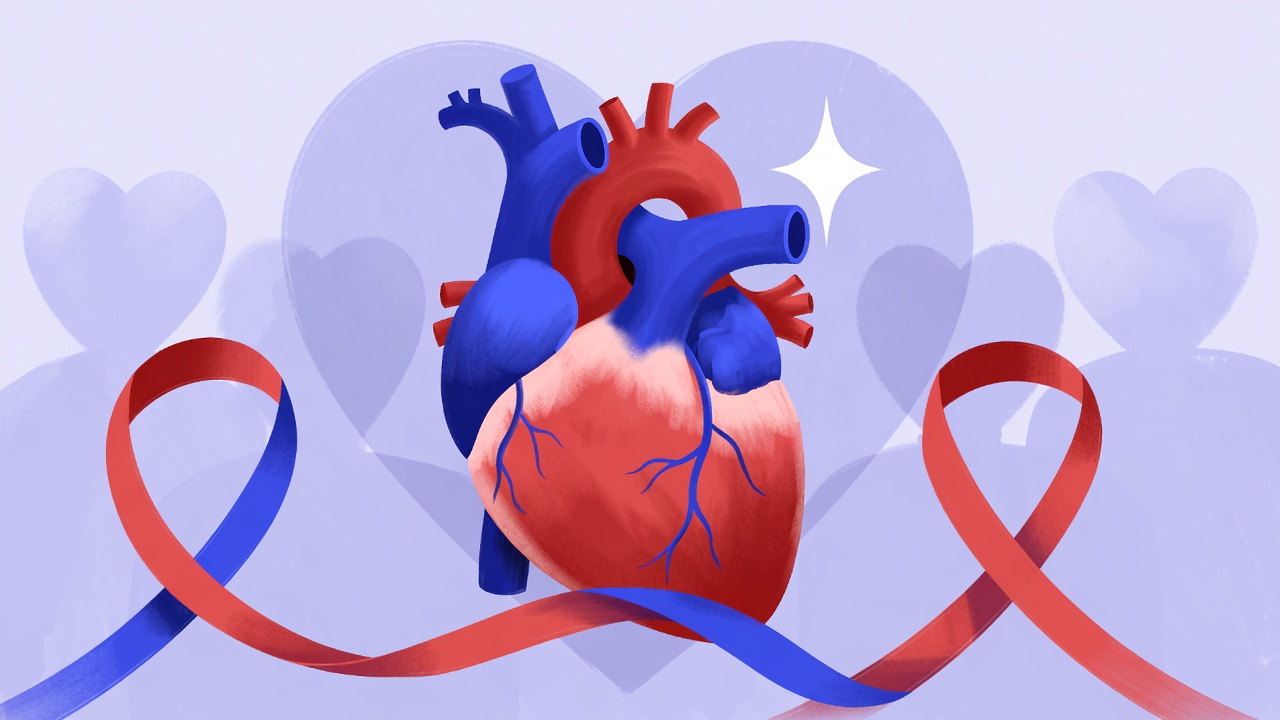
Every February, as Valentine’s Day hearts fill shop windows and social media feeds, a different kind of heart takes center stage. Congenital Heart Defect (CHD) Awareness Week, observed from February 7 through February 14, asks us to look beyond the candy-red symbols of romance and pay attention to hearts that have been fighting since their very first beat.
For the families who live this reality, February 14 is not just about flowers and chocolates. It is a day to honor heart warriors — babies, children, and adults whose hearts were formed differently before they ever took their first breath. The timing is no accident. CHD Awareness Day falls on Valentine’s Day, linking the universal symbol of love to a cause that demands both compassion and scientific urgency.
This year, with landmark guidelines released in December 2025 and fresh global data from the American Heart Association’s 2026 Heart Disease and Stroke Statistics Update, there has never been a better moment to educate yourself and others about congenital heart disease.
Here are ten essential facts every person should know.
1. What Is Congenital Heart Disease and Why Does It Matter Globally?
Congenital heart disease (CHD) refers to structural problems with the heart that are present from birth. The word “congenital” simply means “existing at birth.” These defects affect the walls, valves, or blood vessels of the heart. They can disrupt the normal flow of blood — sometimes sending it to the wrong place, slowing it down, or blocking it entirely.
CHD is not a single condition. It encompasses more than 30 recognized types of heart defects, ranging from a tiny hole in the heart wall that may close on its own, to complex malformations that require multiple open-heart surgeries in infancy. According to the American College of Cardiology and the American Heart Association’s December 2025 joint guideline, these defects can be classified as simple, moderate, or complex based on their severity.
Some of the most common types include:
| Type of CHD | What It Means |
|---|---|
| Ventricular Septal Defect (VSD) | A hole in the wall between the heart’s lower chambers |
| Atrial Septal Defect (ASD) | A hole in the wall between the heart’s upper chambers |
| Tetralogy of Fallot | A combination of four defects that affect blood flow |
| Coarctation of the Aorta | A narrowing of the body’s main artery |
| Transposition of the Great Arteries | The two main arteries leaving the heart are switched |
| Patent Ductus Arteriosus (PDA) | A blood vessel that should close after birth stays open |
What makes CHD so significant is its sheer scope. It is the most common type of birth defect worldwide, and it remains a leading cause of birth-defect-related death in infants and young children. Understanding CHD is the first step toward supporting the millions of families it touches.
2. How Common Is Congenital Heart Disease: Global Birth Prevalence Statistics
The numbers are staggering — and they have remained remarkably consistent across decades and continents.
CHD affects roughly 1% of all live births worldwide. That translates to an estimated 1.35 million babies born with a heart defect every single year around the globe. The British Heart Foundation’s August 2025 Global Cardiovascular Disease Factsheet puts the figure at approximately 1 in 110 births globally, with an average of about 3,300 new diagnoses per day — roughly one every 26 seconds.
In the United States alone, about 40,000 newborns are born with a congenital heart defect each year, according to the Centers for Disease Control and Prevention. That means roughly one in every 100 American babies arrives with some form of heart anomaly. A baby is born with CHD in the U.S. approximately every 15 minutes.
As far as researchers can determine, the birth rate of CHD is remarkably similar across all countries and ethnic groups. Minor regional variations exist — for instance, certain subtypes like subpulmonic ventricular septal defects appear slightly more often in East Asian populations — but the overall global rate holds steady. This universality reinforces that CHD is not a disease of poverty, wealth, race, or geography. It is a shared human challenge.
Of those born with CHD, roughly 1 in 4 infants has what doctors call a critical congenital heart defect (CCHD). These babies will need surgery or another procedure within their very first year of life. Without treatment, critical CHDs can be fatal.
3. Congenital Heart Disease Causes and Known Risk Factors in Pregnancy
One of the most unsettling truths about CHD is this: in most cases, doctors do not know exactly what caused it. The majority of congenital heart defects arise from a combination of genetic and environmental factors that researchers are still working to untangle.
That said, science has identified several known risk factors. A 2024 systematic review and meta-analysis published in the Canadian Journal of Cardiology found robust evidence linking the following maternal factors to increased CHD risk:
Established Risk Factors:
- Pregestational diabetes — This carries the strongest association, with an odds ratio of 3.51. In plain terms, mothers with diabetes before pregnancy face roughly 3.5 times the risk of having a baby with CHD compared to non-diabetic mothers.
- Maternal obesity — Being overweight or affected by obesity before pregnancy increases CHD risk, with a clear dose-response relationship (higher weight, higher risk).
- Smoking during pregnancy — Tobacco exposure, including secondhand smoke, is linked to higher rates of several heart defect subtypes.
- Advanced maternal age — Older mothers face a modestly elevated risk.
- Rubella infection — A mother who contracts rubella (German measles) during pregnancy faces a very significant chance of having a baby with birth defects, including CHD.
- Certain medications — ACE inhibitors, some anti-seizure drugs (such as valproic acid), lithium, retinoic acids for acne, and certain antibiotics taken during the first trimester are associated with higher risk.
- Alcohol and recreational drug use — Both are linked to increased CHD risk.
Genetic factors also play a role. A family history of CHD raises the probability — though most babies with CHD have no close relatives with the condition. Chromosomal abnormalities such as Down syndrome (Trisomy 21), Turner syndrome, and DiGeorge syndrome (22q11.2 deletion) are strongly associated with heart defects.
The National Heart, Lung, and Blood Institute notes that while CHD is not usually inherited directly, the risk increases if either parent or a sibling has a heart defect. According to Cincinnati Children’s Hospital, if the mother herself has CHD, the risk for her child ranges from 2.5% to 18%, with an average of about 6.7%.
4. Can Congenital Heart Defects Be Prevented: Steps to Reduce Risk Before and During Pregnancy
There are no guaranteed strategies to prevent congenital heart disease. However, the scientific evidence points to several practical steps that may lower the risk.
The March of Dimes recommends the following actions for anyone planning a pregnancy or currently pregnant:
- Take folic acid daily. A vitamin supplement with at least 400 micrograms of folic acid every day — ideally before conception — may help reduce the risk of heart defects. Some research suggests that diets rich in folate-containing fruits and vegetables also have a protective effect.
- Manage existing health conditions. If you have diabetes, lupus, phenylketonuria (PKU), or epilepsy, work closely with your doctor to manage these conditions before and during pregnancy. Poorly controlled diabetes, in particular, carries one of the strongest associations with CHD.
- Review all medications with your doctor. Do not start or stop any medication without medical advice. Some drugs used for high blood pressure, seizures, acne, and depression carry known risks to fetal heart development.
- Avoid smoking, alcohol, and recreational drugs. All three are linked to higher rates of CHD and other birth defects.
- Achieve a healthy weight before pregnancy. Even modest weight loss (around 10 to 20 pounds) can improve pregnancy outcomes.
- Get vaccinated against rubella. If you have never had rubella or the MMR vaccine, consult your doctor before becoming pregnant.
- Request prenatal screening. A fetal echocardiogram uses harmless sound waves to create images of the developing heart. It can detect many heart defects before birth, giving families and medical teams time to prepare.
These steps are especially important during the first six weeks of pregnancy, when the fetal heart is forming. As the March of Dimes explains, congenital heart defects can develop before many women even know they are pregnant — another reason preconception health matters so much.
5. How Is Congenital Heart Disease Diagnosed in Babies and Children Today?
Early detection saves lives. The tools available to doctors in 2026 are remarkably advanced compared to even a generation ago.
Before birth, many heart defects can now be identified through routine prenatal ultrasound. When something unusual is spotted, doctors can order a fetal echocardiogram — a specialized ultrasound that provides detailed images of the baby’s heart structure. This allows medical teams to plan interventions, schedule deliveries at hospitals with cardiac surgery units, and prepare families for what lies ahead.
After birth, every baby born in the United States is required to undergo pulse oximetry screening within 24 hours. This painless, noninvasive test clips a small sensor onto the baby’s finger or toe to measure blood oxygen levels. Abnormally low levels can indicate a critical heart defect that needs immediate attention. New Jersey became the first U.S. state to adopt this screening in 2011, following a recommendation by the Secretary’s Advisory Committee on Heritable Disorders in Newborns and Children. Today it is standard nationwide.
Beyond these initial screenings, doctors use a range of diagnostic tools:
| Test | What It Does |
|---|---|
| Echocardiogram | Uses sound waves to create moving images of the heart |
| Electrocardiogram (ECG/EKG) | Records the heart’s electrical activity |
| Chest X-ray | Shows the heart’s size and shape |
| Cardiac MRI | Produces detailed images using magnetic fields |
| Cardiac catheterization | A thin tube is threaded into the heart to measure pressure and oxygen levels |
A crucial point: not all CHDs are caught in infancy. Some milder defects produce no obvious symptoms and may go undiagnosed for years — even decades. According to Cleveland Clinic, some people only learn about their congenital heart condition in adulthood, often after routine tests reveal an unexpected heart murmur or an irregular rhythm.
6. Congenital Heart Disease Survival Rates: Why More People Are Living Into Adulthood
Here is the good news — and it is nothing short of remarkable.
Over 90% of babies born with congenital heart defects in the United States now survive well into adulthood. This statistic, confirmed by the American Heart Association’s December 2025 announcement, represents one of the great triumphs of modern medicine.
The improvement has been dramatic. Data from the Metropolitan Atlanta Congenital Defects Program shows that the one-year survival rate for infants with severe CHD rose from 67.4% for those born between 1979 and 1993 to 82.5% for those born between 1994 and 2005 — and outcomes have only continued to improve since. According to a 2025 Medscape analysis, approximately 97% of patients with CHD will now reach adulthood. For those alive at age 18, about 75% may live into their sixties.
In the United States, an estimated 2 to 3 million people are currently living with CHD. The Children’s Healthcare of Atlanta estimates the number at more than 2.4 million heart warriors — both children and adults. This population is growing at a rate of roughly 5% per year.
A pivotal fact often overlooked: there are now more adults living with congenital heart disease than children. The population of adult CHD survivors has exceeded the pediatric population, creating an entirely new field of medicine — and a new set of challenges.
7. Why Adults Living with Congenital Heart Disease Need Lifelong Specialized Care
Surviving childhood with CHD is not the end of the story. It is the beginning of a new chapter that requires continued vigilance.
The landmark 2025 ACC/AHA Guideline for the Management of Adults with Congenital Heart Disease, published in December 2025, made this its central message: adults with CHD need lifelong, specialized follow-up care. The guideline, developed by the American College of Cardiology and the American Heart Association along with several other medical societies, replaces the previous 2018 guidance and introduces several major updates.
Key recommendations from the 2025 guideline:
- Specialized care at ACHD centers improves outcomes. Adults with congenital heart disease have measurably better results when treated at dedicated Adult Congenital Heart Disease (ACHD) centers staffed by cardiologists trained in this specialty.
- Transition planning should begin in adolescence. The guideline recommends that planning for the transition from pediatric to adult cardiac care should begin between ages 12 and 16, with the actual transfer of care typically occurring between ages 18 and 21.
- Multidisciplinary teams are essential. Complex decisions about surgery, heart failure management, pregnancy, and mental health require input from cardiologists, cardiac surgeons, electrophysiologists, nurses, and psychologists working together.
- Mental health matters. The updated guideline places new emphasis on the psychological well-being of adults with CHD — a population that faces elevated rates of anxiety, depression, and reduced quality of life.
- Pre-procedure consultation is critical. Any patient with ACHD should consult an ACHD cardiologist before undergoing any procedure — cardiac or otherwise — for expert guidance on anesthesia risks and post-operative management.
Despite these recommendations, a troubling gap in care persists. As lead guideline author Dr. Michelle Gurvitz noted, many patients stop seeing congenital heart disease specialists once they leave pediatric care. Common barriers include lack of awareness, limited access to ACHD specialists (particularly in rural areas), and insurance challenges. The guideline calls this a priority to address.
As researchers at the EURO-ACHD 2025 Congress emphasized, the care paradigm must shift: ACHD patients should no longer be viewed merely as survivors. Instead, the focus should move from simply prolonging life to enhancing quality of life and overall well-being.
8. Most Common Types of Congenital Heart Defects and Their Symptoms in Children
Not all heart defects look the same, and not all produce obvious symptoms. Understanding the range of defects and their warning signs can be the difference between early intervention and a missed diagnosis.
The most common types of CHD include:
- Ventricular Septal Defect (VSD) — The single most common CHD. A hole in the wall separating the heart’s two lower chambers allows oxygen-rich blood to mix with oxygen-poor blood. Small VSDs may cause no symptoms and can close on their own. Larger ones require surgical repair.
- Atrial Septal Defect (ASD) — Similar to VSD but located in the wall between the heart’s upper chambers. Some ASDs go undetected well into adulthood.
- Tetralogy of Fallot — A combination of four related defects that reduces blood flow to the lungs. Babies with this condition often appear blue (a condition called cyanosis) because their blood carries less oxygen.
- Transposition of the Great Arteries — The two major blood vessels leaving the heart are reversed. Without prompt surgical correction, this is fatal.
- Coarctation of the Aorta — A dangerous narrowing of the body’s main artery that forces the heart to pump harder.
- Atrioventricular Septal Defect (AVSD) — Involves holes in the walls between the heart’s chambers plus abnormal heart valves, commonly associated with Down syndrome.
Warning signs to watch for in babies and children:
- A blue or grayish tint to the skin, lips, or fingernails (cyanosis)
- Rapid or labored breathing
- Poor feeding or failure to gain weight
- Excessive sweating, especially during feeding
- Unusual tiredness or fatigue during activity
- Swelling in the legs, abdomen, or around the eyes
- A heart murmur detected by a doctor
Some defects cause dramatic symptoms within hours of birth. Others are silent for years. As the New York State Department of Health notes, more than half of people living with CHD are now adults — a reminder that this is not only a childhood condition.
9. Latest Advances in Congenital Heart Disease Treatment and Research in 2025–2026
The pace of progress in CHD care has never been faster. Several major developments in 2025 and early 2026 are reshaping how doctors treat and manage these conditions.
Updated clinical guidelines (December 2025)
The 2025 ACC/AHA/HRS/ISACHD/SCAI Guideline represents the most comprehensive update to adult CHD management in seven years. Among its notable additions: new recommendations for heart failure treatment in ACHD patients, updated strategies for managing conditions like tetralogy of Fallot and Eisenmenger syndrome, and guidance on Fontan screening for liver disease. The guideline also introduces a refined Anatomic and Physiological (AP) Classification System that assigns each patient both an anatomic complexity score (I–III) and a physiological stage (A–D) to guide individualized care.
Novel pharmacological therapies
Research presented at the EURO-ACHD 2025 Congress highlighted the emergence of new drug therapies and electrical stimulation techniques for patients with a systemic right ventricle — a group historically considered very high-risk. Scientists described these advances as offering “perhaps for the first time, tangible opportunities to improve outcomes” in this population.
Improved surgical and interventional techniques
Catheter-based (minimally invasive) procedures continue to replace open-heart surgeries for many conditions. Transcatheter pulmonary valve replacement, for instance, now allows doctors to implant a new heart valve through a thin tube threaded through a blood vessel — no chest incision required. New strategies for valve replacement in adults with CHD were a major focus of the EURO-ACHD 2025 proceedings.
Advances in imaging and AI
Three-dimensional printing, holographic imaging, and artificial intelligence are being integrated into CHD care at leading centers worldwide. These technologies help surgeons plan complex procedures with greater precision and allow cardiologists to detect subtle changes in heart function over time.
The growing adult CHD population
As guideline author Dr. Gurvitz observed: “The patient population is not going anywhere — it’s only getting larger.” This growth is driving demand for more ACHD-trained specialists, expanded research funding, and new models of care delivery — including telemedicine and rural outreach programs.
10. How to Support Congenital Heart Disease Awareness Week 2026 in Your Community
CHD Awareness Week is not just for medical professionals and affected families. Everyone can play a role. Here is how you can make a difference during the week of February 7–14, 2026 — and beyond.
Wear red. Red is the official color of CHD awareness, just as it is for heart disease in general. Putting on a red shirt, scarf, or pin is a simple but visible act of solidarity. February also falls during American Heart Month, so your red attire carries double meaning.
Share facts and personal stories on social media. Use the hashtags #CHDAwareness and #1in100 to join the global conversation. Organizations like the American Heart Association, the Children’s Heart Foundation, and Mended Little Hearts provide shareable graphics, fact sheets, and family stories that help put real faces to the statistics.
Support or join a Congenital Heart Walk. The Children’s Heart Foundation organizes walks across the country to raise funds for CHD research. Every dollar helps advance the science of diagnosis, treatment, and — ultimately — prevention.
Advocate for policy change. Contact your local and national representatives to support legislation like the Congenital Heart Futures Act, which seeks to improve data collection and increase research funding through the National Institutes of Health. Mended Little Hearts co-hosts annual CHD Lobby Days where anyone can participate.
Request a proclamation. Many state governors, mayors, and local officials will sign proclamations declaring February 7–14 as Congenital Heart Defect Awareness Week. This is often as simple as submitting a request through an official website.
Educate yourself and others. Visit trusted sources such as the CDC’s congenital heart defects page, the American Heart Association’s CHD resources, or the Adult Congenital Heart Association for reliable, up-to-date information.
Donate blood. Many heart warriors undergo multiple surgeries throughout their lives. Blood donations are a direct and tangible way to support them.
The Heart of the Matter: Why Congenital Heart Disease Awareness Saves Lives
Every 26 seconds, somewhere in the world, a family receives a diagnosis that will change their lives forever. Some will learn about their baby’s heart defect during a prenatal ultrasound. Others will discover it in a terrifying rush of alarms in a hospital delivery room. A few will not learn the truth until their child — or they themselves — are well into adulthood.
What unites every one of these stories is the power of awareness. When parents know the risk factors, they can take preventive steps. When hospitals screen newborns, critical defects are caught before they become emergencies. When teenagers with CHD understand that they need lifelong care, they stay connected to the specialists who can keep them healthy. When communities raise their voices and their donations, scientists gain the resources to develop better treatments and, one day, cures.
Congenital heart disease is the world’s most common birth defect. It does not discriminate by nationality, income, or background. But with early detection, skilled medical care, and a society that refuses to look away, the outcomes are better today than at any point in human history.
This CHD Awareness Week, take a moment to learn, share, and act. The heart you help may be smaller than your fist — but the life it sustains is as vast as any on earth.