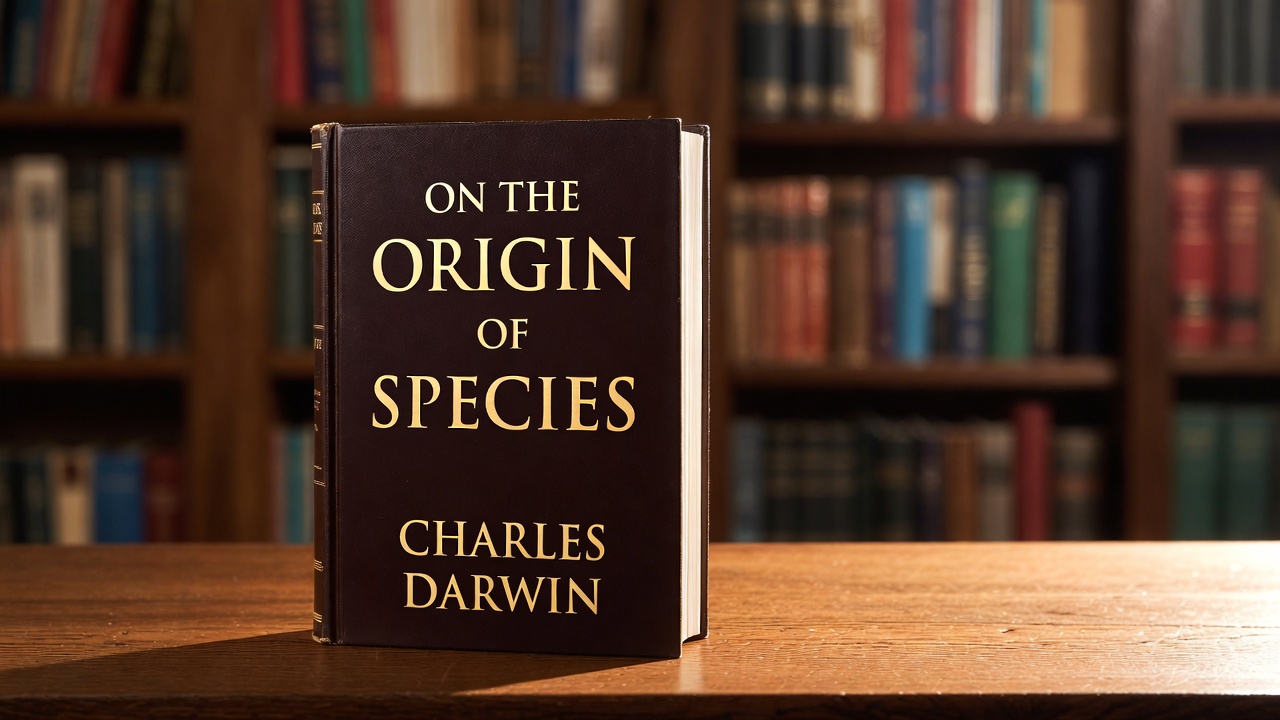
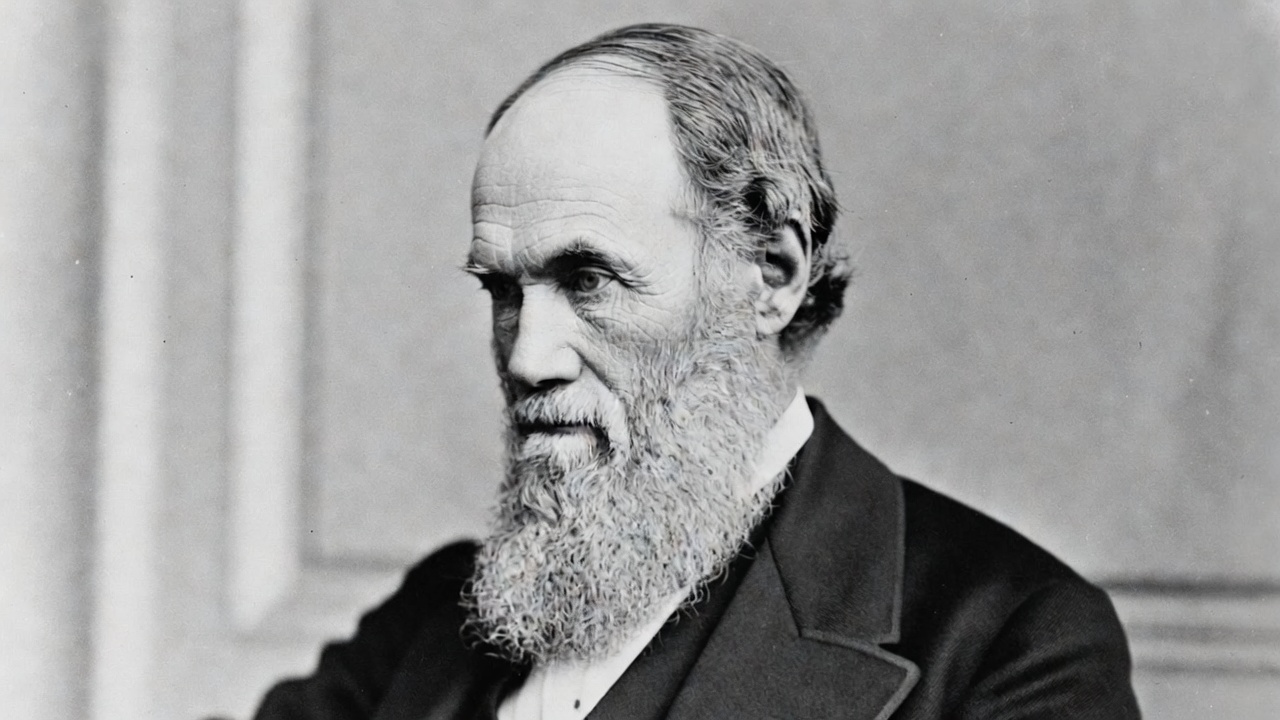
Charles Darwin changed how humanity understands life on Earth. His theory of evolution by natural selection remains one of the most important ideas in all of science. Yet, beyond the textbooks and lecture halls, Darwin’s personal life was full of surprises. He dropped out of medical school. He ate the animals he studied. He married his first cousin after writing a pros-and-cons list about marriage itself.
More than 140 years after his death, Darwin’s story still captivates scientists, historians, travellers, and curious minds around the world. Every February 12 — his birthday — people celebrate International Darwin Day with lectures, museum exhibits, and pilgrimages to places like the Galápagos Islands and Down House in Kent.
This article digs deep into the most fascinating, lesser-known facts about Charles Darwin. Whether you are a biology student, a history enthusiast, or a traveller planning your next adventure, these ten facts will reshape how you see the father of evolution.
From his unlikely start as a failed medical student to his final resting place in one of England’s most revered churches, Darwin’s life reads like a novel. It is full of dramatic turning points, personal tragedies, unlikely friendships, and quiet acts of genius. Along the way, we will also explore the places that shaped his thinking — places you can still visit today, from the windswept coasts of Patagonia to the volcanic islands of the Galápagos.
1. Charles Darwin Was Born on the Same Day as Abraham Lincoln
Here is a coincidence that history loves to repeat. Charles Robert Darwin and Abraham Lincoln were both born on February 12, 1809. That is where the similarities in their early lives end, though.
Lincoln came into the world in a one-room log cabin in the Kentucky wilderness. Darwin, on the other hand, was born into wealth and privilege at The Mount, a grand Georgian estate overlooking the River Severn in Shrewsbury, Shropshire, England. His father, Robert Darwin, was a prosperous doctor and financier. His mother, Susannah Darwin (née Wedgwood), was the daughter of the famous pottery industrialist Josiah Wedgwood.
Despite their vastly different beginnings, both men shared a deep hatred of slavery. Darwin’s grandfathers on both sides — Erasmus Darwin and Josiah Wedgwood — were prominent abolitionists. Darwin himself was outraged by what he witnessed during his travels in South America. In Brazil, he described the cruelty inflicted on enslaved people as revolting and inhumane. Lincoln, of course, would go on to sign the Emancipation Proclamation in 1863.
The two men never met. They never exchanged a single letter. But their shared birthday has linked them in popular imagination ever since. In fact, dual celebrations of Darwin and Lincoln on February 12 are common in both the United Kingdom and the United States.
| Feature | Charles Darwin | Abraham Lincoln |
|---|---|---|
| Date of birth | February 12, 1809 | February 12, 1809 |
| Birthplace | Shrewsbury, England | Hodgenville, Kentucky, USA |
| Family wealth | Wealthy upper class | Poor frontier family |
| Stance on slavery | Staunch abolitionist | Issued Emancipation Proclamation |
| Legacy | Father of evolutionary theory | 16th President of the United States |
This shared birthday is more than trivia. It reminds us that greatness can emerge from any background — a cabin in Kentucky or a mansion on the Severn.
2. Darwin Dropped Out of Medical School Because He Couldn’t Stand the Sight of Blood
Many people assume Darwin was always destined for science. The truth is messier.
In 1825, Darwin’s father sent him to the University of Edinburgh to study medicine. Robert Darwin was a successful physician, and he expected his son to follow the same path. Edinburgh was, at the time, one of the best medical schools in Europe.
But young Charles hated it.
Surgery in the early 19th century was performed without anaesthesia. Darwin had to watch operations on conscious, screaming patients. He later wrote that the experience haunted him. He described two particularly gruesome operations — one on a child — and said he rushed away before they were finished. He called the lectures “dull” and the anatomy classes unbearable.
He did find some bright spots at Edinburgh. He took taxidermy lessons from a freed Black slave named John Edmonstone, whom Darwin later recalled as “a very pleasant and intelligent man.” This friendship reinforced Darwin’s belief that people of all races shared the same feelings and intelligence — a conviction he held for the rest of his life.
Darwin also met Robert Edmond Grant, a former student of the French evolutionary thinker Jean-Baptiste Lamarck. Grant exposed Darwin to radical ideas about the mutability of species. These conversations planted seeds that would later bloom into the theory of evolution.
Still, Darwin never finished medical school. He left Edinburgh without a degree. His father, frustrated and worried, reportedly told him: “You care for nothing but shooting, dogs, and rat-catching, and you will be a disgrace to yourself and all your family.”
Those are stinging words from a father. History, of course, proved Robert Darwin spectacularly wrong.
3. He Studied Theology at Cambridge Before Becoming a Naturalist
After the Edinburgh failure, Robert Darwin had a new plan for his son. If Charles would not be a doctor, he could at least become an Anglican clergyman. A country parson lived a comfortable, respectable life — and there would be plenty of time for nature walks and beetle collecting on the side.
So in 1828, Darwin enrolled at Christ’s College, Cambridge, to study theology.
Darwin later admitted he did not take his theological studies very seriously. “I did not then in the least doubt the strict and literal truth of every word in the Bible,” he wrote. But his heart was clearly elsewhere. He spent much of his time at Cambridge collecting beetles with an almost obsessive passion. One famous anecdote describes him putting a beetle in his mouth to free up a hand when he found a third specimen.
More importantly, Cambridge introduced Darwin to two mentors who would shape his future. John Stevens Henslow, a professor of botany, became a close friend and intellectual guide. Adam Sedgwick, a geologist, took Darwin on a field trip to Wales in the summer of 1831 that sharpened his skills in observation and geological thinking.
It was Henslow who, in August 1831, wrote Darwin a letter that changed everything. The letter contained an invitation to join a voyage around the world aboard HMS Beagle as the ship’s naturalist. Henslow described the opportunity as one for “a man of zeal & spirit.”
Darwin leapt at the chance. His father initially opposed the idea, wanting his son to settle down as a clergyman. But Darwin’s uncle, Josiah Wedgwood II, helped persuade Robert Darwin to relent.
The aspiring pastor would never return to theology. Instead, he would circle the globe and come home with the seeds of the most revolutionary idea in the history of biology.
4. The HMS Beagle Voyage Lasted Five Years Instead of Two
The second survey expedition of HMS Beagle is one of the most important scientific journeys ever undertaken. It departed from Plymouth Sound on December 27, 1831, under the command of Captain Robert FitzRoy. Darwin was just 22 years old.
The original plan was a two-year trip to survey the coastline of South America. Instead, the voyage lasted nearly five years. The Beagle did not return to England until October 2, 1836.
During those five years, Darwin spent a remarkable three years and three months on land and only about 18 months at sea. While the crew charted harbours and measured ocean depths, Darwin explored. He hiked through Brazilian rainforests. He rode with gauchos across the Argentine Pampas. He unearthed giant fossil bones in Patagonia. He climbed the Andes and found petrified trees high in the mountains, evidence that the peaks had once been at sea level.
Key stops on the Beagle voyage
| Date | Location | Notable Event |
|---|---|---|
| January 1832 | Cape Verde Islands | Darwin begins geological observations |
| February 1832 | Brazil | First encounter with tropical rainforests |
| September 1832 | Argentina | Discovery of massive fossil bones |
| January 1835 | Chile | Witnesses eruption of Mount Osorno |
| February 1835 | Valdivia, Chile | Experiences a powerful earthquake |
| September–October 1835 | Galápagos Islands | Observes finches, tortoises, and mockingbirds |
| October 1836 | Falmouth, England | Returns home after nearly five years |
The Galápagos Islands visit, lasting about five weeks, proved to be the intellectual turning point. Darwin noticed that finches, tortoises, and mockingbirds varied from island to island. These observations would gnaw at his mind for years, eventually leading him to question the fixity of species.
What made the Galápagos so special? The islands sit about 1,000 kilometres off the coast of Ecuador in the Pacific Ocean. Their isolation means that species there evolved independently, adapting to the unique conditions of each island. Darwin visited four islands — San Cristóbal (then called Chatham), Floreana (Charles), Isabela (Albemarle), and Santiago (James). On each island, he noticed subtle but consistent differences in the wildlife.
The famous Galápagos finches are the most celebrated example. Darwin initially thought the birds were a mixture of blackbirds, grosbeaks, and finches. It was the ornithologist John Gould back in London who identified them as twelve separate species of finches, each with a differently shaped beak adapted to a different food source. This realisation was a thunderbolt. It suggested that a single ancestral species had arrived on the islands long ago and then diversified — adapted — to fill different ecological roles.
Darwin also rode the giant tortoises during his visit, later remarking that it was “difficult to keep balanced” on their shells. He noted that local residents could tell which island a tortoise came from simply by looking at the shape of its shell. These seemingly small observations added up to something enormous: evidence that species are not fixed but change over time in response to their environment.
Darwin later called the Beagle voyage “by far the most important event in my life,” saying it “determined my whole career.” When he set out, he was a green university graduate still planning to become a parson. When he returned, he was an established naturalist whose specimen collections had already made him famous in London scientific circles.
5. Darwin Ate the Exotic Animals He Studied During His Travels
This is one of the strangest and most delightful facts about Charles Darwin. The man who spent his life studying animals also loved to eat them.
It started at Cambridge. Darwin co-founded a dining society known as the Gourmet Club — also called the Glutton Club. The group’s purpose was simple: to dine on “birds and beasts, which were before unknown to human palate.” Members sampled hawk, bittern, and various unusual fowl. Darwin reportedly drew the line at brown owl, which he found too tough and unpleasant to finish.
His adventurous appetite continued during the Beagle voyage. In South America, Darwin ate armadillo (which he compared favourably to duck), puma (which he described as tasting like veal), and various rodents including agouti. He even sampled rhea — a large, ostrich-like bird — only realising partway through a meal that it was actually a rare species he had been searching for. He quickly saved the remaining bones and feathers and sent them to the Zoological Society in London, where the bird was later named Rhea darwinii in his honour.
In the Galápagos, Darwin became quite fond of giant tortoise meat. He and the crew reportedly took several dozen tortoises aboard the Beagle for the return trip — not as specimens, but as provisions. The tortoises were eaten during the voyage home.
This culinary adventurism might seem odd by modern standards. But in the 19th century, sampling local wildlife was a routine part of natural history fieldwork. Scientists were expected to document everything about a species — including its taste.
Darwin’s willingness to eat his research subjects tells us something important about his character. He was never a detached, ivory-tower thinker. He was hands-on, physical, and deeply immersed in the natural world. He wanted to understand life in every possible dimension — including on the plate.
6. Darwin Made a Pros-and-Cons List Before Deciding to Get Married
Darwin’s logical, analytical mind did not switch off when it came to personal decisions. In 1838, two years after returning from the Beagle voyage, he faced one of life’s biggest questions: should he get married?
Rather than follow his heart, Darwin did what any self-respecting scientist would do. He took a sheet of paper, drew two columns, and started listing the advantages and disadvantages of marriage.
Darwin’s famous marriage pros-and-cons list
In favour of marriage (“Marry”):
- Children — “if it please God”
- A constant companion and friend in old age
- Someone to take care of the house
- “Better than a dog anyhow”
Against marriage (“Not Marry”):
- Loss of freedom to go where one liked
- Less money for books
- Less time to read books
- “Conversation of clever men at clubs”
- Not forced to visit relatives
After weighing the options, Darwin scrawled his verdict at the bottom of the page: “Marry — Marry — Marry. Q.E.D.” (The Latin abbreviation stands for quod erat demonstrandum — “which was to be demonstrated.”)
He then went to his father for advice and soon proposed to his first cousin, Emma Wedgwood. They married on January 29, 1839, at St. Peter’s Church in Maer, Staffordshire.
The marriage turned out to be a deeply loving one. Charles and Emma had ten children together. Tragically, three of their children died young — two in infancy and their beloved daughter Annie at age ten. Annie’s death in 1851 devastated Darwin and is widely believed to have deepened his doubts about a benevolent God.
Despite the grief, Charles and Emma maintained a warm, devoted partnership. They played backgammon together every evening between 8:00 and 8:30 PM — a ritual Darwin tracked with meticulous scorekeeping. He once wrote to a friend about their running tally, noting with amusement how their wins and losses were remarkably even.
Darwin’s last words, spoken to Emma on April 19, 1882, reveal the depth of their bond: “I am not the least afraid of death — Remember what a good wife you have been to me — Tell all my children to remember how good they have been to me.”
7. Darwin Waited Over 20 Years to Publish His Theory of Evolution
This is perhaps the most extraordinary fact about Darwin’s career. He began forming his theory of evolution by natural selection shortly after returning from the Beagle voyage in 1836. Yet he did not publish On the Origin of Species until November 24, 1859 — more than 23 years later.
Why the delay?
Darwin was terrified of the public reaction. He knew his ideas would be seen as an attack on religious orthodoxy and the established social order. He once compared revealing his theory to “confessing a murder.” In a letter to his friend Joseph Hooker in 1844, he wrote: “I am almost convinced (quite contrary to the opinion I started with) that species are not (it is like confessing a murder) immutable.”
During those two decades of silence, Darwin was anything but idle. He spent years gathering evidence, conducting experiments, and building an airtight case. He studied barnacles for eight solid years, becoming the world’s leading expert on these crustaceans. He bred pigeons. He corresponded with naturalists, botanists, and geologists across the globe. He filled notebook after notebook with observations, arguments, and counterarguments.
What finally pushed him to publish was a letter from Alfred Russel Wallace, a young British naturalist working in Southeast Asia. In June 1858, Wallace sent Darwin a manuscript outlining a theory of evolution remarkably similar to his own. Darwin was stunned. He feared he would lose priority for the idea he had been developing for over two decades.
Darwin’s friends, Charles Lyell and Joseph Hooker, arranged a solution. On July 1, 1858, papers by both Darwin and Wallace were read at a meeting of the Linnean Society of London. This joint presentation established that both men had independently arrived at the same theory.
Darwin then raced to complete a condensed version of his larger planned work. The result was On the Origin of Species by Means of Natural Selection, or the Preservation of Favoured Races in the Struggle for Life. The first edition of 1,250 copies sold out on the very first day of publication.
The book changed everything. By the 1870s, most of the scientific community and the educated public had accepted evolution as a fact. Today, Darwin’s theory remains the unifying framework of the life sciences.
8. “Survival of the Fittest” Was Not Darwin’s Phrase
One of the most common misconceptions about Darwin is that he coined the phrase “survival of the fittest.” He did not.
The phrase was created by Herbert Spencer, a British philosopher who read Darwin’s work and applied evolutionary concepts to sociology, economics, and philosophy. Spencer first used the expression in his 1864 book Principles of Biology after reading On the Origin of Species.
Darwin himself preferred the term “natural selection.” He believed this phrase more accurately described the process he had observed. In nature, it is not always the strongest or fastest individuals that survive. It is those best suited — or “fitted” — to their particular environment. A creature perfectly adapted to a cold climate might perish in the tropics, regardless of its physical strength.
However, Darwin did eventually adopt Spencer’s phrase. In the fifth edition of On the Origin of Species, published in 1869, he included “survival of the fittest” as an alternative expression for natural selection. He gave full credit to Spencer for originating the term.
This distinction matters more than you might think. The phrase “survival of the fittest” has been widely misunderstood and misused over the decades. It has been invoked to justify social Darwinism — the idea that wealthy, powerful individuals and nations are biologically superior to the poor and weak. It has been twisted to support eugenics, forced sterilisation programmes, and racial hierarchies.
Darwin himself would have been horrified by these applications. He was a gentle, empathetic man who wrote in The Descent of Man (1871) that withholding aid from the weak and vulnerable would “endanger the instinct of sympathy, the noblest part of our nature.” He understood that human morality, cooperation, and compassion were themselves products of evolution — and among our greatest adaptive strengths.
9. Darwin Suffered from a Mysterious Chronic Illness for Most of His Adult Life
After returning from the Beagle voyage in 1836, Darwin began to suffer from a baffling array of symptoms. He experienced chronic nausea, vomiting, severe headaches, heart palpitations, trembling, eczema, and extreme fatigue. These symptoms plagued him for the remaining 46 years of his life.
The illness was debilitating. Darwin often could not work for more than a few hours each day. He rarely travelled or attended social gatherings. He turned down invitations, avoided public lectures, and conducted most of his scientific work from the quiet seclusion of Down House in the village of Downe, Kent, which he purchased in 1842.
What caused his illness? Nobody knows for certain, even today. Over the years, doctors and historians have proposed dozens of theories. Here are some of the most discussed:
Chagas disease. Some researchers believe Darwin was bitten by a “benchuca” (kissing bug) during his time in Argentina in 1835. He described the encounter in his journal. Chagas disease, caused by the parasite Trypanosoma cruzi, can cause chronic heart problems and digestive issues — symptoms consistent with Darwin’s complaints. This theory has many supporters, but it cannot be confirmed without testing Darwin’s remains.
Psychosomatic illness. Other scholars suggest that Darwin’s symptoms were triggered by anxiety and stress. The pressure of his revolutionary ideas — and the fear of public reaction — may have manifested as physical illness. Darwin’s symptoms were often worst during periods of intense intellectual work or social stress.
Lactose intolerance or cyclical vomiting syndrome. More recent medical analyses have proposed these conditions as possible explanations for Darwin’s chronic digestive troubles.
Ménière’s disease. Some doctors have suggested this inner-ear disorder, which causes dizziness, nausea, and ringing in the ears, as a possible diagnosis.
Despite his suffering, Darwin’s productivity was astonishing. He published 25 books, including landmark works on coral reefs, volcanic islands, barnacles, orchids, earthworms, and human emotions — in addition to On the Origin of Species and The Descent of Man. He wrote thousands of letters to scientists around the world, many of which survive today in the Darwin Correspondence Project at Cambridge University.
Darwin structured his days at Down House with military precision to manage his condition. He woke early and took a short walk before breakfast. He worked in his study from 8:00 to 9:30 AM — which he considered his most productive period. He then read his letters, rested on the sofa, and returned to work before lunch. Afternoons were devoted to more walking, letter writing, and rest. He played backgammon with Emma every evening and was usually in bed by 10:30 PM.
Visitors to Down House often remarked on how warm and cheerful Darwin was despite his frail health. One guest described him as tall and thin but with “the sweetest smile, the sweetest voice, the merriest laugh.” She added that he never stayed long at a time, “but as soon as he had talked much, said he must go and rest, especially if he had a good laugh.”
His illness, paradoxically, may have helped his work. Confined to Down House, Darwin had little choice but to focus intensely on research, reading, and writing. The quiet country life, broken only by gentle walks on his “Sandwalk” thinking path — a gravel loop around a small copse of trees — provided the perfect environment for sustained intellectual effort. Darwin would walk set numbers of laps each day, kicking a stone along the path to count his circuits. It was on the Sandwalk that many of his greatest ideas took shape.
10. Darwin Was Buried in Westminster Abbey Despite Being an Agnostic
Charles Darwin died on April 19, 1882, at Down House. He was 73 years old. Doctors attributed his death to heart failure — what they called “angina pectoris” at the time.
Darwin and his family had planned a simple burial in St. Mary’s churchyard in the village of Downe, near their home. The family’s wishes were modest. Darwin himself had asked the village carpenter, John Lewis, to make his coffin. Lewis later recalled: “I made his coffin just as he wanted it: all rough, just as it left the bench, no polish, no nothing.”
But the scientific and political establishment had other plans.
Within days of Darwin’s death, his neighbour and friend Sir John Lubbock organised a petition signed by more than 20 members of Parliament requesting that Darwin be buried in Westminster Abbey. The argument was simple: Britain’s greatest naturalist deserved to lie alongside Sir Isaac Newton in the nation’s most sacred church.
The Dean of Westminster, who was in France at the time, immediately telegraphed his approval in French: “Oui sans aucune hésitation, regrette mon absence” — “Yes, without any hesitation. I regret my absence.”
On April 26, 1882, Darwin was laid to rest in the nave of Westminster Abbey, just a few feet from Newton’s tomb. The funeral was attended by members of Parliament, ambassadors, leading scientists, and Church of England clergy. Pallbearers included Thomas Henry Huxley (known as “Darwin’s Bulldog”), Alfred Russel Wallace, and Joseph Hooker.
The burial was deeply ironic. Darwin had grown increasingly sceptical of religion throughout his life. His faith wavered after witnessing the horrors of slavery in South America and after the deaths of his children — especially his daughter Annie. He never called himself an atheist, but he openly identified as an agnostic. (The term itself was coined by his friend Thomas Huxley in 1869.)
In 2008, on the eve of the 200th anniversary of Darwin’s birth, the Church of England issued a semi-official apology for its early hostility to his ideas. An essay by the Rev. Dr. Malcolm Brown, the church’s director of mission and public affairs, stated: “The Church of England owes you an apology for misunderstanding you and, by getting our first reaction wrong, encouraging others to misunderstand you still.”
Darwin’s great-great-grandson, Andrew Darwin, responded drily. He said the family was pleased to hear the church’s apology but added: “They buried him in Westminster Abbey, which I suppose was an apology of sorts.”
Today, you can visit Darwin’s grave in the Abbey’s nave. In 2018, the ashes of Stephen Hawking were buried between Newton and Darwin — placing three of the greatest scientific minds in history side by side in one of Christendom’s most iconic churches.
Why Charles Darwin’s Legacy Still Matters in 2026
Darwin’s ideas are not relics of the 19th century. They are alive, growing, and more relevant than ever.
In the life sciences, the theory of evolution by natural selection remains the unifying framework that connects genetics, ecology, paleontology, medicine, and every other branch of biology. Without Darwin’s insights, we would not understand antibiotic resistance, vaccine development, or the genetic diversity that makes populations resilient to new diseases. The COVID-19 pandemic was a vivid, global-scale demonstration of Darwinian principles: the virus mutated, variants competed, and natural selection shaped which strains spread and which faded. Understanding evolution was not an academic exercise — it was a matter of life and death.
In the field of conservation biology, Darwin’s thinking is essential to protecting endangered species and fragile ecosystems. Scientists working to save coral reefs, rainforests, and Arctic wildlife all rely on evolutionary theory to understand how species adapt — or fail to adapt — to changing environments. As climate change accelerates, Darwin’s framework for understanding adaptation, competition, and extinction is more critical than ever.
In culture and travel, Darwin’s legacy draws hundreds of thousands of visitors each year to sites like the Galápagos Islands, Down House in Kent, and Westminster Abbey in London. The Galápagos, in particular, have become one of the world’s most treasured natural destinations — a living laboratory where visitors can see evolution in action, just as Darwin did nearly two centuries ago. The Charles Darwin Foundation, established in 1959, continues to conduct vital research and conservation work across the archipelago.
Darwin’s influence extends well beyond biology. His ideas have shaped psychology (evolutionary psychology explores the adaptive origins of human behaviour), economics (market competition echoes natural selection), philosophy (our understanding of humanity’s place in nature), and even artificial intelligence (genetic algorithms mimic the process of natural selection to solve complex problems).
And in our own daily lives, Darwin reminds us to be curious. To look closely. To question received wisdom. To gather evidence before drawing conclusions. His life was not one of flashes of genius. It was one of patient, tireless observation and thinking. He turned beetle collecting, pigeon breeding, and earthworm watching into world-changing science.
Visiting Darwin’s Key Landmarks: A Traveller’s Guide for 2026
If Darwin’s story has inspired you, consider visiting the places that shaped his life and work.
Down House, Downe, Kent, England
Darwin’s family home for 40 years is now managed by English Heritage and open to the public. You can see his study, his greenhouse, and the famous Sandwalk — the gravel path in the garden where Darwin took daily thinking walks. The house contains original furniture, manuscripts, and personal belongings.
The Galápagos Islands, Ecuador
The archipelago that sparked Darwin’s greatest ideas remains one of the most extraordinary wildlife destinations on the planet. Visitors can snorkel with sea lions, observe giant tortoises, and walk among blue-footed boobies. The Charles Darwin Research Station on Santa Cruz Island continues important conservation work. Many cruise operators offer itineraries that retrace Darwin’s original route through the islands.
Westminster Abbey, London
Darwin’s grave in the nave of the Abbey is a must-see for any history or science enthusiast visiting London. His resting place near Newton and Hawking represents one of the most remarkable gatherings of scientific genius in the world.
The Sedgwick Museum of Earth Sciences, Cambridge
This museum holds some of Darwin’s original geological specimens from the Beagle voyage. Cambridge itself is full of Darwin connections — from Christ’s College, where he studied, to the Fitzwilliam Museum and the University Library, which houses many of his manuscripts.
The Natural History Museum, London
The museum holds an extensive collection of Darwin-related specimens, documents, and exhibits. It is also home to a famous statue of Darwin that sits in the central hall — a fitting tribute to the man whose work underpins the entire institution.
Frequently Asked Questions About Charles Darwin
When was Charles Darwin born and when did he die? Darwin was born on February 12, 1809, in Shrewsbury, England. He died on April 19, 1882, at Down House in Kent, England.
What is Charles Darwin most famous for? Darwin is most famous for his theory of evolution by natural selection, which he published in On the Origin of Species in 1859.
Did Charles Darwin visit the Galápagos Islands? Yes. Darwin visited the Galápagos Islands in September and October 1835 during the HMS Beagle voyage. He spent about five weeks exploring four of the islands.
Was Charles Darwin religious? Darwin was raised as an Anglican and even studied theology at Cambridge. However, his faith gradually declined over his lifetime. He described himself as an agnostic in his later years.
Where is Charles Darwin buried? Darwin is buried in the nave of Westminster Abbey in London, near the tomb of Sir Isaac Newton.
How many children did Charles Darwin have? Darwin and his wife Emma had ten children: William Erasmus, Anne Elizabeth, Mary Eleanor, Henrietta Emma, George Howard, Elizabeth, Francis, Leonard, Horace, and Charles Waring. Sadly, three died in childhood — Mary Eleanor and Charles Waring in infancy, and Anne Elizabeth at age ten. Several of his surviving sons had remarkable careers. George became an astronomer, Francis a distinguished botanist, and Horace a civil engineer. All three were elected Fellows of the Royal Society and were later knighted. Another son, Leonard, became a soldier, politician, and economist.
Did Darwin coin the phrase “survival of the fittest”? No. The phrase was coined by philosopher Herbert Spencer. Darwin adopted it in the fifth edition of On the Origin of Species and credited Spencer.
Final Thoughts: The Endless Curiosity of Charles Darwin
Charles Darwin was not a revolutionary by temperament. He was quiet, careful, and deeply anxious about upsetting the world. He delayed publishing his greatest work for more than two decades. He suffered from chronic illness. He played backgammon every evening with his wife.
But beneath that gentle, domestic exterior was a mind of extraordinary power. Darwin saw what others had looked at for centuries without truly seeing. He connected dots across continents, species, and geological time. He turned careful observation into a theory that explained the diversity of all life on Earth.
In 2026, as we continue to grapple with questions about biodiversity, climate change, and the future of life on this planet, Darwin’s legacy is not just historical. It is practical. It is urgent. And it is profoundly human.
The next time you see a finch on a branch, a tortoise at a zoo, or a fossil in a museum case, take a moment. Look closely. Wonder about its story. That is exactly what Darwin would have done.
If you enjoyed this article, share it with fellow history and science enthusiasts. For more in-depth articles on global heritage, festivals, and the remarkable stories behind the places we visit, bookmark this blog and check back regularly.