Every February 2nd, millions of Americans turn their attention to a small Pennsylvania town and its furry weather prognosticator. But beneath the media spectacle lies a rich tapestry of folklore, immigrant tradition, and cultural evolution that most people never discover. As a folklorist who has spent years studying North American holiday customs, I’m thrilled to share these lesser-known aspects of one of our most peculiar celebrations.
1. The Ancient European Origins of Groundhog Day Traditions Explained
Long before any groundhog cast a shadow in Pennsylvania, Europeans were using animals to predict the coming of spring. Groundhog Day’s roots stretch back to the ancient Celtic festival of Imbolc, celebrated on February 1st-2nd, which marked the midpoint between the winter solstice and the spring equinox.
The early Christian church later transformed this pagan celebration into Candlemas, a feast day commemorating the presentation of Jesus at the Temple. A traditional English rhyme captured the weather-predicting element:
“If Candlemas Day be fair and bright,
Winter will have another flight.
If Candlemas Day brings cloud and rain,
Winter won’t come again.”
German immigrants, particularly those settling in Pennsylvania, brought their own version of this tradition—but they used the hedgehog (Dachs) as their forecaster. When they arrived in America and found no hedgehogs, they pragmatically substituted the abundant local groundhog, creating the tradition we know today.
2. Why Punxsutawney Phil Became America’s Most Famous Weather-Predicting Groundhog
While dozens of groundhogs across North America now make February 2nd predictions, Punxsutawney Phil reigns supreme. But why this particular rodent from a small town in Jefferson County, Pennsylvania?
The answer lies in savvy 19th-century marketing and community dedication. In 1887, a group of local businessmen and groundhog hunters—calling themselves the Punxsutawney Groundhog Club—declared their town’s groundhog the one and only true weather prophet. Clymer Freas, the city editor of the Punxsutawney Spirit newspaper, promoted the celebration relentlessly.
| Year | Milestone in Phil’s History |
|---|---|
| 1887 | First official trek to Gobbler’s Knob |
| 1893 | Punxsutawney Groundhog Club formally established |
| 1966 | Phil appears on national television for the first time |
| 1993 | Film Groundhog Day transforms the celebration into a national phenomenon |
| 2001 | Phil receives his own official website |
| 2020 | Virtual celebration due to COVID-19 pandemic |
According to Groundhog Club lore, there has only ever been one Phil, kept immortal by a mysterious “groundhog punch” (actually a secret elixir) administered each summer. This playful mythology has become integral to the celebration’s charm.
3. The Surprising Accuracy Rate of Groundhog Day Weather Predictions Revealed
Let’s address the question everyone asks: How accurate is Punxsutawney Phil’s weather forecast?
The short answer? Not very—at least not by meteorological standards. According to analysis by the National Oceanic and Atmospheric Administration (NOAA) and various independent researchers, Phil’s predictions have an accuracy rate of approximately 39-40%, which is actually worse than random chance.
Breakdown of Phil’s Prediction Patterns (1887-2024):
| Prediction Type | Number of Times | Percentage |
|---|---|---|
| Saw Shadow (6 more weeks of winter) | ~107 | ~78% |
| No Shadow (Early spring) | ~20 | ~15% |
| No Record | ~10 | ~7% |
Phil has a notable bias toward seeing his shadow, which folklorists attribute to several factors:
- Early morning ceremonies often occur before cloud cover develops
- The tradition was established by hunters who associated clear February days with continued winter
- Seeing the shadow creates more dramatic storytelling
Yet here’s what’s fascinating from a folklore perspective: accuracy was never the point. Groundhog Day functions as what anthropologists call a “calendrical ritual”—a community celebration marking time’s passage and expressing collective hope for winter’s end.
4. How German Pennsylvania Dutch Settlers Created American Groundhog Day Customs
The Pennsylvania Dutch (a corruption of Deutsch, meaning German) community deserves primary credit for transplanting and transforming this tradition on American soil. These settlers, arriving primarily in the 18th century, brought with them a rich tradition of weather folklore, agricultural superstition, and animal prognostication.
In the German tradition, the forecasting creature was the badger or hedgehog. The German saying went: “Sonnt sich der Dachs in der Lichtmeßwoche, so geht er auf vier Wochen wieder zu Loche” (“If the badger sunbathes during Candlemas week, he will return to his hole for four more weeks”).
The Pennsylvania Dutch made several key adaptations:
- Animal Substitution: Groundhogs (Marmota monax) were abundant in Pennsylvania, while hedgehogs were nonexistent
- Community Celebration: What was once household superstition became a public gathering
- Masculine Social Ritual: Early celebrations were tied to hunting clubs and men’s fraternal organizations
- American Optimism: The event gained a festive, humorous quality distinct from European solemnity
This cultural translation exemplifies what folklorists call “adaptation and survival”—the process by which immigrant traditions transform to fit new environments while retaining core symbolic meaning.
5. Lesser-Known Groundhog Day Celebrations Across North America You Should Visit
While Punxsutawney dominates media coverage, a network of regional groundhog ceremonies spans the continent. Each offers unique local flavor and, often, contradicts Phil’s prediction.
Notable North American Groundhog Day Celebrations:
| Location | Groundhog Name | Unique Features |
|---|---|---|
| Sun Prairie, Wisconsin | Jimmy the Groundhog | Claims to be “legitimate” weather prophet; once bit the mayor |
| Staten Island, New York | Staten Island Chuck | Mayor traditionally attends; once dropped by Mayor de Blasio |
| Wiarton, Ontario, Canada | Wiarton Willie | Albino groundhog; major Canadian celebration since 1956 |
| Atlanta, Georgia | General Beauregard Lee | Lives at Dauset Trails Nature Center; Southern charm |
| Birmingham, Alabama | Birmingham Bill | Southeastern representative |
| Shubenacadie, Nova Scotia | Shubenacadie Sam | Makes prediction before Phil due to time zone |
These regional celebrations represent what folklorists term “localization”—communities adopting a widespread tradition while imbuing it with local identity. Shubenacadie Sam, for instance, makes his prediction approximately two hours before Phil, leading to occasional playful rivalries about whose forecast is “first” or most accurate.
6. The Groundhog Day Movie’s Surprising Impact on American Holiday Traditions
Harold Ramis’s 1993 film Groundhog Day, starring Bill Murray, fundamentally transformed how Americans understand and celebrate February 2nd. Before the film, Groundhog Day was a minor regional curiosity; afterward, it became a national cultural touchstone.
The film’s folkloric impact includes:
- Attendance Explosion: Punxsutawney’s February 2nd crowd grew from a few hundred to over 30,000 in peak years
- Linguistic Contribution: “Groundhog Day” entered common parlance as a metaphor for repetitive, inescapable situations
- Philosophical Interpretation: The film spawned serious academic analysis about existentialism, Buddhism, and self-improvement
- Tourism Economy: The film created a sustainable tourism industry in Punxsutawney
From a folklore studies perspective, Groundhog Day represents a rare case of “mass media folklorization”—where a commercial entertainment product actually strengthens and spreads traditional practice rather than replacing it. The film treated the celebration with genuine affection, and viewers responded by seeking out the authentic experience.
Remarkably, the movie wasn’t even filmed in Punxsutawney. Most scenes were shot in Woodstock, Illinois, which now holds its own Groundhog Day celebration commemorating the film.
7. What Groundhogs Actually Do During Winter Hibernation and February Emergence
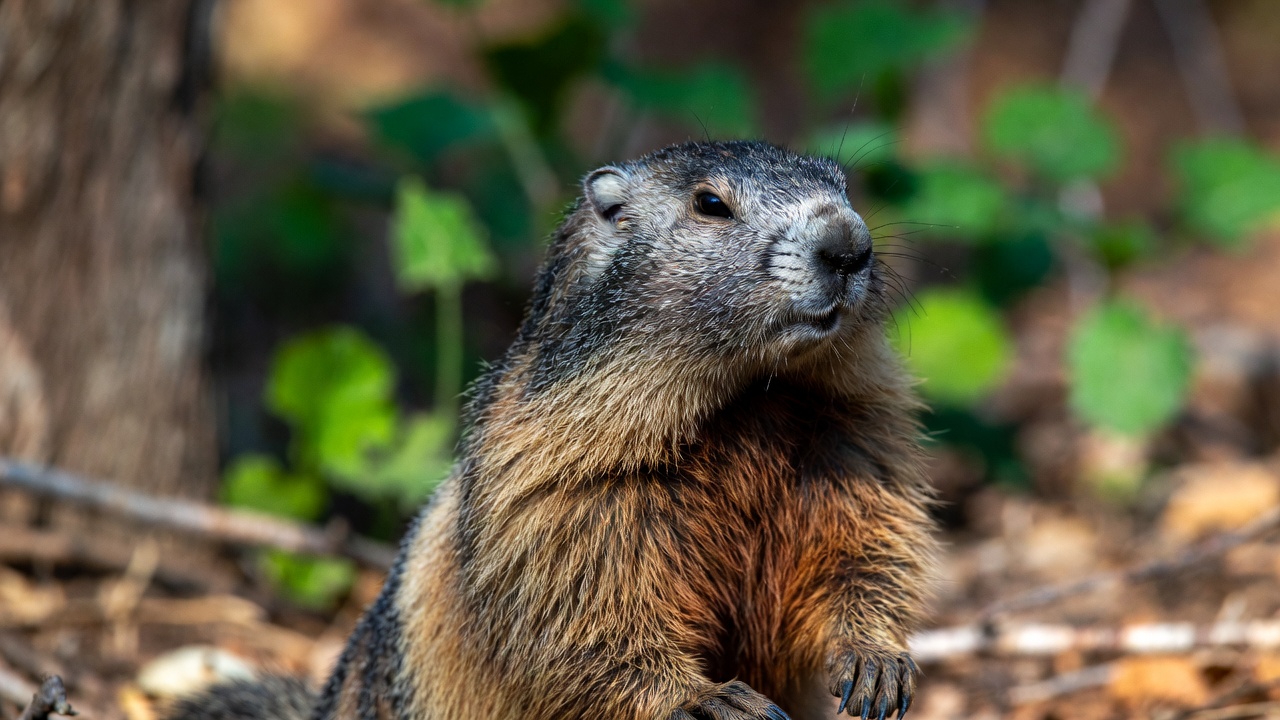
Understanding the natural history of groundhog hibernation adds scientific depth to the folkloric tradition. Groundhogs (Marmota monax) are among North America’s few true hibernators, and their biology connects intriguingly to the celebration’s timing.
The Groundhog’s Winter Cycle:
| Stage | Timing | Body Changes |
|---|---|---|
| Pre-hibernation | September-October | Intense eating; weight nearly doubles |
| Deep hibernation | November-January | Heart rate drops from 80 to 5 beats/minute; body temperature falls to 35-40°F |
| Periodic arousal | Throughout winter | Brief awakenings every few weeks to urinate, reposition |
| Male emergence | Late January-February | Males wake first; begin seeking mates |
| Full emergence | March-April | Both sexes fully active; breeding season peaks |
Here’s the biologically fascinating part: male groundhogs naturally begin emerging in late January to early February, not to check the weather but to survey potential mates before females awaken. The folk tradition unknowingly aligned with actual groundhog behavior!
This synchronicity between natural phenomena and cultural practice is what folklorists call “ecological embedding”—traditions that, whether by design or coincidence, reflect genuine environmental patterns.
8. Indigenous North American Animal Weather Prediction Traditions Before European Contact
While Groundhog Day as we know it arrived with European settlers, Indigenous North American peoples had their own rich traditions of animal-based weather prediction. Understanding these traditions provides important context for how different cultures observe and interpret the natural world.
Many Eastern Woodland tribes, who shared territory with groundhogs, incorporated animal behavior into seasonal knowledge:
- Lenape (Delaware) Tradition: Observed the thickness of animal fur and the behavior of bears emerging from hibernation as spring indicators
- Iroquois Confederacy: Used the timing of specific bird migrations and animal movements in agricultural planning
- Anishinaabe Wisdom: The phrase “Makwa Giizis” (Bear Moon) for February reflects attention to bear emergence patterns
Key Differences from European Traditions:
| Aspect | European Tradition | Indigenous Approaches |
|---|---|---|
| Purpose | Single-day prediction | Ongoing seasonal observation |
| Method | Shadow/no shadow binary | Complex behavioral interpretation |
| Animals | Single designated species | Multiple species considered |
| Timeframe | Point prediction | Pattern recognition over weeks |
Indigenous traditions emphasized accumulated ecological knowledge rather than singular prophetic moments. This represents a fundamentally different epistemological approach—one that modern climatologists actually consider more scientifically valid.
9. Strange and Unusual Groundhog Day Superstitions and Rituals Still Practiced Today
Beyond the main shadow ceremony, Groundhog Day has accumulated a fascinating collection of regional superstitions, folk beliefs, and peculiar practices. These represent living folklore—traditions that continue to evolve.
Documented Groundhog Day Folk Practices:
- The Secret Language of Groundhogese: In Punxsutawney, Phil supposedly communicates his prediction in “Groundhogese,” translated only by the Inner Circle—a group of men in top hats who tend to Phil year-round
- Protective Amulets: Some Pennsylvania Dutch families kept groundhog teeth or claws as protection against late winter hardship
- Groundhog Day Foods: Traditional celebrations included:
- Groundhog meat prepared as “groundhog stew” (now largely ceremonial)
- Punches and ciders consumed at dawn gatherings
- German-influenced pastries and doughnuts
- Weather Diaries: Dedicated observers maintain decades-long journals comparing Phil’s predictions to actual weather outcomes—a practice blending scientific method with folk belief
- The Groundhog Lodge Tradition: Pennsylvania Dutch communities hold Grundsau Lodges where participants must speak only Pennsylvania Dutch dialect; speaking English incurs fines used for charity
These practices demonstrate what folklorists call “ritual elaboration”—the tendency for traditions to accumulate additional elements over time, becoming more complex and community-specific.
10. The Future of Groundhog Day: How Climate Change Affects This Beloved American Tradition
As a folklorist studying living traditions, I must address how climate change is affecting Groundhog Day both practically and symbolically. This ancient celebration about seasonal transition now exists in an era of increasingly unpredictable weather patterns.
Observable Impacts:
- Shifting Hibernation Patterns: Warmer winters have caused some groundhog populations to emerge earlier or hibernate less deeply, potentially disrupting the biological basis of the tradition’s timing
- Reduced Snow Events: Iconic images of snow-covered Gobbler’s Knob ceremonies are becoming less reliable
- Prediction Meaning: When “six more weeks of winter” might mean mild temperatures rather than severe cold, the prediction’s significance shifts
Symbolic Adaptations:
Some communities have begun using Groundhog Day as an occasion for environmental education, connecting the traditional concern with seasonal change to contemporary climate awareness. This represents what folklorists call “tradition as vehicle”—using established cultural practices to communicate new messages.
The celebration’s survival, however, seems assured precisely because it serves psychological rather than meteorological needs. Groundhog Day expresses our collective desire for winter’s end, our playful relationship with nature’s uncertainty, and our need for communal celebration during winter’s depths.
Conclusion: Why Groundhog Day Traditions Still Matter in Modern America
Groundhog Day endures not despite its irrationality but because of it. In an age of satellite weather prediction and climate modeling, we still gather before dawn to watch a rodent for signs of spring. This says something profound about human nature.
From its roots in Celtic and Germanic Europe, through Pennsylvania Dutch adaptation, to Hollywood transformation, Groundhog Day demonstrates how folklore functions as living culture—constantly adapting, absorbing new meanings, and serving evolving community needs.
Whether Phil sees his shadow or not, the tradition fulfills its true purpose: bringing communities together in late winter’s darkness to share hope, humor, and the timeless human longing for warmth’s return.
What’s your favorite Groundhog Day tradition or memory? Share in the comments below!