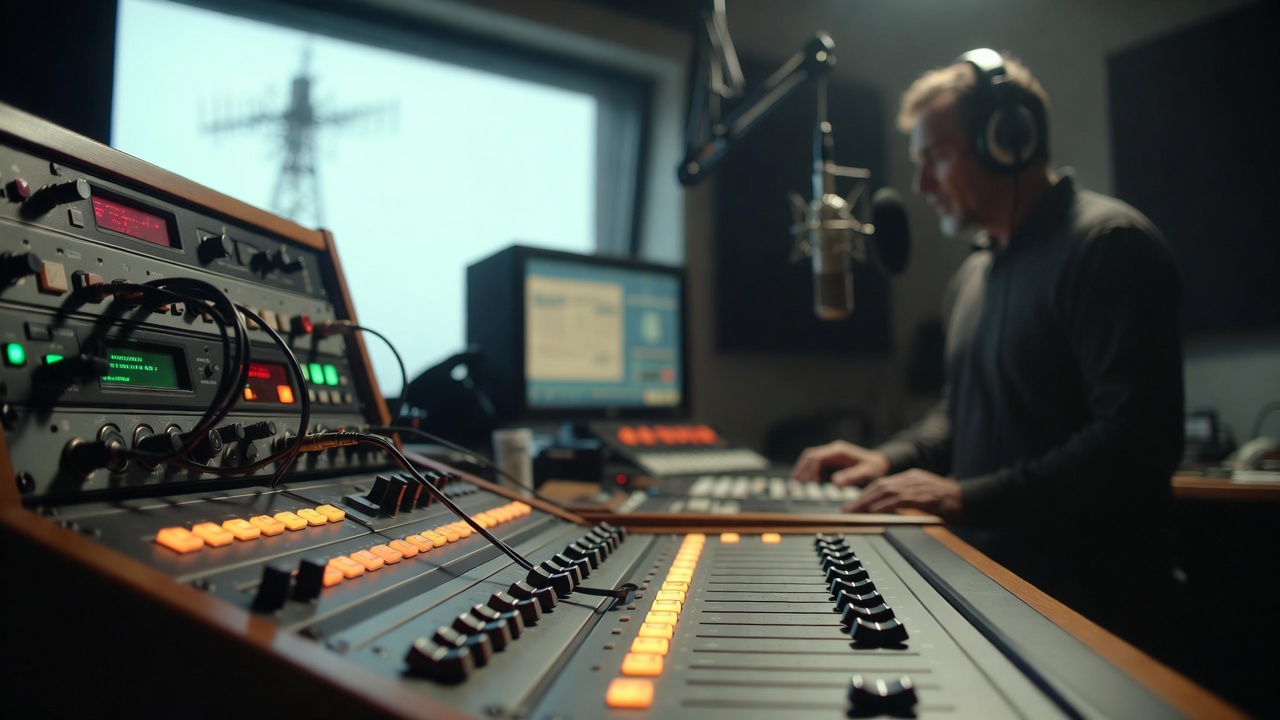
Every year on February 13, millions of people across the globe pause to honor the medium that has shaped how humanity receives news, shares stories, and connects across borders. World Radio Day 2026 carries a theme that could not be more timely: “Radio and Artificial Intelligence.” This theme, chosen by UNESCO, challenges us to reflect on how AI can serve as a tool for broadcasters — not a replacement for the human voices we trust.
Radio is not a relic. It is alive, evolving, and still remarkably powerful. According to data compiled by the World Radio Alliance, radio reaches up to 90% of the population in key markets and remains the most trusted medium worldwide. In the United States alone, approximately 293 million people listen to radio every week — more than the number of weekly Facebook users, according to Nielsen research. In the United Kingdom, Q4 2025 RAJAR figures confirmed that 50 million adults tune in weekly, with over 1 billion weekly listening hours recorded, as reported by RadioToday.
These numbers tell a clear story. Radio is not fading. It is adapting. And World Radio Day is the perfect moment to celebrate this resilience.
Whether you are a broadcaster, a teacher, a student, a community leader, or simply someone who loves the crackle and warmth of a live broadcast, this guide offers ten practical, meaningful, and fun ways to celebrate World Radio Day on February 13, 2026. Each suggestion aligns with this year’s “Radio and AI” theme while honoring the traditions that make radio irreplaceable.
1. How to Tune In to Special World Radio Day 2026 Broadcasts Around the World
The simplest and most powerful way to celebrate World Radio Day is also the most direct: turn on the radio.
On February 13 each year, radio stations around the planet prepare special programming. Some stations broadcast tributes to iconic moments in radio history. Others host live panel discussions about the future of the medium. In 2026, many stations are producing segments specifically about the intersection of radio and artificial intelligence.
UNESCO maintains a global interactive map where radio stations, media outlets, and organizations register their World Radio Day activities. As of early February 2026, more than 370 stations and entities from every inhabited continent had already signed up. You can use this map to discover what stations near you — or in a country that interests you — are planning for the day.
What to Listen For
Here is what makes February 13 broadcasts different from ordinary programming:
| Broadcast Type | Description | Where to Find It |
|---|---|---|
| Historical retrospectives | Stations replay iconic broadcasts from their archives | National public broadcasters (BBC, NPR, ABC, NHK) |
| AI and radio discussions | Panels exploring how AI tools are changing production | UNESCO partner stations on the interactive map |
| Cross-border link-ups | Live connections between stations in different countries | Community and university radio stations |
| Listener call-in shows | Audiences share their favorite radio memories | Local FM and AM stations |
| Youth-produced segments | Young broadcasters take over the microphone | Campus radio and educational stations |
If you do not have a traditional radio receiver, do not worry. Most stations now stream online. Apps like TuneIn, Radio Garden, and iHeartRadio give you access to thousands of stations worldwide from your phone or laptop. Radio Garden, in particular, lets you spin a virtual globe and click on any green dot to hear a live broadcast from that location. It is a beautiful way to experience the diversity of radio on World Radio Day.
Pro tip: Set a reminder for the morning of February 13. Pick three stations from three different continents. Listen for fifteen minutes each. You will hear three different languages, three different styles, and three different perspectives — all delivered through the same enduring medium.
2. Register Your Station on the UNESCO World Radio Day Interactive Map for Free
If you work at a radio station, manage a community broadcast, or run a podcast with live-streaming capabilities, registering on the UNESCO World Radio Day map is one of the most effective ways to participate in 2026.
The map serves as a global directory of broadcasters celebrating the day. It is free to join, and the registration process is straightforward through UNESCO’s website. Once registered, your station appears on the map alongside hundreds of others from around the world.
Why Registration Matters
Registration is not just symbolic. It opens doors. According to UNESCO’s official offers page for World Radio Day 2026, registered stations gain access to several practical benefits:
- Free AI tools designed for radio. Technology companies partnering with UNESCO for 2026 are offering broadcasters the chance to test AI-powered tools for transcription, content indexing, and audience analytics.
- Free training sessions. UNESCO partners are hosting capacity-building workshops to help radio professionals engage with AI in an ethical and effective way.
- Visual resources in six UN languages. Stations receive free graphics, logos, and promotional materials to use on air and on social media.
- An AI Roadmap document. This guide contains 12 practical recommendations to help stations use AI responsibly and avoid common pitfalls.
For community radio stations in developing regions, these resources are especially valuable. Many smaller stations operate on tight budgets with limited access to new technology. World Radio Day offers a rare chance to access professional tools and training at no cost.
The map also facilitates cross-border collaborations. UNESCO encourages stations to use the map to find partner stations in other countries. These collaborations can involve exchanging programs, sharing sound archives, or even producing joint broadcasts. Some partnerships that started on World Radio Day have continued year-round, creating lasting bonds between stations that would never have met otherwise.
3. Explore the 2026 Theme: How Artificial Intelligence Is Changing Radio Broadcasting
The 2026 theme — “Radio and Artificial Intelligence: AI Is a Tool, Not a Voice” — deserves more than a passing mention. It deserves a deep conversation. And World Radio Day is the right moment to have it.
UNESCO chose this theme to address a reality that every media professional now faces. AI is transforming how content is produced, distributed, and consumed. But the organization draws a clear line. As UNESCO’s official World Radio Day page states: “Technology alone does not build trust. Radio broadcasters do.”
What AI Can Do for Radio Right Now
The potential applications are real and growing:
Automated transcription and translation. AI tools can transcribe hours of spoken content in minutes. For multilingual broadcasters, this means programs in one language can be quickly subtitled or summarized in another. This is a game-changer for stations that serve diverse linguistic communities.
Archive management. Radio stations possess vast collections of recordings — decades of interviews, music, news reports, and cultural programming. Much of this material sits in storage because organizing it manually would take years. AI can index these archives by keyword, speaker, topic, and date, breathing new life into historical content that would otherwise remain buried.
Audience analytics. AI-powered analytics tools can help stations understand when their listeners tune in, what topics generate the most engagement, and how listening patterns shift over time. These insights help small stations make smarter decisions about programming without hiring expensive consultants.
Accessibility improvements. AI can generate real-time captions for online radio streams, making broadcasts accessible to deaf and hard-of-hearing audiences. It can also produce audio descriptions of visual content shared alongside radio programming on social media.
What AI Should Not Do
UNESCO’s 2026 messaging is careful to stress boundaries. AI should not replace human editorial judgment. It should not generate news content without human oversight. It should not be used to create synthetic voices that mislead listeners about who is speaking.
The AI Roadmap released for World Radio Day 2026 provides 12 specific recommendations for ethical AI use in radio. Among the key principles: transparency about when and how AI is used, protection of journalistic integrity, and commitment to serving the public interest above all.
How to Celebrate This Theme
Here are some concrete actions tied to this theme:
- Host a listening party focused on programs that discuss radio and AI. Invite friends, colleagues, or students to listen together and discuss what they hear.
- Write a letter to your local station sharing your thoughts on AI in broadcasting. Stations value listener feedback, especially on issues this important.
- Share UNESCO’s AI Roadmap on social media. Tag your favorite radio stations and ask how they plan to approach AI.
- Read about the history of technology in radio. Every generation has faced a “new technology” moment — from the transition from AM to FM, to the rise of satellite radio, to the arrival of internet streaming. AI is the latest chapter in a long story of adaptation.
4. Support Your Local Community Radio Station on World Radio Day 2026
Community radio is the heartbeat of local broadcasting. These stations, often run by volunteers with minimal budgets, serve neighborhoods, towns, and rural areas that commercial broadcasters overlook. They broadcast in local languages. They cover local issues. They give a microphone to voices that might otherwise go unheard.
On World Radio Day, supporting your community radio station is one of the most meaningful actions you can take.
The Global Reach of Community Radio
The numbers are striking. South Africa alone has more than 150 community radio stations. Mali has over 86 community stations, many serving rural populations within a 100-kilometer radius. In India, the community radio sector has grown rapidly, with hundreds of stations operating in local and indigenous languages across the country.
According to research cited by the United Nations Africa Renewal magazine, at least 75% of households in developing countries have access to radio. This makes radio the most accessible mass medium on Earth, far ahead of television or the internet in many regions.
Community radio matters because it fills gaps that no other medium can. As Lifeline Energy notes, radio goes where newer technologies cannot — beyond electricity, beyond mobile signals, beyond literacy. In communities where reading rates are low and internet access is scarce, radio delivers life-saving information about health, agriculture, weather, and civic participation.
How to Support Community Radio on February 13
There are many practical ways to help:
- Donate. Even a small financial contribution can cover the cost of a day’s broadcasting. Many community stations operate on annual budgets of less than $35,000, as documented in a CIMA report on local radio stations in Africa.
- Volunteer your time. Stations often need help with everything from answering phones to editing audio. If you have media skills, offer to produce a segment.
- Share their content on social media. A single share can introduce a community station to an entirely new audience.
- Attend a live event. Many community stations host open houses, concerts, or public broadcasts on World Radio Day. Show up. Your presence matters.
- Write to local officials. Advocate for policies that support community broadcasting, including funding, spectrum access, and legal protections.
Community radio is not a charity case. It is a civic institution. Supporting it on World Radio Day is an investment in local democracy and cultural preservation.
5. Organize a World Radio Day Listening Party at School, Work, or Home
A listening party is one of the simplest and most enjoyable ways to celebrate World Radio Day. It requires no special equipment, no budget, and no expertise. All you need is a radio — or a phone with internet access — and a group of people willing to listen together.
Why Listening Parties Work
In an age of personalized playlists and on-demand content, there is something powerful about the shared experience of listening together. Radio is, at its core, a communal medium. Before television, before the internet, families gathered around the radio. Communities tuned in to the same stations at the same time. This shared listening created a sense of connection that individualized media cannot replicate.
A World Radio Day listening party recreates that experience. It brings people into the same room — physical or virtual — to hear the same voices, at the same time, and to talk about what they heard.
How to Plan a Listening Party
Step 1: Choose your format. Will this be a casual gathering at home? A structured classroom activity? A team-building event at the office? The format shapes the experience.
Step 2: Select your stations. Use the UNESCO interactive map or Radio Garden to find stations broadcasting special World Radio Day content. Pick two or three from different countries for variety.
Step 3: Prepare discussion questions. Here are a few to get the conversation started:
- What surprised you about what you heard?
- Did the broadcast change how you think about radio?
- How does radio in another country differ from what you are used to?
- What role should AI play in radio, based on what you heard?
Step 4: Add food and atmosphere. This is a celebration, after all. Play some music before the broadcast begins. Serve snacks themed to the countries whose stations you are listening to. Make it fun.
Step 5: Share the experience. Post photos or reflections on social media using the hashtag #WorldRadioDay. Tag the stations you listened to. Your engagement helps raise the profile of the event and encourages others to participate next year.
Listening Parties for Schools
Teachers can turn a listening party into a rich learning activity. Ask students to compare radio news coverage across different countries. Have them research the history of radio in a specific region. Challenge them to write a short script for a radio segment and record it. These exercises build media literacy, critical thinking, and cultural awareness — skills that matter more than ever in the age of AI-generated content.
6. Create Your Own Radio Program or Podcast for World Radio Day 2026
You do not need to work at a radio station to make radio. On World Radio Day, one of the most creative ways to participate is to produce your own audio content — whether that is a traditional radio segment, a podcast episode, or a simple voice recording shared on social media.
Why Creating Matters
The act of creating radio content connects you to the medium in a way that listening alone cannot. When you plan a segment, write a script, choose music, and speak into a microphone, you begin to understand why radio has endured for more than a century. You experience the discipline of working within a time limit. You feel the intimacy of speaking to an audience you cannot see. You discover how much care goes into the broadcasts we often take for granted.
Ideas for Your World Radio Day Program
You do not need to produce a full hour of programming. Even a short segment — five to ten minutes — can be meaningful. Here are some ideas:
An interview with someone who loves radio. Talk to a grandparent about listening to radio as a child. Interview a local DJ about their favorite moment on air. Ask a community radio volunteer what motivates them.
A personal radio memoir. Record yourself sharing a memory connected to radio. Maybe it was a song you first heard on the car radio. Maybe it was a news broadcast that changed how you saw the world. These personal stories are the soul of radio.
A themed music mix. Curate a playlist of songs that have been important to radio history. Introduce each track with a brief explanation of its significance.
A mini-documentary about your local station. Visit a station near you. Record the sounds of the studio — the hum of equipment, the shuffle of papers, the moment before a broadcast goes live. These atmospheric recordings capture the unique texture of radio.
An AI experiment. In honor of the 2026 theme, try using an AI tool to help with one aspect of your production — perhaps transcription, editing, or research. Then discuss in your segment what the tool did well and where human judgment was still needed.
Tools You Need
You do not need expensive equipment. A smartphone with a voice recording app is enough to get started. Free editing software like Audacity or GarageBand can help you polish your recording. If you want to share your creation widely, platforms like Anchor (now part of Spotify) or SoundCloud make distribution simple.
The point is not perfection. The point is participation.
7. Use Social Media to Raise Awareness About World Radio Day February 13 2026
Social media and radio are not rivals. They are allies. On World Radio Day, social platforms become amplifiers — spreading the message of radio’s importance to audiences who might not otherwise think about the medium.
Hashtags and Campaigns
The primary hashtag is #WorldRadioDay. UNESCO and its partners promote this hashtag across all platforms. In previous years, the hashtag has trended in multiple countries, generating millions of impressions.
For 2026, the theme-specific hashtag #RadioAndAI is also circulating widely. Using both hashtags increases the visibility of your posts and connects them to the global conversation.
What to Post on World Radio Day
Here is a content calendar to keep your social media active throughout the day:
| Time | Content Idea | Platform |
|---|---|---|
| Morning | Share a childhood radio memory with a photo of an old radio set | Instagram, Facebook |
| Midday | Post a short video of yourself tuning into a station from another country via Radio Garden | TikTok, Instagram Reels |
| Afternoon | Share a quote from a favorite radio host or broadcaster | X (Twitter), Threads |
| Evening | Write a thoughtful post about why radio matters in the age of AI | LinkedIn, Facebook |
| All day | Repost content from UNESCO’s official World Radio Day accounts | All platforms |
Engaging with Radio Stations Online
Many stations run special social media campaigns on February 13. They might post behind-the-scenes photos, host live Q&A sessions with their presenters, or ask listeners to share their stories. Engage with these posts. Comment. Share. React. The algorithms that govern social media reward engagement, and every interaction helps radio stations reach new audiences.
If you have a blog or website, consider writing a post about World Radio Day and linking to the UNESCO celebration page. These backlinks contribute to the visibility of the event in search results, which in turn helps more people discover it.
A Note on Authenticity
In a year when the theme is artificial intelligence, there is a certain irony in using social media — platforms deeply shaped by algorithms — to promote a medium valued for its human authenticity. Lean into that irony. Use your social media posts to make a case for why human-created, human-delivered content matters. Share real stories. Use your own voice. The contrast between algorithmic feeds and genuine human expression is itself a powerful argument for radio.
8. Discover the History of World Radio Day and Why February 13 Was Chosen
Understanding the history of World Radio Day deepens your appreciation for the celebration. It also gives you excellent material for conversations, social media posts, and educational activities on February 13.
The Origins
World Radio Day did not exist before 2011. That year, the Member States of UNESCO proclaimed February 13 as World Radio Day. The following year, in 2012, the United Nations General Assembly formally adopted the observance through Resolution A/RES/67/124.
But why February 13? The date marks the anniversary of the founding of United Nations Radio in 1946. On that day, the UN launched its own radio service to broadcast news and information to the world. It was an act of faith in radio’s power to cross borders, languages, and ideologies.
The first official World Radio Day was celebrated on February 13, 2012. Since then, every year has carried a distinct theme chosen by UNESCO to highlight a pressing issue facing the medium. Here is a look at the themes from recent years:
| Year | Theme |
|---|---|
| 2026 | Radio and Artificial Intelligence |
| 2025 | Radio and Climate Change |
| 2024 | Radio: A Century Informing, Entertaining and Educating |
| 2023 | Radio and Peace |
| 2022 | Radio and Trust |
| 2021 | New World, New Radio |
| 2020 | We Are Diversity, We Are Radio |
| 2019 | Dialogue, Tolerance and Peace |
Source: UNESCO World Radio Day Past Editions
Each theme builds on the last, creating a running conversation about radio’s role in society. The progression from trust (2022) to peace (2023) to a century of service (2024) to climate change (2025) and now to artificial intelligence (2026) reflects the evolving challenges and opportunities facing the medium.
Radio’s Deeper History
Radio itself has a history stretching back to the late 1800s and early 1900s. The first commercial radio broadcasts began in the 1920s, and within a decade, radio had transformed entertainment, journalism, and politics. It was through radio that millions heard the news of world wars, the voices of civil rights leaders, the sounds of rock and roll, and the results of elections.
In many parts of the world, radio was the first electronic medium to reach ordinary people. It came before television. It came before the internet. In rural Africa, South Asia, and Latin America, it often came before electricity itself — powered by batteries and later by hand-crank generators.
This history is not abstract. It lives in every broadcast. When you celebrate World Radio Day, you are honoring more than a technology. You are honoring a tradition of human connection that spans a century and touches every corner of the planet.
9. Attend a World Radio Day 2026 Event or Workshop in Your City
World Radio Day is not only celebrated on the airwaves. In cities around the world, organizations host in-person events — from panel discussions and workshops to concerts and open-studio tours. Attending one of these events is a wonderful way to mark the day.
Major Events in 2026
One of the most notable events planned for 2026 is the World Radio Day celebration in Milan, organized by Radio Speaker. Hosted at the Talent Garden Calabiana, this free event runs for nine hours of live streaming and features prominent Italian radio figures. The program includes exclusive interviews, training sessions, and round tables focused on how AI can support radio without replacing the human touch. The Milan event was scheduled for March 9, 2026, to avoid conflicts with the Winter Olympics and the Sanremo Festival, ensuring maximum attendance.
Beyond Milan, the kinds of events you can look for in your own city include:
Panel discussions. Universities, media organizations, and UNESCO national commissions often host panels exploring the year’s theme. In 2026, these panels typically feature broadcasters, AI researchers, media ethicists, and listeners in conversation.
Open-studio tours. Some radio stations invite the public into their studios on World Radio Day. These tours offer a rare behind-the-scenes look at how radio is made — from the soundproof booths to the mixing boards to the antenna towers.
Workshops and training sessions. UNESCO and its partners are offering free AI training sessions for broadcasters in 2026, as noted on the official offers page. Even if you are not a professional broadcaster, these workshops can be fascinating and educational.
Community concerts and cultural events. In many countries, World Radio Day is celebrated with live music, storytelling performances, and cultural showcases. These events highlight the role radio plays in preserving and promoting local culture.
School and university events. Educational institutions are increasingly using World Radio Day as a teaching moment. Look for events at local schools, colleges, and libraries.
How to Find Events Near You
Start with the UNESCO interactive map. Search for registrations in your country or city. Check the websites and social media accounts of your local radio stations. Contact your national UNESCO commission. Search for World Radio Day events on platforms like Eventbrite and Meetup.
If you cannot find an event near you, create one. Even a small gathering — a listening party in a café, a lunchtime discussion at work, a school assembly — counts as a World Radio Day celebration. The spirit of the day is participation, not scale.
10. Advocate for Radio as a Lifeline in Emergency and Disaster Situations
World Radio Day is a celebration, but it is also a call to action. One of the most important roles radio plays in the modern world is as a lifeline during emergencies and disasters. On February 13, take the opportunity to advocate for policies and investments that strengthen radio’s emergency broadcasting capabilities.
Why Radio Is Essential in Crises
When hurricanes knock out cell towers, when earthquakes destroy internet infrastructure, when floods cut off power to entire regions — radio keeps broadcasting. Battery-powered and hand-crank receivers continue to work when everything else fails. Radio signals travel vast distances. They do not require literacy. They reach communities that are physically cut off from other forms of communication.
The 2016 theme of World Radio Day was specifically “Radio in Times of Emergency and Disaster”, recognizing this critical function. Since then, every major natural disaster has reinforced the message. During the COVID-19 pandemic, community radio stations across sub-Saharan Africa continued broadcasting public health information even as other media struggled to reach rural audiences, as documented by the Center for International Media Assistance.
The AI Connection
The 2026 theme adds a new dimension to this conversation. AI tools can help emergency broadcasters in several ways:
- Real-time translation. During cross-border disasters, AI can rapidly translate emergency information into multiple languages.
- Automated alerts. AI systems can monitor weather data and seismic activity, automatically generating alerts for radio broadcasters to verify and transmit.
- Archive analysis. AI can analyze recordings from past disasters to identify best practices in emergency communication.
- Accessibility. AI-generated captions and sign-language interpretation can make emergency broadcasts accessible to people with hearing impairments.
But the core message of World Radio Day 2026 applies here too. AI is a tool, not a voice. In an emergency, people need to hear a trusted human voice — someone from their community, speaking their language, understanding their situation. No AI can replicate that trust.
How to Advocate
On World Radio Day 2026, consider these advocacy actions:
- Write to your elected officials about the importance of maintaining and funding emergency broadcasting infrastructure.
- Share stories of how radio saved lives during past disasters. Personal accounts are powerful advocacy tools.
- Support organizations that provide radio equipment to disaster-prone communities. Groups like Lifeline Energy distribute solar-powered and wind-up radios to communities in Africa and beyond.
- Encourage your local station to update its emergency broadcasting plan. Ask whether they have incorporated AI tools where appropriate while maintaining human editorial control.
- Promote media literacy. Help people in your community understand why radio matters in emergencies and how to access emergency broadcasts.
Why World Radio Day Matters More Than Ever in 2026
World Radio Day is not just a date on the calendar. It is a reminder. It reminds us that in a world saturated with screens, algorithms, and on-demand content, there is still a medium that speaks to everyone. It crosses every border. It overcomes every barrier. It requires nothing but a receiver and a willingness to listen.
The 2026 theme — Radio and Artificial Intelligence — forces us to think carefully about the future. AI will change radio, just as it is changing every other industry. But the question is not whether AI will be used. The question is how. Will it serve the public interest? Will it strengthen trust? Will it empower the voices that need to be heard most?
The answer depends on all of us — broadcasters, listeners, policymakers, and citizens. World Radio Day gives us one day each year to engage with these questions together. But the conversation does not end on February 13. The habits you build, the stations you support, and the advocacy you undertake can echo through the rest of the year.
Here is a quick summary of the ten ways to celebrate:
| # | Way to Celebrate | Difficulty | Who It’s For |
|---|---|---|---|
| 1 | Tune in to special broadcasts | Easy | Everyone |
| 2 | Register your station on the UNESCO map | Easy | Broadcasters |
| 3 | Explore the “Radio and AI” theme | Medium | Media professionals, students |
| 4 | Support your local community radio station | Easy | Everyone |
| 5 | Organize a listening party | Medium | Teachers, families, workplaces |
| 6 | Create your own radio program or podcast | Medium-Hard | Creators, students |
| 7 | Use social media to raise awareness | Easy | Everyone with a social account |
| 8 | Learn the history of World Radio Day | Easy | History lovers, educators |
| 9 | Attend a local event or workshop | Medium | Everyone |
| 10 | Advocate for radio in emergencies | Medium | Citizens, policymakers |
Frequently Asked Questions About World Radio Day 2026
What is World Radio Day? World Radio Day is an international observance proclaimed by UNESCO in 2011 and adopted by the United Nations General Assembly in 2012. It is celebrated every year on February 13 to honor radio as a medium for education, information, and cultural connection.
When is World Radio Day 2026? World Radio Day 2026 falls on Friday, February 13, 2026.
What is the theme for World Radio Day 2026? The official theme is “Radio and Artificial Intelligence.” The central message is that AI is a tool, not a voice — emphasizing ethical and responsible AI use in radio broadcasting.
Why is World Radio Day celebrated on February 13? February 13 marks the anniversary of the creation of United Nations Radio in 1946. UNESCO chose this date to honor the founding of the UN’s own radio service.
How can I participate in World Radio Day? There are many ways to participate. You can listen to special broadcasts, register on the UNESCO map, support community radio, organize a listening party, create your own content, or advocate for radio’s role in emergency communication. This guide covers ten specific ideas in detail.
Where can I find official World Radio Day resources? Visit the UNESCO World Radio Day 2026 official page for the media kit, visual resources, the AI Roadmap, and links to partner offers and the interactive map.
Is World Radio Day only for radio professionals? Absolutely not. World Radio Day is for everyone. Listeners, students, teachers, community leaders, families, and anyone who values the power of radio is invited to participate.
Final Thoughts: The Voice That Never Fades
There is something almost magical about radio. You turn a dial or press a button, and a voice enters the room. It might be someone reading the news a thousand miles away. It might be a DJ playing a song you have not heard in years. It might be a farmer in Mali sharing advice on the harvest, or a volunteer in Uganda reading health information to a community that has no other source.
That voice is human. It always has been. And on World Radio Day 2026, as we grapple with the possibilities and risks of artificial intelligence, that simple fact matters more than ever.
AI will make radio more efficient. It will make archives searchable. It will make translations faster. It will make broadcasts more accessible. These are good things. But the trust that listeners place in radio is not built by algorithms. It is built by real people, doing real work, serving real communities.
On February 13, 2026, celebrate that work. Turn on the radio. Listen. Share what you hear. Support the stations that serve your community. And remember: in a world of infinite digital noise, the warmth of a human voice on the radio remains one of the most powerful sounds on Earth.
Happy World Radio Day 2026. 🎙️