Every year on February 4, millions of people across the globe pause to reflect, remember, and rally behind a single cause: the fight against cancer. World Cancer Day 2026 arrives at a moment when the disease continues to claim nearly 10 million lives each year, according to the World Health Organization. Yet it also arrives at a time of extraordinary hope. Medical breakthroughs, stronger global coalitions, and the voices of survivors are rewriting what it means to live with, and beyond, cancer.
At the heart of this annual movement are the slogans — short, sharp, and deeply human phrases that give shape to a shared mission. A great slogan does more than decorate a poster. It sparks conversation. It shifts policy. It reminds a patient sitting alone in a waiting room that the world has not forgotten them.
This year’s official theme, “United by Unique,” is the rallying cry of the Union for International Cancer Control (UICC), the organization that has led World Cancer Day since its founding in 2000. But it is far from the only message that matters. In this guide, we explore 10 powerful World Cancer Day slogans — past, present, and purpose-driven — that continue to inspire action in 2026. We look at where they came from, what they mean on the ground, and how you can use them to make a real difference.
Why World Cancer Day Slogans Matter More Than Ever in 2026
Before we dive into the slogans themselves, it helps to understand why these words carry such weight in 2026.
The global cancer burden is not shrinking. In 2022, roughly 20 million new cancer cases were diagnosed worldwide, and approximately 9.7 million people died from the disease, based on GLOBOCAN estimates published by the International Agency for Research on Cancer (IARC). By 2050, that number of new cases is projected to climb to 35 million if current trends hold, driven largely by aging populations and population growth, according to the American Cancer Society’s Global Cancer Facts & Figures, 5th Edition.
In the United States alone, an estimated 2,041,910 new cancer cases and 618,120 cancer deaths were projected for 2025, per the American Cancer Society’s annual statistics report. Cancer mortality rates have been declining steadily — averting nearly 4.5 million deaths since 1991 — thanks to reduced smoking, earlier detection, and improved treatment. But alarming disparities persist across racial, ethnic, and socioeconomic lines.
Here is the uncomfortable truth: between 30% and 50% of all cancers are preventable through lifestyle changes and evidence-based strategies, according to the WHO. Eliminating tobacco use alone could prevent roughly one in four cancer deaths — approximately 2.6 million deaths per year, as noted by the American Cancer Society.
Slogans cut through this complexity. They distill years of research, advocacy, and lived experience into a phrase that a teenager in Jakarta, a policymaker in Nairobi, or a caregiver in London can carry with them. They are the common language of a global movement.
World Cancer Day 2026 Theme: “United by Unique” — The Official Campaign Slogan
Slogan #1: “United by Unique”
The UICC launched the “United by Unique” campaign as a three-year initiative running from 2025 through 2027. It represents a fundamental shift in how the global cancer community talks about care. Rather than treating cancer as a purely clinical condition defined by tumor type and stage, this slogan insists that every patient is a whole person with a unique story.
What “United by Unique” Means in Practice
The core message is straightforward: every experience with cancer is different, but everyone affected by cancer shares the same goal — a world where health systems see the person before the patient.
In 2025, the campaign’s first year focused on raising awareness about the concept of people-centred care. In 2026, the UICC has shifted the emphasis toward real-world experiences. The question driving this year’s campaign is direct: What does it take to deliver cancer care that genuinely meets people’s needs?
This is not an abstract question. People-centred care means recognizing that a breast cancer patient in rural India faces entirely different barriers than one in urban Germany. It means acknowledging that income, geography, language, disability, and cultural stigma all shape how someone experiences the disease — and whether they survive it.
How the Campaign Performed in Year One
The numbers from 2025 tell a story of remarkable global engagement:
| Metric | Result |
|---|---|
| Activities and events worldwide | Over 900 in 107+ countries |
| Personal stories shared on worldcancerday.org | More than 600 (text, video, and art) |
| Social media posts with #WorldCancerDay | Over 530,000 |
| Press mentions | 30,000+ across 162 countries |
| Participants in the Upside Down Challenge | Over 1,000 |
Source: UICC World Cancer Day 2025 Impact Report
These are not just vanity metrics. Each story shared represents a person who decided to make their private pain public — to teach health systems something that spreadsheets cannot capture. The UICC has been collecting these stories alongside survey data that explores cultural and socioeconomic factors influencing care, feeding them into public policy discussions around the world.
The Upside Down Challenge Returns in 2026
One of the most creative elements of the campaign is the Upside Down Challenge. The idea is simple but powerful: participants post photos or videos of themselves upside down to symbolize how a cancer diagnosis can turn someone’s entire world on its head. Combined with a personal story and the hashtags #WorldCancerDay and #UnitedByUnique, these posts form a growing archive of human resilience.
In 2026, the challenge features updated materials and new social media filters on platforms like TikTok, making it easier for younger audiences to participate.
A companion project, “12 People. 12 Cameras. 12 Months.”, supported by Fujifilm, follows a diverse group of individuals affected by cancer over an entire year. The goal is to capture not just the medical journey, but the emotional, social, and day-to-day realities that traditional awareness campaigns often overlook.
How Past World Cancer Day Slogans Still Inspire Action Today
Great slogans do not expire. The best ones continue to shape behavior, policy, and culture long after their official campaign window closes. The following slogans, drawn from previous UICC campaigns and the broader cancer awareness community, remain powerful calls to action in 2026.
“Close the Care Gap”: Addressing Cancer Inequality Worldwide
Slogan #2: “Close the Care Gap”
This was the official World Cancer Day theme from 2022 to 2024, and it struck a nerve that still resonates. The campaign spotlighted a painful reality: where you live, how much you earn, and the color of your skin can determine whether you survive cancer.
The three-year campaign unfolded in deliberate stages. The first year (2022) focused on understanding the problem — mapping the inequities in cancer care across countries and communities. The second year (2023) shifted to building alliances and amplifying collective voices. The final year (2024) challenged those in power to prioritize cancer, develop new strategies, and allocate resources to close the gap.
Why This Slogan Still Matters in 2026
The gap has narrowed in some areas, but it has not closed. Consider these realities:
- Low- and middle-income countries (LMICs) account for the majority of cancer-related deaths globally, often because of late diagnosis and limited access to treatment.
- In the United States, Native American people bear the highest overall cancer mortality, with rates two to three times higher than White populations for certain cancers, including kidney, liver, stomach, and cervical cancers, according to Cancer Statistics, 2025.
- Black men in the U.S. have an incidence rate approximately 80% higher than Asian American and Pacific Islander men.
- Only 39% of countries surveyed by the WHO covered basic cancer management as part of their financed core health services, according to a 2024 WHO global survey.
Using this slogan in 2026 means more than acknowledging inequality. It means demanding universal health coverage that includes cancer care, funding for screening programs in underserved communities, and policy changes that remove financial barriers to treatment.
“I Am and I Will”: Personal Commitment to Cancer Prevention and Awareness
Slogan #3: “I Am and I Will”
This was the World Cancer Day theme from 2019 to 2021, and it remains one of the most personally empowering slogans the UICC has ever produced. Its genius lies in its simplicity: it turns the global fight against cancer into an individual pledge.
The slogan directly countered a dangerous belief — the idea that cancer is inevitable and that nothing ordinary people can do will make a difference. “I Am and I Will” rejected that fatalism. It told every person, regardless of their role, that their personal actions could be powerful and impactful.
How to Use “I Am and I Will” in 2026
The beauty of this slogan is that it adapts to anyone. A doctor might say: “I am a surgeon, and I will volunteer at a free screening clinic.” A teacher might say: “I am an educator, and I will teach my students about HPV vaccination.” A survivor might say: “I am living proof that early detection works, and I will share my story.”
In 2026, as the UICC campaign pushes toward action over awareness, “I Am and I Will” provides the perfect framework for turning inspiration into tangible commitments. Consider writing your own “I Am and I Will” pledge and sharing it on social media with the #WorldCancerDay hashtag.
“We Can. I Can.” — The Power of Collective and Individual Action Against Cancer
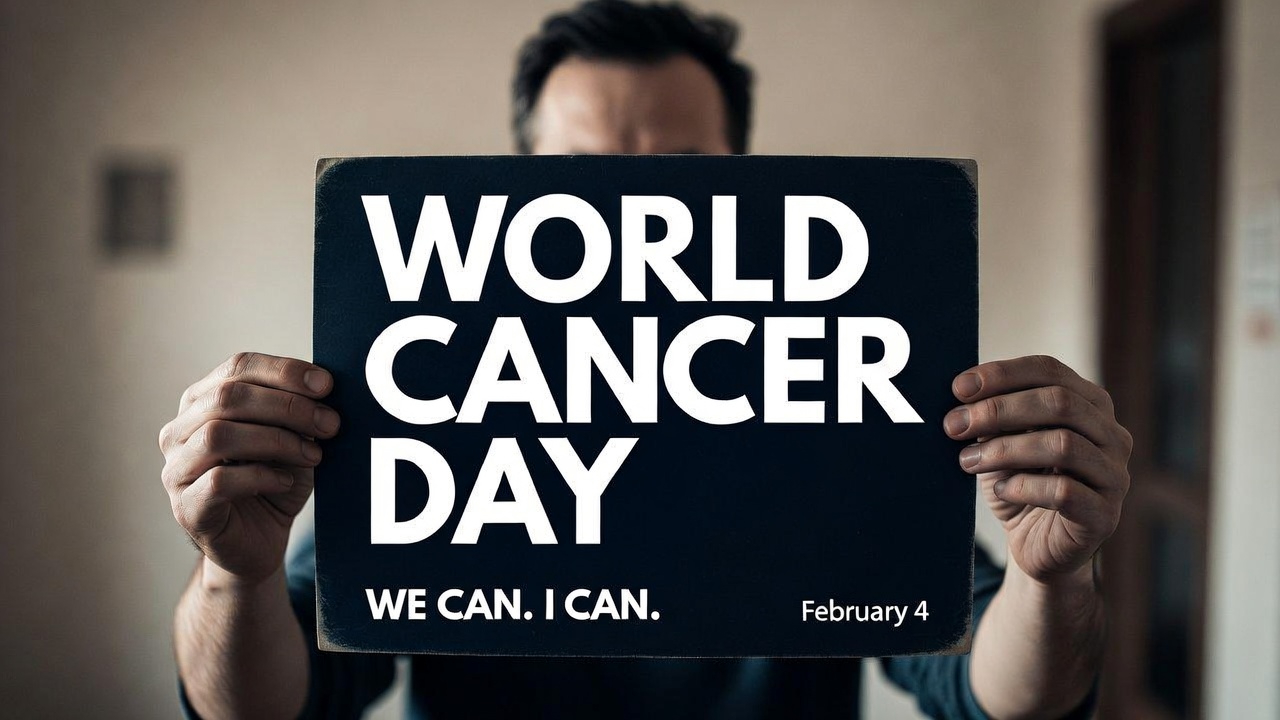
Slogan #4: “We Can. I Can.”
The official World Cancer Day tagline from 2016 to 2018, this dual-sided slogan explored how the fight against cancer operates on two levels simultaneously: the collective and the personal.
On one side, “We Can” speaks to governments, health organizations, pharmaceutical companies, and communities. It is the language of systemic change — building health infrastructure, funding research, and enacting policy. On the other side, “I Can” speaks to the individual. It is the language of personal responsibility — getting screened, quitting smoking, supporting a friend through treatment, or simply learning to recognize warning signs.
Bringing “We Can. I Can.” Into 2026
This slogan is especially relevant in a year where the “United by Unique” campaign asks what real-world people-centred care looks like. The answer is that it requires both:
- Systemic action (“We Can”): Governments must invest in cancer registries, train more oncologists in rural areas, and subsidize life-saving treatments.
- Individual action (“I Can”): Every person can schedule overdue screenings, adopt healthier habits, and donate to or volunteer with cancer organizations.
Neither side can succeed without the other. That is the enduring power of this slogan.
“Not Beyond Us”: Building Hope for a Cancer-Free Future in 2026
Slogan #5: “Not Beyond Us”
This was the World Cancer Day theme for 2015, and it carries an almost defiant optimism. At a time when many people still believed cancer was an unbeatable disease, “Not Beyond Us” declared that a world with fewer cancer deaths was not a fantasy. It was achievable.
The slogan encouraged people to believe that the knowledge, tools, and strategies to prevent, detect, and treat cancer already existed. The challenge was not scientific impossibility. The challenge was political will, funding, and equitable access.
Why “Not Beyond Us” Resonates in 2026
A decade later, that message has only grown stronger. Since 1991, the overall cancer death rate in the United States has dropped by roughly 34%, a decline that has prevented approximately 4.5 million deaths, according to the American Cancer Society. Immunotherapy, targeted therapies, and advances in precision medicine have transformed formerly fatal diagnoses into manageable conditions for millions of patients.
“Not Beyond Us” reminds people in 2026 that progress is not a given — it is earned through sustained effort. But it also reminds us that the trajectory is moving in the right direction, and that surrendering to hopelessness serves no one.
“Treat the Person, Not Just the Disease”: Why People-Centred Cancer Care Saves Lives
Slogan #6: “Treat the Person, Not Just the Disease”
This is one of the central messages of the current UICC campaign, appearing prominently as a call to action on the World Cancer Day website. It is both a medical philosophy and a moral statement.
Traditional cancer care has often focused narrowly on biology and symptoms — tumor size, cell type, treatment protocols. But cancer affects far more than the body. It disrupts mental health, financial stability, family relationships, employment, and sense of identity. A growing body of evidence shows that care models addressing these broader needs lead to better health outcomes, higher patient satisfaction, and even improved survival rates.
What People-Centred Care Looks Like on the Ground
People-centred care is not a slogan for a poster. It is a set of concrete practices:
- Involving patients in treatment decisions, not just informing them.
- Coordinating care across specialists, so patients do not fall through the cracks between oncology, mental health, pain management, and social services.
- Addressing social determinants of health, such as housing, transportation, food security, and childcare, which can make or break a patient’s ability to complete treatment.
- Extending support beyond treatment, through survivorship programs, end-of-life care, and long-term follow-up.
- Removing barriers related to geography, language, income, disability, and cultural stigma.
In 2026, the UICC is calling on governments, organizations, and institutions to make people-centred care a reality — not just a talking point. This slogan is the sharp edge of that demand.
“Early Detection Saves Lives”: The Most Actionable Cancer Awareness Slogan of All Time
Slogan #7: “Early Detection Saves Lives”
No slogan in the history of cancer advocacy has saved more lives than this one. It is not tied to a single year or campaign. It belongs to every hospital waiting room, every public health poster, and every conversation between a doctor and a reluctant patient.
The data behind it is unambiguous. Five-year survival rates for cancers caught at a localized stage are dramatically higher than for those caught after they have spread. For breast cancer, the five-year relative survival rate at the localized stage is approximately 99%. For colorectal cancer caught early, it is around 91%. For melanoma, it exceeds 99% at the localized stage. But when the same cancers are caught at a distant stage, survival rates plummet — sometimes to single digits.
Turning This Slogan Into Action in 2026
| Cancer Type | Recommended Screening | Who Should Be Screened |
|---|---|---|
| Breast cancer | Mammogram | Women aged 40+ (guidelines vary by country) |
| Cervical cancer | Pap test / HPV test | Women aged 21–65 |
| Colorectal cancer | Colonoscopy, stool tests | Adults aged 45+ |
| Lung cancer | Low-dose CT scan | High-risk adults (heavy smokers, aged 50–80) |
| Prostate cancer | PSA test (with discussion) | Men aged 50+ (earlier for high-risk groups) |
Note: Screening guidelines vary by country and organization. Always consult your healthcare provider for personalized advice.
The message for 2026 is clear: do not wait for symptoms. Many cancers are silent in their early stages. Regular screening is the single most powerful tool available to ordinary people in the fight against cancer.
“Cancer Knows No Borders, But Neither Does Hope”: Global Solidarity in the Fight Against Cancer
Slogan #8: “Cancer Knows No Borders, But Neither Does Hope”
This widely shared awareness message captures the dual nature of the cancer crisis. Cancer does not discriminate by nationality, passport, or zip code. It strikes in every country, every community, and every family. But the same interconnectedness that allows disease to spread also allows knowledge, compassion, and medical innovation to cross borders.
The Global Dimension of Cancer in 2026
Consider the geography of the disease:
- Lung cancer is the most common cancer worldwide, with 2.5 million new cases in 2022 alone, accounting for about 12.4% of all new diagnoses, according to the IARC.
- Female breast cancer ranked second globally, with approximately 2.3 million cases (11.6%).
- Colorectal cancer followed at 1.9 million cases (9.6%).
- Countries with the highest age-standardized cancer rates include Australia (462.5 per 100,000), New Zealand (427.3), and Denmark (374.7), driven partly by better detection and reporting, according to World Population Review.
- Countries with the lowest rates include Sierra Leone (35.9), Angola (76.8), and the Gambia (79.2) — but these figures likely reflect underdiagnosis, not lower actual incidence.
This slogan reminds us that hope is a shared resource. A clinical trial in the United States can save lives in Brazil. A community screening program in Kenya can serve as a model for Bangladesh. A survivor’s story posted in Arabic can give courage to a family reading it in Mandarin. The fight against cancer is, by definition, a global one.
“Prevention Is the Best Cure”: How Lifestyle Changes Reduce Cancer Risk Worldwide
Slogan #9: “Prevention Is the Best Cure”
This timeless public health message is both ancient wisdom and cutting-edge science. The WHO estimates that 30% to 50% of cancers are currently preventable through avoiding known risk factors and applying proven prevention strategies.
The leading preventable causes of cancer globally include:
- Tobacco use — responsible for roughly one in four cancer deaths worldwide
- High body mass index (obesity)
- Alcohol consumption
- Low fruit and vegetable intake
- Lack of physical activity
- Air pollution — a significant risk factor for lung cancer
- Cancer-causing infections, including HPV and hepatitis B and C, which account for approximately 30% of cancer cases in low- and lower-middle-income countries
Making Prevention Personal in 2026
Prevention can sometimes feel abstract. But breaking it down into daily choices makes it tangible:
Quit tobacco. This is the single most impactful cancer prevention measure anyone can take. It applies not just to cigarettes but also to cigars, pipes, smokeless tobacco, and secondhand smoke exposure.
Get vaccinated. The HPV vaccine can prevent cervical cancer, anal cancer, and several other cancer types. Hepatitis B vaccination reduces the risk of liver cancer. These vaccines are among the most cost-effective cancer prevention tools ever developed.
Move your body. Regular physical activity reduces the risk of several cancers, including breast, colon, and endometrial cancer. Guidelines generally recommend at least 150 minutes of moderate exercise per week.
Eat well. A diet rich in fruits, vegetables, whole grains, and lean proteins — and low in processed meats and ultra-processed foods — is associated with lower cancer risk. The World Cancer Research Fund publishes evidence-based dietary recommendations for cancer prevention.
Limit alcohol. There is no safe level of alcohol consumption when it comes to cancer risk. Even moderate drinking increases the risk of breast, liver, colorectal, and other cancers.
Protect your skin. Avoid excessive sun exposure and never use tanning beds. Melanoma is one of the most preventable cancers, yet its incidence continues to rise in many countries.
“Prevention Is the Best Cure” is not just a slogan for World Cancer Day. It is a daily practice that, if adopted globally, could prevent millions of deaths every year.
“Together, We Are Stronger Than Cancer”: Community Support and Survivorship in 2026
Slogan #10: “Together, We Are Stronger Than Cancer”
This final slogan speaks to something that no medical treatment can fully replace: human connection. Cancer is often described as a lonely disease. Even in a crowded hospital, a patient can feel isolated — cut off from the life they knew, uncertain about the future, and reluctant to burden those they love.
Community changes that. When a neighbor organizes a meal train. When a colleague quietly covers your workload during chemotherapy. When a support group meets on a Tuesday evening and someone says, “I know exactly what you mean.” These acts of solidarity are not peripheral to cancer care. They are essential to it.
The Role of Community in Cancer Outcomes
Research consistently shows that social support improves cancer outcomes. Patients with strong social networks tend to adhere more closely to treatment plans, experience less depression and anxiety, and report higher quality of life during and after treatment. Conversely, social isolation is associated with worse outcomes across nearly every cancer type.
This is why the “United by Unique” campaign places such emphasis on stories and shared experience. When someone shares their cancer journey, they are not only processing their own experience. They are creating a thread of connection that someone else — perhaps someone on the other side of the world — can hold onto.
How to Support the Cancer Community in 2026
There are many ways to embody this slogan, whether or not cancer has touched your own life:
- Share stories. Contribute to the World Cancer Day platform at worldcancerday.org or share on social media using #WorldCancerDay and #UnitedByUnique.
- Volunteer. Local cancer organizations, hospitals, and hospices always need volunteers — from driving patients to appointments to staffing awareness events.
- Donate. Financial support fuels research, screening programs, and patient support services. Even small contributions add up when multiplied across millions of people.
- Advocate. Write to elected officials about cancer funding, insurance coverage for screenings, and support for clinical trials. Policy change is one of the most powerful levers in the fight against cancer.
- Show up. Sometimes the most meaningful thing you can do is simply be present. Visit a friend in treatment. Listen without trying to fix. Let them know they are not forgotten.
Complete List of World Cancer Day Campaign Themes: A Historical Timeline
To appreciate how far the movement has come, here is a comprehensive timeline of official World Cancer Day themes from the UICC:
| Years | Official Campaign Theme | Core Focus |
|---|---|---|
| 2025–2027 | United by Unique | People-centred cancer care |
| 2022–2024 | Close the Care Gap | Health equity and access |
| 2019–2021 | I Am and I Will | Personal commitment and action |
| 2016–2018 | We Can. I Can. | Collective and individual impact |
| 2015 | Not Beyond Us | Achievable solutions |
| 2014 | Debunk the Myths | Fighting misinformation |
| 2013 | Cancer — Did You Know? | Awareness and education |
| 2012 | Together Let’s Do Something | Community mobilization |
| 2008–2011 | I Love My Healthy Active Childhood | Children’s health and prevention |
Source: World Cancer Day — Wikipedia and UICC
Each theme built on the one before it. Together, they form a narrative arc: from raising basic awareness, to challenging myths, to demanding equity, to placing the individual at the center of care. The slogans of 2026 carry the weight of this entire history.
How to Celebrate World Cancer Day 2026 and Make These Slogans Count
Slogans only matter if they lead to action. Here are concrete ways to bring these messages to life on February 4, 2026 — and throughout the year.
Join the Upside Down Challenge
Post a photo or video of yourself upside down on social media. Pair it with a personal message about how cancer has affected your life or the life of someone you love. Use the hashtags #WorldCancerDay and #UnitedByUnique, and tag @worldcancerday so the UICC can share and amplify your story. New TikTok filters for 2026 make participation even easier.
Organize or Attend a Local Event
Check the World Cancer Day Map of Activities to find events near you. These might include free screening clinics, educational seminars, candlelight vigils, fundraising walks, or community art projects. If there is nothing in your area, consider organizing your own event — the UICC provides a free action toolkit on their website.
Share Evidence-Based Information
Combat misinformation by sharing credible cancer prevention resources from organizations like the WHO, American Cancer Society, World Cancer Research Fund, and IARC. In an age of online misinformation, accurate information is itself a form of activism.
Schedule Your Screenings
If you are overdue for any recommended cancer screening, make the appointment today. Early detection is not just a slogan. It is a medical fact that saves lives every single day.
Support Cancer Research and Patient Services
Consider donating to cancer research organizations, patient advocacy groups, or local hospital foundations. Financial support enables groundbreaking research, provides practical assistance to patients undergoing treatment, and funds community-based prevention programs.
The Global Cancer Burden in 2026: Key Statistics You Should Know
Understanding the scale of the challenge is essential for anyone who wants to make a difference. Here are the most important numbers shaping the cancer landscape in 2026:
| Statistic | Figure | Source |
|---|---|---|
| New cancer cases globally (2022) | ~20 million | IARC/WHO |
| Cancer deaths globally (2022) | ~9.7 million | IARC/WHO |
| Projected new cases by 2050 | ~35 million | American Cancer Society |
| Estimated new cases in the U.S. (2025) | ~2,041,910 | ACS Cancer Statistics 2025 |
| Estimated cancer deaths in the U.S. (2025) | ~618,120 | ACS Cancer Statistics 2025 |
| Percentage of cancers that are preventable | 30–50% | WHO |
| Deaths averted in the U.S. since 1991 | ~4.5 million | ACS |
| Most common cancer worldwide | Lung cancer (2.5M cases) | IARC |
| Countries covering basic cancer care in health benefits | 39% | WHO Global Survey |
| Five-year cancer survivors alive globally (2022) | ~53.5 million | IARC/WHO |
These numbers are not just data points. They represent mothers, fathers, children, friends, and colleagues. Every statistic is a person. That is the entire point of “United by Unique.”
The History and Origins of World Cancer Day: From the Paris Charter to a Global Movement
World Cancer Day was born on February 4, 2000, at the World Summit Against Cancer for the New Millennium in Paris. The Charter of Paris Against Cancer — signed by then-UNESCO Director-General Kōichirō Matsuura and then-French President Jacques Chirac — established the annual observance as part of a broader commitment to promoting research, preventing cancer, and improving patient services.
The charter’s Article 10 designated February 4 as World Cancer Day, ensuring that the summit’s goals would remain visible and active in public consciousness around the world, year after year.
Since then, the day has evolved from a modest advocacy event into one of the largest health awareness days on the planet. It is observed by the United Nations and supported by hundreds of cancer organizations, hospitals, schools, governments, and companies across every continent.
The UICC, headquartered in Geneva, Switzerland, leads the campaign. Its membership includes more than 1,100 organizations in over 170 countries. The UICC’s strategy of running campaigns in three-year cycles allows deeper exploration of themes and creates a sustained drumbeat of advocacy rather than a one-day spike of attention.
The official colors of World Cancer Day are blue and orange — a combination that symbolizes both the seriousness of the fight and the warmth of hope.
Using World Cancer Day Slogans for Social Media Campaigns and Awareness Posts
If you are planning social media content for World Cancer Day 2026, the right slogan can anchor your message and increase engagement. Here are practical tips for using these slogans effectively:
Pair slogans with personal stories. A slogan alone is powerful, but combined with a real human narrative — a survivor’s journey, a caregiver’s reflection, a doctor’s perspective — it becomes unforgettable.
Use the official hashtags. The primary hashtags for 2026 are #WorldCancerDay and #UnitedByUnique. Including these ensures your content reaches the broader conversation and may be amplified by the UICC and its partners.
Create shareable graphics. Design simple, bold images featuring one of the 10 slogans alongside the World Cancer Day logo (available in the UICC’s downloadable toolkit). Visual content consistently outperforms text-only posts on every major platform.
Go beyond one day. The best social media campaigns start before February 4 and continue after it. Consider a week-long series of posts, each built around a different slogan, to keep the conversation alive.
Engage, do not just broadcast. Ask your audience to share their own stories, their own “I Am and I Will” pledges, or their own upside-down photos. Social media is at its most powerful when it is a dialogue, not a monologue.
What the World Cancer Day 2026 Campaign Means for Cancer Patients and Caregivers
For those currently living with cancer — or caring for someone who is — World Cancer Day 2026 carries a very specific message: your experience matters, and the world is listening.
The “United by Unique” campaign is deliberately shifting from awareness to action. In 2026, the UICC is asking people affected by cancer to help identify what is missing from care systems and what actually works in practice. Patients, survivors, caregivers, and health professionals are invited to contribute their insights not as passive recipients of care, but as active participants in reshaping it.
This is a meaningful distinction. For decades, cancer policy has been driven primarily by researchers, clinicians, and administrators. The voices of patients and families have been present, but often peripheral. The current campaign seeks to change that by positioning lived experience as essential evidence — the kind that cannot be captured in a clinical trial but can transform a health system.
If you are a patient or caregiver, your story has value. Sharing it — on the World Cancer Day website, on social media, with your local cancer organization, or simply with a friend — is not just therapeutic. It is a contribution to a global body of knowledge that can improve care for millions of people.
Frequently Asked Questions About World Cancer Day 2026
When is World Cancer Day 2026? World Cancer Day 2026 falls on Wednesday, February 4, 2026.
What is the official theme of World Cancer Day 2026? The theme is “United by Unique,” part of a three-year campaign (2025–2027) led by the UICC focusing on people-centred cancer care.
Who organizes World Cancer Day? World Cancer Day is organized by the Union for International Cancer Control (UICC), a Geneva-based organization with over 1,100 member organizations in more than 170 countries.
What are the official colors of World Cancer Day? The official colors are blue and orange.
How can I participate in World Cancer Day 2026? You can participate by sharing your story, joining the Upside Down Challenge, attending or organizing local events, donating to cancer research, scheduling screenings, and sharing evidence-based information on social media using #WorldCancerDay and #UnitedByUnique.
What is the Upside Down Challenge? It is a social media initiative where participants post upside-down photos or videos to symbolize how cancer disrupts lives. Participants share a personal message and tag @worldcancerday.
How many people die from cancer each year? Approximately 9.7 million people died from cancer globally in 2022, according to the WHO and IARC.
What percentage of cancers are preventable? The WHO estimates that 30% to 50% of all cancers can be prevented through lifestyle changes and evidence-based strategies.
Final Thoughts: Carrying These Slogans Beyond February 4
World Cancer Day is one day. The fight against cancer is every day.
The 10 slogans explored in this article are not decorations. They are distillations of decades of research, advocacy, heartbreak, and hope. Each one carries a call to action:
- “United by Unique” — See the person, not just the patient.
- “Close the Care Gap” — Demand equity in cancer care.
- “I Am and I Will” — Make a personal pledge and keep it.
- “We Can. I Can.” — Act collectively and individually.
- “Not Beyond Us” — Believe that progress is achievable.
- “Treat the Person, Not Just the Disease” — Insist on holistic, compassionate care.
- “Early Detection Saves Lives” — Get screened. Tell others to get screened.
- “Cancer Knows No Borders, But Neither Does Hope” — Support the global fight.
- “Prevention Is the Best Cure” — Make healthier choices every day.
- “Together, We Are Stronger Than Cancer” — Show up for your community.
The best slogan is the one you carry with you after the posters come down and the hashtags stop trending. Choose the one that speaks to you. Write it on a note. Tape it to your mirror. Share it with someone who needs it.
Because cancer does not wait for World Cancer Day. And neither should we.