A Journey Through Thailand’s Most Spectacular Chinese New Year Celebration at Pak Nam Pho, Nakhon Sawan
The drums begin their rhythmic call at dusk. Red lanterns sway gently over the Chao Phraya River. Incense smoke curls toward the heavens. In the ancient trading town of Pak Nam Pho, Nakhon Sawan, a tradition 110 years in the making springs back to life. The Chao Pho-Chao Mae Pak Nam Pho Procession is no ordinary festival. It is a living testament to faith, cultural resilience, and the enduring bond between Thai and Chinese communities at the birthplace of Thailand’s most sacred river.
In 2026, this remarkable celebration marks its 110th anniversary. What began as a humble plea for divine protection during a devastating cholera epidemic has transformed into one of Southeast Asia’s most spectacular Chinese New Year festivals. This is the story of faith, migration, survival, and celebration that connects generations across centuries.
What Is the Chao Pho-Chao Mae Pak Nam Pho Festival in Thailand?
The Chao Pho-Chao Mae Pak Nam Pho Procession Festival is Thailand’s oldest and longest-running Chinese New Year celebration. Held annually in Nakhon Sawan Province, approximately 240 kilometers north of Bangkok, this 12-day festival honors the deities enshrined at two sacred shrines: the Shrine of Chao Pho Theparak and Chao Mae Thap Tim (the “North Shrine”) and the Chao Mae Na Pha Shrine (the “South Shrine”).
The festival takes its name from the revered title given to the principal deities. Chao Pho (เจ้าพ่อ) translates to “Lord Father” or “Godfather.” Chao Mae (เจ้าแม่) means “Lady Mother” or “Goddess.” Together, these titles reflect the protective, parental role these deities play in the spiritual lives of the Pak Nam Pho community.
According to the Tourism Authority of Thailand, visitors can enjoy 12 days and nights of activities. These include:
- Prayers at the North and South Shrines
- Merit-making ceremonies
- Fish releasing for good fortune
- Chinese opera performances
- Over 100 food stalls
- Dragon scale blessing rituals
- The spectacular Golden Dragon Parade
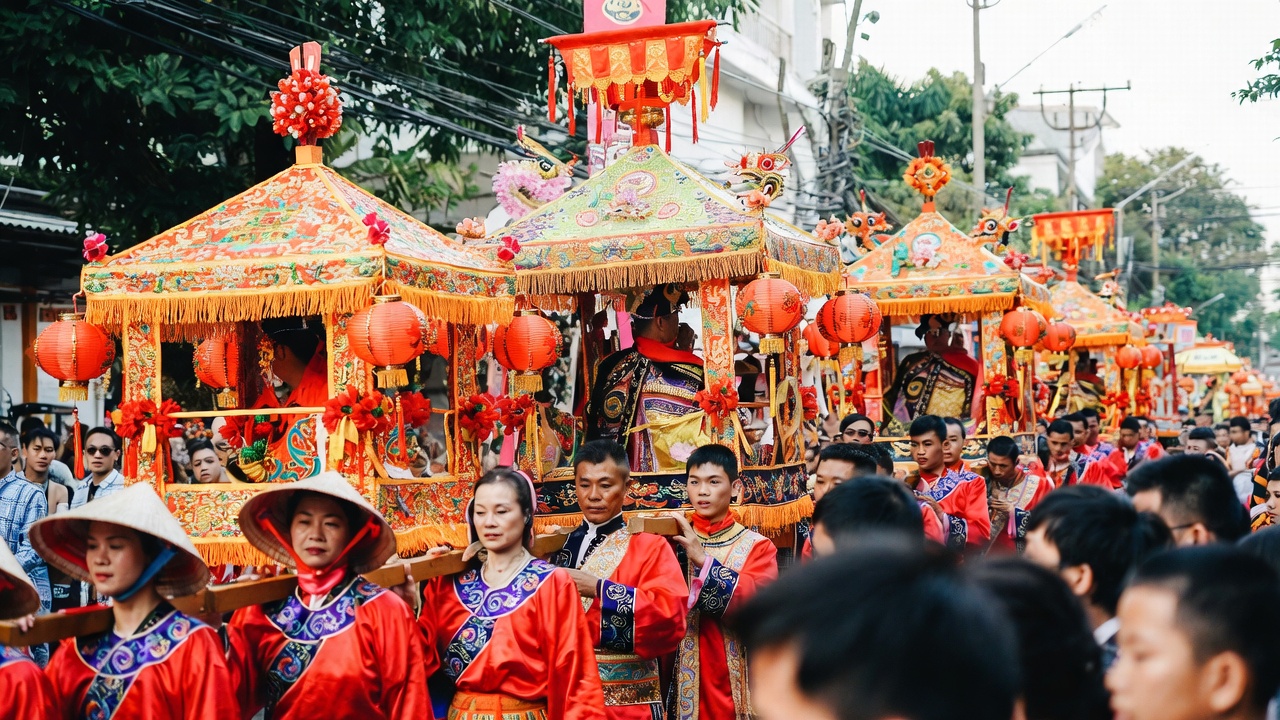
The highlight of the festival is the grand procession. Thousands of participants parade through the streets of Pak Nam Pho, carrying ornate sedan chairs bearing statues of the deities. Martial artists, lion dancers, dragon dancers, beautiful women representing the Goddess Guanyin, and children in traditional costumes create a spectacle that rivals any celebration in Asia.
Where Is Pak Nam Pho and Why Is It Sacred to Thai-Chinese Culture?
The Birthplace of the River of Kings
Pak Nam Pho is the historic heart of Nakhon Sawan Province. The name derives from Thai words meaning “the mouth of a river emerges.” This description captures the geographical and spiritual significance of this location. Here, at the confluence of four great rivers, the Chao Phraya River is born.
The Ping River (originating in Chiang Mai Province), the Wang River, the Yom River (flowing from Phayao), and the Nan River (beginning in Nan Province) all merge at Pak Nam Pho. This convergence creates the Chao Phraya, known as the “River of Kings” (Mae Nam Chao Phraya). The river then flows 372 kilometers southward through Bangkok before emptying into the Gulf of Thailand.
According to the Bangkok Post, this confluence creates a distinctive phenomenon: the “two-colored river,” where waters of different hues meet visibly before blending together. Local residents consider this spot sacred. The merging of four rivers into one symbolizes unity, prosperity, and the flow of life itself.
A Strategic Crossroads Through Thai History
Nakhon Sawan’s history stretches back to prehistoric times. Archaeological discoveries on Khao Chong Khae Hill have uncovered human skeletons, pottery fragments, stone axes, and iron tools dating to the late Iron Age, approximately 2,000 to 3,000 years ago.
| Historical Period | Significance to Nakhon Sawan |
|---|---|
| Dvaravati Period (6th-11th Century) | Over 20 ancient cities scattered throughout the province |
| Sukhothai Period (13th-14th Century) | Known as “Muang Phra Bang,” a border town south of Sukhothai |
| Ayutthaya Period (14th-18th Century) | Renamed “Nakhon Sawan” by King Borommatrailokkanat; became a trading hub |
| Thonburi Period (1775) | King Taksin gathered troops here to fight Burmese invaders |
| Early Rattanakosin Period | Major logistics hub for northern trade; rice and teak passed through |
King Rama V gave the city another name: “Muang Chon Tawan” (City That Faces the Sun). The title acknowledged the city’s eastern-facing position, greeting the morning light each day.
How Chinese Immigrants Shaped the Identity of Pak Nam Pho
The Great Migration: Southern China to Siam
The story of Pak Nam Pho cannot be separated from the story of Chinese immigration to Thailand. Beginning in the 13th century, Chinese merchants, laborers, and farmers began arriving on Siamese shores. By the 19th century, this trickle had become a flood.
According to research on Thai Chinese populations, Chinese migrants to Thailand historically came from five main dialect groups:
- Teochew (Chaozhou) – 56% of Thai-Chinese population
- Hakka – 16%
- Hainanese – 11%
- Cantonese – 7%
- Hokkien – 7%
The Teochew dialect group dominated migration to Thailand. These immigrants came primarily from the coastal regions of Guangdong Province in southern China. They arrived via the Gulf of Siam, landing at ports in Chon Buri and Samut Prakan before dispersing throughout the country.
Many Teochew migrants followed the rivers inland. The Chao Phraya offered a natural highway into Thailand’s interior. At its source, Pak Nam Pho became a natural settlement point. The confluence of rivers meant convergence of trade routes. Rice flowed downstream via the Nan River. Teak logs floated down the Ping from the northern forests. Chinese merchants established businesses to manage this commerce.
The Railway Transforms Pak Nam Pho
The construction of Thailand’s railway system during the reign of King Chulalongkorn (Rama V) accelerated Chinese settlement in Nakhon Sawan. The railway connected Bangkok to the northern provinces. Pak Nam Pho became a critical junction.
As the Bangkok Post reports: “The city grew and many Chinese migrants settled down there after the construction of the railway in the reign of King Rama V. The glory of this city reached its peak in the reign of King Rama VI.”
The Chinese community in Pak Nam Pho established markets, trading houses, and shipping operations. They built shrines to house the deities they brought from their homeland. These deities would protect them in their new country, bless their enterprises, and keep their families safe.
The Sacred Origins of the Chao Pho-Chao Mae Shrines in Nakhon Sawan
The Shrine of Chao Pho Theparak and Chao Mae Thap Tim
The principal shrine of the Pak Nam Pho festival stands on the banks of the Chao Phraya River, on Nakhon Sawan-Chum Saeng Road. Known locally as the “Pueng Thao Kong Shrine” (or “Pung Tao Kong Shrine”), this sacred site has anchored the faith of the Chinese community for over 150 years.
According to historical records cited by the Bangkok Post, the shrine was originally a wooden structure built on high stilts along the riverbank. A Chinese inscription on an ancient bronze bell dates to 1870, during the reign of King Chulalongkorn. The inscription indicates that a Mr. Hongbiao from Hainan Province, China, donated the bell to the shrine.
The shrine houses several important deities:
| Deity | Chinese Name | Role |
|---|---|---|
| Chao Pho Theparak | Pueng Thao Kong / Pung Tao Kong | City god; protector of the community |
| Chao Mae Thap Tim | Thap Tim | Goddess figure; protector |
| Chao Pho Guan Yu | Guan Di | God of war, loyalty, and righteousness |
| Goddess of Heaven | Tian Hou / Mazu | Protector of sailors and fishermen |
| Three-Eyed Godfather | San Yan Shen | God of soldiers and performances |
The riverbank location was no accident. Chinese folk religion emphasizes the importance of water as a conduit of life energy (qi). Rivers carry prosperity. The shrine’s position at the birthplace of the Chao Phraya maximized its spiritual potency.
However, river erosion threatened the original structure. In 1909, community members collaborated to rebuild the shrine. They incorporated a nearby Guan Yu shrine into the reconstructed temple. The new building used wood and cement construction, following traditional Chinese architectural principles that avoided the use of nails.
The Chao Mae Na Pha Shrine: A Dream-Sent Deity
The second shrine central to the festival stands about 10 minutes away, on Kosi Road along the banks of the Ping River. The Chao Mae Na Pha Shrine has its own miraculous origin story.
According to local folklore documented by the Bangkok Post, two elderly residents living near the Pho Chui Pho Chu Shrine received a prophetic dream in 1947. They dreamed that Chao Mae Na Pha had floated down the river from the ancient capital of Ayutthaya. The goddess told them: “If you pull me from the water, you will become wealthy.”
The community constructed a modest wooden shrine to enshrine the goddess. In 1952, a Chinese merchant commissioned a new carved wooden statue. This statue was brought from Wat Mangkon Kamalawat in Bangkok, one of the most important Chinese Buddhist temples in Thailand. The figure was dressed in elegant Chinese costume and holds a cane.
Today, the shrine also houses statues of Guan Yu, Chao Mae Sawan, and Chai Xing Ai (the God of Fortune and Wealth).
How the 1914 Cholera Epidemic Created the Pak Nam Pho Procession Festival
A Community in Crisis
The year 1914 brought terror to the markets of Pak Nam Pho. A cholera epidemic swept through the community. The disease, transmitted through contaminated water, was devastating to river communities. Residents fell ill by the dozens. Many died.
According to Love Thailand, the desperate residents of Pak Nam Pho Market turned to their deities for salvation. They organized the first procession to carry the statues of Chao Pho and Chao Mae through the streets. The faithful prayed for divine intervention. They begged the gods to drive away the disease and restore health to their community.
The epidemic eventually subsided. The community attributed their survival to divine protection. The procession became an annual tradition, initially held during the Chinese New Year period to honor the deities and give thanks for continued protection.
From Humble Prayers to Grand Celebration
The first processions were simple affairs. Devotees carried the deity statues in sedan chairs along the riverbank. The route originally followed the waterway before transitioning to roadside processions as the city developed.
Over the decades, the celebration grew in scale and complexity. Each year, the community added new elements:
- Dragon dances representing power and good fortune
- Lion dances to ward off evil spirits
- Guanyin processions featuring women chosen to represent the Goddess of Mercy
- 108 warriors performing martial arts demonstrations
- Fire-walking ceremonies in some years
- Angkor (sedan chair) processions carrying the deities
- Children’s flower basket processions
As the festival grew, so did its fame. By the mid-20th century, the Pak Nam Pho Chinese New Year celebration had become recognized as one of Thailand’s premier cultural events.
Why the Golden Dragon of Nakhon Sawan Became World Famous
The Dragon Dance Tradition in Chinese Culture
The dragon holds supreme importance in Chinese culture. Unlike Western dragons associated with destruction, the Chinese dragon (long or lung) symbolizes:
- Power and authority
- Strength and good fortune
- Rain and agricultural prosperity
- The Emperor and cosmic order
Dragon dances date back over 2,000 years in China. Performers manipulate long dragon costumes using poles, creating undulating movements that mimic the mythical creature swimming through clouds or water. The longer the dragon, the more auspicious its blessing.
The Famous Golden Dragons of Pak Nam Pho
Nakhon Sawan has earned nationwide recognition for its spectacular golden dragon dances. The dragons used in the Pak Nam Pho procession are among the longest and most elaborate in Thailand.
According to live-less-ordinary.com, the festival features the parade of the “Golden Dragons of Nakhon Sawan.” These dragons are manipulated by large teams of skilled performers from various Chinese associations in the province.
In 2024, the festival featured a 108-meter-long dragon lighting sculpture along the main road. The number 108 holds special significance in Buddhist and Chinese spiritual traditions. It represents completeness and cosmic order.
The dragon dances of Nakhon Sawan have become so renowned that troupes from the province are invited to perform at Chinese New Year celebrations throughout Thailand, including prestigious events at major Bangkok shopping centers.
Understanding the Night Parade (Chiew Sa) and Day Parade (Chiew Si) Traditions
The Two Grand Processions
The climax of the Chao Pho-Chao Mae Pak Nam Pho Procession Festival occurs during its final days. Two spectacular processions cap the 12-day celebration:
1. The Night Parade (Chiew Sa)
The Chiew Sa takes place on the second-to-last night of the festival. This evening procession is a feast for the senses. Illuminated floats, glowing dragon puppets, and torch-lit sedan chairs wind through the streets of Pak Nam Pho. The combination of darkness and light creates an otherworldly atmosphere.
According to Mekong Tourism, the Night Parade features:
- Illuminated golden dragons
- Light and sound performances
- Traditional music with drums and gongs
- Colorful costumes and decorations
2. The Day Parade (Chiew Si)
The following morning brings the Chiew Si, the Day Parade. This procession carries the statue of the deities through the city in full daylight. The Day Parade emphasizes sacred worship over spectacle. Devotees line the streets to receive blessings as the procession passes.
| Procession Element | Night Parade (Chiew Sa) | Day Parade (Chiew Si) |
|---|---|---|
| Time | Evening | Morning |
| Atmosphere | Spectacular, theatrical | Sacred, devotional |
| Lighting | Illuminated floats, torches | Natural daylight |
| Focus | Entertainment and spectacle | Worship and blessing |
| Participation | Tourists and locals | Primarily devotees |
Both processions follow routes through the historic Pak Nam Pho district. They pass by markets, temples, and community gathering points. The route allows maximum community participation and ensures that blessings reach every corner of the town.
What Deities Are Worshiped During the Chao Pho-Chao Mae Festival?
The Complex Pantheon of Thai-Chinese Folk Religion
Chinese folk religion in Thailand represents a fascinating blend of traditions. Migrants brought beliefs from their home provinces. These merged with Thai Buddhism, local animist practices, and other regional influences.
The principal deity of the Pak Nam Pho festival is Chao Pho Theparak, known locally as Pueng Thao Kong or Pung Tao Kong. This deity is related to the Chinese concept of the City God (Chenghuangshen), a protective spirit responsible for watching over a particular community.
According to Wikipedia’s article on Pun Tao Kong, this deity is unique to overseas Chinese communities and does not exist in mainland China in exactly this form. The name means “traditional senior chief” or “old chief.” Legends suggest Pun Tao Kong may have been a frontline warrior who traveled with Admiral Zheng He’s famous maritime expeditions in the 15th century.
Other important deities in the Pak Nam Pho pantheon include:
Guan Yu (Guan Di) The God of War, loyalty, and righteousness. Guan Yu was a historical general from the Three Kingdoms period (3rd century CE). He is revered for his unwavering loyalty and moral integrity. In Thai-Chinese communities, he is worshiped by merchants for protection and business success.
Chao Mae Thap Tim A goddess figure who provides protection and blessing to the community.
Mazu (Tian Hou) The Goddess of the Sea, also known as the Heavenly Mother or Queen of Heaven. She protects sailors, fishermen, and all who travel on water. Her worship is particularly important in river communities like Pak Nam Pho.
Guanyin (Kuan Yin) The Buddhist Goddess of Mercy. Beautiful women are selected to represent Guanyin in the procession. They ride in decorated floats, embodying compassion and blessing.
How Has the Pak Nam Pho Festival Evolved Over 110 Years?
From River to Road: Changing Procession Routes
The evolution of the procession route reflects the broader development of Nakhon Sawan. As described by shrine attendant Jessada Phusombunphaisarn to the Bangkok Post: “In the past, the procession used to go down the river before moving to a roadway.”
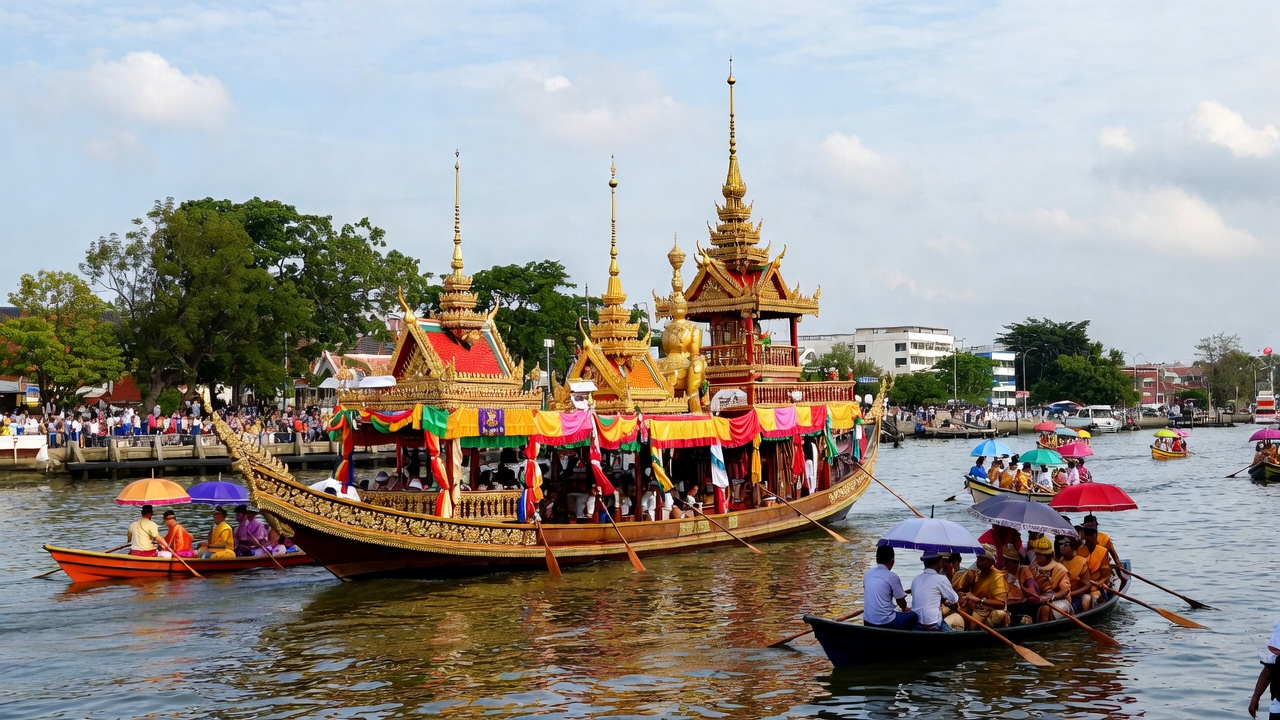
The original water-based processions made sense for a river community. Boats carried the deities along the waterway that connected the shrines. This honored the water spirits and the geographical significance of the confluence.
As Nakhon Sawan developed modern infrastructure, the procession transitioned to land routes. The Dechatiwong Bridge, erected in 1942, became a symbolic gateway connecting the North and Central Plains. Additional bridges (Dechatiwong 2 and 3) were later constructed to handle increased traffic.
Today, the procession routes wind through the main commercial districts of Pak Nam Pho. The walk passes by:
- The origin point of the Chao Phraya River
- The Chao Pho Theparak-Chao Mae Thap Tim Shrine
- The Chao Mae Na Pha Shrine
- Major markets and commercial areas
- The Walking Street (open Saturday evenings)
Modern Themes and Contemporary Elements
Each year, the festival adopts a new theme. Recent themes have included:
| Year | Anniversary | Theme |
|---|---|---|
| 2018 | 102nd | The River of Faith, the Dawn of New Beginning |
| 2024 | 108th | The Miracle Light of The Dragon / 108th Wonderful Dragon Year |
| 2025 | 109th | 12 Days of Happiness and Fun – Nakhon Sawan Wonderland |
| 2026 | 110th | To be announced (Year of the Horse celebrations) |
Modern festivals incorporate:
- Light and sound shows with professional stage productions
- Celebrity concert performances featuring popular Thai artists
- Photography competitions and social media activities
- Night market expansions with hundreds of food and merchandise stalls
- Cultural exhibitions on Thai-Chinese history
Despite these modern additions, the core spiritual elements remain unchanged. The shrine worship, deity processions, and blessing ceremonies continue as they have for over a century.
Planning Your Visit to the Pak Nam Pho Chinese New Year Festival 2026
Festival Dates and Schedule for 2026
Chinese New Year 2026 falls on Tuesday, February 17. This date marks the beginning of the Year of the Horse in the Chinese zodiac. The Pak Nam Pho festival typically spans 12 days, beginning approximately one week before Chinese New Year’s Day.
Based on traditional scheduling, the Chao Pho-Chao Mae Pak Nam Pho Procession Festival 2026 is expected to run from approximately February 5-17, 2026 (dates to be officially confirmed).
Key dates to mark on your calendar:
| Event | Expected Date (2026) |
|---|---|
| Festival opening | Early February |
| Main shrine worship activities | Throughout festival |
| Night Parade (Chiew Sa) | Second-to-last day |
| Day Parade (Chiew Si) | Final day morning |
| Chinese New Year’s Day | February 17, 2026 |
How to Get to Nakhon Sawan
From Bangkok:
- By Car: Approximately 240 km via Highway 32, taking about 3 hours
- By Bus: Regular buses depart from Mo Chit Northern Bus Terminal; journey takes 3-4 hours
- By Minivan: Departs from Victory Monument; approximately 3 hours
- By Train: Trains from Hua Lamphong or Bang Sue Grand Station to Nakhon Sawan station
Within Nakhon Sawan:
The festival centers around the Pak Nam Pho district in Mueang Nakhon Sawan. Key locations include:
- The Origin of the Chao Phraya River viewing point
- Chao Pho Theparak-Chao Mae Thap Tim Shrine (0.57 km from river origin)
- Chao Por Chao Mae Na Pha Shrine (2.59 km from river origin)
- Dechatiwong Bridge (3.72 km from river origin)
- Walking Street (open Saturday evenings)
Ferry Service: A ferry crosses the Chao Phraya River at Pak Nam Pho. The fare is approximately 20 baht per person for a return trip. This provides an authentic experience of river community life.
Accommodation Options
Nakhon Sawan offers a range of accommodation options:
- B2 Nakhon Sawan Premier Hotel – Budget-friendly, 850 meters from festival grounds
- Grand Vissanu Hotel – Mid-range option
- P.A. Thani Hotel – Central location
- The Paradiso JK Design Hotel – Modern boutique option
- Beverly Hill Park Hotel – Family-friendly
Booking Tip: Reserve accommodation well in advance, as hotels fill quickly during the festival period.
Essential Tips for Experiencing the Chao Pho-Chao Mae Procession
Cultural Etiquette and Respectful Behavior
The Chao Pho-Chao Mae Procession is first and foremost a religious ceremony. Visitors should observe appropriate behavior:
At the Shrines:
- Remove shoes before entering sacred areas
- Dress modestly (cover shoulders and knees)
- Speak quietly and avoid disruptive behavior
- Ask permission before photographing worship activities
- Do not touch deity statues or altar objects
During Processions:
- Do not obstruct the path of the procession
- Wait for the procession to pass before crossing
- Show respect by standing when sedan chairs pass
- Applaud performances but remain reverent during sacred moments
When Making Offerings: Traditional offerings at Thai-Chinese shrines include:
- Red candles
- Incense sticks
- Oranges and other fruits
- Lamp oil
- Joss paper
Shrine attendants can guide visitors through proper offering procedures.
Food and Dining Experiences
The festival features over 100 food stalls offering a blend of Thai and Chinese cuisine. Must-try dishes include:
| Dish | Description |
|---|---|
| Ba Mii | Clear egg noodle soup |
| Guay Tiaw | Rice noodle soup with various toppings |
| Hoi Tod | Crispy mussel pancake |
| Chinese pastries | Sweet buns, mooncakes, and rice cakes |
| Roast duck | Traditional Chinese preparation |
| Dim sum | Steamed dumplings and buns |
Nakhon Sawan is known for its multicultural culinary heritage. According to Santi Kunawong, managing director of the History of Muang Pak Nam Pho Museum: “Nakhon Sawan is full of delicious food due to its multiculturalism.”
The Significance of Dragons, Lions, and Other Festival Symbols
Symbolic Meanings in the Procession
Every element of the Chao Pho-Chao Mae Procession carries symbolic meaning rooted in Chinese cosmology and folk belief.
The Dragon (Long)
- Represents the Yang force (masculine, active energy)
- Symbolizes imperial power, strength, and good fortune
- Associated with rain and agricultural abundance
- The longer the dragon, the more powerful its blessing
The Lion (Shi)
- Represents guardian energy and protection
- Lion dances ward off evil spirits
- The “awakening the lion” ceremony at the start of performances brings the spirit to life
- Different lion styles (Northern vs. Southern) carry different associations
The Color Red
- Symbolizes good fortune, joy, and prosperity
- Associated with the fire element and Yang energy
- Believed to ward off the mythical beast Nian
- Worn during festivals to attract positive energy
The Number 108
- Represents cosmic completeness in Buddhist tradition
- The 108-meter dragon sculpture in Nakhon Sawan embodies this auspicious number
- Temples often have 108 steps or 108 statues
Firecrackers and Drums
- Loud noises drive away evil spirits
- Mark transitions between old year and new
- Announce the presence of the deities
The Living Heritage: How Pak Nam Pho Preserves Thai-Chinese Culture
Museums and Historical Sites
For visitors wishing to delve deeper into the history of Pak Nam Pho, several cultural institutions offer insight:
History of Muang Pak Nam Pho Museum Located inside the Fairy Land Department Store, this museum was initiated by Santi Kunawong. Objects are borrowed from local residents, creating a community-sourced collection that tells the authentic story of the town’s development.
Pasan (Chao Phraya River Source Landmark) This modern architectural landmark stands at the tip of Yom Island, directly facing the confluence of the four rivers. According to gplace.com, the building’s name derives from the Thai word meaning “to unite,” reflecting the convergence of waters. The facility serves as a learning center for history and local culture.
Yom Island Accessible by boat from Pak Nam Pho, this river island preserves traditional crafts and industries:
- Fish sauce production
- Traditional shipbuilding
- Soy bean preservation
- Candle making
Chum Saeng Old Town Located about 40 km north of Muang Nakhon Sawan, this historic commercial town provides a glimpse into the past. Traditional shophouses and markets recall the trading heritage of the region.
The Multicultural Identity of Nakhon Sawan
The population of Nakhon Sawan comprises six distinct ethnic groups:
- Thai
- Chinese
- Mon
- Vietnamese
- Laotian
- Descendants of South Asian migrants
According to local experts, “All the groups live in harmony without conflict and conserve their cultures.” The Chao Pho-Chao Mae Procession Festival exemplifies this multicultural harmony. Buddhist monks, Taoist priests, Chinese opera performers, and Thai community leaders all participate in creating a celebration that transcends ethnic boundaries.
The Future of the Chao Pho-Chao Mae Procession: Preserving 110 Years of Faith
Challenges and Opportunities
As the festival enters its 110th year, organizers face several challenges:
Urbanization and Modernization
- Younger generations may feel less connected to traditional practices
- Competition from entertainment options and digital distractions
- Need to balance authenticity with contemporary appeal
Climate and Environmental Concerns
- River pollution affects the sacred waters of the Chao Phraya
- Flooding can impact festival infrastructure
- Drought conditions may affect agricultural communities
Tourism Management
- Balancing tourist numbers with sacred atmosphere
- Ensuring economic benefits reach local communities
- Preserving authenticity while meeting visitor expectations
Strategies for Cultural Preservation
The Nakhon Sawan community has developed approaches to address these challenges:
Youth Engagement
- Dragon and lion dance training programs for young people
- School visits to shrines and participation in ceremonies
- Social media campaigns celebrating local heritage
Official Recognition
- Tourism Authority of Thailand support and promotion
- Documentation of intangible cultural heritage
- Collaboration with cultural organizations
Sustainable Tourism
- Development of cultural learning centers
- Training for local guides and hosts
- Infrastructure improvements to accommodate visitors
The 110th anniversary in 2026 offers an opportunity to renew commitment to these preservation efforts and introduce the festival to a new generation of participants and visitors.
Conclusion: A Living Testament to Faith and Cultural Resilience
The Chao Pho-Chao Mae Pak Nam Pho Procession Festival is more than a celebration. It is a living history book, written not in pages but in processions, prayers, and community bonds. For 110 years, the people of Nakhon Sawan have maintained this remarkable tradition.
What began as a desperate prayer during a cholera epidemic has evolved into one of Southeast Asia’s most spectacular cultural events. The Golden Dragons of Nakhon Sawan now dance not only for divine protection, but also for cultural pride, community identity, and the preservation of heritage.
At the birthplace of the Chao Phraya River, where four great waterways unite into one, Thai and Chinese traditions have similarly merged into something uniquely beautiful. The festival reminds us that culture is not a static artifact to be displayed in museums. It is a living practice that must be renewed with each generation.
As Chinese New Year 2026 approaches and the Year of the Horse gallops in, the drums of Pak Nam Pho will sound once more. The incense will rise. The dragons will dance. And 110 years of faith will continue their sacred procession into the future.
Quick Reference: Chao Pho-Chao Mae Pak Nam Pho Festival 2026
| Detail | Information |
|---|---|
| Official Name | Chao Pho-Chao Mae Pak Nam Pho Procession Festival |
| Location | Pak Nam Pho, Nakhon Sawan Province, Thailand |
| Anniversary (2026) | 110th |
| Chinese New Year 2026 | February 17, 2026 |
| Zodiac Year | Year of the Fire Horse |
| Festival Duration | 12 days and nights |
| Main Shrines | Chao Pho Theparak-Chao Mae Thap Tim Shrine; Chao Mae Na Pha Shrine |
| Key Events | Night Parade (Chiew Sa), Day Parade (Chiew Si) |
| Distance from Bangkok | Approximately 240 km (3 hours by car) |
| Principal Deities | Chao Pho Theparak (Pueng Thao Kong), Chao Mae Thap Tim, Guan Yu, Guanyin |
May the blessings of Chao Pho and Chao Mae bring you prosperity, health, and good fortune in the Year of the Horse and beyond.
新年快乐 (Xīn Nián Kuài Lè) – Happy New Year!
สุขสันต์วันตรุษจีน (Suk San Wan Trut Chin) – Happy Chinese New Year!
Frequently Asked Questions About the Pak Nam Pho Chinese New Year Festival
Is the Chao Pho-Chao Mae Procession Festival free to attend?
Yes, the festival is free to attend for all visitors. The public streets, shrine visits, and procession viewing are open to everyone. Some special activities or reserved seating areas may have fees, but the core festival experience costs nothing.
What is the best time to arrive at the festival?
For the Night Parade (Chiew Sa), arrive at least 2-3 hours before sunset to secure a good viewing position. The procession typically begins after dark, and crowds gather early. For the Day Parade (Chiew Si), arrive early in the morning. The shrines are also best visited in the morning hours when the atmosphere is most peaceful.
Can non-Chinese visitors participate in the ceremonies?
Absolutely. The festival welcomes visitors of all backgrounds. Shrine attendants are typically happy to guide visitors through proper etiquette for making offerings and prayers. Respectful participation is encouraged, and the community takes pride in sharing their heritage with interested visitors.
Is English widely spoken at the festival?
English is limited outside of major hotels and tourist information points. Learning a few Thai phrases will enhance your experience. Key phrases include:
| Thai Phrase | Pronunciation | Meaning |
|---|---|---|
| สวัสดี | Sawadee | Hello |
| ขอบคุณ | Khob khun | Thank you |
| เท่าไหร่ | Tao rai | How much? |
| อร่อย | Aroi | Delicious |
What should I wear to the festival?
Modest, comfortable clothing is recommended. When visiting shrines, cover your shoulders and knees. Many visitors wear red during Chinese New Year celebrations, as red symbolizes good fortune. Comfortable walking shoes are essential, as you will be on your feet for extended periods.
Are there ATMs and money exchange facilities available?
Yes, ATMs are available throughout Nakhon Sawan city center. Most vendors at the festival accept cash only (Thai Baht). Major hotels may accept credit cards, but carry sufficient cash for food stalls and small purchases.
Is the festival suitable for children?
Yes, the festival is family-friendly. Children enjoy the dragon and lion dances, colorful costumes, and festive food. However, be aware that:
- Crowds can be dense during peak procession times
- Firecrackers and loud drums may startle young children
- Evening events run late into the night
How does the Pak Nam Pho festival compare to Bangkok’s Yaowarat celebrations?
Both festivals celebrate Chinese New Year, but they offer different experiences:
| Aspect | Pak Nam Pho (Nakhon Sawan) | Yaowarat (Bangkok) |
|---|---|---|
| History | 110 years of tradition | Long-standing but less continuous tradition |
| Atmosphere | Community-centered, devotional | Urban, commercial |
| Procession | The main highlight; elaborate parade | Smaller-scale activities |
| Crowds | Large but manageable | Very crowded |
| Authenticity | Deep religious significance | Mix of commercial and traditional |
For those seeking the most authentic Thai-Chinese religious festival experience, Pak Nam Pho offers an unmatched depth of tradition.
The Spiritual Practices of Shrine Worship in Thai-Chinese Communities
How to Make Offerings at a Thai-Chinese Shrine
Visiting the Chao Pho Theparak-Chao Mae Thap Tim Shrine or Chao Mae Na Pha Shrine provides an opportunity to participate in traditional Chinese folk religious practices. Here is a guide to respectful worship:
Step 1: Preparation Purchase offerings from vendors near the shrine. Standard offerings include:
- Three or five incense sticks
- Red candles (two)
- Fresh fruits (especially oranges, which symbolize gold/wealth)
- Joss paper or spirit money
Step 2: Lighting Incense Light the incense sticks at the communal flame. Hold the incense between your palms, with your hands raised to forehead level.
Step 3: Prayer and Petition Bow three times while holding the incense. You may silently state your name, birthdate, and the blessing you seek. Common requests include:
- Good health
- Business success
- Family harmony
- Safe travels
Step 4: Placing Offerings Insert the incense into the designated burner. Place candles in the candle holders. Leave fruit offerings on the altar tables.
Step 5: Additional Practices Some devotees cast fortune sticks (Kau Cim) to receive guidance. The shrine attendants can interpret the results. Others may request divination blocks (jiaobei) to determine if their prayers have been received favorably.
Understanding the Concept of “Merit” in Thai-Chinese Worship
The practice of making merit (做功德, zuò gōngdé) is central to Thai-Chinese religious life. Merit accumulates through:
- Worship and offerings at shrines
- Acts of generosity to temples and the needy
- Vegetarian eating during religious periods
- Participation in processions and ceremonies
- Releasing captive animals (especially fish) to grant them freedom
During the Chao Pho-Chao Mae Procession, opportunities for merit-making abound. Many devotees release fish into the Chao Phraya River, symbolizing the liberation of souls and the accumulation of spiritual credit.
Comparing Chinese New Year Festivals Across Thailand
Major Chinese New Year Celebrations in Thailand 2026
Thailand hosts numerous Chinese New Year celebrations. Here is how Pak Nam Pho compares to other major events:
| Location | Key Features | Best For |
|---|---|---|
| Pak Nam Pho (Nakhon Sawan) | 110-year tradition; grand procession; sacred shrines | Religious experience; cultural authenticity |
| Yaowarat (Bangkok) | Street food; shopping; urban celebration | Easy access; culinary exploration |
| Phuket Old Town | Sino-Portuguese architecture; vegetarian festival heritage | Heritage architecture; unique local customs |
| Hat Yai (Songkhla) | Southern Thai Chinese community; regional dishes | Southern Thai culture |
| Chiang Mai | Northern Thai Chinese community; temple visits | Quieter celebration; temple focus |
Why Pak Nam Pho Stands Out
Several factors make the Pak Nam Pho festival unique:
- Longest continuous tradition – 110 years in 2026
- Sacred geography – Location at the source of the Chao Phraya River
- Dual shrine system – North and South shrines anchor the procession
- Community-centered – Deep local participation rather than commercial focus
- Procession scale – One of the largest deity processions in Thailand
- Golden Dragon fame – Recognized as among Thailand’s finest dragon dance traditions