
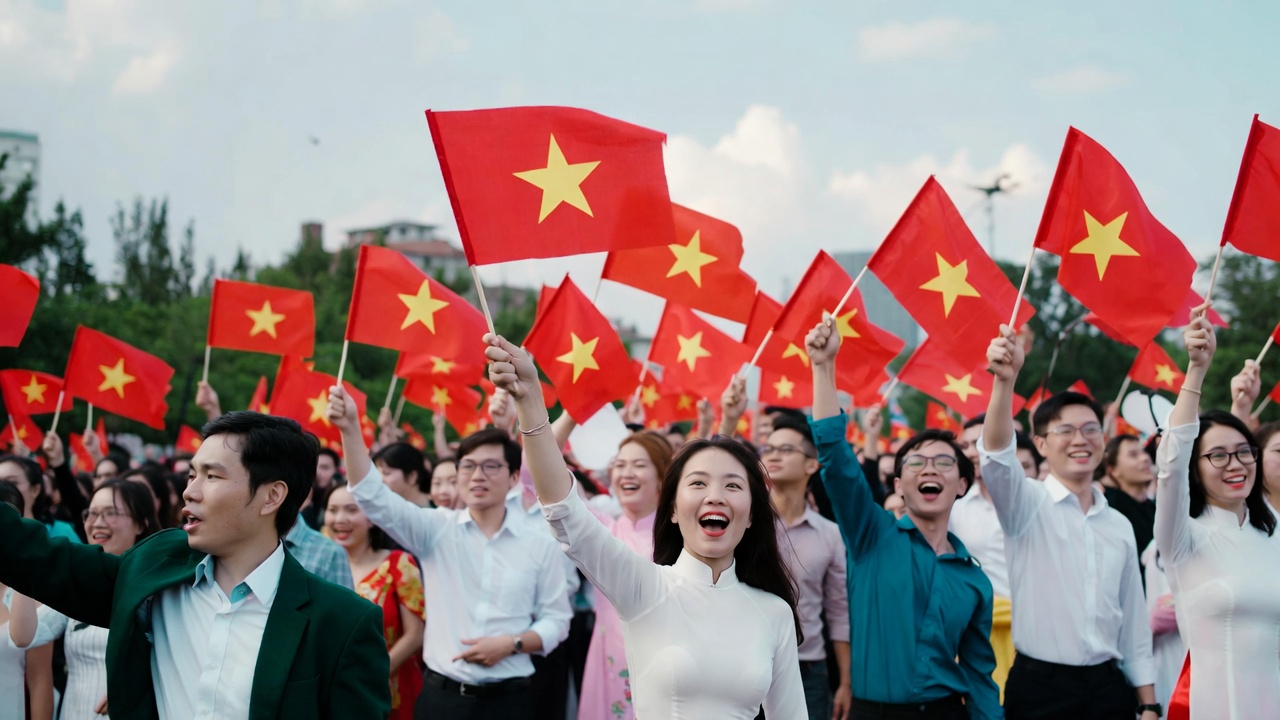
On the eve of the Communist Party of Vietnam’s 96th founding anniversary, the nation is still buzzing with the afterglow of the 14th National Congress — a landmark political event that wrapped up in Hanoi on January 23, 2026. From sweeping leadership elections to a bold 10 percent GDP growth target, the Congress has set the course for Vietnam’s next five years and far beyond. Whether you are a traveler drawn by Vietnam’s rapid transformation, a student of Southeast Asian politics, or simply curious about one of the world’s fastest-growing economies, this guide covers everything you need to know.
What Is the 14th CPV National Congress and Why Does It Matter in 2026?
The National Congress of the Communist Party of Vietnam (CPV) is the most powerful political gathering in the country. It convenes every five years. It sets the direction of national policy. It elects the most senior leaders. It reviews the Party’s work over the previous term and adopts strategic documents that guide the country until the next Congress.
The 14th National Congress was held at the Vietnam National Convention Center in Hanoi from January 19 to January 23, 2026. A total of 1,586 delegates attended, representing more than 5.6 million Party members across the country. That makes the CPV one of the largest ruling parties in the world by membership.
Why does this particular Congress matter so much? Three reasons stand out:
- Timing. The Congress coincides with 40 years since the launch of the Đổi Mới (Renewal) reforms in 1986, a milestone that fundamentally reshaped Vietnam from a centrally planned economy into one of Asia’s most dynamic markets.
- Ambition. The Congress adopted a resolution targeting at least 10 percent average annual GDP growth for the 2026–2030 period — a goal Vietnam has never sustained over a full five-year plan.
- Leadership continuity. General Secretary Tô Lâm was unanimously re-elected, signaling a strong mandate for his reform agenda after just 18 months in the top seat.
The Congress concluded two days ahead of its original schedule, which many observers read as a sign of efficient consensus-building among delegates.
Communist Party of Vietnam 96th Founding Anniversary: Historical Significance of February 3
February 3, 2026, marks the 96th anniversary of the founding of the Communist Party of Vietnam, which was established by Hồ Chí Minh in 1930. This date holds deep emotional and political weight for the Vietnamese people. Across the country, from bustling Hanoi to the Mekong Delta, the anniversary is observed with ceremonies, exhibitions, and cultural events.
The founding of the CPV was a turning point in Vietnam’s long struggle against colonial rule. As a Lao senior official put it during last year’s anniversary, the establishment of the CPV “marked a turning point in the nation’s patriotic movement and resistance against foreign invaders” (VietnamPlus).
This year’s celebration carries extra weight because it comes just days after the conclusion of the 14th Congress. Vietnamese communities around the world are linking the two events. The Vietnamese Embassy in France, for example, hosted a ceremony on February 2 marking both the 96th founding anniversary and the success of the 14th National Party Congress (VietnamPlus). In Saint Petersburg, Russia, a roundtable discussion was held on January 30 covering the same dual themes (Nhan Dan).
A Brief Timeline of the CPV’s Major Milestones
| Year | Milestone |
|---|---|
| 1930 | Hồ Chí Minh founds the Communist Party of Vietnam on February 3 |
| 1945 | Vietnam declares independence; the Democratic Republic of Vietnam is born |
| 1975 | Reunification of North and South Vietnam |
| 1986 | Launch of Đổi Mới (Renewal) reforms |
| 2007 | Vietnam joins the World Trade Organization (WTO) |
| 2024 | General Secretary Nguyễn Phú Trọng passes away; Tô Lâm assumes leadership |
| 2026 | 14th National Congress concludes; 96th founding anniversary celebrated |
The 96th anniversary is not simply a political observance. It is a moment for national reflection on nearly a century of struggle, resilience, and growth. For visitors to Vietnam around this time, it provides a rare window into the country’s political culture and collective memory.
Key Highlights and Outcomes of the 14th CPV National Congress January 2026
The 14th Congress accomplished a dense agenda in just five days. Here are the most significant outcomes.
A new Central Committee was elected. The 14th Central Committee has 200 members — 180 official and 20 alternate. This body serves as the Party’s governing organ between congresses and meets roughly twice a year.
A 19-member Politburo was chosen. The Politburo is the highest decision-making body in Vietnam’s political system. It includes 10 re-elected members from the 13th term and 9 new members (Laotian Times).
Key strategic documents were adopted. These include the Political Report reviewing the 13th term, a socioeconomic development plan for 2026–2030, and a report on Party-building and implementation of the Party Charter.
The Party Charter review was announced. Standing Secretary Trần Cẩm Tú told delegates at the closing session that the Central Committee will launch a comprehensive review of the Party Charter as a priority task, evaluating 15 years of experience under the current 2011 Charter (The Vietnamese).
The theme of the Congress was announced as: “Under the glorious flag of the Party, joining hands and uniting wills to successfully realise the country’s development goals to 2030; ensuring strategic autonomy, fostering self-reliance and confidence, advancing firmly in the era of national rise for peace, independence, democracy, prosperity, civilisation and happiness, and steadfastly progressing towards socialism.”
That mouthful of a theme captures the Party’s dual emphasis: economic modernization and ideological continuity.
Tô Lâm Re-elected as CPV General Secretary: Leadership Changes for 2026–2031
The most closely watched outcome of any CPV Congress is who gets the top job. In this case, there was little suspense. Tô Lâm was unanimously re-elected as General Secretary of the 14th Central Committee, securing all 180 votes from official members during the first plenary session on January 23 (CGTN).
Tô Lâm’s re-election marks his fourth consecutive term on the Central Committee, spanning from the 11th through the 14th terms. He first rose to national prominence as Minister of Public Security before being elevated to the presidency following a series of high-profile political departures. After the death of General Secretary Nguyễn Phú Trọng in July 2024, Tô Lâm assumed the general secretaryship and quickly consolidated power.
In his closing remarks at the Congress, Tô Lâm outlined tasks to ensure peace and stability, drive sustainable development, and advance Vietnam’s goals toward upper-middle-income status by 2030 and high-income status by 2045 (Xinhua).
At the press conference following the closing session, Tô Lâm called for a “new growth model” that would speed up decision-making and unleash the private sector. This language signals a pragmatic, results-driven approach to governance — one that international observers are watching closely.
New Politburo and Central Committee Members Elected at 14th Party Congress
The composition of the Politburo reveals much about the balance of power in Vietnam for the coming five years. The 19-member Politburo was elected from the 180 official members of the new Central Committee.
Key Politburo Members for the 14th Term (2026–2031)
| No. | Name | Key Role |
|---|---|---|
| 1 | Tô Lâm | General Secretary; Secretary of the Central Military Commission |
| 2 | Trần Thanh Mẫn | Chairman of the National Assembly |
| 3 | Trần Cẩm Tú | Standing Member of the Secretariat |
| 4 | Phan Văn Giang | Minister of National Defence |
| 5 | Lương Tam Quang | Minister of Public Security |
| 6 | Nguyễn Duy Ngọc | Hanoi Party Secretary |
| 7 | Trần Lưu Quang | Ho Chi Minh City Party Secretary (new) |
| 8 | Lê Hoài Trung | Minister of Foreign Affairs (new) |
| 9 | Trần Sỹ Thanh | Chairman of the Inspection Commission (new) |
Source: Việt Nam News
The mix of continuity and renewal is intentional. Ten members were re-elected from the 13th term. Nine are new to the Politburo. The presence of officials with backgrounds in public security and national defense reflects the continued influence of the security establishment within Party leadership.
Trần Cẩm Tú, who serves as the Standing Member of the Secretariat, occupies a role that has gained significance in recent years. This position oversees the Party’s day-to-day operations and has been described as a de facto “deputy general secretary.”
Vietnam Five Pillars Leadership System: How Power Is Shared in 2026
Vietnam’s political system is built on a principle of collective leadership. For decades, the country’s top positions were informally known as the “Four Pillars” (tứ trụ): the General Secretary, the President, the Prime Minister, and the Chairman of the National Assembly.
In September 2025, however, the CPV formally elevated the Standing Member of the Secretariat to the same rank as the other four leaders. This expanded the system to “Five Pillars” (The Diplomat). The change was codified in Regulation No. 368-QD/TW, issued by the Central Committee.
This structure is designed to prevent the concentration of power in a single individual, a principle Vietnamese leaders trace back to lessons learned during the post-war period. It distinguishes Vietnam from other one-party states like China, where the roles of General Secretary and President are held by the same person.
At the same time, Tô Lâm is reportedly seeking the presidency in addition to the general secretaryship. If this materializes, it would represent the most significant structural shift in Vietnamese politics in decades, potentially collapsing the Five Pillars back toward a more centralized model. Whether such a consolidation happens — and how it is received within the Party — remains one of the most important political questions in Vietnam today.
For now, the five pillars for the 2026–2031 term appear to be occupied by distinct leaders, maintaining the framework of shared governance.
Vietnam 10 Percent GDP Growth Target 2026–2030: Economic Goals Explained
Perhaps the most headline-grabbing resolution from the 14th Congress is the target of at least 10 percent average annual GDP growth for the 2026–2030 period. This is a significant step up from the 13th Congress target of 6.5–7 percent for 2021–2025, which the country ultimately achieved an average of about 6.25 percent (The Vietnamese).
Key Economic Targets Set at the 14th Congress
| Indicator | Target by 2030 |
|---|---|
| Average annual GDP growth | At least 10% |
| GDP per capita | Approximately $8,500 |
| Manufacturing and processing share of GDP | ~28% |
| Digital economy share of GDP | ~30% |
| Income classification | Upper-middle-income country |
Source: VietnamPlus
To put these numbers in perspective: Vietnam’s GDP per capita stood at about $5,026 in 2025. Reaching $8,500 by 2030 would represent a roughly 69 percent increase in just five years. The country would need to roughly double the pace of its recent income growth to hit that mark.
Nguyễn Anh Tuấn, Vice Head of the Central Committee’s Commission for Policies and Strategies, presented to Congress delegates that this target is “urgent” to meet the nation’s strategic milestones for 2030 and 2045. He argued that Vietnam possesses “sufficient conditions, potential, and policy space” to sustain double-digit growth (The Vietnamese).
Still, Vietnam has never achieved sustained double-digit GDP growth in its modern history. The last time annual growth exceeded 9 percent was in the mid-1990s. Whether the 10 percent target is achievable or aspirational remains a subject of lively debate among economists.
Vietnam Economy 2025 Achievements: GDP Growth, Trade, and Investment Results
The 14th Congress was held against a backdrop of strong economic performance in 2025, which gave delegates confidence to set ambitious targets going forward.
Vietnam’s GDP grew by an estimated 8.02 percent in 2025, the second-highest growth rate in the 2011–2025 period. The fourth quarter alone saw growth of 8.46 percent year-on-year, the fastest quarterly expansion since Q4 2007 (Việt Nam News).
Vietnam’s 2025 Economic Snapshot
| Indicator | 2025 Figure |
|---|---|
| GDP | ~$514 billion |
| GDP per capita | ~$5,026 |
| GDP growth rate | 8.02% |
| Total import-export turnover | ~$930 billion |
| Average inflation (CPI) | 3.31% |
| International tourist arrivals | ~21.2 million (record) |
| Global GDP ranking | 32nd (up 5 places) |
| Credit growth | ~18% |
Sources: Việt Nam News, Vietnam Briefing
The growth was broad-based. Industry and construction led with 8.95 percent growth. The service sector accounted for over 51 percent of total GDP. Total import-export turnover reached approximately $930 billion — an unprecedented record that placed Vietnam among the world’s top 15 trading nations (vietnam.vn).
All 15 major socioeconomic targets set by the National Assembly for 2025 were met or exceeded. Average inflation was controlled at 3.31 percent, within the National Assembly’s ceiling. International tourist arrivals hit a record 21.2 million, reflecting a powerful post-pandemic rebound.
Burkhard Schrage, interim head of the Management Department at RMIT University Vietnam’s Business School, described the performance as “a landmark achievement,” calling Vietnam “a bright spot amid continued global uncertainty.” He predicted that Vietnam is on track to overtake Thailand as ASEAN’s third-largest economy by 2026 or 2027 (China Daily).
40 Years of Đổi Mới Reforms: Vietnam’s Renewal Journey Since 1986
The 14th Congress did not just look forward. It also looked back — specifically, at 40 years of Đổi Mới (Renewal), the landmark reform process launched in 1986 that transformed Vietnam from one of the world’s poorest nations into a middle-income, globally connected economy.
Before Đổi Mới, Vietnam’s economy was centrally planned and largely isolated from global markets. Inflation ran rampant. Food shortages were common. The reforms introduced market-oriented economic mechanisms while maintaining the Party’s political leadership — a model sometimes described as “socialism with market characteristics.”
The results, over four decades, have been extraordinary:
- GDP per capita rose from roughly $100 in the mid-1980s to over $5,000 in 2025.
- Poverty rates plummeted. Vietnam went from a country that could not feed itself to a major agricultural exporter.
- The country became a global manufacturing hub, attracting billions in foreign direct investment from Samsung, Intel, Apple suppliers, and many others.
The 14th Congress adopted a special report reviewing these four decades. International scholars who participated in discussions around the Congress widely agreed that Vietnam “stands out as a successful model of socioeconomic development” (VietnamPlus).
However, the Congress also acknowledged that the current development model has limitations. Growth has been heavily dependent on labor-intensive manufacturing, foreign investment, and exports. Domestic value chains remain weak. Productivity gains have been modest. The new Congress resolution calls for a fundamental shift toward a knowledge- and productivity-driven economy — a move that former Indian Deputy National Security Adviser S.D. Pradhan described as “a decisive shift from an input-based development approach” (Việt Nam News).
The theory of Đổi Mới itself has now been elevated to a constituent part of the Party’s ideological foundation, alongside Marxism-Leninism and Hồ Chí Minh Thought. This integration signals that pragmatic reform is no longer a temporary policy — it is baked into the Party’s identity.
Digital Transformation and Innovation: Vietnam’s New Growth Model for 2030
If one phrase captures the strategic pivot announced at the 14th Congress, it is this: science and technology, innovation, and digital transformation as the main driving forces.
The Congress resolution envisions a new growth model that moves away from reliance on cheap labor and capital accumulation. Instead, it seeks to build an economy driven by technology adoption, digital infrastructure, and a highly skilled workforce.
This pivot is backed by concrete policy. In December 2024, the Politburo issued Resolution No. 57-NQ/TW, which set ambitious targets: a digital economy share of at least 30 percent of GDP by 2030 and 50 percent by 2045 (VietnamPlus). The recently enacted Law on Data designates data as a “new means of production” and a strategic resource.
Vietnam has already laid groundwork during the 2020–2025 period under its National Digital Transformation Program. The concept of “digital citizens” has taken root. E-government services have expanded. The country aims for 100 percent of administrative procedures to be available online.
Five Strategic Breakthroughs Identified by General Secretary Tô Lâm
- Decentralization and delegation of authority — empowering local governments to act decisively
- Science, technology, innovation, and digital transformation — the core drivers of the new growth model
- High-quality human resource development — building a workforce for the digital age
- Institutional reform — removing bottlenecks in regulations and governance
- Infrastructure modernization — including transport, energy, and digital backbone systems
These breakthroughs are not abstract goals. They are tied to specific Politburo resolutions issued in late 2024 and early 2025, covering everything from energy security to private sector development to cultural soft power.
George Toloraya, a Russian scholar, noted at the Saint Petersburg roundtable that the 14th Congress represents a fundamental shift from Vietnam’s role as a “factory of the world” toward its ambition to become a “high-tech powerhouse” (VietnamPlus).
Vietnam Anti-Corruption Campaign and Government Streamlining Revolution
One of the most dramatic changes in Vietnam over the past two years has been the anti-corruption campaign and the sweeping government streamlining initiative — often called the “Revolution of Streamlining.”
The anti-corruption drive was ignited by the late General Secretary Nguyễn Phú Trọng, who famously described it as a “burning furnace.” Under his leadership, and continuing under Tô Lâm, eight Politburo members were removed from their posts between late 2022 and mid-2024. This level of turnover at the very top of Vietnamese politics was unprecedented.
Tô Lâm extended the campaign into a wholesale restructuring of government. Key results include:
- Eight ministries or agencies abolished
- Nearly 150,000 jobs cut from the state payroll
- Massive reduction in bureaucratic layers and overlapping agencies
The 14th Congress resolution reinforces the emphasis on governance modernization, merit-based selection, and accountability tied to outcomes. The newly elected Central Inspection Commission, led by Chairman Trần Sỹ Thanh, is expected to expand asset oversight mechanisms beyond public servants to a broader range of sectors.
These measures have won praise from some quarters for cutting red tape and signaling genuine reform. But they have also raised concerns about whether the anti-corruption apparatus has become a tool for political consolidation rather than institutional improvement. Independent observers continue to monitor this tension closely.
How the 14th CPV Congress Impacts Vietnam’s Foreign Policy and International Relations
The 14th Congress affirmed the elevation of foreign affairs and international integration to the same strategic level as defense and security — a notable shift in how Vietnam positions its external relationships.
Vietnam currently maintains a network of comprehensive strategic partnerships with all five permanent members of the UN Security Council — the United States, China, Russia, France, and the United Kingdom — as well as with major economies like Japan, South Korea, India, and Australia. This “bamboo diplomacy” — flexible, resilient, and rooted — has been a hallmark of Vietnam’s post-Đổi Mới foreign policy.
The Congress resolution calls for:
- Deepening multilateral engagement, especially within ASEAN, the United Nations, and APEC
- Strengthening economic diplomacy, with trade serving as the primary vehicle for international integration
- Promoting Vietnam’s cultural soft power through people-to-people exchanges and diaspora engagement
The diplomatic briefing held on January 27, co-chaired by Minister of Foreign Affairs Lê Hoài Trung, saw ambassadors and heads of international organizations receive updates on the Congress outcomes. Many shared “views and assessments of Vietnam’s recent development achievements and extended their best wishes” (VietnamPlus).
Russia’s President Vladimir Putin congratulated Tô Lâm by phone on January 24. China’s President Xi Jinping sent a special envoy who affirmed that the CPC “supports the CPV Central Committee, led by General Secretary Tô Lâm, in guiding the Vietnamese people to successfully implement the Resolution of the Congress.”
For travelers and business professionals, the message is clear: Vietnam intends to be more, not less, open to the world during the 2026–2031 period.
What International Experts Say About Vietnam’s 14th Party Congress 2026
The 14th Congress drew significant commentary from international scholars, think tanks, and diplomats.
Professor Carl Thayer, from the Australian Defence Force Academy at the University of New South Wales, described the Congress as an event that would “make groundbreaking decisions to realise the aspiration of a strong and prosperous Vietnam by 2045” (VietnamPlus).
Professor Nguyễn Thị Liên Hằng, Director of the Weatherhead East Asian Institute at Columbia University, shared in-depth assessments of the Party’s leadership role and its significance for Vietnam’s development trajectory (VietnamPlus).
An article published on the website of the Lee Kuan Yew School of Public Policy in Singapore described the Congress as a “pivotal inflection point” in Vietnam’s development trajectory. It was “not just a routine transfer of power, but a strategic effort aimed at consolidating leadership, renewing a party’s vision, and positioning Vietnam for significant transformation by 2030” (VietnamPlus).
Gilbert Tenèze, head of the France–Vietnam Friendship Association chapter in Eure-et-Loir province, observed that the Congress outcomes “reflect the image of a nation deeply attached to its roots yet driven by an inspiring development vision.”
These assessments, while largely positive, also carry notes of caution. The Lee Kuan Yew School article concluded that the Congress’s success “will be judged not by its resolutions alone, but by whether Vietnam can translate political alignment into sustained improvements in execution, productivity, innovation, and governance quality.”
Vietnam 2026 Legislative Election: What Comes After the Party Congress
With the Party Congress completed, attention now turns to the 2026 Vietnamese legislative election, scheduled for March 15, 2026. This vote will elect the 16th National Assembly, which in turn will formalize state-level positions — including the President, Prime Minister, and Chairman of the National Assembly — for the new term.
The National Assembly election is important because it translates the Party’s decisions into state governance. While the CPV holds a monopoly on political power, the legislative process still plays a role in codifying policy, passing laws, and overseeing government operations.
Key dynamics to watch:
- Will Tô Lâm assume the presidency in addition to the general secretaryship? Multiple sources suggest this is under consideration.
- Who will serve as Prime Minister in the new term? Adjustments at the government level are expected.
- How will the Congress’s economic and reform agenda be translated into specific legislation?
The US-ASEAN Business Council has noted that for the private sector, the combination of continuity at the top and managed leadership transition “supports confidence in orderly succession and sustained policy consistency” (US-ABC).
Celebrating CPV 96th Anniversary: Events and Cultural Activities Across Vietnam
The 96th founding anniversary of the CPV on February 3, 2026, is being celebrated with a wide range of cultural events both inside Vietnam and abroad.
Domestic Celebrations
Film screening program. The Ministry of Culture, Sports and Tourism announced a nationwide film screening program running from February 3 to 22. The program features films of “strong ideological and humanistic value and high artistic quality,” including “Tứ Chiến Trên Không” (Hijacked), an action film based on a true story in Vietnam’s aviation history (Nhan Dan).
Exhibition at the National Library. The National Library of Vietnam on January 26 opened an exhibition titled “The Communist Party of Vietnam Through Its National Congresses”, offering a visual journey through the Party’s history.
Painting exhibitions. In Hanoi, a painting exhibition titled “Welcoming the New Year of the Horse 2026” opened at the Old Quarter Cultural Exchange Centre, featuring around 80 artworks by Vietnamese artists.
Overseas Celebrations
- France: The Vietnamese Embassy in Paris hosted a ceremony combining the 96th anniversary with celebrations of the 14th Congress’s success.
- Russia: A roundtable was held in Saint Petersburg analyzing the Congress outcomes alongside the anniversary.
- Japan: Dr. Nguyễn Hồng Sơn, President of the Union of Vietnamese Associations in Japan, described the 14th Congress as a “Congress of confidence and aspiration, of breakthroughs and action, of discipline and creativity, of solidarity and development.”
For travelers visiting Vietnam in early February, these events offer a unique chance to witness the intersection of politics, culture, and national identity. The festive atmosphere, combined with the Tết (Lunar New Year) season, makes this one of the most vibrant times to experience the country.
Vietnam’s Government Restructuring and Its Impact on Everyday Life
Beyond the high politics, the changes set in motion by the 14th Congress have tangible implications for ordinary Vietnamese citizens and for anyone doing business in the country.
The streamlining revolution launched by Tô Lâm has already reduced the number of ministries and government agencies. The goal is to create a leaner, faster, and more responsive bureaucracy that can keep pace with the demands of a modern economy.
Key reforms affecting daily life include:
- Expansion of digital government services. Citizens can increasingly complete administrative procedures online, from marriage registration to business licensing.
- Mobile Money services. The implementation plan for Government Decree No. 368/2025/ND-CP on Mobile Money is expected to extend digital financial services to remote and disadvantaged areas.
- Administrative reform at the local level. Commune-level officials are being trained in science, technology, and digital tools to better serve local communities.
- Institutional reform. The Politburo’s Resolution 66 has been described as shifting away from “the old mindset of banning what cannot be easily managed,” transforming the institutional framework into a competitive advantage.
Minister of Justice Nguyễn Hải Ninh described these changes as “foundational,” noting that they are unlocking new development pathways that were previously blocked by outdated regulations.
For international businesses, the takeaway is a government increasingly committed to reducing red tape, accelerating decision-making, and creating a more predictable regulatory environment. This aligns with Vietnam’s broader strategy of attracting higher-value foreign investment in technology, manufacturing, and innovation.
Vietnam Tourism and Travel in 2026: Riding the Wave of National Transformation
Vietnam’s rapid transformation is not just an economic story. It is also a travel story. The country welcomed a record 21.2 million international visitors in 2025, a 20.4 percent increase from the previous year. The New York Times ranked Vietnam 34th on its list of the top 52 global destinations for 2026, recognizing it as “a rapidly evolving tourism hub.”
For travelers, the 14th Congress and 96th anniversary period offers a unique cultural dimension to any Vietnam trip. The streets of Hanoi are decorated with banners and flags. Cultural exhibitions are in full swing. And the Tết (Lunar New Year) celebrations — which in 2026 welcome the Year of the Horse — add a layer of festivity that makes early February one of the best times to visit.
Practical Travel Tips for Visiting Vietnam During National Celebrations
- Expect heightened security around government buildings and the National Convention Center in Hanoi, especially during the Congress period.
- Book accommodations early. The combination of Tết and national celebrations means hotels and guesthouses fill up fast.
- Explore cultural events. Check local listings for film screenings, exhibitions, and ceremonies open to the public.
- Respect the occasion. Vietnamese people take these anniversaries seriously. Showing interest and respect for the celebrations will be warmly received.
- Visit Hồ Chí Minh Mausoleum. This is a particularly popular pilgrimage site during Party anniversaries and offers a moving experience regardless of your political views.
Vietnam’s tourism infrastructure has improved dramatically. Expressways have expanded. International airports have been upgraded. E-visa policies have been broadened. The country is more accessible than ever for international visitors.
Vietnam’s Vision 2045: From Middle-Income to High-Income Nation
The 14th Congress did not just set targets for 2030. It also reaffirmed Vietnam’s long-term vision for 2045 — the centenary of national independence. By that date, the CPV aims for Vietnam to be a high-income, developed nation with a knowledge-based economy, strong institutions, and global influence.
The stepping stones laid out in the Congress resolution are:
- By 2030: Upper-middle-income status, modern industrial base, GDP per capita of ~$8,500
- By 2045: High-income status, fully developed economy, digital economy comprising ~50% of GDP
The path from here to there requires sustained reform across multiple fronts: education, infrastructure, governance, and the business environment. The Congress identified five key pillars for this journey:
- Innovation-driven growth model
- Strategic security and diplomacy
- Party building and state capacity
- Human security — including anti-corruption, public trust, and environmental protection
- National unity — democracy paired with discipline, participation with responsibility
As the Lee Kuan Yew School of Public Policy analysis concluded: “If Vietnam succeeds, the 14th Congress may well be remembered as the moment the country decisively repositioned itself for a new era of accelerated, high-quality growth — and for a confident ascent toward 2045.”
Challenges Ahead: Can Vietnam Achieve 10 Percent Growth?
For all its ambition, the 14th Congress resolution faces real-world constraints that will test Vietnam’s ability to deliver on its promises.
Trade risks. Vietnam’s record trade surplus with the United States — reaching over $121 billion through the first 11 months of 2025 — has drawn scrutiny. A 20 percent U.S. tariff was imposed on Vietnamese goods in August 2025. Economists warn that further tariff escalation could significantly impact Vietnam’s export-driven growth model.
Domestic value chain weakness. Foreign-invested enterprises accounted for 77.3 percent of total exports in 2025. Domestic firms contributed just 22.7 percent. Building stronger local supply chains is essential but will take time.
Workforce readiness. Only about 29.2 percent of trained workers hold certificates or qualifications. Achieving a knowledge-driven economy requires massive investment in education and skills development.
Infrastructure bottlenecks. Despite recent improvements, Vietnam still faces gaps in transport, energy, and digital infrastructure — especially in rural areas.
Political risk. The concentration of power under Tô Lâm raises questions about internal checks and balances. As scholars at The Diplomat have noted, “Whether it represents genuine renewal or a new framework for personal rule remains Vietnam’s weightiest political question” (The Diplomat).
None of these challenges are insurmountable. But they underscore the difference between setting targets and achieving them. The next five years will reveal whether the 14th Congress was a genuine turning point — or an aspiration that outpaced execution.
Final Thoughts: What the 14th CPV Congress Means for Vietnam’s Future
The 14th National Congress of the Communist Party of Vietnam, set against the backdrop of the 96th founding anniversary, represents a moment of both reflection and ambition. It celebrates nearly a century of the CPV’s leadership while laying out a vision that would fundamentally transform Vietnam within two decades.
For the Vietnamese people, the Congress carries the weight of expectation. The promise of 10 percent growth, digital transformation, anti-corruption, and high-income status touches every household in the country — from rice farmers in the Mekong Delta to software engineers in Ho Chi Minh City.
For the international community, the Congress signals that Vietnam intends to remain a dynamic, open, and strategically important player in Southeast Asia and beyond. Its network of comprehensive partnerships, its trade ambitions, and its digital economy goals all point toward deeper global integration.
For travelers and cultural enthusiasts, the confluence of the Congress and the 96th anniversary — coming amid the joyful atmosphere of Tết — offers a rare glimpse into the soul of modern Vietnam. It is a country that honors its revolutionary past while racing toward a technologically advanced future. It is a nation where tradition and transformation walk hand in hand.
As Vietnam enters what many are calling its “defining decade,” the world is watching. The decisions made at the 14th Congress will echo far beyond Hanoi. They will shape the trajectory of one of the 21st century’s most compelling national stories.
Disclaimer: This article is intended for informational and educational purposes. It aims to present facts accurately and with respect for Vietnamese culture and political traditions. All data cited is drawn from publicly available official and journalistic sources as of February 2026.
References and Further Reading
- Communist Party of Vietnam Wraps Up 14th National Congress — Xinhua
- 14th National Party Congress Reflects CPV’s Self-Renewal Capacity — Việt Nam News
- Vietnam’s 14th National Congress: Power, Reform, and the Next Political Generation — The Diplomat
- Outcomes of the 14th National Congress — US-ASEAN Business Council
- Vietnam’s Economy in 2025: GDP, FDI, and Trade — Vietnam Briefing
- 14th National Congress of the Communist Party of Vietnam — Wikipedia
- Vietnam GDP Annual Growth Rate — Trading Economics