Experience Chinese New Year the way families have for thousands of years. Here’s your insider guide to the most meaningful customs.
The firecrackers pop. Red lanterns sway. Families gather around steaming dumplings. This is Spring Festival—the most important celebration in Chinese culture.
But here’s the thing. Most tourists only scratch the surface. They see the parades. They watch the dragon dances. They miss the real magic.
Want to celebrate Chinese New Year like a local? These 15 traditions will transform you from a spectator into a participant.
1. The Great Reunion Dinner (年夜饭 Nián Yè Fàn)
When: New Year’s Eve
This isn’t just dinner. It’s the most important meal of the entire year.
Families travel hundreds—sometimes thousands—of miles to be together. The table groans under the weight of symbolic dishes. Every food means something.
| Dish | Symbolism | Why It Matters |
|---|---|---|
| Whole fish | Abundance | The word “fish” (鱼 yú) sounds like “surplus” |
| Dumplings | Wealth | Shaped like ancient gold ingots |
| Spring rolls | Prosperity | Golden color resembles gold bars |
| Longevity noodles | Long life | Never cut them—that’s bad luck |
| Sticky rice cake | Rising success | “Cake” (糕 gāo) sounds like “high/tall” |
| Tangyuan | Family unity | Round shape represents togetherness |
Local tip: The fish is never completely finished. Leaving some behind ensures surplus carries into the new year.
2. Giving Red Envelopes (红包 Hóng Bāo)
Who gives: Married adults, elders, employers
Who receives: Children, unmarried young adults, employees
Red envelopes aren’t just gifts. They’re blessings wrapped in lucky crimson paper.
The rules are specific:
- Always give new, crisp bills
- Amounts should include the number 8 (prosperity) or 6 (smoothness)
- Never give amounts with 4 (sounds like “death”)
- Use both hands when giving and receiving
How much should you give? Here’s a general guide for Chinese New Year red envelope amounts:
| Relationship | Typical Amount (CNY) |
|---|---|
| Your children | 500-2000 |
| Nieces/nephews | 200-500 |
| Friends’ children | 100-200 |
| Service workers | 50-100 |
Modern twist: Digital red envelopes via WeChat have become wildly popular. Families play games to “snatch” virtual hongbao in group chats.
3. Thorough House Cleaning Before New Year (大扫除 Dà Sǎo Chú)
When: Days before New Year’s Eve
Out with the old. Literally.
Families scrub every corner. They sweep under beds. They wash windows until they sparkle. This isn’t about cleanliness—it’s about clearing out last year’s misfortune.
But here’s the catch: never clean on New Year’s Day itself. You’ll sweep away your fresh luck.
The cleaning checklist includes:
- Washing all bedding and curtains
- Clearing out clutter and broken items
- Paying off debts
- Returning borrowed items
- Resolving conflicts with others
Think of it as a spiritual reset button.
4. Decorating with Spring Couplets (春联 Chūn Lián)
Where: Door frames, walls, windows
Those red banners flanking doorways? They’re poetry. Actual poetry.
Spring couplets feature calligraphy with auspicious phrases. They welcome good fortune and ward off evil spirits.
Traditional placement follows strict rules:
- Right side (as you face the door): First line of the couplet
- Left side: Second line
- Top horizontal banner (横批 héng pī): Summary phrase
Popular Spring Festival couplet phrases include:
- 福星高照 (Fú xīng gāo zhào) – “May the lucky star shine upon you”
- 吉祥如意 (Jí xiáng rú yì) – “May everything go as you wish”
- 恭喜发财 (Gōng xǐ fā cái) – “Wishing you prosperity”
Local tip: The character 福 (fú, meaning “fortune”) is often hung upside-down. Why? “Upside-down” (倒 dào) sounds like “arrive” (到 dào). Fortune has arrived.
5. Staying Up Until Midnight (守岁 Shǒu Suì)
When: New Year’s Eve
Forget about early bedtimes. Tonight, you don’t sleep.
守岁 literally means “guarding the year.” The tradition says staying awake adds years to your parents’ lives. Children especially are encouraged to stay up.
How do families pass the time?
- Playing mahjong or card games
- Watching the CCTV Spring Festival Gala (春晚)
- Snacking on melon seeds, dried fruits, and candies
- Sharing family stories
- Counting down to midnight
At the stroke of twelve? Fireworks explode. The sky ignites. A new year is born.
6. Setting Off Firecrackers and Fireworks (放鞭炮 Fàng Biān Pào)
Purpose: Scare away evil spirits, welcome good luck
The legend says a monster named “Nian” terrorized villages every New Year. What scared it away? Loud noises and the color red.
Firecrackers honor this story. The louder, the better.
Key moments for fireworks:
- Midnight on New Year’s Eve
- First thing on New Year’s morning
- During the Lantern Festival (day 15)
Note: Many cities have banned or restricted fireworks for safety and pollution concerns. Check local regulations if you’re visiting China during Spring Festival.
7. Wearing New Clothes in Red (穿新衣 Chuān Xīn Yī)
Colors: Red, gold, pink, orange
Avoid: Black, white (funeral colors)
New year. New clothes. New you.
Wearing brand-new outfits symbolizes fresh beginnings. Red remains the dominant color because it represents luck, happiness, and prosperity.
Modern families often buy complete new outfits—from underwear to outer coats. Everything fresh. Everything red (or at least red-accented).
Fashion tips for Spring Festival:
- Red sweaters or dresses are classic choices
- Gold accessories add prosperity symbolism
- Embroidered details with phoenix or dragon motifs elevate your look
- Even red socks count!
8. Visiting Relatives and Friends (拜年 Bài Nián)
When: First five days of the new year
拜年 is the art of New Year visiting. It follows a specific schedule:
| Day | Who to Visit |
|---|---|
| Day 1 | Paternal family (father’s side) |
| Day 2 | Maternal family (mother’s side) |
| Day 3 | Wife’s family (for married couples) |
| Days 3-5 | Friends, colleagues, distant relatives |
The greeting formula is simple:
- Say “新年好” (Xīn nián hǎo – Happy New Year) or “过年好” (Guò nián hǎo)
- Bow slightly or nod respectfully to elders
- Offer good wishes for health, wealth, and happiness
- Present gifts (fruit, sweets, alcohol, or tea)
Gift-giving taboos:
- Never give clocks (sounds like “attending a funeral”)
- Avoid pears (sounds like “separation”)
- Skip sharp objects (symbolize cutting ties)
- Don’t wrap gifts in white or black paper
9. Eating Dumplings at Midnight (吃饺子 Chī Jiǎo Zi)
Where: Mainly Northern China
When: Midnight on New Year’s Eve
In Northern China, dumplings aren’t optional. They’re mandatory.
The entire family gathers to make them. Grandmothers teach grandchildren. Fathers mix the filling. Everyone folds.
Why dumplings for Chinese New Year?
- Shape resembles ancient Chinese gold ingots
- The word 饺子 (jiǎo zi) sounds like 交子 (jiāo zi), meaning “exchange of years”
- Making them together strengthens family bonds
The fun tradition: Hide a coin inside one dumpling. Whoever finds it gets extra luck for the year.
Classic dumpling fillings:
- Pork and cabbage (prosperity)
- Pork and chive (long-lasting fortune)
- Beef and onion (strength)
- Three delicacies (shrimp, pork, egg)
10. Watching the CCTV Spring Festival Gala (看春晚 Kàn Chūn Wǎn)
Channel: CCTV-1
Duration: About 4-5 hours
Viewers: 700+ million annually
It’s the most-watched television broadcast in human history.
Every New Year’s Eve since 1983, Chinese families have gathered around the TV for the 春晚 (Chūn Wǎn). Think of it as China’s Super Bowl halftime show—extended to five hours.
The program includes:
- Traditional Chinese music performances
- Comedy sketches (相声 and 小品)
- Pop music by top artists
- Acrobatics and martial arts
- Dance performances representing all 56 ethnic groups
- The countdown to midnight
Love it or hate it, watching together is part of the ritual. Many families keep it running in the background during dinner and games.
11. Praying at Temples for Blessings (祈福 Qí Fú)
When: New Year’s Eve midnight, New Year’s Day morning
Temples overflow during Spring Festival. Incense smoke fills the air. Bells ring.
Worshippers come to:
- Light the first incense of the new year (抢头香)
- Pray for health, wealth, and family harmony
- Draw fortune lots (求签)
- Make offerings to ancestors
Popular temples for Chinese New Year worship:
| Temple | Location | Famous For |
|---|---|---|
| Lama Temple | Beijing | Blessing ceremonies |
| Jing’an Temple | Shanghai | Fortune drawing |
| Nanputuo Temple | Xiamen | New Year bell ringing |
| Wong Tai Sin Temple | Hong Kong | Divination |
Tip: Arrive very early (or very late at night) to avoid crushing crowds.
12. Enjoying Lantern Festival (元宵节 Yuán Xiāo Jié)
When: 15th day of the first lunar month
Activities: Lantern displays, riddle solving, eating tangyuan
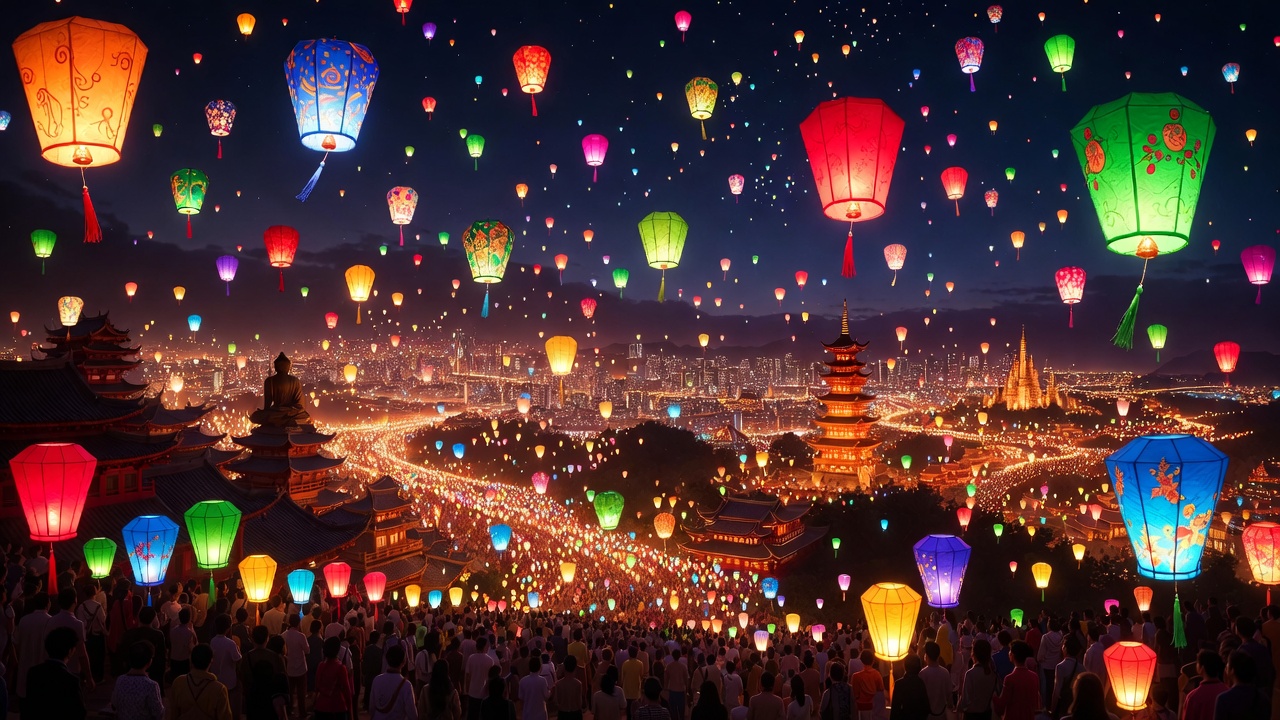
This is the grand finale. Spring Festival doesn’t end until the lanterns are lit.
The Lantern Festival marks the first full moon of the new year. Streets glow with handmade lanterns in every shape imaginable—dragons, flowers, animals, cartoon characters.
Key traditions:
- Guessing lantern riddles (猜灯谜): Riddles attached to lanterns challenge your wit
- Eating tangyuan (汤圆): Sweet glutinous rice balls in warm soup
- Dragon and lion dances: Grand performances fill the streets
- Setting off fireworks: One last explosion before normal life resumes
The round tangyuan symbolizes family reunion. The name sounds like 团圆 (tuán yuán), meaning “reunion.”
13. Respecting Food Taboos and Lucky Dishes
Food during Spring Festival isn’t random. Every ingredient carries meaning.
What to eat during Chinese New Year:
| Food | Meaning | How It’s Prepared |
|---|---|---|
| Mandarin oranges | Wealth | Displayed in bowls, given as gifts |
| Pomelo | Abundance | Eaten fresh |
| Peanuts | Longevity | Boiled or roasted as snacks |
| Melon seeds | Fertility | Endless snacking during visits |
| Nian gao (rice cake) | Annual improvement | Steamed, pan-fried, or in soup |
What NOT to eat:
- Porridge: Associated with poverty
- Medicine: Avoid taking medicine on Day 1 if possible (symbolizes illness all year)
- White foods: Tofu, white steamed buns (associated with death)
14. Avoiding New Year Taboos (过年禁忌 Guò Nián Jìn Jì)
Break these rules, and you might jinx your entire year. At least, that’s what tradition says.
Things NOT to do during Chinese New Year:
❌ On Day 1:
- Don’t sweep or take out trash (sweeps away luck)
- Don’t wash hair (washes away fortune)
- Don’t use scissors or knives (cuts off good luck)
- Don’t say negative words (death, illness, poverty, ghost)
- Don’t break things (if you do, say “碎碎平安” – suì suì píng ān – “may there be peace year after year”)
- Don’t cry (invites sadness)
- Don’t wear black or white (funeral colors)
❌ During the entire festival period:
- Don’t lend money (you’ll lose wealth all year)
- Don’t demand debt repayment (rude and unlucky)
- Don’t give odd-numbered gifts (even numbers are lucky)
- Don’t argue or fight
15. Lion and Dragon Dance Performances (舞狮舞龙 Wǔ Shī Wǔ Lóng)
Purpose: Bring good luck, scare away evil, bless businesses
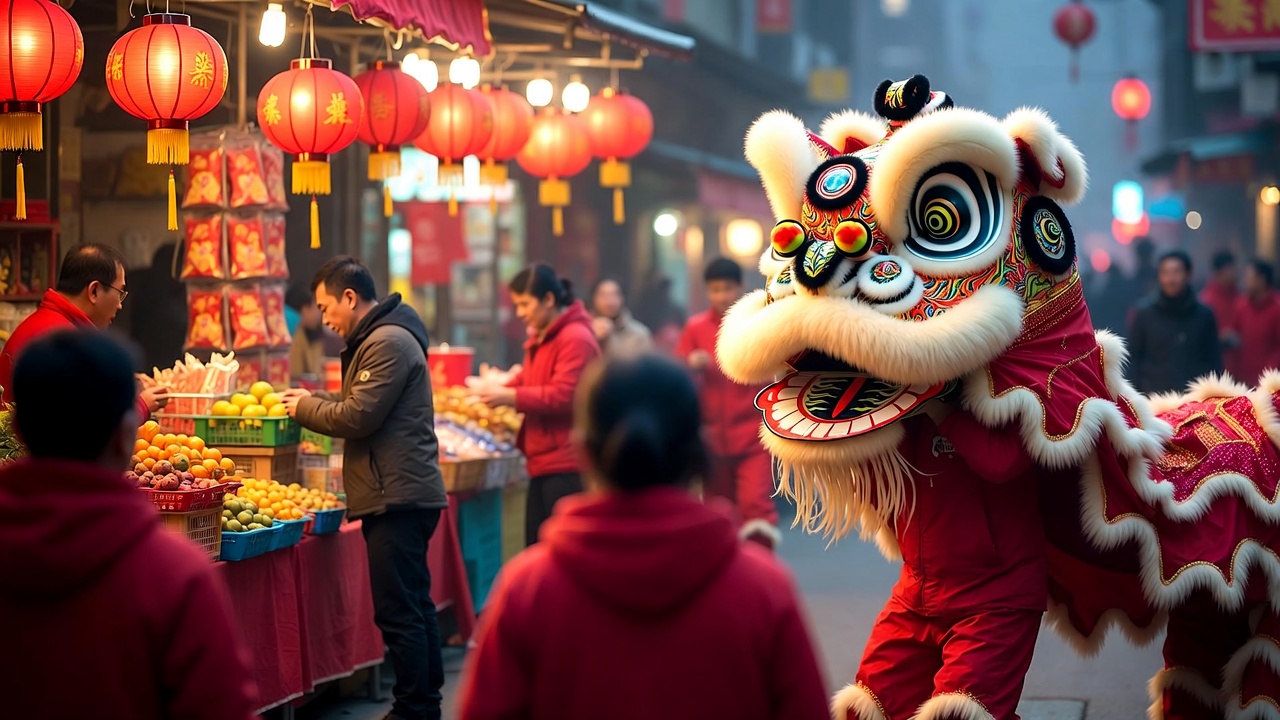
The drums thunder. The lion’s eyes blink. It dances through doorways, “eating” lettuce hung from above.
Lion dances and dragon dances are Spring Festival’s most spectacular public performances.
Lion Dance vs Dragon Dance:
| Feature | Lion Dance | Dragon Dance |
|---|---|---|
| Performers | 2 people per lion | 10+ people per dragon |
| Length | Short (1 lion costume) | Long (up to 50 meters) |
| Symbolism | Courage, protection | Power, wisdom, good fortune |
| Movement | Acrobatic, agile | Flowing, wave-like |
Businesses pay premium prices for lion dance blessings. The lion enters the shop, “eats” the ceremonial lettuce (采青 cǎi qīng), and spits it out—symbolizing spreading fortune.
How to Wish Someone Happy Chinese New Year
Master these phrases, and you’ll impress every auntie you meet.
Essential Spring Festival greetings:
- 新年快乐 (Xīn nián kuài lè) – Happy New Year
- 恭喜发财 (Gōng xǐ fā cái) – Wishing you prosperity
- 身体健康 (Shēn tǐ jiàn kāng) – Wishing you good health
- 万事如意 (Wàn shì rú yì) – May everything go as you wish
- 年年有余 (Nián nián yǒu yú) – May you have abundance every year
- 心想事成 (Xīn xiǎng shì chéng) – May your wishes come true
For specific audiences:
| Recipient | Greeting | Meaning |
|---|---|---|
| Elders | 福如东海,寿比南山 | Fortune vast as the sea, longevity like mountains |
| Children | 学业进步 | Progress in studies |
| Business people | 财源广进 | May wealth flow in |
| Friends | 大吉大利 | Great luck and fortune |
Final Thoughts: Celebrating Spring Festival Like a True Local
Spring Festival isn’t about perfect execution. It’s about intention.
It’s the grandmother who wakes before dawn to make dumplings. The father who drives twelve hours to be home. The child who saves their red envelope money all year.
These traditions have survived for millennia because they’re about what matters most: family, gratitude, and hope for the future.
So this Chinese New Year, don’t just watch. Participate.
Hang some red. Cook something symbolic. Call someone you love.
That’s how you celebrate like a local.
新年快乐! Xīn Nián Kuài Lè! Happy Chinese New Year!
Planning a trip to China during Spring Festival? Check out our guides to the best Chinese New Year destinations and tips for traveling during the world’s largest annual migration.