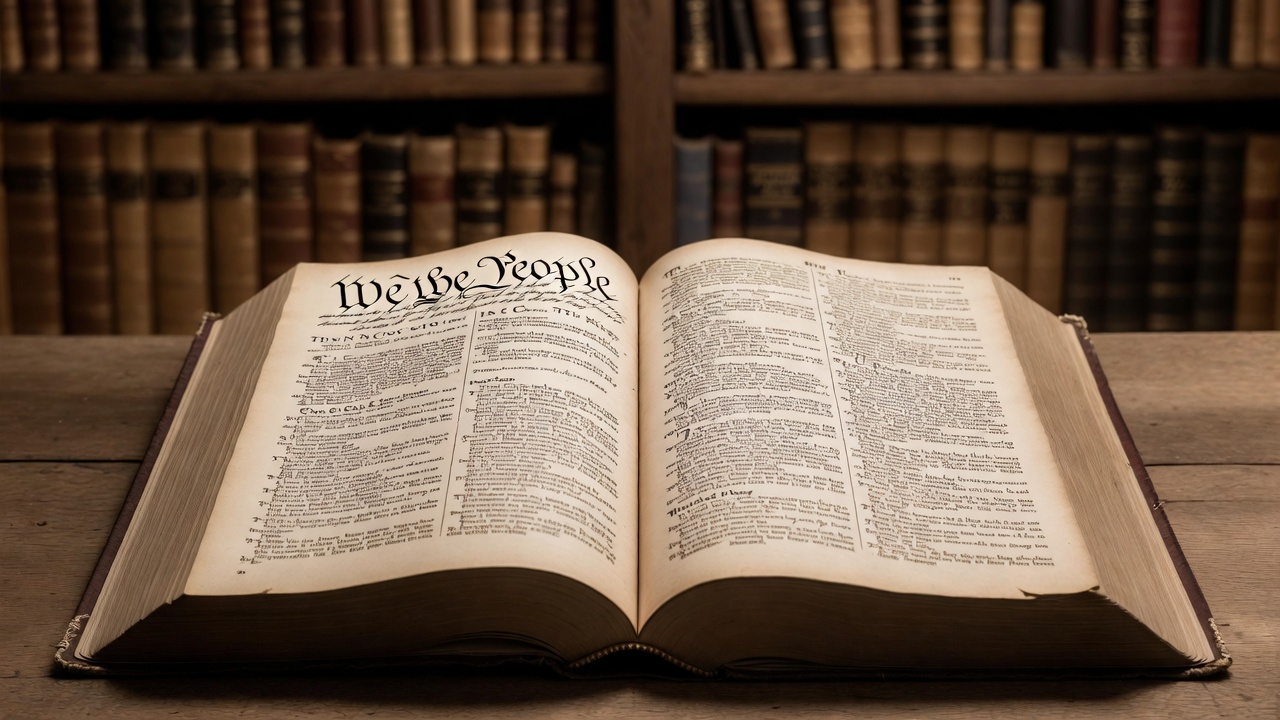
As America celebrates its 250th anniversary in 2026, there has never been a better time to look back at the document that holds the country together. The US Constitution is only about 4,543 words long — shorter than most college essays. Yet it has governed over 330 million people for more than two centuries. It is the oldest written national constitution still in use anywhere on the planet.
Most Americans learn the basics in school. They know about the three branches of government, the Bill of Rights, and maybe a few key amendments. But the Constitution hides a wealth of strange, funny, and downright shocking stories behind its elegant parchment. From a provision that technically allows you to become a government-sanctioned pirate, to a college student’s C-minus paper that literally changed the law of the land, these lesser-known facts reveal just how human, how messy, and how remarkable the making of American democracy really was.
Whether you are a history buff, a traveler visiting Philadelphia’s Independence Hall or the National Archives in Washington, D.C., or simply someone who wants to impress your friends at the next Fourth of July barbecue, this list is for you. Here are 20 surprising US Constitution facts that will change how you see the most important document in American history.
1. The US Constitution Is the Shortest Written National Constitution in the World
Let’s start with something simple but surprising. The original US Constitution contains only about 4,543 words, including signatures. Even with all 27 amendments added, the total comes to roughly 7,762 words. That is shorter than many blog posts you find online today.
By comparison, India’s constitution runs over 146,000 words, making it the longest national constitution on Earth. The constitutions of Brazil, Nigeria, and the European Union’s foundational treaties dwarf the American document many times over.
Yet those few thousand words established the entire framework of the federal government — the presidency, Congress, the Supreme Court, and a system of checks and balances that has endured since 1788. As the National Constitution Center notes, it fits on just four large sheets of parchment paper. The Framers valued brevity. They wrote principles, not regulations. That decision to keep things short and broad is precisely what has allowed the document to survive and adapt for nearly 240 years.
2. Why the Constitutional Convention Was Originally Held in Secret Behind Locked Doors
The summer of 1787 in Philadelphia was brutal. Temperatures climbed well above 90°F (32°C), the streets smelled of horse manure and open sewage, and thick clouds of flies swarmed the city. Into this misery walked 55 delegates from 12 states who had been tasked with one job: fix the failing Articles of Confederation.
They quickly decided to do something far more radical — throw the Articles out entirely and write a brand-new framework of government. And they did it in total secrecy.
The doors and windows of the Pennsylvania State House (now called Independence Hall) were sealed shut. Armed sentries stood guard outside. Delegates swore oaths not to reveal anything discussed inside. James Madison, who kept the most detailed notes of the proceedings, did not allow them to be published until after his death in 1836 — nearly 50 years later.
Why all the secrecy? The delegates feared public pressure and political backlash. They knew their proposal to create a strong federal government would be controversial. They believed honest debate required privacy. Without that secrecy, delegates may not have been willing to compromise. And without compromise, there would be no Constitution.
If you visit Independence Hall in Philadelphia today, you can stand in the very room where this happened. The hall is part of Independence National Historical Park, and guided tours run daily. It is one of the most moving experiences a traveler can have in America.
3. Thomas Jefferson and John Adams Did Not Sign the US Constitution
Here is a fact that stumps most people in trivia games. Thomas Jefferson and John Adams — two of the most famous Founding Fathers, both future presidents, and both signers of the Declaration of Independence — never signed the Constitution.
The reason is straightforward. They were not in the country. Jefferson was serving as the American minister to France, stationed in Paris. Adams was serving as the American minister to Great Britain, living in London. Neither attended the Constitutional Convention, and therefore neither had the opportunity to sign.
This is one of those Constitution facts for history buffs that reminds us how physically disconnected early American leaders were from one another. In an age before telephones, let alone the internet, transatlantic communication took weeks or even months by sailing ship. Jefferson followed the Convention from afar and expressed concerns about the lack of a bill of rights. His feedback, communicated by letter to Madison, played an important role in the eventual addition of the first ten amendments.
4. The Word “Democracy” Does Not Appear Anywhere in the Constitution
Search every line, every clause, every amendment. The word “democracy” is completely absent from the US Constitution. So is the word “democratic.”
This was deliberate. The Framers established a republic, not a direct democracy. In a republic, citizens elect representatives who make decisions on their behalf. Many of the delegates at the Convention actually feared pure democracy. They worried that direct majority rule could become “mob rule” and trample the rights of minorities and individuals.
James Madison addressed this directly in Federalist No. 10, where he argued that a large republic with elected representatives would be better at controlling the dangers of political factions than a small, direct democracy. The entire system of checks and balances — the Senate, the Electoral College, the appointed judiciary — was designed to filter popular passions through layers of deliberation.
This distinction between a republic and a democracy remains a topic of debate in American civic life today, nearly 240 years later.
5. How a College Student’s Bad Grade Led to the 27th Constitutional Amendment
This might be the most inspiring Constitution story you have never heard. It starts in 1982, when a 19-year-old college sophomore named Gregory Watson was enrolled in a government class at the University of Texas at Austin.
Watson was assigned to write a paper about a governmental process. While researching in the library, he stumbled across something strange — a proposed constitutional amendment, originally written by James Madison in 1789, that had never been ratified. The amendment stated that any change to congressional pay could not take effect until after the next election. In simpler terms: Congress cannot vote itself an immediate pay raise.
Watson noticed something crucial. Unlike most proposed amendments, this one had no expiration date. He argued in his paper that the amendment was still legally “alive” and could be ratified by the states even after nearly 200 years.
His professor gave him a C grade, calling the idea a “dead letter.” Watson was furious. So he set out to prove her wrong — not by arguing in the classroom, but by actually getting the amendment ratified.
Working largely on his own, Watson launched a letter-writing campaign to state legislatures across the country. Maine ratified the amendment in 1983. Colorado followed in 1984. Slowly, state by state, the momentum built. According to reporting by NPR, Watson spent a decade on his grassroots crusade. On May 7, 1992, Michigan became the 38th state to ratify, and the amendment officially became the 27th Amendment to the US Constitution — 202 years and seven months after it was first proposed.
It remains the most recent amendment to the Constitution.
And Watson’s grade? In 2017, the University of Texas at Austin retroactively changed it from a C to an A+. Sometimes persistence pays off. Sometimes it takes two centuries.
6. The US Constitution Contains Spelling Errors That Still Exist Today
For a document written by some of the most brilliant minds of the 18th century, the Constitution has a surprising number of spelling quirks.
The most famous? Above the signatures of the delegates, Pennsylvania is spelled “Pensylvania” — with just one N. At first glance, this looks like an embarrassing typo. But historians note that in the late 1700s, this was actually an accepted alternative spelling. Interestingly, the Constitution uses both spellings — “Pennsylvania” and “Pensylvania” — in different places.
There is also a genuine grammatical error. Article I, Section 10 uses “it’s” (with an apostrophe, meaning “it is”) where the correct word should be “its” (possessive, no apostrophe). Even by 18th-century standards, this was wrong. As Brainscape notes, this gives comfort to grammar offenders everywhere.
Other words in the Constitution look strange to modern eyes but were perfectly normal in 1787. The word “chuse” appears instead of “choose.” This was a standard spelling at the time.
The original parchment was hand-written by Jacob Shallus, a clerk for the Pennsylvania General Assembly. The Convention paid him just $30 for his labor — equivalent to roughly $800 today. Not bad for the most consequential piece of penmanship in American history.
7. Benjamin Franklin Had to Be Carried to the Constitutional Convention
Benjamin Franklin was 81 years old during the Constitutional Convention of 1787. He was by far the oldest delegate — the youngest, Jonathan Dayton of New Jersey, was only 26. Franklin was in such poor health that he could not walk the short distance from his home to the State House.
His solution? He was carried through the streets of Philadelphia in a sedan chair hoisted by four prisoners from the Walnut Street Jail. These prisoners were reportedly selected because they could be trusted not to drop the famous inventor and statesman.
Despite his physical frailty, Franklin’s mind remained sharp, and his presence lent the Convention enormous moral authority. According to accounts documented by the National Archives, Franklin reportedly wept as he signed the Constitution. He also delivered one of the Convention’s most memorable lines. Looking at the carved sun on the back of George Washington’s chair, Franklin said he had often wondered during the debates whether it was a rising or setting sun. Now, he said, he was happy to know it was a rising sun.
Franklin holds a unique distinction in American history. He is the only Founding Father to have signed all three of the nation’s foundational documents: the Declaration of Independence (1776), the Treaty of Paris (1783), and the US Constitution (1787).
8. The Constitution Was Secretly Moved to Fort Knox After the Attack on Pearl Harbor
After the Japanese attack on Pearl Harbor on December 7, 1941, Washington, D.C. was gripped by fear of further strikes. Armed soldiers patrolled the streets. Anti-aircraft guns were mounted on rooftops. Government officials scrambled to protect America’s most treasured possessions.
On December 26, 1941 — the day after Christmas — Secret Service agents quietly cleared a platform at Union Station. Four nondescript parcels were loaded onto a train bound for Louisville, Kentucky. Inside those parcels were the original Constitution, the Declaration of Independence, and Abraham Lincoln’s Gettysburg Address, among other irreplaceable documents.
Their destination was the United States Bullion Depository at Fort Knox — one of the most secure locations on Earth, famous for housing the nation’s gold reserves. As the U.S. National Park Service describes, Archibald MacLeish, the Librarian of Congress, personally sealed the documents in specially prepared bronze containers heated to drive off moisture. The containers were then wrapped in mineral wool and locked inside wooden cases.
The Constitution remained at Fort Knox until October 1, 1944, after the success of the D-Day invasion made the threat of attack on Washington far less likely. It was then returned to the Library of Congress, and finally moved to the National Archives Building in 1952, where it remains on display today in the Rotunda for the Charters of Freedom.
9. The Constitution Technically Allows You to Become a Government-Sanctioned Pirate
Buried deep in Article I, Section 8, Clause 11 of the Constitution is a power that sounds like something out of a Hollywood movie. Congress has the authority to “grant Letters of Marque and Reprisal.”
What does this mean? A letter of marque is essentially a government license that authorizes a private citizen to attack and capture enemy ships. During the 18th and 19th centuries, this practice — known as privateering — was a legitimate tool of warfare. A privateer was different from a pirate because they operated with government permission. Without the letter, you were a pirate subject to hanging. With it, you were a patriotic entrepreneur.
The United States used privateers with great success during the Revolutionary War and the War of 1812. As the Congressional Research Service explains, the fledgling nation lacked a large navy, so letters of marque allowed the government to harness private merchant vessels to disrupt British trade.
While the U.S. has not issued a letter of marque in over two centuries, this power has never been formally revoked. Congress has even debated reviving it in modern times. In December 2025, Senator Mike Lee introduced the Cartel Marque and Reprisal Authorization Act, which would allow private citizens to seize the property of drug cartels under a modern form of the old privateering commission. The provision remains one of the Constitution’s most fascinating relics.
10. Only 39 of the 55 Delegates to the Constitutional Convention Actually Signed the Document
Not everyone who attended the Constitutional Convention agreed with the final product. Of the 55 delegates who participated, only 39 signed the Constitution on September 17, 1787.
Three delegates famously refused to sign. Edmund Randolph and George Mason of Virginia and Elbridge Gerry of Massachusetts objected, in large part because the Constitution lacked a bill of rights — a list of protections for individual liberties. Mason had actually authored the Virginia Declaration of Rights, which later influenced the Bill of Rights.
Their objections turned out to be prescient. The absence of a bill of rights became the single biggest obstacle to ratification. Several states nearly voted against the Constitution because of this gap. Supporters (known as Federalists) ultimately promised that a bill of rights would be added as the first order of business in the new government. That promise was kept. James Madison drafted the first ten amendments, which were ratified on December 15, 1791, and became the Bill of Rights.
Other delegates simply left the Convention early and never returned. Rhode Island — ever the rebel — refused to even send delegates in the first place. It became the last of the original 13 states to ratify the Constitution on May 29, 1790, and only after being threatened with having its trade treated as that of a foreign nation.
11. What the Senate Almost Called the President of the United States Instead
When the Convention created the office of the president, nobody could agree on what to call the person who held it. The Senate proposed an extravagant title: “His Highness the President of the United States of America and Protector of their Liberties.”
If that sounds like something from a European monarchy, that is exactly the problem. Many members of the House of Representatives and other politicians felt the title was far too royal for a republic. Vice President John Adams — ironically one of the people most in favor of a grand title — was mocked behind his back for his enthusiasm.
Eventually, both the House and Senate compromised on the simpler and now-familiar title: “The President of the United States.” Plain, dignified, and democratic.
The debate may seem trivial, but it reflected a deep anxiety in the early republic. America had just fought a war to free itself from a king. The last thing many citizens wanted was a leader who sounded like one.
12. How the First National Thanksgiving Was Created to Celebrate the Constitution
Most Americans associate Thanksgiving with Pilgrims, turkeys, and cranberry sauce. But the first national Thanksgiving was not about Plymouth Rock at all. It was about the Constitution.
On November 26, 1789, President George Washington issued a proclamation establishing the first national Thanksgiving Day. The purpose was to give thanks to God for the “peaceable and rational manner” in which the new Constitution had been established. Washington specifically called on citizens to express gratitude for “the great degree of tranquility, union, and plenty” that the new framework of government had brought.
This fact gets lost in the mythology of Thanksgiving, but it speaks to how important the Constitution was to the founding generation. They did not take the peaceful creation of a new government for granted. They had seen the violence of revolution and the dysfunction of the Articles of Confederation. The fact that 13 independent states could agree on a single governing document without bloodshed was, to them, something truly worth celebrating.
It was not until 1863, during the Civil War, that President Abraham Lincoln established the annual Thanksgiving holiday on the fourth Thursday of November, the tradition that continues today.
13. The Original Constitution Did Not Give Anyone the Explicit Right to Vote
This is one of the most shocking US Constitution facts for many people. The original Constitution, ratified in 1788, does not include an explicit right to vote. Nowhere in the original text does it say that citizens have a right to cast ballots.
Instead, the Constitution left voting qualifications almost entirely up to the individual states. And the states were restrictive. In the early years of the republic, voting was generally limited to white men who owned property. Women, African Americans, Native Americans, and poor white men without property were all excluded.
It took nearly two centuries of struggle, protest, and bloodshed to expand the franchise:
| Amendment | Year Ratified | What It Did |
|---|---|---|
| 15th Amendment | 1870 | Prohibited denying the vote based on race |
| 19th Amendment | 1920 | Gave women the right to vote |
| 23rd Amendment | 1961 | Gave Washington, D.C. residents the right to vote in presidential elections |
| 24th Amendment | 1964 | Banned poll taxes in federal elections |
| 26th Amendment | 1971 | Lowered the voting age to 18 |
Each of these amendments represents a hard-won expansion of democracy. The original Framers created a system that was, by modern standards, deeply limited. The story of the Constitution is, in many ways, the story of who gets to participate in American life.
14. The Chance of Getting a New Constitutional Amendment Passed Is Basically Zero
Here is a sobering number. Since the Constitution was ratified, more than 11,900 amendments have been proposed in Congress. Of those, only 33 have been sent to the states for ratification. And of those, only 27 have been approved.
If you do the math, the success rate for proposed amendments is roughly 0.23% — which, rounded down, is essentially zero.
The process is deliberately difficult. Article V of the Constitution requires a proposed amendment to be approved by two-thirds of both the House and Senate (or by a convention called by two-thirds of state legislatures, which has never happened). The amendment must then be ratified by three-fourths of state legislatures — currently 38 out of 50 states.
This high bar was intentional. The Framers wanted the Constitution to be stable. They did not want it changed on a whim or at the whip of temporary popular passion. As a result, the Constitution has been amended, on average, only about once every nine years since 1788.
The last amendment — the 27th, pushed through by Gregory Watson’s letter-writing campaign — was ratified in 1992. That means the Constitution has not been amended in over 33 years. There are serious, ongoing debates about whether this rigidity is a strength or a weakness of the American system.
15. The Bill of Rights Originally Did Not Apply to State Governments
When the Bill of Rights was ratified in 1791, it only restricted the federal government. States were free to pass laws that would have violated the first ten amendments.
This meant, for example, that a state could establish an official religion, restrict speech, or deny a jury trial — all without violating the Constitution. Many states did exactly this. Massachusetts maintained an established church (Congregationalism) until 1833.
This changed slowly through a legal process called “incorporation,” in which the Supreme Court used the 14th Amendment’s Due Process Clause (ratified in 1868) to apply individual rights from the Bill of Rights to state governments. But this process took decades. Many protections in the Bill of Rights were not applied to the states until the mid-20th century.
For example, the right to a court-appointed lawyer (from the Sixth Amendment) was not applied to the states until the Supreme Court’s landmark decision in Gideon v. Wainwright in 1963. The right against unreasonable searches and seizures (from the Fourth Amendment) was not fully applied until Mapp v. Ohio in 1961.
This means that for most of American history, the Bill of Rights was essentially a set of rules that only the federal government had to follow.
16. The 13th Amendment Has a Controversial Exception That Still Sparks Debate
The 13th Amendment, ratified on December 6, 1865, formally abolished slavery in the United States. But read the text carefully, and you will notice a critical caveat:
“Neither slavery nor involuntary servitude, except as a punishment for crime whereof the party shall have been duly convicted, shall exist within the United States.”
That exception — “except as a punishment for crime” — has generated intense debate for more than 160 years. Critics argue that this clause created a legal foundation for systems of forced prison labor that disproportionately affected Black Americans, particularly in the post-Civil War South.
During the era of convict leasing, Southern states arrested formerly enslaved people on minor or fabricated charges, convicted them, and then “leased” them to private companies for labor under brutal conditions. Many historians view this as a continuation of slavery by another name.
The debate remains very much alive today. Several states, including Alabama, Tennessee, Oregon, and Vermont, have passed ballot measures in recent years to remove the exception clause from their own state constitutions. The conversation about how the 13th Amendment’s language shapes the modern criminal justice system continues to evolve as America confronts its history with greater honesty.
17. The 25th Amendment Has Been Invoked Multiple Times — Usually Because of Medical Procedures
The 25th Amendment, ratified in 1967, clarifies the rules for presidential succession and disability. Section 3 allows the president to temporarily transfer power to the vice president by written declaration.
This provision has been used several times, and the reason is surprisingly mundane. Presidents have invoked Section 3 primarily for medical procedures requiring anesthesia — particularly colonoscopies.
President George W. Bush transferred power to Vice President Dick Cheney twice: once in 2002 and again in 2007, both times for colonoscopies. President Joe Biden transferred power to Vice President Kamala Harris in November 2021 for the same reason.
Each transfer lasted only a few hours. But during those hours, the vice president was technically the Acting President of the United States — the most powerful person in the world, if only briefly.
Before the 25th Amendment was passed, there was no clear procedure for what happened when a president was temporarily incapacitated. When President James Garfield was shot in 1881, he lingered for 80 days before dying — and no one could agree on whether the vice president should take over. The 25th Amendment was designed to prevent that kind of crisis from happening again.
18. The Constitution Was Written in the Same Building Where the Declaration of Independence Was Signed
Independence Hall in Philadelphia has an unmatched place in American history. The Declaration of Independence was debated and adopted there in July 1776. Just 11 years later, in the summer of 1787, the US Constitution was drafted and signed in the very same building.
George Washington also received his commission as Commander of the Continental Army in this building in 1775. That means three of the most pivotal moments in the founding of the United States all took place within the same walls.
In 2026, Independence Hall is expected to be a major destination for America 250 celebrations. The National Constitution Center, located just across the street, is opening new exhibit galleries specifically for the anniversary. A rare original printed copy of the Constitution — one of just 14 known to survive — will be on display.
If you are planning to visit Philadelphia, plan extra time. The city is the birthplace of American democracy, and every corner of the old town district tells a piece of that story. Beyond Independence Hall, visitors can explore the Liberty Bell Center, Congress Hall, Carpenter’s Hall, and the new exhibits at the National Constitution Center.
19. The Full US Constitution Was Displayed for the First Time in History in 2025
For more than two centuries, nobody had ever seen the complete US Constitution displayed in a single exhibit. The four original pages of the Constitution are famously displayed behind protective glass in the Rotunda of the National Archives in Washington, D.C. But the original Bill of Rights and the other 17 amendments were stored separately and rarely shown to the public.
That changed in September 2025. According to an official press release from the National Archives, the entire Constitution — all four original pages, the Bill of Rights, all 17 subsequent amendment documents, and a rarely seen “fifth page” (a letter of transmittal signed by George Washington) — was displayed together in the Rotunda for the first time in history.
The exhibit ran from September 16 through October 1, 2025, as part of the nation’s 250th anniversary celebrations. Extended evening hours were offered on weekends to accommodate the expected crowds.
For anyone who missed it, the regular display of the original four pages of the Constitution remains open year-round at the National Archives. The documents are preserved in custom cases filled with argon gas, maintained at 67°F (19.4°C) with a relative humidity of 40 percent. The titanium-framed cases are designed to protect the parchment from light, temperature changes, and atmospheric damage for generations to come.
20. The Constitution Turns 250 in 2037 — and America Is Already Getting Ready
While the nation is in the midst of celebrating the 250th anniversary of the Declaration of Independence in 2026, another milestone is already on the horizon. The US Constitution will celebrate its own 250th birthday on September 17, 2037.
The National Constitution Center in Philadelphia has stated explicitly that its current renovation and expansion projects are designed not only for the 2026 celebrations but also to prepare the nation for the Constitution’s 250th anniversary in 2037. New galleries, interactive exhibits, and educational programs are being developed with a multi-decade timeline in mind.
This forward-looking approach reflects something important about the Constitution itself. It was designed to endure, to adapt, and to serve future generations who could not yet be imagined. The Framers who sweated through that Philadelphia summer in 1787 could never have dreamed of the nation their document would create — a country of 50 states, more than 330 million people, and a global influence that reaches every corner of the world.
As we celebrate America 250 in 2026, the Constitution reminds us that the project of self-governance is never finished. Every generation inherits the work of the last and passes it on, imperfect but enduring, to the next.
Frequently Asked Questions About the US Constitution
How old is the US Constitution in 2026?
The US Constitution was signed on September 17, 1787. In 2026, it is 238 years old. Its 250th anniversary will be in 2037.
How many words are in the US Constitution?
The original Constitution contains approximately 4,543 words. With all 27 amendments, the total is roughly 7,762 words.
How many amendments does the US Constitution have?
As of 2026, the Constitution has 27 amendments. The first ten, known as the Bill of Rights, were ratified in 1791. The most recent, the 27th Amendment, was ratified in 1992.
Where is the original US Constitution kept?
The original Constitution is displayed in the Rotunda for the Charters of Freedom at the National Archives Building in Washington, D.C., at 700 Pennsylvania Avenue, NW.
Who wrote the US Constitution?
The Constitution was the product of 55 delegates at the Constitutional Convention. James Madison is often called the “Father of the Constitution” for his central role in drafting the document. The physical penmanship was done by Jacob Shallus, a clerk who was paid $30.
Can you visit Independence Hall where the Constitution was signed?
Yes. Independence Hall is located in Philadelphia, Pennsylvania, and is part of Independence National Historical Park. Free guided tours are available, though timed entry tickets are recommended, especially during summer months and the 2026 anniversary celebrations.
Quick Reference: 20 US Constitution Facts at a Glance
| # | Surprising Fact |
|---|---|
| 1 | Shortest written national constitution in the world (about 4,543 words) |
| 2 | Drafted in total secrecy behind locked doors with armed guards |
| 3 | Thomas Jefferson and John Adams were abroad and never signed it |
| 4 | The word “democracy” never appears in the document |
| 5 | A college student’s C paper led to the 27th Amendment in 1992 |
| 6 | Contains spelling errors, including “Pensylvania” and a misused apostrophe |
| 7 | Benjamin Franklin, age 81, was carried to the Convention in a sedan chair |
| 8 | Moved to Fort Knox after Pearl Harbor for safekeeping during WWII |
| 9 | Includes a provision allowing Congress to authorize privateering (legal piracy) |
| 10 | Only 39 of 55 delegates actually signed the document |
| 11 | The Senate wanted to call the president “His Highness” |
| 12 | The first national Thanksgiving was held to celebrate the Constitution |
| 13 | The original text does not explicitly grant anyone the right to vote |
| 14 | The success rate for proposed amendments is essentially 0% |
| 15 | The Bill of Rights did not apply to states until the mid-20th century |
| 16 | The 13th Amendment contains a controversial exception for convicted criminals |
| 17 | The 25th Amendment has been invoked mainly for presidential colonoscopies |
| 18 | Written in the same building where the Declaration of Independence was signed |
| 19 | The full Constitution was displayed together for the first time in 2025 |
| 20 | The Constitution’s own 250th anniversary is coming in 2037 |
Why These Constitution Facts Matter in 2026 and Beyond
As the United States marks 250 years since the Declaration of Independence this year, it is worth remembering that the founding of the nation was not a single event. It was a process — messy, contentious, and deeply human. The Constitution, with its spelling errors and missing commas, its compromises and contradictions, its sweeping ideals and painful exclusions, reflects the full complexity of that process.
The America 250 celebrations are happening across the country in 2026. Philadelphia is hosting major events at Independence Hall and the National Constitution Center. Washington, D.C.’s National Archives continues to welcome visitors to see the original document. States from New Hampshire to California are organizing their own commemorations, educational programs, and community events.
But the most important celebration might be the simplest one: actually reading the Constitution. At fewer than 5,000 words, you can read the entire original document in about 30 minutes. Carry a pocket Constitution (they are given away free at many libraries and civic organizations). Talk about it with your family. Discuss it with your neighbors.
The Framers did not create a perfect document. They created a document that could be improved — through debate, through amendment, through the hard work of each generation. That is the real genius of the Constitution, and that is what makes it worth celebrating 238 years later.
Have you visited Independence Hall or the National Archives? Share your experience in the comments below. And if you learned something new from this list, share it with a friend — everyone deserves to know the weird, wonderful, and surprising story of the US Constitution.