Your Complete Insider’s Guide to Milano Cortina 2026 – From Alpine Slopes to Fashion Streets
The roar of the crowd. The crisp Alpine air biting at your cheeks. The triumphant moment when gold glitters against a backdrop of the UNESCO-listed Dolomites. From February 6 to 22, 2026, the eyes of the sporting world will turn to northern Italy for the XXV Winter Olympic Games – and if you’re planning to be there, benvenuto. You’ve chosen wisely.
There’s something almost poetic about Italy hosting these Winter Games. This is a nation that has perfected the art of living well – la bella vita – and now, for the first time in Olympic history, two cities will officially co-host the event. Milan, the pulsating heart of Italian fashion and finance, will welcome athletes and spectators with its sleek urban energy. Cortina d’Ampezzo, the “Queen of the Dolomites,” will offer that timeless Alpine glamour that has drawn winter enthusiasts since the 1956 Games.
I’ve spent two decades chasing festivals and cultural celebrations across this planet, and I can tell you without hesitation: Milano Cortina 2026 represents something special. It’s not merely a sporting event – it’s an invitation to experience Italy at its winter finest, when the mountains blush pink at sunset (a phenomenon locals call enrosadira), when the trattorias serve soul-warming cassoeula, and when every cobblestone street seems to whisper stories of centuries past.
In this comprehensive guide, I’ll walk you through everything you need to know to make your 2026 Winter Olympics experience unforgettable. Whether you’re a die-hard sports fan planning to catch every figure skating routine, or a curious traveler wondering what else northern Italy offers beyond the medal ceremonies, consider this your passport to the Games.
Milano Cortina 2026 Olympics Dates and Schedule: When to Plan Your Italian Winter Adventure
Understanding the timeline of the Games is crucial for planning your trip. Here’s what you need to know:
| Event | Dates | Duration |
|---|---|---|
| Olympic Winter Games | February 6–22, 2026 | 17 days |
| Paralympic Winter Games | March 6–15, 2026 | 10 days |
| Opening Ceremony | February 6, 2026 | San Siro Stadium, Milan |
| Closing Ceremony | February 22, 2026 | Arena di Verona |
Early competition begins on February 4, with curling and ice hockey preliminaries starting before the official Opening Ceremony. The Paralympics follow a few weeks later, offering another opportunity to witness extraordinary athletic achievement.
The Opening Ceremony, titled “Armonia” (Harmony), will transform Milan’s legendary San Siro Stadium into a celebration of Italian culture. Creative Director Marco Balich has promised a spectacle that “brings together different elements,” with confirmed performances from Mariah Carey, Laura Pausini, and Andrea Bocelli.
The Closing Ceremony moves to Verona’s ancient Roman amphitheater, built in 30 AD – making it the first UNESCO World Heritage monument to host an Olympic ceremony. Titled “Beauty in Action,” this finale will feature principal dancer Roberto Bolle from La Scala Theatre Ballet, weaving together music, art, and sport in a setting that once hosted gladiatorial combat.
How to Get to Milan and Cortina for the 2026 Winter Olympics: Complete Transportation Guide
Getting to the Games requires some planning, as venues are spread across approximately 22,000 square kilometers of northern Italy. This is, by design, the most geographically expansive Winter Olympics in history.
Flying into Northern Italy: Best Airports for Milano Cortina 2026
Milan Malpensa Airport (MXP) serves as the primary international gateway. Located approximately 50 kilometers northwest of Milan’s city center, it offers direct connections to most major global cities. During the Olympics, enhanced train services will run from Malpensa to Milano Centrale with departures every 30 minutes from early morning until late night.
Milan Linate Airport (LIN) provides a convenient option for European flights, sitting just 7 kilometers from downtown Milan.
Venice Marco Polo Airport (VCE) is your best choice if you’re heading directly to Cortina d’Ampezzo. From Venice, it’s approximately 2-3 hours by bus to reach the “Queen of the Dolomites.”
Verona Villafranca Airport (VRN) offers excellent access to the Closing Ceremony venue and serves as a gateway to the Dolomites.
Train Travel During the 2026 Winter Olympics: Trenitalia and Trenord Services
Italy’s train network is your friend during the Games. Trenitalia, as a Premium Partner of Milano Cortina 2026, has enhanced services connecting all major Olympic clusters.
Key rail connections include:
- Frecciarossa high-speed trains linking Milan, Verona, and Bologna
- Regional trains with integrated bus services to mountain venues
- Train & Ride packages combining rail travel with dedicated Olympic shuttle buses
To reach Cortina d’Ampezzo by train, the most practical route involves taking a train to Ponte nelle Alpi-Polpet station, then connecting via the “Cortina 2026 Link” shuttle service. You can purchase integrated Train + Bus tickets on Trenitalia’s website by selecting “Cortina 2026” as your destination.
For Livigno and Bormio, take the train to Tirano station (easily reachable from Milan), where Olympic shuttle buses continue to the alpine venues.
Trenord, Lombardy’s regional rail operator, will run an impressive 2,500 daily connections during the Games, with extended service hours to accommodate spectators.
Driving to the Winter Olympics 2026: What You Need to Know
While driving offers flexibility, be prepared for significant traffic restrictions. Most Olympic venues cannot be reached by private vehicle – instead, you’ll use Park & Ride facilities with shuttle connections.
Olympic Limited Traffic Zones will be enforced on competition days, requiring a special Host Territories Vehicle Pass for access. Requests must be submitted through an online platform that opened in October 2025.
Parking locations with shuttle connections:
| Destination | Park & Ride Location | Shuttle Connection |
|---|---|---|
| Cortina | Dobbiaco, San Vito, Son dei Prade | Cortina South Spectators Bus Terminal |
| Livigno | Designated facilities | Livigno venues |
| Bormio | Designated facilities | Bormio Spectators Bus Terminal |
My recommendation? Leave the car behind and embrace Italy’s excellent public transport. You’ll skip the stress of mountain driving in winter conditions, contribute to the Games’ sustainability goals, and likely save considerable money on parking fees.
The Milano Cortina 2026 Transport App: Your Essential Digital Companion
Download the official Transport Milano Cortina 2026 app (available on iOS and Android) to plan routes, check schedules, and book tickets integrating trains, shuttles, and local transport from ATM, Trenitalia, Trenord, and taxi services.
Where to Stay During the 2026 Winter Olympics: Accommodation Guide for Milan, Cortina, and Beyond
Accommodation during the Games will be at a premium – and prices will reflect it. Early booking is essential.
Milan Hotel Guide for Winter Olympics Visitors
Milan offers the widest range of accommodation options, from luxury five-star hotels to budget-friendly hostels. The city’s excellent metro system means you can stay outside the center while maintaining easy access to venues.
Best neighborhoods for Olympic visitors:
- Centro Storico – Walking distance to major attractions; highest prices
- Navigli – Canal-side charm with great restaurants; slightly more affordable
- Porta Nuova – Modern district near Garibaldi station; excellent train connections
- Brera – Artsy neighborhood with boutique hotels; romantic atmosphere
Budget tip: Consider staying in Monza (20 minutes by train), Bergamo (50 minutes), or even Lake Como towns for potentially lower rates and beautiful surroundings.
Cortina d’Ampezzo Hotels and Lodging Options
Cortina has long been the playground of Italy’s elite, and accommodations reflect this heritage. Expect higher prices than comparable alpine resorts elsewhere in Europe.
Accommodation options range from:
- Luxury hotels like Hotel Cristallo and Grand Hotel Savoia
- Boutique alpine lodges offering traditional Dolomite hospitality
- B&Bs and guesthouses in surrounding villages (often better value)
- Apartment rentals through Airbnb (the official Games-time partner)
Smart strategy: Stay in nearby towns like Dobbiaco, San Vito di Cadore, or Passo Tre Croci for more affordable rates while maintaining shuttle access to Olympic venues.
Alternative Bases for Exploring the 2026 Winter Olympics
Verona makes an excellent base if you’re attending the Closing Ceremony, offering rich cultural attractions and easy rail connections to Milan and the Dolomites.
Bolzano provides Germanic-Italian charm with excellent access to multiple Olympic clusters in the Dolomites.
Venice – though further from the action – offers an unforgettable Italian experience and reasonable transport connections to Cortina.
Best Places to Visit in Milan During the Winter Olympics: Complete Sightseeing Guide
Milan is a city that rewards those who look beyond the surface. Yes, there’s the Duomo and the famous shopping streets, but the true magic lies in the city’s quieter corners, its hidden courtyards, and its unapologetic dedication to fare bella figura – making a good impression.
Milan Cathedral (Duomo di Milano): Italy’s Gothic Masterpiece
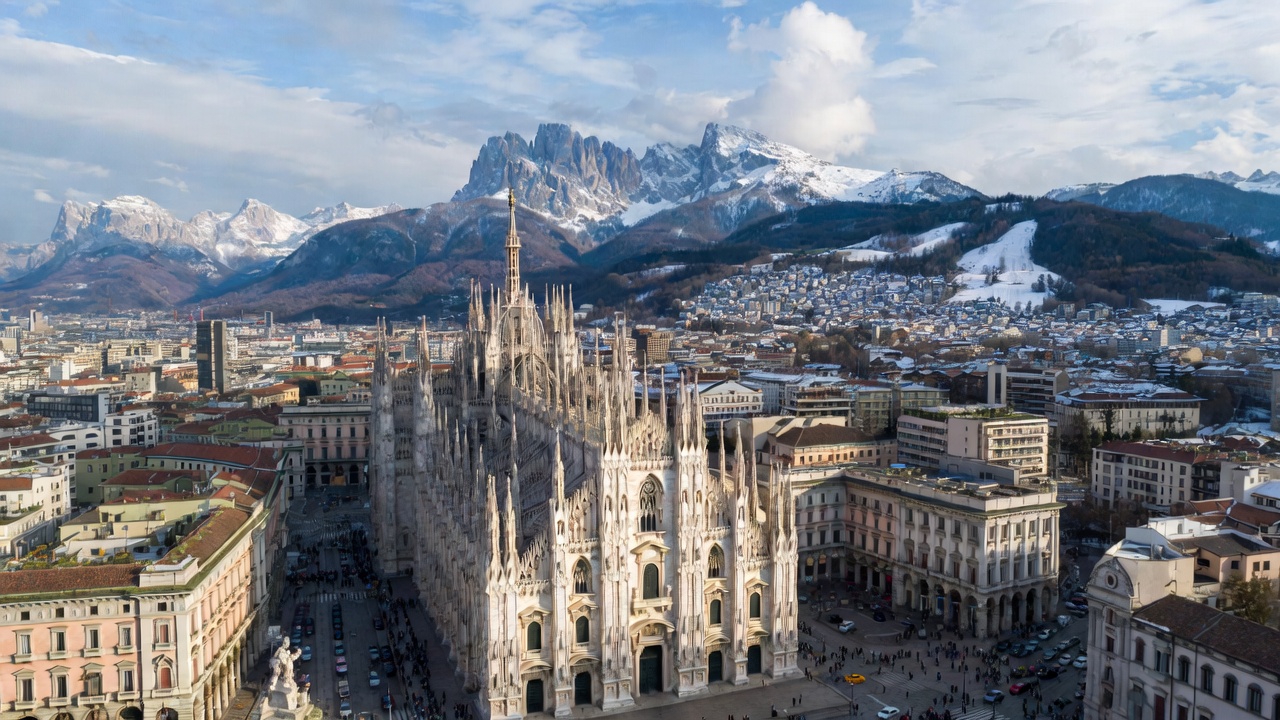
No visit to Milan is complete without standing before the Duomo, one of the world’s largest Gothic cathedrals. Construction began in 1386 and continued for nearly six centuries – meaning that artisans across more than twenty generations contributed to its completion.
The statistics alone are staggering: 135 spires, over 3,400 statues, and approximately 700 figures decorating its marble facade. But numbers cannot capture the emotion of stepping inside, where light filters through stained glass windows, illuminating centuries of devotion and artistry.
Don’t miss: Climbing to the rooftop terraces. Whether by stairs (a good workout) or elevator, the views across Milan’s rooftops to the distant Alps are worth every euro of the entrance fee. On clear winter days, you can see the snow-capped peaks that host the skiing events.
Practical information:
- Tickets: Book in advance at duomomilano.it
- Rooftop access: Via stairs (€10) or elevator (€14)
- Hours: 9:00 AM – 7:00 PM daily
- Winter tip: Morning visits offer the best light for photography
The Last Supper by Leonardo da Vinci: Experiencing the World’s Most Famous Painting
In the refectory of Santa Maria delle Grazie, Leonardo da Vinci created what many consider the most significant painting in Western art. L’Ultima Cena (The Last Supper) depicts the moment Jesus announces that one of his disciples will betray him – and Leonardo captured the shock, disbelief, and guilt rippling across the faces of the twelve apostles with unprecedented psychological insight.
This is not a painting you simply glance at. It demands contemplation.
Booking is essential – tickets often sell out weeks in advance. Only 25 visitors are permitted every 15 minutes to protect this fragile masterwork.
How to secure tickets:
- Book directly through cenacolovinciano.vivaticket.it
- New tickets are sometimes released on Wednesdays at 12:00 noon Italian time
- Consider guided tours (more expensive but often more available)
- Ask your hotel concierge – premium hotels sometimes have connections
Galleria Vittorio Emanuele II: The World’s Oldest Shopping Mall
Connecting Piazza del Duomo to Piazza della Scala, this magnificent 19th-century arcade is Milan’s living room. Beneath its iron-and-glass dome, you’ll find prestigious boutiques (Prada, Louis Vuitton, Gucci), historic cafés, and one of the world’s most peculiar traditions.
Look for the mosaic bull on the floor. Local legend holds that spinning three times on the bull’s, ahem, nether regions brings good luck. The marble is noticeably worn from decades of hopeful visitors following this tradition. Will it help your favorite Olympic team? Perhaps not. But it’s quintessentially Milanese – a blend of high culture and playful superstition.
Don’t miss: Coffee or an aperitivo at Caffè Camparino or Biffi, establishments that have served Milanese society for over a century.
Castello Sforzesco: Milan’s Historic Fortress and Museum Complex
This imposing 15th-century castle once housed the Sforza dynasty, Milan’s ruling family during the Renaissance. Today, it contains several museums showcasing everything from ancient Egyptian artifacts to Michelangelo’s final sculpture, the unfinished Pietà Rondanini.
The surrounding Parco Sempione offers a welcome green escape in winter, with views toward the Arco della Pace (Arch of Peace) – a triumphal arch that Napoleon commissioned before his empire collapsed.
Museum highlights:
- Pinacoteca del Castello – Renaissance paintings including works by Mantegna and Bellini
- Museum of Ancient Art – Michelangelo’s Pietà Rondanini
- Museum of Musical Instruments – One of Europe’s finest collections
Best part? The castle courtyards are free to enter, making this a perfect budget-friendly activity.
Teatro alla Scala: The Temple of Opera
Even if you can’t attend a performance (and during the Olympics, tickets will be scarcer than usual), the Museo Teatrale alla Scala offers a glimpse into the world’s most prestigious opera house.
La Scala has premiered works by Verdi, Rossini, and Puccini. Its red velvet boxes, glittering chandeliers, and incredible acoustics have made it a pilgrimage site for music lovers since 1778.
Performance tip: Check the schedule at teatroallascala.org – there may be rehearsals, smaller performances, or last-minute tickets available during your visit.
Navigli District: Milan’s Historic Canal Neighborhood
Once the heart of Milan’s inland port system – partly engineered by Leonardo da Vinci – the Navigli canals have transformed into one of the city’s most atmospheric neighborhoods.
Naviglio Grande and Naviglio Pavese are now lined with independent galleries, vintage markets, artisan workshops, and restaurants that spill onto the waterfront. This is where Milanese come for aperitivo (Italy’s answer to happy hour), and you should join them.
Aperitivo culture explained: For the price of a drink (€8-15), you gain access to elaborate buffets of pasta, salads, cured meats, and more. It’s a social ritual, not just a meal, meant to ease the transition from work to evening.
Best time to visit Navigli: Late afternoon through evening, when the canals reflect the golden lights of restaurants and the energy builds toward dinner.
Pinacoteca di Brera: Northern Italy’s Finest Art Collection
Housed in a 17th-century palazzo in Milan’s most bohemian neighborhood, the Brera holds masterpieces by Raphael, Caravaggio, Titian, and Piero della Francesca.
This isn’t the Uffizi or the Vatican Museums – it’s more intimate, more manageable, and allows you to actually contemplate individual works rather than being swept along by crowds.
Must-see works:
- Raphael’s Marriage of the Virgin – considered his finest early work
- Mantegna’s Dead Christ – startlingly realistic Renaissance perspective
- Caravaggio’s Supper at Emmaus – dramatic lighting that defined baroque art
The surrounding Brera District is Milan’s artistic heart, with cobblestone streets, antique shops, and excellent small restaurants.
San Siro Stadium: The Olympic Opening Ceremony Venue
Even without the Olympics, San Siro is a temple. Home to both AC Milan and Inter Milan football clubs, it has witnessed some of the most dramatic moments in sporting history.
During Milano Cortina 2026, this 80,000-seat stadium will host the Opening Ceremony – a once-in-a-lifetime spectacle. If you have tickets, you’re in for an unforgettable evening.
If not, the stadium offers tours that take you through the tunnels, onto the pitch, and into the museum celebrating the two rival clubs who share this legendary venue.
Modern Milan: Porta Nuova and the Vertical Forest
Milan isn’t just about history. The Porta Nuova district showcases the city’s contemporary ambitions, with soaring skyscrapers and one of the world’s most innovative residential buildings.
Bosco Verticale (Vertical Forest) comprises two residential towers covered with approximately 900 trees and 20,000 plants. It’s a living building, changing with the seasons, and a symbol of Milan’s commitment to sustainable urban design.
Nearby Piazza Gae Aulenti offers sleek cafés and restaurants beneath the towers of Milan’s new financial district.
Best Things to Do in Cortina d’Ampezzo: Queen of the Dolomites Visitor Guide
If Milan is where Italy meets modernity, Cortina is where tradition meets the sky. This alpine resort, nestled in a broad valley at 1,224 meters elevation, has attracted winter enthusiasts since the 1956 Winter Olympics – Italy’s first – put it on the global map.
The town itself is small enough to walk end-to-end in twenty minutes, yet its surroundings offer seemingly infinite adventures.
Corso Italia: Cortina’s Elegant Main Street
The pedestrian-only Corso Italia is Cortina’s social spine, lined with designer boutiques, traditional skiwear shops, cafés, and restaurants. This is where the beautiful people come to see and be seen – and during the Olympics, expect it to be more glamorous than ever.
What makes Cortina different from other ski resorts? It’s the remarkable blend of Italian style and Alpine tradition. You’ll hear Ladin (the ancient Romance language of the Dolomites) spoken alongside Italian and German, see traditional wooden balconies beside contemporary architecture, and find menus offering both Austrian dumplings and Italian pasta.
Shopping tip: Cortina is famous for its artisan crafts, including hand-carved wooden objects, traditional Ladin textiles, and high-quality outdoor gear.
Tofana-Freccia nel Cielo Cable Car: Soaring Above the Dolomites
Rising from just outside Cortina to Cima Tofana at 3,244 meters, this cable car system offers some of the most spectacular mountain views in the Alps.
From the summit, you look out across the Cristallo, Sorapis, and Sexten mountain groups – a panorama that explains why the Dolomites earned UNESCO World Heritage status in 2009. The unique pale rock, formed from ancient coral reefs, turns pink and orange at sunrise and sunset (the famous enrosadira effect).
Winter tip: Check the summit webcam before ascending. Mountain weather is unpredictable, and there’s no point paying for a cable car ticket if clouds obscure the view.
Cinque Torri: The Five Towers of the Dolomites
This iconic cluster of rock formations offers some of the most photographed landscapes in the Dolomites. The five towers rise dramatically from alpine meadows, creating a scene that looks almost surreal in winter when snow blankets the surrounding slopes.
Beyond their visual appeal, Cinque Torri holds significant World War I history. The mountains here formed the front line between Italian and Austrian forces, and you can still see trenches, fortifications, and military remnants scattered across the landscape.
In winter, a chairlift provides access to excellent skiing terrain with panoramic views. The open-air WWI museum beneath the towers (accessible via ski or snowshoe) offers a moving tribute to the soldiers who fought in these harsh conditions.
Lake Sorapiss: The Turquoise Jewel of the Dolomites
One of the Dolomites’ most stunning natural wonders, Lago di Sorapis (Lake Sorapiss) features an almost unbelievable turquoise color caused by glacial minerals suspended in the water.
Winter access note: The traditional hiking trail from Passo Tre Croci (approximately 5-6 hours round trip in summer) is not advisable in winter without proper mountaineering equipment. However, the viewpoint of Monte Cristallo – visible about 30 minutes into the approach – makes a rewarding winter outing for properly equipped hikers.
Lagazuoi Cable Car and WWI History
The Lagazuoi Cable Car ascends to Rifugio Lagazuoi (2,753 meters), perched dramatically on the mountainside overlooking Falzarego Pass.
This area saw intense World War I combat, and visitors can explore restored trenches, gun turrets, and tunnels carved into the rock. The setting is simultaneously beautiful and haunting – a reminder that these pristine mountains witnessed unimaginable suffering just over a century ago.
Via Ferrata enthusiasts: Several of the Dolomites’ most famous protected climbing routes begin from here, though these require proper equipment and experience.
Lake Misurina: Italy’s Largest Natural Alpine Lake
Approximately 20 minutes’ drive from Cortina, Lago di Misurina sits at 1,754 meters elevation beneath the dramatic peaks of the Tre Cime di Lavaredo (Three Peaks of Lavaredo).
In winter, the lake freezes solid, creating a magical landscape straight from a fairy tale. The views toward the Tre Cime – perhaps the most iconic image of the Dolomites – are unforgettable.
The area is also famous for its exceptionally clean air, so pure that a hospital specializing in respiratory conditions for children was established nearby.
Tre Cime di Lavaredo: The Most Famous Peaks in the Dolomites
The Tre Cime di Lavaredo (Three Peaks of Lavaredo) are arguably the Dolomites’ most recognizable silhouette – three massive rock towers rising dramatically from the landscape.
In summer, a moderately challenging 9-kilometer loop hike circumnavigates the peaks. In winter, access is significantly more difficult and typically requires snowshoes or touring skis, along with mountain experience.
Winter alternative: Drive (or take a bus) to Rifugio Auronzo at the end of the toll road (when open) for views of the peaks without a major hike. However, road closures are common during heavy snow.
2026 Winter Olympics Venues Guide: Where Events Are Taking Place
Understanding the venue layout helps plan which events to attend based on your accommodation and interests.
Milan Olympic Venues
| Venue | Events | Transport Access |
|---|---|---|
| San Siro Stadium | Opening Ceremony | Metro M5 (San Siro), M1+M5 (Lotto), Tram 16 |
| Milano Santa Giulia Arena | Ice Hockey | Metro M4 (Forlanini FS) |
| Milano Rho Ice Hockey Arena | Ice Hockey | Metro M1 (Rho Fieramilano) |
| Mediolanum Forum (Assago) | Figure Skating, Short Track | Metro M2 (Assago) |
Cortina d’Ampezzo Olympic Venues
| Venue | Events | Access |
|---|---|---|
| Tofane Slopes (Olympia delle Tofane) | Women’s Alpine Skiing | Cable car from Cortina South Terminal |
| Cortina Sliding Centre | Bobsled, Luge, Skeleton | Shuttle from Cortina South Terminal |
| Cortina Curling Olympic Stadium | Curling | 20-minute walk from Cortina South Terminal |
Other Mountain Venues
| Location | Events | Transport |
|---|---|---|
| Bormio (Stelvio) | Men’s Alpine Skiing, Ski Mountaineering | Train to Tirano + shuttle |
| Livigno | Freestyle Skiing, Snowboard | Train to Tirano + shuttle |
| Anterselva/Antholz | Biathlon | Train to Valdaora + shuttle |
| Predazzo/Tesero (Val di Fiemme) | Nordic Skiing, Ski Jumping | Frecciarossa to Verona + FrecciaLink |
| Verona | Closing Ceremony, Paralympic Opening | Direct train to Verona Porta Nuova |
Traditional Northern Italian Winter Food: What to Eat During the Olympics
If there’s one thing that can rival the Olympic spectacle, it’s the cuisine of northern Italy in winter. This is hearty, soul-warming food born from mountain necessity and refined by centuries of culinary tradition.
Lombardy’s Winter Kitchen: Milan and Surroundings
Risotto alla Milanese – Saffron-infused rice cooked to creamy perfection. Often served alongside ossobuco, this golden dish represents Milan at its most luxurious. The saffron turns the rice a brilliant yellow, earning it the nickname “risotto giallo” (yellow risotto).
Ossobuco – Cross-cut veal shanks braised with vegetables, white wine, and broth. The name means “bone with a hole” – referring to the marrow-filled bone that’s the dish’s most prized part. Traditionally served with risotto alla Milanese, creating one of Italy’s most beloved piatti unici (one-dish meals).
Cassoeula – This Lombardy specialty epitomizes cucina povera (peasant cooking). Pork (various cuts including ribs, sausage, and sometimes pig’s feet) is slow-cooked for hours with savoy cabbage, creating a dish that warms you from the inside out. Tradition dictates eating cassoeula only after the first frost, when the cabbage becomes sweeter.
Polenta – Ground cornmeal cooked to creamy or firm consistency, served as a side or base for countless preparations. In mountain baite (ski lodges), you’ll find it topped with braised beef, melted cheese, or wild game stews.
Cotoletta alla Milanese – Milan’s take on breaded veal cutlet, pounded thin, coated in breadcrumbs, and fried in butter until golden. The crispy exterior gives way to tender, flavorful meat – simple and spectacular.
Dolomite Cuisine: Cortina and the Mountains
The Dolomites’ food reflects its position between Italian and Austrian cultures. You’ll find German-influenced dishes with Italian refinement.
Canederli (Knödel) – Bread dumplings that showcase the region’s waste-nothing ethos. Stale bread is mixed with eggs, milk, and various additions (speck, spinach, cheese) to create hearty dumplings served in broth or with butter and sage.
Casunziei – Crescent-shaped ravioli unique to the Ampezzo area, traditionally filled with beetroot and dressed with melted butter and poppy seeds. The deep purple color and slightly sweet flavor are unforgettable.
Speck Alto Adige – Dry-cured, lightly smoked ham that’s a protected specialty of the region. Sliced thin and served with mountain cheese and fresh bread, it’s the perfect alpine snack.
Strangolapreti – “Priest stranglers,” so called because these spinach and bread dumplings were supposedly so delicious that gluttonous priests choked on them. Served with brown butter and grated cheese.
Kaiserschmarrn – Shredded sweet pancake of Austrian origin, typically dusted with powdered sugar and served with berry compote or apple sauce. Perfect for dessert after a day on the slopes.
Strudel – Yes, you’ll find excellent apple strudel throughout the Dolomites, reflecting the region’s Austrian heritage.
The Aperitivo Ritual: Italy’s Sacred Pre-Dinner Tradition
In Milan especially, aperitivo is non-negotiable. Between 6:00 and 9:00 PM, bars and cafés transform into social hubs where Milanese gather to shake off the day over drinks and nibbles.
How it works: Order a drink (Aperol Spritz, Negroni, Campari soda, or wine) and gain access to a buffet spread that often includes pasta, risotto, cured meats, vegetables, and more. Some establishments charge a higher drink price to cover the food; others offer modest snacks.
Best aperitivo areas in Milan:
- Navigli – Most atmospheric, along the canals
- Brera – Sophisticated, artsy crowd
- Porta Nuova – Modern, business-oriented scene
- Isola – Trendy, up-and-coming neighborhood
Mountain aperitivo: In Cortina, the tradition continues at ski lodges and hotel bars, often featuring local wines and grappas alongside mountain cheeses and speck.
Regional Drinks: From Grappa to Hot Chocolate
Grappa – This grape-based pomace brandy is northern Italy’s digestivo of choice. In the Dolomites, you’ll find homemade versions flavored with cumin, juniper, pine, gentian, and various herbs. It’s served after dinner to aid digestion – or so they say.
Bombardino – A winter favorite in Italian ski resorts: a warm cocktail mixing zabaglione (egg custard) with brandy and typically topped with whipped cream. Sweet, boozy, and perfect après-ski.
Cioccolata Calda – Italian hot chocolate is nothing like its watered-down counterparts elsewhere. Thick enough to eat with a spoon, it’s essentially melted chocolate in a cup, often topped with panna (whipped cream).
Day Trips from Milan During the 2026 Winter Olympics: Exploring Northern Italy
The beauty of using Milan as an Olympic base is access to some of Italy’s most extraordinary destinations.
Lake Como Day Trip: Alpine Beauty Near Milan
Just one hour north by train, Lake Como offers landscapes that have inspired poets, artists, and filmmakers for centuries. The deep blue waters, surrounded by snow-capped peaks and elegant villas, create an atmosphere of romantic grandeur.
How to visit:
- Take a train from Milano Cadorna or Milano Centrale to Como San Giovanni (direct trains)
- From Como, catch a ferry to Bellagio (the “Pearl of Lake Como”) or explore Como’s old town
- Return to Milan by evening train
Winter note: Many lake ferries operate reduced schedules in winter, but the essential routes continue. Check navigazionelaghi.it for current timetables.
Verona Day Trip: City of Romeo and Juliet (and the Closing Ceremony)
Shakespeare set his most famous love story here, and Verona has embraced the legend wholeheartedly. Whether or not Juliet actually existed, the city’s Roman arena, medieval streets, and Renaissance palaces are unquestionably real – and spectacular.
During the Olympics, Verona takes center stage for the Closing Ceremony on February 22. Even without ceremony tickets, the city deserves a visit.
Must-see in Verona:
- Arena di Verona – Roman amphitheater built around 30 AD, now hosting opera and the Olympic Closing Ceremony
- Juliet’s House – Touch the bronze breast of Juliet’s statue for good luck in love (another worn-smooth Italian tradition)
- Piazza delle Erbe – Ancient Roman forum, now lined with cafés and market stalls
- Castelvecchio – Medieval castle housing an excellent art museum
Transport: Frecciarossa high-speed trains connect Milan and Verona in approximately 1 hour.
Venice Day Trip: La Serenissima in Winter
Venice without crowds is one of winter’s great gifts. While you won’t escape tourists entirely, visiting in February means fewer day-trippers, shorter lines, and a more authentic experience of this impossible city.
Travel time: 2.5 hours from Milan by high-speed train, or approximately 2 hours from Cortina by bus.
Winter magic in Venice:
- Misty mornings over the Grand Canal
- Carnival preparations (Venice Carnival often overlaps with late February)
- Cozy bacari (wine bars) serving cicchetti (Venetian tapas)
- Fewer tourists means better photographs and easier navigation
Acqua alta warning: Venice’s famous flooding is most common from October through January, so check forecasts. The new MOSE barrier system has reduced major flooding, but high water can still occur.
Bergamo: The Medieval Hilltop City
Often overlooked by tourists rushing between Milan and Venice, Bergamo rewards those who pause. The upper town (Città Alta) is a perfectly preserved medieval walled city perched on a hill, reached by a charming funicular.
Why visit:
- Piazza Vecchia – Considered one of Italy’s most beautiful squares
- Cappella Colleoni – Renaissance chapel with extraordinary decorative detail
- Walking the Venetian walls – UNESCO World Heritage Site
- Excellent food – Bergamo’s casoncelli (stuffed pasta) and polenta e osei (dessert mimicking polenta and birds) are legendary
Travel time: 50 minutes by train from Milan.
Monza: Racing Heritage and Royal Splendor
Best known for the Formula One Italian Grand Prix, Monza offers more than just high-speed thrills.
Highlights:
- Villa Reale – Royal palace rivaling those of Vienna and Versailles
- Monza Park – One of Europe’s largest enclosed parks, perfect for winter walks
- Monza Cathedral – Home to the Iron Crown of Lombardy, which tradition holds contains a nail from the True Cross
Travel time: 15-20 minutes by train from Milan.
Winter Olympics Ticket Information: How to Buy Milano Cortina 2026 Tickets
Tickets for Milano Cortina 2026 are sold exclusively through the official website: tickets.milanocortina2026.org
Key Ticketing Details
- Tickets are nominative – They must bear the name of the person attending
- Maximum purchase: 25 tickets total per person; 10 per session (4 for high-demand events)
- Name changes: Allowed for free through your account
- Official resale platform: Opened in December 2025 – the only legitimate secondary market
Price Ranges
Ticket prices vary significantly by event:
| Event Type | Price Range |
|---|---|
| Opening/Closing Ceremonies | €150 – €2,000+ |
| Figure Skating | €70 – €500+ |
| Ice Hockey | €150+ |
| Alpine Skiing | €50 – €250 |
| Cross-Country Skiing | €30 – €100 |
| Paralympic Events | €10 – €50 |
Budget tip: Paralympic events offer incredible athletic performances at significantly lower prices – don’t overlook them.
Digital Tickets and App Requirements
All tickets are digital and accessed through the official Milano Cortina 2026 app. Download the app before arriving and log in at least once to ensure offline access to your tickets.
Important: Your QR code must be visible on your phone at venue entry. Without it, you cannot enter – regardless of your purchase confirmation.
Practical Travel Tips for Milano Cortina 2026: What Every Visitor Should Know
Weather During the Winter Olympics
Milan (February):
- Temperatures: 0°C to 10°C (32°F to 50°F)
- Conditions: Often foggy in the Po Valley; occasional rain
- What to pack: Warm coat, umbrella, layers
Cortina and the Dolomites (February):
- Temperatures: -10°C to 5°C (14°F to 41°F)
- Conditions: Snow likely; bright sun common at altitude
- What to pack: Serious winter gear, including warm boots, insulated jacket, gloves, hat, sunglasses (essential for snow glare)
Language Tips
Italian is the primary language, though English is widely spoken in tourist areas and among younger Italians. In Cortina and the Dolomites, you’ll also hear German and Ladin.
Useful Italian phrases:
- Buongiorno – Good morning/day
- Buonasera – Good evening
- Grazie – Thank you
- Per favore – Please
- Quanto costa? – How much does it cost?
- Dov’è…? – Where is…?
- Forza Italia! – Go Italy! (appropriate when cheering)
Money and Payments
Italy uses the euro (€). Credit cards are widely accepted, though some smaller establishments (especially in mountain areas) may be cash-only. ATMs are readily available in cities and towns.
Tipping: Not obligatory in Italy (service is often included), but rounding up or leaving a few euros for good service is appreciated.
Safety and Security
Italy is generally safe for tourists, though standard precautions apply:
- Watch for pickpockets in crowded areas (metro, tourist sites)
- Keep valuables secure in hotels and while out
- Expect heightened security at Olympic venues – arrive early
During the Games, no-fly zones will be enforced over venues, and security checks will be thorough. Allow extra time for entry.
Connectivity and Communications
Most visitors can use their home mobile plans with roaming, though charges may apply. Alternatively, purchase a local Italian SIM card for data – available at phone shops and some tobacconists (tabacchi).
WiFi is widely available in hotels, cafés, and restaurants.
Electrical Requirements
Italy uses Type L and Type F plugs with 230V power. Visitors from the UK, US, Australia, and other countries will need adapters.
Sustainability at Milano Cortina 2026: Traveling Responsibly
The organizers have emphasized sustainability, with 93% of venues being pre-existing or temporary structures. As visitors, we can support these efforts.
How to travel sustainably:
- Use public transport instead of private vehicles
- Stay in locally-owned accommodations when possible
- Eat at restaurants using local, seasonal ingredients
- Minimize single-use plastics by carrying a reusable water bottle
- Respect natural areas by staying on marked trails
The Dolomites are particularly fragile. These mountains support unique ecosystems and communities. Tread lightly, take only photographs, and leave nothing behind.
Creating Your Perfect Milano Cortina 2026 Itinerary: Sample Trip Plans
One-Week Milan-Based Olympics Experience
Day 1: Arrive Milan, settle into accommodation, evening aperitivo in Navigli
Day 2: Milan highlights (Duomo, Last Supper, Galleria), Olympic Fan Village
Day 3: Attend Olympic event (Figure Skating/Ice Hockey in Milan venues)
Day 4: Day trip to Lake Como or Bergamo
Day 5: Travel to Dolomites, attend Alpine Skiing event in Cortina or Bormio
Day 6: Explore Cortina, cable car excursion, return to Milan evening
Day 7: Final Milan exploration, departure
Two-Week Grand Olympic Tour
Days 1-3: Milan (city exploration, Milan Olympic events)
Days 4-5: Verona (explore city, attend Closing Ceremony if timing aligns)
Days 6-8: Cortina d’Ampezzo (Alpine events, Dolomites exploration)
Days 9-10: Livigno or Bormio (Freestyle Skiing, Ski Mountaineering events)
Days 11-12: Val di Fiemme (Nordic events, Cross-Country Skiing)
Days 13-14: Return via Venice (explore the floating city, departure)
Conclusion: Why Milano Cortina 2026 Will Be Unforgettable
I’ve seen many festivals and sporting events around the world, but few promise the combination of elements coming together in northern Italy this February. The Olympic spirit meeting Italian artistry. Alpine tradition meeting metropolitan sophistication. Ancient Roman amphitheaters meeting cutting-edge sports technology.
What makes these Games special isn’t just the competition – though that will be extraordinary. It’s the backdrop. It’s watching figure skaters trace impossible patterns while knowing that Leonardo da Vinci’s Last Supper waits across the city. It’s cheering downhill racers beneath mountains that glow pink at sunset. It’s warming yourself with a bowl of cassoeula in a trattoria that’s served the same recipe for generations, then stepping outside to find the medieval streets buzzing with Olympic energy.
Italy has always understood that life’s greatest experiences engage all the senses. At Milano Cortina 2026, you’ll see athletic excellence, hear the roar of crowds in historic venues, taste cuisine refined over centuries, feel the crisp mountain air on your skin, and sense something harder to define – the thrill of being part of a global celebration.
Book your tickets. Reserve your accommodation. Download the transport app. And come prepared to fall in love – with the athletes, with the mountains, with the cities, with Italy itself.
Ci vediamo a Milano Cortina 2026 – See you at the Games.