Think you know everything about the most romantic day of the year? Think again. Valentine’s Day holds secrets that even history buffs miss. Grab your sweetheart. Pour some wine. Let’s dive into fascinating Valentine’s Day trivia for couples that will spark conversation—and maybe a little friendly competition.
The Ancient Origins of Valentine’s Day: Where Romance Really Began
Valentine’s Day didn’t start with chocolate boxes and red roses. Its roots run much darker.
The holiday traces back to Lupercalia, an ancient Roman fertility festival held every February 15th. Young men would draw women’s names from a jar. These random pairings often led to marriage. Not exactly Tinder—but close.
The Christian church later rebranded the celebration around 496 AD. Pope Gelasius declared February 14th as St. Valentine’s Day. But here’s the twist: historians still debate which Valentine the day honors. At least three martyred saints named Valentine exist in church records.
Fun fact for couples: The phrase “wearing your heart on your sleeve” may come from Lupercalia. Young Romans literally pinned names of their romantic interests to their sleeves.
Who Was the Real Saint Valentine? The Mystery Behind the Name
The most popular legend involves a priest named Valentine in third-century Rome. Emperor Claudius II had banned marriage for young soldiers. He believed single men made better warriors.
Valentine disagreed. He performed secret weddings for young lovers. When Claudius discovered this, Valentine was imprisoned and executed.
Before his death, Valentine allegedly sent a love letter to his jailer’s daughter. He signed it “From your Valentine.” Sound familiar?
| Saint Valentine Legend | Historical Accuracy |
|---|---|
| Performed secret marriages | Possible but unverified |
| Healed a blind girl | Likely embellished |
| Sent first “Valentine” note | Romantic legend, weak evidence |
| Executed February 14th | Date uncertain |
Valentine’s Day Trivia Questions for Couples: Test Your Knowledge Together
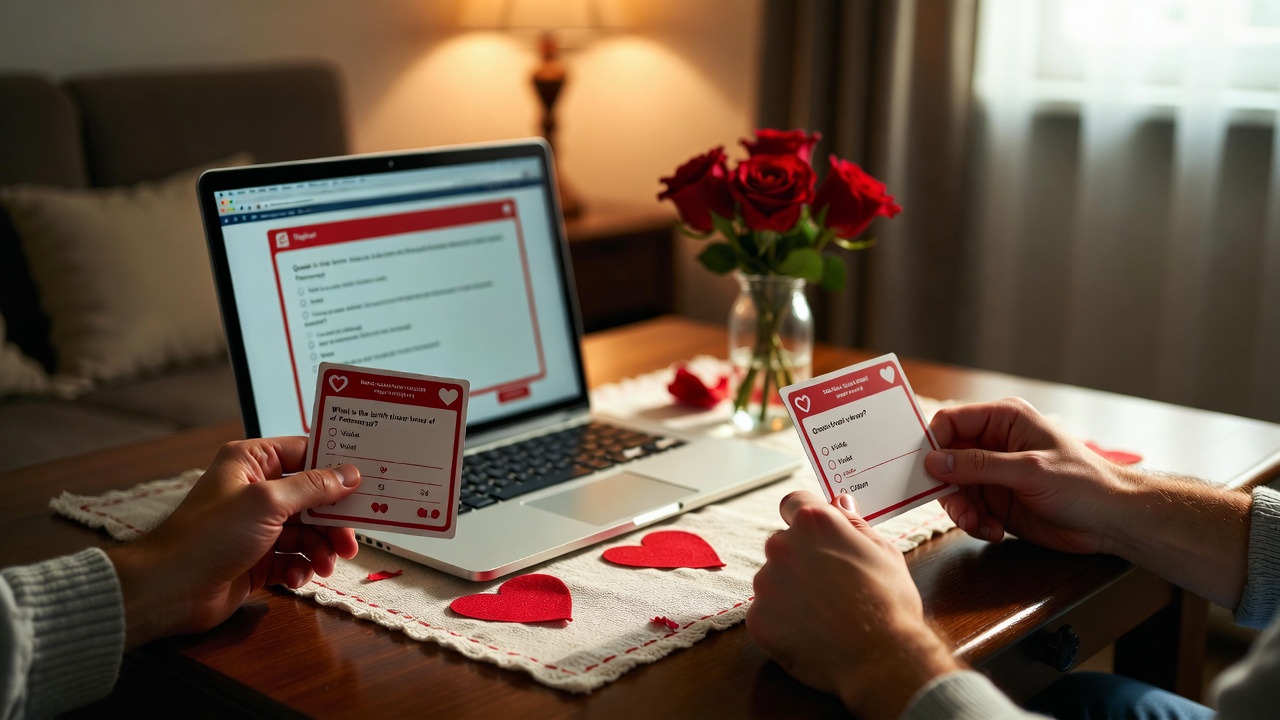
Looking for Valentine’s Day trivia questions for couples game night? Here are conversation starters guaranteed to surprise:
Easy Round
- What country consumes the most chocolate on Valentine’s Day?
- Answer: The United States (58 million pounds annually)
- Which flower is most associated with Valentine’s Day?
- Answer: Red roses (250 million are produced for the holiday)
- What year did Hallmark release its first Valentine’s Day card?
- Answer: 1913
Medium Difficulty
- In which century did written valentines become popular?
- Answer: The 15th century
- What percentage of Valentine’s cards are purchased by women?
- Answer: Approximately 85%
- Which U.S. state produces the most red roses?
- Answer: California
Challenging Questions
- What did “X” originally symbolize in “XOXO”?
- Answer: A kiss—people who couldn’t write signed documents with an X, then kissed it as a pledge of sincerity
- Which Shakespeare play mentions St. Valentine’s Day?
- Answer: Hamlet (Ophelia’s song in Act 4)
Weird Valentine’s Day Facts That Will Blow Your Mind
Ready for strange Valentine’s Day history facts you’ve never heard? Buckle up.
The Vinegar Valentines Trend
Victorian-era sweethearts didn’t always play nice. “Vinegar valentines” were insulting cards sent to people you disliked. They featured cruel poems and ugly caricatures. Postage was often “collect”—meaning the recipient paid to receive the insult.
Doctors Once Prescribed Chocolate for Heartbreak
In the 1800s, physicians recommended chocolate to lovesick patients. They believed it soothed broken hearts. Science now confirms chocolate releases feel-good endorphins. Those doctors weren’t entirely wrong.
The Heart Shape Isn’t Really a Heart
The iconic Valentine’s heart looks nothing like an actual human heart. Some historians believe the shape came from:
- Silphium seeds (an ancient contraceptive plant)
- Swan necks forming a heart when two swans face each other
- Ivy leaves, associated with fidelity in ancient Greece
Valentine’s Day Statistics Every Couple Should Know
Numbers tell a story. These Valentine’s Day spending statistics reveal how seriously we take romance:
| Category | Annual U.S. Spending |
|---|---|
| Total Valentine’s Day spending | $25.8 billion |
| Average per person | $185 |
| Candy | $2.4 billion |
| Flowers | $2.3 billion |
| Jewelry | $6.2 billion |
| Greeting cards | $1.3 billion |
| Evening out | $4.3 billion |
Surprising stat: About 9 million people buy Valentine’s gifts for their pets. Yes, really.
Romantic Valentine’s Day Traditions Around the World
Americans don’t own romance. Check out how different countries celebrate Valentine’s Day:
Japan: Women Give Chocolate First
Japanese women gift chocolate to men on February 14th. Men reciprocate one month later on “White Day” (March 14th). There’s also “giri-choco”—obligation chocolate given to male coworkers. No romance required.
South Korea: A Love Holiday Every Month
South Koreans celebrate love on the 14th of every month. April 14th is “Black Day”—singles eat black noodles together to mourn their relationship status.
Wales: Wooden Spoons of Love
Forget roses. Welsh tradition involves hand-carved wooden spoons. The spoons feature intricate designs symbolizing the giver’s feelings. This custom dates back to the 17th century.
Finland: Friend’s Day
Finns celebrate “Ystävänpäivä” (Friend’s Day) instead of romantic love. Cards and gifts go to friends, not just romantic partners.
The History of Valentine’s Day Cards: From Handwritten to Hallmark
When did Valentine’s Day cards become popular? The tradition started earlier than you’d guess.
The oldest known valentine dates to 1415. Charles, Duke of Orleans, wrote it to his wife while imprisoned in the Tower of London. He called her his “very gentle Valentine.”
Mass-produced valentines appeared in the 1840s. Esther Howland, a Massachusetts woman, saw English valentines and started an American industry. She’s known as the “Mother of the Valentine.”
Timeline of Valentine’s Card History:
- 1415 – First known written valentine
- 1700s – Handmade paper valentines become common
- 1840s – Esther Howland begins mass production
- 1913 – Hallmark enters the market
- 2020s – Digital valentines and e-cards surge
Today, approximately 145 million Valentine’s Day cards are exchanged annually. Only Christmas beats it.
Valentine’s Day Food Trivia: The Sweet Side of Love
Food and romance go together like chocolate and strawberries. Here’s Valentine’s Day food history worth knowing:
Why Chocolate?
The Aztecs believed cacao was a gift from the gods. Montezuma reportedly drank 50 cups of chocolate daily for stamina. Spanish conquistadors brought cacao to Europe, where it became associated with luxury and love.
Richard Cadbury created the first heart-shaped chocolate box in 1861. Marketing genius? Absolutely.
Conversation Hearts Origin Story
Those chalky candy hearts with messages? They started as lozenges. In 1866, a Boston pharmacist named Oliver Chase invented a machine to make them. His brother added romantic phrases. NECCO (New England Confectionery Company) sold them for over 150 years.
Classic conversation heart messages:
- BE MINE
- KISS ME
- TRUE LOVE
- SWEET TALK
- HUG ME
Newer additions include “TEXT ME” and “TWEET.” Times change.
Red Roses on Valentine’s Day: Why This Flower Rules Romance
Why do we give red roses on Valentine’s Day? The answer involves mythology, royalty, and savvy florists.
In Roman mythology, red roses were linked to Venus, goddess of love. Legend says roses grew from the ground where her tears fell.
During the Victorian era, flowers carried secret meanings. This language of flowers—called “floriography”—let people express forbidden feelings. Red roses meant deep romantic love.
Rose color meanings for couples:
| Rose Color | Traditional Meaning |
|---|---|
| Red | Deep love, passion |
| Pink | Gratitude, admiration |
| White | Purity, new beginnings |
| Yellow | Friendship, joy |
| Orange | Enthusiasm, desire |
| Lavender | Enchantment, love at first sight |
Industry fact: Colombia and Ecuador export over 500 million rose stems for Valentine’s Day. Most arrive in refrigerated cargo planes just days before February 14th.
Valentine’s Day Proposal Statistics: Will They Say Yes?
Thinking about popping the question? You’re not alone.
Valentine’s Day engagement facts:
- 6 million couples get engaged on Valentine’s Day annually
- It ranks as the second most popular proposal day (after Christmas)
- 43% of women prefer a traditional “down on one knee” proposal
- The average engagement ring costs $5,500 in the U.S.
Best Valentine’s Day proposal locations:
- Restaurants (still number one)
- Home (cozy and personal)
- Travel destinations (memorable backdrop)
- Outdoor settings (parks, beaches)
- Where you first met (nostalgic)
Fun Valentine’s Day Couple Activities Inspired by History
Want to celebrate like romantics of the past? Try these historical Valentine’s Day date ideas:
Write a Handwritten Love Letter
Channel your inner Charles of Orleans. Skip the text message. Put pen to paper. Seal it with wax if you’re feeling dramatic.
Learn Victorian Floriography Together
Create a secret flower code only you two understand. Send hidden messages through bouquets.
Make Homemade Chocolate
The Aztecs knew what they were doing. Melt good chocolate. Add your own flavors. Feed each other.
Play Valentine’s Day Trivia
Use the questions from this article. Winner picks the movie—or gets a massage.
Exchange “Vinegar Valentines” (Playfully)
Write silly, affectionate “insult” cards to each other. Keep it lighthearted. Laugh together.
Little-Known Valentine’s Day Symbols and Their Meanings
Beyond hearts and roses, these Valentine’s Day symbols carry deep significance:
Cupid
The chubby winged baby is actually Eros, Greek god of desire. Romans called him Cupid. His arrows caused instant, irresistible love. Being “struck by Cupid’s arrow” meant falling hopelessly in love.
Lovebirds
These small parrots mate for life. They sit close together, appearing to whisper. Medieval Europeans noticed this behavior and associated them with devoted couples.
Doves
Doves mate for life and share parenting duties equally. Ancient Greeks connected doves to Aphrodite. Releasing doves at weddings symbolizes lasting love.
Valentine’s Day Records That Prove Love Is Grand
Looking for romantic world records? These will impress:
- Longest marriage: 86 years (Herbert and Zelmyra Fisher)
- Largest box of chocolates: 2,002 pounds
- Most expensive Valentine’s card: $2.2 million (adorned with diamonds)
- Longest kiss: 58 hours, 35 minutes, 58 seconds (Thailand, 2013)
- Most couples kissing simultaneously: 39,897 (Mexico City, 2009)
Quick-Fire Valentine’s Day Trivia for Couples Quiz
Test yourselves with these rapid-fire questions:
- Teachers receive the most valentines. True or false? True
- Wearing red on Valentine’s Day brings luck in which country? China
- What’s the Italian word for “I love you”? Ti amo
- How many seeds does a strawberry have? Around 200
- What bird did medieval people believe chose its mate on February 14th? Birds in general (referenced by Chaucer)
Final Thoughts: Why Valentine’s Day Trivia Brings Couples Closer
Knowledge shared is connection deepened. Learning Valentine’s Day history and traditions together creates moments. You’ll remember that debate about Cupid’s origins. The laughter over vinegar valentines. The surprise when you learned about Japan’s White Day.
This February 14th, skip the ordinary dinner conversation. Pull out these facts. Challenge each other. Learn something new together.
After all, the best relationships never stop being curious—about the world and about each other.
Did you enjoy this Valentine’s Day trivia guide? Save it for your next couples game night. Share it with friends planning their February 14th celebrations. And most importantly—go tell someone you love them.