There is a moment in late January when India starts to breathe again. The biting winter loosens its grip. Mustard fields across the Indo-Gangetic plains erupt into a blazing ocean of gold. Somewhere in a village school in Bengal, a child dips their finger in ink for the very first time. Somewhere on a Punjabi rooftop, a kite snaps free and drifts toward the clouds. And somewhere inside the centuries-old walls of a Sufi shrine in Delhi, a qawwali singer raises his voice in a melody that was first composed over 700 years ago — all to make a grieving saint smile.
This is Basant Panchami — one of India’s most quietly powerful festivals, and one that reveals the country’s staggering cultural range better than almost any other.
In 2026, Basant Panchami falls on Friday, January 23. The Panchami Tithi begins at 2:28 AM on January 23 and ends at 1:46 AM on January 24, with the most auspicious window for Saraswati Puja observed between 7:15 AM and 12:33 PM. But the ways in which this single day is celebrated — from Bengal’s elaborate pandals to Punjab’s rooftop kite battles to Kerala’s temple-led literacy rituals — tell a story far richer than any single date can hold.
I have spent years chasing festivals across India’s many cultural corridors. Basant Panchami remains one of my favorites — not for its grandeur, but for its warmth, its regional contrasts, and its message that the pursuit of knowledge is the highest form of devotion.
Let me walk you through how this festival unfolds, region by region.
What Is Basant Panchami and Why Is It Celebrated in India?
The word “Basant” (or “Vasant”) means spring in Sanskrit. “Panchami” means the fifth day. Together, the name refers to the fifth day of the bright half (Shukla Paksha) of the Hindu month of Magha, which typically falls in late January or early February on the Gregorian calendar.
Basant Panchami carries two layers of meaning, both equally important.
First, it is a seasonal marker. According to the Hindu understanding of six seasons (ritus), spring is called the “King of all Seasons” (Rituraj). Basant Panchami arrives about 40 days before spring reaches full bloom. This 40-day transition period ends with Holi, the festival of colors. So in many ways, Basant Panchami is the starting gun for India’s most vibrant seasonal stretch.
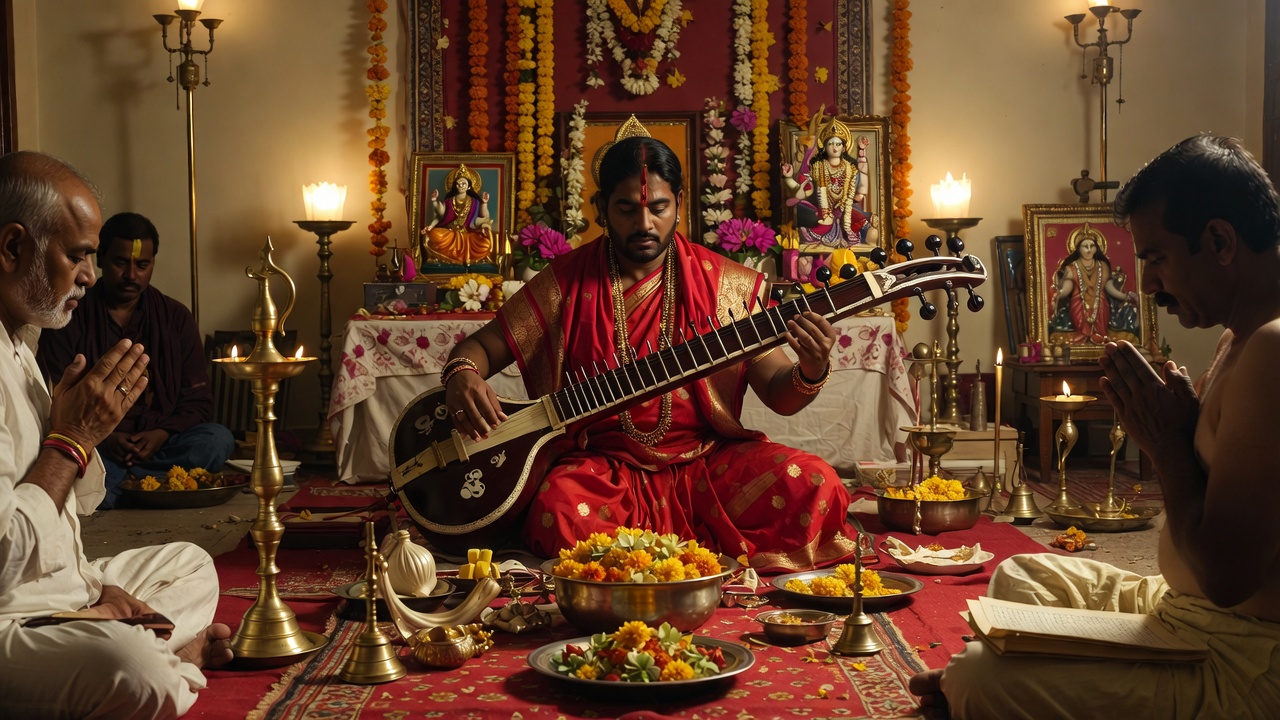
Second, it is a day of worship dedicated to Goddess Saraswati — the Hindu deity of knowledge, wisdom, music, art, and speech. Ancient scriptures describe this day as the moment Saraswati appeared from Lord Brahma to bring sound, rhythm, and creativity into a silent universe. Devotees across India honor her by placing books, pens, musical instruments, and learning tools at her feet — seeking her blessings for intellectual growth and creative clarity.
These two threads — nature’s renewal and the light of knowledge — weave together to make Basant Panchami a celebration that transcends caste, creed, and geography. But how it is expressed changes dramatically depending on where in India you find yourself.
Basant Panchami Date 2026: Puja Muhurat and Auspicious Timings
Before we travel across the country, here is a quick reference for Basant Panchami 2026 timings:
| Detail | 2026 Timing |
|---|---|
| Date | Friday, January 23, 2026 |
| Panchami Tithi Begins | 02:28 AM, January 23 |
| Panchami Tithi Ends | 01:46 AM, January 24 |
| Best Puja Muhurat | 07:15 AM – 12:33 PM |
| Hindu Month | Magha, Shukla Paksha |
| Day of the Week | Friday (considered auspicious) |
Note: Exact muhurat times may shift slightly based on your city. It is wise to check a local panchang (Hindu calendar) or consult a priest for precise timings in your area.
Many astrologers regard Basant Panchami as an Abujha Muhurat day — meaning the entire day is naturally auspicious. This makes it an ideal date for starting new ventures, enrolling children in school, beginning music lessons, or even conducting weddings without needing a separate astrological consultation.
Saraswati Puja in West Bengal: The Grand Celebration Students Wait for All Year
If there is one place in India where Basant Panchami belongs to the young, it is West Bengal.
Here, the festival is known as Saraswati Pujo (using the Bengali pronunciation of Puja), and it is massive. In terms of enthusiasm, many Bengalis rank it right alongside Durga Puja — the state’s most famous festival. But while Durga Puja is a family-and-community affair, Saraswati Pujo belongs squarely to the students.
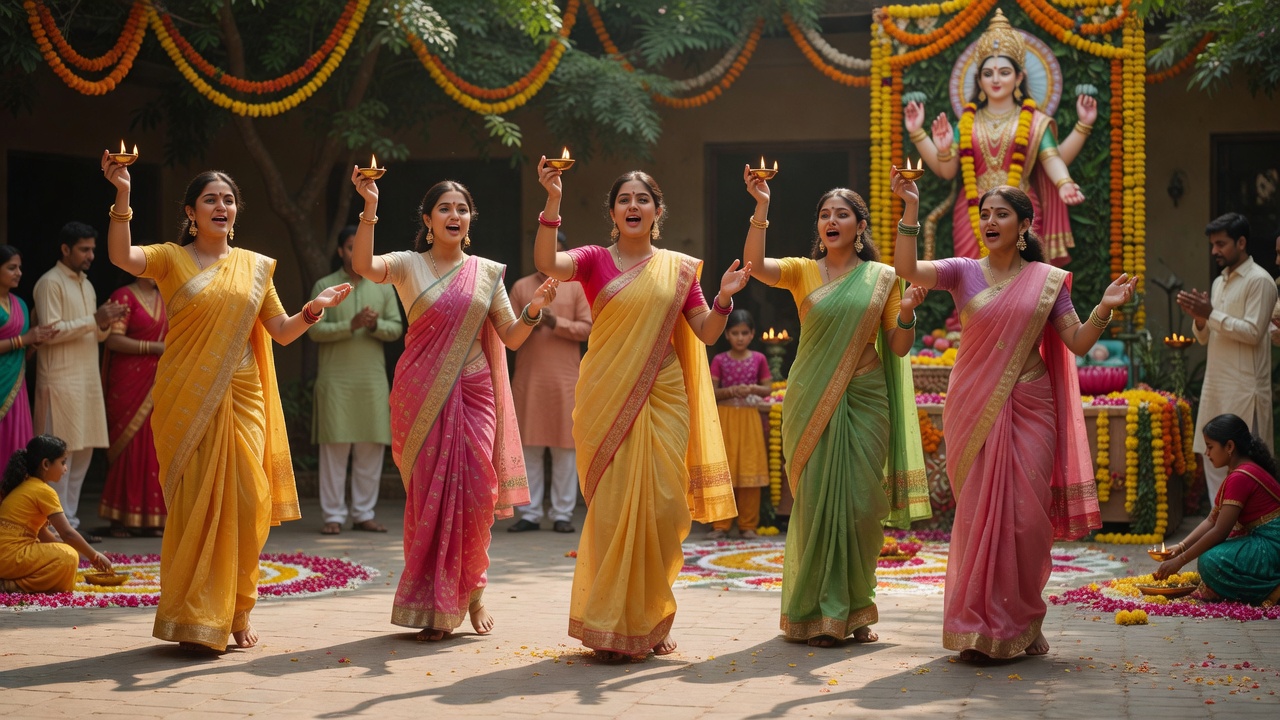
In the weeks before the festival, schools, colleges, and neighborhood clubs begin preparing pandals — decorated temporary shrines. Artisans craft elaborate clay idols of Goddess Saraswati, often depicting her seated on a white lotus, dressed in white, holding her veena (stringed instrument) and sacred texts. These idols arrive at schools and homes with quiet devotion — a ritual that went viral on social media during the 2026 celebrations in West Bengal for its sheer simplicity and sincerity.
On the morning of the festival, students bathe early and dress in yellow or white saris and kurtas. Books, pens, notebooks, musical instruments — and yes, even laptops and tablets in modern times — are placed at the goddess’s feet. Here is the key tradition: students do not read or write on this day. It is a gesture of surrender, a way of saying that all knowledge belongs to Saraswati, and one must first honor her before resuming the pursuit of learning.
The day is full of rituals, but it never feels heavy. There is Pushpanjali (offering of flowers while chanting mantras). There is anjali in school courtyards where hundreds of students stand together in yellow. There is the aroma of khichuri (a rice-and-lentil dish) and labra (mixed vegetable curry) being prepared as bhog (sacred food) to be distributed after the puja.
And then, there is the social dimension. In Bengal, Saraswati Pujo is famously the day when young men and women dress their best, visit each other’s pandals, and exchange quiet glances. It is, in many ways, Bengal’s version of a spring social — elegant, understated, and full of meaning.
Key Bengali Saraswati Pujo traditions at a glance:
- Idol installation in schools, homes, colleges, and community pandals
- No reading or writing on the day as a mark of respect
- Offering books, pens, and instruments at the goddess’s feet (Pustak Puja)
- Yellow and white attire for devotees
- Bhog distribution of khichuri, sweets, and fruits
- Immersion of idols (bisarjan) in rivers or water bodies the following day
Saraswati Puja in Bihar, Jharkhand, and Odisha: Where Schools Turn into Temples
Move westward from Bengal into Bihar, Jharkhand, and Odisha, and Saraswati Puja remains a major festival — but with its own regional flavors.
In Bihar, educational institutions are the heart of the celebration. Schools and colleges set up pandals with beautifully crafted Saraswati idols. Students organize cultural events, including music recitals, poetry readings, and art competitions. The tradition of Haate-Khori — a child’s first writing lesson — is practiced widely, with parents bringing young children to temples or school events to trace their first letters in rice or on a slate.
Bihar also has a unique historical connection to this day. The Deo Sun Shrine in Aurangabad district, one of the oldest sun temples in India, is believed to have been established on Basant Panchami. The day is celebrated at this site to honor the founding of the shrine.
In Odisha, the festival carries a slightly different name — Basanta Panchami or Sri Panchami. Sacred fire rituals (homas and yagnas) are conducted in schools and colleges across the state. Children aged four or five begin their formal education in a ceremony called Khadi-Chuan or Vidya-Arambha. Fresh yellow flowers are offered to Goddess Saraswati in temples, and the atmosphere blends scholarly devotion with seasonal joy.
Basant Panchami in Varanasi: Rituals Along the Sacred Ganga Ghats
Varanasi — India’s spiritual capital — experiences Basant Panchami with a depth that only this ancient city can offer.
The celebration begins at the ghats (stone steps leading to the river Ganges). As the morning sun breaks through the winter haze, priests perform elaborate pujas at riverside temples. Devotees dressed in yellow line the steps, offering flowers and prayers to both Goddess Saraswati and the holy river.
Benaras Hindu University (BHU), one of Asia’s oldest and most respected universities, becomes a center for Saraswati worship on this day. Students and faculty gather for prayer ceremonies, followed by music recitals and poetry readings that continue into the evening. For a city that has always prized learning, music, and philosophy, Basant Panchami feels deeply personal.
The Brij region — Mathura and Vrindavan — adds another layer. Basant Panchami here marks the official beginning of Holi celebrations. At the famous Shri Banke Bihari Temple in Vrindavan, priests toss abeer and gulal (colored powders) on devotees — a preview of the full Holi revelry that will follow 40 days later. Devotees are also granted access to the temple’s special Vasanti room, which remains closed at other times of the year.
Kite Flying on Basant Panchami in Punjab and Haryana: When the Sky Becomes a Battlefield
Travel to Punjab and Haryana, and Basant Panchami transforms into something entirely different — a roaring, rooftop kite-flying festival that paints the sky in every conceivable color.
Here, the festival is known simply as Basant — a word that carries the dual weight of seasonal celebration and harvest pride. The mustard fields (sarson ke khet) of Punjab reach peak bloom around this time, turning the landscape into a shimmering carpet of gold. People wear yellow turbans and yellow clothing in tribute to these fields.
But the kites are the main event.
Families, friends, and strangers gather on rooftops from morning until late evening, flying patangs (kites) and engaging in pech ladana — kite battles where the goal is to cut an opponent’s string using your own. The victorious cry of “Woh kaata!” (“I cut it!”) echoes between buildings, and every freed kite drifts across the horizon like a tiny paper bird seeking its own spring.
The tradition has deep roots. According to historians, competitive kite-flying became closely associated with Basant during the late colonial and post-colonial periods, growing into a grand public festival of rooftop gatherings, music, and seasonal joy. Maharaja Ranjit Singh, founder of the Sikh Empire, famously encouraged Basant celebrations as a social event and in 1825 donated 2,000 rupees to the Harmandir Sahib Gurdwara in Amritsar for food distribution on this day.
The food of Punjabi Basant is as bold as its kites. Families prepare Sarson da Saag (mustard greens curry) and Makki di Roti (corn flatbread), along with Meethe Chawal (sweet yellow rice). It is a feast built for cold-weather celebration.
Kite-flying traditions on Basant Panchami:
- Patang (kite) and dor (string) are purchased from local markets in the weeks leading up to the festival
- Manja — special string coated in a mixture of glue and powdered glass — is used for kite battles
- Rooftops, open grounds, and parks serve as kite-flying arenas
- Yellow attire is worn by most participants
- Bhangra and Gidda folk dances add to the festive spirit
Basant Panchami in Rajasthan and Gujarat: Kites, Sweets, and Spring Colors
Rajasthan shares Punjab’s love for kites but adds its own Rajasthani flair. The skies over Jaipur — the Pink City — fill with vibrant kites on Basant Panchami, and friendly competitions from rooftops and open grounds last all day. Schools and temples organize Saraswati Puja in the morning, followed by the outdoor festivities.
Local sweet shops prepare boondi ladoos, kesari rice, and saffron-flavored treats — all in shades of gold and yellow. The combination of kite-flying above and sweets below gives Jaipur’s Basant celebrations a uniquely joyful character.
In Gujarat, particularly in the Kutch region, Basant Panchami carries strong overtones of love and romance. People prepare bouquets and garlands of flowers set with mango leaves as gifts for loved ones. Songs about Lord Krishna’s playful interactions with Radha fill the air — reflecting the Hindu tradition that associates Basant with Kamadeva (the deity of love) and his wife Rati.
How Newly Married Couples Celebrate Basant Panchami in Maharashtra
In Maharashtra, the festival takes on a distinctly domestic and marital character.
Newly married couples observe a special tradition: they visit a temple together on their first Basant Panchami after the wedding, wearing yellow garments and offering prayers. In some families, the couple worships Lord Shiva and Goddess Parvati — honoring them as the ideal divine couple — and seeks blessings for a prosperous married life.
Across Maharashtra, Madhya Pradesh, Chhattisgarh, and parts of Uttar Pradesh, devotees traditionally bathe in the morning, worship Shiva and Parvati, and offer mango flowers and ears of wheat as seasonal tributes. The atmosphere is intimate rather than grand — a quiet prayer for renewal, shared between families.
Basant Panchami in Uttarakhand: Where Shiva, Parvati, and Agriculture Are Honored Together
In the hill state of Uttarakhand, Basant Panchami weaves together spiritual worship and agricultural gratitude.
While Saraswati Puja is observed in schools and temples, the people of Uttarakhand also worship Lord Shiva and Goddess Parvati — honoring Parvati as the mother earth and offering thanks for the health of their crops. The celebration feels grounded in the rhythms of mountain agriculture — where spring signals not just warmth but survival.
People eat yellow rice, wear yellow clothing, and exchange gifts related to education and school supplies. The festival also marks a popular shopping season for school materials, as families prepare children for the academic year ahead.
Vidyarambham Ceremony: How South India Starts Children’s Education on Basant Panchami
The relationship between Basant Panchami and South India is nuanced and fascinating.
In states like Tamil Nadu, Karnataka, Kerala, and Andhra Pradesh, the primary Saraswati Puja does not happen on Basant Panchami. Instead, it takes place during Sharad Navaratri (September–October), specifically on the last three days:
| Day | Ritual |
|---|---|
| Ashtami (8th day) | Saraswati Avahana — books are reverently placed for worship |
| Navami (9th day) | Saraswati Pradhan Puja — main worship with elaborate rituals |
| Dashami / Vijaya Dashami (10th day) | Vidyarambham and Puja Eduppu — resuming studies |
However, Basant Panchami is still observed in the South — particularly as an auspicious day for beginning educational pursuits. The Vidyarambham (or Aksharabhyasam) ceremony — in which a young child writes their first letters, guided by an elder’s hand — can be performed on this day as well.
In Kerala, the Avanamcode Saraswathi Temple near Kalady (the birthplace of Adi Shankaracharya) is a renowned center for Vidyarambham. The temple sees a surge of devotees during both Vijaya Dashami and Basant Panchami, as parents bring children for the sacred initiation into learning.
In Andhra Pradesh, Basant Panchami is known as Sri Panchami — with “Sri” referring to Saraswati as a manifestation of the goddess Devi. The emphasis is softer, more private — family-led rather than community-led — but the reverence for learning remains unchanged.
Sufi Basant at Nizamuddin Dargah: A 700-Year-Old Tradition of Interfaith Harmony in Delhi
Perhaps no Basant Panchami celebration in India is as historically layered and emotionally stirring as the one held at the Dargah of Hazrat Nizamuddin Auliya in Delhi.
This is Sufi Basant — a tradition that stretches back to the 13th century and stands as one of India’s most beautiful examples of interfaith cultural exchange.
The story begins with grief. When Nizamuddin Auliya — one of India’s most revered Sufi saints of the Chishti order — lost his beloved nephew Taqiuddin Nuh, he fell into a deep sorrow that lasted for months. His most devoted disciple, the legendary poet-musician Amir Khusrau, watched helplessly as his master withdrew from the world.
Then came a morning on the eve of Basant Panchami. Khusrau noticed a group of Hindu villagers walking past the shrine, dressed in bright yellow, singing songs of spring, and carrying mustard flowers. Struck by their joy, he had an idea. He dressed himself in yellow, gathered blooming mustard flowers, and composed new verses welcoming the season. Standing before his grief-stricken master, he sang:
“Sakal ban phool rahi sarson…” (Every field is filled with yellow mustard blooms…)
According to Altamash Nizami, a direct descendant of Nizamuddin Auliya, the saint smiled for the first time since his loss. That single moment of healing became a tradition that has been kept alive for over seven centuries.
Today, every year on Basant Panchami, the Nizamuddin Dargah transforms into a sea of yellow. Marigold garlands drape the shrine. A yellow chaddar (cloth covering) replaces the customary green one on the saint’s tomb. Yellow rice is prepared and distributed to visitors. The air fills with the melodies of qawwali — the devotional music form that Khusrau himself helped popularize.
The celebration follows a traditional sequence:
- Afternoon prayers conclude, and qawwali singers gather in the nearby Nizamuddin Basti (settlement)
- A procession begins through the narrow lanes, stopping at the grave of Taqiuddin Nuh — the nephew whose death inspired the tradition
- The procession enters the dargah, where the “Khusro ki Basant” mehfil (musical gathering) begins
- Classical qawwali is performed for about two hours in the courtyard
- The singers then move to the adjacent tomb of Amir Khusrau to pay tribute
What makes this celebration extraordinary is its inclusivity. Hindus and Muslims, locals and visitors, scholars and devotees — all come together in a shared celebration of spring, love, and music. As the dargah’s sajjadanashin (head priest) has noted, the festival rises above religious boundaries and delivers a message of unity, love, and brotherhood.
If you visit Delhi during Basant Panchami, this experience is unmissable. Wear yellow. Bring flowers. And let the qawwali carry you somewhere timeless.
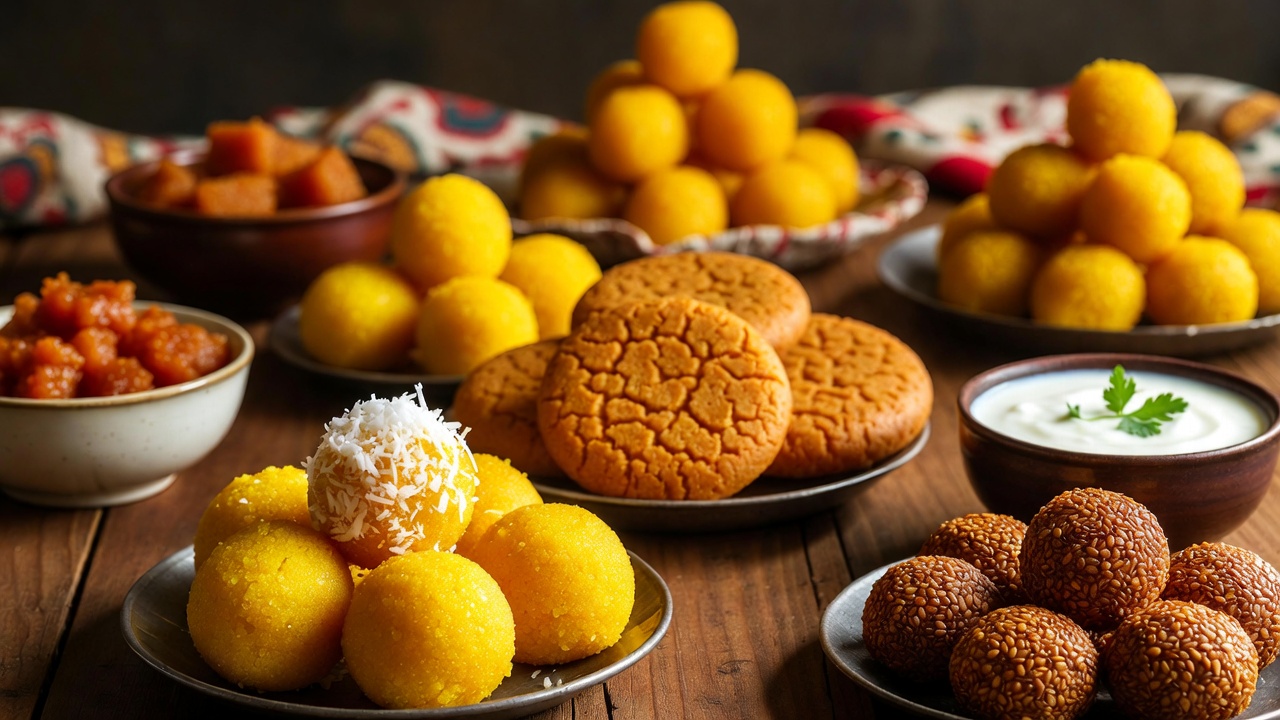
Traditional Basant Panchami Food: What to Eat During the Festival Across India
Food is never an afterthought in Indian festivals. On Basant Panchami, the color yellow dominates the plate just as it dominates the wardrobe.
| Dish | Region | Description |
|---|---|---|
| Kesar Halwa | North India (widespread) | A warm dessert made with flour, ghee, sugar, nuts, and saffron strands that give it a rich golden color |
| Meethe Chawal (Sweet Yellow Rice) | Punjab, UP, Delhi | Rice cooked with saffron, cardamom, and sugar — a Basant Panchami staple |
| Boondi Ladoo | Rajasthan, UP | Round sweets made from fried chickpea batter droplets, soaked in sugar syrup |
| Sarson da Saag & Makki di Roti | Punjab | Mustard greens curry served with corn flatbread — the iconic Punjabi winter-spring meal |
| Khichuri | West Bengal | Rice-and-lentil dish offered as bhog (sacred food) during Saraswati Puja |
| Saffron Kheer | Widespread | Rice pudding infused with saffron, served as an offering and dessert |
| Yellow Rice (Kesari Bhaat) | Karnataka, Maharashtra | Rice colored with turmeric or saffron, served with dal |
The reason for the yellow emphasis is deeply symbolic. Yellow represents the mustard flowers that bloom across northern India in January, signaling the end of winter. It also represents energy, knowledge, prosperity, and optimism — qualities associated with both the spring season and Goddess Saraswati.
Why Do People Wear Yellow on Basant Panchami? Significance of the Color Yellow
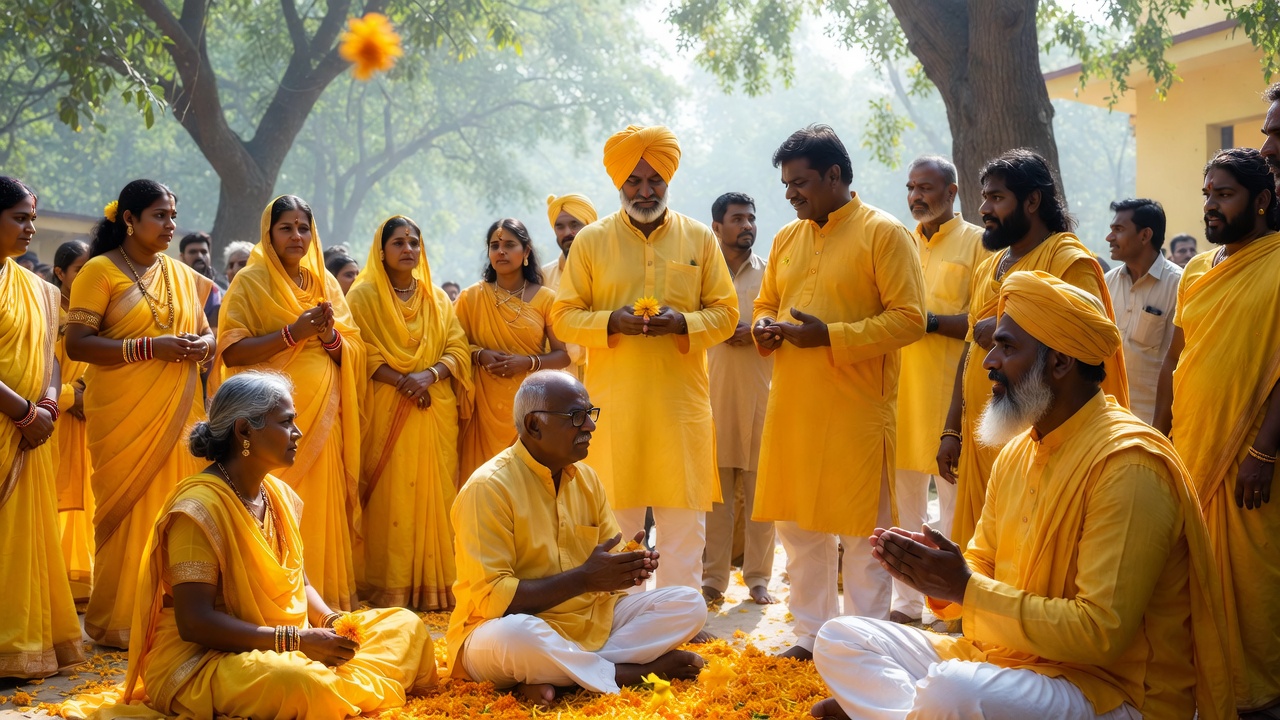
If you attend any Basant Panchami celebration anywhere in India, the one constant you will notice is the color yellow.
Yellow clothing. Yellow flowers. Yellow food. Yellow decorations.
This is not random. In Hindu symbolism, yellow carries deep meaning:
- It mirrors nature. Mustard flowers, which blanket the fields of north India during this time, are a vibrant gold-yellow. The festival draws its visual identity from this landscape.
- It represents Goddess Saraswati. While Saraswati is traditionally depicted in white, the yellow of Basant Panchami represents the light of knowledge she brings — warm, bright, and life-giving.
- It signals prosperity. In Indian culture, yellow (and gold) have long been associated with abundance, good fortune, and auspiciousness.
- It embodies spring energy. After months of dull, cold winter, yellow is the color that announces: life is returning.
Devotees wear yellow saris, yellow kurtas, and yellow turbans. Temples are decorated with marigolds and mustard flowers. Even the offerings — from saffron rice to turmeric-tinted sweets — follow the yellow theme.
Basant Panchami and the Start of Holi: The 40-Day Countdown
One of the most interesting facts about Basant Panchami is its connection to Holi — India’s famous festival of colors.
Basant Panchami arrives exactly 40 days before Holi. This is not a coincidence. In the Hindu understanding of seasons, any transition period takes 40 days to fully manifest. Basant Panchami marks the beginning of spring’s awakening. Holi marks its full bloom.
In Mathura and Vrindavan, this connection is celebrated physically. On Basant Panchami, the Holika Dahan Pandal preparation begins — communities start digging holes and installing the Holi Danda (a wooden stick) filled with waste wood and dried cow dung, which will be burned on Holika Dahan night, 40 days later.
At the Shri Banke Bihari Temple in Vrindavan, priests throw abeer and gulal on devotees on Basant Panchami, giving the crowd its very first taste of Holi celebrations. The Vasanti room of the temple — normally closed to the public — is opened on this day, allowing devotees to experience a rare and intimate darshan.
Best Places to Experience Basant Panchami in India: A Traveler’s Guide for 2026
For travelers, Basant Panchami offers a chance to experience India’s cultural diversity in a single day. Here are the best destinations to witness the festival’s full range:
| Destination | Best For | Highlight Experience |
|---|---|---|
| Kolkata, West Bengal | Grand Saraswati Puja | School and pandal-hopping; student celebrations; clay idol artistry |
| Varanasi, Uttar Pradesh | Spiritual depth | Ghat rituals; BHU celebrations; music recitals |
| Amritsar / Ludhiana, Punjab | Kite flying | Rooftop kite battles; Punjabi feasts; mustard field views |
| Jaipur, Rajasthan | Kites and sweets | Rooftop competitions; local mithai shops; temple visits |
| Delhi (Nizamuddin Dargah) | Sufi Basant | Qawwali mehfil; interfaith celebration; historic shrine visit |
| Vrindavan, Uttar Pradesh | Holi connection | Banke Bihari Temple color play; start of 40-day Holi countdown |
| Shantiniketan, West Bengal | Cultural immersion | University celebrations in the tradition of Rabindranath Tagore |
Travel tip: Book accommodations early. Basant Panchami falls on a Friday in 2026, making it ideal for a long weekend trip. Weather across north India is pleasantly cool — perfect for outdoor festivals and temple visits.
How Basant Panchami Celebrations Have Evolved in Modern India
Basant Panchami has changed with the times — but its soul remains intact.
In urban India, the festival now includes community potlucks, art competitions, literary events, and even digital tribute concerts organized on social media. Schools use the occasion to promote reading habits and cultural awareness among children. Students place not just books and pens at Saraswati’s feet, but also tablets, laptops, and smartphones — a recognition that knowledge today flows through many channels.
In Punjab, the kite-flying tradition faces increasing safety scrutiny. The use of manja (glass-coated string) has caused injuries and accidents over the years. Many states now encourage the use of cotton or plain strings as safer alternatives, and organized kite festivals with safety regulations have become more common.
Across the border in Lahore, Pakistan, the Basant kite-flying festival was banned in 2005 due to safety concerns. However, in a significant cultural revival, the Punjab government of Pakistan lifted the ban in 2025 under the new Punjab Regulation of Kite Flying Ordinance, 2025. The ordinance mandates cotton-only strings, QR-coded kite registration, and drone monitoring. In February 2026, Lahore’s skies once again filled with kites after a nearly 20-year hiatus — a moment of deep cultural significance for the entire Punjabi community.
Frequently Asked Questions About Basant Panchami 2026
When is Basant Panchami in 2026? Basant Panchami 2026 falls on Friday, January 23, 2026.
What is the difference between Basant Panchami and Saraswati Puja? They are the same festival observed under different names. “Basant Panchami” emphasizes the arrival of spring, while “Saraswati Puja” emphasizes the worship of Goddess Saraswati. The name used depends on the region — Bengal uses “Saraswati Pujo,” Punjab prefers “Basant,” and much of north India uses “Vasant Panchami.”
Is Basant Panchami a public holiday? Basant Panchami is classified as a restricted (optional) holiday in most Indian states. Government offices may remain open, but schools and colleges often close for the day. Private offices generally operate normally, though many employees take the day off.
Why is Basant Panchami considered auspicious for weddings? The day is regarded as an Abujha Muhurat — an inherently auspicious period that does not require separate astrological checks. It symbolizes purity, renewal, and new beginnings, making it a popular choice for marriage ceremonies.
Can Saraswati Puja be performed at home? Yes. Devotees can perform Saraswati Puja at home by placing a Saraswati idol or image on a clean altar, offering yellow flowers, fruits, and sweets, placing books and instruments at her feet, lighting a ghee lamp, and chanting Saraswati mantras.
Final Thoughts: Why Basant Panchami Matters Beyond Religion
There is something profoundly democratic about Basant Panchami. It does not ask for grand pilgrimages or expensive offerings. A child writing their first letter. A student placing their worn-out textbook at the feet of a goddess. A kite rising from a dusty rooftop. A Sufi melody that has survived 700 years because someone once wanted to make a broken heart smile.
Basant Panchami reminds us that the arrival of spring is not just a change in weather — it is a state of mind. It tells us that renewal is possible, that learning never ends, and that the simplest yellow flower can carry the weight of centuries of devotion.
If you are planning to visit India in late January 2026, do not miss this festival. It will not overwhelm you with scale. But it will stay with you — quietly, warmly — like the first sunshine after a long winter.
Happy Basant Panchami. May the spring of knowledge touch every corner of your life.