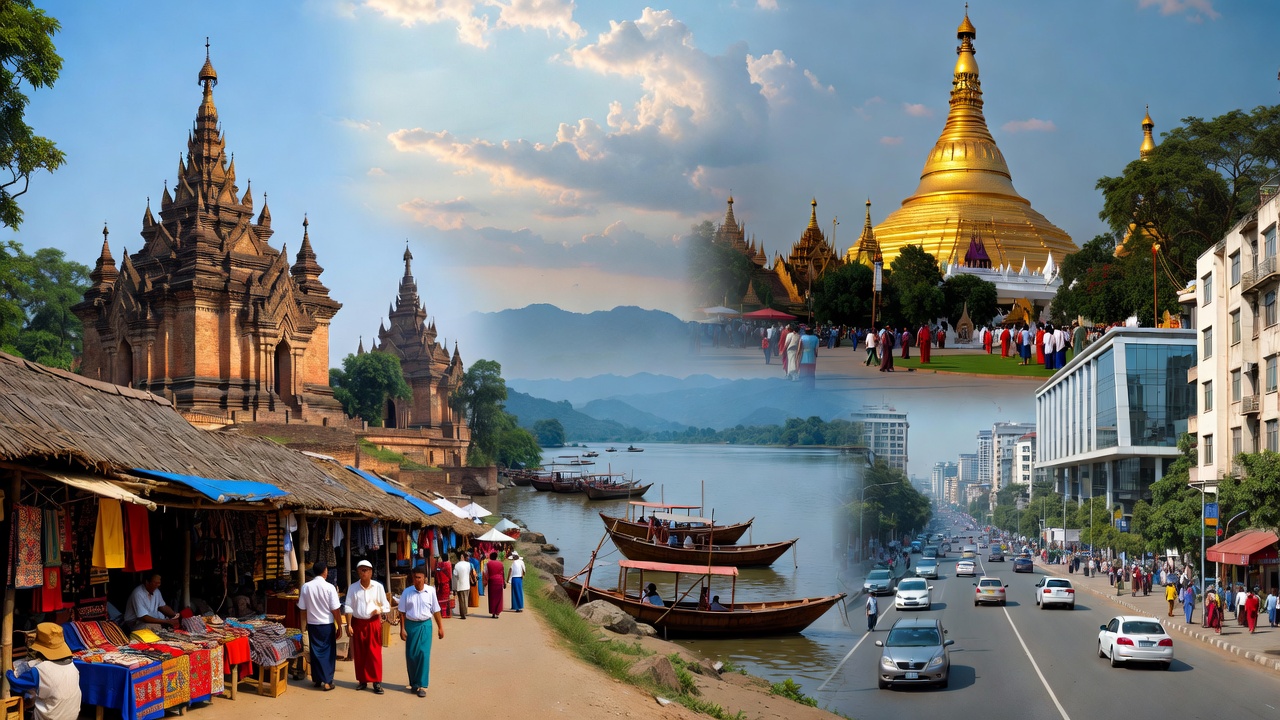
Every year on February 12, the Republic of the Union of Myanmar pauses to honor one of the most important dates on its national calendar. Union Day — known locally as Pyidaungsu Nayt (ပြည်ထောင်စုနေ့) — marks the anniversary of the 1947 Panglong Agreement. This was the landmark pact that brought the country’s diverse ethnic communities together under a shared vision of independence and self-governance. In 2026, Myanmar celebrates the 79th anniversary of that historic agreement.
For travelers and culture lovers, Union Day offers a rare window into Myanmar’s soul. It is a day of flag relays, ethnic dance performances, community feasts, and patriotic reflection. The celebrations are especially vibrant in Yangon, the country’s largest city, and Naypyidaw, its administrative capital. Whether you are a first-time visitor or a returning traveler, this guide will help you experience the best of Union Day in both cities.
This article covers the history behind Union Day, where to see the most meaningful ceremonies, what cultural events to expect, practical travel advice, and tips for respectful participation. Let’s explore what makes this holiday so special to the people of Myanmar.
What Is Myanmar Union Day and Why Is It Celebrated on February 12?
Union Day is a national public holiday in Myanmar. It falls on the same date every year: February 12. The holiday honors the signing of the Panglong Agreement on February 12, 1947. This agreement brought together representatives of the Shan, Kachin, and Chin peoples with General Aung San, the leader of the interim Burmese government, to demand joint independence from British colonial rule.
At the time, Myanmar — then known as Burma — was not a unified country. The British had governed the central lowlands (known as Ministerial Burma) separately from the surrounding hill regions inhabited by various ethnic groups. The Panglong Agreement changed that. It established the principle that all groups would seek independence together and form a federal union.
General Aung San’s famous pledge at the conference captured the spirit of the agreement: “If Burma receives one kyat, you will also get one kyat.” This promise of equality became the bedrock of the nation’s founding ideals.
The agreement was signed by General Aung San on behalf of the Bamar people, alongside Shan leaders Sao Shwe Thaik, Sao Khun Cho, and Sao San Tun; Kachin leaders Sama Duwa Sinwa Nawng and Duwa Zaw Wan; and Chin leaders U Wam Kaung and U Hal Khun. Together, they committed their peoples to building a nation rooted in equality, autonomy, and mutual respect.
Less than a year later, on January 4, 1948, Burma officially gained independence from Britain. February 12 has been commemorated as Union Day ever since — a reminder that Myanmar was built not by a single ethnic group, but by the shared will of many.
The History of the Panglong Agreement: How Myanmar’s Ethnic Groups United for Independence
To understand Union Day, you need to understand the context in which the Panglong Agreement was born.
British Colonial Rule and the Division of Burma
When the British completed their conquest of Burma in 1886 with the overthrow of King Thibaw, they did not govern it as one country. Central Burma fell under direct colonial administration. The surrounding frontier areas — home to the Shan, Kachin, Chin, Karen, Karenni, and other peoples — were governed separately, often through local chiefs and traditional leaders.
This divide-and-rule strategy created deep fault lines. The various ethnic groups developed separate political identities. Some, like the Karen and Kachin, were recruited heavily into the British colonial army. Others, like the Bamar majority, were largely excluded from military service. These divisions sowed the seeds of mistrust that would echo for decades.
The Road to the 1947 Panglong Conference
After World War II ended, General Aung San emerged as the leader of Myanmar’s independence movement. He understood that the British would not grant independence to a fractured country. Unity was essential.
In early 1947, Aung San traveled to London and signed the Aung San–Attlee Agreement with British Prime Minister Clement Attlee. This agreement set the stage for Burmese independence but required that the frontier areas be consulted about their future.
Aung San then convened the Panglong Conference in the small town of Panglong in southern Shan State. The conference ran from February 6 to February 12, 1947. Negotiations were difficult. The Shan leaders worried about losing their rights after independence. The Kachin representatives demanded the creation of a Kachin State. The Chin leaders sought guarantees for the protection of their communities.
Through careful diplomacy and personal commitment, Aung San gained their trust. On the afternoon of February 12, 1947, the historic agreement was signed.
What the Panglong Agreement Actually Said
The Panglong Agreement contained 12 main points covering political, economic, and social equality. Key provisions included:
- The frontier areas would enjoy full autonomy in internal administration.
- A Kachin State would be created within the Union.
- Shan and Chin leaders would have representation in the central government.
- Financial arrangements would ensure equitable distribution of resources.
It is important to note that not all ethnic groups were signatories. The Karen, Mon, and Rakhine peoples were not represented at the conference because they were considered part of Ministerial Burma. The Karenni (Kayah) attended only as observers. Despite this, the agreement laid the foundation for the Union of Burma that emerged after independence.
The Tragic Aftermath
General Aung San was assassinated on July 19, 1947 — just five months after Panglong and before independence was achieved. His death, along with several cabinet members, was a devastating blow. July 19 has been commemorated as Martyrs’ Day ever since.
Many of the promises made at Panglong were never fully kept. Successive governments struggled to deliver the equality and autonomy that the ethnic groups had been promised. This unfulfilled promise continues to shape Myanmar’s political landscape today.
How Myanmar Celebrates Union Day: Traditions, Flag Relays, and Cultural Events
Union Day is not just a one-day event. Preparations begin months in advance, building anticipation across the country.
The Union Flag Relay: A Nationwide Journey
One of the most distinctive traditions is the Union Flag Relay. About two months before February 12, the national flag begins a ceremonial journey through the capital cities of Myanmar’s various states and regions. At each stop, the flag is greeted with parades, cultural performances, and public entertainment.
In the final five days before Union Day, the flag is carried through 45 different townships. The relay builds momentum as the flag moves closer to its final destination: People’s Square (Pyithu Yin Pyin) on Pyay Road in Yangon. The arrival of the flag at People’s Square marks the official start of the Union Day celebrations.
Official Ceremonies and Speeches
On the morning of February 12, a formal flag salute ceremony takes place. Government officials read the Union Day message, which typically emphasizes themes of national unity, ethnic harmony, and the enduring importance of the Panglong spirit. Military guards of honor are present, and the national anthem is sung.
In Naypyidaw, the capital, the ceremony is attended by senior government officials, regional chief ministers, military leaders, and representatives of national ethnic groups. The event is broadcast on state television.
Cultural Performances and Ethnic Dance
Union Day is a celebration of Myanmar’s remarkable ethnic diversity. Throughout the festivities, you can see traditional dance performances from various ethnic communities — including Shan, Kachin, Chin, Kayin (Karen), Mon, Rakhine, and Bamar artists. These performances showcase the unique costumes, music, and movement traditions of each group.
Common performances include:
- Shan sword dances and traditional folk music
- Kachin Manao-style dances with rhythmic drumming
- Kayin “Frog Drum” (Don) dances, a symbol of Kayin cultural pride
- Bamar classical dances, including the famous peacock dance
- Chin traditional dances featuring elaborate headwear and woven garments
School Activities and Patriotic Expression
In the weeks before Union Day, school children across Myanmar write patriotic poems and essays about national unity. Schools hold speech competitions and cultural presentations. These activities help younger generations connect with the meaning of the holiday and the values it represents.
Celebrating Union Day in Yangon: Best Places and Events in Myanmar’s Largest City
Yangon is the heart of Union Day celebrations in Myanmar. The city’s energy is infectious during this period. Here is where to go and what to see.
People’s Square on Pyay Road: The Main Celebration Venue in Yangon
People’s Square (also known as People’s Park or Pyithu Yin Pyin) on Pyay Road is the primary venue for Union Day celebrations in Yangon. This is where the Union Flag Relay concludes, and where the most important official ceremonies take place.
In recent years, the celebrations at People’s Square have included:
| Event | Details |
|---|---|
| Union Day Message Ceremony | Held at 7:30 AM on February 12. The Yangon Region Chief Minister reads the official Union Day message. A Guard of Honour presents the national salute. |
| MSME Market Fair | Small and medium enterprises from across Myanmar set up stalls selling handicrafts, textiles, food products, and regional specialties. The fair typically runs for 2–3 days starting on February 10 or 12. |
| Music Concert | Well-known Myanmar singers and DJs perform on a large stage. Performances run from morning through the evening. |
| Ethnic Cultural Shows | Traditional dance troupes from different states and regions perform throughout the day. |
| Food Stalls and Charity Feasts | Vendors sell traditional snacks and dishes. Free charity meals (satuditha) are also offered. |
Based on previous years, the 78th Union Day celebration in 2025 featured sector-wise departmental exhibitions, an MSME fair, and a music concert at People’s Square from February 12 to 14. The 79th Union Day in 2026 is expected to follow a similar pattern.
Practical tip: Pyay Road near People’s Square is typically closed to traffic on February 12. If you are traveling by taxi or private car, plan to be dropped off at the Myaynigone area and walk from there. Public transport will also be rerouted.
Shwedagon Pagoda: Myanmar’s Most Sacred Buddhist Site During Union Day
No visit to Yangon is complete without seeing the Shwedagon Pagoda — and Union Day is a particularly meaningful time to be there. While the pagoda does not host specific Union Day events, it remains the spiritual center of the city. Many locals visit the pagoda on Union Day to pray for peace, unity, and national prosperity.
Key facts about Shwedagon Pagoda:
- Height: Approximately 99–110 meters (sources vary slightly)
- Age: Believed to be over 2,500 years old by legend; historians estimate it was built between the 6th and 10th centuries
- Gold covering: The main stupa is covered in hundreds of genuine gold plates
- Diamonds: The crown of the stupa is studded with 4,531 diamonds, including a massive 72-carat diamond at the very top
- Relics: The pagoda is said to house eight strands of Gautama Buddha’s hair
- Opening hours: 4:00 AM to 10:00 PM daily
- Entrance fee for foreigners: Approximately 20,000 Kyats (about US$9.50 as of 2025)
The pagoda sits atop Singuttara Hill and can be seen from almost anywhere in Yangon. There are four main entrances — south, west, north, and east — each guarded by a pair of chinthe (mythological lion statues). Remember which entrance you used, because that is where your shoes will be stored. Footwear must be removed before entering the complex.
Dress code: You must cover your shoulders and knees. T-shirts with elbow-length sleeves and trousers or long skirts are appropriate. Sarongs (longyi) are available to borrow at the entrance if needed.
Best time to visit during Union Day: Early morning (around sunrise at 6:00–7:00 AM) or late afternoon (4:00–5:30 PM). The golden stupa is especially breathtaking when illuminated by the low-angle sunlight. February is part of Myanmar’s dry season, so the weather is comfortable with temperatures typically between 18°C and 33°C.
Kandawgyi Lake and Karaweik Palace: A Scenic Stop Near the Celebrations
Just east of the Shwedagon Pagoda lies Kandawgyi Lake, one of Yangon’s most beautiful green spaces. On its eastern shore sits the Karaweik Palace, a distinctive building shaped like a royal barge from Myanmar’s historical courts. The area around the lake is popular with families during public holidays.
While there are no formal Union Day ceremonies at Kandawgyi Lake, the area often comes alive with picnickers, street food vendors, and a relaxed holiday atmosphere. It is an excellent place to take a break between attending ceremonies at People’s Square and visiting Shwedagon Pagoda.
Bogyoke Aung San Market: Shopping for Traditional Myanmar Crafts
Bogyoke Aung San Market (formerly Scott Market) is Yangon’s most famous shopping destination. Named after General Aung San himself, the market is a fitting place to visit during Union Day. Here you can find:
- Traditional longyi fabric and handwoven textiles from various ethnic communities
- Lacquerware from Bagan
- Jade and gemstones — Myanmar is one of the world’s largest producers of jade
- Shan bags and handmade accessories
- Paintings and artwork depicting Myanmar’s cultural heritage
The market is typically closed on Mondays and public holidays. However, surrounding street vendors and shops may remain open on Union Day. Check locally before visiting.
Downtown Yangon: Colonial Architecture and the Sule Pagoda
The streets of downtown Yangon are decorated with national flags and banners during the Union Day period. A walk through the downtown area takes you past impressive British colonial-era architecture, including the former High Court, the Secretariat Building (where General Aung San was assassinated), and the classic shophouses of the old city center.
At the center of downtown stands the Sule Pagoda, a 2,000-year-old octagonal stupa that serves as a major landmark and roundabout. The pagoda is an important religious site, and many locals stop here to pay respects during the holiday.
Celebrating Union Day in Naypyidaw: Events and Attractions in Myanmar’s Capital City
Naypyidaw — meaning “Abode of Kings” — has been Myanmar’s administrative capital since 2005. Located 376 km north of Yangon and 274 km south of Mandalay, it occupies a central position in the country. The city is known for its vast boulevards, monumental architecture, and a surprisingly quiet atmosphere compared to Yangon.
During Union Day, Naypyidaw transforms into the center of official state celebrations. Here is what to expect.
The Official Union Day State Ceremony in Naypyidaw
The most formal Union Day observances take place in Naypyidaw. The state flag salute ceremony is held at the capital’s designated ceremonial grounds. Senior government officials, including the head of state, military leaders, regional chief ministers, and representatives of all national ethnic groups, attend the event.
The ceremony includes:
- A flag-raising ceremony with a formal Guard of Honour
- The reading of the official Union Day message, which is broadcast nationally
- A review of cultural exhibitions showcasing the traditions and achievements of Myanmar’s ethnic communities
- Photo displays and historical exhibitions about the Panglong Agreement and the country’s independence struggle
The Union Day Concert: Ethnic Traditional Dancing and Live Music in Naypyidaw
A highlight of the Naypyidaw celebrations is the Union Day concert. This event features ethnic traditional dancing, contemporary music performances, and cultural shows. Performers from across the country travel to the capital to represent their communities.
The concert is a vivid display of Myanmar’s ethnic tapestry. You may see Chin dancers in their intricately woven garments, Shan performers with traditional long drums, Kachin troupes performing synchronized group dances, and Bamar artists showcasing classical movements that date back centuries.
Uppatasanti Pagoda: Naypyidaw’s Golden Peace Pagoda
The Uppatasanti Pagoda — also known as the Peace Pagoda — is the most prominent landmark in Naypyidaw. Completed in 2009, it stands approximately 99–100 meters tall and is modeled after Yangon’s Shwedagon Pagoda.
Key features of Uppatasanti Pagoda:
- Houses a Buddha tooth relic donated by China
- Contains the Maha Hsutaungpyae Buddha Image in the Maha Pasadabhumi Gandhakuti Chamber
- Features four jade Buddha images in a hollow cave within the pagoda
- Surrounded by a garden of 108 holy Bo trees
- Includes a pagoda museum with carved stone murals depicting the life of the Buddha and key moments in Myanmar’s Buddhist history
- A 33-meter-high flagpole stands nearby
Unlike the Shwedagon, Uppatasanti Pagoda does not charge an entrance fee for foreigners. Visitors should dress modestly — covering shoulders and knees — and remove footwear before entering. Women may be asked to wear a longyi (provided free of charge at the entrance).
The pagoda is especially beautiful at sunrise and sunset, when the golden stupa catches the light and glows against the sky. Evening visits are also rewarding, as the illuminated pagoda is visible from across the city.
The National Museum of Naypyidaw: Understanding Myanmar’s Cultural Heritage
The National Museum in Naypyidaw offers a comprehensive overview of Myanmar’s history, culture, and art. Located on Yaza Thingaha Road near Kumudra Circle in Ottarathiri Township, the museum has five main buildings containing exhibits that range from ancient artifacts and royal regalia to traditional musical instruments and paintings.
A visit to the National Museum during Union Day adds meaningful context to the celebrations. You can see historical documents related to the independence movement, learn about the different ethnic groups that make up the Union, and appreciate the artistic traditions that are on display during the holiday’s cultural performances.
Opening hours: 9:30 AM to 4:00 PM (closed on Mondays and government holidays — but Union Day itself may have special arrangements)
National Landmark Garden: A Miniature Tour of Myanmar in One Afternoon
The National Landmark Garden in Zeyathiri Township covers 400 acres and features scaled-down replicas of Myanmar’s most famous landmarks. You can see miniature versions of the Shwedagon Pagoda, Ngapali Beach, Inle Lake, and many other iconic sites from across the country’s states and regions.
The garden also showcases the customs, traditions, and cultural heritage of Myanmar’s national ethnic groups. During the Union Day period, the garden may host special exhibits or cultural demonstrations that complement the main celebrations.
Other Naypyidaw Attractions Worth Visiting During Union Day
| Attraction | Description |
|---|---|
| Defence Services Museum | Covers the history of Myanmar’s armed forces since 1945. Notably, a copy of the Panglong Agreement hangs on display inside. |
| Gem Museum | Displays Myanmar’s precious stones — rubies, sapphires, and jade — for which the country is world-famous. |
| Naypyidaw Zoological Gardens | The largest zoo in Myanmar, covering about 500 acres with over 430 animals representing 81 species. |
| Water Fountain Garden | A landscaped park with illuminated fountain shows in the evening. A popular spot for locals to gather and relax. |
What to Eat During Union Day: Traditional Myanmar Festival Food and Where to Find It
Food is central to any celebration in Myanmar. During Union Day, both Yangon and Naypyidaw come alive with food stalls, charity feasts, and traditional treats. Here are the dishes you should not miss.
Mohinga: Myanmar’s National Dish
Mohinga (မုန့်ဟင်းခါး) is a rich, warming fish noodle soup that is widely considered Myanmar’s national dish. Made with catfish in a broth flavored with lemongrass, ginger, garlic, and banana stem, it is served over thin rice noodles and topped with boiled eggs, fried fritters (akyaw), and fresh coriander.
During Union Day, mohinga is available from street vendors around People’s Square in Yangon and at food stalls in Naypyidaw’s celebration grounds. It is traditionally eaten for breakfast, but you will find it served all day during festivals.
Lahpet Thoke: The Famous Fermented Tea Leaf Salad
Lahpet thoke (လက်ဖက်သုပ်) is perhaps Myanmar’s most famous culinary creation. It is a salad made from fermented tea leaves mixed with crunchy accompaniments — roasted peanuts, sesame seeds, fried garlic, dried shrimp, and shredded cabbage. The result is a complex mix of bitter, sour, salty, and savory flavors.
Tea leaf salad holds a special place in Myanmar’s social culture. It is served at celebrations, offered to guests, and shared at family gatherings. During Union Day, you will find lahpet thoke at almost every food stall and market fair.
Shan Noodles: A Taste of the Highlands
Shan noodles (ရှမ်းခေါက်ဆွဲ) come from the Shan State — the same region where the Panglong Agreement was signed. This dish features flat rice noodles in a light broth or tossed in a sauce made with tomato and ground pork or chicken. It is lighter and milder than mohinga, making it a refreshing option during the warm February weather.
Mont Lone Yay Paw: Sweet Glutinous Rice Balls
Mont lone yay paw (မုန့်လုံးရေပေါ်) are soft, chewy glutinous rice balls filled with palm sugar (jaggery). They are boiled and served in a warm coconut milk broth. The dish is commonly associated with Myanmar’s traditional festivals and is a favorite during Union Day celebrations.
Charity Feasts: Satuditha Tradition
During Union Day and other public holidays, communities across Myanmar organize satuditha (စတုဒိသာ) — free communal feasts offered to passersby and the public. These feasts can include anything from full rice-and-curry meals to sweet desserts and cold drinks. Participating in a satuditha is not just about eating; it is an act of merit-making (kutho) central to Myanmar’s Theravada Buddhist culture.
Myanmar’s 135 Ethnic Groups: Understanding the Diversity Celebrated on Union Day
Union Day is, at its core, a celebration of diversity within unity. Myanmar is home to an extraordinary variety of ethnic communities. The government officially recognizes 135 distinct ethnic groups, organized into eight major national ethnic races: Bamar, Shan, Kayin (Karen), Rakhine, Mon, Chin, Kachin, and Kayah (Karenni).
A Quick Overview of Myanmar’s Major Ethnic Groups
| Ethnic Group | Population Share (approx.) | Primary Region | Notable Cultural Traditions |
|---|---|---|---|
| Bamar | ~68% | Central lowlands | Classical dance, Theravada Buddhism, Burmese language |
| Shan | ~9% | Shan State (eastern highlands) | Rice-based cuisine, traditional Shan sword dances, Thadingyut festival |
| Kayin (Karen) | ~7% | Kayin State, Ayeyarwady Delta | Don (Frog Drum) dances, wrist-tying ceremonies, Karen New Year |
| Rakhine | ~4% | Rakhine State (western coast) | Nantha sandalwood ceremonies, coastal Buddhist traditions |
| Mon | ~2% | Mon State (lower Myanmar) | Ancient Theravada Buddhist traditions, Mon classical dance |
| Chin | ~2% | Chin State (northwestern hills) | Elaborate woven textiles, facial tattoo traditions (historically), harvest festivals |
| Kachin | ~1.5% | Kachin State (far north) | Manao dance festivals, animist-Christian traditions, jade mining heritage |
| Kayah (Karenni) | ~0.75% | Kayah State | Long-necked Padaung traditions, fire festivals |
Note: Population figures are approximate and based on various estimates, as detailed ethnicity data from the 2014 Myanmar Census has not been publicly released.
The Bamar majority makes up roughly two-thirds of the population, while the remaining third is spread across dozens of smaller communities. Many of these groups have distinct languages, religious practices, and cultural traditions. Union Day is the one day each year when this diversity is placed front and center in the national consciousness.
Practical Travel Tips for Visiting Myanmar During Union Day 2026
Planning a trip to Myanmar for Union Day requires some preparation. Here is what you need to know.
When Is Union Day 2026?
Union Day 2026 falls on Thursday, February 12. Since it is a national public holiday, government offices, banks, schools, and many businesses will be closed. Some shops and restaurants — especially those in tourist areas — remain open.
Best Time to Visit Myanmar for Union Day Celebrations
February is one of the best months to visit Myanmar. It falls within the country’s dry season (November to February), which means comfortable temperatures, low humidity, and minimal rainfall. In Yangon, expect daytime temperatures of around 30–33°C (86–91°F) and cooler evenings around 18–20°C (64–68°F).
Getting to Yangon and Naypyidaw
Yangon is Myanmar’s main international gateway. Yangon International Airport (RGN) receives flights from Bangkok, Singapore, Kuala Lumpur, Kunming, and other regional hubs.
Naypyidaw has its own airport — Naypyidaw International Airport (NYT) — with domestic flights from Yangon (approximately 1 hour). You can also travel between the two cities by:
- Bus: The journey takes approximately 5–6 hours. Several bus companies operate comfortable VIP coaches on this route.
- Train: Trains run daily but are slower (8–10 hours). The journey offers scenic views of the Myanmar countryside.
- Car: The drive takes about 4–5 hours via the Yangon-Mandalay Expressway.
Accommodation Tips
Book your accommodation well in advance if you plan to visit during Union Day. February is peak tourist season in Myanmar, and hotels in Yangon fill up quickly. In Naypyidaw, accommodation is more readily available, as the city receives fewer tourists. Options range from budget guesthouses to international-standard hotels.
Currency and Payments
Myanmar’s currency is the Kyat (MMK). While some hotels and tourist establishments accept US dollars, it is best to carry Kyat for daily expenses. ATMs are available in both Yangon and Naypyidaw, though it is wise to carry some cash as backup. Credit card acceptance has improved but is still limited outside major hotels and restaurants.
Dress Code and Cultural Etiquette
Myanmar is a deeply Buddhist country, and visitors should be mindful of local customs:
- At pagodas and temples: Remove your shoes and socks. Cover your shoulders and knees. Do not point your feet toward Buddha images. Do not touch the monks.
- In public: Dress modestly. Short shorts, sleeveless tops, and revealing clothing are considered inappropriate, especially at religious and cultural events.
- During Union Day events: Be respectful during flag-raising ceremonies and speeches. Photography is generally welcome, but ask before photographing individuals, especially monks and ethnic performers.
Safety Considerations
Travelers should check the latest travel advisories for Myanmar before planning a visit. The political situation has been complex since the 2021 military takeover. The country also experienced a severe earthquake on March 28, 2025, which affected parts of the country and neighboring Thailand. While Yangon and Naypyidaw were not directly impacted, recovery efforts are ongoing in some regions.
Always consult your government’s travel advisory website and consider travel insurance that covers unforeseen circumstances.
Union Day and the Panglong Spirit: Why This Holiday Matters for Myanmar’s Future
Union Day is more than a historical anniversary. It is a living reminder of an unfinished promise.
The Panglong Agreement envisioned a country where all ethnic groups would live together in equality, autonomy, and mutual respect. As General Aung San declared during the conference, “We should not emphasize our differences. We should only think about how to live together.”
Nearly eight decades later, this vision remains aspirational. Myanmar has experienced decades of internal conflict between the central government and various ethnic armed organizations. The challenges of building a truly federal, inclusive union are enormous.
Yet every year, Union Day offers a moment of reflection and renewal. Communities across the country — from the Kachin hills in the far north to the Rakhine coast in the west, from the Chin highlands to the Shan plateau — come together to affirm the founding principles of their shared nation.
The Global New Light of Myanmar, the state newspaper, noted in its 2026 Union Day editorial that the holiday “is recognized as an annual reaffirmation of the principles of our Union, reminding us that Myanmar is not the nation of a single ethnic group but a Union of many ethnicities, cultures, and languages.”
For visitors, Union Day is a chance to witness this complex and deeply felt national conversation firsthand. It is an opportunity to see the beauty of Myanmar’s diversity — in its dances, its food, its textiles, and its people — while also understanding the ongoing struggles that shape the country’s path.
Comparing Union Day Celebrations: Yangon vs. Naypyidaw at a Glance
| Feature | Yangon | Naypyidaw |
|---|---|---|
| Main Venue | People’s Square, Pyay Road | Central ceremonial grounds |
| Atmosphere | Lively, crowded, festive | Formal, spacious, ceremonial |
| Key Events | MSME fair, concerts, cultural shows, flag ceremony | State ceremony, Union Day concert, cultural exhibitions |
| Nearby Attractions | Shwedagon Pagoda, Kandawgyi Lake, Bogyoke Aung San Market | Uppatasanti Pagoda, National Museum, National Landmark Garden |
| Food Scene | Abundant street food, market stalls, charity feasts | Food stalls at event grounds, hotel restaurants |
| Accessibility | International flights, easy local transport | Domestic flights, buses from Yangon/Mandalay |
| Crowd Level | High — Yangon is Myanmar’s most populated city | Moderate — Naypyidaw is less densely populated |
| Best For | Travelers who want a vibrant, immersive cultural experience | Travelers who want to see the official state celebrations and explore a unique planned city |
A Suggested 3-Day Union Day Itinerary: Experiencing Both Yangon and Naypyidaw
Here is a suggested itinerary for travelers who want to see the best of both cities during Union Day.
Day 1: Arrive in Yangon (February 11)
- Morning: Arrive at Yangon International Airport. Check into your hotel in the downtown area or near Shwedagon Pagoda.
- Afternoon: Visit Shwedagon Pagoda in the late afternoon to watch the sunset illuminate the golden stupa. Spend 1–2 hours exploring the complex.
- Evening: Walk through downtown Yangon past Sule Pagoda and the colonial-era buildings. Have dinner at a local restaurant and try mohinga or Shan noodles.
Day 2: Union Day in Yangon (February 12)
- Early Morning (7:00–8:00 AM): Head to People’s Square for the flag salute ceremony and the reading of the Union Day message.
- Mid-Morning to Afternoon: Explore the MSME market fair. Watch the ethnic cultural performances. Sample traditional snacks from food stalls.
- Late Afternoon: Visit Kandawgyi Lake for a relaxing stroll.
- Evening: Return to People’s Square for the Union Day concert. Enjoy live music and dance performances until the evening.
Day 3: Day Trip or Transfer to Naypyidaw (February 13)
- Option A: Day trip to Naypyidaw. Take an early morning bus or domestic flight. Visit Uppatasanti Pagoda, the National Museum, and the National Landmark Garden. Return to Yangon in the evening.
- Option B: Stay in Yangon. Visit Bogyoke Aung San Market (check if open), explore Chinatown for street food, and revisit Shwedagon Pagoda at sunrise.
Frequently Asked Questions About Union Day in Myanmar
Is Union Day a public holiday in Myanmar?
Yes. Union Day is an official national public holiday. Government offices, banks, and schools are closed. Most businesses and shops in tourist areas remain open, though hours may be reduced.
Can foreigners attend Union Day celebrations?
Yes. Union Day celebrations are public events, and foreign visitors are welcome to attend. There is no entrance fee for events at People’s Square in Yangon. Visitors should dress modestly and behave respectfully during ceremonies.
What is the difference between Union Day and Independence Day in Myanmar?
Union Day (February 12) commemorates the signing of the Panglong Agreement in 1947, which unified the country’s ethnic groups in the push for independence. Independence Day (January 4) commemorates the actual date in 1948 when Myanmar officially gained independence from Britain. Both are important national holidays, but they mark different milestones.
Do I need a visa to visit Myanmar?
Most foreign visitors need a visa to enter Myanmar. An e-visa is available for citizens of many countries and can be applied for online. Check the latest visa requirements with the Myanmar embassy or consulate in your country before traveling.
What language is spoken during Union Day events?
Official ceremonies are conducted in Burmese (Myanmar language). However, during ethnic cultural performances, you may hear phrases and songs in Shan, Kachin, Chin, Kayin, and other languages. Signs and programs at major events sometimes include English translations.
Final Thoughts: Why You Should Experience Union Day in Myanmar
Union Day is one of those rare holidays that manages to be both deeply political and genuinely festive. It is a day when the people of Myanmar — with all their differences in language, religion, and tradition — come together to honor a shared dream.
For travelers, it offers something that no museum or guidebook can provide. You see the dances of communities that have kept their traditions alive for centuries. You taste the food that brings families together. You feel the pride and the hope that still cling to the promise of Panglong.
Whether you choose the busy streets of Yangon or the wide boulevards of Naypyidaw, Union Day will give you a deeper understanding of what Myanmar is — and what it hopes to become.
Mingalarbar (မင်္ဂလာပါ) — and happy Union Day.