As winter loosens its grip and mustard fields paint the Indian landscape in brilliant gold, the air hums with devotion. Vasant Panchami 2026 falls on Friday, January 23, and millions of devotees across India, Nepal, Bangladesh, and the global Hindu diaspora are preparing to honour Maa Saraswati — the goddess of wisdom, music, learning, and the arts.
This guide brings you the best Saraswati Aarti, devotional songs, mantras, and sacred prayers to make your Vasant Panchami celebrations deeply meaningful. Whether you are a student seeking blessings before board exams, a musician invoking creative grace, or a parent performing your child’s Vidyarambh (first writing ceremony), this is your complete resource.
What Is Vasant Panchami and Why Do We Worship Goddess Saraswati?
Vasant Panchami — also called Basant Panchami or Saraswati Puja — is celebrated on the fifth day (Panchami Tithi) of the bright fortnight (Shukla Paksha) in the Hindu month of Magha. The word Vasant means “spring,” and Panchami means “fifth.” The festival heralds the arrival of Rituraj Vasant, the king of all seasons.
According to Hindu tradition, Lord Brahma created the universe but found it silent and lifeless. He sprinkled water from his kamandalu (sacred vessel), and a radiant goddess appeared — seated on a white lotus, holding a veena (stringed instrument), a book, and a rosary. She played the veena, and the universe was filled with sound, speech, and consciousness. Brahma named her Saraswati, meaning “the essence of self” (sara = essence, sva = self).
Since Maa Saraswati is believed to have manifested on this day, Vasant Panchami is also celebrated as Saraswati Jayanti. The festival holds special importance for:
- Students and scholars seeking academic success
- Musicians, artists, and writers praying for creative inspiration
- Parents initiating their children into formal education (Aksharabhyasam)
- Anyone beginning a new venture, as the entire day is considered an Abujha Muhurat (universally auspicious time)
Vasant Panchami 2026 Date, Time, and Saraswati Puja Muhurat
Getting the timing right is essential for performing Saraswati Puja with full devotion and spiritual benefit. Here are the key details for 2026:
| Detail | Vasant Panchami 2026 |
|---|---|
| Date | Friday, January 23, 2026 |
| Panchami Tithi Begins | 2:28 AM on January 23, 2026 |
| Panchami Tithi Ends | 1:46 AM on January 24, 2026 |
| Saraswati Puja Muhurat | 7:13 AM to 12:33 PM (approx.) |
| Madhyahna Moment | 12:50 PM |
| Auspicious Colour | Yellow (पीला) |
Note: Muhurat timings vary slightly by city. The timings above are based on New Delhi IST. Always check your local panchang (Hindu almanac) or consult a priest for your specific location. Sources like DrikPanchang provide city-specific timings.
Vasant Panchami is considered an Abujha Muhurat day. This means the entire day is auspicious for starting new ventures, marriages, griha pravesh (housewarming), and education — no separate muhurat consultation is needed.
Om Jai Saraswati Mata Aarti: Lyrics in Hindi and English with Meaning
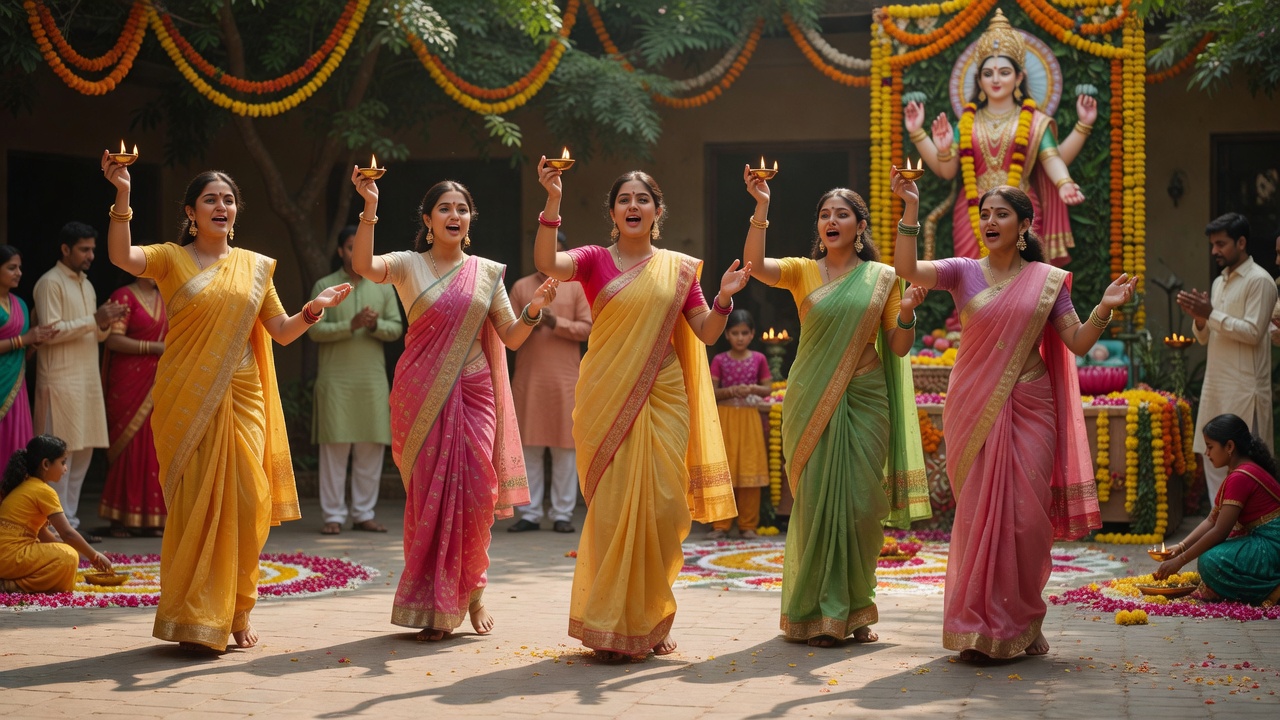
The Saraswati Aarti “Om Jai Saraswati Mata” is the most widely sung devotional hymn during Vasant Panchami celebrations. It is performed in homes, schools, temples, and community pandals across India. No Saraswati Puja is considered complete without this aarti.
Saraswati Aarti Lyrics in Hindi (Original)
जय सरस्वती माता, मैया जय सरस्वती माता । सदगुण वैभव शालिनी, त्रिभुवन विख्याता ॥
चन्द्रवदनि पद्मासिनि, द्युति मंगलकारी । सोहे शुभ हंस सवारी, अतुल तेजधारी ॥
बाएं कर में वीणा, दाएं कर माला । शीश मुकुट मणि सोहे, गल मोतियन माला ॥
देवी शरण जो आए, उनका उद्धार किया । पैठी मंथरा दासी, रावण संहार किया ॥
विद्या ज्ञान प्रदायिनि, ज्ञान प्रकाश भरो । मोह अज्ञान और तिमिर का, जग से नाश करो ॥
धूप दीप फल मेवा, माँ स्वीकार करो । ज्ञानचक्षु दे माता, जग निस्तार करो ॥
माँ सरस्वती की आरती, जो कोई जन गावे । हितकारी सुखकारी, ज्ञान भक्ति पावे ॥
Saraswati Aarti Meaning: Verse-by-Verse in English
Understanding the meaning behind the aarti deepens the connection with the divine. Here is what each verse conveys:
| Verse | Meaning |
|---|---|
| Jai Saraswati Mata… | Glory to Mother Saraswati, who is known across the three worlds for her virtues and divine splendour. |
| Chandravadani Padmasini… | She has a moon-like face, sits on a lotus, and radiates auspicious light. She rides the graceful swan and carries boundless radiance. |
| Bayen kar mein Veena… | In her left hand, she holds the veena; in her right, a rosary. A jewelled crown adorns her head, and a pearl necklace graces her neck. |
| Devi sharan jo aaye… | Whoever sought refuge in the Goddess was uplifted. By influencing Manthara, she brought about the destruction of Ravana. |
| Vidya gyan pradayini… | O bestower of learning, fill the world with the light of knowledge and destroy the darkness of ignorance and attachment. |
| Dhoop deep phal mewa… | O Mother, please accept these offerings of incense, lamps, fruits, and dry fruits. Grant us the eyes of wisdom and help the world cross over suffering. |
| Maa Saraswati ki Aarti… | Whoever sings this aarti of Mother Saraswati receives knowledge, devotion, benefit, and happiness. |
How to Perform Saraswati Aarti at Home
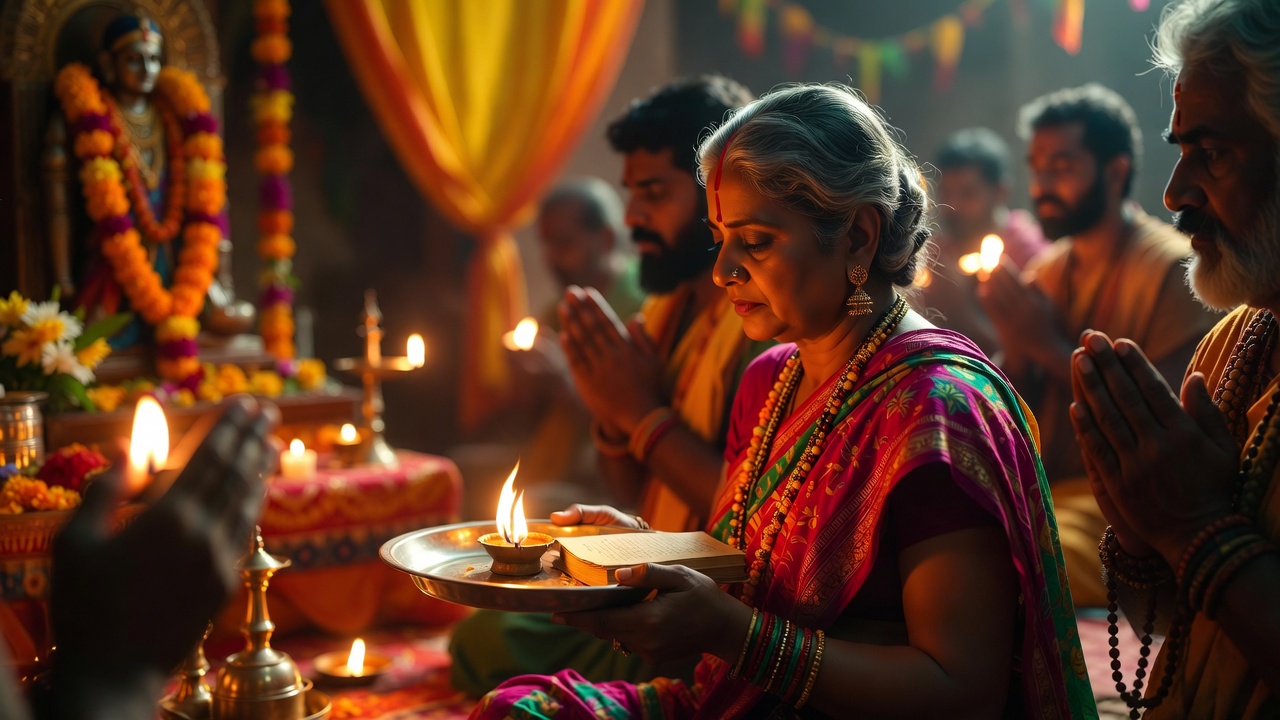
Performing the aarti correctly brings spiritual completeness to your puja:
- Light a ghee lamp (diya) with an odd number of wicks (one, three, or five)
- Hold the aarti plate with both hands and rotate it clockwise in front of the Saraswati murti or image
- Sing the aarti collectively — family participation strengthens the devotional energy
- Ring a small bell with your left hand while performing the aarti with the right
- Conclude by touching the flame gently with your fingertips and then to your forehead
Ya Kundendu Tusharahara Dhavala: The Most Powerful Saraswati Vandana Shloka
If there is one prayer that every devotee of Saraswati should know by heart, it is the Ya Kundendu Tusharahara Dhavala shloka. This ancient Saraswati Vandana is recited in school morning assemblies at Kendriya Vidyalayas, Saraswati Shishu Mandirs, and DAV schools across India. It is also the opening prayer in countless temples and cultural institutions.
Ya Kundendu Shloka: Sanskrit Text with Transliteration
या कुन्देन्दुतुषारहारधवला या शुभ्रवस्त्रावृता या वीणावरदण्डमण्डितकरा या श्वेतपद्मासना । या ब्रह्माच्युतशंकरप्रभृतिभिर्देवैः सदा पूजिता सा माम् पातु सरस्वती भगवती निःशेष जाड्यापहा ॥
Ya Kundendu Tusharahara Dhavala, Ya Shubhra Vastravrita, Ya Veena Varadanda Manditakara, Ya Shveta Padmasana, Ya Brahmachyuta Shankara Prabhritibhir Devaih Sada Pujita, Sa Mam Pattu Saraswati Bhagavati, Nihshesha Jadyapaha.
Ya Kundendu Saraswati Vandana Meaning in English
This shloka translates as:
“She who is as radiant as the jasmine flower, the moon, and a garland of snow; she who is draped in pure white garments; she whose hands are adorned with the veena (divine stringed instrument); she who is seated on a white lotus; she who is always worshipped by Brahma, Vishnu (Achyuta), Shiva (Shankara), and all the gods — may that Goddess Saraswati, who removes all forms of ignorance and dullness, protect me.“
This is not merely a prayer for academic success. It is a profound invocation asking the goddess to remove jadya — the deep-rooted lethargy and mental fog that blocks true understanding.
Best Saraswati Mantras to Chant on Vasant Panchami for Wisdom and Success
Mantras are sacred sound formulas that carry specific vibrational energy. Chanting Saraswati mantras during Vasant Panchami is believed to sharpen intellect, improve memory, and bless the devotee with eloquent speech. Here are the most important mantras, from the simplest beej mantra to more elaborate invocations.
Complete List of Saraswati Mantras with Benefits
| Mantra | Name | Best For |
|---|---|---|
| ॐ ऐं सरस्वत्यै नमः (Om Aim Saraswatyai Namah) | Saraswati Beej Mantra | Overall knowledge, memory, wisdom |
| ॐ ऐं ह्रीं श्रीं वाग्देव्यै सरस्वत्यै नमः | Saraswati Mahamantra | Speech, eloquence, creative arts |
| या देवी सर्वभूतेषु विद्यारूपेण संस्थिता, नमस्तस्यै नमस्तस्यै नमस्तस्यै नमो नमः | Devi Suktam (Saraswati verse) | Recognising the divine in all knowledge |
| ॐ ऐं वाग्देव्यै विद्महे कामराजाय धीमहि, तन्नो देवी प्रचोदयात् | Saraswati Gayatri Mantra | Deep meditation, intellectual clarity |
| सरस्वति नमस्तुभ्यं वरदे कामरूपिणि, विद्यारम्भं करिष्यामि सिद्धिर्भवतु मे सदा | Vidyarambh Mantra | Beginning new education or learning |
How to Chant Saraswati Mantras Correctly
- Best time: Early morning during Brahma Muhurat (approximately 4:00–5:30 AM) or during the puja muhurat window
- Direction: Face east or northeast while chanting
- Mala: Use a crystal (sphatik) or white sandalwood mala. Chant 108 times for a complete cycle
- Offerings: Place white flowers, a veena or musical instrument, books, and pens before the Saraswati image while chanting
- Consistency: For best results, chant daily for 21 or 40 consecutive days starting from Vasant Panchami
Saraswati Chalisa: The 40-Verse Prayer for Knowledge and Academic Success
The Saraswati Chalisa is a devotional composition of 40 verses (chalisa means “forty” in Hindi) that praises Goddess Saraswati and seeks her blessings for wisdom, creativity, and learning. It is an essential part of Vasant Panchami prayers, especially in North India.
Key Verses of Saraswati Chalisa with English Translation
The Chalisa opens with a doha (couplet):
जनक जननी पदमरज, निज मस्तक पर धरि । बन्दौं मातु सरस्वती, बुद्धि बल दे दातारि ॥
“Placing the dust of my parents’ lotus feet upon my head, I bow to Mother Saraswati — the bestower of wisdom and strength.”
Some of the most beloved verses within the Chalisa include:
- “Jai Shri Sakal Buddhi Balaraasi, Jai Sarvagya Amar Avinaasi” — Hail to the source of all intellect and strength, the all-knowing, eternal, and indestructible one.
- “Jai Jai Jai Veenakar Dhaari, Karati Sada Suhans Savaari” — Glory to the bearer of the veena, who always rides the graceful swan.
- “Kalidaas Jo Bhaye Vikhyaata, Teri Kripa Drishti Se Maata” — The great poet Kalidasa became famous only through your gracious glance, O Mother.
Benefits of Reciting Saraswati Chalisa
According to the devotional tradition, the closing verses of the Chalisa itself describe its benefits:
- Daily recitation is believed to enhance memory and focus
- Students who chant it before exams report feeling calmer and more confident
- Artists and musicians recite it to invoke creative inspiration
- A 40-day continuous practice (chalisa vrat) beginning from Vasant Panchami is considered especially powerful for overcoming learning difficulties
Top Saraswati Bhajans and Devotional Songs to Play During Vasant Panchami
Music is inseparable from Saraswati worship. After all, the goddess herself holds the veena — the mother of all musical instruments. Here are the most popular Saraswati bhajans and devotional songs that fill homes and temples during Vasant Panchami celebrations.
Most Popular Saraswati Devotional Songs
| Song Title | Style | When to Play |
|---|---|---|
| “Jai Jai He Bhagwati Sur Bharati” | Classical bhajan | During morning puja |
| “Om Jai Saraswati Mata” (Aarti) | Traditional aarti | During aarti ceremony |
| “He Sharde Maa” (Film: Alaap, 1977) | Bollywood devotional | Throughout the day |
| “Maa Saraswati Sharde” | Folk devotional | Community celebrations |
| “Ya Kundendu Tusharahara Dhavala” | Sanskrit chant | Morning meditation |
| “Saraswati Vandana” (School prayer) | Prayer song | School assemblies |
| “Veena Vadini Var De” | Semi-classical | Evening satsang |
| “Om Jai Veene Wali” | Alternative aarti | During puja |
The Song That Defined Saraswati Devotion in Indian Cinema
The Bollywood classic “He Sharde Maa” from the 1977 film Alaap remains one of the most soul-stirring Saraswati bhajans ever composed. Sung by the legendary playback singer, this song captures the essence of an artist’s surrender to the goddess of knowledge. Even decades later, it is played in homes and at cultural events across India every Vasant Panchami.
Creating a Saraswati Puja Playlist for 2026
For a complete worship experience, arrange your playlist in this order:
- Early morning (5:00–6:30 AM): Saraswati Gayatri Mantra chanting (108 repetitions)
- During puja setup (6:30–7:00 AM): Ya Kundendu Tusharahara Dhavala
- Main puja (7:13 AM–12:33 PM): Saraswati Chalisa, followed by individual mantras
- Aarti time: Om Jai Saraswati Mata (full aarti)
- Post-puja celebration: He Sharde Maa and other bhajans
- Evening: Saraswati Stotram or Ashtakam for a peaceful close
How to Perform Saraswati Puja at Home: Step-by-Step Vidhi for Vasant Panchami 2026
Performing Saraswati Puja at home is a beautiful family tradition. You do not need elaborate arrangements — sincerity and devotion are what matter most. Here is a complete guide.
Saraswati Puja Samagri (Items Required)
Before starting, gather these essential puja items:
- Saraswati murti or framed image (preferably in white or yellow attire)
- Yellow and white flowers — marigolds, chrysanthemums, jasmine
- Ghee lamp (diya) and incense sticks (agarbatti)
- Kumkum (vermillion), haldi (turmeric), and chandan (sandalwood paste)
- White cloth for the altar
- Fruits — bananas, apples, seasonal fruits
- Sweets — kesari halwa, boondi laddoo, or kheer
- Books, pens, musical instruments — these are placed at the feet of the goddess
- Puja kalash (sacred water vessel) with mango leaves and a coconut on top
- Yellow clothes to wear during the puja
Step-by-Step Saraswati Puja Vidhi
Step 1: Preparation Wake up during Brahma Muhurat. Take a bath, preferably with a turmeric paste, which is considered pleasing to the goddess. Wear clean yellow or white clothes.
Step 2: Setting Up the Altar Place the Saraswati murti or image on a clean, elevated platform covered with a white cloth. Arrange flowers around the murti. Fill the kalash and place it before the goddess.
Step 3: Ganesh Puja Begin by invoking Lord Ganesha, the remover of obstacles. Offer a short prayer: “Om Gan Ganapataye Namah.” This is standard practice before any Hindu puja.
Step 4: Saraswati Avahan (Invocation) Invite Goddess Saraswati into the murti by chanting the Saraswati Avahan mantra. Sprinkle holy water and offer flowers.
Step 5: Shodashopachara Puja (16-Step Worship) Offer the following items one by one, each accompanied by the appropriate mantra:
- Asana (seat) — offer a seat to the goddess
- Padya (water for feet)
- Arghya (water for hands)
- Achamaniya (water to sip)
- Snana (ceremonial bath)
- Vastra (clothes)
- Yajnopavita (sacred thread)
- Gandha (sandalwood paste)
- Pushpa (flowers)
- Dhoop (incense)
- Deep (lamp)
- Naivedya (food offering)
- Tambula (betel leaves)
- Dakshina (monetary offering)
- Pradakshina (circumambulation)
- Namaskara (final prostration)
Step 6: Mantra Chanting Chant the Saraswati Beej Mantra (Om Aim Saraswatyai Namah) 108 times using a sphatik mala.
Step 7: Aarti Sing the Om Jai Saraswati Mata aarti with the full family. This is the emotional peak of the puja.
Step 8: Prasad Distribution Distribute the offered sweets and fruits as prasad to all family members and visitors.
Important tradition: On Saraswati Puja day, many devotees do not read or study until the puja is completed. Books and instruments are placed at the goddess’s feet and are not touched until after the aarti. This practice symbolises complete surrender of one’s learning to the divine.
Regional Saraswati Puja Traditions Across India: How Different States Celebrate
Vasant Panchami is a pan-Indian festival, but its customs vary beautifully from state to state. Here is a look at how different regions celebrate.
West Bengal and Eastern India: The Grand Saraswati Puja
In West Bengal, Saraswati Puja is arguably the biggest celebration of the year for students. Schools, colleges, and neighbourhood committees set up elaborate pandals (temporary structures) with beautifully crafted clay idols of the goddess. Students dress in yellow sarees and kurtas. The next day, the idols are immersed in rivers and ponds in a procession called visarjan.
In Bihar and Jharkhand, similar community pujas are organised. Children take the lead in organising and performing the rituals — a tradition that fosters responsibility and devotion from a young age.
Punjab and Haryana: Basant and Kite Flying
In the Punjab region, Vasant Panchami is celebrated as the Basant Festival of Kites. The sky fills with colourful patangs (kites), and families prepare festive meals including makke ki roti, sarson ka saag, and meethe chawal (sweet yellow rice). Men wear yellow turbans, and women don yellow chunnis (scarves).
Odisha: Sri Panchami
In Odisha, the festival is known as Sri Panchami or Basanta Panchami. Fresh yellow flowers are offered in temples, and homas (fire rituals) are performed in schools. The Khadi-Chuan ceremony marks the initiation of education for young children aged four to five.
South India: Saraswati Puja During Navaratri
Interestingly, in Tamil Nadu, Kerala, Karnataka, and Andhra Pradesh, the most elaborate Saraswati Puja happens not on Vasant Panchami but during Sharadiya Navaratri (September–October). The ninth day of Navaratri, called Saraswati Puja or Ayudha Puja, is when books, musical instruments, and tools are worshipped. However, Vasant Panchami is still observed as Sri Panchami with temple prayers and offerings.
Maharashtra: Newlywed Traditions
In Maharashtra, there is a unique custom. Newly married couples visit a temple together on the first Vasant Panchami after their wedding. They offer prayers wearing yellow clothes, seeking blessings for a life filled with knowledge and harmony.
Bali, Indonesia: Hari Raya Saraswati
Beyond India, Balinese Hindus in Indonesia celebrate Hari Raya Saraswati with prayers in family compounds, schools, and temples from morning to noon. Teachers and students wear bright traditional clothes. Children bring offerings of cakes and fruits to school temples. This beautiful tradition shows how Saraswati worship has crossed oceans.
Saraswati Stotram and Ashtakam: Advanced Prayers for Deep Devotion
For those who wish to go beyond the popular aarti and chalisa, the Saraswati Stotram and Saraswati Ashtakam offer deeper spiritual engagement.
Saraswati Stotram (Ya Kundendu Stotram)
This stotram is attributed to ancient sages and is recited during the Shodashopachara Puja. It describes the goddess in exquisite detail — her white garments, her lotus seat, and her role as the destroyer of ignorance. The full stotram is available on DrikPanchang with recitation audio.
Agastya Krita Saraswati Stotram
This stotram was composed by Sage Agastya, one of the revered Saptarishis (seven great sages) of Vedic tradition. It is considered especially powerful for overcoming speech difficulties and for those in teaching or public speaking professions.
Saraswati Ashtakam (Eight-Verse Praise)
The Saraswati Ashtakam consists of eight verses glorifying the goddess. It is chanted during elaborate pujas and special occasions. This prayer is ideal for devotees who want a longer, more meditative chanting practice beyond the aarti.
108 Names of Goddess Saraswati (Ashtottara Shatanamavali)
Reciting the 108 names of Maa Saraswati is a powerful devotional practice. Each name highlights a different attribute of the goddess. The recitation begins with “Om Saraswatyai Namah” and includes names like:
- Om Mahabhadrayai Namah (The greatly auspicious one)
- Om Mahamayayai Namah (The great enchantress)
- Om Brahmavishnushivatmikayai Namah (The essence of Brahma, Vishnu, and Shiva)
A complete list with pronunciation guides is available at DrikPanchang’s Saraswati Mantra page.
Why Yellow Is the Sacred Colour of Vasant Panchami
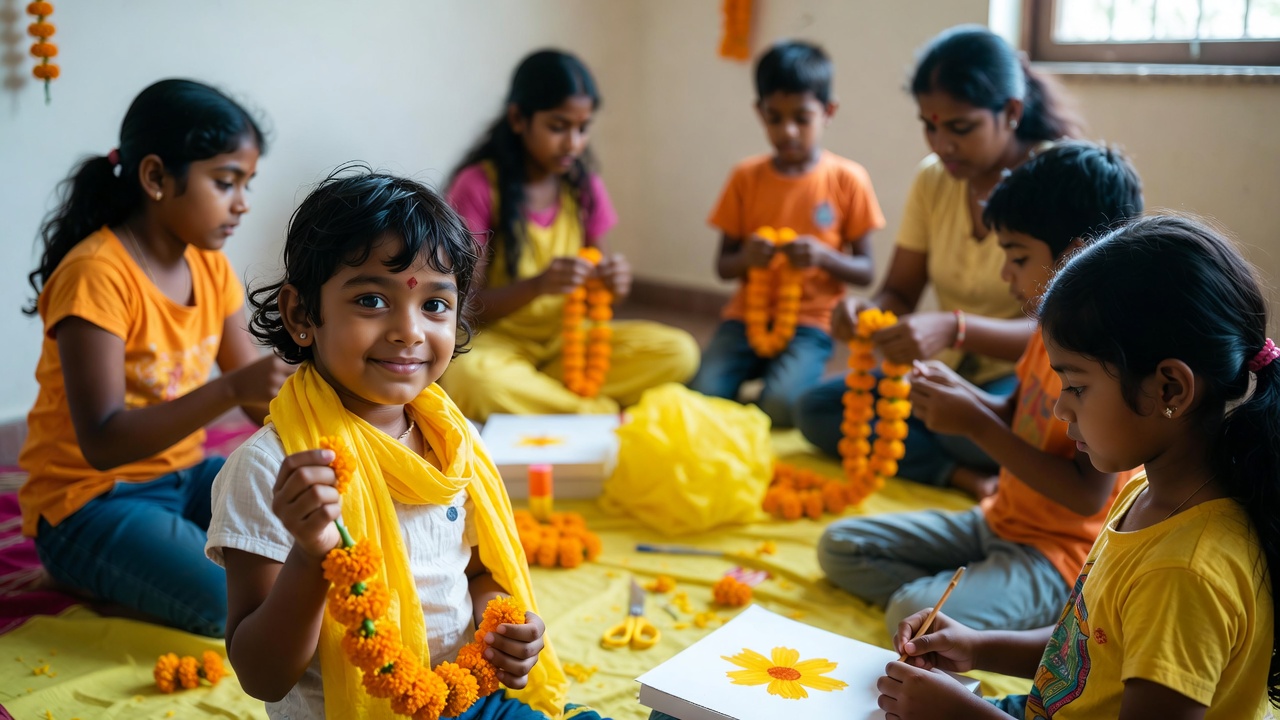
You will notice that everything about Vasant Panchami is drenched in yellow — clothes, flowers, food, and decorations. This is not merely decorative. Yellow carries deep symbolic meaning in this festival:
- Nature’s palette: Mustard fields across North India bloom in golden yellow during this season, marking the arrival of spring
- Knowledge and prosperity: In Hindu symbolism, yellow represents vidya (knowledge), buddhi (intellect), and samriddhi (prosperity)
- Saraswati’s association: While Saraswati is often depicted in white (representing purity), the festival itself is associated with yellow as the colour of auspiciousness and the spring season
- Energetic significance: Yellow is linked to the Manipura Chakra (solar plexus), which governs confidence, willpower, and mental clarity
Traditional Yellow Foods Prepared on Vasant Panchami
| Dish | Region | Description |
|---|---|---|
| Meethe Chawal (Sweet Saffron Rice) | North India | Rice cooked with saffron, sugar, and dry fruits |
| Kesari Halwa | Pan-India | Semolina pudding with saffron and ghee |
| Boondi Laddoo | North India | Round sweets made from gram flour |
| Khichdi | Eastern India | Lentil and rice dish with turmeric |
| Zarda | Punjab, UP | Sweet rice with cardamom and nuts |
| Kheer | Pan-India | Rice pudding, sometimes with saffron |
Frequently Asked Questions About Saraswati Aarti and Vasant Panchami Prayers
Q: Can I recite Saraswati Aarti every day, or is it only for Vasant Panchami? A: You can recite the Saraswati Aarti any day. Many students chant it daily before starting their studies. However, it carries special significance on Vasant Panchami, Saraswati Puja during Navaratri, and on Thursdays.
Q: What is the best time to chant Saraswati mantras? A: Early morning (Brahma Muhurat, around 4:00–5:30 AM) is ideal. During Vasant Panchami, the puja muhurat window (7:13 AM to 12:33 PM for 2026) is the best time.
Q: Can non-Hindus recite Saraswati prayers? A: Yes. Saraswati represents universal wisdom and creativity. Anyone who respects learning and seeks knowledge can chant these prayers. In Bali, Indonesia, Saraswati worship is part of local Hindu-Buddhist tradition and is open to all.
Q: Why are books not read until after the puja? A: Placing books at the goddess’s feet symbolises surrendering your knowledge to the divine. It is a gesture of humility. After the puja and aarti are complete, the books are taken back — now blessed by Saraswati.
Q: Is Vasant Panchami a public holiday in India? A: Vasant Panchami is observed as a restricted or optional holiday in many Indian states. It is a gazetted holiday in West Bengal, Bihar, and some other states. Government offices and schools may have different policies depending on the state.
Q: What is the connection between Vasant Panchami and Holi? A: Vasant Panchami marks the beginning of the 40-day countdown to Holi. In Vrindavan’s famous Banke Bihari Temple, priests begin Holi celebrations on this day by tossing gulal (coloured powder) on devotees. Communities also begin preparing the Holika Dahan pyre from this day onwards.
Making Vasant Panchami 2026 Spiritually Meaningful: Final Thoughts
Vasant Panchami is more than a ritual. It is an annual reminder that knowledge is sacred. In a world flooded with information, this festival asks us to pause, bow before the goddess of wisdom, and seek not just data but vivek — true discernment.
Whether you chant the Om Jai Saraswati Mata aarti in a grand pandal in Kolkata, fly kites in the fields of Punjab, or quietly light a lamp before a small Saraswati image in your apartment, the essence remains the same: a grateful heart seeking the light of knowledge.
This Vasant Panchami, on January 23, 2026, may Maa Saraswati bless you and your family with wisdom, creativity, and the courage to learn something new every single day.