A Comprehensive Travel Guide to the Most Spectacular Hindu Celebrations Outside Southeast Asia
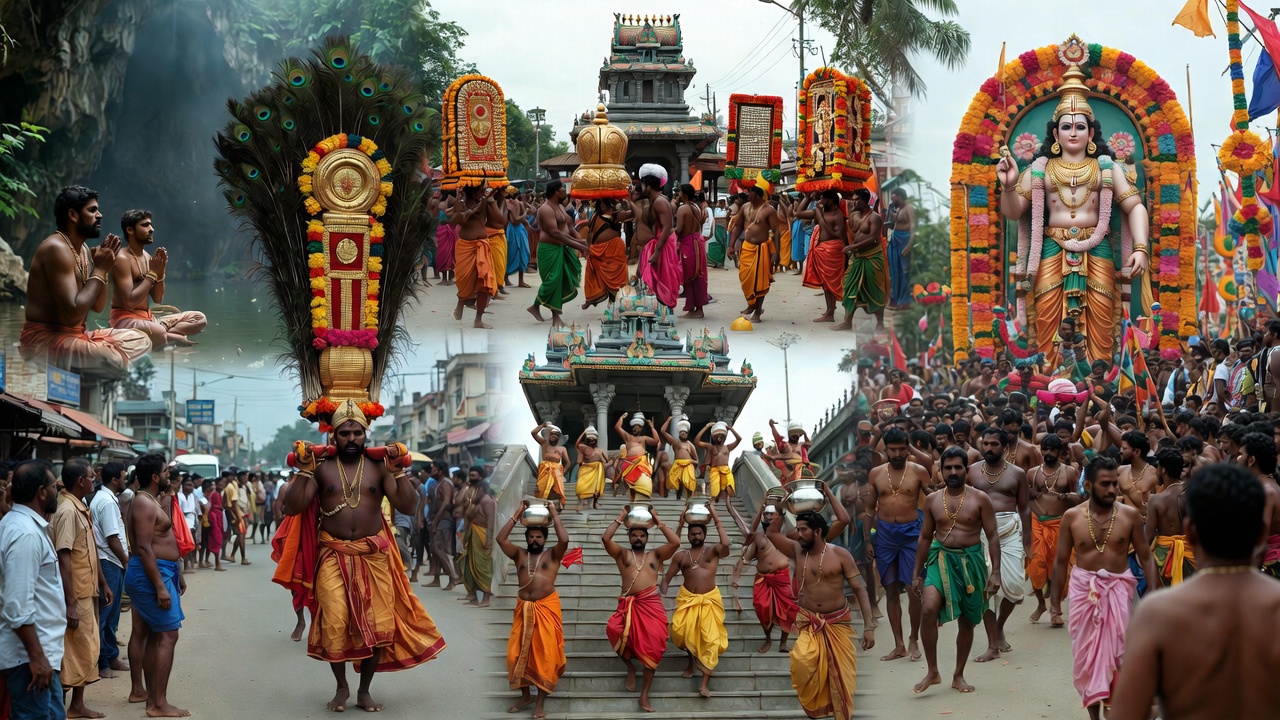
If you’ve ever witnessed the mesmerizing processions of devotees carrying kavadis adorned with peacock feathers, or watched in awe as participants enter trance-like states during religious ceremonies, you’ve experienced the profound spiritual energy of Thaipusam. While Malaysia’s Batu Caves celebration draws over one million devotees annually, this ancient Tamil Hindu festival is celebrated with equal fervor across the globe.
In this comprehensive guide, we explore the best places to celebrate Thaipusam outside Malaysia, taking you on a journey through temple processions in Singapore, the vibrant Cavadee celebrations of Mauritius, the sacred rituals in Tamil Nadu’s Palani hills, and the passionate kavady traditions that have flourished in the Tamil diaspora from South Africa to Fiji.
What is Thaipusam and Why is it Celebrated Worldwide?
Thaipusam (also spelled Thaipoosam or Thaipooyam) is a Tamil Hindu festival celebrated on the full moon day in the Tamil month of Thai, which typically falls between January and February on the Gregorian calendar. The name itself is a portmanteau: “Thai” refers to the tenth Tamil month, and “Pusam” represents the star that reaches its highest point during this celestial occasion.
The Sacred Mythology Behind Thaipusam
The festival commemorates a pivotal moment in Hindu mythology. According to the Kanda Puranam (the Tamil version of the Skanda Purana), three asuras (demons) named Surapadman, Tarakasuran, and Singamukhan had terrorized the three worlds after receiving powerful boons from Lord Shiva. The devas (celestial beings) pleaded for help.
In response, Lord Shiva manifested six divine sparks that eventually became Lord Murugan (also known as Kartikeya or Subrahmanya). Goddess Parvati then granted her son a divine spear called the Vel, symbolizing wisdom and the power to dispel darkness and ignorance.
Lord Murugan used this sacred weapon to defeat Surapadman, splitting him into two halves that transformed into a peacock (which became his divine mount) and a rooster (which adorns his flag). This victory represents the triumph of good over evil, light over darkness, and wisdom over ignorance.
Why Thaipusam Spread Across the Globe
The festival’s global reach mirrors the Tamil diaspora’s migration patterns during colonial rule. Indian indentured laborers brought their religious traditions to:
| Region | Period of Migration | Primary Reason |
|---|---|---|
| Malaysia & Singapore | 1800s-1900s | British colonial plantation work |
| Mauritius | 1834-1920 | Sugar plantation labor |
| South Africa | 1860s onwards | Railway and mining work |
| Fiji | 1879-1916 | Sugar cane cultivation |
| Caribbean | 1838-1917 | Post-abolition plantation work |
Today, Thaipusam is a public holiday in Mauritius, several Malaysian states, and the Indian state of Tamil Nadu. It remains one of the most visually striking and spiritually profound Hindu celebrations worldwide.
Singapore Thaipusam Festival: A 4-Kilometer Procession of Faith
While not a public holiday in Singapore, the city-state hosts one of the most organized and spectacular Thaipusam celebrations outside Malaysia. The festival transforms Little India into a vibrant tapestry of devotion, traditional music, and colorful processions.
When and Where to Experience Singapore Thaipusam
Thaipusam 2026 in Singapore falls on Sunday, February 1, 2026. The sacred procession begins the night before:
- 11:30 PM, January 31: Devotees depart from Sri Srinivasa Perumal Temple on Serangoon Road
- 12:05 AM, February 1: Doors open at Sri Thendayuthapani Temple on Tank Road
- 11:00 PM, February 1: All processions must conclude
The 4-kilometer pilgrimage route connects two historically significant temples:
| Temple | Location | Significance |
|---|---|---|
| Sri Srinivasa Perumal Temple | 397 Serangoon Road | Starting point; dedicated to Vishnu |
| Sri Thendayuthapani Temple | 15 Tank Road | Endpoint; Singapore’s oldest Murugan temple (est. 1859) |
The Silver Chariot Procession (Punar Pusam)
On the eve of Thaipusam, witness the Silver Chariot Procession—a tradition dating back to the 1800s. The chariot carries the processional image of Lord Murugan from Sri Thendayuthapani Temple to Sri Layan Sithi Vinayagar Temple on Keong Saik Road.
2026 Silver Chariot Schedule:
- 5:00 AM: Departs Sri Thendayuthapani Temple
- 6:30 AM: Arrives at Sri Mariamman Temple (South Bridge Road)
- 7:30 AM: Reaches Sri Layan Sithi Vinayagar Temple
- 5:00 PM: Return procession begins
This tradition honors the Nattukottai Chettiars, the merchant banking community credited with introducing Thaipusam to Southeast Asia in the 1850s. The Sri Thendayuthapani Temple was designated a National Monument of Singapore on October 20, 2014.
What Makes Singapore Thaipusam Unique
Unlike the more intense celebrations elsewhere, Singapore’s Thaipusam emphasizes:
- Live music stations along the procession route (7 AM – 10 PM)
- Traditional temple musicians performing devotional hymns
- Strict organization with designated water points (thaneer panthals) and medical stations
- No piercings or trances allowed inside temple premises
Travel Tip: Station yourself along Serangoon Road or near the key temples as early as possible. Use public transport—Farrer Park MRT (Exit G) for the starting temple, Dhoby Ghaut MRT (Exit B) for the endpoint.
Tamil Nadu India: Experience Thaipusam Where the Tradition Began
While larger celebrations occur abroad, Tamil Nadu remains the spiritual birthplace of Thaipusam. Here, the festival isn’t a single-day event but extends into a 10-day Brahmotsavam (grand festival) at major Murugan temples.
Palani Murugan Temple: The Ultimate Thaipusam Pilgrimage
The Arulmigu Dhandayuthapani Swamy Temple in Palani, Dindigul district, is one of the Six Abodes of Murugan (Arupadai Veedu) and the most significant Thaipusam destination in India.
Why Palani is Special:
- The temple sits atop Sivagiri, the taller of Palani’s two hills
- The main deity’s idol was sculpted by the legendary Sage Bogar using Navapaashana—nine poisonous substances mixed in precise ratios believed to form an eternal medicine
- The idol depicts Murugan as Dhandapani, a young ascetic stripped of ornaments, wearing only a loincloth
- According to legend, this is where Idumban (the origin of the kavadi tradition) encountered Lord Murugan
Pilgrimage Numbers: During Thai Pusam, 3-5 lakh devotees (300,000-500,000) visit the temple. An estimated 10,000 kavadis reach Palani during the festival.
The Legendary Kavadi Tradition at Palani
The kavadi tradition itself originated from the story of Idumban, a reformed disciple who was tasked with carrying two hills from the Himalayas to South India. He attached them to a stick bent in an arc—creating the first kavadi.
Palani Thaipusam Highlights:
| Day | Event |
|---|---|
| Day 1 | Flag hoisting (Kodi Etram) at Periyanayaki Amman Temple |
| Day 7 | Thanga Ther (Golden Chariot procession) |
| Day before Thaipusam | Thirukalyanam (Celestial wedding of Muthukumara Swamy) |
| Main Day | Kavadi Attam (ceremonial dance), silver chariot procession |
Barefoot Pilgrims: Devotees walk for days from distant villages, entering Palani barefoot. Many observe 48 days of strict fasting and celibacy before carrying their kavadi up the 700+ stone steps to the temple.
Other Significant Thaipusam Temples in Tamil Nadu
| Temple | Location | Special Features |
|---|---|---|
| Subramaniya Swamy Temple | Tiruchendur | Seaside temple; where Murugan emerged victorious |
| Kapaleeshwarar Temple | Mylapore, Chennai | Three-day Theppotsavam (float festival) |
| Meenakshi Amman Temple | Madurai | Meenakshi Sundareshwarar Theppotsavam |
| Tiruttani Murugan Temple | Near Chennai | One of the six abodes |
How to Reach Palani:
- Nearest Airport: Coimbatore International Airport (114 km)
- Railway: Palani has its own station; alternatively, travel to Dindigul or Madurai
- Road: Frequent buses from Coimbatore, Chennai, Madurai, and Dindigul
Mauritius Thaipoosam Cavadee: A Public Holiday Celebration
Mauritius holds a unique distinction: it’s the only African country where Hinduism is the largest religion (over 50% of the population). Here, Thaipusam is known locally as Thaipoosam Cavadee and is celebrated as a national public holiday.
When is Cavadee in Mauritius?
Thaipoosam Cavadee 2026: Sunday, February 1, 2026 (public holiday)
The celebrations follow the traditional Tamil calendar, with festivities beginning 10 days prior with the Kodi Etram (flag hoisting ceremony).
Kovil Montagne: The Heart of Mauritian Cavadee
The grandest celebrations occur at Sri Siva Subramanya Thirukovil, better known as Kovil Montagne (“Temple Mountain”), located in the Corps de Garde Mountain in Quatre Bornes.
Historical Significance:
- Founded in 1890 by Velamurugan, a humble Indian immigrant laborer
- Built with every penny he saved while working on sugar plantations
- Thousands of devotees make pilgrimage here each year
Unique Elements of Mauritian Cavadee
Mauritius has developed distinctive traditions while maintaining core rituals:
| Element | Mauritian Adaptation |
|---|---|
| Cavadee Construction | Made from wood and bamboo, up to 3 meters high, decorated with flowers, peacock feathers, coconuts, and miniature icons |
| Color Palette | Devotees wear fuchsia or saffron colored clothing |
| Body Preparation | Upper body smeared with holy ash |
| Route | Procession to nearest river or sea for sacred bathing before temple arrival |
| Community Feast | Vegetarian meal served on banana leaves after temple rituals |
The Piercing Rituals of Mauritius
Mauritian Cavadee retains the traditional mortification practices:
- Vel piercings: Small lance-shaped needles through tongue and cheeks (vow of silence)
- Body piercings: Needles through chest, back, abdomen, and legs
- Hook piercings: Larger cavadees pulled by hooks attached to the devotee’s back with limes dangling from hook ends
- Silence vow: Those not pierced tie a scarf around their mouth
Travel Tip: The celebrations happen throughout the island, so visitors can witness processions in multiple locations. The road is sprinkled with water to ease the suffering of barefoot devotees on hot tar—a gesture of community compassion.
Cultural Significance Beyond Religion
Thaipoosam Cavadee has become a celebration of Mauritian multicultural identity:
“Not just the Tamils but a lot of Mauritians from other religious and cultural backgrounds also join the festive celebration.” — Mauritius Tours
Food stalls offering traditional Tamil cuisine—idli, dosa, and payasam—are organized by locals of all backgrounds, showcasing the island’s cultural integration.
South Africa Thaipusam Kavady: A 164-Year-Old Tradition
The Indian indentured laborers who arrived on South African shores 164 years ago (beginning in 1860) brought with them not just their labor but their rich religious traditions. Today, Thaipoosam Kavady is celebrated with a character unique to South Africa while preserving the underlying philosophy.
Major Thaipusam Temples in South Africa
| Temple | Location | Notes |
|---|---|---|
| Clairwood Shree Siva Soobramonior Temple | Durban | One of the oldest Tamil temples |
| Shree Emperumal Hindu Temple | Mount Edgecombe, north of Durban | Founded 1875; celebrating 150th anniversary in 2025 |
| Shree Sivasubramaniar Alayam | Palm Ridge, Johannesburg | Major Gauteng celebration |
| Johannesburg Melrose Shree Siva Subramaniar Temple | Melrose | Daily obayams during festival period |
The South African Kavady Experience
The South African celebration spans 10-17 days of intense devotion:
Preparation Period:
- Daily temple attendance and worship
- Intense fasting
- Mantra chanting and meditation
- Bhajan singing
- Strict vegetarian diet
Notable Traditions:
- Seval Kodi (rooster flag) hoisting ceremony marks the beginning
- Abishegam: Purification of kavadies on the day before the main celebration
- Devotees carry either paal kodums (milk pots) or kavadies
- Turmeric string worn throughout the festival, removed only after flag de-hoisting
Historical Temple Milestone: Shree Emperumal Hindu Temple
The Shree Emperumal Hindu Temple Society in Mount Edgecombe celebrated their 150th anniversary in 2025. During their recent Thaipusam Kavady:
“We catered for up to 600 people a day. Over the entire period from day 1 to the last day, which was 17 days of prayer, we had in excess of 5,000 people in and out of our temple.” — Temple President Govender
This temple was one of the first Hindu places of worship built by Indian indentured laborers in South Africa, constructed approximately 15 years after their arrival.
The Spiritual Philosophy Behind South African Kavady
As Hindu priest and cultural leader Guru Kriba Vayapuri explains:
“The kavadi is a semicircular wooden structure adorned with flowers, peacock feathers and a little spear (vel)… The kavadi can be regarded as a burden (life’s challenge) whose weight the bearer can’t manage and therefore implores the Lord to intercede.”
The tribulations devotees seek relief from include:
- Sickness and health challenges
- Financial difficulties
- Marital or relationship problems
- Career and business struggles
- Lack of peace of mind
Sri Lanka Thaipusam: Celebrating at Ancient Tamil Sacred Sites
Sri Lanka’s Tamil Hindu communities celebrate Thaipusam with particular intensity in the northern and eastern regions—areas with the strongest historical Tamil presence.
Key Thaipusam Destinations in Sri Lanka
| Location | Temple | Significance |
|---|---|---|
| Jaffna | Nallur Kandaswamy Kovil | One of the most famous Hindu temples in Sri Lanka |
| Trincomalee | Koneswaram Temple (Thirukonamalai) | Designated as “Dakshina-Then Kailasam” (Mount Kailash of the South) |
| Colombo | Various kovils | Capital city celebrations |
| Kataragama | Kataragama Temple | Multi-religious site sacred to Hindus, Buddhists, and Muslims |
The Sacred City of Trincomalee
Trincomalee holds an extraordinary status in Hinduism—it is simultaneously a:
- Pancha Ishwaram (one of five ancient Shiva temples)
- Paadal Petra Sthalam (one of 275 temples praised in Tamil hymns)
- Maha Shakta Pitha (major goddess worship site)
- Murugan Tiruppadai (sacred Murugan site)
The Koneswaram Temple, perched on a cliff overlooking the Indian Ocean, was expanded by Rajendra Chola I in the 11th century. During Thaipusam, devotees gather here adorned in traditional attire, carrying offerings of fruits, flowers, and milk pots.
Kataragama: Where Multiple Faiths Converge
Unlike other Thaipusam sites, Kataragama Temple is unique for being sacred to three religions:
- Hindus worship Lord Murugan (Kataragama Deviyo)
- Buddhists venerate the site
- Muslims have a mosque within the complex
During the Kataragama Festival (July/August), devotees perform fire-walking and body piercing rituals similar to Thaipusam, though the temple also hosts Thaipusam celebrations in January/February.
Sri Lankan Thaipusam Customs
Devotees in Sri Lanka follow similar practices to other regions:
- Purification rituals and fasting beforehand
- Barefoot pilgrimage to temples
- Offerings of fruits, flowers, and milk pots
- Special poojas (prayers) at Lord Murugan temples
Travel Tip: Combining a Thaipusam visit with exploration of Sri Lanka’s northern heritage sites (Jaffna Fort, Jaffna Library, Naga Pooshani Ambal Kovil) creates an enriching cultural experience.
Fiji Thaipusam: The Largest Hindu Temple in the Southern Hemisphere
When Indian laborers arrived in Fiji between 1879 and 1916 to work on sugar plantations, they brought their devotion to Lord Murugan with them. Today, Fiji hosts one of the most visually stunning Thaipusam celebrations in the Pacific.
Sri Siva Subramaniya Swami Temple, Nadi
The centerpiece of Fijian Thaipusam is the Sri Siva Subramaniya Swami Temple in downtown Nadi—the largest Hindu temple in the Southern Hemisphere.
Temple Highlights:
- Dravidian architecture rarely seen outside India
- Built by eight specialist craftsmen from India over 10 years
- Three main sanctums: Lord Murugan, Ganesh, and Meenakshi/Shiva
- Colorful gopuram (entrance tower) with intricate carvings
- Ceiling frescoes painted Michelangelo-style from scaffolding
Thaipusam Celebrations at Nadi Temple
Recent Thaipusam celebrations have drawn:
“A large crowd of over a thousand devotees gathered at the Sri Siva Subramaniya Swami Temple in Nadi… The auspicious occasion saw devotees from around Fiji pulling carts and dancing in celebration.” — Fiji Times
Festival Activities:
- Cart pulling (chariot processions)
- Devotional dancing around the temple
- Traditional pujas conducted by priests
- Music, dance, and feasting throughout the day
Other Fiji Thaipusam Locations
| Temple | Location |
|---|---|
| Sri Siva Subramaniya Swami Temple | Nadi |
| Sri Raj Mahamariamman Temple | Suva |
The Ten-Day Fiji Thaipusam Festival
Similar to celebrations elsewhere, Fiji’s Thaipusam extends over multiple days:
“During the ten-day festival held over the full moon between January and February, devotees arrive at the temple to pray and cleanse their spirits. Some prove their faith with multiple body piercings on the chest, arms, face and tongue while others drag chariots, or kavadris, attached by sharpened meat hooks pierced into their backs.” — Rough Guides
Visitor Etiquette:
- Remove shoes before entering temple grounds
- Do not attend if you have recently consumed alcohol
- Cover shoulders and legs
- Photography may be restricted during rituals
- Observe in respectful silence during ceremonies
Travel Tip: The temple is located at the southern end of Nadi’s main street, easily accessible by taxi from the airport or bus from other island points.
Caribbean Thaipusam: Trinidad and Tobago, Guyana, and Beyond
The Caribbean hosts significant Tamil communities descended from indentured laborers who arrived between 1838 and 1917. Trinidad and Tobago and Guyana maintain the strongest Thaipusam traditions in the region.
Trinidad and Tobago
Trinidad has a substantial Hindu population (approximately 18-25% of the country), with many tracing their ancestry to Tamil Nadu. Thaipusam is celebrated at various Hindu temples across the islands, though with less elaborate kavadi processions than Malaysia or Singapore.
Guyana
Guyana’s Indo-Guyanese community (approximately 40% of the population) includes descendants of Tamil laborers. Thaipusam observances occur at Hindu temples throughout the country.
Suriname and Jamaica
Smaller Tamil diaspora communities in Suriname and Jamaica also maintain Thaipusam traditions, though celebrations may be more intimate family and temple-based observances.
North American Celebrations
In Canada and the United States, growing Tamil diaspora communities have established Thaipusam observances:
| Location | Temple |
|---|---|
| Concord, California | Shiva Murugan Temple |
| Toronto, Canada | Various Tamil Hindu temples |
| New York area | Sri Ganesh Temple and others |
These celebrations typically feature kavadi processions, milk pot offerings, and special pujas, though the more intense mortification practices may be modified due to local regulations.
Understanding Kavadi Attam: The Sacred Burden Dance
At the heart of Thaipusam lies Kavadi Attam (the kavadi dance)—a ceremonial act of devotion through dance, food offerings, and self-mortification. Understanding this practice enhances appreciation of the festival.
Types of Kavadi Offerings
| Type | Description | Carried By |
|---|---|---|
| Paal Kavadi | Pots of fresh cow’s milk | Women, children, and men |
| Simple Kavadi | Semicircular wooden/metal frame with offerings | Most devotees |
| Vel Kavadi | Frame adorned with peacock feathers, images of deities | Experienced devotees |
| Alagu Kavadi | Large elaborate structure with hooks piercing the body | Advanced practitioners |
The 48-Day Preparation
Serious kavadi bearers undergo rigorous preparation:
Physical and Spiritual Disciplines:
- Strict vegetarian diet (satvik food)
- Complete celibacy
- Daily temple visits and prayers
- Fasting (some for 24-48 hours before, others throughout the 48 days)
- Abstinence from alcohol and stimulants
- Regular mantra chanting and meditation
The Spiritual Significance
The kavadi represents more than physical burden:
“By bearing the Kavadi, the devotees implore Murugan for assistance, usually as a means of balancing a spiritual debt or on behalf of a loved one who is in need of help or healing.” — Wikipedia
The practice symbolizes:
- Debt bondage to the divine (willingly taken)
- Life’s challenges and burdens
- Sacrifice of ego and worldly attachments
- Gratitude for answered prayers
- Petition for divine intervention
Travel Tips for Attending Thaipusam Festivals Worldwide
Whether you’re a spiritual seeker or cultural enthusiast, attending Thaipusam requires preparation and respect.
What to Wear to Thaipusam
| Do | Don’t |
|---|---|
| Cover shoulders and knees | Wear revealing clothing |
| Wear loose, comfortable clothing | Wear leather (sacred animal) |
| Choose white, yellow, or orange (auspicious colors) | Wear black (inauspicious) |
| Bring a shawl or sarong for temple entry | Forget head covering for women at some temples |
| Wear comfortable walking shoes (you’ll remove them at temples) | Wear new shoes that might cause blisters |
Festival Etiquette Guidelines
Do:
- Remove footwear before entering temples
- Ask permission before photographing devotees (especially those in trance)
- Maintain respectful silence during rituals
- Stay hydrated and bring water
- Give way to kavadi bearers and processions
- Arrive early for best viewing positions
Don’t:
- Touch kavadi frames or offerings without permission
- Consume alcohol before or during the festival
- Touch devotees in trance states
- Make loud noises or disruptive comments
- Block procession routes
- Eat meat on the day of your visit (for temple entry)
Health and Safety Considerations
| Concern | Preparation |
|---|---|
| Heat and sun | Bring hat, sunscreen, wear light colors |
| Crowds | Identify emergency exits, keep belongings secure |
| Dehydration | Carry water, use provided water points |
| Standing for hours | Wear comfortable shoes, bring portable seat if allowed |
| Smoke from incense | Those with respiratory issues should maintain distance |
Photography Tips
- Ask permission before close-up shots of devotees
- Respect no-photography zones inside sanctums
- Never use flash near devotees in trance
- Wide-angle shots of processions are generally acceptable
- The best light is during early morning processions
Thaipusam 2026 and Beyond: Festival Dates Calendar
Plan your trip with this comprehensive date guide:
| Year | Date | Day |
|---|---|---|
| 2026 | February 1 | Sunday |
| 2027 | January 23 | Saturday |
| 2028 | February 11 | Friday |
| 2029 | January 31 | Wednesday |
| 2030 | January 20 | Sunday |
Note: Dates are based on the Tamil calendar and may vary slightly by location. Always confirm with local temple authorities.
Best Destinations by Experience Level
| If You Want… | Go To… |
|---|---|
| Largest crowds, most intense rituals | Batu Caves, Malaysia |
| Well-organized, accessible celebration | Singapore |
| Birthplace of the tradition | Palani, Tamil Nadu, India |
| Public holiday atmosphere | Mauritius |
| Unique diaspora adaptation | South Africa |
| Pacific island cultural fusion | Fiji |
| Ancient sacred sites | Trincomalee, Sri Lanka |
Frequently Asked Questions About Thaipusam
Can non-Hindus attend Thaipusam?
Yes, absolutely. Thaipusam is open to all observers. Visitors of any faith are welcome to witness the processions and visit temples (following appropriate etiquette). Many temples actively welcome cultural tourists.
Is it safe to attend Thaipusam?
Yes, the festivals are generally very safe. Major celebrations have police presence, medical stations, and water points. The biggest concerns are heat exposure and crowd management—arrive early, stay hydrated, and follow marshal instructions.
Do all devotees pierce their bodies?
No. Body piercing is one form of penance, but many devotees participate by:
- Carrying milk pots (paal kudam) on their heads
- Carrying simple flower-decorated kavadis
- Walking barefoot in the procession
- Shaving their heads as an act of humility
- Fasting and observing silence
How long does Thaipusam last?
The main celebration occurs on one day, but:
- Preparations begin 10-48 days before
- Flag hoisting ceremonies occur 10 days prior
- Some locations (Tamil Nadu) celebrate for 10 full days
- Singapore’s procession runs from 11:30 PM until 11:00 PM the next day (approximately 24 hours)
What is the difference between kavadi and Cavadee?
They’re the same thing! Cavadee is the Mauritian spelling/pronunciation of kavadi. Both refer to the ceremonial burden carried by devotees.
Conclusion: A Global Celebration of Faith, Endurance, and Community
Thaipusam represents far more than a religious festival—it’s a living testament to the resilience of Tamil culture across centuries and continents. From the limestone caves of Kuala Lumpur to the volcanic mountains of Mauritius, from Singapore’s urban temples to the ancient hills of Palani, millions of devotees honor their spiritual heritage through acts of profound devotion.
For travelers seeking authentic cultural experiences, Thaipusam offers:
- Unparalleled visual spectacle of color, movement, and ritual
- Deep insight into Tamil Hindu spirituality and mythology
- Witness to extraordinary human devotion and physical endurance
- Cross-cultural community celebration that transcends boundaries
Whether you choose to witness the organized processions of Singapore, the public holiday festivities of Mauritius, the ancient rituals of Tamil Nadu, or the diaspora traditions of South Africa and Fiji, you’ll encounter a festival that speaks to universal themes of faith, sacrifice, community, and the triumph of good over evil.
Plan your journey, respect the traditions, and prepare to be transformed by one of the world’s most remarkable religious celebrations.
Have you experienced Thaipusam? Share your stories in the comments below. For more festival travel guides, subscribe to our newsletter.