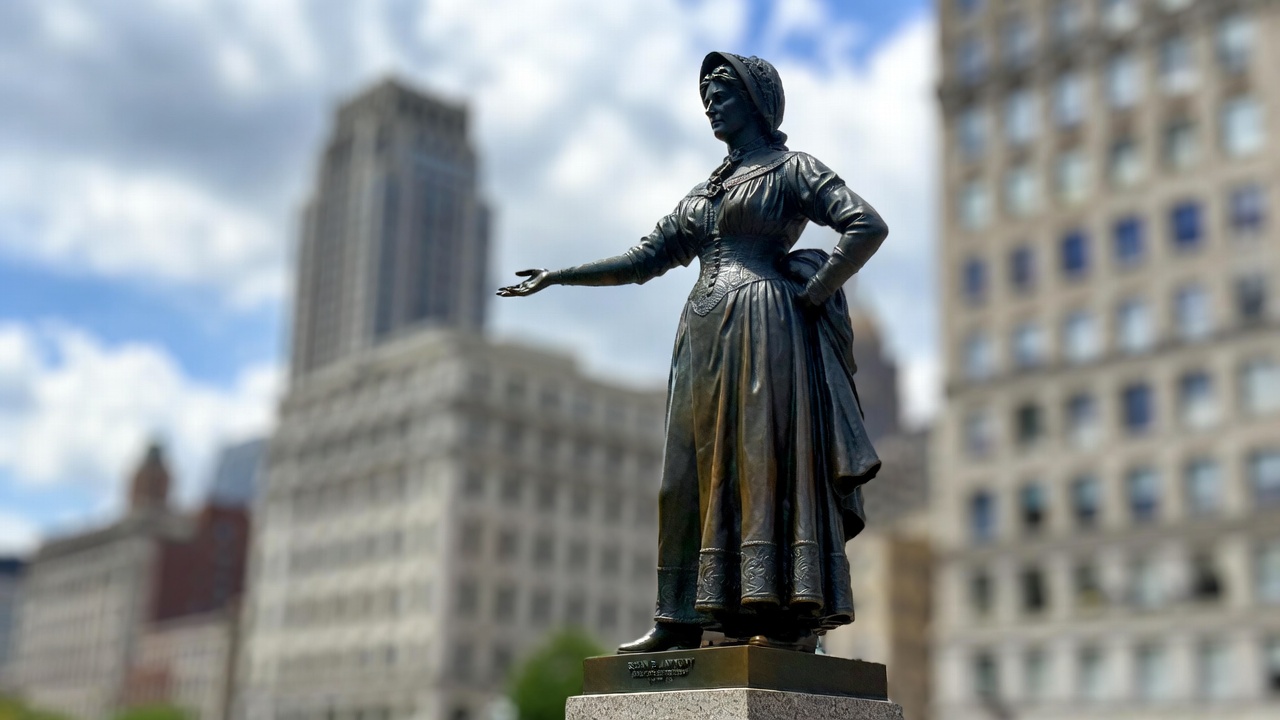
Susan B. Anthony is far more than a face on a coin. Her tireless fight for women’s suffrage shaped American democracy. Today, her legacy echoes in congressional halls across the nation. As we approach Susan B. Anthony Day 2026, her story feels more urgent than ever.
Who Was Susan B. Anthony? The Woman Behind the Movement
Born February 15, 1820, in Adams, Massachusetts, Susan Brownell Anthony grew up in a Quaker household. Her family believed deeply in social equality. By age 17, she collected anti-slavery petitions. Her passion for justice never wavered.
In 1851, Anthony met Elizabeth Cady Stanton. The two became inseparable allies. Together, they fought for over 50 years. Their mission? Equal rights for women in America.
Anthony traveled relentlessly. She gave 75 to 100 speeches per year. She organized campaigns across every state. Her famous words still resonate:
“Failure is impossible.”
Susan B. Anthony’s Famous Arrest: When Voting Was a Crime
On November 5, 1872, Susan B. Anthony did something radical. She voted in the presidential election in Rochester, New York. At that time, only men could legally vote.
Two weeks later, a federal marshal arrived at her door. She was arrested for “illegal voting.” Anthony insisted on a proper arrest. She wanted the world to watch.
Before her trial, Anthony spoke in all 28 towns of Monroe County. Her speech asked a simple question: “Is it a crime for a U.S. citizen to vote?”
The judge ordered a guilty verdict without jury deliberation. Anthony was fined $100. She refused to pay. She never did. The judge avoided jailing her to prevent an appeal. Despite this, her trial made national headlines. The conversation had begun.
The 19th Amendment: The Susan B. Anthony Amendment Explained
In 1878, Senator Aaron A. Sargent introduced a constitutional amendment. Its text was simple yet revolutionary:
“The right of citizens of the United States to vote shall not be denied or abridged by the United States or by any State on account of sex.”
This amendment bore no changes for 42 years. Anthony lobbied Congress every year until her death in 1906. She never saw her dream realized.
On August 18, 1920, Tennessee became the 36th state to ratify. The 19th Amendment became law. It is still called the Susan B. Anthony Amendment in her honor.
The Susan B. Anthony Dollar Coin: America’s First Woman on Currency
In 1979, Susan B. Anthony made history again. She became the first real woman depicted on U.S. circulating currency. President Jimmy Carter signed the legislation on October 10, 1978.
Susan B. Anthony Dollar Coin Specifications
| Feature | Details |
|---|---|
| Years Minted | 1979-1981, 1999 |
| Composition | 91.67% Copper, 8.33% Nickel |
| Diameter | 26.5 mm (11-sided inner border) |
| Designer | Frank Gasparro (U.S. Mint Chief Engraver) |
| Reverse Design | Apollo 11 Eagle Landing on Moon |
| Total Minted | Over 888 million coins |
The coin faced challenges. Its size resembled a quarter. Public confusion led to low adoption. Many called it the “Carter Quarter.” Most coins sat unused in Treasury vaults.
By the late 1990s, vending machines and transit systems finally put them to use. The Sacagawea dollar replaced it in 2000. Yet the Susan B. Anthony dollar remains a treasured collectible today.
Susan B. Anthony’s Legacy and 2026 Voting Rights Legislation
Anthony’s fight for the ballot box continues to shape policy debates. In 2026, her legacy intersects with current legislative battles over voter registration requirements.
Voting rights organizations track over 700 election-related bills across more than half of U.S. states. Many require documentary proof of citizenship to register. Critics argue these laws create barriers—especially for married women who have changed their names.
An estimated 69 million American women have birth certificates that no longer match their current legal names. For these voters, additional documentation may be required. Supporters say such measures protect election integrity. Opponents call them modern obstacles to the ballot box.
The League of Women Voters—founded just six months after the 19th Amendment—remains at the forefront. Their 2026 initiative aims to reach 8.5 million voters to defend democratic participation.
Susan B. Anthony would recognize this fight. The details have changed. The stakes remain the same.
Susan B. Anthony Day 2026: When and How to Celebrate
Susan B. Anthony Day falls on February 15, 2026. This commemorates her 206th birthday. The day is officially recognized in California, Florida, New York, Wisconsin, and several other states.
State Recognition of Susan B. Anthony Day
| State | Date Observed |
|---|---|
| California | February 15 |
| Florida | February 15 (Official Holiday) |
| New York | February 15 |
| Wisconsin | February 15 (First state, 1976) |
| Massachusetts | August 26 (Women’s Equality Day) |
| West Virginia | Election Day (Even-numbered years) |
Ways to Honor Susan B. Anthony in 2026
- Visit the National Susan B. Anthony Museum & House – Located in Rochester, New York, her home is now a National Historic Landmark. The 2026 birthday celebration theme is “Get on with the Work!”
- Pay respects at her gravesite – Also in Rochester, memorial services are held annually on February 15.
- Explore her birthplace – The Susan B. Anthony Birthplace Museum in Adams, Massachusetts, offers historical exhibits.
- Learn about women’s suffrage history – The National Women’s History Museum offers virtual resources and educator workshops.
- Register to vote – Exercise the right she fought her entire life to secure.
- Share her story – Use hashtags like #SusanBAnthonyDay, #WomensSuffrage, and #19thAmendment on social media.
Key Moments in Susan B. Anthony’s Life: A Timeline
| Year | Event |
|---|---|
| 1820 | Born February 15 in Adams, Massachusetts |
| 1851 | Meets Elizabeth Cady Stanton; begins lifelong partnership |
| 1856 | Becomes NY state agent for American Anti-Slavery Society |
| 1863 | Co-founds Women’s Loyal National League; collects 400,000 anti-slavery petitions |
| 1872 | Arrested for voting illegally in Rochester, NY |
| 1878 | Women’s suffrage amendment introduced to Congress |
| 1906 | Dies March 13 in Rochester, NY; final words: “Failure is impossible” |
| 1920 | 19th Amendment ratified; women gain right to vote nationally |
| 1979 | First woman depicted on U.S. circulating coin |
Why Susan B. Anthony Still Matters in 2026
Anthony’s legacy transcends history books. Her methods—grassroots organizing, civil disobedience, relentless advocacy—remain blueprints for modern activism.
The National Susan B. Anthony Museum’s new leadership emphasizes her ongoing relevance. CEO Allison Hinman continues the theme: “Get on with the Work.” The work of equality is never finished.
Today, organizations bearing her name operate across the political spectrum. Her image inspires both progressive and conservative movements. This speaks to her fundamental message: every citizen deserves a voice.
Final Thoughts: Honoring a Legacy That Changed America
Susan B. Anthony spent 50 years fighting for a vote she never cast legally. She faced ridicule, arrest, and constant opposition. She never gave up.
Her face on a dollar coin—though imperfect—marked a milestone. The 19th Amendment bearing her name transformed American democracy. Her birthday remains a day of reflection and action.
As 2026 brings new debates over voting access, Anthony’s words echo louder than ever. The ballot box remains the cornerstone of democracy. Protecting it honors her sacrifice.
Failure is impossible—but only if we continue the work.