A deep exploration of Thailand’s most extraordinary spiritual tradition, where ancient Chinese rituals meet Thai devotion at the confluence of four sacred rivers
Introduction: Where Four Rivers Meet and Spirits Speak Through Mortals
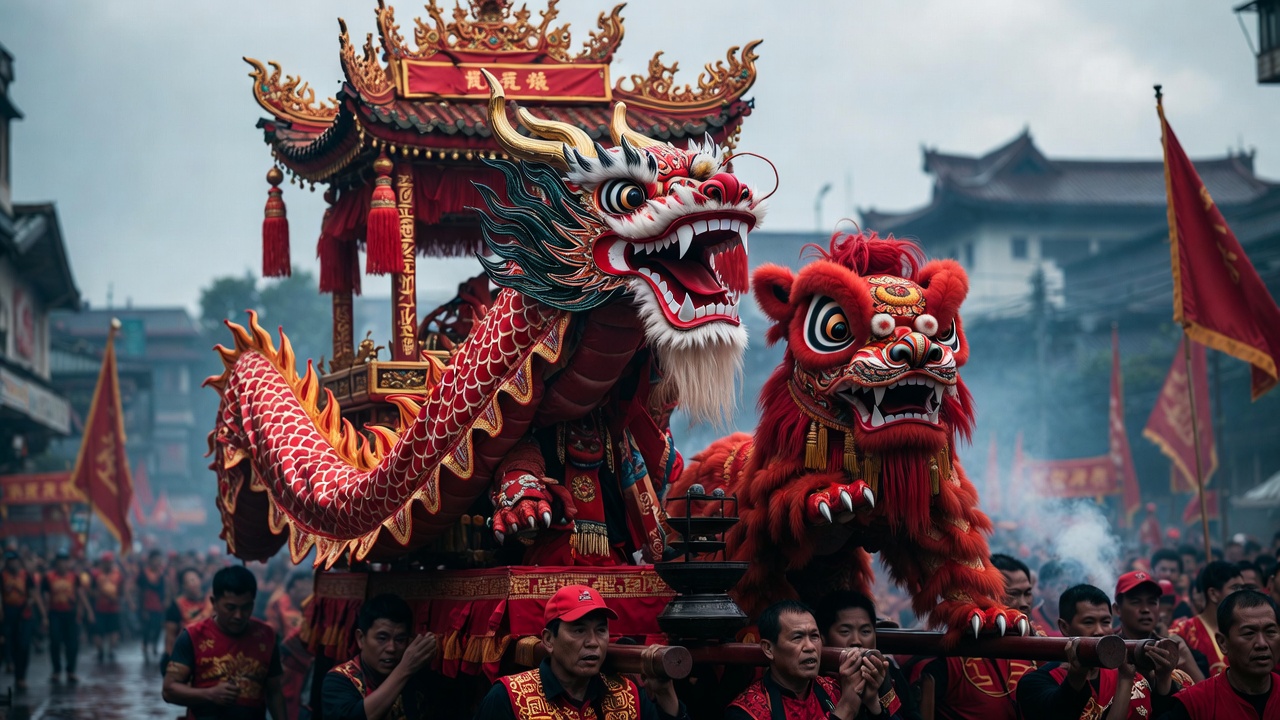
Picture this: It is February 2026. Hundreds of thousands of people crowd the banks of the Chao Phraya River’s birthplace. Red lanterns sway in the evening breeze, golden dragons snake through packed streets, and the air crackles with firecrackers. But look closer at this scene in Pak Nam Pho, Thailand. Beyond the spectacle, something far more ancient and mysterious unfolds.
A figure in white robes sits perfectly still. Temple assistants surround them. Drums begin their hypnotic rhythm. Then, something shifts. The figure’s eyes roll back. Their body trembles. A voice emerges—not their own—speaking in tongues they have never learned. A deity has arrived.
Welcome to the world of the spirit mediums of Pak Nam Pho. This is not just another Chinese New Year celebration. This is a living portal between the mortal realm and the divine. For over a century, this tradition has defined the spiritual heart of Nakhon Sawan Province. It has shaped the identity of one of Thailand’s most significant Chinese diaspora communities.
In this comprehensive guide, we will journey beyond the tourist brochures. We will explore the history, rituals, beliefs, and contemporary relevance of these remarkable practitioners. Whether you are a cultural traveler, spiritual seeker, or simply curious about the world’s most fascinating traditions, this story will transform how you see Thailand’s spiritual landscape.
What Is a Spirit Medium in Thai-Chinese Religious Practice?
Understanding the Tang-ki Tradition in Southeast Asia
Before diving into Pak Nam Pho’s specific traditions, we must understand the broader context. The tang-ki (童乩, also spelled tangki or tâng-ki) is a cornerstone of Chinese folk religion. This Hokkien term translates literally as “divining youth.” It refers to a person believed to serve as a vessel for deities.
According to research published in the academic journal Tradition and Modernity of Humanity, spirit mediums in Chinese culture have existed since the Shang Dynasty, making this tradition over 3,000 years old. The practice migrated to Southeast Asia alongside Chinese immigrants, taking root wherever significant Chinese communities established themselves.
Key characteristics of tang-ki practice include:
| Aspect | Description |
|---|---|
| Selection | Believed to be chosen by specific deities, not self-appointed |
| Trance State | Enter altered consciousness where the deity “possesses” them |
| Functions | Healing, divination, blessing, writing sacred talismans |
| Duration | Trance states typically last 0.5 to 3 hours |
| Community Role | Serve as intermediaries between human and spiritual realms |
In Thailand, these practitioners are often called Ma Song (ม้าทรง), which translates to “horses of the gods.” This poetic name captures the relationship perfectly. The medium becomes a vehicle—a horse—upon which the deity rides into the mortal world. The Tourism Authority of Thailand describes how these Ma Song move through festival processions in ecstatic states, carrying the community’s spiritual burdens.
The Difference Between Shamans, Mediums, and Tang-ki
Many Westerners confuse these terms. They are not interchangeable. A shaman controls spiritual forces. They journey to the spirit world at will. A tang-ki surrenders control. They become entirely subject to the deity’s will. This distinction matters greatly within Chinese religious practice.
The Museum of Archaeology and Anthropology at Cambridge University explains that during possession, the tang-ki speaks in what practitioners call “shen language”—divine speech that often requires interpretation by assistants. This “speaking in tongues” phenomenon appears across many world religions but takes specific forms within the tang-ki tradition.
The History of Spirit Mediums in Pak Nam Pho Thailand
Chinese Immigration to Nakhon Sawan: Rivers of Destiny
Pak Nam Pho’s story begins with geography. The name itself means “mouth of the Pho River.” This is the sacred confluence where the Ping, Wang, Yom, and Nan rivers merge to form the mighty Chao Phraya—Thailand’s River of Kings. For centuries, this strategic location made it a natural trading hub.
According to the Bangkok Post, Chinese immigrants began settling here during the reign of King Rama III (1824-1851). Most came as traders, drawn by the bustling commerce flowing between the northern and central plains. Products like rice, teak logs, and agricultural goods passed through Pak Nam Pho on their way to Bangkok and beyond.
The Chinese community here comprises five distinct dialect groups:
- Teochew (largest group, approximately 56% of Thai-Chinese nationally)
- Hainanese
- Cantonese
- Hakka
- Hokkien
Each group brought their own religious traditions, deities, and spiritual practices. Pak Nam Pho became what local businessman Santi Kunawong describes as “home to the third-largest Chinese community after Bangkok and Phuket.”
The Cholera Epidemic That Changed Everything
The spirit medium tradition at Pak Nam Pho crystallized around a devastating health crisis. According to LoveThailand.org, approximately 70 years ago—placing the event in the mid-20th century—a hemorrhagic disease, likely cholera, swept through the community.
In those days, modern medicine remained inaccessible to most riverside communities. People watched their families sicken and die. Desperate for salvation, they turned to their ancestral practices. Community elders called upon Chao Pho (the Godfather) and Chao Mae (the Goddess) to intervene.
What happened next became legend. Spirit mediums entered trance states. The deities spoke through them. The mediums wrote sacred talismans called “Hu” (符)—the Chinese term for protective amulets. These talismans were burned, and the ashes mixed with water for the sick to drink. According to local tradition, the epidemic ended. The community survived.
This event transformed the annual celebrations from cultural observance into profound spiritual gratitude. The Chao Pho-Chao Mae of Pak Nam Pho Procession Festival was born. It continues to this day, now marking over 109 years of continuous tradition.
The Sacred Shrines of Pak Nam Pho: Centers of Spiritual Power
Shrine of Chao Pho Theparak and Chao Mae Thap Tim
No exploration of Pak Nam Pho’s spirit medium tradition can ignore its physical heart. The Shrine of Chao Pho Theparak and Chao Mae Thap Tim stands on Nakhon Sawan-Chum Saeng Road, overlooking the precise point where four rivers become one.
The Bangkok Post’s travel section describes this hallowed site as having been built more than 150 years ago. The shrine houses a statue of Chao Pho Theparak, whom locals revere as Pueng Thao Kong—the city god. Devotees come here seeking protection, wealth, success, and good fortune.
Architectural features include:
- Half-timbered structure raised on high stilts (rebuilt in 1909)
- Wood and cement construction without nails
- Red ceiling and pillars in traditional Chinese style
- Gold dragon sculptures on the roof
- Green dragon and white tiger murals at the entryway
The shrine also preserves a remarkable collection of vintage wooden sedan chairs used in procession festivals. These ceremonial carriers have transported deity statues through the streets for generations. Most significant are the old wooden chairs with nails—used in spirit medium rituals requiring acts of self-mortification.
Chao Mae Na Pha Shrine: The Goddess from the River
A 10-minute journey from the main shrine leads pilgrims to the Chao Mae Na Pha Shrine on Kosi Road, overlooking the Ping River. The legend here is distinctly local.
According to folklore recorded by the Bangkok Post, in 1947, two elderly locals dreamed that Chao Mae Na Pha floated down the river from Ayutthaya. The goddess instructed them to retrieve her statue from the water, promising wealth in return. They did. The shrine they built to house her became another pilgrimage point in Pak Nam Pho’s spiritual geography.
The Chao Pho-Chao Mae Pak Nam Pho Procession Festival 2026
When Is the Chinese New Year Festival in Nakhon Sawan Thailand?
The Pak Nam Pho Chinese New Year celebration spans an extraordinary 12 days and nights. In 2026, with Chinese New Year falling on February 17, the festival will likely run from early February through mid-month. This makes it one of the longest Chinese New Year celebrations in all of Thailand.
Key festival events include:
| Event | Typical Timing | Description |
|---|---|---|
| Festival Opening | Day 1 | Shrine ceremonies, initial devotee gatherings |
| Nightly Celebrations | Days 1-12 | Chinese opera, food markets, cultural performances |
| Chiew Sa (Night Parade) | Near festival end | Nighttime procession of deities through streets |
| Chiew Si (Day Parade) | Final days | Grand daytime procession with spirit mediums |
| Fire Walking | Varies by year | Traditional purification ritual |
According to the Mekong Tourism website, the 2025 festival theme was “12 Days of Happiness and Fun – Nakhon Sawan Wonderland,” featuring five themed zones: Wonder Food, Wonder Faith, Wonder Five (celebrating five Chinese ethnic groups), Wonder Fun, and Wonder Festival.
The Grand Procession: When Deities Walk the Streets
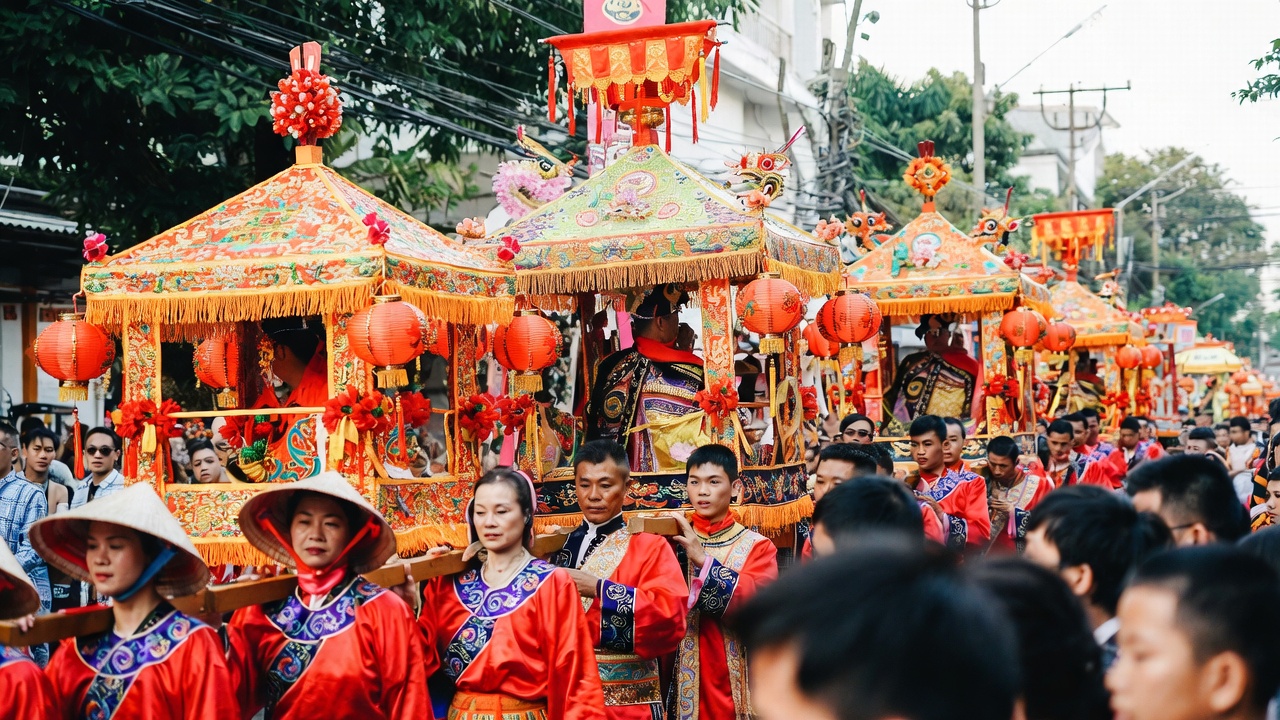
The festival’s spiritual climax arrives with the Chao Pho-Chao Mae procession. This is when spirit mediums take center stage. The Nation Thailand reports that these processions draw over 100,000 visitors to the riverbanks.
Procession elements include:
- Deity statues carried through streets by devotees
- 108 warriors practicing martial arts (108 is auspicious in Chinese numerology)
- Lion and dragon dances from various Nakhon Sawan associations
- Angkor processions with beautiful women representing the Goddess of Guan Yin
- Little girls carrying flower baskets
- Golden dragon dances—Nakhon Sawan’s dragons are famous throughout Thailand for their beauty
The golden dragon at Pak Nam Pho deserves special mention. These are not mere decorations. Each dragon is operated by teams of skilled dancers who train year-round. The dragon represents bravery, strength, and positive change. Local belief holds that its presence brings significant transformation to the community.
Spirit Medium Rituals at Pak Nam Pho: Sacred Practices Revealed
The Trance Induction Process
How does an ordinary person become a vessel for the divine? The process follows ancient protocols refined over centuries.
First, the prospective medium sits in the shrine. Temple assistants surround them. The environment fills with incense smoke—typically sandalwood and camphor. Drums and gongs begin their rhythmic patterns. Invocation songs are chanted in traditional Teochew or Hokkien dialects.
According to National Geographic’s coverage of similar Thai festivals, mediums describe the moment before possession as hearing a “loud slapping noise” in their ears. Their consciousness shifts. Then, they are no longer themselves.
What observers witness includes:
- Eyes rolling back or glazing over
- Body trembling or shaking violently
- Voice changing—sometimes becoming high-pitched, sometimes deep and commanding
- Speaking in unknown languages—mediums claim to speak dialects they never learned
- Superhuman endurance—feeling no pain during rituals
One medium interviewed by National Geographic, named Pai Siripohn, explained: “On the morning of the procession I’m always scared about the piercing, but I feel no pain. I’m never even aware of it.” Her spirit, she says, is a goddess who protects children.
The Sacred Hu: Talisman Writing by Spirit Mediums
Perhaps the most sought-after service of Pak Nam Pho’s spirit mediums is the creation of Hu (符)—sacred talismans. Research from ResearchGate describes this practice in academic detail.
The Hu-making process:
- Medium enters trance through invocation ritual
- Medium slashes their tongue (in some traditions) to draw blood
- Blood-infused ink is used to write sacred characters
- Specific symbols and prayers are inscribed on yellow or red paper
- Completed talisman becomes a sacred object
These talismans serve multiple purposes:
| Type | Purpose | Usage |
|---|---|---|
| Protective Hu | Ward off evil spirits | Affixed to doors or worn on person |
| Healing Hu | Cure illness | Burned, ashes mixed with water to drink |
| Fortune Hu | Attract wealth and luck | Kept in wallet or home altar |
| Blessing Hu | General well-being | Carried on person |
The transformation from ordinary paper to sacred object illustrates the medium’s role. Through divine possession, they convert the profane into the sacred. This theological concept resonates across many world religions but takes specific form in Chinese folk practice.
Self-Mortification: The Spectacle of Divine Suffering
At some Pak Nam Pho festivals, particularly in years when community leaders determine it appropriate, self-mortification rituals occur. These practices, more commonly associated with Phuket’s Vegetarian Festival, also appear in Nakhon Sawan’s celebrations.
The South China Morning Post explains the theology behind these dramatic acts. Devotees believe that by inflicting pain upon themselves, spirit mediums redirect bad fortune away from the community. The medium absorbs suffering that would otherwise befall others.
Common self-mortification practices include:
- Cheek piercing with skewers, rods, or blades
- Tongue piercing with sharp implements
- Fire walking across burning coals
- Ladder climbing using rungs made of sharp blades
- Sitting on nail chairs preserved in Pak Nam Pho’s shrines
According to Cultural Diaries, those who participate claim to feel no pain while in trance states. Medical observers note that bleeding is minimal, and wounds often heal remarkably quickly—phenomena that participants attribute to divine protection.
It is crucial to approach these practices with cultural respect. These are not performances for tourist cameras. They are deeply sincere religious acts performed by believers who stake their bodies on their faith.
The Five Chinese Dialect Groups of Nakhon Sawan
Teochew, Hainanese, Cantonese, Hakka, and Hokkien Communities
Pak Nam Pho’s Chinese heritage is not monolithic. Five distinct dialect groups call this region home, each contributing unique elements to the spiritual landscape.
According to Wikipedia’s article on Thai Chinese demographics, the national breakdown shows Teochew speakers dominating at 56 percent, followed by Hakka (16%), Hainanese (11%), with Cantonese and Hokkien each at 7%. Nakhon Sawan mirrors this diversity.
Each group’s contribution:
| Dialect Group | Historical Role | Religious Emphasis |
|---|---|---|
| Teochew | Rice trade, merchant class | Mazu (Sea Goddess), Guan Di |
| Hainanese | Food industry, hospitality | Tian Hou, local deities |
| Cantonese | Skilled trades, goldsmithing | Ancestor worship, Guan Yin |
| Hakka | Agriculture, mining | Earth God, ancestral spirits |
| Hokkien | Maritime trade, banking | Nine Emperor Gods, Mazu |
The Chiang Rai Times notes that during the festival, these groups create unique lantern sculptures showcasing their cultural identities. The friendly competition between groups adds visual diversity to celebrations.
This diversity matters for spirit medium traditions. Different deities speak through different mediums. A medium possessed by Guan Yu (the god of righteousness, popular among Teochew) will behave differently than one channeling Hian Thian Siang Tee (a deity popular in Hokkien communities). The spiritual ecosystem of Pak Nam Pho accommodates this plurality.
How to Experience the Pak Nam Pho Spirit Medium Festival Responsibly
Cultural Etiquette for Foreign Visitors
Attending spirit medium rituals as an outsider carries responsibilities. These are not tourist attractions. They are living religious practices. Your behavior matters.
Essential guidelines:
- Dress appropriately: White or modest clothing is preferred. Avoid black (associated with funerals) and revealing attire.
- Ask before photographing: Some ceremonies prohibit cameras. Some mediums do not wish to be photographed. Always ask permission.
- Maintain respectful distance: Do not crowd mediums during trance states. Keep clear of procession paths.
- Do not touch: Never touch a medium in trance or the objects they carry without explicit permission.
- Accept offerings gracefully: If blessed water or blessed items are offered, accept with both hands and a slight bow.
- Observe silence during invocations: When drums signal invocation, quiet conversation stops.
Where to Stay During Nakhon Sawan Chinese New Year Festival
Accommodation fills quickly during the 12-day celebration. Plan ahead. Options range from international-standard hotels near Dechatiwong Bridge to budget guesthouses in the old town.
Recommended areas:
- Riverside: For procession views and easy shrine access
- City center: Near Wat Photharam and main festival stages
- Chum Saeng district: Quieter option, 40 minutes north, with its own Chinese heritage sites
Book at minimum two months in advance for festival dates. Some loyal devotees reserve a full year ahead.
Best Times to See Spirit Medium Rituals
Not all 12 days feature equal spiritual activity. Peak medium activity typically occurs during:
- Opening ceremonies at shrines
- Night parade (Chiew Sa) processions
- Day parade (Chiew Si) events
- Early mornings at major shrines (fewer crowds, more intimate ceremonies)
The Tourism Authority of Thailand recommends arriving early for any major ritual. Crowds can exceed 100,000 during peak events.
The Spiritual Significance of Pak Nam Pho for Thai-Chinese Identity
Maintaining Chinese Cultural Heritage in Thailand
Thailand presents a unique case in overseas Chinese history. Unlike other Southeast Asian nations, it never experienced colonization. This allowed Chinese immigrants to integrate gradually, often through intermarriage with ethnic Thais, while maintaining cultural practices.
The Minority Rights Group estimates that Thai-Chinese constitute 10-12 percent of Thailand’s population. Many control significant business interests—some reports suggest over 80 percent of Thai commerce. This economic integration occurred alongside cultural preservation.
Pak Nam Pho exemplifies this balance. According to the Nation Thailand, the region is known for maintaining Chinese heritage while participating fully in Thai national life. The spirit medium tradition serves as cultural anchor—a practice that binds generations to their ancestral roots.
Why Spirit Medium Traditions Matter in Modern Thailand
In an age of smartphones and scientific medicine, why do these ancient practices persist? The answer lies in community function.
Functions served by spirit medium traditions:
- Health care supplement: Many rural Thai-Chinese still consult mediums alongside modern doctors
- Psychological support: The opportunity to communicate with deceased relatives through mediums provides comfort
- Community cohesion: Festivals unite diaspora communities across economic and generational divides
- Cultural transmission: Young people learn ancestral languages, stories, and values through participation
- Identity anchor: In a globalizing world, these practices affirm distinctive heritage
Academic research on Teochew communities confirms that Thai-Chinese remain “very proud” of their roots while identifying primarily as Thai nationals. Spirit medium traditions help navigate this dual identity.
Comparing Pak Nam Pho to Other Thai Spirit Medium Festivals
Pak Nam Pho vs Phuket Vegetarian Festival Rituals
The Phuket Vegetarian Festival (Nine Emperor Gods Festival) attracts global attention for its extreme self-mortification rituals. How does Pak Nam Pho compare?
| Aspect | Phuket | Pak Nam Pho |
|---|---|---|
| Timing | 9th lunar month (September/October) | 1st lunar month (January/February) |
| Duration | 9 days | 12 days |
| Primary Focus | Nine Emperor Gods | Chao Pho and Chao Mae (local deities) |
| Self-mortification | Highly prominent, extreme forms | Present but less emphasized |
| Dietary restrictions | Strict vegetarianism required | Less strictly enforced |
| Tourist awareness | Internationally famous | Relatively unknown outside Thailand |
| Crowd size | Massive international attendance | Primarily domestic pilgrims |
Pacific Standard magazine notes that Phuket’s extreme piercings—sometimes involving bicycles, guns, or household objects—have evolved partly as spectacle. Pak Nam Pho maintains more traditional boundaries, focusing on spiritual efficacy rather than visual drama.
The Phi Ta Khon Ghost Festival Connection
Northern Thailand’s Phi Ta Khon festival in Dan Sai, Loei Province, offers another comparison point. According to Wikipedia, this event also relies heavily on spirit mediums to select dates and guide ceremonies.
The key difference lies in religious tradition. Phi Ta Khon blends Buddhist merit-making with animist spirit beliefs. Pak Nam Pho draws primarily from Chinese folk religion and Taoism. Both demonstrate how spirit mediumship adapts to local contexts.
The Future of Spirit Medium Traditions in Pak Nam Pho
Challenges Facing Traditional Practices
Spirit medium traditions face genuine pressures in contemporary Thailand. Urbanization draws young people to Bangkok and other cities. Secularization reduces interest in traditional religion. Education emphasizes scientific worldviews that conflict with supernatural beliefs.
The Phuket Gazette, reporting on similar concerns at the Vegetarian Festival, notes that some organizers now require spirit mediums to carry identity cards verifying their status. This response to concerns about “fake” mediums reveals tensions between tradition and modernity.
How Communities Are Preserving Heritage
Despite challenges, Pak Nam Pho’s traditions show resilience. Several factors support continuity:
- Government support: Thailand’s Tourism Authority promotes the festival nationally and internationally
- Economic incentive: The 12-day celebration generates significant revenue for local businesses
- Community pride: Local Chinese associations actively fund and organize events
- Documentation efforts: Museums like the History of Muang Pak Nam Pho Museum preserve artifacts and oral histories
- Social media: Young devotees now share experiences on platforms like Facebook and TikTok, creating new engagement pathways
The TAT Newsroom highlights how Thailand now packages Chinese New Year festivals, including Pak Nam Pho, as cultural tourism products. This commercial dimension cuts both ways—it ensures survival while potentially diluting authenticity.
Planning Your Visit: Practical Information for 2026
How to Get to Nakhon Sawan from Bangkok
Nakhon Sawan lies approximately 240 kilometers north of Bangkok. Multiple transportation options exist:
By Train:
- Depart from Bangkok’s Hua Lamphong or Bang Sue Grand Station
- Journey time: 3.5-5 hours depending on train type
- Northern Line services run frequently
- Scenic route following historical rail corridors
By Bus:
- Depart from Bangkok’s Mo Chit Northern Bus Terminal
- Journey time: 3-4 hours
- Multiple departures daily
- Most economical option
By Air:
- No commercial airport in Nakhon Sawan
- Nearest airport: Phitsanulok (approximately 130 km)
- Connecting bus or taxi required
By Car:
- Highway 1 (Phahonyothin Road) north from Bangkok
- Well-maintained roads throughout
- Approximately 3 hours without traffic
Essential Thai Phrases for Festival Visitors
A few words in Thai demonstrate respect and ease interactions:
| English | Thai | Pronunciation |
|---|---|---|
| Hello | สวัสดี | Sa-wat-dee |
| Thank you | ขอบคุณ | Khop khun |
| Beautiful | สวย | Suay |
| Excuse me | ขอโทษ | Khor toht |
| Blessing/Fortune | โชคดี | Chok dee |
| Shrine | ศาล | San |
For Chinese speakers, Teochew phrases will be particularly well-received by older community members and shrine attendants.
Conclusion: Why the Spirit Mediums of Pak Nam Pho Matter
As you plan your travels for 2026, consider what Pak Nam Pho offers beyond typical tourist experiences. Here, at the birthplace of Thailand’s great river, ancient traditions pulse with contemporary vitality. Spirit mediums continue practices their ancestors brought across the South China Sea. Communities gather as they have for over a century. The divine and human realms meet in ways that demand witness.
This is not mere spectacle. The spirit mediums of Pak Nam Pho embody something profound about human spiritual seeking. They remind us that meaning-making takes many forms. They demonstrate how cultural traditions adapt and survive. They offer glimpses into belief systems that differ radically from Western norms yet serve universal human needs.
Whether you approach these traditions as anthropological curiosity, spiritual seeking, or simple travel adventure, Pak Nam Pho delivers experiences unavailable elsewhere. The red lanterns may draw your eye. But it is the white-robed figure in trance, the ancient deity speaking through mortal lips, the community bound by centuries of shared faith—these are what will stay with you long after you return home.
The rivers converge at Pak Nam Pho. So does Thailand’s past and present. So might your understanding of what spirituality can mean.
The Role of Food and Vegetarianism in Pak Nam Pho Celebrations
Traditional Chinese Festival Foods in Thailand
No Thai-Chinese festival is complete without its distinctive cuisine. The 12 days of Pak Nam Pho celebrations transform the riverside into a sprawling food market, with over 100 food stalls serving everything from sacred offerings to casual street snacks.
According to the Tourism Authority of Thailand, food plays a central role in the festival’s spiritual economy. Certain dishes carry specific symbolic meanings:
| Food Item | Symbolic Meaning | When Consumed |
|---|---|---|
| Whole fish | Abundance and surplus | Reunion dinners |
| Longevity noodles | Long life | Throughout festival |
| Sticky rice cakes (Nian Gao) | Rising prosperity | First days |
| Oranges | Good fortune | Offerings at shrines |
| Pomelo | Family unity | Shared among relatives |
| Red eggs | Fertility and joy | Celebratory gifts |
The Teochew community, being the largest Chinese dialect group in Pak Nam Pho, contributes distinctive culinary traditions. Teochew congee (rice porridge) served with an array of small dishes represents the merchant community’s practical yet refined taste. Braised duck and steamed fish prepared in Teochew style appear at every significant gathering.
Street vendors offer affordable festival treats that draw locals and visitors alike. Ba Mii (egg noodle soup) steams from countless carts. Khanom Buang (crispy Thai crepes) provide sweet interludes between shrine visits. The Guay Chap noodle soup, with its distinctively pork-rich broth, satisfies appetites after long procession walks.
Vegetarian Options and Sacred Food Practices
While Pak Nam Pho does not mandate vegetarianism like Phuket’s festival, many devotees voluntarily adopt meat-free diets during the celebration period. This practice, called kin jay in Thai, demonstrates spiritual commitment.
Vegetarian food stalls identified by yellow flags offering jay food serve innovative plant-based versions of traditional dishes. Skilled cooks transform tofu, mushrooms, and wheat gluten into remarkably convincing “mock meats.” Vegetarian versions of popular Thai-Chinese dishes include:
- Mock duck curry with coconut milk and aromatic spices
- Vegetarian pink noodle soup substituting mushrooms for pork blood cubes
- Tofu preparations ranging from deep-fried to silken varieties
- Vegetable spring rolls stuffed with seasonal produce
For those observing strict jay practice, additional restrictions apply beyond meat avoidance. Garlic, onions, and strong-flavored vegetables are excluded under the principle that such foods inflame passionate emotions, interfering with spiritual clarity.
Understanding the Theological Framework of Spirit Mediumship
Taoist Influences on Thai-Chinese Spiritual Practice
The spirit medium traditions of Pak Nam Pho draw heavily from Taoist cosmology. Understanding this theological framework illuminates what observers witness during rituals.
Taoism posits a universe animated by the interplay of complementary forces—yin and yang, heaven and earth, spirit and matter. Between the human world and the celestial realm exist countless deities, each with specific domains of influence. The scholarly analysis from Tao.org explains that spirit mediums serve as bridges between these realms.
The key theological concepts include:
Shen (神) – Divine Spirits: These are celestial beings who achieved their status through moral cultivation or cosmic appointment. They possess power to bless, protect, and guide mortals. The deities worshipped at Pak Nam Pho—Chao Pho Theparak, Chao Mae Thap Tim, Guan Yu, and others—represent different aspects of divine virtue.
Ling (靈) – Spiritual Vitality: This term, whose Chinese character combines radicals meaning “rain,” “chanting,” and “shaman,” captures the animating force that flows between spiritual and physical realms. The spirit medium channels this vitality.
Fu (符) – Sacred Talismans: These written objects embody divine power in material form. When a possessed medium writes a fu, they inscribe not merely symbols but concentrated spiritual energy.
The Hierarchy of Chinese Deities in Pak Nam Pho Shrines
Multiple deities receive worship at Pak Nam Pho’s shrines, reflecting the pluralistic nature of Chinese folk religion. Unlike monotheistic traditions that insist on exclusive worship, this system accommodates many divine beings with overlapping but distinct functions.
Principal deities at Pak Nam Pho include:
Chao Pho Theparak (Pueng Thao Kong): The city god who protects Pak Nam Pho specifically. This deity belongs to the category of earth gods who guard specific territories. Devotees seek his blessing for local prosperity and protection from misfortune.
Chao Mae Thap Tim: A goddess figure often associated with fertility, family harmony, and women’s welfare. Her presence alongside the male deity reflects the yin-yang balance essential to Taoist thought.
Guan Yu (关羽): The deified military general from the Three Kingdoms period who represents righteousness, loyalty, and martial virtue. Merchants favor Guan Yu because his integrity symbolizes trustworthy commerce. His distinctive appearance—red face, long black beard—makes him instantly recognizable in shrine statuary.
Guan Yin (观音): The Goddess of Mercy, originally a bodhisattva from Mahayana Buddhism absorbed into Chinese folk practice. She represents compassion and salvation from suffering. Her image frequently appears in processions where women represent her earthly presence.
Mazu (妈祖): The sea goddess particularly venerated by communities with maritime heritage. Given that Pak Nam Pho’s Chinese settlers arrived by river and sea, Mazu worship carries special significance.
The Economics and Tourism Impact of the Festival
How the Festival Supports Local Economy
The Pak Nam Pho Chinese New Year celebration generates substantial economic activity for Nakhon Sawan Province. The 12-day duration extends visitor spending far beyond typical festival timeframes.
Economic impacts include:
- Hospitality sector: Hotels, guesthouses, and short-term rentals experience near-100% occupancy
- Food and beverage: Hundreds of vendors plus established restaurants see peak revenues
- Retail: Festival-specific goods including ritual supplies, souvenirs, and clothing drive sales
- Transportation: Increased demand for taxis, tuk-tuks, and buses
- Entertainment: Performance troupes, Chinese opera companies, and musicians receive bookings
The Nation Thailand reports that the festival’s recognition on a global stage positions Nakhon Sawan as a cultural tourism destination beyond its traditional role as a transit point to northern Thailand.
Local government investment reflects this economic importance. The municipality funds massive lighting installations—including the iconic dragon-shaped sculptures along Dechatiwong Bridge. Private shrine associations invest in procession equipment, performer costumes, and ceremonial objects. This spending creates employment for artisans, craftspeople, and service workers throughout the year.
Sustainable Tourism Considerations
As Pak Nam Pho gains international recognition, stakeholders face decisions about balancing growth with preservation. The experience of Phuket’s Vegetarian Festival, which the Tourism Authority of Thailand describes as drawing “crowds of spectators,” offers both opportunities and warnings.
Challenges include:
- Commercialization pressure: Demand for dramatic content may push practices toward spectacle rather than spirituality
- Crowding: Excessive visitor numbers can degrade experience quality and safety
- Cultural misunderstanding: Tourists unfamiliar with protocols may behave disrespectfully
- Environmental impact: Waste management during peak periods strains municipal services
Positive developments include:
- Documentation initiatives: Museums and archives preserve authentic practices
- Community guidelines: Local associations maintain standards for medium participation
- Visitor education: Improved signage and information materials guide appropriate behavior
- Sustainable infrastructure: Investment in permanent facilities reduces temporary construction waste
Personal Testimonies: Voices from the Community
Shrine Attendant Perspectives
Those who serve at Pak Nam Pho’s shrines offer unique insights into spirit medium traditions. Jessada Phusombunphaisarn, a shrine attendant quoted in the Bangkok Post, describes the historical evolution:
“This shrine first created the Pueng Thao Kong Procession Ceremony before we collaborated with Chao Mae Na Pha Shrine to transform our ritual into the Chao Pho-Chao Mae of Pak Nam Pho Procession Festival.”
This collaboration between shrines demonstrates how traditions remain living and adaptive rather than frozen in historical forms. Different deity cults coordinate to create unified community celebrations.
Shrine attendants also serve practical functions during medium consultations. They translate divine messages, help manage devotee queues, and ensure ritual protocols are observed. Their knowledge, passed down through generations, constitutes intangible cultural heritage as valuable as the physical shrines themselves.
Devotee Experiences
Regular festival participants describe the event in terms that blend spiritual devotion with community belonging. For many Thai-Chinese families, the annual return to Pak Nam Pho represents reconnection with roots.
Multiple generations often travel together. Grandparents teach grandchildren proper worship protocols. Young adults return from urban jobs to join family processions. Children experience traditions that shaped their elders’ identities. This intergenerational transmission ensures continuity.
The emotional resonance extends beyond ethnic Chinese participants. Thai Buddhists and international visitors increasingly join celebrations. The festival’s inclusive atmosphere allows varied engagement levels—from deep spiritual commitment to respectful cultural observation.
Photographic and Documentary Ethics
Respectful Documentation Guidelines
The dramatic visual nature of spirit medium rituals attracts photographers and videographers. However, ethical documentation requires careful consideration of consent, sacred boundaries, and representation.
Best practices for photographers:
- Always ask permission before photographing individuals, especially mediums in trance
- Never use flash during invocation ceremonies—light can disrupt spiritual processes
- Maintain physical distance that allows rituals to proceed unimpeded
- Avoid sensationalizing images that emphasize blood or pain out of context
- Credit cultural context when sharing images, rather than presenting them as exotic curiosities
- Consider consequences of publication—would subjects approve of how they’re portrayed?
Professional journalists and documentary makers should ideally coordinate with festival organizers in advance. Some ceremonies permit documentation; others do not. Some mediums welcome attention; others prefer privacy. These distinctions matter.
Representation and Cultural Sensitivity
How outsiders represent Pak Nam Pho’s traditions affects how they are perceived globally. Sensationalistic coverage focusing solely on extreme practices—without theological context—distorts understanding. The academic literature emphasizes presenting these traditions as coherent religious systems rather than collections of bizarre behaviors.
Erik Cohen’s scholarly work on Thai festivals, conducted over decades, models respectful academic engagement. His approach treats practitioners as experts in their own traditions whose explanations deserve serious consideration.
Frequently Asked Questions About Pak Nam Pho Spirit Mediums
Is it safe to attend spirit medium rituals?
Yes, for observers who maintain respectful distance. Do not interfere with ceremonies or crowd mediums. Follow directions from temple staff. The events are family-friendly, with thousands of Thai families attending annually.
Can foreigners receive blessings from spirit mediums?
Generally yes. Many mediums welcome all sincere seekers regardless of nationality. Approach with respect, observe proper etiquette, and wait for appropriate moments. Having a Thai-speaking companion helps navigate protocols.
Are the self-mortification rituals real?
Yes. These are genuine religious practices, not staged performances. However, attempting to replicate them without proper training and spiritual preparation would be dangerous and culturally inappropriate.
What should I wear to the festival?
Modest clothing is appropriate. White is traditional and respectful. Avoid black, very revealing attire, or clothing with inappropriate images. Comfortable shoes are essential for walking procession routes.
Is vegetarianism required during the festival?
Unlike Phuket’s Nine Emperor Gods Festival, strict vegetarianism is not mandated at Pak Nam Pho. However, vegetarian food options abound, and observant devotees do maintain dietary restrictions during the celebration period.