A Photographer’s Complete Guide to Thailand’s Most Spectacular Chinese New Year Celebration
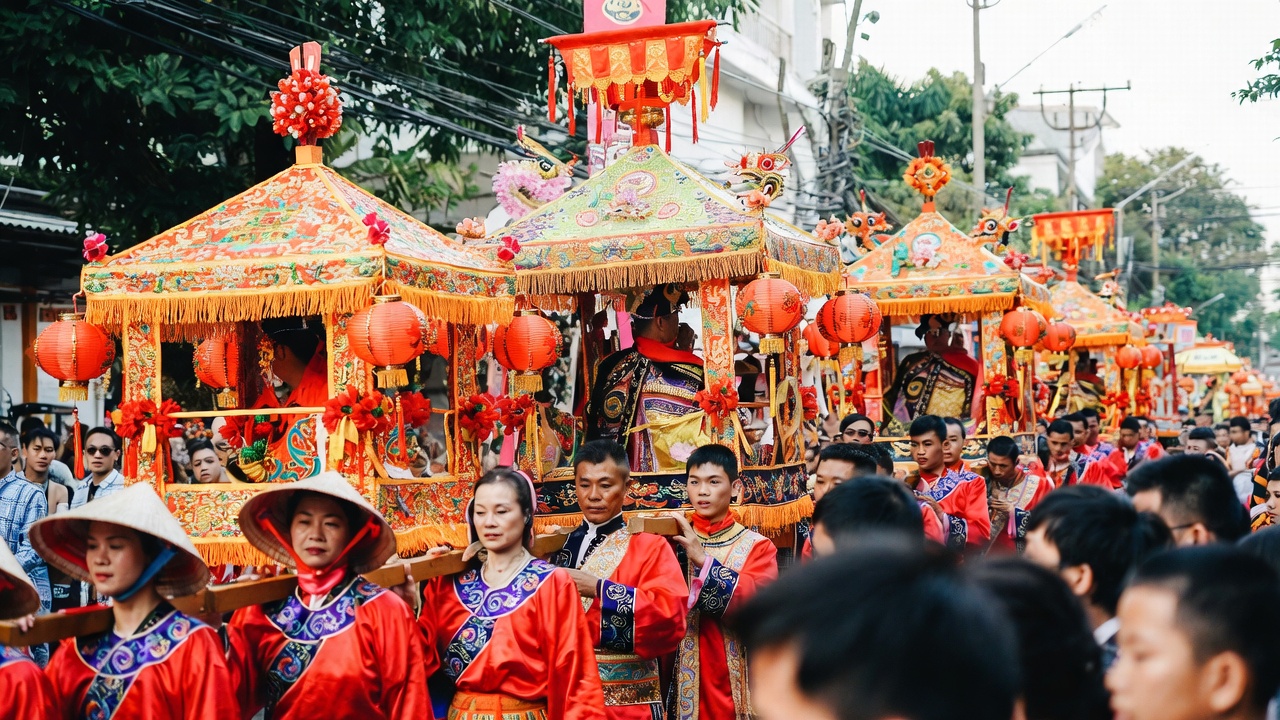
The drums thunder through the tropical night air. Golden dragons twist and writhe under strings of crimson lanterns. Thousands of spectators line the streets of Nakhon Sawan. This is the Pak Nam Pho Night Parade—one of Asia’s most visually stunning celebrations. For photographers, it represents a once-a-year opportunity to capture images that pulse with colour, movement, and cultural significance.
The Pak Nam Pho Chinese New Year Festival has been running since 1914. That makes it over 110 years old. Each year, it draws tens of thousands of visitors to this provincial Thai city. In 2026, when the Year of the Horse begins on February 17, this festival will once again transform Nakhon Sawan into a photographer’s paradise.
This guide will take you through the best photography spots, essential camera settings, and cultural context you need to capture extraordinary images at the Pak Nam Pho Night Parade. Whether you are a professional photographer or an enthusiastic amateur, these insights will help you return home with portfolio-worthy shots.
Understanding the Pak Nam Pho Chinese New Year Festival in Nakhon Sawan
Before scouting locations, understanding the festival’s significance helps you anticipate the best photographic moments. The Pak Nam Pho Chinese New Year Festival is not merely a celebration. It is a living testament to the deep cultural bonds between Thailand and China.
Nakhon Sawan, whose name means “Heavenly City” in Thai, sits at the confluence of four major rivers: the Ping, Wang, Yom, and Nan. These rivers merge here to form the Chao Phraya River—the lifeblood that flows through Bangkok and sustains much of central Thailand. This geographical significance made Pak Nam Pho a natural trading hub centuries ago.
Chinese merchants settled in this area during the late 19th century. They brought their traditions, beliefs, and festivals with them. According to Tourism Authority of Thailand, the annual procession tradition began in 1914 when local Chinese communities started parading their revered deities through the streets.
The festival centres on the worship of Chao Pho Thepharak and Chao Mae Thapthim—patron deities housed in the historic shrine on the banks of the Chao Phraya River. For twelve days and nights, the city celebrates with markets, Chinese opera performances, food stalls, and culminating processions.
The Two Parades You Need to Know
The festival features two main parades that offer different photographic opportunities:
| Parade | Local Name | Date (2026) | Time | Photography Character |
|---|---|---|---|---|
| Night Parade | Chiew Sa | February 16, 2026 | Evening (typically 6-11 PM) | Dramatic lighting, LED dragons, glowing lanterns |
| Day Parade | Chiew Si | February 17, 2026 | Early morning (6 AM onwards) | Natural light, sacred procession, traditional costumes |
The Night Parade (Chiew Sa) is the main attraction for most photographers. It features illuminated floats, LED-lit dragon costumes, and spectacular light displays against the dark sky. The Day Parade (Chiew Si) offers a different aesthetic—morning light illuminating traditional costumes and sacred objects.
Best Photography Locations for the Pak Nam Pho Dragon Parade Route
Selecting your photography position can mean the difference between capturing a masterpiece and fighting crowds for a glimpse. The parade route winds through central Nakhon Sawan, passing key landmarks. Here are the prime spots, ranked by photographic potential.
1. Chao Pho Thepharak-Chao Mae Thapthim Shrine: The Sacred Starting Point
This 130-year-old shrine sits on the banks of the Chao Phraya River, opposite Pak Nam Pho Market. It serves as the spiritual heart of the festival. The parade begins and ends here.
Why photographers love it:
- Historical backdrop: The wooden shrine with its gold dragon sculptures creates an authentic setting
- Morning light: East-facing position catches beautiful sunrise light during the Day Parade
- Ceremony coverage: Capture the blessing rituals before participants set off
- River reflections: The shrine’s riverside location offers opportunities for reflection shots
Practical considerations:
- Arrive at least two hours early for the Night Parade
- Space is limited; respectful behaviour is essential
- Remove shoes before entering shrine areas
- Photography permitted outside; ask permission for interior shots
The shrine is located on Nakhon Sawan-Chum Saeng Road, on the east bank of the Chao Phraya River. According to historical records cited by the Bangkok Post, the shrine houses a bronze bell dating to 1870, during the reign of King Chulalongkorn (Rama V).
2. Dechatiwong Bridge: Elevated Dragon Sculpture Photography Spot
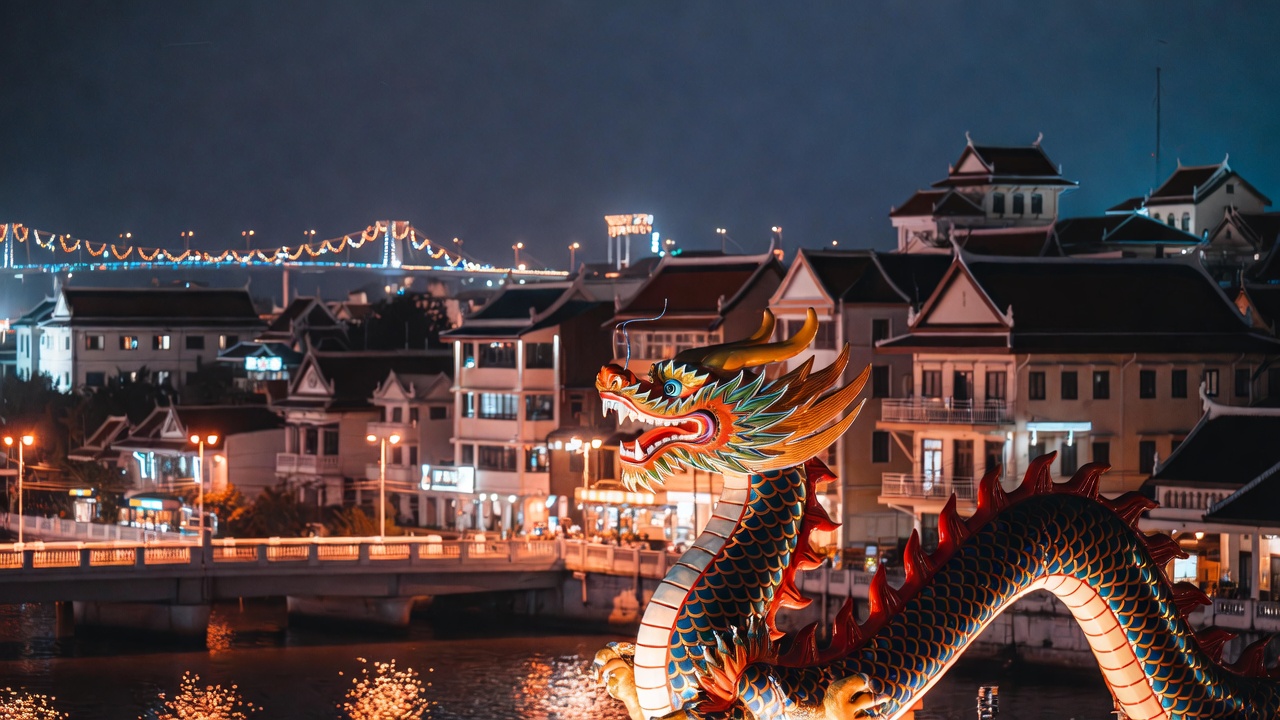
The historic Dechatiwong Bridge offers perhaps the most iconic Pak Nam Pho images. During the festival, massive dragon-shaped lighting sculptures are installed along this historic bridge.
Why photographers love it:
- Elevated perspective: Bridge height provides unobstructed views of the parade below
- Light installations: Dragon sculptures spanning 108 metres create stunning foreground elements
- Historical significance: The bridge, built in 1942, represents the “gateway to the North”
- Multiple angles: Shoot from the bridge or from below looking up at illuminated dragons
Photography tips for this location:
- The bridge gets crowded; secure your spot early
- A wide-angle lens captures the full dragon sculpture
- Long exposures can create interesting light trails as vehicles pass
- Consider shooting from both bridge level and street level for variety
Coordinates: The Dechatiwong Bridge is located approximately 500 metres from the city clock tower, connecting central Nakhon Sawan across the Chao Phraya River.
3. Pasan Building: Modern Architecture Meets Traditional Festival
Pasan is Nakhon Sawan’s newest landmark, completed in 2016 with investment from Thailand’s Department of Tourism. This architecturally striking building sits at the exact point where the Ping and Nan rivers merge to form the Chao Phraya.
Why photographers love it:
- Unique architecture: The building’s curved design symbolises the merging of rivers and creates dramatic leading lines
- 360-degree viewpoint: An elevated walkway offers panoramic views of the river and city
- Sunset location: Widely considered the best sunset spot in Nakhon Sawan
- Less crowded: Being slightly outside the parade route, it offers a calmer shooting environment
How to capture festival images from Pasan: While Pasan does not sit directly on the parade route, it offers unique perspectives:
- Photograph the illuminated city skyline with festival decorations
- Capture the confluence of two different-coloured rivers (the Ping flows greenish, the Nan reddish)
- Use the building’s architecture as a frame for distant parade lights
Access: You can reach Pasan by crossing the Nimmanoradee Bridge from Pak Nam Pho area, or by taking a ferry from the market pier (approximately 20-30 THB). The building offers free admission and is open from 6:00 AM to 8:00 PM daily.
4. Pak Nam Pho Market Area: Street-Level Parade Photography
The market area represents the commercial heart of the old Chinese settlement. Streets here are narrow, crowded, and atmospheric. This is where you capture the raw energy of the celebration.
Why photographers love it:
- Intimate shots: Narrow streets put you close to parade performers
- Vendor light: Market stalls create interesting ambient lighting
- Local character: Chinese shophouses decorated with red lanterns provide authentic backgrounds
- Food photography opportunities: Capture street food culture between parade segments
Recommended positions around Pak Nam Pho Market:
| Location | Best For | Crowd Level |
|---|---|---|
| Main parade street | Full parade floats | Very High |
| Side alleys | Performers preparing | Moderate |
| Near Wat Photharam | Cultural context | Moderate |
| Market junction corners | Parade turns (longer shooting time) | High |
Street photography tip: Corners where the parade turns are premium spots. Floats slow down for turns, giving you several extra seconds to compose and shoot.
5. Paradise Park (Sawan Park): Wide-Angle Festival Atmosphere
Sawan Park is a large public park covering 314 rai in the city centre. While not directly on the parade route, it serves as a gathering point and offers open space for festival activities.
Why photographers love it:
- Dragon statue: A large Heavenly Dragon statue serves as a permanent landmark
- Wide shots: Open space allows wider compositions showing crowds and atmosphere
- Night lighting: Park illumination during festival creates ambient photography conditions
- Family moments: Locals gather here, offering documentary photography opportunities
Night Parade Photography Settings and Camera Gear Recommendations
Photographing a night parade presents significant technical challenges. Moving subjects, mixed lighting, and dark conditions require careful camera settings. Here is a comprehensive guide.
Essential Camera Settings for Chinese New Year Night Parade Photography
The key challenge is balancing three competing needs: enough light, fast enough shutter speed, and acceptable noise levels. Here are recommended settings as starting points.
| Setting | Recommended Value | Reasoning |
|---|---|---|
| ISO | 1600-6400 | High ISO necessary for available light |
| Aperture | f/2.8 or wider | Maximum light gathering; creates bokeh |
| Shutter Speed | 1/125 to 1/250 sec | Freezes moderate movement |
| Focus Mode | Continuous AF (AI Servo/AF-C) | Tracks moving subjects |
| Metering | Spot or Centre-weighted | Handles high-contrast lighting |
| White Balance | Auto or Custom | Mixed lighting requires flexibility |
| Image Format | RAW | Maximum post-processing latitude |
Adjusting for specific situations:
For illuminated floats and LED dragons: The floats themselves provide light. You can often use lower ISO (800-1600) when shooting directly lit subjects. Watch for blown highlights on LED elements.
For performers in darker areas: Push ISO higher (3200-6400). Accept some noise rather than blurry images. Modern cameras handle high ISO well, and noise can be addressed in post-processing.
For motion blur creative effects: Experiment with slower shutter speeds (1/30 to 1/60 sec) to capture motion blur in dragon movements. This creates a sense of energy and movement. Stabilise your body against a wall or pole to reduce camera shake.
Recommended Camera Gear for Festival Photography in Thailand
Lenses:
| Lens Type | Focal Length | Use Case |
|---|---|---|
| Fast prime | 35mm f/1.4 or 50mm f/1.8 | Low-light general shooting |
| Standard zoom | 24-70mm f/2.8 | Versatility for different compositions |
| Telephoto | 70-200mm f/2.8 | Isolating performers from crowds |
| Wide-angle | 16-35mm f/2.8 | Capturing full floats and environmental shots |
A fast prime lens (large maximum aperture like f/1.4 or f/1.8) is arguably the most important piece of gear for night parade photography. It allows you to gather maximum light while maintaining reasonable ISO levels.
Other essential gear:
- Spare batteries: Night shooting drains batteries faster; carry at least three
- Fast memory cards: Continuous shooting requires fast write speeds
- Lens cleaning cloth: Humidity and smoke from firecrackers can affect lenses
- Small flashlight: Useful for changing settings in darkness
- Comfortable footwear: You will be standing for hours
What NOT to bring:
- Tripod: Generally impractical in crowded parade conditions
- Flash: External flash can disturb performers and rarely helps with parade distances
- Laptop: Leave it at the hotel; review images later
How to Photograph Dragon Dance Performances at Night Parades
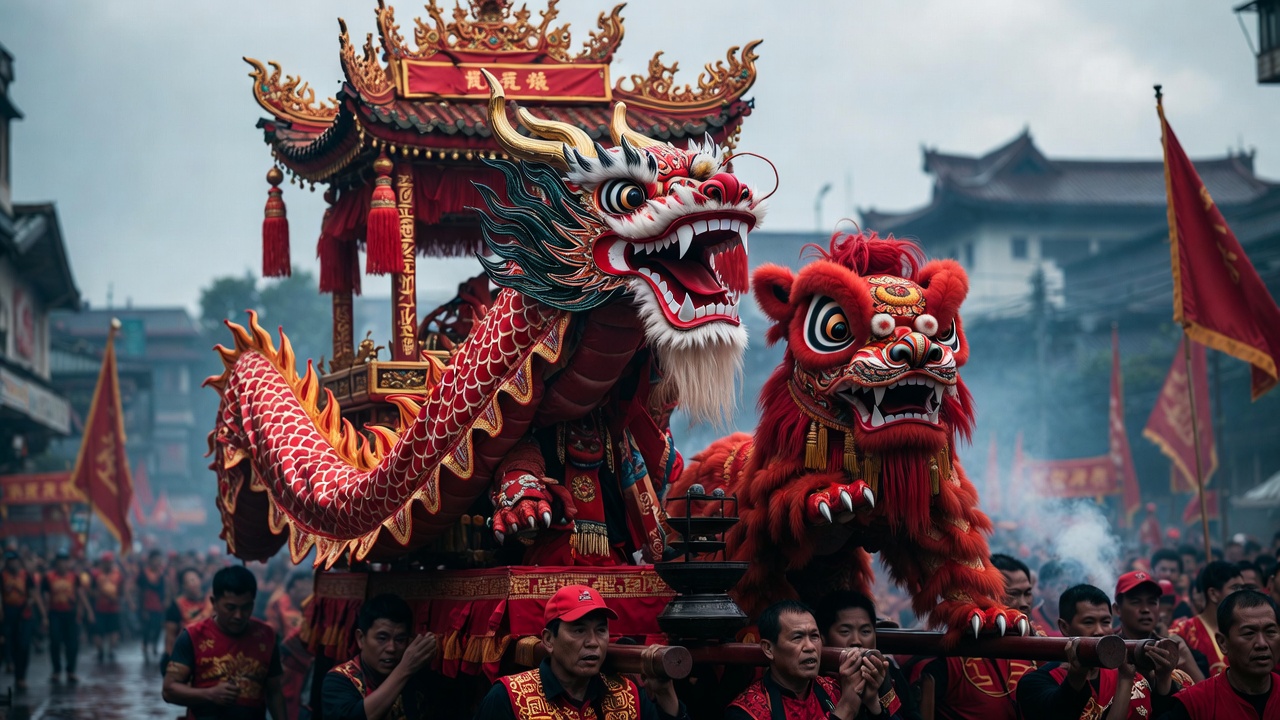
The dragon dance is the festival’s photographic centrepiece. Understanding the dance helps you anticipate moments and capture compelling images.
Understanding Dragon and Lion Dance Differences
Many first-time visitors confuse dragon dances with lion dances. Both appear at the Pak Nam Pho parade, and knowing the difference helps you photograph each effectively.
| Characteristic | Dragon Dance | Lion Dance |
|---|---|---|
| Number of performers | 8-12 (or more for longer dragons) | 2 performers |
| Movement style | Sinuous, undulating, waves | Acrobatic, playful, aggressive |
| Costume | Long serpentine body on poles | Single head-and-body costume |
| Key shots | Full length showing curves | Close-ups showing expression |
| Historical origin | Rain and prosperity symbolism | Ward off evil spirits |
At Pak Nam Pho, you will see multiple styles reflecting the diverse Chinese ethnic groups in Nakhon Sawan. These include Cantonese lions (Singhtoh), Hainanese lions, and Teochew dragons. Each has distinct visual characteristics.
Techniques for Capturing Dragon Dance Movement
The Pearl Chase Traditional dragon dances feature a performer leading with a “pearl” (a ball on a stick). The dragon “chases” this pearl. Photograph the moment when the dragon head lunges toward the pearl for dynamic shots.
The Wave As performers raise and lower their poles in sequence, the dragon body creates a wave effect. Position yourself perpendicular to the dragon’s length to capture the full wave pattern.
The Spin Dragons often spin in circles. Use a slower shutter speed (1/60 sec) and pan with the movement to create a sharp dragon head against a blurred background.
The Finale Most dragon performances end with a dramatic pose. Watch for performers bunching together and raising the dragon high. This is often the most photogenic moment.
Capturing Emotion in Festival Performers
Beyond the spectacle, look for human moments:
- Concentration on performers’ faces as they coordinate complex movements
- Children watching in wonder from the crowd
- Elderly community members whose traditions these festivals preserve
- Behind-the-scenes preparation before performers enter the parade route
These images add emotional depth to your festival coverage.
Travel Guide: Getting to Nakhon Sawan for the Chinese New Year Festival
Planning your trip logistics ensures you maximise photography time rather than scrambling for transport.
How to Travel from Bangkok to Nakhon Sawan for the Festival
Nakhon Sawan lies approximately 250 kilometres north of Bangkok. Several transport options connect the two cities.
| Transport | Duration | Cost (2026 est.) | Advantages |
|---|---|---|---|
| Bus from Mo Chit Terminal | 3.5-4 hours | 200-600 THB | Frequent departures, comfortable |
| Train from Bangkok | 3.5-4.5 hours | 100-1,000 THB | Scenic route, various classes |
| Private car/taxi | 2.5-3 hours | 3,000-5,500 THB | Door-to-door convenience |
| Self-drive rental | 2.5-3 hours | Variable | Flexibility for photography scouting |
According to travel booking platform 12go.asia, multiple bus operators serve this route. Sombat Tour and Sukhothai Win Tour offer regular departures from Mo Chit Bus Terminal (Chatuchak). The first buses leave around 7:30 AM; the last departures run until approximately 10:30 PM.
Train travel offers a scenic alternative. Trains depart from Krung Thep Aphiwat Central Terminal (formerly Bang Sue Central Station) and arrive at Pak Nam Pho Station. The train station is about 2 kilometres from the city centre.
Important festival period note: Transport fills up during Chinese New Year. Book buses and trains several days in advance. Hotels should be booked weeks ahead—ideally months for properties near the parade route.
Best Hotels Near Pak Nam Pho Parade Route for Photographers
Accommodation close to the action saves time and allows you to rest between parade sessions.
Near the parade route (within 1 km):
| Hotel | Distance to Parade | Approximate Price | Notes |
|---|---|---|---|
| Grand Vissanu Hotel | 0.82 km | 800-1,500 THB/night | Central location |
| B2 Nakhon Sawan Premier Hotel | 0.84 km | 700-1,200 THB/night | Modern amenities |
| P.A. Thani Hotel | 1.59 km | 600-1,000 THB/night | Good value |
| Bonito Chinos Hotel | 2.99 km | 700-1,100 THB/night | Chinese-Thai decor |
Tips for festival accommodation:
- Book early—rooms sell out months ahead
- Request a room facing away from the parade street if you need to sleep during celebrations
- Confirm parking if you are driving
- Some hotels offer package deals including parade viewing spots
Chinese New Year 2026 Pak Nam Pho Festival Dates and Schedule
The 2026 Pak Nam Pho Chinese New Year Festival will mark approximately 111 years since the tradition began. Here are the key dates based on typical festival scheduling.
Expected 2026 Festival Timeline
Chinese New Year 2026 falls on Tuesday, February 17, marking the start of the Year of the Horse. The Pak Nam Pho festival typically runs for 12 days and nights, with the following expected schedule:
| Event | Expected Date (2026) | Notes |
|---|---|---|
| Festival Opening | ~February 6-7 | Markets and food stalls begin |
| Cultural Performances | Throughout | Chinese opera, music, dance |
| Night Parade (Chiew Sa) | February 16 | Main evening procession |
| Day Parade (Chiew Si) | February 17 | Morning sacred procession |
| Festival Closing | February 17-18 | Final ceremonies at shrines |
Note: Official dates are typically announced by the Tourism Authority of Thailand and Nakhon Sawan Municipality a few months before the festival. Check TAT’s official website closer to the date for confirmed schedules.
What to Photograph Beyond the Main Parades
The parade nights are the highlight, but the entire festival offers photography opportunities:
Days before the parade:
- Red lantern decorations throughout the city
- Shrine preparations and offerings
- Chinese opera rehearsals at temporary stages
- Market setup and vendor preparations
During the festival:
- Food stalls serving traditional Chinese-Thai dishes
- Temple activities at shrines throughout the city
- Street life and local celebrations
- Children with festival toys and decorations
Special moments to anticipate:
- Fish release ceremonies at the river (symbolic merit-making)
- Dragon scale blessings where visitors touch dragon costumes for luck
- Incense offerings creating atmospheric smoke effects
Cultural Etiquette for Photographing Thai-Chinese Festivals
Respectful photography ensures you capture authentic moments while honouring the cultural significance of the celebration.
Photography Do’s and Don’ts at Sacred Ceremonies
Do:
- Ask permission before photographing individuals, especially elderly community members
- Dress modestly when entering shrine areas (cover shoulders and knees)
- Remove shoes when entering sacred spaces
- Be patient and let ceremonies proceed without interference
- Share photos with subjects if they express interest
- Learn basic Thai phrases (“ขอโทษครับ/ค่ะ” – excuse me; “ขอบคุณครับ/ค่ะ” – thank you)
Don’t:
- Use flash during sacred ceremonies without permission
- Block other worshippers’ access to shrines
- Climb on religious structures for better angles
- Touch sacred objects, costumes, or performance equipment
- Photograph inside shrine buildings without explicit permission
Understanding the Five Chinese Ethnic Groups at Pak Nam Pho
The festival celebrates the unity of five Chinese ethnic groups that settled in Nakhon Sawan. Understanding their distinct contributions enriches your photographic documentation.
| Ethnic Group | Lion/Dragon Style | Visual Characteristics |
|---|---|---|
| Cantonese (Guangdong) | Southern Lion, Fut San style | Aggressive head, tall forehead |
| Teochew | Big drum traditions, Green Lion | White-browed green lion |
| Hainanese | Hainanese Lion | Distinctive regional style |
| Hokkien (Fujian) | Various | Often associated with Mazu worship |
| Hakka | Various | Often associated with ancestral worship |
The festival’s “Wonder Five” zone specifically highlights the unity of these five groups. This represents one of the five thematic zones featured in recent festivals:
- Wonder Food: Street food and delicacies
- Wonder Faith: Religious and spiritual activities
- Wonder Five: Celebrating five ethnic groups
- Wonder Fun: Entertainment and games
- Wonder Festival: The grand parades
Post-Processing Tips for Night Parade Festival Photography
Capturing images is only half the work. Processing your files effectively brings out the festival’s magic.
Handling Mixed Lighting in Festival Photos
Night parades feature challenging mixed lighting: tungsten street lights, LED float lights, red lanterns, and flash from spectator phones. Here is how to handle this in post-processing.
White balance approach:
- Shoot in RAW format (essential for flexibility)
- In post-processing, decide on your colour intention:
- Accurate: Use a grey point to neutralise colour casts
- Atmospheric: Lean into warm tones; let reds glow
- Dramatic: Increase contrast between warm and cool areas
Noise reduction strategy:
- Apply moderate luminance noise reduction globally
- Use selective noise reduction on shadow areas
- Preserve detail in faces and costume elements
- Accept some noise in dark backgrounds—it adds to the atmosphere
Creating a Cohesive Festival Photo Series
A strong photo series tells a complete story. Consider including:
| Shot Type | Purpose | Examples |
|---|---|---|
| Establishing wide | Sets the scene | Street decorated with lanterns |
| Activity medium | Shows action | Dragon performers mid-dance |
| Detail close-up | Reveals craftsmanship | Dragon head construction, fabric details |
| Environmental portrait | Connects people to place | Performer with parade backdrop |
| Candid moment | Adds emotion | Child’s reaction to dragon |
| Behind-the-scenes | Provides context | Performers preparing backstage |
Aim for variety in focal length, subject distance, and orientation (horizontal and vertical) to create a well-rounded series.
Year of the Horse 2026: Symbolic Photography Opportunities
The Year of the Horse brings specific symbolic elements you can incorporate into your photography.
Horse Symbolism in Chinese New Year Celebrations
The Horse is the seventh animal in the Chinese zodiac. It represents:
- Energy and enthusiasm
- Independence and freedom
- Adventure and travel
- Success through hard work
In 2026, specifically the Year of the Fire Horse, expect additional fire-themed decorations and performances. Look for:
- Horse motifs in decorations and banners
- Fire-coloured (red, orange, gold) lighting themes
- Horse-shaped lanterns and sculptures
- Performances incorporating horse symbolism
Incorporating Zodiac Elements in Your Compositions
Practical tips:
- Scout for horse decorations before the parade to plan compositions
- Include zodiac animal banners as foreground or background elements
- Photograph families born in Horse years (1954, 1966, 1978, 1990, 2002, 2014) if they are willing—this year is their ben ming nian (zodiac year)
- Capture the transition moment at midnight on Chinese New Year’s Eve if accessible
Advanced Techniques: Creative Night Parade Photography Ideas
Once you have mastered the basics, try these creative approaches.
Long Exposure Dragon Trail Photography
Create ethereal images showing the dragon’s path through space:
- Set your camera on a stable surface (wall ledge, bean bag)
- Use shutter speed of 1-4 seconds
- Time your exposure as the dragon passes
- The LED lights on dragon costumes create light trails while stationary elements stay sharp
Silhouette Photography Against Parade Lights
Position yourself with bright floats behind your subjects:
- Find spectators watching the parade
- Expose for the bright background
- Subjects become dramatic silhouettes against the parade lights
- Works especially well with children reaching toward the parade
Reflection Photography at the Riverside Locations
Near the Chao Phraya River and at Pasan:
- Include water reflections of lanterns and lights
- Use a polarising filter to control reflection intensity
- Evening “blue hour” (just after sunset) provides ideal lighting balance
- Long exposures smooth the water for mirror-like reflections
Practical Checklist: Pak Nam Pho Night Parade Photography Essentials
Use this checklist to prepare for your photography expedition.
Gear Checklist
Camera body:
- [ ] Primary camera with good high-ISO performance
- [ ] Backup camera body (if available)
Lenses:
- [ ] Fast prime lens (35mm or 50mm, f/1.4 or f/1.8)
- [ ] Standard zoom (24-70mm f/2.8) or equivalent
- [ ] Optional: telephoto for performer close-ups
Accessories:
- [ ] Minimum 3 fully charged batteries
- [ ] 2+ high-speed memory cards (64GB+ recommended)
- [ ] Lens cleaning cloth and blower
- [ ] Rain cover (February can see occasional showers)
- [ ] Small flashlight with red mode
- [ ] Comfortable camera strap
- [ ] Snacks and water (long night ahead)
Pre-Trip Research Tasks
- [ ] Confirm 2026 festival dates with official sources
- [ ] Book accommodation near parade route
- [ ] Arrange transport to Nakhon Sawan
- [ ] Scout parade route on Google Maps
- [ ] Download offline maps of Nakhon Sawan
- [ ] Learn basic Thai greeting phrases
- [ ] Check weather forecast for festival dates
On-Location Strategy
- [ ] Arrive at chosen spot 2-3 hours before parade
- [ ] Take test shots to dial in settings before parade starts
- [ ] Identify backup positions in case primary spot does not work
- [ ] Note locations of restrooms and food vendors
- [ ] Plan your post-parade transport back to hotel
Beyond the Parade: Other Photography Locations in Nakhon Sawan
Extend your trip to capture more of what this region offers.
Bueng Boraphet: Thailand’s Largest Freshwater Lake
Located about 20 minutes from the city centre, Bueng Boraphet covers 224 square kilometres. It offers:
- Bird photography: Hundreds of species, especially during cooler months
- Lotus flower fields: Blooming flowers create stunning early morning scenes
- Floating raft palace: Built during King Rama VI’s reign
- Aquarium: For rainy day alternatives
Wat Khiriwong: Hilltop Temple Views
This golden-spired temple sits atop a hill overlooking the city. Photograph:
- Panoramic city views
- Golden chedi architecture
- Buddha images and religious art
- Sunrise or sunset over Nakhon Sawan
Chansen Ancient City: Historical Ruins
For photographers interested in history, the ancient city ruins offer archaeological subjects and atmospheric textures.
Local Food Photography Opportunities During the Pak Nam Pho Festival
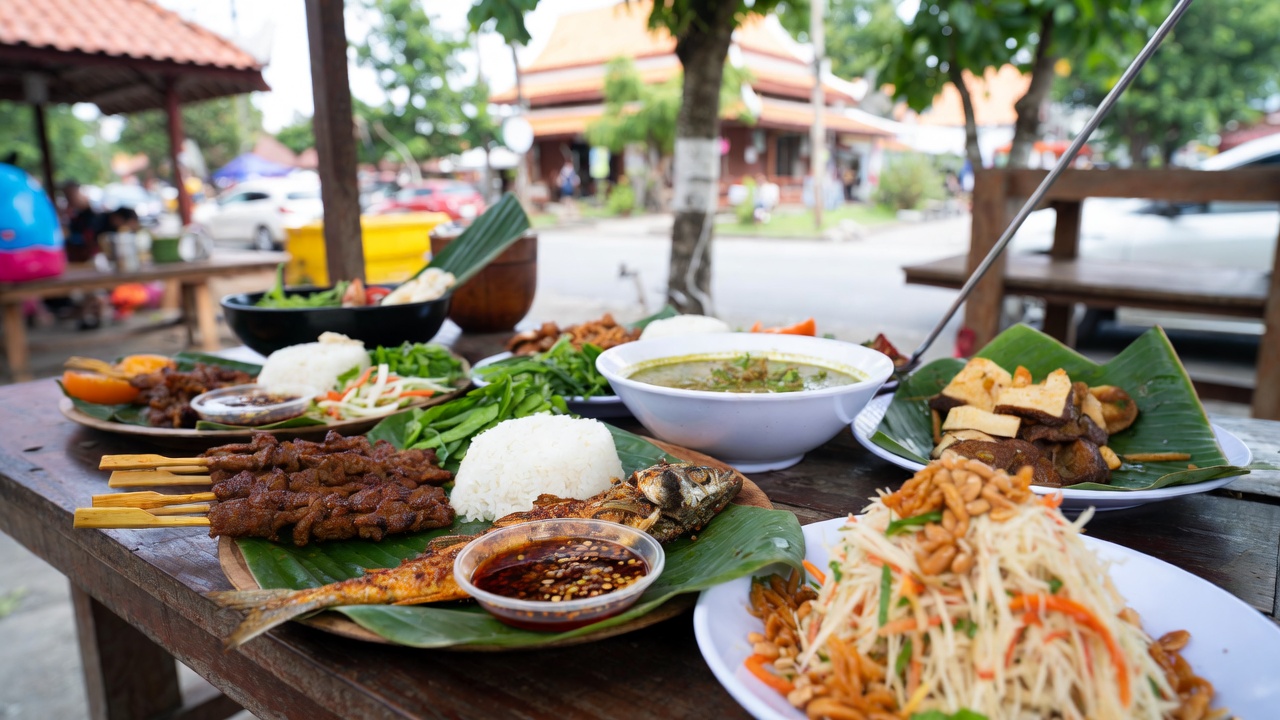
No festival photography journey is complete without capturing the culinary side of the celebration. The Pak Nam Pho festival features over 100 food stalls serving traditional Chinese-Thai dishes that tell their own cultural story.
Must-Photograph Festival Foods
The food at Pak Nam Pho reflects the Teochew, Cantonese, Hainanese, and Hokkien influences of the local Chinese community. Here are dishes that offer both photographic and gastronomic appeal:
Traditional Festival Dishes:
| Dish | Description | Photography Appeal |
|---|---|---|
| Bah-jang (Sticky rice dumplings) | Pyramid-shaped bamboo leaf parcels | Interesting textures, traditional presentation |
| Roasted duck | Glazed Cantonese-style duck | Rich colours, hanging displays |
| Ang ku kueh (Red tortoise cake) | Pressed rice cakes in turtle molds | Vibrant red colour, intricate patterns |
| Jeen (Chinese fried pastries) | Golden fried flour treats | Steam rising, golden tones |
| Hainanese chicken rice | Poached chicken with fragrant rice | Clean presentation, contrast plates |
Photography tips for food stalls:
- Visit during preparation times (early evening) for action shots of cooking
- Use available light from stall lighting—avoid flash which flattens food
- Include vendor hands and faces for human interest
- Capture steam rising from hot dishes (backlit steam looks most dramatic)
- Look for repeating patterns in food displays
Recommended Food Streets for Photography
Arak Road near Pak Nam Pho Market hosts long-established restaurants including Mr. Chuea’s Rice Porridge Shop, which has operated for over 40 years. The simple shophouse atmosphere and traditional Teochew-style Chinese cuisine make excellent documentary subjects.
Near Wat Photharam, street food vendors set up temporary stalls during the festival. The combination of temple architecture and food vendors creates culturally rich compositions.
Night Market Atmosphere Photography
The festival transforms ordinary streets into vibrant night markets. Capture:
- Lantern-lit vendor faces creating warm portraits
- Customers selecting food for candid moments
- Price signs in Thai and Chinese showing cultural mixing
- Children choosing treats for emotional storytelling
- Cooking flames and woks for dynamic action
The best time for food photography is early evening (5-7 PM) when vendors are setting up and the blue hour sky provides pleasant ambient light before full darkness.
Weather Considerations for February Photography in Nakhon Sawan
Understanding local weather patterns helps you prepare gear and plan your shooting schedule.
February Climate in Central Thailand
February falls within Thailand’s cool dry season—generally the best time for outdoor photography. However, conditions can vary:
| Weather Factor | Typical February Conditions | Photography Impact |
|---|---|---|
| Temperature | 20-32°C (68-90°F) | Comfortable for extended shooting |
| Humidity | Moderate (60-70%) | Less lens fogging than wet season |
| Rain probability | Low (2-3 days monthly) | Minimal disruption expected |
| Air quality | Variable | Haze possible; affects long shots |
| Sunset time | ~6:15-6:30 PM | Golden hour planning |
Preparing for Weather Variations
Heat management:
- Start early mornings and late afternoons when cooler
- Take breaks during midday heat
- Stay hydrated—carry water at all times
- Wear breathable, lightweight clothing
Rare rain contingencies:
- Pack a compact rain cover for your camera
- Identify covered shooting positions along the parade route
- Rain on streets can create beautiful reflection opportunities
Dust and haze:
- February can see agricultural burning haze
- Use UV or protective filters on lenses
- Adjust compositions if distant backgrounds are hazy
- Embrace haze for atmospheric effect in some images
Making Connections: Working with Local Communities
The most meaningful festival photographs often come through genuine human connections.
Approaching Performers and Participants
Dragon dance troupes, lion dancers, and parade participants often welcome photographers who approach respectfully. Here is how to build rapport:
Before the parade:
- Visit practice sessions if you can locate them
- Introduce yourself and explain your project
- Ask permission before photographing preparation
- Offer to share images via email or social media
During the parade:
- Make eye contact and gesture before raising your camera
- Smile and show appreciation for performances
- Give performers space to work—do not obstruct their movement
- Clap and show enthusiasm when not shooting
After capturing images:
- If you promised to share photos, follow through
- Consider printing and mailing photos to community organisations
- Tag local groups and tourism accounts when posting on social media
- Credit the festival and location in your published work
Community Photography Resources
The local TAT Nakhon Sawan office can provide contacts for parade organisers and community groups. They may assist with:
- Access to rehearsal sessions
- Introductions to troupe leaders
- Information about specific performance schedules
- Press credentials for professional work
Conclusion: Making the Most of Your Pak Nam Pho Photography Experience
The Pak Nam Pho Night Parade represents one of Southeast Asia’s most photogenic festivals. Its combination of dramatic lighting, centuries-old traditions, and authentic cultural celebration creates unique opportunities for compelling photography.
Key takeaways for photographers:
- Plan your position carefully: The best spots require early arrival and strategic thinking
- Master your low-light technique: High ISO, fast lenses, and steady hands are essential
- Respect the culture: This is a sacred celebration, not just a photo opportunity
- Tell the complete story: Look beyond the parade for human moments and cultural details
- Stay for both parades: The night and day parades offer distinct photographic opportunities
The Year of the Horse 2026 promises another spectacular celebration. With proper preparation, the right gear, and cultural sensitivity, you can return home with images that capture both the spectacle and the soul of this remarkable Thai-Chinese tradition.
Whether you are documenting the golden dragons dancing under neon lights, the quiet devotion at riverside shrines, or the joy on children’s faces watching the parade pass, the Pak Nam Pho Chinese New Year Festival offers photographic memories that will last far longer than the twelve days of celebration.
Sawatdee pee mai krub/kha (Happy New Year) and good shooting!
Last updated: February 2026
Note: Festival dates and schedules are subject to change. Always verify with the Tourism Authority of Thailand and local authorities before travelling.
Frequently Asked Questions: Pak Nam Pho Night Parade Photography
When is the best time to arrive for the Night Parade photography?
Arrive at your chosen location 2-3 hours before the scheduled parade start time. Prime positions fill quickly, especially near the shrine and main intersections. Use the waiting time to take test shots, adjust settings, and observe the pre-parade atmosphere.
Can I use a tripod at the Pak Nam Pho parade?
Tripods are impractical in most parade locations due to crowds. Instead, use a fast lens, image stabilisation, and proper hand-holding technique. If you must have stability, consider a monopod or find a wall/ledge to brace against.
Is flash photography allowed during the parade?
Flash is generally discouraged during sacred portions of the parade and inside shrines. For the main street procession, flash will not effectively reach parade floats and may disturb performers and other spectators. Rely on available light techniques instead.
What focal length is most useful for dragon dance photography?
A 35mm to 85mm range covers most situations. Wider (24mm) helps capture full floats and environmental context. Longer (200mm) isolates individual performers. A versatile 24-70mm f/2.8 zoom is an excellent single-lens choice.
How do I photograph moving dragons without blur?
Use a shutter speed of at least 1/125 second to freeze moderate movement. For faster dragon movements, aim for 1/250 second. Increase ISO as needed to maintain these speeds. Alternatively, embrace motion blur creatively with slower shutter speeds and panning technique.
Are there photography permits required for the festival?
For personal photography, no permits are required. Professional photographers working on commercial assignments should contact the Nakhon Sawan Municipality or Tourism Authority of Thailand in advance for specific requirements.
Disclaimer: Travel information, prices, and schedules mentioned in this article are based on data available at the time of writing and may change. Always verify details with official sources before planning your trip.