Rome never runs out of reasons to celebrate. But every year on February 11, the city marks an anniversary that shaped not only Italy, but the entire Catholic world. The Lateran Pacts, signed on this date in 1929, ended nearly sixty years of bitter conflict between the Italian state and the Vatican. In 2026, the 97th anniversary of the Lateran Treaty arrives on a Wednesday — and this year, there is more reason than ever to pay attention. A new pope sits on the throne of Saint Peter. The echoes of the 2025 Jubilee Year still hum through the city’s cobblestoned streets. And Rome itself is in the middle of a cultural renaissance that makes February one of the most rewarding months to visit.
This guide walks you through everything you need to know about Lateran Treaty Day in Rome 2026: the history behind it, where to go, what to see, how locals observe it, and how to weave this singular anniversary into a rich winter visit to the Eternal City.
What Are the Lateran Pacts and Why Do They Matter in 2026?
Before you can appreciate Lateran Treaty Day as a visitor, you need to understand why Romans still care about a political agreement signed nearly a century ago.
The story begins with a wound. When Italy unified as a nation in the 1860s and 1870s, the newly formed Kingdom seized the Papal States — vast territories across the Italian peninsula that the Catholic Church had governed for over a thousand years. In 1870, Italian troops marched into Rome itself. The pope lost his temporal kingdom overnight. Pope Pius IX declared himself a “prisoner of the Vatican” and refused to recognize the Italian government. For the next 59 years, successive popes never left Vatican grounds.
This standoff became known as the “Roman Question” (Questione Romana). It placed millions of Italian Catholics in an impossible position. Were they faithful to the Church, or loyal citizens of their country? The tension poisoned Italian politics, culture, and daily life for decades.
The resolution came on February 11, 1929. Inside the Lateran Palace — one of Rome’s oldest and most storied buildings — Cardinal Pietro Gasparri signed on behalf of Pope Pius XI, and Benito Mussolini signed for King Victor Emmanuel III. The three documents they put their names to are collectively known as the Lateran Pacts (Patti Lateranensi).
The Three Components of the Lateran Pacts
The Lateran Pacts were not a single treaty. They consisted of three distinct agreements, each addressing a different dimension of the Church-State relationship:
| Document | Purpose | Key Outcome |
|---|---|---|
| The Treaty | Resolved the Roman Question | Created Vatican City as a sovereign state — the smallest independent country in the world at just 0.44 km² |
| The Concordat | Regulated the Catholic Church’s role in Italy | Made Catholicism the state religion; mandated religious education in public schools |
| The Financial Convention | Settled financial claims | Italy paid the Vatican 1.75 billion lire in compensation for lost territories |
The Treaty was the most dramatic element. It gave the pope a country of his own — tiny, yes, but fully sovereign. The Vatican City State had its own postal service, its own currency, its own police force, and its own diplomatic corps. The Roman Question, at last, was settled.
In 1948, the postwar Constitution of the Italian Republic formally recognized the Lateran Pacts as the legal framework governing relations between Italy and the Catholic Church. Then, in 1984, the Concordat was significantly revised under Prime Minister Bettino Craxi and the Holy See. The most notable change: Catholicism was no longer the sole state religion of Italy. The revised agreement modernized the relationship between Church and State while preserving the Vatican’s sovereignty.
In 2026, all of this matters because the Lateran Pacts remain the constitutional and diplomatic foundation on which Vatican City stands. Every time the pope addresses the world from St. Peter’s Square, every time a foreign head of state visits the Holy See, every time a Vatican diplomat speaks at the United Nations — the legal basis traces back to that February morning in the Lateran Palace.
History of Lateran Treaty Day: How Rome Commemorates February 11 Each Year
February 11 is a public holiday in Vatican City. Offices close. The Swiss Guard stands at attention. Flags fly over the tiny city-state. For Vatican employees and clergy, this is their national day — a moment to reflect on the sovereignty that makes their unique institution possible.
In Italy itself, February 11 is not a national public holiday. Most Romans go to work and school as usual. But the anniversary never passes without notice. Every year, the Italian government holds a formal celebration at the Palazzo Borromeo, the elegant baroque residence on Via Condotti that serves as the Italian Embassy to the Holy See. Senior government officials attend, often including the Prime Minister. In February 2025, Prime Minister Giorgia Meloni attended the ceremony at Palazzo Borromeo, underscoring the enduring importance Italy places on its relationship with the Vatican.
At the Vatican, the day is typically observed with special liturgical celebrations and diplomatic receptions. Cardinals, ambassadors accredited to the Holy See, and senior Vatican officials gather to mark the occasion. The mood is one of quiet institutional pride rather than boisterous festivity. This is not Carnevale. There are no parades or fireworks. Instead, there are homilies, handshakes, and the reaffirmation of a partnership that has endured through fascism, world war, the Cold War, and the digital age.
For visitors to Rome, the day offers a chance to witness a side of the city most tourists never see — the diplomatic and ecclesiastical machinery that makes Vatican City function as both a spiritual headquarters and a sovereign state.
Pope Leo XIV and the Lateran Pacts Anniversary in 2026
The 2026 anniversary carries a special charge because of a historic transition in Church leadership. Pope Francis died on April 21, 2025, ending a transformative twelve-year papacy. Just weeks later, on May 8, 2025, the College of Cardinals elected Cardinal Robert Francis Prevost as the 267th pope. He chose the name Leo XIV.
Pope Leo XIV is a figure of firsts. He is the first pope born in the United States — raised in Chicago and the suburb of Dolton, Illinois. He is the first Augustinian friar to hold the papacy. And he brings a deeply international perspective, having spent decades as a missionary in Peru, where he served as Bishop of Chiclayo. He speaks English, Spanish, Italian, French, and Portuguese, and can read Latin and German.
His choice of the name “Leo” is significant. It echoes Pope Leo XIII, who challenged the injustices of the Industrial Revolution with his landmark encyclical Rerum Novarum. The National Catholic Reporter named Leo XIV its Newsmaker of the Year for 2025, noting that within weeks of his election, he announced plans to make Vatican City the world’s first carbon-neutral state.
For the Lateran Pacts anniversary, Pope Leo XIV’s presence adds a new layer of meaning. The 1929 Treaty created the sovereign platform from which every modern pope has operated. Now, an American-born pope — a man who bridges the Americas and Europe — governs that tiny sovereign state. The Lateran Pacts made his global ministry legally possible.
As of early 2026, Pope Leo XIV has been settling into his role with a style that observers describe as calm, balanced, and attentive to tradition. He restored certain liturgical customs that his predecessor had modified. He has spoken passionately about migration, ecological justice, and interfaith dialogue. His first Lateran Pacts anniversary as pope will be watched carefully by Vatican observers, diplomats, and the Roman public alike.
Where Were the Lateran Pacts Signed? Visiting the Lateran Palace and Basilica in Rome
The Lateran Pacts take their name from the Lateran Palace (Palazzo del Laterano), one of the most historically significant buildings in all of Christendom. If you visit only one site in connection with the anniversary, make it this one.
The Lateran Palace: A Thousand Years of Papal History
The Lateran Palace sits on the Caelian Hill (Celio), in the southeastern corner of Rome’s historic center. Its story stretches back to the Roman Empire. The land originally belonged to the wealthy Laterani family. After one member was accused of conspiracy against Emperor Nero, the property was confiscated. Centuries later, it passed to Emperor Constantine the Great, who gifted it to Pope Miltiades around 313 AD.
For the next thousand years, the Lateran Palace served as the primary residence of the popes. It was here, not at the Vatican, that the medieval Church was governed. Only after the papacy returned from its exile in Avignon, France, in the late 14th century — and found the Lateran in ruins — did the popes relocate permanently to the Vatican. Pope Sixtus V demolished much of the old palace in 1586 and commissioned architect Domenico Fontana to build the structure that stands today.
The current palace houses the Vatican Historical Museum, the offices of the Diocese of Rome, and the residential apartments of the Cardinal Vicar. Under the terms of the Lateran Treaty, the palace enjoys extraterritorial status — meaning it is legally Vatican property, even though it sits on Italian soil.
Visiting tip: The Lateran Palace is not always open to casual visitors, but guided tours of the Vatican Historical Museum are available. Check the official Archbasilica website for current hours and booking information.
The Archbasilica of Saint John Lateran: Mother of All Churches
Right next to the palace stands the Archbasilica of Saint John Lateran (San Giovanni in Laterano) — and this is where things get truly extraordinary. Most visitors to Rome make a beeline for St. Peter’s Basilica. Few realize that San Giovanni in Laterano actually outranks St. Peter’s in the Catholic hierarchy. Its full title says it all: “Mother and Head of All Churches in Rome and in the World” (Omnium urbis et orbis ecclesiarum mater et caput).
Founded in 324 AD by Emperor Constantine, this is the oldest basilica in the Western world. It served as the cathedral of the Bishop of Rome — the pope — and it remains the pope’s official cathedral to this day. Until 1870, all popes were crowned here. Pope Leo XIV himself was formally installed as Bishop of Rome in a ceremony at the Lateran Basilica on May 25, 2025.
The basilica you see today is largely the result of a major reconstruction by Francesco Borromini in the 1650s, commissioned by Pope Innocent X for that year’s Jubilee. The imposing main façade was completed in 1735 by Alessandro Galilei, crowned by towering statues of Christ, Saint John the Baptist, Saint John the Evangelist, and the twelve Apostles. The central bronze doors are ancient — they were taken from the Curia Julia in the Roman Forum, where the Roman Senate once met.
Inside, the basilica is a feast of baroque grandeur. Look for the Gothic baldachin over the papal altar, which reportedly contains relics of the heads of Saints Peter and Paul. The Cosmatesque floor — an intricate medieval mosaic of colored marble — is original. And the cloister, begun in 1222, is one of the most serene medieval spaces in all of Rome.
Practical information for 2026:
- Address: Piazza San Giovanni in Laterano, 4, 00184 Roma
- Admission: Free to enter the basilica. The cloister and Sancta Sanctorum chapel require a ticket.
- Getting there: Metro Line A to San Giovanni station (a 2-minute walk). Bus lines 16, 81, 85, and 87 also stop nearby.
- Security note: Enhanced security checks are in place. Glass bottles and aerosol cans are prohibited. Expect short queues, especially during the morning.
The Scala Santa: Climbing the Holy Steps on Your Knees
Across from the basilica stands the building housing the Scala Santa — the Holy Stairs. According to tradition, these are the 28 marble steps that Jesus walked up in the palace of Pontius Pilate in Jerusalem before his trial. Saint Helena, mother of Emperor Constantine, is said to have brought them to Rome in the 4th century.
For centuries, the faithful have climbed these steps on their knees — a practice that earns a plenary indulgence under Church law. The experience is deeply moving even for non-Catholics. The worn marble, visible through openings in the protective wooden covering, speaks to the millions of pilgrims who have made this ascent over 1,700 years.
Things to Do in Rome on Lateran Treaty Day: February 11, 2026
While Lateran Treaty Day is not a public holiday in Italy, February 11 offers a rich slate of experiences for visitors. Here is how to build a meaningful day around the anniversary.
Morning: Explore the Lateran Complex
Start your day at the Lateran. Arrive early — by 8:30 or 9:00 AM — to beat any security lines at the basilica. Spend time inside San Giovanni in Laterano, taking in the nave, the apse mosaics, and the papal altar. Then visit the cloister and, if available, the Sancta Sanctorum chapel (the pope’s private medieval chapel, decorated with precious frescoes). Cross the street to climb the Scala Santa.
Midday: Walk the Via della Conciliazione
After the Lateran, take the Metro or a bus across the city to the Vatican district. Your destination: the Via della Conciliazione, the broad boulevard that leads directly to St. Peter’s Square. This avenue was commissioned by Mussolini specifically to celebrate the Lateran Pacts. Its name — “Road of the Conciliation” — refers to the historic reconciliation between Italy and the Holy See. The boulevard was constructed in the 1930s by demolishing a dense medieval neighborhood called the Spina di Borgo. The result is one of Rome’s most dramatic vistas: a clear, unbroken view from the Tiber River all the way to the dome of St. Peter’s.
Walking the Via della Conciliazione on February 11 gives you a visceral sense of how the Lateran Pacts reshaped the physical fabric of Rome. This road exists because two powers decided to make peace.
Afternoon: Visit St. Peter’s Basilica and Vatican City
Complete the symbolic journey by entering St. Peter’s Square and, if time allows, St. Peter’s Basilica itself. Remember that the Jubilee 2025 formally concluded with the closing of the Holy Door on January 6, 2026, so the extraordinary Jubilee crowds will have thinned. February is an excellent time to visit the Vatican Museums and Sistine Chapel with shorter wait times than summer months.
Keep in mind: Vatican City offices are closed on February 11 for Lateran Treaty Day. The Vatican Museums may have adjusted hours — always check the official Vatican Museums website before visiting.
Evening: Dine in Trastevere or Prati
End the day with a classic Roman dinner in one of the neighborhoods closest to the action. Prati, the elegant residential quarter just north of the Vatican, offers excellent trattorias within walking distance of St. Peter’s. Trastevere, across the Tiber, is Rome’s most beloved dining neighborhood, with cobblestone lanes, ivy-covered façades, and restaurants serving cacio e pepe, amatriciana, and crispy supplì.
Best Places to Visit in Rome During the Lateran Pacts Anniversary Week
February 11 is just one day. But if you build a longer stay around it, Rome rewards you generously. Here are the must-see sites and experiences that connect to the themes of history, faith, and diplomacy that define the Lateran Pacts.
Vatican City: The Sovereign State Born from the Lateran Treaty
Vatican City covers just 0.44 square kilometers (110 acres). It has roughly 800 residents. Yet it is one of the most influential sovereign entities on earth. Everything here — from St. Peter’s Basilica to the Sistine Chapel to the Vatican Gardens — exists as sovereign territory because of the 1929 Treaty.
Key sites within Vatican City:
- St. Peter’s Basilica — The largest church in the world. Free entry. The dome climb offers unmatched views of Rome.
- The Vatican Museums and Sistine Chapel — Home to Michelangelo’s ceiling and the Raphael Rooms. Book tickets online in advance.
- The Vatican Gardens — Beautifully manicured grounds covering more than half of Vatican City. Guided tours available.
- St. Peter’s Square — Designed by Bernini, the great colonnade embraces visitors in a symbolic arms-of-the-Church embrace.
The Palazzo Borromeo: Where Italy Honors the Anniversary
The annual governmental commemoration takes place at the Palazzo Borromeo, seat of the Italian Embassy to the Holy See. This is a working embassy, so it is not open to public visits. But standing outside on Via Condotti and understanding what happens inside — the speeches, the diplomatic toasts, the reaffirmation of Church-State harmony — connects you to the living legacy of the Lateran Pacts.
The Capitoline Museums and Roman Forum
The Capitoline Museums (Musei Capitolini), the oldest public museum in the world, sit atop the Capitoline Hill. They house an extraordinary collection of ancient Roman sculpture, including the famous Capitoline Wolf, the Dying Gaul, and a colossal bronze of Emperor Marcus Aurelius. In February 2026, the museums are hosting a major exhibition exploring the dialogue between ancient art and contemporary jewelry design by Cartier, curated with scenographic design by three-time Academy Award winner Dante Ferretti.
From the museum’s terrace, you look down directly onto the Roman Forum — the ruins of the political and commercial heart of the ancient empire. The bronze doors of the Lateran Basilica once stood in the Curia Julia down below. History is literally connected across centuries.
Palazzo Barberini and the Bernini Exhibition
Opening on February 12, 2026 — the day after Lateran Treaty Day — is a major exhibition at Palazzo Barberini dedicated to Gian Lorenzo Bernini and the Barberini family. This exhibition traces the extraordinary partnership between the young sculptor Bernini and his patron, Pope Urban VIII (Maffeo Barberini). Bernini essentially built Baroque Rome — and the city’s visual identity owes as much to his chisel as to any treaty or concordat. The timing makes this a perfect pairing with a Lateran Pacts visit.
Rome in February 2026: Weather, Crowds, and Practical Travel Tips
What Is the Weather Like in Rome in February?
February is one of Rome’s coldest months, but by northern European or North American standards, it remains mild. Here is what to expect:
| Metric | Average |
|---|---|
| Daytime high | 13°C (55°F) |
| Nighttime low | 3–4°C (37–39°F) |
| Sunshine | 5–6 hours per day |
| Rainy days | 5–13 days in the month |
| Monthly rainfall | 60–75 mm |
What to pack: Bring a warm winter coat, layers (merino wool is ideal), a scarf, an umbrella, and comfortable waterproof walking shoes. Rome’s cobblestones can be slippery when wet. Evenings are cold — you will not be sitting on terraces after sunset.
The silver lining: February is firmly in Rome’s low season. The massive summer and autumn crowds are gone. Lines at the Colosseum, Vatican Museums, and Pantheon are significantly shorter. Hotel prices can be up to 25% cheaper than peak season. You will almost always find a table at a good restaurant without reserving days in advance — with the exception of Valentine’s Day on February 14, when reservations are essential.
How to Get Around Rome in February 2026
Rome’s public transport system is your best friend in winter. The Metro (Lines A and B) covers the major tourist areas. Buses fill in the gaps. The Roma Pass or Turbopass can be worthwhile if you plan to visit multiple museums.
Important note for 2026: Rome has been investing heavily in transport infrastructure in connection with the Jubilee. The city secured over €1.3 billion in state funding for improvements, including work on Rome’s third metro line connecting St. Peter’s and St. John Lateran. Check for any construction-related disruptions before your trip.
The Trevi Fountain in 2026: Starting February 1, 2026, Rome introduced a €2 admission fee for tourists to access the area directly in front of the Trevi Fountain during daytime hours. You can still admire the fountain from the piazza above or visit for free after sunset.
Where to Stay in Rome Near the Lateran Basilica
The San Giovanni neighborhood — named after the Lateran Basilica — is an excellent base for visitors interested in the Lateran Pacts anniversary. It is well-connected by Metro (Line A, San Giovanni station), offers a wide range of hotels at reasonable prices, and feels more authentically Roman than the areas around Termini station.
For visitors who want to split their time between the Lateran and the Vatican, the Prati district is a strong choice. Located just north of Vatican City, Prati is an elegant, tree-lined neighborhood with excellent restaurants, cafés, and shops on the Via Cola di Rienzo.
Carnevale in Rome 2026: Festive Season Around Lateran Treaty Day
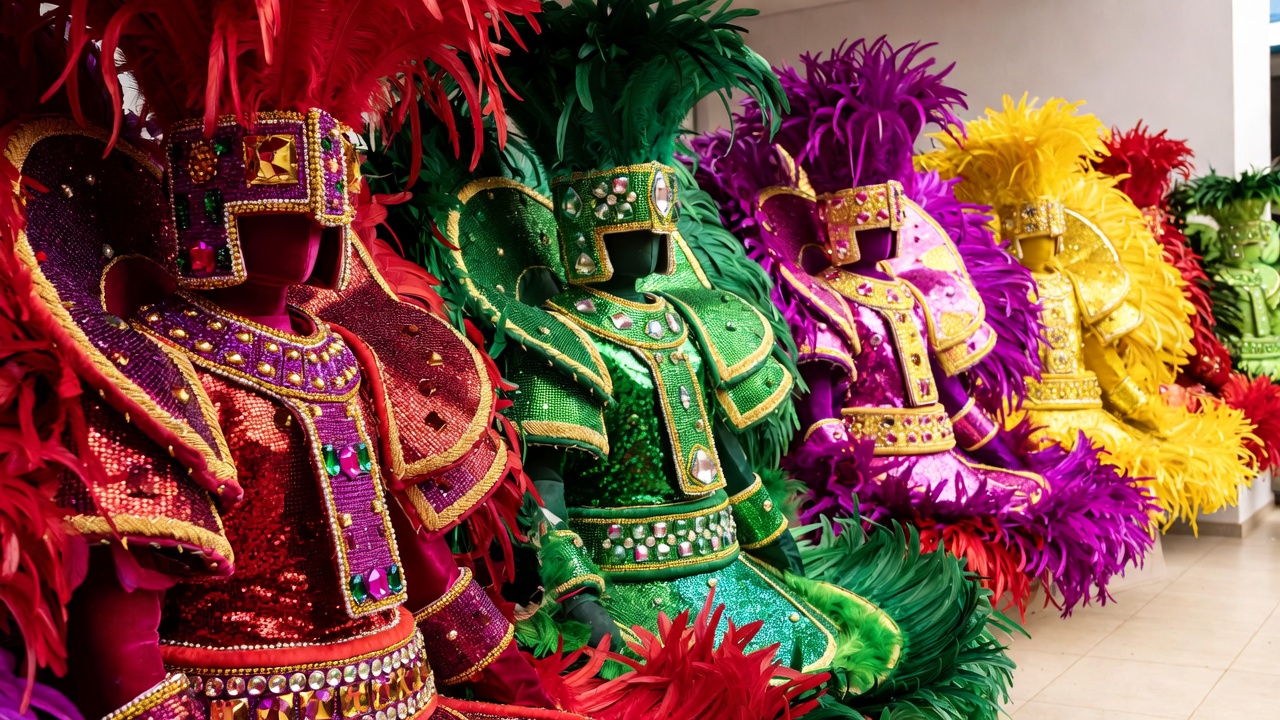
One of the great bonuses of visiting Rome in February is Carnevale — the exuberant pre-Lenten celebration that fills the city with costumes, confetti, and fried pastries. In 2026, the main Carnevale festivities center on the days leading up to Shrove Tuesday (Martedì Grasso) on February 17.
Carnevale in Rome is not the grand masked-ball spectacle of Venice. It is warmer, more chaotic, more child-focused — and absolutely delightful. Here is what to expect:
- Children in costumes fill the streets, parks, and piazzas. Expect tiny superheroes, princesses, and animals everywhere.
- Coriandoli — colored confetti — coats the sidewalks. It gets everywhere. Embrace it.
- Bakeries overflow with two traditional Carnevale treats: frappe (light, crispy fried pastry dusted with powdered sugar) and castagnole (small, round fried dough balls, sometimes filled with cream or chocolate). Every pasticceria and forno in the city makes them in February. They are addictive.
- Street parades and performances pop up in neighborhoods across the city. The Yorick Festival in 2026 — named after Shakespeare’s jester in Hamlet — pays tribute to the creative power of comedy and imagination during Carnival season.
- Cinecittà World, Rome’s cinema-themed amusement park, hosts family-friendly Carnival events with costume contests and themed rides.
The overlap between Carnevale and Lateran Treaty Day makes mid-February an unusually festive time to visit Rome. You get the solemnity of the anniversary and the joyful chaos of Carnival in a single trip.
Six Nations Rugby in Rome: February 2026 Sporting Events
Sports fans have another reason to be in Rome in early February 2026. The Six Nations Championship, Europe’s premier rugby tournament, brings international matches to the Stadio Olimpico. Italy faces Scotland on February 7, four days before Lateran Treaty Day.
The atmosphere around a Six Nations match in Rome is electric. Italian rugby fans — the tifosi — are passionate and welcoming. The pre-match buzz spills into the city’s pubs, bars, and restaurants. If you are in Rome for the Lateran Pacts anniversary and enjoy sport, catching a Six Nations match adds a vibrant, communal experience to your itinerary.
Best Exhibitions and Cultural Events in Rome February 2026
Rome’s cultural calendar in February 2026 is extraordinarily rich. Here are the standout exhibitions that complement a Lateran Pacts-themed visit:
Treasures of the Pharaohs at the Scuderie del Quirinale
Dates: Through May 3, 2026 Where: Scuderie del Quirinale, Via XXIV Maggio, 16
A blockbuster exhibition of ancient Egyptian artifacts — a reminder that Rome has been a crossroads of civilizations for millennia. The Scuderie del Quirinale, once the papal stables, is one of Rome’s finest exhibition spaces.
Impressionism and Beyond at the Museo dell’Ara Pacis
Dates: Through May 3, 2026 Where: Museo dell’Ara Pacis, Lungotevere in Augusta
Masterworks from the Detroit Institute of Arts travel to Rome for this landmark show. Monet, Renoir, Cézanne, and more — displayed alongside the Ara Pacis, the ancient Altar of Peace commissioned by the Roman Senate in 13 BC.
Bernini and the Barberini Family at Palazzo Barberini
Dates: Opening February 12, 2026 Where: Palazzo Barberini, Via delle Quattro Fontane, 13
As mentioned above, this exhibition explores the creative partnership between Bernini and Pope Urban VIII — the sculptor and the pontiff who together built the Baroque Rome we know today.
Alphonse Mucha Exhibition at Palazzo Bonaparte
Dates: Through March 8, 2026 Where: Palazzo Bonaparte, Piazza Venezia, 5
Over 150 original works by the Art Nouveau master, with a surprise: Botticelli’s Venus, on special loan from the Royal Museums of Turin, creating a dialogue between Renaissance and Art Nouveau ideals of beauty.
Understanding the Concordat Revision of 1984 and Its Impact on Modern Italy
No guide to the Lateran Pacts would be complete without addressing what happened 55 years after the original signing. In 1984, Italian Prime Minister Bettino Craxi and the Vatican’s Secretary of State, Cardinal Agostino Casaroli, signed a revised Concordat — sometimes called the Villa Madama Agreement, after the Renaissance villa where it was finalized.
The revision was seismic. Its most important change: both sides formally declared that Catholicism was no longer the sole state religion of Italy. Religious education in public schools became optional rather than mandatory. The state’s financial support for the Church was restructured through a voluntary tax allocation system (the otto per mille), in which Italian taxpayers could choose to direct a small percentage of their income tax to the Catholic Church or to other recognized religious organizations.
The 1984 revision reflected Italy’s evolution into a modern, pluralistic democracy. It acknowledged that the country — while deeply shaped by Catholic culture — was home to citizens of many faiths and none. The revised Concordat also strengthened the principle that the Church and State operate in separate, independent spheres, each sovereign in its own domain.
For the February 11 commemoration, Italians honor both the original 1929 Pacts and the 1984 revision. The annual ceremony at Palazzo Borromeo is formally called the “Anniversary of the Signing of the Lateran Pacts and of the Concordat Revision Agreement.” This dual celebration captures the living nature of the Church-State relationship — a partnership that adapts, evolves, and renews itself across generations.
How the Lateran Pacts Created the World’s Smallest Country: Vatican City Facts and Figures
The Lateran Treaty of 1929 created something unique in international law: a sovereign state of just 44 hectares (110 acres), entirely enclosed within the boundaries of a major capital city. Here are some facts that bring Vatican City to life:
| Fact | Detail |
|---|---|
| Area | 0.44 km² (0.17 sq mi) — smaller than many golf courses |
| Population | Approximately 800 residents |
| Head of State | Pope Leo XIV (since May 8, 2025) |
| Government | Absolute monarchy (theocracy) |
| Official languages | Italian (working language), Latin (official) |
| Currency | Euro (Vatican-minted euros are collector’s items) |
| Military | Swiss Guard (founded 1506), Gendarmerie Corps |
| Extraterritorial properties | 23 buildings in Rome enjoy extraterritorial status under the Lateran Treaty, including the Lateran Basilica, Palazzo Borromeo, and several other churches and offices |
| UN status | Permanent Observer State at the United Nations |
| Joined the Universal Postal Union | 1929 (months after the Treaty) |
The financial settlement attached to the Treaty provided the Vatican with 750 million Italian lire in cash and 1 billion lire in consolidated bonds — enormous sums at the time, which the Vatican invested and managed to build its financial independence.
Vatican City is the only country in the world where the entire territory is a UNESCO World Heritage Site. Its art collection, architecture, libraries, and archives represent one of the greatest concentrations of cultural patrimony on earth — all made legally possible by the Lateran Pacts.
Visiting Rome for the Lateran Pacts Anniversary: A Sample Three-Day Itinerary
For travelers who want to build a visit around the February 11 anniversary, here is a sample three-day itinerary that balances history, faith, culture, and la dolce vita.
Day 1: Tuesday, February 10 — Arrival and Ancient Rome
- Morning/Afternoon: Arrive in Rome. Check into your hotel.
- Late Afternoon: Walk to the Colosseum and Roman Forum. February’s shorter lines mean you can explore at a relaxed pace. Look for the site of the Curia Julia — the Roman Senate house whose bronze doors now stand in the Lateran Basilica.
- Evening: Dinner in Monti, Rome’s oldest and hippest neighborhood, just steps from the Colosseum. Try carciofi alla giudia (Jewish-style fried artichokes) — a February seasonal specialty.
Day 2: Wednesday, February 11 — Lateran Treaty Day
- Morning: Start at the Archbasilica of Saint John Lateran. Explore the interior, cloister, and Sancta Sanctorum. Climb the Scala Santa. Appreciate the building where the Pacts were signed.
- Midday: Take the Metro (Line A, San Giovanni to Ottaviano) to the Vatican district. Walk down the Via della Conciliazione toward St. Peter’s.
- Afternoon: Visit St. Peter’s Basilica. Climb the dome for panoramic views. If time allows, book a timed entry for the Vatican Museums and Sistine Chapel.
- Evening: Dinner in Prati or Trastevere. Celebrate the day with a glass of Roman wine and a plate of cacio e pepe.
Day 3: Thursday, February 12 — Art, Culture, and Carnevale
- Morning: Visit the Capitoline Museums and the Cartier exhibition. Enjoy views over the Roman Forum from the museum terrace.
- Afternoon: Head to Palazzo Barberini for the opening of the Bernini exhibition. Then stroll to the Trevi Fountain (remember the new €2 daytime access fee) and the Pantheon.
- Evening: Wander through Rome’s streets and enjoy early Carnevale atmosphere. Stop at a pasticceria for frappe and castagnole. End the night with an aperitivo at a bar in Piazza Navona.
The Legacy of the Lateran Pacts in the Age of Pope Leo XIV
Pope Leo XIV’s papacy is still young. He was elected just nine months before the 2026 Lateran Treaty anniversary. But his early actions suggest a leader who understands the weight of the sovereignty the Lateran Pacts bestow.
Within weeks of his election, Leo XIV announced a commitment to making Vatican City carbon-neutral — a bold environmental pledge that only a sovereign state can make on the world stage. He has spoken forcefully about migration, economic justice, and interfaith dialogue. He chose to restore certain liturgical traditions, signaling continuity with the deep Catholic past. And on May 25, 2025, he was formally installed as Bishop of Rome at the Lateran Basilica — the very building where the Pacts were signed, the mother church of all Christendom.
The Lateran Pacts are not a dusty relic. They are a living framework. They give the pope a platform — sovereign, independent, diplomatically recognized — from which to address the conscience of the world. In 2026, under Leo XIV, that platform carries a new voice, a new vision, and a renewed sense of purpose.
Frequently Asked Questions About the Lateran Pacts and February 11 in Rome
Is February 11 a public holiday in Rome? February 11 is a public holiday in Vatican City, not in Italy or Rome at large. Vatican offices, including the Vatican Museums, may have reduced hours or closures. Most Roman shops, restaurants, and attractions operate normally.
Can I attend the official Lateran Pacts ceremony? The governmental ceremony at Palazzo Borromeo is an invitation-only diplomatic event. However, any liturgical celebrations at the Lateran Basilica or within Vatican City may be open to the public. Check local listings closer to the date.
Is the Lateran Palace open to visitors? The Lateran Palace houses the Vatican Historical Museum, which offers guided tours. Availability varies, so book in advance through the Archbasilica’s official website.
What year were the Lateran Pacts signed? The Lateran Pacts were signed on February 11, 1929. The 2026 anniversary marks 97 years since the signing.
When was the Concordat revised? The Concordat was significantly revised in 1984 under the Villa Madama Agreement, which ended Catholicism’s status as the sole state religion of Italy.
How do I get to the Lateran Basilica? Take Metro Line A to San Giovanni station. The basilica is a 2-minute walk from the exit.
Is Rome worth visiting in February? Absolutely. February offers fewer crowds, lower hotel prices, rich cultural programming, Carnevale festivities, and seasonal food. The weather is cool but manageable with proper layers.
Final Thoughts: Why the Lateran Pacts Still Resonate in 2026
Almost a century after Cardinal Gasparri and Mussolini affixed their signatures in the Lateran Palace, the agreement they forged continues to shape the world. Vatican City remains a sovereign state. The pope remains a head of state. The diplomatic, cultural, and spiritual apparatus of the Catholic Church — serving 1.4 billion faithful worldwide — rests on the legal foundation laid down on February 11, 1929.
For the traveler, the Lateran Pacts anniversary is an invitation to see Rome from a different angle. Not just as a museum of antiquity. Not just as a setting for la dolce vita. But as a place where the ancient and the modern, the sacred and the political, the Italian and the universal all intersect — in a palace on a hill, in a basilica older than nations, and in a city that has been negotiating between power and faith for two thousand years.
Come to Rome in February 2026. Walk through the Lateran. Stand in St. Peter’s Square. Eat a castagnola while confetti drifts through the winter air. And reflect on the remarkable fact that one signature, on one February morning, created the world’s smallest country — and one of its most powerful voices.
Buon viaggio.
Disclosure: This article was researched and written in February 2026 and reflects the most current information available at the time of publication. Always verify opening hours, ticket prices, and travel requirements before your trip. Official sources include Vatican Museums, the Archbasilica of Saint John Lateran, and Turismo Roma.