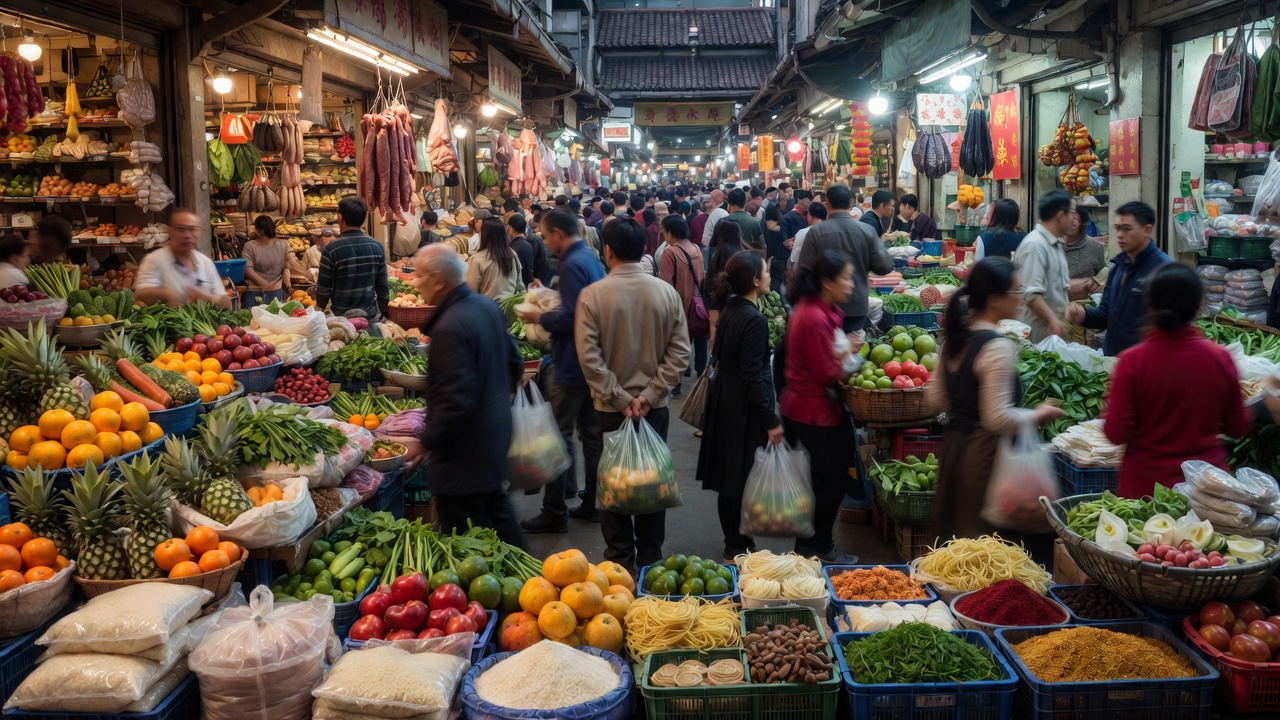
A Complete Guide to Sourcing Lucky Fruits, Traditional Vegetables, and Festive Ingredients for the Lunar New Year Celebration
The air carries a distinct energy as late January approaches. Red lanterns sway gently in the winter breeze. Markets buzz with activity. Families across the globe prepare for one of humanity’s oldest and most widely celebrated festivals: Chinese New Year, also known as the Spring Festival or Lunar New Year.
For the estimated 1.5 billion people who celebrate this 15-day festival worldwide, fresh produce sits at the heart of every gathering. From the symbolic mandarin oranges exchanged between relatives to the precisely selected ingredients for the reunion dinner, the quality of fresh produce directly impacts the auspiciousness of the celebration.
But where should international buyers source their festive produce? Should you venture into the bustling wet markets of Singapore’s Chinatown Complex? Browse the organized aisles of 99 Ranch Market in California? Or explore the traditional bazaars of Hong Kong’s flower markets?
This comprehensive guide explores everything you need to know about Chinese New Year fresh produce shopping for international buyers. We compare overseas and local market options, decode the symbolism behind essential ingredients, and share expert tips for selecting the most auspicious items for your celebration.
Understanding the Cultural Significance of Fresh Produce in Lunar New Year Celebrations
Fresh produce plays a role in Chinese New Year celebrations that extends far beyond nutrition. In Chinese culture, food carries symbolic weight and energetic resonance. The practice of gifting premium, high-quality fruits dates back centuries. Parents would place fruits like mandarin oranges beside their children’s pillows, along with red envelopes containing money, to ward off folkloric monsters.
The tradition continues today. As noted by Produce Business, fruit plays an important role in the daily life and social traditions of many Asian communities. The festival, which falls on February 17, 2026, presents an optimal window for retailers and consumers alike to focus on the best produce available.
Why Fresh Produce Matters During Spring Festival
The reunion dinner on Lunar New Year’s Eve represents the most important meal of the year. Every dish served carries specific meaning:
- Fish symbolizes surplus and abundance
- Dumplings represent wealth (shaped like ancient gold ingots)
- Spring rolls suggest prosperity (resembling gold bars)
- Fresh vegetables signify renewal and health
- Lucky fruits attract good fortune for the coming year
The China Highlights travel guide explains that the auspicious symbolism of traditional Chinese New Year foods is based on their pronunciations or appearance. Not only do the dishes themselves matter, but the preparation, serving methods, and eating rituals all carry significance.
The 15-Day Festival Timeline and Produce Needs
Understanding the festival timeline helps buyers plan their shopping:
| Day | Event | Produce Needs |
|---|---|---|
| Day 1 | New Year’s Day | Fresh fruits for offerings, lucky citrus |
| Days 2-5 | Family Visits | Gift oranges, premium fruits |
| Day 7 | “Renri” (Human Day) | Raw fish salad (Yu Sheng) ingredients |
| Day 9 | Jade Emperor’s Birthday | Sugarcane, pomelos |
| Day 15 | Lantern Festival | Tang yuan ingredients, fresh fruits |
Planning purchases around these events ensures freshness while respecting tradition.
Best Lucky Fruits to Buy for Chinese New Year: Complete Symbolism Guide
The exchange of lucky fruits remains central to Lunar New Year celebrations. Understanding the symbolism helps buyers select appropriate items for different occasions and recipients.
Mandarin Oranges and Tangerines: The Ultimate Symbol of Prosperity
No fruit holds more significance during Chinese New Year than the mandarin orange. TIME Magazine reports that the practice of exchanging mandarin oranges has existed since at least the Qing dynasty.
Why mandarin oranges represent good luck:
- The Mandarin pronunciation “jú” (橘) sounds similar to “jí” (吉), meaning “auspicious”
- The Cantonese pronunciation “gam” is identical to the word for “gold”
- Their round shape represents completeness and family unity
- The golden-orange color evokes images of gold ingots once used as currency
Shopping tips for mandarin oranges:
- Select fruits in pairs — even numbers are considered auspicious
- Keep stems and leaves attached — this symbolizes longevity and fertility
- Choose plump, evenly colored specimens with glossy skin
- Avoid fruits with the number 4 in any grouping (sounds like “death” in Chinese)
- Display in red or gold bowls with 6 or 8 pieces
According to Monash University Malaysia, giving mandarin oranges is a symbolic way of wishing someone happiness and prosperity. You are literally giving them “wealth.”
Pomelos: The Giant Citrus of Family Unity
Pomelos ripen just before Lunar New Year, making them closely associated with family gatherings. The Mandarin word for pomelo—yòuzi—sounds similar to the word for “have,” inviting prosperity.
In Northern China and among Hakka communities, pomelos symbolize:
- Family unity (their large size feeds many people)
- Fertility and abundance
- Protection against evil (their strong citrus smell wards off negative energy)
Apples, Pineapples, and Other Auspicious Fruits
Apples (píngguǒ): Sound like “peace” (píng’ān), making them ideal for New Year’s Eve offerings.
Pineapples (ong lai in Hokkien): Sound similar to “good luck comes,” explaining their prominent placement in homes and businesses throughout Southeast Asia.
Grapes: Historically associated with royalty, grapes symbolize wealth, fortune, and fertility.
Dragon fruit: Their bright red skin represents prosperity and good fortune.
Complete Lucky Fruit Shopping List
| Fruit | Chinese Name | Symbolism | Best For |
|---|---|---|---|
| Mandarin Orange | 橘子 (júzi) | Good luck, wealth | Gift-giving, home display |
| Tangerine | 柑 (gān) | Gold, prosperity | Family exchanges |
| Pomelo | 柚子 (yòuzi) | Abundance, unity | Home offerings |
| Apple | 苹果 (píngguǒ) | Peace, safety | Altar offerings |
| Pineapple | 凤梨 (fènglí) | Fortune coming | Business entrance |
| Kumquat | 金橘 (jīnjú) | Gold, luck | Potted decoration |
| Persimmon | 柿子 (shìzi) | Success | New Year’s Eve |
| Dragon Fruit | 火龙果 (huǒlóngguǒ) | Prosperity | Gift boxes |
Essential Asian Vegetables for Traditional Chinese New Year Recipes
While fruits dominate gift-giving traditions, vegetables form the backbone of reunion dinner preparations. International buyers need access to specific Asian greens that may not appear in mainstream supermarkets.
Bok Choy and Shanghai Bok Choy: The Versatile Greens
According to The Woks of Life, Shanghai bok choy appears in restaurants more often than other varieties. The smaller, more tender specimens make for better presentations and are essential for dishes like Braised Chinese Mushrooms with Baby Bok Choy.
Types of bok choy to know:
- Baby bok choy — tender, sweet, ideal for stir-fries
- Shanghai bok choy — green stalks, popular in restaurants
- Dwarf bok choy — also called “cream bok choy” (奶油白菜)
- Regular white bok choy — larger, more robust flavor
Cooking note: Bok choy cooks extremely fast. When stir-frying, add it last and cook for only 45 seconds to one minute.
Chinese Broccoli (Gai Lan): The Restaurant Favorite
Chinese broccoli, known as gai lan in Cantonese or jiè lán (芥兰) in Mandarin, looks nothing like Western broccoli. It features long green stems with dark, thick leaves and occasional edible flower buds.
RecipeTin Eats describes it as a staple vegetable dish at Yum Cha (dim sum) restaurants. The stems have a texture similar to broccoli, while the leaves taste like spinach.
Key difference from Western broccoli: Chinese broccoli is sweeter and much less bitter than broccoli rabe, making it more versatile in traditional preparations.
Choy Sum (Yu Choy): The Sweeter Alternative
Choy sum, also labeled as yu choy in some markets, offers a milder, sweeter profile than other Asian greens. The name “yu choy” translates to “oil vegetable” because the plant belongs to the rapeseed family.
This vegetable works particularly well:
- Stir-fried with garlic and chicken broth
- Blanched and drizzled with oyster sauce
- Added to noodle soups
- Paired with mushroom dishes
Mustard Greens (Gai Choy): The Bold Choice
For those who enjoy robust flavors, Chinese mustard greens (芥菜) deliver a mild horseradish-like taste. Many Fujian specialty dishes feature these greens, including:
- Mustard green rice — made with pork belly and dried oyster
- Pickled mustard green soup
- Stir-fried mustard greens with crabmeat — an elegant banquet dish
Complete Asian Vegetables Shopping Guide
| Vegetable | Chinese Name | Flavor Profile | Best Preparation |
|---|---|---|---|
| Baby Bok Choy | 小白菜 | Mild, slightly sweet | Quick stir-fry |
| Shanghai Bok Choy | 上海青 | Tender, delicate | Blanched with sauce |
| Gai Lan | 芥兰 | Slightly bitter | Steamed with oyster sauce |
| Choy Sum | 菜心 | Sweet, mild | Garlic stir-fry |
| Napa Cabbage | 大白菜 | Crisp, fresh | Hot pot, dumplings |
| Chinese Celery | 芹菜 | Intense celery | Soups, stir-fries |
| Water Spinach | 空心菜 | Earthy, tender | Wok with fermented tofu |
| Snow Pea Shoots | 豆苗 | Fresh, pea flavor | Light garlic sauté |
Where to Buy Chinese New Year Produce in the USA: Asian Supermarket Guide
For international buyers in North America, several major Asian supermarket chains provide comprehensive selections of Lunar New Year essentials.
99 Ranch Market: The Largest Asian Supermarket Chain
99 Ranch Market has evolved into the largest Asian supermarket chain in the United States since its founding in 1984 by Taiwanese immigrant Roger H. Chen. According to Wikipedia, the chain now operates 58 stores across 11 states.
Why international buyers choose 99 Ranch:
- Wide selection of imported products from mainland China, Hong Kong, Taiwan, Japan, Korea, and Southeast Asia
- Fresh produce sections featuring Asian vegetables daily
- Live seafood departments with traditional fish tanks
- In-store announcements in Mandarin, Cantonese, and English
- Lunar New Year gift boxes and decorations
The name “99” holds cultural significance. In Chinese, the number nine sounds like the word for “long-lasting,” making it auspicious.
Store locations include: California (multiple), Nevada, Texas, Washington, Oregon, New Jersey, New York, Maryland, Massachusetts, Arizona, and Virginia.
H Mart: Korean-American Excellence
While 99 Ranch focuses primarily on Chinese products, H Mart serves a broader pan-Asian customer base with Korean specialties. The chain has become a major competitor, particularly on the East Coast.
Key differences from 99 Ranch:
- Stronger emphasis on Korean ingredients
- Generally higher prices but better-maintained facilities
- More consistent produce quality
- Wider selection of prepared foods
The Chinatown Advantage: Why Local Markets Offer Better Prices
Saveur magazine investigated why Chinatown produce prices remain significantly lower than other supermarkets. The answer lies in the supply chain.
According to food researcher Valerie Imbruce, author of From Farm to Canal Street: Chinatown’s Alternative Food Network in the Global Marketplace:
“Chinatown’s 80-plus produce markets are cheap because they are connected to a web of small farms and wholesalers that operate independently of the network supplying most mainstream supermarkets.”
How Chinatown markets keep prices low:
- Direct relationships with small neighborhood wholesalers
- Close geographic proximity allows multiple deliveries daily
- Minimal refrigeration needs due to rapid turnover
- Simplified operations without expensive technology
- Lower overhead costs (plywood shelves instead of fancy displays)
- Access to family farms growing Asian vegetables in Florida and Honduras
This network enables Chinatown markets to offer 200+ varieties of fruits and vegetables at fraction of mainstream prices.
Complete USA Asian Market Comparison
| Market Type | Price Level | Selection | Best For |
|---|---|---|---|
| 99 Ranch Market | Moderate | Extensive | One-stop shopping |
| H Mart | Higher | Pan-Asian | Quality produce |
| Chinatown Markets | Lowest | Specialized | Budget-conscious |
| Weee! (Online) | Variable | Growing | Convenience |
| Farmers Markets | Variable | Limited Asian | Local sourcing |
Singapore Wet Markets: A Model for Fresh Produce Shopping During Lunar New Year
Singapore’s wet markets represent a fascinating model for fresh produce shopping that international buyers can learn from, even if they cannot visit in person.
What Makes Singapore Wet Markets Unique
The term “wet market” itself may have originated in Singapore. According to BiblioAsia, the Oxford English Dictionary added “wet market” in 2016, citing a 1978 Straits Times article as the earliest recorded use.
The “wet” refers to:
- Live fish splashing in water tubs
- Melting ice keeping produce cold
- Constant washing of meat and seafood stalls
- Spraying of fresh produce
Singapore government subsidizes wet markets, ensuring accessibility for all residents. Today, the National Environment Agency oversees 83 wet markets across the city-state.
Top Singapore Markets for Chinese New Year Shopping
Chinatown Complex Market (Kreta Ayer)
Located at 335 Smith Street, this market sits in the basement of the iconic Chinatown Complex. Honey Kids Asia describes it as particularly good for Chinese cooking ingredients and especially popular before Chinese New Year.
Notable features:
- Live seafood including cockles, lobsters, crabs, tiger prawns
- Exotic meats like eels, frogs, and turtles
- Fresh preparation services on-site
- Connection to Chinatown Complex Food Centre upstairs
Tekka Market (Little India)
The largest indoor wet market in Singapore offers massive selection across multiple categories:
- One of the largest fresh spice selections
- Freshly grated coconut and coconut milk
- Indian cooking essentials
- Pan-Asian produce variety
Tiong Bahru Market
Popular among both locals and expatriates, this market in the hip Tiong Bahru neighborhood offers:
- Vast seasonal produce selection
- Australian and New Zealand beef
- Fresh flowers (ginger flowers, orchids)
- Clean, well-organized environment
Singapore Wet Market Price Comparison
According to various academic studies cited by Wikipedia, wet markets offer lower prices, greater freshness, and facilitate both bargaining and social interaction compared to supermarkets.
| Item Category | Wet Market | Supermarket | Savings |
|---|---|---|---|
| Leafy Greens | S$1.50-3.00 | S$3.00-5.00 | 40-50% |
| Live Seafood | S$8-15/kg | S$15-25/kg | 40-45% |
| Fresh Pork | S$8-12/kg | S$12-18/kg | 30-35% |
| Tropical Fruits | S$2-5 | S$4-8 | 40-50% |
How to Select Fresh Fish and Seafood for Chinese New Year Reunion Dinner
Fish holds perhaps the most important position on the Chinese New Year dinner table. The Chinese word for fish (鱼, yú) sounds identical to the word for “surplus” (余), making it essential for symbolizing abundance in the coming year.
Choosing the Right Fish: Traditional Favorites
Chinese Pomfret (Dou Chang) and White Pomfret (Bai Chang)
According to SGWetMarket, these remain traditional favorites prized for their fine meat and delicate sweetness.
Selection criteria for fresh fish:
- Clear eyes — cloudy eyes indicate age
- Vivid red gills — brown or gray gills suggest poor freshness
- Glossy, firm body — flesh should spring back when pressed
- Fresh ocean smell — avoid any ammonia odor
Important Fish Serving Rituals
The Tilda Rice blog explains crucial fish serving traditions:
- Place the head toward elders or distinguished guests as a sign of respect
- Never turn the fish over after eating one side — this brings bad luck
- Leave some fish remaining to symbolize surplus for the coming year
Premium Seafood for Special Occasions
Sea Cucumber (Hoi Sum)
Also known as “sea ginseng,” sea cucumbers carry the Cantonese name meaning “joyful heart.” Japanese-sourced and thorny varieties command the highest prices.
Abalone
Premium abalone features prominently in traditional Lunar New Year dishes like pen cai (盆菜), the layered prosperity pot.
Live Prawns and Lobster
The word for prawn (虾, xiā) sounds similar to “laughter” (笑, xiào) in some dialects, adding festive connotations.
Complete Chinese New Year Produce Shopping Timeline for International Buyers
Timing your purchases correctly ensures optimal freshness while avoiding the price spikes that occur as the festival approaches.
4 Weeks Before New Year: Planning Phase
Actions:
- Identify your nearest Asian supermarkets or Chinatown districts
- Review traditional recipes and create ingredient lists
- Check store hours during the festival period (some close for celebrations)
- Order any specialty items that require shipping
Items to purchase:
- Dried goods (dried mushrooms, dried scallops, dried oysters)
- Preserved meats (Chinese sausage, waxed duck)
- Pantry staples (soy sauce, oyster sauce, sesame oil)
2 Weeks Before: Non-Perishable Shopping
This period, known as Little New Year (小年), traditionally marks the beginning of festival preparations.
Items to purchase:
- Decorations and red packets (hong bao)
- Specialty items requiring advance ordering
- Dried fruits and nuts for candy boxes
- Rice, noodles, and flour for dumpling wrappers
1 Week Before: Fresh Produce Shopping
The China Odyssey Tours guide notes that about a week before Lunar New Year, families head to markets to stock up on festive treats.
Items to purchase:
- Lucky fruits — mandarin oranges, pomelos, apples
- Root vegetables — radishes, lotus root, taro
- Preserved items — nian gao (sticky rice cake), preserved vegetables
3-5 Days Before: Perishable Shopping
Items to purchase:
- Asian leafy greens — bok choy, gai lan, choy sum
- Fresh herbs — green onions, cilantro, ginger
- Tofu and tofu products
- Fresh mushrooms — shiitake, enoki, wood ear
1-2 Days Before: Final Fresh Items
Items to purchase:
- Live or fresh seafood — fish for reunion dinner
- Fresh meats — for dumpling filling, stir-fries
- Any missing last-minute items
Complete Shopping Timeline Table
| Timing | Category | Examples | Storage Notes |
|---|---|---|---|
| 4 weeks out | Dried goods | Mushrooms, scallops | Cool, dry place |
| 2 weeks out | Non-perishables | Sauces, noodles | Pantry storage |
| 1 week out | Semi-perishables | Citrus fruits, root vegetables | Cool room temperature |
| 3-5 days out | Leafy greens | Bok choy, gai lan | Refrigerator crisper |
| 1-2 days out | Fresh seafood/meat | Whole fish, pork | Refrigerate immediately |
Comparing Overseas Markets vs. Local Markets: Price, Quality, and Authenticity
International buyers face a fundamental choice: shop at specialized Asian markets that may require travel, or source from local mainstream supermarkets with limited selection.
Overseas Asian Markets: Advantages
Superior Selection
Specialized markets stock items simply unavailable elsewhere:
- 200+ varieties of Asian produce
- Live seafood tanks
- Authentic regional specialties
- Seasonal Lunar New Year items
Better Pricing
The unique supply chains serving Chinatown markets consistently deliver lower prices. Imbruce’s research found that specialized wholesale networks eliminate many middlemen.
Cultural Experience
Shopping at traditional markets provides cultural immersion:
- Multi-lingual assistance from knowledgeable staff
- Recipe suggestions based on seasonal availability
- Authentic atmosphere for newcomers to the tradition
Quality Freshness
Rapid turnover at busy Asian markets means fresher produce. Multiple daily deliveries ensure just-picked vegetables and recently caught seafood.
Local Mainstream Markets: Advantages
Convenience
- Shorter travel distances
- Familiar shopping environment
- Integrated with regular grocery shopping
- Consistent store hours
Growing Selection
Many mainstream grocers now stock basic Asian ingredients:
- Baby bok choy (increasingly common)
- Mandarin oranges (widely available)
- Basic sauces and condiments
- Some specialty items during Lunar New Year
Consistent Quality Standards
Mainstream chains offer:
- Standardized quality control
- Clear expiration dating
- Return policies
- Clean, climate-controlled environments
Head-to-Head Comparison
| Factor | Asian Specialty Market | Mainstream Supermarket |
|---|---|---|
| Selection | Extensive (200+ items) | Limited (20-30 items) |
| Price | Generally lower (30-50% savings) | Higher on specialty items |
| Freshness | Excellent (rapid turnover) | Good (standardized) |
| Authenticity | High | Variable |
| Convenience | May require travel | Widely accessible |
| Staff Knowledge | Expert | Limited |
| Atmosphere | Cultural immersion | Familiar |
| Operating Hours | May vary | Consistent |
The Hybrid Approach: Best of Both Worlds
Experienced international buyers often employ a hybrid strategy:
From Asian Markets:
- Specialty vegetables (gai lan, choy sum, yu choy)
- Live seafood
- Traditional ingredients (dried goods, preserved items)
- Lucky fruits in bulk
- Festive decorations
From Local Markets:
- Standard produce (onions, carrots, celery)
- Dairy and eggs
- Beverages
- Last-minute items
This approach maximizes value while maintaining convenience.
Online Asian Grocery Shopping: The Growing Alternative for International Buyers
The rise of online Asian grocery services provides new options for international buyers, particularly those without convenient access to physical Asian markets.
Major Online Platforms
99 Ranch Market Online
The chain offers delivery services across their operating states with same-day delivery up to 25 miles from stores. Their app launched in February 2021 with features including:
- Inventory checking before visiting
- Weekly deal circulars
- Recipe suggestions with one-tap ingredient adding
- Free delivery on orders over $49
Weee!
This platform specializes in Asian groceries with growing produce selection.
Yamibuy
Popular for specialty items and snacks, with some fresh produce options.
Amazon and General Platforms
Increasingly stock common Asian ingredients, though selection remains limited compared to specialized retailers.
Online Shopping Considerations
Advantages:
- Convenience for those far from Asian markets
- Ability to compare prices easily
- Scheduled delivery options
- Access to items not locally available
Limitations:
- Produce selection may be limited
- Fresh items may not meet in-person selection standards
- Shipping costs can eliminate price advantages
- Availability varies by location
- Some items cannot be shipped (live seafood)
Recommended Online Shopping Strategy
- Use online platforms for non-perishables — dried goods, sauces, snacks
- Plan ahead for delivery timing — order at least one week in advance
- Purchase fresh produce locally when possible — in-person selection ensures quality
- Check customer reviews — gauge freshness and quality from other buyers
- Compare total costs including shipping — free delivery thresholds vary
Feng Shui Tips for Displaying Lucky Fruits During Chinese New Year
The arrangement and display of lucky fruits involves more than aesthetics. Feng shui principles guide placement for maximum auspicious energy.
The Significance of Eight Fruits
According to Alibaba’s Party Guide, placing eight fresh, vibrant fruits in a bowl is widely recommended. The number eight in Cantonese sounds like “prosperity” (发, fā).
Regional variations exist:
- Southern China/Hong Kong: Eight remains standard
- Fujian/Taiwan: Twelve fruits (representing zodiac animals)
- Singapore/Malaysia: Elaborate trays with compartments containing various treats
Proper Display Guidelines
Placement:
- Position on dining tables or entryway shelves
- Place near the main entrance to welcome good luck
- Include in altar offerings alongside incense
Maintenance:
- Replace fruits daily to maintain freshness
- Remove any fruit showing signs of spoilage immediately
- Add red decorations like ribbons around stems
- Include lucky coins beneath the bowl
Timing:
- Begin arranging no later than Chinese New Year’s Eve
- Set up during daylight hours (9 AM to 3 PM optimal)
- Maintain display throughout the 15-day festival
- Replace completely for Lantern Festival
Display Configuration Example
        [Pomelo - Center Top]
    [Orange] [Orange] [Orange]
    [Orange] [Orange] [Orange]
        [Tangerine] [Tangerine]
        ----------------
        [Red/Gold Bowl]
        [Lucky Coins Beneath]
Budget Guide: How Much to Spend on Chinese New Year Produce Shopping
Budgeting for Lunar New Year produce varies significantly based on family size, celebration scale, and geographic location.
Average Spending by Category
| Category | Budget Option | Mid-Range | Premium |
|---|---|---|---|
| Lucky Fruits (per household) | $30-50 | $50-100 | $100-200+ |
| Fresh Vegetables | $20-40 | $40-80 | $80-150 |
| Seafood/Fish | $30-60 | $60-150 | $150-400+ |
| Specialty Ingredients | $20-40 | $40-100 | $100-250 |
| Total Produce Budget | $100-190 | $190-430 | $430-1000+ |
Money-Saving Strategies
Buy in bulk at Asian markets:
- Case discounts on oranges (often $10-15 for 10-lb boxes)
- Larger quantities of vegetables cost less per pound
- Split bulk purchases with friends or family
Shop early in the season:
- Prices spike dramatically in the final week
- Premium items sell out quickly
- Early shopping ensures best selection
Compare market prices:
- Different markets may specialize in certain items
- Chinatown markets consistently offer lower prices
- Check weekly circulars for sales
Consider frozen alternatives:
- Frozen fish can substitute for fresh in some dishes
- Pre-made dumpling wrappers save time and money
- Frozen vegetables work for soups and fillings
Common Mistakes International Buyers Make When Shopping for Chinese New Year Produce
Avoiding these pitfalls ensures a more successful and culturally appropriate shopping experience.
Mistake #1: Buying Odd Numbers of Lucky Fruits
Chinese culture associates odd numbers with bad luck. Always purchase and gift fruits in even numbers, with 8 being particularly auspicious.
Exception: Four (4) should also be avoided as it sounds like “death” in Chinese.
Mistake #2: Removing Stems and Leaves from Oranges
The stems and leaves attached to mandarin oranges symbolize longevity and fertility. Intentionally removing them before gifting removes the symbolic blessing.
Mistake #3: Shopping Too Late
Waiting until the final days before New Year results in:
- Higher prices (demand-driven increases)
- Limited selection (popular items sell out)
- Reduced quality (picked-over produce)
- Stressed shopping experience (crowded markets)
Mistake #4: Assuming All Citrus is Equal
Not all citrus fruits carry the same symbolism:
- Mandarin oranges/tangerines: Excellent (gold, luck)
- Regular oranges: Acceptable (good luck)
- Lemons/limes: Avoid (sour taste = bitterness/hardship)
- Grapefruits: Avoid (bitterness symbolizes difficulty)
Mistake #5: Overlooking Fresh Produce Storage
Improper storage ruins even the best purchases:
- Citrus fruits: Room temperature, away from direct sunlight
- Leafy greens: Refrigerator crisper, wrapped in damp paper
- Fresh fish: Ice or refrigerator, cook within 24-48 hours
- Root vegetables: Cool, dark place with ventilation
Mistake #6: Forgetting the Full Celebration Timeline
Chinese New Year spans 15 days, not just one. Planning only for New Year’s Eve leaves families scrambling mid-festival.
Sustainable Chinese New Year Produce Shopping: Reducing Waste and Supporting Local Farms
As environmental awareness grows, many families seek ways to celebrate sustainably without abandoning cherished traditions.
Reducing Gift Fruit Waste
The tradition of exchanging oranges can lead to excess, particularly when families receive multiple gifts.
Solutions:
- Donate excess oranges to food banks or shelters after the holiday
- Use reusable containers for citrus displays
- Share surplus with neighbors or coworkers
- Preserve citrus through marmalade or dried peel
Supporting Local and Sustainable Sources
Local Asian farms:
Many regions now have Asian vegetable farms growing specialty produce. Research shows Chinatown wholesalers source from family farms in Florida and Honduras, supporting small-scale agriculture.
Organic options:
Major Asian supermarkets increasingly stock organic produce. While prices run higher, the environmental benefits align with many families’ values.
Seasonal awareness:
Choosing produce that’s in-season locally reduces environmental impact:
- Citrus fruits are naturally in season during winter (January-February)
- Many Asian greens grow well in cooler weather
- Some specialty items require importing regardless of season
Eco-Friendly Display Alternatives
- Reusable red and gold bowls for fruit displays
- LED-lit fruit displays instead of disposable decorations
- Fabric gift bags instead of plastic wrapping
- Potted kumquat trees (living decorations)
Conclusion: Making the Most of Your Chinese New Year Produce Shopping Experience
The journey to a meaningful Chinese New Year celebration begins with thoughtful produce shopping. Whether you explore the bustling aisles of 99 Ranch Market, navigate the vibrant chaos of a traditional Chinatown wet market, or order specialty items online, the key lies in understanding both the practical and symbolic aspects of your purchases.
Key takeaways for international buyers:
- Start early — Begin shopping 2-4 weeks before the festival
- Understand symbolism — Choose items with appropriate meanings
- Visit specialized markets — Asian supermarkets offer better selection and prices
- Buy lucky fruits in pairs — Even numbers bring good fortune
- Maintain freshness — Time purchases to ensure peak quality
- Embrace the experience — Shopping is part of the celebration
The exchange of mandarin oranges, the careful selection of reunion dinner fish, the arrangement of lucky fruits on the family altar — these acts connect modern families to thousands of years of tradition. They transform simple grocery shopping into an act of hope, blessing, and cultural continuity.
As you prepare for your Chinese New Year celebration, may your shopping cart overflow with prosperity, your fruits bring abundance, and your reunion dinner nourish both body and spirit.
恭喜发财 (Gōng xǐ fā cái) — May you have a prosperous New Year!
Frequently Asked Questions About Chinese New Year Produce Shopping
What fruits should I avoid buying for Chinese New Year?
Avoid fruits with negative associations: pears (sounds like “separation”), bananas (associated with decline in some dialects), lemons and limes (sour taste represents hardship), and grapefruits (bitterness symbolizes difficulty).
How many mandarin oranges should I buy for Chinese New Year gifts?
Purchase mandarin oranges in even numbers, avoiding four (sounds like “death”). Common gift amounts include 6, 8, or 12 oranges. For home displays, aim for 8 oranges as this number represents prosperity.
Where can I find authentic Asian vegetables in the USA?
Major Asian supermarket chains like 99 Ranch Market (58 locations across 11 states) and H Mart offer extensive selections. Local Chinatown markets often provide the best prices and freshest options.
How far in advance should I buy fresh fish for reunion dinner?
Purchase fresh fish 1-2 days maximum before cooking. Look for clear eyes, vivid red gills, and a glossy, firm body. If buying live fish, have it prepared same-day.
Can I use regular oranges instead of mandarin oranges?
Yes, regular oranges carry positive symbolism (good luck), though mandarin oranges remain preferred due to their stronger linguistic associations with gold and prosperity.
What makes wet market produce fresher than supermarket produce?
Wet markets receive multiple daily deliveries from nearby wholesalers, resulting in produce that’s often harvested within 24 hours. The rapid turnover means products don’t sit in storage or refrigeration for extended periods.
How do I store mandarin oranges to keep them fresh throughout the 15-day festival?
Keep mandarin oranges at room temperature, away from direct sunlight. Check daily and remove any fruits showing signs of spoilage. For longer storage (2+ weeks), refrigeration extends freshness but may reduce symbolic energy.