A Comprehensive Guide to Navigating Chunyun — The World’s Largest Annual Human Migration
Introduction: Understanding the Scale of Chinese New Year Travel Rush
Every year, as the Lunar New Year approaches, China transforms into a nation on the move. The Chunyun (春运), or Spring Festival travel rush, represents the largest annual human migration on Earth. In 2025, the total number of inter-regional passenger trips across China during the 40-day Spring Festival travel rush reached an estimated 9.03 billion, according to official data from China’s Ministry of Transport.
For foreigners living in or visiting China during this period, the experience can be overwhelming. Cities that normally bustle with activity suddenly empty as millions return to their hometowns. Transportation networks operate at maximum capacity. Road conditions become unpredictable. Understanding how to navigate this period is essential for any international traveler.
This guide provides a thorough comparison of driving versus public transport options during the Chinese New Year travel peak. You will learn about road conditions, high-speed rail networks, domestic flights, and ride-hailing services. Each section offers practical advice tailored specifically to foreign visitors and expatriates.
What Is Chunyun and Why Does It Matter for Foreign Travelers?
The Cultural Significance Behind the World’s Biggest Migration
Chunyun literally translates to “spring movement.” It typically begins 15 days before Lunar New Year’s Day and lasts for approximately 40 days. During this window, hundreds of millions of migrant workers return home from major cities and overseas Chinese reconnect with ancestral roots.
The tradition of family reunion during Spring Festival is deeply rooted in Chinese culture. The reunion dinner on New Year’s Eve, known as 年夜饭 (Nián Yè Fàn), is considered sacred. Missing this gathering can be viewed as disrespectful to family values. This cultural imperative drives the massive movement of people across the country.
For foreigners, understanding this context is crucial. The travel rush is not merely a logistical phenomenon. It reflects core Chinese values of filial piety, homecoming, and renewal. Respecting and understanding these traditions will enhance your travel experience during this special time.
Key Statistics Foreign Travelers Should Know
| Metric | 2025 Data |
|---|---|
| Total Chunyun trips | 9.03 billion |
| Road travel share | Approximately 8.39 billion trips (80%) |
| Railway trips | Over 510 million |
| Air travel trips | Over 90 million |
| Duration | 40 days (mid-January to late February) |
| Peak travel days | 3-7 days before and after New Year’s Eve |
Source: China Ministry of Transport via Xinhua
How Road Conditions Change During Chinese New Year Peak Travel Season
Highway Traffic Patterns and Congestion Hotspots
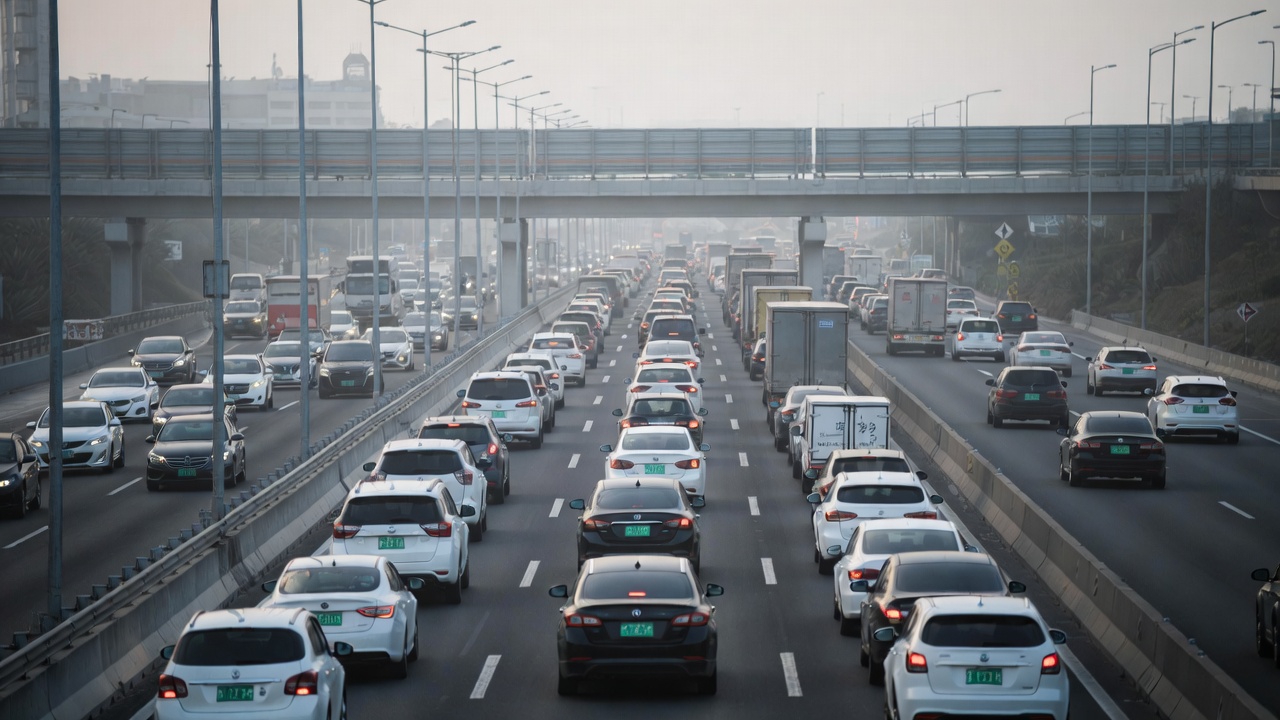
Road travel in private vehicles remains the dominant form of travel during Chunyun, accounting for approximately 80 percent of all cross-regional trips. This creates extraordinary pressure on China’s highway network.
Major congestion points include:
- Toll stations at provincial boundaries — These become severe bottlenecks. The infamous Wuzhuang Toll Station in Anhui features 36 lanes that compress into four lanes, creating traffic jams visible from aerial photography.
- Routes leading to major departure cities — The top 5 cities with the most departures are usually Guangzhou, Shenzhen, Beijing, Shanghai, and Hangzhou.
- Routes leading to major arrival cities — The top 5 cities with the most arrivals are usually Wuchang, Chongqing, Chengdu, Wuhan, and Zhengzhou.
Expected Wait Times and Traffic Jam Duration
During peak travel days, traffic conditions can deteriorate rapidly. This isn’t the longest jam China has seen; that title belongs to the 2010 Beijing–Tibet corridor mess that stretched roughly 100 km over 12 days. While such extreme situations are rare, multi-hour delays at toll stations are common during Chunyun.
Peak congestion periods to avoid:
| Direction | Peak Dates | Peak Hours |
|---|---|---|
| Outbound from cities | 1-3 days before New Year’s Eve | 8:00 AM – 2:00 PM |
| Homeward return | 3rd-5th day of New Year | 12:00 PM – 8:00 PM |
| Work return | 6th-7th day of New Year | All day |
Toll-Free Highway Policies During Spring Festival
One factor contributing to increased road traffic is China’s toll-free policy during major holidays. In 2012, the PRC government announced that national highways would be toll free for Golden Week, and as a result 86 million people traveled by road. This same policy applies during Spring Festival, encouraging more drivers to hit the road.
For foreigners, this means free toll passage during the official holiday period. However, it also means significantly heavier traffic. The savings on tolls may be offset by increased fuel consumption during traffic jams.
Can Foreigners Legally Drive in China During Chinese New Year?
Understanding Chinese Driving License Requirements for International Visitors
China does not recognize International Driving Permits (IDPs). This is a critical point that many foreign visitors misunderstand. China is not part of the international agreements that recognize IDPs. Mainland China didn’t sign on with the convention that created the IDP, and as such chose not to recognize it.
To legally drive in China, foreigners must obtain one of two types of Chinese driving licenses:
1. Temporary Driving Permit
- Valid for up to 90 days
- Can only be used for rental cars in the province where issued
- Does not require a written test
- Requires valid foreign driver’s license with certified Chinese translation
2. Full Chinese Driver’s License
- Valid for 6 years
- Requires a residence permit
- Requires passing a written theory exam (100 questions, 90% pass rate required)
- The test is available in English in big cities, like Beijing and Shanghai, but in smaller cities officials may require you do it in Chinese
Step-by-Step Process for Obtaining a Temporary Driving Permit
For short-term visitors wanting to drive during Chinese New Year, the temporary permit is the practical option.
Required documents:
- Valid passport with Chinese visa
- Original foreign driver’s license
- Certified Chinese translation of your driver’s license
- Proof of temporary residence (hotel booking or registration)
- Three passport-sized photos with white background
- Medical certificate (vision and color-blindness test)
Where to apply:
- Local Motor Vehicle Administration Office (车管所)
- Some major airports offer application services
- Processing typically takes a few hours to one day
Estimated costs: It will cost about 300-400 RMB ($43–$57) to obtain a temporary Chinese driver’s license. The total cost includes application, translation, notarisation, passport photo, and other miscellaneous fees.
Regional Limitations and Rental Restrictions
Even with a valid temporary permit, significant limitations apply:
- Rental cars cannot leave their designated administrative area. This significantly restricts long-distance travel plans.
- Many rental companies require a license valid for more than 180 days.
- Chinese credit cards or mobile payment (Alipay/WeChat Pay) are typically required for deposits.
- Many larger rental companies won’t rent to you if your license expires within a month.
Practical Challenges of Driving in China During Spring Festival
Road Safety Concerns Foreign Drivers Must Understand
Driving in China presents unique challenges even under normal circumstances. During Chunyun, these challenges intensify.
Traffic is chaotic and largely unregulated, and right-of-way and other courtesies are usually ignored. The average Chinese driver has fewer than five years of experience behind the wheel and the rate of traffic accidents in China, including fatal accidents, is among the highest in the world.
Key driving behaviors to expect:
- Aggressive lane changes — Drivers frequently change lanes without signals
- Red light compliance — Less strict than Western countries, especially for right turns
- Pedestrian right of way — Does not exist in practice; pedestrians must yield to vehicles
- Horn usage — Constant honking is normal communication, not aggression
- E-bike and scooter traffic — These vehicles operate unpredictably in urban areas
Navigation Challenges and Language Barriers
For foreign drivers, navigation presents additional difficulties:
GPS and mapping:
- Google Maps has limited functionality in China
- Baidu Maps and Amap are apps which can give the most accurate information for real-time traffic in China
- Both apps are primarily in Chinese, though Amap has an international version
Road signs:
- Traffic signs in China follow international conventions, but text is often written in Chinese (English translation will also be available in most places)
- Rural areas may have Chinese-only signage
- Important Chinese road sign terms to know:
- 限速 (Xiàn sù) — Speed Limit
- 禁止鸣笛 (Jìnzhǐ míng dí) — No Honking
- 让 (Ràng) — Yield
- 停车让行 (Tíngchē ràng xíng) — Stop & Give Way
Weather Hazards During the Chunyun Period
The Chunyun period falls during China’s winter season. Weather conditions can significantly impact road safety.
Regional weather concerns:
| Region | Common Hazards | Preparation Tips |
|---|---|---|
| Northern China | Snow, ice, sub-zero temperatures | Snow tires, emergency kit, anti-freeze |
| Central China | Freezing rain, fog | Reduce speed, increase following distance |
| Southern China | Heavy rain, flooding | Check weather forecasts, avoid low-lying areas |
| Western Mountains | Avalanches, road closures | Check road conditions before departure |
Severe snow storms in late January 2008 stranded many thousands of migrant workers as they attempted to get home. At one time over 100,000 people were at the main railway station in the southern city of Guangzhou.
High-Speed Rail Travel During Chinese New Year: A Foreigner’s Complete Guide
Why HSR Is Often the Best Choice for International Travelers
China’s high-speed rail network is the largest in the world, spanning over 45,000 kilometers. For foreigners traveling during Chunyun, HSR offers several advantages over driving:
Advantages of high-speed rail:
- Predictable travel times — Trains run on schedule regardless of road conditions
- No license required — Only passport needed
- Comfort — Modern trains with spacious seating
- Safety — Excellent safety record
- Speed — Up to 350 km/h on main routes
- Language support — Announcements in English on major routes
How Foreigners Can Book China High-Speed Train Tickets
Foreign passengers can book China train tickets on their own on the China Railway official website https://www.12306.cn/en/index.html. At present, www.12306.cn is the ONLY China Railway official website for China train tickets booking.
Booking options for foreigners:
| Platform | Language | Payment | Notes |
|---|---|---|---|
| 12306.cn (official) | English version available | Visa, MasterCard, JCB | Recommended official channel |
| Trip.com/Ctrip | English | International cards | User-friendly for foreigners |
| Klook | Multiple languages | Various international payments | Good customer service |
| Travel agencies | English | Various | Personal assistance available |
Important booking tips:
- Train tickets are priced according to demand, season, and time of travel. Fares on popular routes may increase during holidays and peak seasons
- Book as early as possible — tickets become available 15 days before departure
- You are recommended to book tickets early, especially when your departure date coincides with a Chinese festival or holiday
- Have backup dates and routes planned
Navigating Chinese Train Stations as a Foreign Passenger
Chinese railway stations operate differently from Western counterparts. Understanding the process will reduce stress during your journey.
Step-by-step station navigation:
- Arrive early — At least 90 minutes before departure during Chunyun
- Find the correct entrance — Large stations have multiple entries
- Security screening — Similar to airport security; all bags X-rayed
- ID verification — Your identity document must match that used when you booked your tickets. In larger stations with multiple security lines, there may be a designated channel for passengers using a passport
- Find your waiting area — Trains depart from specific gates
- Board the train — Gates open approximately 15 minutes before departure
Pro tips for foreigners:
- Automatic entrance gates still largely do not accept passports or may fail to read them properly. Look for the specific lane with an actual attendant if you’re in a hurry
- Keep your passport accessible throughout your journey
- Download the 12306 app for real-time updates
- Have your destination written in Chinese characters
Seat Classes and Price Comparison on Chinese Trains
Chinese high-speed trains offer multiple seat classes to suit different budgets and preferences.
| Seat Class | Chinese Name | Features | Price Range |
|---|---|---|---|
| Second Class | 二等座 | Standard seating, 3+2 configuration | Lowest |
| First Class | 一等座 | Wider seats, 2+2 configuration, more legroom | ~40% higher |
| Business Class | 商务座 | Fully reclining seats, meal included | ~100% higher |
| Premium | 特等座 | Similar to business, available on select trains | Varies |
Travelers are recommended to take high speed trains that are less crowded during the Spring Festival Rush. More standing room tickets on normal trains are sold than on the high speed ones, making their seat class carriages much more crowded.
Domestic Flight Options During Spring Festival Peak Travel
When Flying Makes More Sense Than Trains or Driving
For long-distance travel during Chunyun, domestic flights offer significant time savings. CAAC reports 94% regularity during Spring Festival 2025, indicating reliable operations even during the travel rush.
Consider flying when:
- Distance exceeds 1,500 kilometers
- Train tickets are unavailable
- Time is more valuable than money
- Traveling with significant luggage
- Destination lacks high-speed rail access
Major airlines serving domestic routes:
- Air China (CA) — Flag carrier, extensive network
- China Eastern (MU) — Shanghai hub
- China Southern (CZ) — Guangzhou hub
- Hainan Airlines (HU) — Strong domestic coverage
- Spring Airlines (9C) — Budget carrier
How to Book Domestic Flights in China as a Foreigner
There are multiple ways for foreign travelers to book domestic flights in China. Online bookings through airlines’ websites is one of the most efficient methods, and the best thing is, they usually offer English-language versions.
Recommended booking platforms:
- Trip.com/Ctrip — Most foreigner-friendly, accepts international cards
- Airline official websites — Direct booking, English available
- Fliggy (Alibaba) — Good prices, requires Alipay
- Airport counters — Last resort, long queues expected
Payment considerations:
Most airlines’ official websites and the major third-party platforms like Ctrip and Trip.com should be accepting payments made by international credit cards such as Visa, MasterCard, and American Express.
Chinese Airport Navigation Tips for International Travelers
Airports during Chunyun operate at peak capacity. Arriving well-prepared reduces stress and potential delays.
Pre-flight checklist:
- Arrive 2-3 hours before domestic departures
- Bring your passport (used for booking)
- Download airline app for boarding pass
- Prepare for thorough security screening
- Power banks must be 100Wh or less with 3C label (new rule June 2025)
Security screening notes:
Airlines in China are much more likely to ground flights due to weather than airlines in America. Don’t be surprised if a rainstorm throws off your flight plans.
Using Ride-Hailing Apps During Chinese New Year in China
DiDi: China’s Uber Alternative Explained for Foreign Users
DiDi Chuxing (滴滴出行) dominates China’s ride-hailing market. For foreigners, it offers a practical alternative to driving during Chunyun.
DiDi is China’s top ride-hailing app (like Uber) that foreigners can use with international phone numbers and credit cards. The English version lets you book cars, bikes, and even buses across most Chinese cities, with cashless payments via Visa/Mastercard or Alipay.
DiDi service tiers:
| Service | Chinese Name | Best For | Price Level |
|---|---|---|---|
| Express | 快车 | Budget travel | Lowest |
| Premier | 专车 | Comfort, airport trips | Mid-range |
| Luxe | 豪华车 | Business, luxury | Highest |
| Express Pool | 拼车 | Shared rides, savings | 30-50% less than Express |
Spring Festival Surge Pricing and Driver Availability
During Chunyun, DiDi experiences significant operational changes that foreign users should understand.
Hailing a DiDi won’t just take longer during the holiday season (with hailing success rate expected to fall 16 percent), it will also be more expensive, with the app automatically adding surcharge as a gratuity to the driver for sticking around and working during Spring Festival.
Surge pricing expectations:
- Surge pricing hits hard during rush hour. Avoid 7-9 AM and 5-7 PM when fares spike up to 2x
- Additional holiday surcharges of up to 9 RMB per ride
- Longer wait times, especially in residential areas
- Fewer drivers available as many return to hometowns
Cost-saving strategies:
- Travel during off-peak hours (10 AM – 4 PM weekdays)
- Use Express Pool for non-urgent trips
- Book in advance when possible
- Consider nearby pickup points to reduce wait times
- Start tipping drivers now. Rumor has it that the algorithm favors riders who tip regularly
Setting Up Payment Methods as a Foreign DiDi User
Payment setup is crucial for a smooth DiDi experience. Currently, DiDi supports all valid Debit Cards, Credit Cards and PayPal. DiDi does not support any cash payments.
Payment options:
- International credit/debit cards — Visa, MasterCard accepted
- Alipay — Link your international card to Alipay first
- WeChat Pay — Requires Chinese bank card for full functionality
- Apple Pay — Supported in app
Setup recommendations:
- Test your payment method before you need it urgently
- Have a backup payment option configured
- Enable auto-pay for seamless transactions
- Keep sufficient balance if using prepaid options
Comprehensive Comparison: Driving vs. Public Transport During Chunyun
Cost Analysis for Different Travel Scenarios
Understanding the true cost of each transport mode helps make informed decisions.
Example route: Shanghai to Chengdu (approximately 1,900 km)
| Transport Mode | Estimated Cost (RMB) | Time | Stress Level |
|---|---|---|---|
| Driving (own car) | 1,500-2,000 (fuel, tolls*) | 20-28 hours | Very High |
| Car rental + driving | 2,500-3,500 | 20-28 hours | Very High |
| High-speed rail | 800-1,500 | 11-14 hours | Low |
| Domestic flight | 1,000-3,000 | 3 hours (+ airport time) | Medium |
*Tolls may be waived during official holiday period
Time Efficiency: When Each Option Wins
Choose driving when:
- Traveling with family and significant luggage
- Destination lacks public transport access
- Flexible schedule with no time pressure
- Route includes multiple scenic stops
- You have a valid Chinese driving license
Choose high-speed rail when:
- Travel distance is 300-1,500 km
- Punctuality is essential
- Traveling alone or with small group
- Want to work or rest during travel
- First time navigating Chinese New Year travel
Choose flying when:
- Distance exceeds 1,500 km
- Time is the priority
- Connecting to international flights
- Route lacks direct rail service
- Budget allows for premium option
Safety Considerations for Each Transport Mode
Safety should factor into your transport decision, especially during the chaotic Chunyun period.
Road safety concerns:
- The rate of traffic accidents in China, including fatal accidents, is among the highest in the world
- Fatigue from long driving hours increases risk
- Unpredictable behavior from stressed drivers
- Weather-related hazards during winter
Rail safety:
- Excellent safety record on high-speed trains
- Regulated operations with strict protocols
- No driver fatigue factor
- Weather generally doesn’t affect schedules
Air safety:
- Chinese carriers maintain good safety standards
- More susceptible to weather delays
- Airport congestion can be stressful
- Luggage restrictions apply
Regional Travel Guide: Best Transport Options by Destination
Traveling from Beijing During Spring Festival
Beijing serves as a major departure point during Chunyun. Understanding your options from the capital maximizes travel efficiency.
Popular routes from Beijing:
| Destination | Recommended Transport | Travel Time | Notes |
|---|---|---|---|
| Shanghai | High-speed rail | 4-5.5 hours | Most convenient option |
| Xi’an | High-speed rail | 4-6 hours | Terracotta Warriors access |
| Harbin | High-speed rail/Flight | 5-9 hours/2 hours | Ice Festival season |
| Guangzhou | Flight | 3 hours | Rail takes 8+ hours |
| Chengdu | Flight | 2.5 hours | Rail takes 8+ hours |
Beijing station options:
- Beijing South (北京南) — Primary HSR station
- Beijing West (北京西) — Long-distance trains
- Beijing Railway Station (北京站) — Various routes
Big cities often have multiple high-speed rail stations. For example, Beijing has Beijing South (北京南), Beijing West (北京西), and Beijing Railway Station (北京站). Always verify your departure station on your ticket.
Traveling from Shanghai During Spring Festival
Shanghai’s two airports and multiple rail stations offer numerous departure options.
Key Shanghai transport hubs:
- Shanghai Hongqiao Railway Station — Primary HSR hub, connected to Hongqiao Airport
- Shanghai Railway Station — Some long-distance services
- Shanghai Pudong International Airport — International and domestic flights
- Shanghai Hongqiao International Airport — Primarily domestic
Shanghai departure tip: Travel from Shanghai Hongqiao station allows easy connection to nearby Hongqiao Airport if plans change.
Traveling from Guangdong Province (Guangzhou/Shenzhen)
Southern China sees massive outbound traffic during Chunyun as migrant workers head north.
The top 10 busiest routes included Beijing–Harbin, Beijing–Xi’an, Beijing–Wuhan, Beijing–Zhengzhou, Guangzhou–Wuhan, Guangzhou–Chongqing, Guangzhou–Zhengzhou, Guangzhou–Changsha, Shenzhen–Zhengzhou, and Shanghai–Xi’an.
Strategies for leaving Guangdong:
- Book train tickets 15 days in advance
- Consider departing 1-2 days before peak
- Flying may offer better availability for remote destinations
- Night trains can avoid daytime crowds
Practical Tips for Surviving Chunyun as a Foreign Traveler
Essential Apps and Digital Tools to Download
Prepare your smartphone before traveling during Chinese New Year.
Must-have apps:
- 12306 — Official train booking and tracking
- DiDi — Ride-hailing services
- Ctrip/Trip.com — Multi-modal booking platform
- Baidu Maps or Amap — Navigation with real-time traffic
- WeChat — Communication, payment, mini-programs
- Alipay — Payment, services for foreigners
- Translation apps — Google Translate or Baidu Translate
Packing Essentials for Holiday Travel in China
Extended travel during Chunyun requires thoughtful preparation.
For all transport modes:
- Valid passport with appropriate visa
- Phone with essential apps installed
- Portable charger (power banks under 100Wh for flights)
- Snacks and water (lines can be long)
- Cash as backup payment
- Warm clothing (winter season)
For driving:
- Chinese driver’s license (temporary or full)
- Rental contract and insurance documents
- Paper maps as GPS backup
- Emergency kit (first aid, flashlight, blanket)
- Snacks and drinks for traffic jams
Understanding Holiday Schedule and Business Closures
China essentially pauses during the Spring Festival holiday. Planning around closures prevents inconvenience.
Typical closure schedule:
| Business Type | Closure Period | Notes |
|---|---|---|
| Banks | 5-7 days | ATMs remain operational |
| Government offices | 7-9 days | No services available |
| Restaurants | Varies widely | Many close, tourist areas stay open |
| Tourist attractions | Often open | May have reduced hours |
| Public transport | Operating | Increased frequency on peak days |
| Shops and malls | Varies | Major chains often open |
Peak crowding periods:
- 3-5 days before New Year’s Eve — Outbound peak
- New Year’s Eve and Day 1-2 — Relatively quiet
- Days 3-7 — Tourism peaks, return travel begins
- Days 8-10 — Massive return-to-work migration
Safety and Emergency Information for Foreign Travelers
Emergency Contacts and Services in China
Having emergency information readily available is essential during travel.
Important numbers:
- Police: 110
- Fire: 119
- Medical: 120
- Traffic accidents: 122
- General emergency: 112 (connects to local services)
For foreigners:
- Nearest embassy or consulate contact
- International SOS or travel insurance hotline
- Hotel emergency contact
What to Do If Stranded or Delayed
Extended delays can occur during Chunyun. Having a plan reduces stress.
If your train is delayed or canceled:
- Check the 12306 app for updates
- Visit the service counter for rebooking
- Request meal vouchers for long delays
- Consider alternative routes or transport modes
If stuck in traffic:
- Remain calm and patient
- Keep the engine running for heat/AC in extreme weather
- Have emergency supplies accessible
- Use navigation apps to find alternative routes
- Consider exiting the expressway at the nearest interchange and using national or provincial highways as alternatives
If flight is delayed or canceled:
- Flight delay compensation: 4–8 hours → airline supplies meal + ¥200 cash/e-credit; ≥8 hours → ¥400 (airline-caused). Weather/ATC delays: only meals/hotel
- Check airline app for rebooking options
- Visit airline service counter
- Keep receipts for expense reimbursement claims
Conclusion: Making the Right Transport Choice for Your Chinese New Year Journey
The Chinese New Year travel period presents unique challenges for foreign visitors and residents alike. The sheer scale of movement — 9.03 billion trips during the 40-day period — creates conditions unlike anything experienced elsewhere in the world.
Key takeaways for foreign travelers:
- Plan far in advance — Book trains and flights 15+ days before travel
- Understand your transport options — Each mode has distinct advantages
- Driving requires significant preparation — License, navigation, and patience
- High-speed rail is often optimal — Reliable, comfortable, and foreigner-friendly
- Flexibility is essential — Have backup plans for delays or cancellations
- Embrace the experience — Chunyun reflects deep cultural values worth observing
For most foreign travelers, high-speed rail represents the best balance of cost, convenience, safety, and reliability. The network’s extensive coverage, predictable schedules, and English-language support make it accessible even during the busiest travel season.
However, there is no one-size-fits-all answer. Your specific circumstances — destination, budget, group size, and travel experience in China — should guide your decision.
Whatever transport mode you choose, approaching the journey with patience, preparation, and cultural awareness will transform a potentially stressful trip into an unforgettable experience. The Chunyun represents more than just logistics. It embodies the Chinese people’s profound connection to family and tradition. Participating in this annual migration, even as a foreign observer, offers insight into Chinese culture that no tourist attraction can match.
新年快乐! (Xīn nián kuài lè!) — Happy New Year!
Frequently Asked Questions About Chinese New Year Travel for Foreigners
Can foreigners drive in China with an International Driving Permit?
No. China does not recognize International Driving Permits. You must obtain a temporary Chinese driving permit (valid up to 90 days) or a full Chinese driver’s license to drive legally in mainland China.
How far in advance should I book train tickets during Chunyun?
Train tickets become available exactly 15 days before departure. Set reminders and book immediately when tickets release. Popular routes sell out within minutes during peak travel days.
Is it possible to get train tickets if I didn’t book in advance?
Possible but difficult. Standing room tickets may be available. Check the 12306 app frequently for cancellations. Consider alternative dates, routes, or transport modes.
Are DiDi and other ride-hailing apps reliable during Chinese New Year?
Services remain available but with reduced driver availability, longer wait times, and surge pricing. Expect to pay more and wait longer than normal.
What happens if my train or flight is canceled due to weather?
Free rebooking or refunds are typically provided for weather-related cancellations. Check your booking platform or airline for specific policies. Keep receipts for any expenses incurred.
Should I avoid traveling during Chinese New Year entirely?
Not necessarily. While challenging, experiencing Chunyun provides unique cultural insight. With proper planning, travel is manageable. The period immediately around New Year’s Eve (Days 1-3) tends to be quieter for long-distance travel.
Additional Resources and Cultural Context for Foreign Travelers
Understanding Why Chinese People Travel During Spring Festival
To fully appreciate the Chunyun phenomenon, foreigners should understand the cultural drivers behind this massive movement. The Spring Festival is not merely a holiday. It represents the most important occasion in the Chinese cultural calendar.
Cultural factors driving travel:
Filial piety (孝道 Xiàodào): This Confucian virtue places paramount importance on respect for parents and ancestors. Returning home to be with elderly parents during Spring Festival demonstrates this respect. For many migrant workers, this may be the only opportunity all year to see aging parents or young children left behind in villages.
Ancestor worship: Many families conduct rituals to honor ancestors during the New Year period. These ceremonies typically must be performed at the ancestral home, necessitating travel regardless of distance.
The reunion dinner (年夜饭 Nián Yè Fàn): This meal on New Year’s Eve holds almost sacred significance. Families gather to share special dishes with symbolic meanings. Being absent from this dinner can be seen as a serious breach of family obligation.
New year blessings: Children traditionally receive red envelopes (红包 Hóngbāo) containing money from elders. Grandparents often save their gifts to present in person, creating additional incentive for family visits.
The Phenomenon of “Reverse Chunyun” and How It Affects Travelers
In recent years, a new trend has emerged that foreign travelers should understand.
What is reverse Chunyun?
Traditionally, Chunyun involved workers traveling from cities to rural hometowns. Now, increasingly, elderly parents travel to visit their adult children in cities. This “reverse migration” offers several advantages:
- Avoids the most crowded travel routes
- Allows younger workers to avoid missing work
- Gives grandparents a chance to see city life
- Often results in easier ticket availability
Implications for foreign travelers:
If you must travel during Chunyun, consider routes that run counter to the main flow. Traveling INTO major cities during the pre-New Year period may be easier than traveling OUT. Similarly, leaving cities during the return period may offer better availability.
Regional Celebrations and Their Impact on Local Transport
China’s diverse regions celebrate Spring Festival with varying traditions. Understanding these differences helps foreign travelers plan more effectively.
Northern China:
- Traditional celebrations with emphasis on dumplings (饺子)
- Cold weather makes outdoor activities challenging
- Indoor gatherings mean less daytime traffic in some areas
- Ice and snow festivals draw tourists to Harbin
Southern China:
- Cantonese traditions include special foods and temple visits
- Warmer weather allows for outdoor celebrations
- Major flower markets create localized traffic congestion
- Hong Kong and Macau have distinct celebration patterns
Western China:
- Ethnic minority regions may celebrate differently
- Some areas have alternative festivals
- Lower migration volumes due to geographic isolation
- Scenic areas attract domestic tourists
Technology Tips for Navigating Chinese New Year Travel
Modern technology has transformed Chunyun travel. Foreigners should leverage these tools effectively.
Essential mobile payment setup:
Before traveling during Chinese New Year, ensure your mobile payment systems are functioning:
- Alipay Tour Pass: Overseas users can directly bind overseas bank cards such as Visa and Mastercard in the Alipay App. This enables payment at most Chinese merchants.
- WeChat Pay: More challenging for foreigners without Chinese bank cards. However, the mini-program within WeChat allows access to some services including DiDi.
- Cash as backup: Despite China’s digital payment dominance, cash remains accepted. Carry sufficient RMB for emergencies.
Communication tools:
- WeChat is essential for communication within China
- A VPN may be needed for accessing Western services
- Download offline translation packs before traveling
- Save important addresses and phone numbers in Chinese
Weather Patterns and How They Affect Chunyun Travel
The timing of Chinese New Year coincides with winter weather, which significantly impacts travel conditions.
Historical weather disruptions:
The most severe recent disruption occurred in 2008 when massive snow storms stranded hundreds of thousands of travelers. Similar events, though less severe, occur periodically. Understanding weather risks helps foreign travelers prepare contingency plans.
Weather monitoring recommendations:
- Check forecasts daily during your travel period
- Follow official announcements on road and rail conditions
- Have alternative routes and dates planned
- Consider travel insurance covering weather delays
- Pack appropriate cold weather gear regardless of destination
Regional weather patterns during Chunyun:
| Region | Typical Conditions | Risk Level |
|---|---|---|
| Northeast | Severe cold, snow common | High |
| North China | Cold, occasional snow | Medium-High |
| Central China | Freezing rain, fog | Medium |
| South China | Cool, rain possible | Low-Medium |
| Southwest | Variable, elevation dependent | Medium |
Cultural Etiquette for Foreign Travelers During Spring Festival
Interacting with Chinese people during the New Year period requires cultural awareness.
Greetings and phrases:
- 新年快乐 (Xīn nián kuài lè) — Happy New Year
- 恭喜发财 (Gōngxǐ fācái) — Wishing you prosperity
- 春节快乐 (Chūnjié kuài lè) — Happy Spring Festival
- 万事如意 (Wànshì rúyì) — May everything go your way
Do’s and Don’ts:
Do:
- Accept red envelopes graciously if offered
- Show interest in Spring Festival traditions
- Be patient with holiday crowds and delays
- Wish people “Happy New Year” when appropriate
Don’t:
- Open red envelopes in front of the giver
- Give gifts in sets of four (unlucky number)
- Wear predominantly white or black (funeral colors)
- Complain about the crowds — locals find this insensitive
Planning Your Return Journey After Spring Festival
The return journey often proves more challenging than the outbound trip. Foreign travelers should prepare specifically for this phase.
Peak return periods:
The biggest return migration occurs between days 5-7 of the New Year, when workers begin heading back to their jobs. A second peak occurs around day 15 (Lantern Festival) when schools and some businesses resume.
Return journey strategies:
- Depart earlier: Leave before the main return rush
- Depart later: Wait until after day 10 when crowds thin
- Book return tickets immediately: Don’t wait until you’re ready to return
- Flexible arrangements: Keep options open for multiple dates
- Consider non-peak times: Night trains or early morning flights
Budget Planning for Chinese New Year Travel
Traveling during Chunyun typically costs more than off-peak periods. Foreign travelers should budget accordingly.
Typical price increases:
| Category | Normal Period | Chunyun Period | Increase |
|---|---|---|---|
| Domestic flights | Base fare | 1.5-3x base | 50-200% |
| Hotels (tourist cities) | Standard rate | 1.5-2x rate | 50-100% |
| DiDi/ride-hailing | Standard fare | Surge pricing | 20-100% |
| Train tickets | Fixed pricing | Fixed pricing | 0%* |
*Train fares remain regulated, but availability becomes the challenge.
Money-saving strategies:
- Book transportation weeks in advance
- Consider travel insurance for peace of mind
- Stay in residential areas rather than tourist zones
- Use public transport when possible
- Take advantage of toll-free highway periods if driving
- Eat at local restaurants rather than tourist establishments