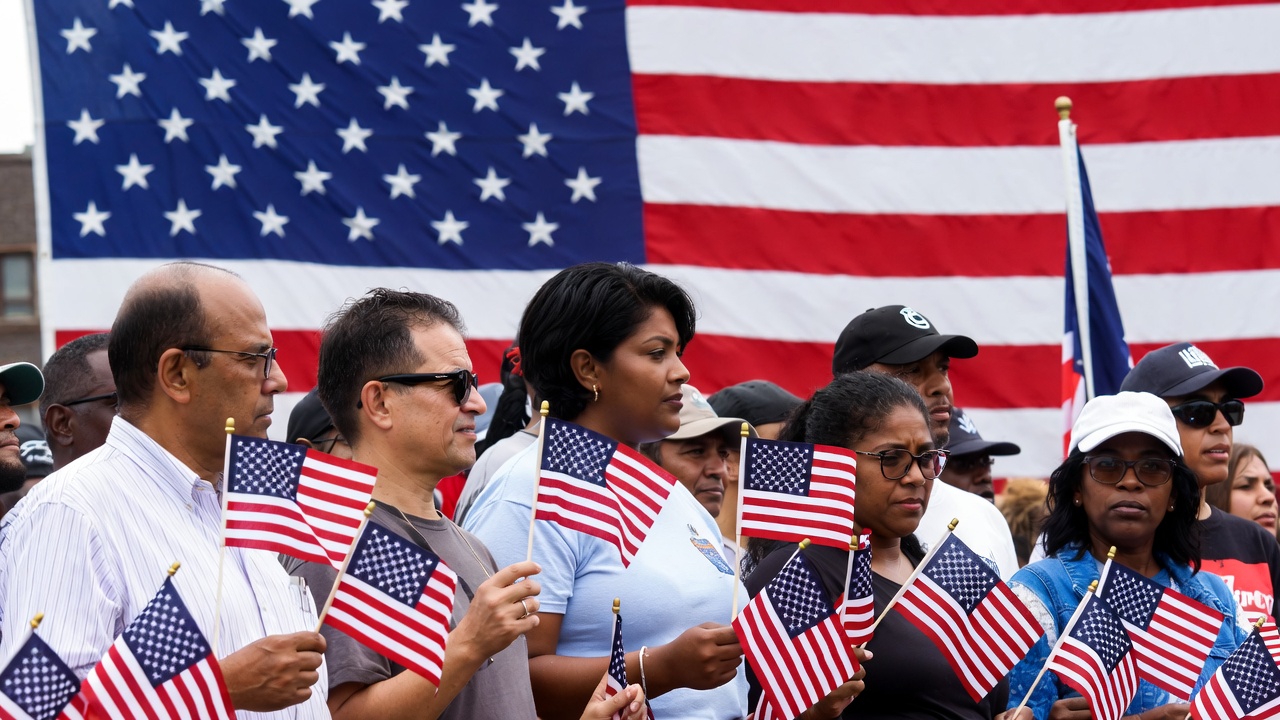
On Thursday, September 17, 2026, Americans across the nation will pause to honor two inseparable traditions at once: the signing of the United States Constitution and the civic identity that document forged for every citizen. This year, Citizenship Day carries an especially resonant charge. It falls during the nation’s landmark Semiquincentennial—the 250th anniversary of American independence. From naturalization ceremonies in federal courthouses to Constitution Week programming in classrooms, September 17 is a day that invites all Americans to reconnect with the rights, responsibilities, and remarkable history that define civic life in the United States.
This guide walks you through everything you need to know about Citizenship Day 2026—its history, its deep ties to Constitution Day, the rights guaranteed by the Constitution, and how you can take part in the celebrations this September.
What Is Citizenship Day and Why Is It Celebrated on September 17?
Citizenship Day is a federally recognized observance held every year on September 17. It honors two things at once. First, it marks the anniversary of the signing of the U.S. Constitution on September 17, 1787, in Philadelphia. Second, it celebrates everyone who has become an American citizen—whether by birth or through naturalization.
The date is not a coincidence. September 17 was chosen because it is the exact day that delegates to the Constitutional Convention put their names to the finished document. That single act created the legal framework for everything Americans understand about governance, liberty, and individual rights. By tying Citizenship Day to this date, Congress ensured that the celebration of the document and the celebration of the people it protects would always be one and the same.
Citizenship Day is not a federal public holiday. Government offices, businesses, and schools remain open. However, it is an official observance that the president may acknowledge through a proclamation each year. More importantly, federal law requires every educational institution that receives federal funding to hold a program about the U.S. Constitution on September 17. Federal agencies must also provide educational materials about the Constitution to their employees on this day. If September 17 falls on a weekend or another holiday, the program must take place on the nearest weekday.
In 2026, September 17 falls on a Thursday, making it straightforward for schools and agencies to plan their observances on the actual date.
The Complete History of Citizenship Day in the United States
The road to Citizenship Day as we know it involved several name changes, congressional resolutions, and decades of civic advocacy.
The Origins: “I Am an American Day” (1940)
The idea of a national day to celebrate citizenship was championed by William Randolph Hearst, the newspaper magnate, in 1939. Hearst believed that the country needed a formal occasion to honor the privileges and duties of being American.
His advocacy paid off quickly. In 1940, Congress passed a joint resolution and President Franklin D. Roosevelt signed it into law. The new observance was called “I Am an American Day,” and it was celebrated on the third Sunday in May. The day focused on recognizing newly naturalized citizens and encouraging civic education.
The Shift to September: Citizenship Day (1952)
The observance changed names and dates a little over a decade later. On February 29, 1952, President Harry S. Truman signed a law renaming the holiday “Citizenship Day” and moving it from May to September 17. The new date aligned the celebration with the anniversary of the Constitution’s signing, forging the connection between citizen and document that persists today.
Constitution Week Enters the Picture (1956)
Four years later, Congress expanded the observance further. On August 2, 1956, lawmakers requested that the president proclaim the week of September 17 through September 23 each year as “Constitution Week.” This gave educators, civic groups, and community leaders an entire week to plan programming around the Constitution.
The Modern Name: Constitution Day and Citizenship Day (2004)
The final evolution came through the Consolidated Appropriations Act of 2005, signed into law in December 2004. An amendment introduced by the late Senator Robert Byrd of West Virginia renamed the September 17 observance to its current title: “Constitution Day and Citizenship Day.”
The same legislation included the pivotal mandate requiring federally funded schools and agencies to hold educational programs about the Constitution each September 17. The U.S. Department of Education is responsible for implementing this requirement.
| Year | Event | Key Change |
|---|---|---|
| 1939 | William Randolph Hearst advocates for a citizenship day | Civic momentum begins |
| 1940 | Congress creates “I Am an American Day” | Observed on the third Sunday in May |
| 1952 | Renamed “Citizenship Day” by President Truman | Moved to September 17 |
| 1956 | Congress establishes “Constitution Week” | September 17–23 designated |
| 2004 | Renamed “Constitution Day and Citizenship Day” | Federal education mandate added |
How Constitution Day and Citizenship Day Are Connected in Federal Law
Although people sometimes refer to “Constitution Day” and “Citizenship Day” as though they are separate occasions, they are legally the same observance. The governing statute is 36 U.S.C. § 106, which states:
“September 17 is designated as Constitution Day and Citizenship Day.”
The law goes on to describe the purpose of the combined holiday:
“Constitution Day and Citizenship Day commemorate the formation and signing on September 17, 1787, of the Constitution and recognize all who, by coming of age or by naturalization, have become citizens.”
In other words, the Constitution is not treated as an abstract document. It is framed as the living instrument through which citizens gain their rights. The law explicitly ties the document to the people it was designed to serve. That is why every naturalization ceremony—the final step in becoming an American citizen—includes an oath to support and defend the Constitution.
The statute also grants the president authority to call on government officials to display the American flag on all government buildings on this day. It urges state and local authorities to plan observances that instruct citizens in “their responsibilities and opportunities” as Americans.
Why 2026 Is a Landmark Year for Citizenship Day Celebrations
America’s 250th Anniversary and the Spirit of Civic Renewal
Citizenship Day 2026 arrives in the middle of a year unlike any other in American history. On July 4, 2026, the nation will celebrate the 250th anniversary of the Declaration of Independence—an event known as the Semiquincentennial or America250.
The celebrations began in earnest in 2025 and will continue throughout 2026. According to the America250 initiative, the goal is to engage all 350 million Americans in reflecting on the nation’s past and looking toward its future. The initiative has launched programs such as “America’s Invitation” (a storytelling project), “America’s Field Trip” (a student contest), and “America Gives” (a nationwide volunteer service drive).
Philadelphia—the city where the Constitution was both drafted and signed—is at the heart of these celebrations. The National Constitution Center is opening new galleries, and the Museum of the American Revolution is hosting major exhibitions throughout 2026. The Smithsonian Institution’s “Our Shared Future: 250” spans its 21 museums, the National Zoo, and over 200 affiliate locations nationwide.
This means that Citizenship Day on September 17, 2026 will not be an ordinary observance. It will unfold within a broader national conversation about American identity, governance, and the meaning of the Constitution in the modern era.
The 239th Anniversary of the Constitution’s Signing
September 17, 2026, also marks exactly 239 years since the delegates signed the Constitution in Independence Hall. While not a round-number anniversary in the way that the Declaration’s 250th is, it is still a milestone. With public attention already trained on American founding principles, the 239th anniversary offers a powerful opportunity to explore the Constitution itself—the document that turned revolutionary ideals into a practical system of governance.
Understanding the US Constitution: The Foundation of American Rights
To grasp why Citizenship Day matters, you need to understand the document at its center.
How the Constitution Was Written and Signed in 1787
In the sweltering summer of 1787, 55 delegates gathered at Independence Hall in Philadelphia for what became known as the Constitutional Convention. Their original mandate was narrow: to revise the Articles of Confederation, the loose framework that had governed the newly independent states. But the delegates quickly realized that patching the old system would not be enough. They chose a bolder path and drafted an entirely new document.
George Washington presided over the Convention. James Madison—often called the “Father of the Constitution”—drafted the initial plan that became the basis for debate. Not every Founding Father was present. Thomas Jefferson was serving as ambassador to France. John Adams was on diplomatic duty in England. Patrick Henry refused to attend, preferring the Articles of Confederation.
After months of debate, compromise, and revision, the delegates signed the Constitution on September 17, 1787. By June 21, 1788, the Constitution went into effect after nine of the 13 original states ratified it.
The Structure of the Constitution: Articles and Amendments
The Constitution begins with its famous preamble—“We the People of the United States, in Order to form a more perfect Union…”—and is organized into seven articles followed by 27 amendments.
The Seven Articles:
- Article I establishes Congress (the Senate and the House of Representatives) and its powers.
- Article II creates the executive branch and the office of the President.
- Article III sets up the judicial branch and the Supreme Court.
- Article IV addresses the relationship between states.
- Article V describes how the Constitution can be amended.
- Article VI establishes the Constitution as the supreme law of the land.
- Article VII outlines the ratification process.
The original document was intentionally designed with a system of checks and balances. No single branch of government can act without oversight from the others. This architecture was the Founders’ safeguard against the kind of concentrated power they had experienced under the British monarchy.
The Bill of Rights Explained: First 10 Amendments That Protect US Citizens
The first 10 amendments to the Constitution, known collectively as the Bill of Rights, were ratified on December 15, 1791. They represent the most direct and personal protections the Constitution offers to individuals.
The Bill of Rights was not part of the original Constitution. Many delegates at the Convention believed it was unnecessary, arguing that the Constitution itself limited government power enough to protect individual liberty. Others, particularly the Anti-Federalists, disagreed. They feared that without explicit protections, the new federal government could become as tyrannical as the monarchy the colonies had just overthrown.
To win ratification from skeptical states, James Madison proposed a set of amendments drawn from state bills of rights, the Virginia Declaration of Rights (1776), and the English Bill of Rights (1689). Congress approved 12 amendments and sent them to the states. Ten were ratified, becoming the Bill of Rights.
Here is what each amendment protects:
| Amendment | Protection |
|---|---|
| First | Freedom of religion, speech, the press, assembly, and the right to petition the government |
| Second | The right to keep and bear arms |
| Third | Protection against quartering soldiers in private homes |
| Fourth | Protection against unreasonable searches and seizures |
| Fifth | Right to due process, protection against double jeopardy and self-incrimination |
| Sixth | Right to a speedy and public trial by jury, right to counsel |
| Seventh | Right to a jury trial in civil cases |
| Eighth | Protection against excessive bail, fines, and cruel and unusual punishment |
| Ninth | Rights not listed in the Constitution are still retained by the people |
| Tenth | Powers not given to the federal government are reserved to the states or the people |
These 10 amendments form the bedrock of American civil liberties. They are the reason a citizen can speak freely, practice any religion, own firearms, demand a fair trial, and live secure in their home. For new citizens taking the naturalization oath, these protections are not abstract principles—they are tangible, life-changing guarantees.
Key Constitutional Amendments That Expanded US Citizenship Rights
The Bill of Rights was just the beginning. Over the following two centuries, 17 additional amendments were ratified, bringing the total to 27 amendments. Several of these later amendments dramatically expanded who could participate in American democracy.
The Reconstruction Amendments: Ending Slavery and Guaranteeing Equal Protection
Three amendments ratified in the aftermath of the Civil War fundamentally reshaped American citizenship:
- 13th Amendment (1865): Abolished slavery throughout the United States.
- 14th Amendment (1868): Granted citizenship to all persons born or naturalized in the United States and guaranteed equal protection under the law. This amendment became the foundation for countless civil rights rulings.
- 15th Amendment (1870): Prohibited the denial of voting rights based on race, color, or previous condition of servitude.
Expanding the Vote: Women’s Suffrage, Youth Voting, and the Abolition of Poll Taxes
Other amendments focused specifically on expanding the right to vote:
- 19th Amendment (1920): Granted women the right to vote.
- 24th Amendment (1964): Banned poll taxes in federal elections, removing a financial barrier that had disproportionately affected Black voters in the South.
- 26th Amendment (1971): Lowered the voting age from 21 to 18.
The Most Recent Amendment
The 27th Amendment, ratified in 1992, addresses congressional pay. It states that no law changing the compensation of members of Congress can take effect until after the next election of representatives. Remarkably, this amendment was originally proposed on September 25, 1789—the same batch that included the Bill of Rights—but it took 203 years to be ratified because it contained no deadline.
Since 1992, no new amendment has been added. According to the National Constitution Center, nearly 12,000 measures to amend the Constitution have been introduced in Congress since 1789, but only 33 have ever been sent to the states for ratification—and only 27 of those succeeded. That gives any proposed amendment roughly a 0.23% chance of becoming law.
How the Naturalization Process Works: Becoming a US Citizen in 2026
Citizenship Day is not only about those who are citizens by birth. It also honors the hundreds of thousands of people who become Americans through naturalization each year.
Eligibility Requirements for US Naturalization
To naturalize, a person must generally meet the following requirements under the Immigration and Nationality Act (INA):
- Be a lawful permanent resident (green card holder) for at least 5 years (or 3 years if married to a U.S. citizen).
- Have been physically present in the United States for at least 30 months out of the 5-year period.
- Be at least 18 years old.
- Demonstrate good moral character.
- Pass an English language test (reading, writing, and speaking).
- Pass a civics test covering U.S. history and government.
- Show attachment to the principles of the U.S. Constitution.
The final step in naturalization is the most meaningful: taking the Oath of Allegiance in a public ceremony. New citizens swear to support and defend the Constitution and laws of the United States. Many of these ceremonies are held in federal courthouses, national landmarks, and even baseball stadiums.
Naturalization by the Numbers: FY 2024 Statistics
The most recent comprehensive data comes from fiscal year 2024. According to U.S. Citizenship and Immigration Services (USCIS), the numbers tell a powerful story:
| Statistic | FY 2024 Figure |
|---|---|
| Total new citizens naturalized | 818,500 |
| Change from previous year | –7% (down from 878,500 in FY 2023) |
| 3-year total (FY 2022–2024) | Over 2.6 million |
| Comparison to pre-pandemic average (2010–2019) | +12% above the 730,100 annual average |
| Top country of origin | Mexico (13.1%) |
| Second country of origin | India (6.1%) |
| Third country of origin | Philippines (5.5%) |
| Median age of new citizens | 42 years |
| Percentage who were women | Over 55% |
| Number of centenarian new citizens | 23 |
| Top state of residence | California |
These figures highlight the breadth and diversity of the naturalization system. People from every continent, of every age, and from all walks of life continue to pursue American citizenship in extraordinary numbers.
What Is Happening with Naturalization in 2025 and 2026?
The landscape for naturalization has been shifting. According to a Congressional Research Service report updated in September 2025, the median processing time for the N-400 naturalization application was 5.5 months in the first nine months of FY 2025—a major improvement from 11.5 months in FY 2021.
However, the environment has also become more complex. As of March 31, 2025, approximately 536,000 naturalization applications were pending with USCIS. A Niskanen Center analysis of January 2026 data found that naturalization filings surged by 109% in October 2025 compared to the same month the prior year. This spike was likely driven by a new naturalization civics test announced in September 2025, which took effect for applications filed after October 20, 2025.
In June 2025, the Department of Justice issued a memo identifying denaturalization proceedings—the legal process of revoking citizenship—as an enforcement priority. And in August 2025, USCIS issued updated guidance instructing officers to weigh applicants’ positive attributes, such as community involvement and family ties, alongside any negative factors during good moral character evaluations.
Despite the policy shifts and processing challenges, naturalization ceremonies continue to take place across the country. In January 2026, NPR reported attending three ceremonies in the Washington, D.C. area where new citizens from dozens of countries took the oath—a reminder that the path to citizenship, while sometimes difficult, remains deeply meaningful for those who walk it.
What Rights Do US Citizens Have Under the Constitution?
The Constitution grants a distinct set of rights and privileges to citizens that non-citizens do not fully share. Understanding these rights is central to the purpose of Citizenship Day.
Rights Exclusive to US Citizens
- The right to vote in federal, state, and local elections.
- The right to run for federal office (with specific age and residency requirements).
- The right to serve on a federal jury.
- Protection from deportation. A naturalized citizen enjoys the same protection from removal as a citizen by birth.
- The right to apply for federal employment in positions that require citizenship.
- The ability to sponsor family members for immigration to the United States.
Rights Shared by All Persons in the United States
The Constitution also protects certain rights for all persons on U.S. soil, regardless of citizenship status:
- Freedom of speech, religion, and the press (First Amendment).
- The right to due process and equal protection under the law (Fifth and Fourteenth Amendments).
- Protection from unreasonable searches and seizures (Fourth Amendment).
- The right to counsel in criminal proceedings (Sixth Amendment).
This distinction matters. The Constitution is not a document that only serves citizens. Many of its protections extend to every person within the nation’s borders. But citizenship unlocks a set of participatory rights—especially the right to vote—that give individuals a direct voice in how the country is governed.
How to Celebrate Constitution Day and Citizenship Day 2026
Whether you are a lifelong citizen, a new American, an educator, or simply someone who cares about civic life, there are many ways to mark this observance.
Attend a Naturalization Ceremony Near You
One of the most moving ways to observe Citizenship Day is to attend a naturalization ceremony. These public events are held in federal courthouses and other venues across the country. Watching dozens of people from different nations take the oath together is a powerful experience. The National Constitution Center in Philadelphia hosts an annual ceremony where 50 immigrants take the Oath of Allegiance in front of the public.
Visit a National Museum or Historic Site
The Smithsonian Institution is running its “Our Shared Future: 250” initiative across all 21 museums in 2026. The National Archives in Washington, D.C., where the original Constitution is on permanent display, offers Constitution Day-specific programming, educational resources, and even the chance to virtually “sign” the Constitution on their website.
In Philadelphia, the National Constitution Center offers interactive exhibits, Constitution 101 courses, and special programming throughout Constitution Week. The Museum of the American Revolution is also presenting major exhibitions tied to the Semiquincentennial.
Use Free Classroom and Community Resources
The Center for Civic Education provides free lesson plans on Constitution Day topics at every grade level. The U.S. Courts offer activities such as “Civil Discourse and the Constitution,” a 50-minute program in which students have conversations with federal judges and volunteer lawyers.
For families, the National Archives provides downloadable eBooks, primary source activities, and video resources. USCIS also offers a free mobile app—“USCIS: Civics Test Study Tools”—that lets anyone quiz themselves on the 100 questions from the naturalization civics exam.
Read the Constitution Yourself
It sounds simple, but it is perhaps the most fitting observance of all. The full text of the Constitution is available online through the National Archives, the National Constitution Center, and the Library of Congress. Pocket-sized printed copies are also widely available at bookstores and educational supply shops.
The Constitution is a short document—about 4,543 words in its original form, making it one of the shortest national constitutions in the world. Reading it takes less time than most people expect, and it offers a direct connection to the values that Citizenship Day was created to celebrate.
Constitution Week 2026: Events, Activities, and Key Dates
Constitution Week runs from September 17 through September 23, 2026. Here are the key dates and opportunities during this week:
| Date | Day | Observance / Activity |
|---|---|---|
| September 17 | Thursday | Constitution Day and Citizenship Day — Educational programs in schools, naturalization ceremonies nationwide |
| September 17–23 | Thursday–Wednesday | Constitution Week — Community events, lectures, museum programs |
| September 17 | Thursday | National Constitution Center annual naturalization ceremony (Philadelphia) |
| Throughout Week | — | USCIS naturalization ceremonies across the country |
| Throughout Week | — | Federal agencies provide Constitution education to employees |
| Throughout 2026 | — | America250 Semiquincentennial programs in all 50 states |
The U.S. Department of Education encourages federal, state, and local officials, as well as leaders of civic, social, and educational organizations, to conduct programs that bring communities together to reflect on active citizenship.
Citizenship Day and the Naturalization Civics Test: What New Citizens Must Know
A key part of the naturalization process is the civics test, which requires applicants to demonstrate knowledge of U.S. history and government. The test is directly relevant to the spirit of Citizenship Day because it ensures that new citizens understand the very document being celebrated on September 17.
Key Facts About the Naturalization Civics Test
- Applicants must answer 6 out of 10 questions correctly to pass.
- Questions are drawn from a pool of 100 possible questions covering American government, history, and civic principles.
- In FY 2024, the initial pass rate was 89.7%, reflecting the strong preparation of applicants.
- A new version of the civics test was announced in September 2025 and took effect for applications filed after October 20, 2025.
Sample Civics Questions Related to the Constitution
Here are examples of questions that a naturalization applicant might face:
- What is the supreme law of the land? — The Constitution.
- What does the Constitution do? — It sets up the government, defines the government, and protects basic rights of Americans.
- How many amendments does the Constitution have? — 27.
- What are the first 10 amendments called? — The Bill of Rights.
- What is one right or freedom from the First Amendment? — Speech, religion, assembly, press, or petition the government.
These are not trick questions. They are straightforward inquiries into the foundations of American governance. Every citizen—naturalized or born—benefits from knowing the answers.
The Difference Between Constitution Day, Independence Day, and Other Patriotic Holidays
Americans observe several patriotic holidays throughout the year, and it can be easy to mix them up. Here is a clear comparison:
| Holiday | Date | What It Commemorates |
|---|---|---|
| Independence Day | July 4 | Adoption of the Declaration of Independence (1776) |
| Constitution Day and Citizenship Day | September 17 | Signing of the Constitution (1787) and the celebration of US citizenship |
| Bill of Rights Day | December 15 | Ratification of the first 10 amendments (1791) |
| Presidents’ Day | Third Monday in February | Honors US presidents, especially Washington and Lincoln |
| Veterans Day | November 11 | Honors all who served in the US armed forces |
| Memorial Day | Last Monday in May | Honors those who died in military service |
Independence Day celebrates the birth of the nation. Constitution Day celebrates the creation of the system of government that has sustained it. The two are deeply connected but mark different chapters of the same story. The Declaration announced ideals—life, liberty, and the pursuit of happiness. The Constitution built the machinery to protect them.
Why Civic Education Matters More Than Ever in 2026
Citizenship Day is fundamentally about education. The 2004 law that gave the holiday its current name also established the requirement that schools and agencies teach about the Constitution on September 17. That mandate reflects a broader conviction: democracy depends on informed citizens.
The Center for Civic Education, a national nonprofit, provides curriculum materials and programs such as “We the People” and “Project Citizen” to classrooms across the country. The National Constitution Center offers a Constitution 101 course with 15 modules, videos, activities, and assessments that allow students to explore the Constitution from diverse perspectives.
In 2026, the stakes for civic education feel especially high. The Semiquincentennial offers a once-in-a-generation chance to engage young people with the story of their country. Constitution Day sits at the heart of that opportunity. As the U.S. Courts put it, naturalization ceremonies, Preamble recitations, and classroom discussions during this week are not just educational exercises—they are acts of democratic participation.
Frequently Asked Questions About Citizenship Day 2026
Is Citizenship Day a federal holiday? No. Citizenship Day (officially “Constitution Day and Citizenship Day”) is a federal observance, not a public holiday. Government offices, businesses, and schools remain open.
When is Citizenship Day 2026? Thursday, September 17, 2026.
What is Constitution Week? Constitution Week runs from September 17 to September 23 each year. It was established by Congress in 1956.
Do schools have to teach about the Constitution on September 17? Yes. Under the Consolidated Appropriations Act of 2005 (P.L. 108-447), every educational institution receiving federal funds must hold an educational program about the U.S. Constitution on September 17.
Can I attend a naturalization ceremony? Yes. Most naturalization ceremonies are open to the public. Contact your local federal courthouse or USCIS field office for schedules.
Is Constitution Day observed differently in any state? In Arizona, the holiday is called “Constitution Commemoration Day” and is treated as a state holiday. When September 17 falls on a Sunday, Arizona observes it on that day. When it falls on any other weekday, the state holiday is observed on the preceding Sunday.
How many people become US citizens each year? In FY 2024, 818,500 people were naturalized. Over the past decade, USCIS has welcomed nearly 8 million new citizens.
What is the connection between Citizenship Day and the 250th anniversary? The Semiquincentennial (America250) celebrates the 250th anniversary of the Declaration of Independence on July 4, 2026. Citizenship Day, falling on September 17, extends that anniversary spirit by focusing on the Constitution—the document that turned independence into governance.
Looking Ahead: What Citizenship Day Means for the Future of American Democracy
When the delegates walked out of Independence Hall on September 17, 1787, a woman reportedly asked Benjamin Franklin what kind of government they had created. His famous reply: “A republic, if you can keep it.”
That answer has echoed through 239 years of American history. The Constitution was never intended to be a finished product. The Founders built an amendment process into it precisely because they knew the document would need to evolve. From the abolition of slavery to women’s suffrage to the lowering of the voting age, the Constitution has been revised 27 times to better reflect the nation’s growing understanding of equality and justice.
Citizenship Day 2026 arrives at a moment when Americans are actively debating what their founding documents mean in the 21st century. Proposed amendments in the current 119th Congress range from term limits for members of Congress to changes in presidential election rules. The status of the Equal Rights Amendment remains a subject of legal and political discussion. Processing times for naturalization have improved but new policy changes continue to reshape the experience for aspiring citizens.
Through all of this, the core message of September 17 remains constant. The Constitution belongs to the people. It was written by their representatives, ratified by their states, and amended by their elected leaders. Citizenship—whether acquired at birth or earned through years of effort—is the mechanism through which individuals claim their place in that story.
So this September, whether you attend a ceremony, read the Constitution for the first time, or simply reflect on what it means to be an American, take a moment to recognize the extraordinary connection between the document signed in Philadelphia in 1787 and the millions of citizens it continues to protect today.
Happy Citizenship Day 2026.
Have questions about Citizenship Day, Constitution Day, or the naturalization process? Drop a comment below or share this post with someone preparing for their own citizenship journey. And if you are attending a naturalization ceremony or Constitution Week event in 2026, share your experience on social media with the hashtags #NewUSCitizen, #ConstitutionWeek, and #WeThePeople.