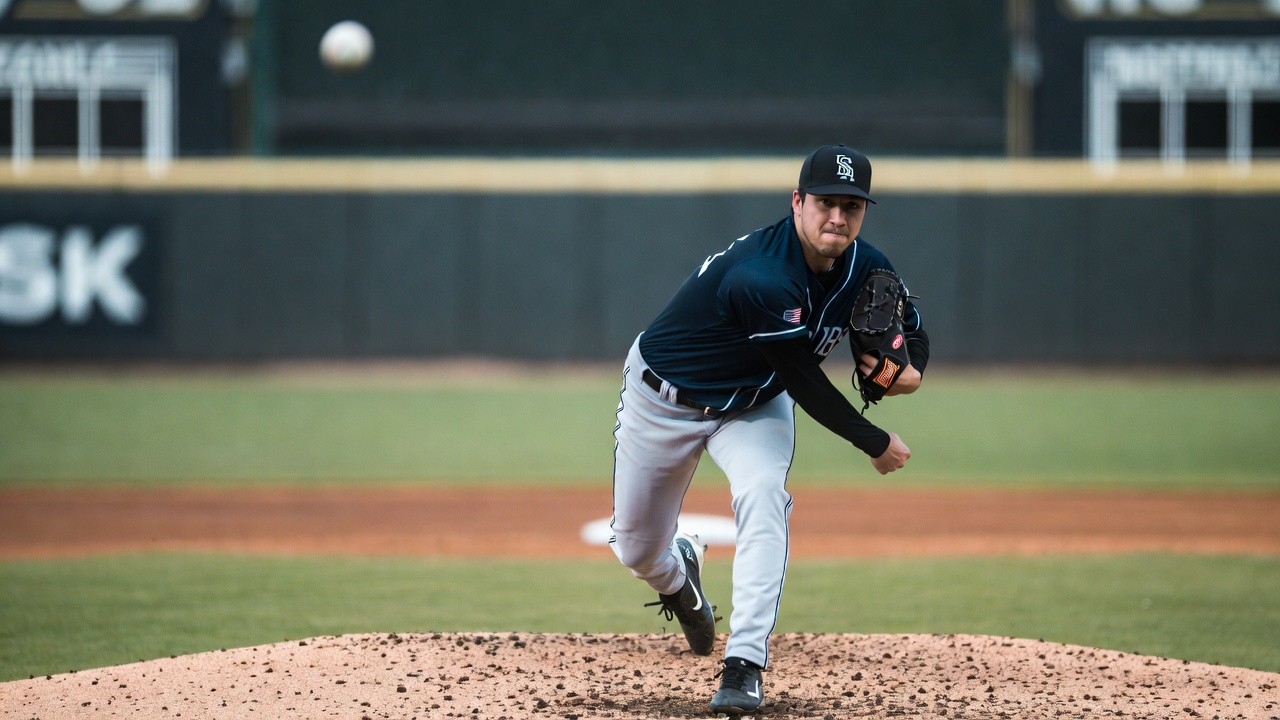
Walk into any stadium in Japan during the NPB season. You will hear the thunder of organized cheering sections called ōendan. You will see fans waving team towels in perfect unison. And on the mound, you will watch a pitcher execute something American scouts have chased for decades: the art of pitch mastery over raw power.
Japanese pitchers have not just arrived in Major League Baseball. They have conquered it. From Hideo Nomo’s revolutionary corkscrew windup in 1995 to Shohei Ohtani hitting 101.7 mph on his fastball in 2025 — after recovering from elbow surgery — the pipeline from Nippon Professional Baseball to the American big leagues has become one of the most reliable talent corridors in all of professional sports.
But why? What makes these arms so dominant? The answer is not simple. It involves a smaller baseball, a different rotation system, a pitching philosophy rooted in centuries-old cultural values, and a secret weapon that American coaches spent decades telling their pitchers to avoid.
This is the full story.
How NPB Pitching Differs from MLB Pitching: A Complete Breakdown
To understand why Japanese pitchers succeed in America, you first need to understand how the two leagues differ. Major League Baseball and Nippon Professional Baseball share the same fundamental rules. Nine innings. Three outs. Balls and strikes. But beneath that surface, the games are played very differently.
The baseball itself is different. The NPB ball, manufactured by Mizuno, is slightly smaller than the Rawlings ball used in MLB. An NPB ball measures between 22.54 and 23.18 centimeters in circumference. The MLB ball is between 22.9 and 23.5 centimeters. That gap seems tiny. It is not. The NPB ball also has a tackier surface and raised seams. This gives pitchers a firmer grip. They can generate more spin. They can manipulate the ball with greater precision.
Former MLB pitcher Frank Herrmann, who played in NPB for the Rakuten Golden Eagles, put it plainly in an interview with FanGraphs: “You see a lot more off-speed pitches here. Guys don’t throw as hard, but they can spin it. Also, everyone seemingly throws a variation of a fork or a split. Perhaps it’s because the balls are a little smaller and tackier relative to MLB balls.”
The rotation system is different. MLB teams use a five-man starting rotation. Each pitcher gets four days of rest between starts. NPB teams use a six-man rotation. Each pitcher gets five days of rest. This extra day of recovery changes everything. It lets pitchers throw more pitches per outing. It gives them time to maintain “feel” for grip-sensitive pitches like the splitter. It also reduces cumulative fatigue across the long season.
The strike zone is different. NPB uses a slightly narrower inside strike zone compared to MLB. This encourages Japanese pitchers to paint the corners. They learn to work the edges of the plate rather than challenge hitters through the middle.
The ballparks are different. Several NPB stadiums have dimensions that would violate American Official Baseball Rules for parks built after 1958. These cozier confines shift the game toward contact hitting and run prevention, reinforcing the premium Japan places on pitching and defense.
Here is a side-by-side comparison of the key structural differences:
| Feature | NPB | MLB |
|---|---|---|
| Ball size | 22.54–23.18 cm | 22.9–23.5 cm |
| Ball surface | Tackier, raised seams | Smoother, treated with mud |
| Starting rotation | 6-man | 5-man |
| Rest between starts | 5 days | 4 days |
| Regular season games | 143 | 162 |
| Active roster | 28 (25 game day) | 26 |
| Extra innings | 12 max (tie allowed) | Unlimited |
| Ball manufacturer | Mizuno | Rawlings |
These are not minor differences. They shape how pitchers are developed, how they approach each at-bat, and what kinds of weapons they carry to the mound.
The Japanese Pitching Training Philosophy That Builds Elite Arms
In America, the phrase “less is more” dominates modern pitching development. Pitch counts are monitored obsessively. Young arms are guarded carefully. Rest is sacred.
In Japan, the philosophy has historically been the opposite. More is more. The roots of this approach trace back to Koshien, the national high school baseball tournament held each spring and summer at Hanshin Koshien Stadium near Osaka. Koshien is more than a sporting event. It is a cultural institution. Think March Madness combined with the emotional weight of a national holiday.
At Koshien, a single ace pitcher often carries his entire team. Research published in the Orthopaedic Journal of Sports Medicine noted that top pitchers at Koshien can throw over 700 pitches and participate in more than 50 innings across a six-game tournament. This tradition of endurance carries forward into professional baseball.
NPB spring training camps are famous for their intensity. Herrmann observed that “in spring training, pitchers routinely throw 100-pitch bullpens.” He contrasted this with MLB organizations, where teams “tend to stress ‘saving your bullets’ and quality over quantity.”
This training volume produces something specific: command. Japanese pitchers learn to throw strikes to all four quadrants of the zone with multiple pitches. They do not rely on one dominant offering. They build deep arsenals.
The cultural context matters here, too. As American journalist Robert Whiting wrote in his landmark 1977 book The Chrysanthemum and the Bat, Japanese baseball reflects broader national values of “group identity, cooperation, hard work, respect for age, seniority and ‘face.'” A pitcher in Japan is expected to master his craft through relentless repetition — a concept called tanren (鍛錬), which translates roughly as “forging through discipline.”
This does not mean Japan has not modernized. It has. Facilities like Driveline Baseball now work with NPB arms. Analytics have infiltrated Japanese front offices. But the cultural bedrock of patient, methodical skill-building remains central to how Japanese pitchers learn their trade.
Why the Split-Finger Fastball Is Japan’s Secret Pitching Weapon
If there is a single pitch that defines the Japanese pitching identity, it is the split-finger fastball — or splitter.
The splitter looks like a fastball out of the pitcher’s hand. Then it drops. Sharply. Late. Batters swing over it. They pound it into the ground. They look foolish chasing it. And in 2023, MLB hitters posted just a .191 batting average and a .517 OPS against splitters. That made it significantly more effective than the slider (.651 OPS), sweeper (.635 OPS), curveball (.647 OPS), or standard changeup (.669 OPS), as reported by Yahoo Sports.
Yet the splitter represents only a tiny fraction of pitches thrown in MLB. In 2023, it accounted for just 2.1% of all pitches — even though that marked an all-time high since pitch tracking began in 2008. In NPB, the pitch is everywhere.
Why the gap? Two reasons.
First, American coaching spent decades discouraging the splitter. The pitch requires spreading the index and middle fingers wide apart over the ball’s seams. Coaches feared this grip placed excessive stress on the elbow and led to injuries. Former Tampa Bay manager Joe Maddon told the Associated Press in 2011 that he believed the splitter was dangerous because “there’s no resistance against the ball being thrown, and it really put a lot of pressure on the elbow.” He also worried pitchers would become too dependent on it, neglecting development of other offerings.
Second, the NPB ball makes the splitter easier to learn. The tackier surface and smaller circumference give pitchers a more secure grip when spreading their fingers wide. Young Japanese pitchers learn forkball and splitter variants from their earliest competitive years. By the time they reach NPB, the pitch is fully developed.
The result? Nearly every Japanese pitcher who comes to MLB brings a devastating splitter. The Dodgers Beat noted in 2025 that the Los Angeles Dodgers now feature three different elite splitter shapes from their Japanese pitchers: Roki Sasaki’s ultra-low-spin plummet, Yoshinobu Yamamoto’s firm late tilt at the knees, and Shohei Ohtani’s classic “trap door” version.
MLB’s own analysis confirmed that splitters produce strong run-value results across the tracking era. The pitch was just never widely adopted — until Japanese arms brought it to America and forced a reckoning.
Chris Langin, director of pitching at Driveline Baseball, told Yahoo Sports: “In the States, there’s a taboo associated with it, and the frequency of classified splitters is just remarkably low.” That taboo is dissolving fast, thanks to Japanese influence.
Hideo Nomo and the Pioneers Who Opened MLB’s Door for Japanese Pitchers
Every journey has a beginning. For Japanese pitchers in Major League Baseball, that beginning has a name: Hideo Nomo.
In 1995, Nomo exploited a loophole in his NPB contract to join the Los Angeles Dodgers. No Japanese player had made a permanent move to MLB since Masanori Murakami’s brief stint with the San Francisco Giants in 1964 — a gap of over 30 years.
Nomo arrived with his famous “tornado” windup — a violent twisting motion where he turned his back almost completely to the batter before whipping the ball toward the plate. And he arrived with a forkball that made National League hitters look helpless.
The results were immediate. In June 1995, Nomo delivered six consecutive starts of eight or more innings, striking out 60 batters and allowing just five earned runs in over 50 innings. He started the All-Star Game. He won National League Rookie of the Year. He finished fourth in Cy Young voting. He led the league in strikeouts with 236.
Nomo went on to throw two no-hitters — including one at Coors Field in Denver, the only no-hitter in that park’s history. That accomplishment alone tells you everything about Nomo’s command in a ballpark notorious for turning pitchers into batting practice machines.
His 123 MLB wins remained the most by a Japanese-born pitcher until Yu Darvish passed him in combined MLB and NPB victory totals. And his cultural impact was even bigger than his statistics. As Ichiro Suzuki said: “Before Hideo came over here, everyone had an image of major-league baseball and people looked at players over here as monsters because they were so big. We were able to get an image of, ‘Maybe I can play in the big leagues.'”
Nomo opened the door. Others walked through it.
Daisuke Matsuzaka arrived in Boston in 2007 and became the first Japanese starting pitcher to win a World Series game. Masahiro Tanaka debuted with the Yankees in 2014 and set an MLB record with 16 consecutive quality starts from the beginning of his career. Hiroki Kuroda posted a remarkably consistent 3.45 career ERA across seven seasons with the Dodgers and Yankees.
And then came the modern era’s dominant figures.
Yu Darvish’s Career MLB Stats and His Legacy as a Japanese Pitching Legend
Yu Darvish does not just hold records. He is the record.
Through the 2025 season, Darvish has posted a career 115-93 record with a 3.65 ERA and 33.2 WAR across his MLB tenure, according to Baseball Reference. He was a Cy Young runner-up twice. He led all of Major League Baseball in strikeouts in 2013 with 277, a mark that remains the highest single-season total by a Japanese-born pitcher.
In August 2023, Darvish struck out his 1,919th MLB batter, surpassing Hideo Nomo as the all-time leader in strikeouts by a Japanese-born pitcher. He has since become the first Japanese pitcher to reach 2,000 MLB strikeouts.
What makes Darvish special is his repertoire. He throws a staggering variety of pitches. His fastball sits in the mid-90s. His slider has multiple shapes. His curveball drops off a cliff. His cutter moves like a knife through butter. He adds a splitter and sinker when the mood strikes. Orioles manager Brandon Hyde said it best: “You never know what he’s going to throw; he can throw anything in any count.”
This pitch diversity is the hallmark of Japanese pitching development. Where many American pitchers are taught to dominate with two or three pitches, Japanese arms learn to command five, six, or even seven distinct offerings. Darvish is the ultimate expression of that philosophy.
He was also the bridge between eras. In his seven seasons in NPB with the Hokkaido Nippon-Ham Fighters, Darvish posted a sub-2.00 ERA and accumulated 1,250 strikeouts in just 167 games. His dominance in Japan preceded his dominance in America. He proved that elite NPB pitching translates at the highest level.
Shohei Ohtani’s Return to Pitching in 2025: How He Dominated as a Two-Way Player
No conversation about Japanese pitchers in MLB is complete without the player who redefined what is possible on a baseball diamond.
Shohei Ohtani returned to pitching in 2025 after recovering from his second major elbow surgery. The expectations were immense. The results were even bigger.
In 14 regular-season starts for the Dodgers, Ohtani posted a 2.87 ERA with 62 strikeouts and just 9 walks in 47 innings. His strikeout-to-walk ratio was absurd. His stuff was, somehow, better than before.
According to MLB.com’s analysis, Ohtani’s fastball velocity reached a career high in 2025. His four-seam fastball averaged 98.4 mph — over 1.5 mph harder than before his injury. His maximum velocity hit 101.7 mph. He reached triple digits more than 49 times across the regular season and postseason. Over one of every ten fastballs he threw reached 100 mph.
But velocity was not even the most impressive part. Ohtani set career-high average velocities on every single one of his secondary pitches, too. Sharper sweepers. Harder sliders. Nastier splitters. Tighter curveballs. He also debuted a new hard slider in 2025, adding yet another weapon to an already terrifying arsenal.
Oh, and while doing all this on the mound, Ohtani also hit 55 home runs, scored 146 runs (most in MLB), and accumulated 9.4 FanGraphs WAR to lead the National League. He is, in every sense, the most complete baseball player who has ever lived.
His postseason pitching against the Brewers in the NLCS was described as one of the greatest single-game pitching performances in baseball history.
Ohtani is the ultimate product of the Japanese pitching development system — refined in NPB, unleashed in MLB.
Yoshinobu Yamamoto’s Dominant 2025 Season and His Path from NPB Ace to World Series MVP
If Ohtani is the unicorn, Yoshinobu Yamamoto is the prototype of what Japanese pitching excellence looks like in its purest form.
Yamamoto won the Sawamura Award — Japan’s equivalent of the Cy Young — multiple times before making the jump to MLB. In NPB, he was nearly unhittable. He posted a 1.83 career ERA across 699 innings before departing. He threw a no-hitter. He dominated the Japan Series. He was, by every measure, the best pitcher in Japanese baseball.
His transition to MLB was carefully managed. In his 2024 rookie season with the Dodgers, Yamamoto went 7-2 but was limited by a shoulder and triceps injury that cut his year short after 18 starts. The Dodgers handled him cautiously, maintaining at least five days of rest between outings.
In 2025, Yamamoto rewarded that patience. He made 30 starts and posted a 12-8 record with a 2.49 ERA and 0.99 WHIP, according to Sports Illustrated. He was named 2025 World Series MVP as the Dodgers won their second consecutive championship.
Yamamoto’s primary weapon is his splitter. A breakdown by Sports Info Solutions during his NPB career showed that his splitter generated 10 swinging strikes on just 34 attempts during his no-hitter. The pitch averages around 90 mph — about 4 mph off his fastball — and shows excellent late downward action. He also manipulates its shape, sometimes throwing a firmer sinker-type splitter that catches the bottom of the zone.
His pitch mix is a textbook example of the Japanese approach: a mid-90s four-seam fastball, a devastating splitter, a sweeping curveball that reaches the low 80s (high for the pitch type), a cutter, and precise command of every zone.
As the 2026 World Baseball Classic approaches, Yamamoto has stated he is committed to representing Team Japan, telling reporters: “I am filled with determination to once again carry the Hinomaru on my back.”
Roki Sasaki’s Rookie Season Struggles and His Potential to Become MLB’s Next Great Japanese Arm
Not every Japanese pitcher arrives in MLB and dominates immediately. Roki Sasaki’s 2025 rookie season proved that.
Sasaki was one of the most hyped international prospects in baseball history. In NPB, he threw a perfect game in April 2022, tying the NPB record for strikeouts in a single game. He regularly touched 102 mph. He was nicknamed the “Monster of the Reiwa Era” — a nod to Daisuke Matsuzaka’s legendary “Monster of the Heisei Era” nickname from a generation earlier.
After being posted by the Chiba Lotte Marines, Sasaki signed with the Dodgers in January 2025. Because he was under 25, MLB rules required him to accept a minor league deal with a $6.5 million signing bonus.
His regular season was a roller coaster. He made eight starts before a shoulder injury landed him on the injured list. His final regular-season line: 1-1, 4.46 ERA, 28 strikeouts, 22 walks in 36.1 innings. Command was the issue. His fastball velocity remained elite — his first three pitches in Tokyo Dome reached 100 mph — but the control that had defined his NPB career evaporated against MLB hitters.
The Dodgers moved him to the bullpen for September and the playoffs. That is where Sasaki found himself.
He earned three saves and posted a 0.84 ERA across 10.2 postseason innings. His performance in NLDS Game 4 was historic: three perfect innings of relief — covering the eighth, ninth, and tenth — to clinch the series. Manager Dave Roberts called it “one of the great all-time appearances out of the pen that I can remember.”
Dodgers general manager Brandon Gomes confirmed that Sasaki will “absolutely” return to the starting rotation in 2026. At just 24, his ceiling remains immense. The question is whether he can maintain his elite stuff while solving the command issues that plagued his early starts.
The adjustment challenges Sasaki faced are instructive. They illustrate that even the most talented NPB arms must adapt to a different ball, different strike zone, different lineup construction, and different pace of play.
How Shota Imanaga Became One of the Best Left-Handed Pitchers in MLB from NPB
While Dodgers arms dominated headlines, the Chicago Cubs quietly benefited from one of the best Japanese pitchers of the current era.
Shota Imanaga — nicknamed “The Throwing Philosopher” — spent seven seasons with the Yokohama DeNA BayStars before signing with Chicago ahead of the 2024 season. His NPB career was marked by thoughtful evolution: he led the Central League in strikeouts in 2023, developing a deep pitch mix centered around a fastball-splitter combination.
His MLB debut season in 2024 was spectacular. He went 15-3 with a 2.91 ERA, made the All-Star team, and contributed to a combined no-hitter. The Cubs went 23-6 in his 29 starts.
In 2025, Imanaga started the MLB Tokyo Series opener against the Dodgers at Tokyo Dome. He pitched four scoreless, hitless innings and struck out Shohei Ohtani twice. He finished the season with a 9-8 record and 3.73 ERA across 25 starts and 144.2 innings, according to his Wikipedia career summary.
What makes Imanaga effective is his pitch usage. According to Baseball Savant data, he relies on a four-seam fastball (48.7% usage) and a split-finger fastball (31.4% usage) as his two primary offerings. His sweeper (16.6%) serves as his main breaking ball. He barely uses any other pitch. This simplicity is deceptive — because the execution is so precise.
Imanaga embodies a core Japanese pitching principle: you do not need to throw seven pitches. You need to throw three pitches perfectly.
His personality also reflects the cultural journey of Japanese players in America. When asked how he felt pitching in New York for the first time, Imanaga replied through his interpreter: “The view from the hotel, I recognize it from Spider-Man. So I was just like, oh, this is where Spider-Man was.”
The Throwing Philosopher has won over Wrigley Field. He represents a quieter but equally important form of Japanese pitching dominance — not through overwhelming power, but through craft, control, and intelligence.
Tatsuya Imai’s MLB Debut in 2026: What to Expect from NPB’s Next Elite Pitcher
The pipeline does not stop. In fact, it is accelerating.
Tatsuya Imai, a 27-year-old right-hander from the Saitama Seibu Lions, is the marquee Japanese pitcher entering MLB for the 2026 season. His 2025 NPB campaign was dominant: a 1.92 ERA, 0.89 WHIP, and 178 strikeouts in 163.2 innings, as ESPN reported.
ESPN projected him as a mid-rotation starter with a mid-3.00s ERA ceiling in MLB. His contract is expected to exceed $157 million over six years — a staggering figure that reflects both his talent and the established success of the NPB-to-MLB pipeline.
Imai’s pitch profile is intriguing. According to MLB.com’s comparison analysis, his best secondary pitch is a slider that generated a 46% swing-and-miss rate in NPB in 2025. He throws a mid-90s fastball that he maintained late into the season despite pitching over 160 innings. He features both a splitter and a changeup — an unusual combination that gives him multiple avenues to neutralize hitters.
Even more interesting: during the 2025 NPB season, Imai added a “Vulcan” changeup — a pitch thrown with a wide, split-finger-like grip that he learned from a teammate. This gives him three distinct off-speed variants, which is rare even in the era of expanded pitch arsenals.
MLB.com compared Imai’s overall profile to Seattle Mariners ace Luis Castillo, noting similar pitch repertoires and workhorse builds. Against right-handed hitters, over 90% of Imai’s pitches were four-seam fastballs and sliders. Against left-handers, he mixed in his changeup and splitter to create a completely different look.
The FanGraphs scouting evaluation praised Imai’s trajectory: “The 27-year-old Imai has steadily improved as a strike-thrower and innings-eater each of the last three years, and his fastball was still sitting in the mid-90s at the end of 2025 even though he’d worked 160-plus innings for the second consecutive season.”
His walk rate improved each year: 5.1 BB/9 in 2022, 4.1 in 2023, 3.6 in 2024, and 2.5 in 2025. That progression tells a story of discipline, refinement, and the Japanese development philosophy in action.
NPB’s Six-Man Rotation vs MLB’s Five-Man Rotation: Why Extra Rest Matters for Pitchers
One of the most significant structural differences between the two leagues is the rotation system. And it may be the single biggest factor in why Japanese arms arrive in MLB so well-prepared.
In NPB, most teams run a six-man rotation. Each starter gets five days of rest between outings instead of four. The league also schedules a regular Monday off-day, meaning many weeks include additional rest beyond the baseline.
This matters for several reasons:
Recovery. Extra rest reduces cumulative fatigue on the arm. A study published in the Orthopaedic Journal of Sports Medicine found that NPB and MLB teams showed distinctly different injury patterns. The NPB team in the study had a higher proportion of pitching-related injuries, while the MLB team showed more throwing-related injuries — a subtle but important distinction that points to different physical stress profiles.
Pitch development. The splitter is a grip-sensitive pitch. Maintaining “feel” for it requires freshness in the hand and forearm. As the Dodgers Beat analysis noted, the six-man rotation and regular off-days “can encourage a broader pitch mix and give pitchers time to maintain feel for a grip-sensitive pitch like the splitter.”
Complete games. NPB traditionally values the complete game more than MLB does. When a starter is effective, he is expected to finish what he started. This culture of going deep into games — supported by the extra rest day — builds the endurance and mental toughness that translate well to MLB’s grueling 162-game schedule.
Transition advantage. When a Japanese pitcher arrives in MLB, he often continues to receive extra rest initially. The Dodgers kept both Yamamoto and Sasaki on modified schedules in 2025, with at least five days of rest between most starts. This buffer helps smooth the transition without asking the pitcher to immediately adopt a more demanding schedule.
The six-man rotation is not perfect. It means fewer starts per pitcher across a season. Critics argue it limits a pitcher’s opportunity to build true MLB-caliber stamina. But as more Japanese arms succeed in America, the data increasingly supports the idea that building arms slowly and protecting them systematically produces better long-term results.
The Shuuto and Other Unique Japanese Pitches That MLB Hitters Cannot Solve
Beyond the splitter, Japanese pitchers bring a vocabulary of pitches that American hitters rarely encounter.
The shuuto (シュート) is perhaps the most distinctly Japanese offering. It is a pitch that breaks down and in on right-handed batters, similar in some ways to a screwball or a heavy two-seam fastball. According to its Wikipedia entry, the most renowned shuuto pitcher in history was Masaji Hiramatsu, whose version was dubbed the “razor shuuto” because it seemed to cut through the air.
American baseball analyst Mike Fast noted that the shuuto “can describe any pitch that tails to the pitcher’s arm side, including the two-seam fastball, the circle change-up, the screwball, and the split-finger fastball.” The term is more of a movement family than a single grip. This reflects the Japanese approach to pitching classification: they categorize pitches by movement rather than by grip.
Other distinctly Japanese pitch concepts include:
- The forkball (fōku). The precursor to the modern splitter. Thrown with the ball wedged deeply between the index and middle fingers. It drops dramatically but is slower than a splitter. Hideo Nomo’s devastating forkball was the weapon that earned him Rookie of the Year in 1995.
- The gyroball. A theoretical pitch developed through Japanese sports science research that spins on its axis like a bullet, producing unusual movement profiles. While its existence as a truly distinct pitch is debated, the research behind it represents Japan’s willingness to apply scientific rigor to pitch design.
- The Vulcan changeup. Recently adopted by Tatsuya Imai, this pitch uses a wide, split-like grip but is classified as a changeup. It provides yet another speed and movement variation.
The common thread is deception through variation. Japanese pitchers are taught from youth levels to manipulate the baseball in multiple ways. Where an American college pitcher might arrive in pro ball with a fastball, slider, and developing changeup, a Japanese equivalent often carries five or six fully formed pitch types.
The 2026 World Baseball Classic and the Future of Japanese Pitching Dominance
As of early 2026, the baseball world is turning its attention to the 2026 World Baseball Classic. Team Japan — Samurai Japan — will once again field a pitching staff that rivals any MLB rotation.
Yamamoto has confirmed his participation. He told reporters he is training hard to be ready for Pool C play at Tokyo Dome in March. Japan is grouped with Australia, Chinese Taipei, and Korea.
Ohtani, who struck out Mike Trout to clinch Japan’s 2023 WBC title in one of the most iconic moments in baseball history, will be the centerpiece of the squad. He enters 2026 in line for his first full pitching season as a Dodger. Sasaki will skip the WBC to focus on establishing himself in the Dodgers’ starting rotation.
The WBC has always been a stage where Japanese pitching philosophy shines. The tournament rewards exactly what NPB develops: command, pitch variety, run prevention, and the ability to perform under extreme pressure. Japan has won three of the five WBC titles held to date. Their pitching has been the foundation of every championship run.
Looking beyond the WBC, the future of the NPB-to-MLB pipeline is brighter than ever. A November 2025 report from MLB.com identified a “larger group of elite arms” potentially making the move after the 2026 NPB season. Pitchers like Hiroya Miyagi, Takahisa Hayakawa, and others are being scouted heavily by MLB teams.
The trend is clear: Japanese pitchers are not just participating in MLB. They are shaping it.
Japanese Pitcher Success Rate in MLB: Historical Data and Key Statistics
Let us look at the numbers that tell the full story of Japanese pitching dominance in America:
| Player | MLB Debut | Career ERA | Career K | Notable Achievement |
|---|---|---|---|---|
| Hideo Nomo | 1995 | 4.24 | 1,918 | ROY, 2 no-hitters, trailblazer |
| Yu Darvish | 2012 | 3.65 | 2,000+ | All-time K leader (Japanese-born) |
| Masahiro Tanaka | 2014 | 3.74 | 991 | 16 consecutive quality starts from debut |
| Shohei Ohtani | 2018 | ~3.00 | 600+ | Two-way MVP, 101.7 mph fastball |
| Yoshinobu Yamamoto | 2024 | ~2.60 | 200+ | 2025 World Series MVP |
| Shota Imanaga | 2024 | ~3.30 | 250+ | All-Star as rookie, 15-3 in 2024 |
| Roki Sasaki | 2025 | 4.46 (RS) | 28 | 0.84 ERA in postseason, 3 saves |
The pattern is unmistakable. Japanese pitchers consistently arrive in MLB and produce at or near elite levels. The rare exceptions — like Sasaki’s uneven regular season — tend to resolve themselves quickly, as the underlying talent and training foundation assert themselves.
Several key accolades held by Japanese pitchers in MLB history include:
- Rookie of the Year: Hideo Nomo (1995 NL), Shohei Ohtani (2018 AL)
- World Series MVP: Yoshinobu Yamamoto (2025)
- Strikeout champion: Nomo (1995 NL, 2001 AL), Darvish (2013 AL)
- Fastest to 1,500 MLB K: Yu Darvish (1,216.1 innings, 197 games)
- Lowest single-season WHIP in MLB history (min. 50 IP): Koji Uehara, 0.565 in 2013
What MLB Teams Can Learn from NPB’s Approach to Pitcher Development
The success of Japanese pitchers in MLB is not just a talent story. It is a systems story. And American organizations are paying attention.
Several elements of the NPB development model are influencing MLB thinking:
1. Broader pitch arsenals from youth levels. American pitching development has traditionally emphasized velocity and a primary breaking ball. Japanese development emphasizes command of multiple pitch types from early ages. As more NPB arms succeed with diverse arsenals, MLB teams are encouraging their prospects to develop additional offerings earlier.
2. The splitter’s rehabilitation. The Japanese splitter’s dominance is forcing American teams to reconsider a pitch they spent decades avoiding. Driveline Baseball’s Chris Langin has noted significant room for growth in splitter adoption across MLB. Paul Skenes, one of the best young pitchers in America, features both a splitter and a changeup — a combination that was once considered redundant.
3. Workload management with additional rest. The Dodgers’ willingness to run a modified six-man rotation when needed — partly to accommodate their Japanese pitchers — represents a shift in thinking. If an extra day of rest produces healthier arms and better performance, the traditional five-man model may not be sacred.
4. Run prevention over strikeouts. NPB pitching philosophy prioritizes preventing runs by any means. Ground balls, weak contact, efficient pitch counts — these are valued alongside strikeout totals. This aligns with advanced analytics in MLB that increasingly show that inducing weak contact can be just as valuable as racking up punchouts.
5. Mental preparation and craft. The Japanese concept of tanren — forging through discipline — produces pitchers who approach each start with a game plan for every hitter. Imanaga’s nickname, “The Throwing Philosopher,” captures this perfectly. There is an intellectual rigor to Japanese pitching that complements the physical gifts.
The Cultural Bridge Between Japanese Baseball and American Baseball in 2026
The relationship between NPB and MLB is no longer one-directional. It is a genuine exchange.
The 2025 MLB Tokyo Series — featuring the Dodgers against the Cubs at Tokyo Dome — showcased this beautifully. Japanese fans cheered for Ohtani, Yamamoto, Sasaki, Imanaga, and Seiya Suzuki as returning heroes. American fans watched in awe as the Tokyo Dome atmosphere — with its coordinated chanting, trumpet-led ōendan sections, and team-specific fight songs — delivered an energy unlike anything in the American game.
Twelve Japanese-born players appeared on MLB Opening Day rosters in 2025, according to JapanBall. That represented the highest total in recent memory and reflected the deepening talent flow between the leagues.
The cultural exchange extends beyond the players themselves. Japanese coaching methodologies are influencing American development programs. American analytics tools are being adopted by NPB front offices. And the fan bases are increasingly interconnected, with Japanese fans following MLB obsessively and American fans discovering the joys of NPB broadcasting.
Perhaps most telling is the story of Shotaro Morii, an 18-year-old Japanese two-way prospect who signed with the Oakland Athletics in January 2025 — bypassing NPB entirely. This broke a longstanding cultural norm. While Morii’s path remains an outlier, it suggests that the traditional career trajectory (Japanese high school → NPB → MLB) may not be the only route for future Japanese stars.
Why Japanese Arms Will Continue to Dominate MLB Pitching in the Years Ahead
The evidence is overwhelming. The pipeline is proven. The philosophy is sound. And the talent keeps coming.
Japanese pitchers succeed in MLB because they are products of a development system that values command over velocity, variety over power, discipline over flair, and craft over raw athleticism. They arrive in America with fully formed pitch arsenals, deep competitive experience, and a mental toughness forged through the intense pressures of Koshien, NPB pennant races, and international competition.
The structural advantages of NPB — the smaller ball that teaches grip sensitivity, the six-man rotation that builds deep pitch mixes, the cultural emphasis on mastery — create pitchers who are uniquely equipped to thrive in the American game.
And the current generation may be the best yet. Ohtani is entering his first full pitching season with the Dodgers. Yamamoto is a reigning World Series MVP. Sasaki has the tools to become one of the most dominant starters in baseball. Imai arrives with the most complete NPB résumé of any incoming pitcher in years. Behind them, a new wave of NPB arms is training, developing, and dreaming of the same journey.
The question is no longer whether Japanese pitchers can compete in MLB. It is whether MLB can adapt fast enough to learn from them.
From the forging grounds of Koshien to the bright lights of Dodger Stadium, the story of Japanese pitching dominance is still being written. And the best chapters may be yet to come.