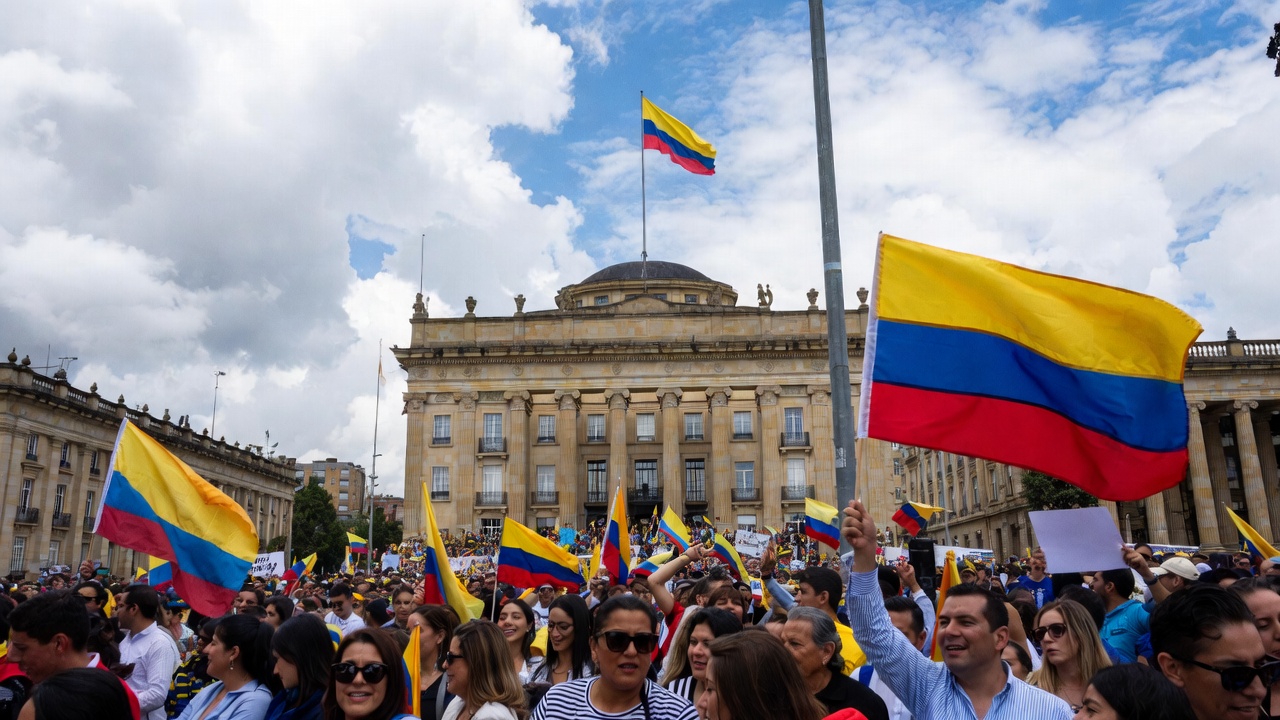
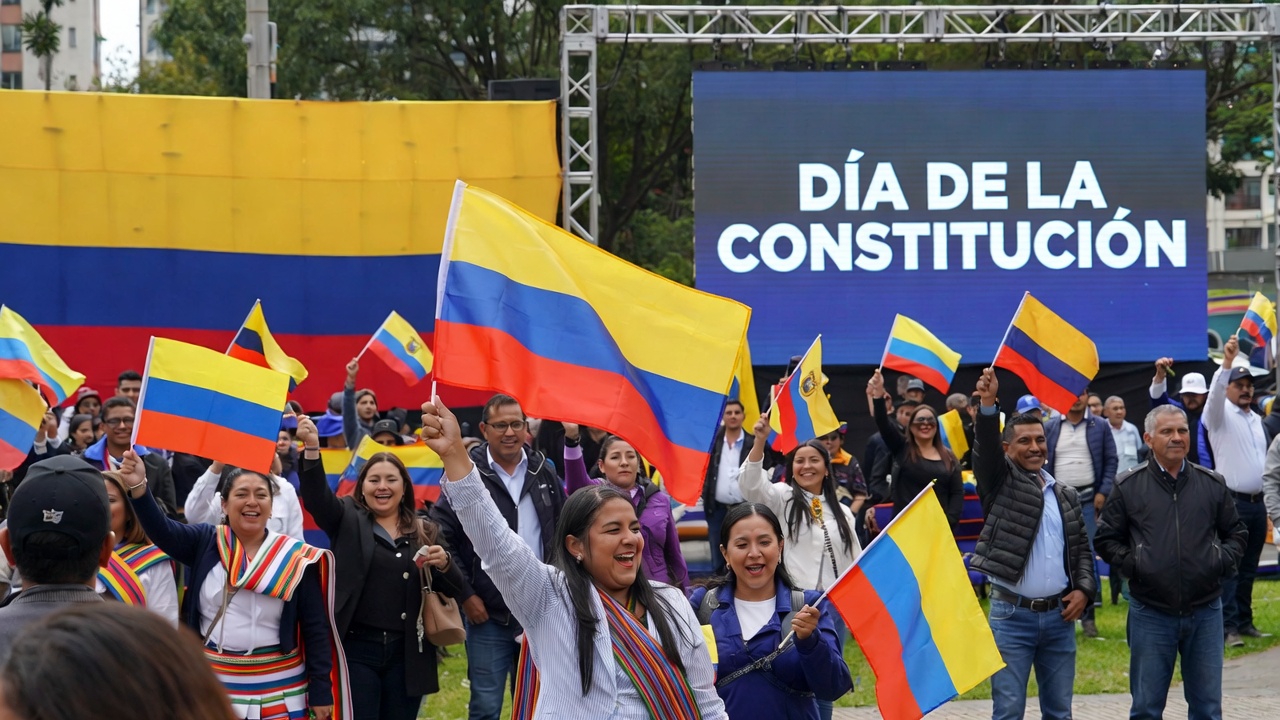
There is a date on the Colombian calendar that does not come with fireworks, military parades, or a day off work. It does not have the flag-waving energy of July 20, the country’s official Independence Day. Yet for legal scholars, students, civic activists, and millions of everyday Colombians, the date carries a weight all its own. July 4 marks the anniversary of the 1991 Political Constitution of Colombia — the document that redefined the nation’s democracy, expanded human rights protections, and gave ordinary citizens a powerful new tool to defend those rights in court.
In 2026, that anniversary hits a particularly resonant milestone. July 4, 2026, marks 35 years since the Constituent Assembly proclaimed its finished text in Bogotá, replacing a constitution that had governed the country for over a century. The anniversary arrives during a politically charged year: Colombia is heading into legislative elections in March and presidential elections on May 31, with ongoing debates about whether the current Constitution needs further reform — or even a new Constituent Assembly.
This is the story of how a student movement, born from grief and outrage, rewrote the social contract of an entire nation. It is also a guide for travelers, researchers, and curious readers who want to understand what Constitution Day means in Colombia today — and why the 35th anniversary in 2026 matters more than ever.
What Is Constitution Day in Colombia and When Is It Celebrated?
Constitution Day in Colombia is an annual observance that commemorates the proclamation of the 1991 Political Constitution (Constitución Política de Colombia de 1991). The date recognized for this commemoration is July 4, the day the National Constituent Assembly formally adopted and proclaimed the new charter in 1991. The document was subsequently published in the Constitutional Gazette number 114 on July 7, 1991, during the presidency of César Gaviria.
It is important to note that Constitution Day is not one of Colombia’s 18 official public holidays. Workers do not get the day off. Banks do not close. However, it is widely recognized as a civic observance — a day for reflection, academic events, and public discourse about the nation’s democratic foundations.
| Key Fact | Detail |
|---|---|
| Official Name | Día de la Constitución Política de Colombia |
| Date | July 4 (annual) |
| 2026 Milestone | 35th anniversary of the 1991 Constitution |
| Type of Observance | Civic — not a public holiday |
| Constitution Replaced | The 1886 Constitution |
| President at Promulgation | César Gaviria Trujillo |
| Assembly Co-Presidents | Horacio Serpa (Liberal), Álvaro Gómez Hurtado (National Salvation Movement), Antonio Navarro Wolff (AD M-19) |
The 1991 Constitution is sometimes called the “Constitution of Rights” (Constitución de los Derechos) because of its sweeping expansion of fundamental protections for citizens. It replaced the Constitution of 1886, which had governed Colombia for 105 years — one of the longest-standing constitutions in Latin American history.
Why the 1991 Colombian Constitution Replaced the 1886 Charter
To understand why Colombians rewrote their constitution, you have to understand the country they were living in during the late 1980s.
Colombia in that decade was drowning in violence. The armed conflict that had simmered since the 1960s — pitting government forces against leftist guerrilla groups like the FARC and the ELN — had grown far more complex. Paramilitary groups now operated alongside the military. Drug cartels, most notoriously the Medellín Cartel led by Pablo Escobar, waged open war against the state through a campaign of bombings, assassinations, and terror known as narcoterrorism.
The political system, meanwhile, was suffocating under its own rigidity. The 1886 Constitution had established a highly centralized, executive-dominated government. A mid-century power-sharing arrangement called the Frente Nacional (National Front), formalized in a 1957 constitutional amendment, had alternated power exclusively between the Liberal Party and the Conservative Party for sixteen years. Even after the formal arrangement ended in 1974, its legacy was a political system that left little room for new voices, indigenous communities, Afro-Colombian populations, or anyone outside the traditional two-party structure.
The country was caught in a cycle: the more the state failed to address inequality, the more guerrilla movements and criminal organizations filled the vacuum. The more violence escalated, the more the government relied on states of siege — emergency powers that expanded presidential authority. According to constitutional scholar Mauricio García Villegas, between 1970 and 1991, Colombia’s government declared states of siege for over 80 percent of the time, creating what he termed a “constitutional dictatorship.”
Several specific events in the 1980s made the case for constitutional reform undeniable:
- November 1985: The M-19 guerrilla group stormed the Palace of Justice in Bogotá. The military’s response was devastating. More than 100 people died, including twelve Supreme Court justices. The event became, in the words of scholar Julieta Lemaitre, a “symbol of the reality of the war and the impossibility of peace.”
- August 1989: Presidential candidate Luis Carlos Galán was assassinated by hitmen linked to the Medellín Cartel. His death shocked the nation and triggered massive public mourning.
- 1989–1990: Three more presidential candidates were murdered: Bernardo Jaramillo Ossa, Carlos Pizarro Leongómez, and Jaime Pardo Leal. Colombia was killing its own future leaders.
The old constitution, born in the 19th century, could not hold. Something had to break — and it did, in the most unexpected way.
How the Séptima Papeleta Student Movement Changed Colombian History
The spark for Colombia’s constitutional transformation did not come from Congress, the presidency, or the military. It came from university students.
In the wake of Luis Carlos Galán’s assassination, thousands of young Colombians took to the streets of Bogotá in what became known as the Marcha del Silencio — the March of Silence. Carrying candles and banners, students from both public and private universities walked in protest against the violence consuming their country. The march was a moment of collective grief, but also of collective resolve.
Out of that grief grew a movement called “Todavía podemos salvar a Colombia” — “We Can Still Save Colombia.” Led primarily by students and faculty from some of Bogotá’s most prominent universities — including the Universidad Externado de Colombia, Universidad del Rosario, Pontificia Universidad Javeriana, and Universidad de los Andes — the movement proposed something radical: a Constituent Assembly to draft an entirely new constitution.
The vehicle for this proposal was brilliant in its simplicity. It was called the Séptima Papeleta — the “Seventh Ballot.”
Here is how it worked. In the March 11, 1990 legislative elections, Colombian voters were already casting ballots on six separate items: Senate, House of Representatives, departmental assemblies, municipal councils, mayors, and the Liberal Party’s internal presidential primary. The student movement proposed adding an unofficial seventh ballot — a slip of paper reading:
“Plebiscito por Colombia, voto por una Asamblea Constituyente que reforme la Constitución y determine cambios políticos, sociales y económicos en beneficio del pueblo.”
(“Plebiscite for Colombia. I vote for a Constituent Assembly to reform the Constitution and bring about political, social, and economic changes for the benefit of the people.”)
The Registraduría Nacional (Colombia’s electoral authority) did not officially recognize the ballot. It did not print it. But newspapers did — most notably El Tiempo, the country’s largest daily, which threw its support behind the initiative and helped distribute the ballots across the country.
The idea was the brainchild of Fernando Carrillo Flórez, a young Harvard-educated constitutional lawyer who was teaching at three private universities in Bogotá. In a February 1990 article in El Tiempo, Carrillo became the first person to use the term “séptima papeleta” in print. He argued that the unofficial vote would “create a political fact” and demonstrate that public opinion demanded a constituent assembly.
On election day, over two million Colombians deposited the seventh ballot into the urns. The Registraduría did not count them officially, but the message was unmistakable. President Virgilio Barco responded by issuing Decree 927 on May 3, 1990, which authorized the Registraduría to count votes on a constituent assembly during the presidential elections of May 27, 1990. This time, over five million people voted in favor.
The students had done something that neither guerrilla armies nor political elites had achieved: they had opened a door to peaceful, democratic transformation.
How the National Constituent Assembly Drafted the 1991 Constitution
On December 5, 1990, Colombians elected 70 delegates to the National Constituent Assembly (Asamblea Nacional Constituyente). The composition of that body was itself a revolution.
For the first time in Colombian history, the assembly that would write the nation’s fundamental law included voices far beyond the traditional Liberal-Conservative establishment. The elected delegates represented:
| Political Group | Delegates |
|---|---|
| Liberal Party | 25 |
| Democratic Alliance M-19 (AD M-19) | 19 |
| National Salvation Movement (Conservative dissident) | 11 |
| Social Conservative Party | 5 |
| Independent Conservative slates | 4 |
| Patriotic Union (UP) | 2 |
| Indigenous Movement | 2 |
| Evangelical Movement | 2 |
| Esperanza, Paz y Libertad (demobilized EPL) | 2 |
| Revolutionary Workers’ Party | 1 |
| Quintín Lame Indigenous Movement | 1 |
The inclusion of the AD M-19 was especially significant. The M-19 was a guerrilla movement that had demobilized and signed a peace agreement with the government of President Barco in March 1990. Its political transformation — from armed insurgency to democratic participation — was a powerful symbol of what the new constitution aimed to achieve. Antonio Navarro Wolff, a former M-19 commander, was elected as one of the assembly’s three co-presidents.
The Assembly was inaugurated on February 5, 1991, and worked for approximately five months. Its deliberations were intense. The delegates debated everything from the structure of the state and the separation of powers to the recognition of indigenous rights, environmental protections, and new mechanisms for citizen participation.
One of the most contentious issues was whether to revoke the existing Congress. A June 1991 agreement between President Gaviria, the three co-presidents, and Liberal Party leader Alfonso López Michelsen resulted in a deal: Congress would be dissolved, but assembly delegates could not run in the new elections. This was a dramatic step — a sitting legislature, voted out of existence by a body that had not existed a year earlier.
On July 4, 1991, the Assembly proclaimed the new Constitution. It consisted of 380 articles and 60 transitory provisions. Colombia had a new social contract.
Key Features of the Colombian Constitution of 1991 Every Visitor Should Know
The 1991 Constitution did not simply update the old one. It reimagined the Colombian state from the ground up. Here are the features that define it — and that still shape daily life in Colombia today.
Colombia as a Social State of Law (Estado Social de Derecho)
The very first article of the Constitution declares that “Colombia is a Social State of Law” — organized as a unitary, decentralized republic with autonomous territorial entities. This was a direct rejection of the extreme centralism that had characterized the 1886 charter. Under the old system, most resources generated in the regions stayed in the capital cities. The new Constitution gave departments and municipalities more control over their own governance and budgets.
The Acción de Tutela: Colombia’s Most Powerful Rights-Protection Tool
Perhaps no single innovation of the 1991 Constitution has had a greater impact on everyday Colombian life than the acción de tutela.
Established under Article 86, the tutela is a legal mechanism that allows any person — citizen or foreigner, rich or poor, literate or not — to file a claim before a judge when their fundamental constitutional rights have been violated or threatened by the action or omission of a public authority. The judge must issue a ruling within 10 days.
What makes the tutela extraordinary is its simplicity and accessibility. No lawyer is required. The claim can be filed in writing or, for minors and illiterate individuals, even orally. It does not require citing the specific constitutional article being violated. It is, by design, a tool for ordinary people.
The numbers tell the story of its impact. According to the Colombian weekly magazine Semana, between 1991 and 2011 — the first two decades of the Constitution — approximately 4 million tutela actions were filed across the country. By 2013 alone, the number had reached 454,500 actions in a single year. The most commonly cited rights include:
| Right Invoked | Percentage of Tutela Claims (2013) |
|---|---|
| Right to petition | 48% |
| Right to health | 23% |
| Other economic and social rights | 15% |
| Human dignity | 14% |
| Social security | 11% |
A 2013 poll of 5,866 people found that 83.7% of respondents were familiar with the tutela — far more than the 20–25% who knew about any other rights-protection mechanism. 65% viewed it favorably; only 11% viewed it negatively.
The tutela has been used to secure access to HIV/AIDS medications, cancer treatments, and medical procedures abroad when domestic options were unavailable. It has been invoked by displaced persons, street vendors, LGBTQ+ individuals, and indigenous communities. The Constitutional Court — itself a creation of the 1991 charter — reviews selected tutela decisions and has used them to issue landmark rulings on health reform, internally displaced persons, and social rights.
Recognition of Ethnic and Cultural Diversity
Article 7 of the Constitution recognizes and protects the ethnic and cultural diversity of Colombia. This was a groundbreaking departure. Under the 1886 Constitution, Colombia had been governed as a monocultural, monolingual, Catholic nation. Indigenous peoples, Afro-Colombian communities, the Raizal people of San Andrés and Providencia, and the Romani population had little formal recognition.
The 1991 charter changed that fundamentally. It declared Spanish the official language but recognized that the languages and dialects of ethnic groups are also official in their territories. It guaranteed indigenous communities representation in Congress. It laid the foundation for later legislation recognizing collective land rights, cultural preservation, and bilingual education.
An Independent Constitutional Court
Before 1991, the power of judicial review rested with the Supreme Court of Justice, which had held that authority since 1910. The new Constitution created an entirely separate Constitutional Court (Corte Constitucional) dedicated exclusively to defending the supremacy of the Constitution. The Court reviews laws, legislative decrees, international treaties, and — critically — tutela decisions. It has become one of the most active and influential constitutional courts in Latin America.
Expanded Citizen Participation
The 1886 Constitution offered citizens one meaningful form of political participation: voting in elections. The 1991 charter dramatically expanded those options. Citizens can now participate through referenda, plebiscites, popular consultations, open town councils (cabildos abiertos), legislative initiatives, and recall votes (revocatoria del mandato). Article 3 declares that “sovereignty resides exclusively in the people,” exercised either directly or through representatives.
Environmental Rights and Protections
In a move that was ahead of its time, the 1991 Constitution included provisions for environmental protection. Article 79 guarantees the right to a healthy environment. Article 80 directs the state to plan for sustainable development. These provisions have been used in subsequent decades to mount legal challenges against mining projects, deforestation, and pollution — making Colombia a notable case study in environmental constitutionalism.
Why the 35th Anniversary of the Colombian Constitution Matters in 2026
The 35th anniversary is not just a round number. It arrives at a moment when the Constitution itself is at the center of Colombia’s fiercest political debates.
Presidential Elections and the Constitutional Reform Question
2026 is an election year in Colombia. Legislative elections are scheduled for March, and presidential elections for May 31. Incumbent President Gustavo Petro — constitutionally barred from seeking a second consecutive term — has spent much of his presidency pushing for a National Constituent Assembly to expand or amend the current Constitution.
Petro’s argument has been that the 1991 Constitution’s social promises remain unfulfilled. “We already have the Constitution,” he has said at public events. “What we need is to guarantee that it becomes a reality.” He has proposed that a new assembly focus on areas like health reform, pension reform, labor rights, and agricultural policy — reforms that, he argues, have been blocked by a hostile Congress.
The proposal has drawn sharp criticism from legal scholars and opposition politicians who accuse Petro of trying to circumvent constitutional procedures. Article 376 of the Constitution states clearly that a Constituent Assembly can only be convened with prior approval from Congress — a body Petro has repeatedly clashed with. Constitutional law professor Gonzalo A. Ramírez-Cleves of the Universidad Externado de Colombia has warned that using a constituent assembly to bypass legislative opposition “could distort the idea that Constitutions are made with a basic consensus.”
Whether or not a new assembly materializes, the debate itself ensures that the 35th anniversary will be anything but a quiet academic occasion. It will be a live political flashpoint.
The 2016 Peace Agreement Turns Ten
The year 2026 also marks the 10th anniversary of the peace agreement signed between the Colombian government and the FARC guerrilla group in September 2016 — a deal that was itself deeply rooted in the constitutional framework established in 1991. The tutela, the Constitutional Court, the mechanisms of citizen participation — all played roles in shaping the peace process and its aftermath. Reflection on the Constitution in 2026 will inevitably intersect with reflection on whether the promises of peace have been kept.
How Colombians Celebrate Constitution Day on July 4
Constitution Day in Colombia is not a carnival, a parade day, or a fiesta. It is something quieter and, in many ways, more profound: a day of civic reflection.
Here is how the observance typically unfolds across the country:
Academic Forums and University Events
The most visible celebrations take place in universities and law schools. Institutions like the Universidad del Rosario, Universidad de los Andes, Pontificia Universidad Javeriana, and the Universidad Externado de Colombia host panels, conferences, and symposia featuring constitutional scholars, former Constituent Assembly members, judges, and civil society leaders.
For the 30th anniversary in 2021, the Universidad del Rosario organized a major event led by law professor Diana Valencia Tello, which brought together scholars, experts, and magistrates. The resulting discussions were published in the book Reflexiones y desafíos de la Constitución Política de 1991 tras treinta años de su expedición. Expect similar — and likely even larger — events for the 35th anniversary in 2026, given the intense political context.
Government Commemorations and Public Statements
The President of the Republic typically issues a public statement or address reflecting on the Constitution’s significance. Given President Petro’s ongoing push for constitutional reform, his remarks on July 4, 2026, will be closely watched by Colombians and international observers alike. Historically, the anniversary is also marked by statements from the Constitutional Court, the Congress, and civic organizations.
Community Workshops and Civic Education Programs
In smaller cities and rural areas, civic organizations, human rights groups, and local government offices use the anniversary as an opportunity to educate citizens about their constitutional rights. Workshops may focus on how to file a tutela, the rights of indigenous and Afro-Colombian communities, or the mechanisms of citizen participation. These grassroots events are less visible than university panels but are arguably more important — they bring the Constitution’s promises directly to the people it was designed to serve.
Media Coverage and Public Debate
Colombian media devote significant coverage to the anniversary. Newspapers like El Tiempo and El Espectador, television networks, and digital platforms publish special reports, opinion columns, and retrospectives. In 2026, expect particular attention to questions like: Has the Constitution fulfilled its promise? Is a new Constituent Assembly necessary? What does constitutional democracy mean in a country still grappling with armed conflict and inequality?
Cultural and Artistic Expressions
In recent years, the anniversary has inspired cultural programming — documentaries, art exhibitions, theater performances, and musical events that explore Colombia’s constitutional journey. Museums like the Museo Nacional de Colombia in Bogotá have featured exhibitions on the nation’s democratic history. The 35th anniversary may see expanded cultural offerings, especially in Bogotá, Medellín, Cali, and Barranquilla.
Best Places to Experience Constitution Day in Colombia in 2026
If you are planning to be in Colombia around July 4, 2026, here are the places where the anniversary will resonate most strongly.
Bogotá: The Heart of Constitutional History
As the nation’s capital and the city where the Constituent Assembly met, Bogotá is the center of Constitution Day observances. Key locations include:
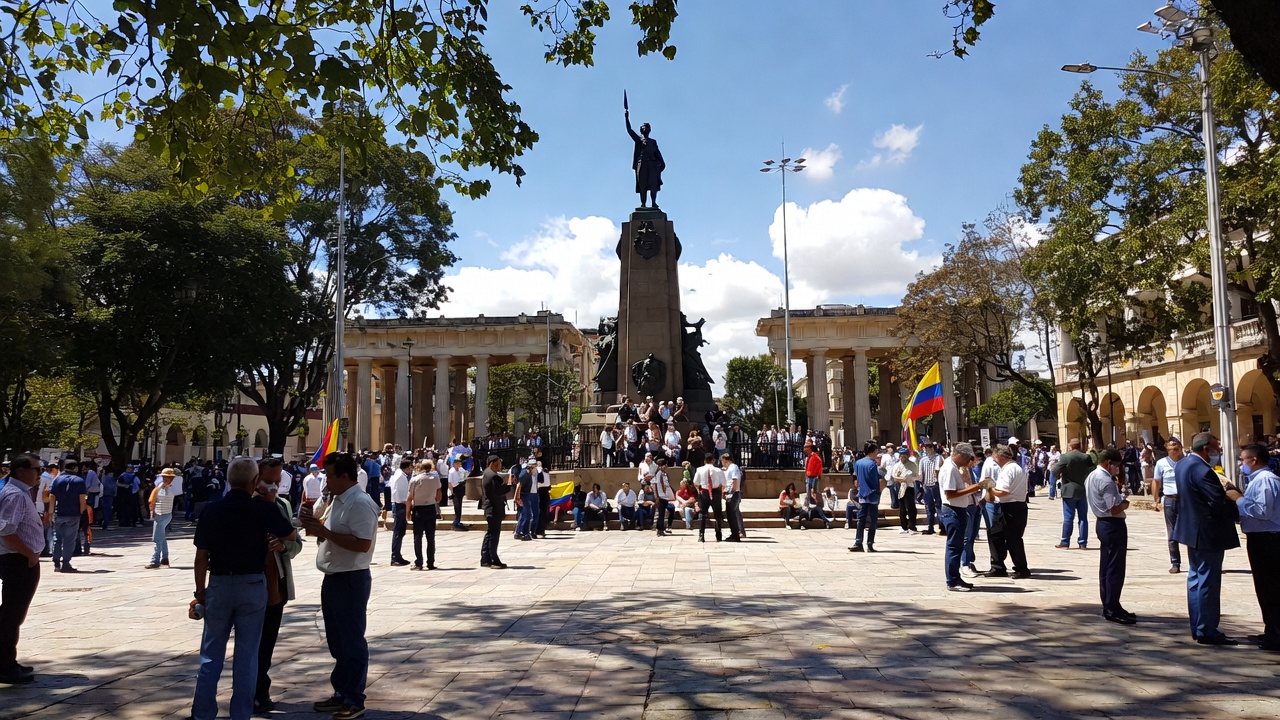
- Plaza de Bolívar: The historic square where the National Capitol building stands — the seat of Colombia’s Congress and the symbolic heart of its democracy.
- The National Capitol Building: Home to the Senate and House of Representatives, often the site of official commemorations.
- Universities in the Candelaria district and beyond: The campuses of the Externado, Rosario, Javeriana, and Andes universities, where many of the student leaders of the Séptima Papeleta studied and organized.
- The Constitutional Court building: An increasingly prominent symbol of the 1991 charter’s legacy.
Medellín: From Violence to Transformation
Medellín — once synonymous with the cartel violence that helped inspire the new Constitution — has undergone one of the most dramatic urban transformations in modern history. The city’s universities and cultural institutions often use the anniversary to reflect on how the 1991 charter contributed to Medellín’s reinvention.
Cali and the Pacific Coast
Cali, the capital of Valle del Cauca, is a hub of Afro-Colombian culture and a region where the Constitution’s recognition of ethnic diversity has had particular resonance. Cultural events on and around July 4 often highlight the rights and contributions of Afro-Colombian and indigenous communities.
Understanding the Legacy of the Séptima Papeleta in 2026
The story of the Séptima Papeleta has only grown in significance over the decades. It is now taught in Colombian schools as a foundational moment of democratic empowerment. And many of the students who led the movement went on to prominent careers in public life.
Fernando Carrillo Flórez, the constitutional lawyer who coined the term, served as a delegate to the Constituent Assembly. He later became Colombia’s Attorney General (Procurador General de la Nación) from 2017 to 2021, and has held positions as Minister of Justice, Minister of the Interior, and Ambassador to Spain.
Claudia López, another student activist from the movement, became one of Colombia’s most prominent politicians. She served as a senator and was elected Mayor of Bogotá in 2019 — the first woman and first openly LGBTQ+ person to hold that office.
Alejandra Barrios, who was a finance student at the Universidad Externado during the movement, went on to become director of the Misión de Observación Electoral (Electoral Observation Mission), one of Colombia’s most important civic watchdog organizations.
Their trajectories illustrate a broader truth: the Séptima Papeleta was not just a moment. It was a generation-defining experience that shaped Colombia’s civic and political leadership for decades.
In 2026, as Colombia marks 35 years since the Constitution and holds new elections, the spirit of that student movement is being invoked by both supporters and critics of constitutional reform. Young Colombians are once again debating what their Constitution should promise — and whether those promises have been kept.
Frequently Asked Questions About Constitution Day Colombia 2026
Is Constitution Day a Public Holiday in Colombia?
No. Constitution Day is a civic observance, not one of Colombia’s 18 official public holidays. Government offices, banks, and businesses remain open. The day is marked by academic events, media coverage, and public discussion rather than parades or official closures.
What Is the Difference Between Constitution Day (July 4) and Independence Day (July 20)?
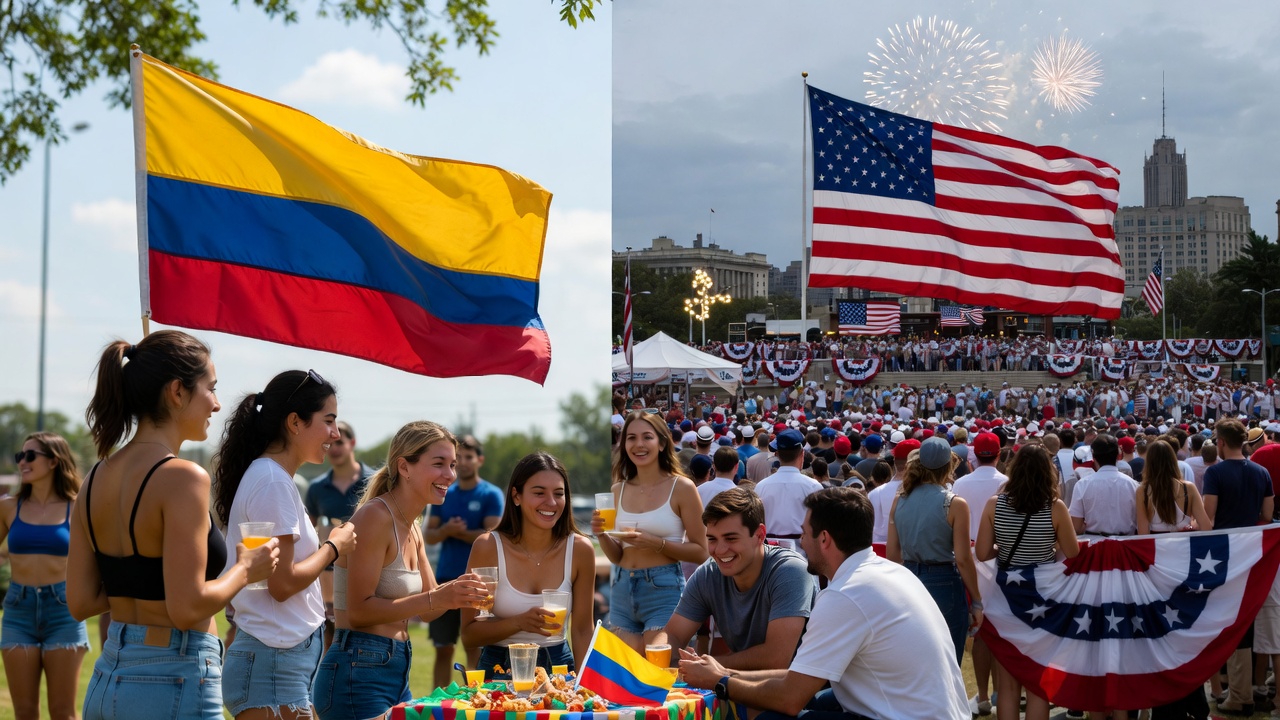
Constitution Day (July 4) commemorates the adoption of the 1991 Political Constitution. Independence Day (July 20) commemorates the 1810 uprising in Bogotá that sparked Colombia’s independence movement from Spain. Independence Day is an official public holiday with military parades, cultural celebrations, presidential speeches, and family gatherings. Constitution Day is a quieter, more reflective observance.
| Feature | Constitution Day (July 4) | Independence Day (July 20) |
|---|---|---|
| Commemorates | 1991 Constitution | 1810 independence uprising |
| Public Holiday? | No | Yes |
| Typical Activities | Academic forums, civic events | Parades, festivals, feasts |
| Mood | Reflective, intellectual | Celebratory, patriotic |
| Food & Drink | Casual (no specific traditions) | Bandeja Paisa, empanadas, aguardiente |
What Year Was the Current Colombian Constitution Written?
The current Constitution was drafted by the National Constituent Assembly between February and July 1991. It was proclaimed on July 4, 1991, and replaced the Constitution of 1886.
What Is the Acción de Tutela?
The acción de tutela is a constitutional mechanism established by Article 86 of the 1991 Constitution. It allows any person to seek immediate judicial protection of their fundamental rights when those rights are violated or threatened. It is widely considered the most important legal innovation of the 1991 charter and has been used millions of times since its creation.
Will There Be a New Constituent Assembly in Colombia in 2026?
This remains one of the most contested political questions in the country. President Gustavo Petro has repeatedly proposed a new Constituent Assembly, arguing that the current Constitution’s social guarantees have not been fully realized. However, Article 376 of the Constitution requires Congressional approval before such an assembly can be convened — and Petro’s opponents in Congress have resisted the proposal. As of early 2026, no assembly has been formally convened.
Travel Tips for Visiting Colombia Around Constitution Day 2026
If you are planning a visit to Colombia in late June or early July 2026, here are some practical considerations:
Weather: July is part of the dry season in Bogotá, with average temperatures around 13–19°C (55–66°F). Pack layers. In Medellín, expect its characteristic spring-like weather (around 22–28°C / 72–82°F). Cali and the coast will be warm and humid.
Transportation: Since Constitution Day is not a public holiday, there are no special closures or disruptions to transportation services. However, note that July 20 (Independence Day) falls just over two weeks later and is a major holiday. Many Colombians travel to family homes or fincas (country properties) around that period, so book ahead if you plan to stay through late July.
Events: Check university websites and local cultural listings in the weeks before July 4 for academic forums, panel discussions, and exhibitions. Many events are free and open to the public, though some university-hosted conferences may require registration.
Safety: Colombia has made enormous progress in safety over the past two decades, but standard travel precautions apply. Stick to well-traveled areas, especially at night. In Bogotá, the neighborhoods of La Candelaria, Chapinero, Zona G, and Usaquén are popular and generally safe for visitors.
Language: While English is increasingly spoken in tourist-heavy areas, Spanish remains essential for navigating daily life and understanding public events. If you want to engage with Constitution Day activities, a working knowledge of Spanish will greatly enrich your experience.
How the 1991 Constitution Shaped Peace Processes in Colombia
It would be impossible to discuss the Constitution’s legacy without mentioning its role in Colombia’s long pursuit of peace.
The 1991 charter itself grew directly out of a peace process — the demobilization of the M-19 guerrilla movement. Former M-19 members sat in the Constituent Assembly and helped draft the document. Antonio Navarro Wolff, who had been a military commander, became a co-president of the body that wrote the nation’s supreme law. That arc — from guerrilla fighter to constitutional architect — set a powerful precedent.
When the Colombian government and the FARC signed their historic peace agreement in 2016, the 1991 Constitution provided much of the legal and institutional framework. The Special Jurisdiction for Peace (Jurisdicción Especial para la Paz, or JEP), created to investigate and adjudicate crimes committed during the armed conflict, draws its legitimacy from the constitutional principles of transitional justice and victims’ rights. The Constitutional Court has reviewed key elements of the peace deal, ensuring they align with the charter’s provisions.
As the 10th anniversary of the FARC peace agreement approaches in September 2026, many Colombians will use both milestones — 35 years of the Constitution and 10 years of the peace deal — to take stock of how far the country has come, and how far it still has to go.
The Colombian Constitution of 1991: A Living Document at 35
Constitutions are often described as “living documents,” but in Colombia, the metaphor feels especially apt. The 1991 charter has been amended multiple times — with reforms in 1993, 1995, 1996, 1997, 1999, 2000, 2001, 2002, 2003, 2004, 2005, and in subsequent years. Each amendment reflected the country’s evolving challenges and aspirations.
But the core architecture remains: a Social State of Law committed to human dignity, pluralism, and participatory democracy. The tutela remains the most-used judicial mechanism in the country. The Constitutional Court continues to issue landmark decisions. Indigenous and Afro-Colombian communities continue to invoke their constitutional rights. Students continue to study the Séptima Papeleta as a case study in democratic mobilization.
The Constitution has not solved Colombia’s problems. The country still struggles with inequality — its Gini coefficient remains among the highest in the world. Armed conflict persists in some regions, with FARC dissident groups and the ELN still active. Corruption erodes public trust. Many of the social rights enshrined in the Constitution — to health, to housing, to dignified work — remain aspirational for millions of Colombians.
But as the Universidad del Rosario’s Professor Diana Valencia Tello has noted, the 1991 charter “created a Social State of Law that was organized in a different way to provide its structural bodies and its decentralized bodies with more autonomy.” It gave citizens tools — above all, the tutela — to hold the state accountable. And it opened political space for voices that had been silenced for generations.
On July 4, 2026, Colombians will not wave flags or set off fireworks. But they will do something that matters just as much: they will argue, debate, and discuss what their Constitution means, what it has achieved, and what it still owes them. That argument — loud, passionate, sometimes bitter, always democratic — may be the Constitution’s greatest legacy of all.
Quick Reference: Constitution Day Colombia 2026 at a Glance
| Item | Details |
|---|---|
| Date | Saturday, July 4, 2026 |
| Anniversary | 35th anniversary of the 1991 Constitution |
| Public Holiday? | No — civic observance only |
| Key Historical Event | Proclamation of the 1991 Political Constitution |
| Key Innovation | Acción de tutela (Article 86) |
| Constitution Replaced | 1886 Constitution (in force for 105 years) |
| Where to Experience | Bogotá (universities, Plaza de Bolívar), Medellín, Cali |
| Political Context in 2026 | Presidential elections May 31; debates on Constituent Assembly |
| Related Holidays | Independence Day: July 20; Battle of Boyacá: August 7 |