Mexico’s Constitution Day (Día de la Constitución) falls on Monday, February 2, 2026. If you are living in Mexico as an expat, planning a trip, or simply curious about one of the country’s most important civic holidays, this guide covers every detail you need — from the history and cultural meaning behind the day to practical tips on closures, travel, and labor rights.
What Is Constitution Day in Mexico and Why Is It Celebrated?
Constitution Day, known locally as Día de la Constitución, is a federal statutory holiday (día de descanso obligatorio) across Mexico. It honors the signing of the Political Constitution of the United Mexican States (Constitución Política de los Estados Unidos Mexicanos) on February 5, 1917, in the city of Santiago de Querétaro.
This was not just another piece of legislation. The 1917 Constitution was born from blood, revolution, and a decade of civil war. It replaced the older Constitution of 1857 and introduced sweeping social reforms that the world had never seen written into a national charter. According to the Library of Congress, the document established free public education, mandated land redistribution, and codified workers’ rights — all firsts in constitutional law at the time.
For Mexicans, the day is a source of quiet but genuine pride. It is not as flashy as Independence Day in September or as visually stunning as Día de Muertos in November. But it represents the legal backbone of modern Mexico — the framework that guarantees rights many citizens fought and died for.
For expats and travelers, understanding Constitution Day helps you make sense of an important part of Mexican identity. It also helps you avoid showing up at a closed bank on a Monday morning.
When Is Mexico Constitution Day 2026? Key Dates You Should Know
The historical anniversary of the Constitution’s signing is always February 5. However, since 2006, the official public holiday has been observed on the first Monday of February. This change was part of a labor reform designed to create long weekends — called puentes (bridges) — that benefit both workers and the tourism industry.
Here are the key dates for 2026:
| Detail | Date |
|---|---|
| Official Public Holiday (Day Off) | Monday, February 2, 2026 |
| Historical Anniversary | Thursday, February 5, 2026 |
| Long Weekend (Puente) | Saturday, January 31 – Monday, February 2 |
This three-day weekend is significant. Millions of Mexicans use the puente to travel domestically, visit family, or simply rest. Popular beach destinations like Cancún, Puerto Vallarta, and Los Cabos see a noticeable surge in visitors during this period. If you are planning to be in Mexico during this weekend, book accommodation and transportation well in advance.
The Mexican Revolution and the Birth of the 1917 Constitution
To fully appreciate what Constitution Day means, you need to understand the violent and transformative period that made it necessary.
The Fall of Porfirio Díaz and the Start of the Revolution
The story begins with Porfirio Díaz, the dictator who ruled Mexico for over 31 years. Under his regime — known as the Porfiriato — Mexico modernized its infrastructure but at a devastating social cost. Wealth concentrated among foreign investors and a small elite class. Indigenous communities lost their ancestral lands. Workers toiled in brutal conditions with no legal protection.
In 1910, a political activist named Francisco I. Madero challenged Díaz for the presidency. When Díaz had Madero arrested and declared himself the winner, the Mexican people had had enough. The Mexican Revolution erupted — a sprawling, bloody conflict that would last roughly a decade and claim an estimated one to two million lives.
From Battlefields to a Constitutional Congress
The Revolution was not a single, unified movement. Figures like Emiliano Zapata fought for land reform in the south. Pancho Villa led armies in the north. Various factions clashed even among themselves. Eventually, a leader named Venustiano Carranza consolidated enough power to convene a Constitutional Convention in the city of Querétaro in late 1916.
The delegates who gathered there were not career politicians sitting in comfort. Many had fought in the Revolution themselves. Their lived experience shaped the document they produced. On February 5, 1917, they ratified a constitution that went far beyond any existing charter in the world.
Key Articles of the 1917 Mexican Constitution That Changed History
The 1917 Constitution contains 136 articles, but three stand out as genuinely revolutionary. According to Encyclopaedia Britannica, these articles presented the most important new concepts in the document and reflected Mexico’s commitment to social justice.
Article 3: The Right to Free, Secular Education
Article 3 established that every Mexican citizen has the right to free, mandatory, and secular public education. This was a direct challenge to the Catholic Church, which had dominated education in Mexico for centuries. The article aimed to ensure that all children — regardless of class, ethnicity, or geography — could receive basic schooling without religious interference.
This provision made the Mexican Constitution one of the first in the world to enshrine the right to education as a constitutional guarantee.
Article 27: Land Reform and National Sovereignty
Article 27 addressed the central grievance of the Revolution: land ownership. It declared that all land, water, and subsoil resources within Mexico’s borders originally belonged to the nation. The government gained the power to redistribute land from large estates (haciendas) to peasant communities through a system of communal farms known as ejidos.
This article also restricted foreign ownership of land, particularly within 100 kilometers of a national border and 50 kilometers of the coast — a rule that still affects real estate transactions for foreigners today.
Article 123: Labor Rights and Worker Protections
Article 123 is sometimes called the Magna Carta of Mexican labor rights. It established the 8-hour workday, a 6-day workweek, a minimum wage, and the right to organize, strike, and bargain collectively. It also introduced equal pay for equal work regardless of gender — a remarkably progressive stance for 1917.
As the Library of Congress notes, this article gave both labor and capital the right to organize, while protecting workers from the exploitative conditions that had fueled the Revolution.
These three articles together made the 1917 Constitution a model for progressive governance worldwide. The Weimar Constitution of 1919 in Germany and even the Russian Constitution of 1918 drew inspiration from Mexico’s charter.
How Is Constitution Day Celebrated Across Mexico?
Constitution Day is more civic than festive. You will not see fireworks lighting up the sky or massive street parties. Instead, the day carries a tone of national reflection, community gathering, and family leisure.
Parades, Ceremonies, and Cultural Events
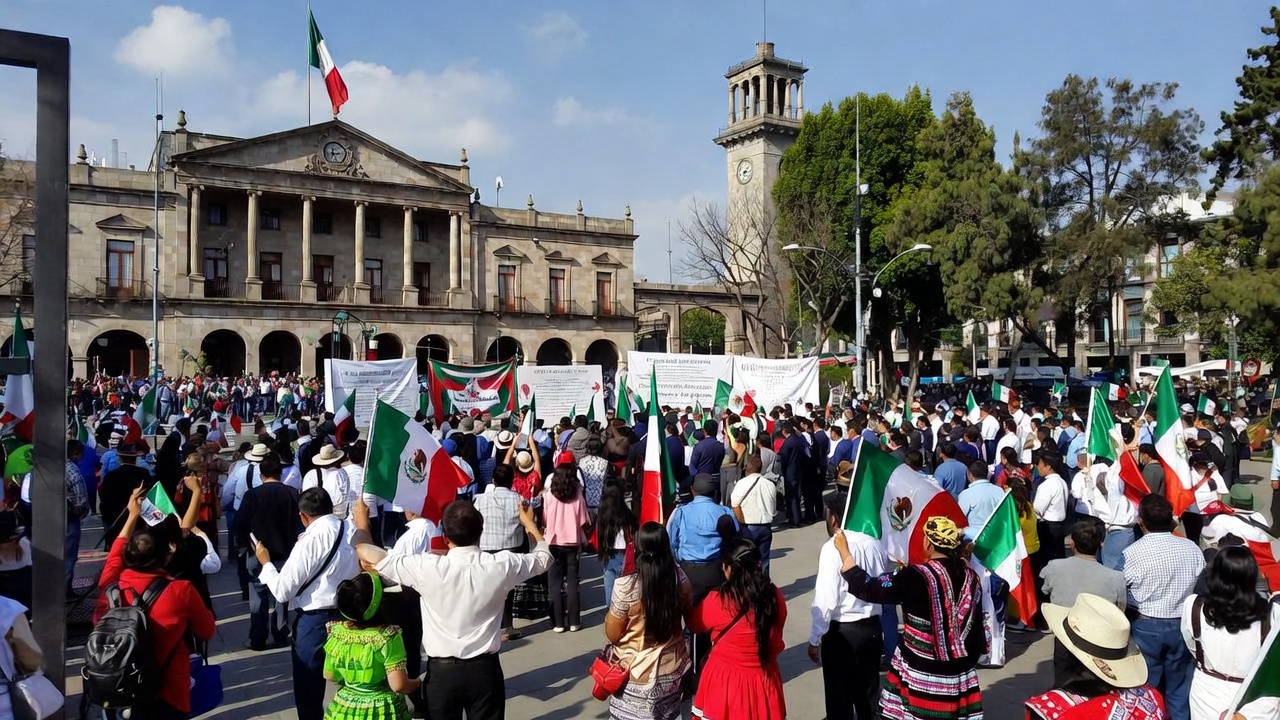
In cities and towns across the country, local governments organize civic ceremonies that often include flag-raising events, speeches by officials, and school-sponsored cultural programs. Marching bands, colorful parades, and theatrical presentations are common, especially in state capitals and larger municipalities.
The heart of the celebration is in Querétaro, the city where the Constitution was actually drafted. Querétaro takes immense pride in its role as the birthplace of the document. In the days surrounding the holiday, the city typically hosts concerts, cultural exhibitions, and historical reenactments of the signing. If you want the most authentic and immersive Constitution Day experience, Querétaro is the place to be.
A Long Weekend for Domestic Travel
For most Mexicans, the real significance of the holiday is the three-day weekend. Families head to the beach, visit relatives in other states, or enjoy day trips to one of Mexico’s many Pueblos Mágicos (Magic Towns) — charming small towns recognized by the government for their cultural or historical significance.
Expect heavy traffic leaving major cities on Friday afternoon and returning on Monday evening. Highways out of Mexico City, Guadalajara, and Monterrey can become particularly congested.
A Quiet Day in the Neighborhood
In many residential neighborhoods, Constitution Day is simply a relaxed day off. Families visit local zócalos (main squares), where street food vendors often set up shop. Children play with balloons. Adults sit on benches and chat. It is a day of rest in the truest sense — a welcome pause in the rhythm of daily life.
What Is Open and What Is Closed on Constitution Day in Mexico?
This is the practical information that expats and travelers need the most. Since Constitution Day is a statutory federal holiday, closures are widespread. Here is a clear breakdown:
| Business/Service | Status on Feb 2, 2026 |
|---|---|
| Banks | Closed |
| Government Offices | Closed |
| Post Offices | Closed |
| Public Schools | Closed |
| Private Schools | Typically closed |
| Museums | Most closed (Monday is regular closing day) |
| Supermarkets & Grocery Stores | Usually open (reduced hours possible) |
| Shopping Malls | Usually open |
| Restaurants & Cafés | Usually open |
| Tourist Attractions | Most open in resort areas |
| Public Transportation | Operates on holiday/Sunday schedule |
| Pharmacies | Usually open |
Key tip for museums: In Mexico, most museums close on Mondays as a standard practice. Since Constitution Day always falls on a Monday, this means nearly all museums will be closed. Plan your museum visits for earlier in the weekend.
Key tip for the border: If you are crossing the Mexico-U.S. border, expect reduced customs hours. According to Buckland Customs, several border ports operate only on overtime service during Constitution Day 2026, and some airports including Guadalajara, Toluca, and Tijuana airports will be fully closed for customs processing.
Constitution Day Mexico Travel Tips for International Visitors
Traveling in Mexico during a public holiday requires a bit of extra planning. Here are the most important things to keep in mind.
Book Flights and Hotels Early for the Long Weekend
The puente weekend creates a mini travel boom within Mexico. Domestic flights fill up quickly, and hotel prices in popular destinations can rise significantly. If you are flying within Mexico or staying in beach towns during this weekend, book at least two to three weeks in advance to secure reasonable prices.
Check Public Transport Schedules Before You Go
Buses and metro systems in major cities will likely run on a reduced holiday schedule, similar to a Sunday timetable. Long-distance bus companies like ADO, ETN, and Primera Plus will still operate, but popular routes may sell out. Check schedules on the operator’s website or app before heading to the terminal.
Bring Cash — ATMs May Be Limited
With banks closed, ATMs can run out of cash in busy areas. Have enough pesos on hand to cover meals, transport, and tips for the day. Many restaurants and shops accept credit cards, but smaller vendors and street food stalls typically operate in cash only.
Be Mindful of Crowds at Beach Destinations
If you are already in Cancún, Playa del Carmen, Puerto Vallarta, or any major coastal resort, expect larger-than-usual crowds. The long weekend brings a wave of domestic tourists. Restaurants may have longer wait times. Beaches will be busier. Enjoy the lively atmosphere, but plan activities accordingly.
Alcohol Sales Are Usually Not Restricted
Unlike election days, when Mexico’s Ley Seca (Dry Law) prohibits alcohol sales, Constitution Day generally does not trigger alcohol restrictions. However, individual municipalities have the authority to impose local rules, so occasional exceptions are possible in smaller towns. When in doubt, ask your hotel or a local shopkeeper.
Mexico Constitution Day and Labor Law: What Expats Working in Mexico Must Know
If you are an expat working in Mexico under a formal employment contract, Constitution Day directly affects your labor rights. Understanding Mexican labor law around public holidays is essential — both for employees and for business owners managing teams.
Your Right to a Paid Day Off
Under Mexico’s Federal Labor Law (Ley Federal del Trabajo), Constitution Day is one of the country’s statutory holidays (días de descanso obligatorio). This means all employees — full-time and part-time — are entitled to a paid day off at their regular salary rate.
This is not optional. Employers are legally required to honor this holiday. As noted by Coderslink, Article 75 of the Federal Labor Law specifies that workers required to work on a mandatory holiday must receive triple their regular daily wage: the normal day’s pay plus an additional double payment for the hours worked.
How Triple Pay Works in Practice
Here is a simple example to illustrate:
| Scenario | Payment |
|---|---|
| Employee takes the day off | Regular daily wage (e.g., MXN $500) |
| Employee works on the holiday | Regular wage + double pay = Triple pay (e.g., MXN $1,500) |
This rule applies regardless of whether the employee is working remotely or on-site. Employers who fail to provide proper holiday pay can face administrative fines from the Secretaría del Trabajo y Previsión Social (STPS), the government agency responsible for labor oversight.
What About Freelancers and Independent Contractors?
If you work as a freelancer or independent contractor in Mexico, labor law holiday protections generally do not apply to you in the same way. Your clients are not obligated to give you a day off or pay you extra. However, you should be aware that your clients’ offices may be closed, and deadlines may shift around the holiday.
How the Mexican Constitution Still Affects Expats and Foreigners Today
The 1917 Constitution is not just a historical relic. Several of its provisions directly impact the lives of foreigners living in or visiting Mexico in 2026.
Property Ownership Restrictions Near the Coast and Borders
Article 27 of the Constitution restricts direct foreign ownership of land within 50 kilometers of the coast and 100 kilometers of national borders. This zone is known as the restricted zone (zona restringida).
Foreigners can still purchase property in these areas, but they must do so through a fideicomiso — a bank trust in which a Mexican bank holds the title on the foreigner’s behalf. The buyer retains full use, rental, and sale rights. This legal mechanism has been in place for decades and is widely used by expats in beach communities like Playa del Carmen, Puerto Vallarta, and San Miguel de Allende.
If you are considering buying property in Mexico, it is worth understanding that this restriction traces directly back to the revolutionary ideals enshrined in the 1917 Constitution.
Freedom of Speech, Religion, and Assembly
The Constitution guarantees freedom of speech, religion, and peaceful assembly for all people within Mexico — not just citizens. However, there is one critical exception for foreigners: Article 33 gives the government the power to expel any foreigner whose presence is deemed inconvenient.
More relevant for daily life, Mexican law prohibits foreigners from participating in political activities, including protests and demonstrations. The U.S. State Department’s Mexico Travel Advisory explicitly warns that joining demonstrations can lead to detention or deportation. On Constitution Day, small civic gatherings are common and peaceful, but as a foreigner, it is best to observe respectfully from the sidelines rather than march in the streets.
Workers’ Rights Apply to Foreign Employees
If you hold a valid work visa and are employed by a Mexican company, you enjoy the same labor rights as Mexican nationals under the Constitution and the Federal Labor Law. This includes the right to paid holidays, overtime compensation, a Christmas bonus (aguinaldo), and profit-sharing.
Best Places to Experience Constitution Day in Mexico as a Traveler
While Constitution Day is not the most visually dramatic holiday on Mexico’s calendar, it offers a genuine window into the country’s civic culture. Here are the best destinations to experience it.
Querétaro: The Birthplace of the Constitution
There is no better place to experience Constitution Day than Santiago de Querétaro, the colonial city where the 1917 Constitution was drafted and signed. The Teatro de la República, where the Constitutional Congress convened, is a must-visit site. The city typically hosts week-long cultural programming leading up to February 5, including lectures, concerts, and historical exhibitions.
Querétaro is also a UNESCO World Heritage Site, known for its stunning aqueduct, baroque architecture, and thriving culinary scene. It is located about two and a half hours north of Mexico City by car or bus, making it an easy weekend trip.
Mexico City: Civic Grandeur in the Capital
The capital hosts flag-raising ceremonies and civic events at the Zócalo (the main square) and other government buildings. The Museo Nacional de Historia (National Museum of History) in Chapultepec Castle offers excellent exhibits on the Revolution and the Constitution, though remember that most museums are closed on Mondays. Visit on the Saturday or Sunday before the holiday instead.
Puebla and Guanajuato: Colonial Charm and Civic Pride
Both Puebla and Guanajuato are culturally rich colonial cities that take civic holidays seriously. Expect small parades, local ceremonies, and a welcoming atmosphere. These cities are also significantly less crowded than beach destinations during the puente weekend, making them ideal for travelers who prefer a quieter experience.
Beach Destinations: A Festive Long Weekend
If you are in Cancún, Puerto Vallarta, Los Cabos, or Huatulco, the holiday weekend brings a lively energy to the resorts and beachfronts. While the celebrations are not Constitution Day–specific, the general atmosphere of a long holiday weekend — with extra street food, live music, and family-friendly activities — adds color to any beach vacation.
A Brief Timeline of Mexico’s Constitutional History
Understanding the broader arc of Mexican constitutional history helps put the 1917 document in context. Mexico has had several constitutions, each reflecting a different chapter in its turbulent political evolution.
| Year | Constitution | Key Significance |
|---|---|---|
| 1824 | First Federal Constitution | Established Mexico as a federal republic after independence from Spain |
| 1836 | Centralist Constitution | Replaced federalism with a centralized government; led to the Texas Revolution |
| 1857 | Liberal Constitution | Introduced civil liberties and separated church and state; preceded the Reform War |
| 1917 | Current Constitution | Born from the Mexican Revolution; first in the world to include social rights |
The 1917 Constitution has been amended hundreds of times since its adoption, adapting to modern realities while preserving its core principles. It remains the supreme law of Mexico today.
Constitution Day Mexico vs. Other Mexican Patriotic Holidays
Visitors sometimes confuse Constitution Day with other major Mexican holidays. Here is a clear comparison:
| Holiday | Date | What It Celebrates |
|---|---|---|
| Constitution Day (Día de la Constitución) | First Monday in February | Signing of the 1917 Constitution |
| Benito Juárez’s Birthday | Third Monday in March | Mexico’s first Indigenous president and champion of reform |
| Independence Day (Día de la Independencia) | September 16 | Start of the independence war against Spain in 1810 |
| Revolution Day (Día de la Revolución) | Third Monday in November | Start of the Mexican Revolution in 1910 |
A common mistake among foreign visitors is confusing Cinco de Mayo (May 5) with Independence Day. Cinco de Mayo commemorates the Battle of Puebla in 1862 — a military victory over French forces — and is not a federal public holiday in Mexico. It is primarily celebrated in the state of Puebla and is much more popular in the United States than in Mexico itself.
How to Respectfully Observe Constitution Day as a Foreigner in Mexico
Mexicans are generally warm, welcoming, and happy to share their culture with visitors. But showing respect for national holidays goes a long way in building goodwill with your neighbors, colleagues, and community.
Learn a Few Key Phrases
Even a basic effort in Spanish is appreciated. Here are a few phrases relevant to the day:
- “Feliz Día de la Constitución” — Happy Constitution Day
- “¿Hay algún evento hoy?” — Are there any events today?
- “¿Está abierto hoy?” — Is it open today?
- “Es un día importante para México” — It is an important day for Mexico
Visit a Historic Site or Museum
Use the weekend (Saturday or Sunday, since Monday closures apply) to visit a museum or historical site related to the Revolution or the Constitution. In Mexico City, the Museo Nacional de la Revolución (National Museum of the Revolution) is built directly into the Monument to the Revolution and offers an excellent overview of the era.
Enjoy the Community Atmosphere
Head to the nearest zócalo or town square. Many communities set up small markets, food stalls, and family-friendly activities. Street food is a central part of any Mexican gathering. Try elotes (grilled corn), esquites (corn in a cup), tacos al pastor, or churros — all widely available from vendors at public gatherings.
Avoid Political Commentary
Even well-intentioned commentary about Mexican politics can land awkwardly. Constitution Day is a patriotic holiday, and it is best to let Mexicans lead the conversation about what the day means to them. Listen, ask questions, and show genuine interest — that is the best way to participate.
Frequently Asked Questions About Constitution Day in Mexico
Is Constitution Day a day off in Mexico?
Yes. Constitution Day is one of Mexico’s statutory federal holidays (días de descanso obligatorio). All employees are entitled to a paid day off. Employers who require staff to work must pay triple wages as mandated by Article 75 of the Federal Labor Law.
Is February 5 or February 2 the real Constitution Day in 2026?
The historical date is February 5, 1917 — the day the Constitution was signed. However, the official public holiday in 2026 falls on Monday, February 2, since it is observed on the first Monday of February to create a long weekend.
Can I still travel within Mexico on Constitution Day?
Absolutely. Airports, bus terminals, and roads remain open. However, domestic travel demand increases significantly during the puente weekend. Book transportation and accommodations early, and expect heavier traffic on major highways.
Are restaurants and shops open on Constitution Day?
Most restaurants, cafés, shopping malls, and tourist-oriented businesses remain open. Banks, government offices, schools, and some museums will be closed. Smaller family-owned shops may close at the owner’s discretion.
Is Constitution Day a “Dry Law” day in Mexico?
Generally, no. Unlike election days, Constitution Day does not trigger nationwide alcohol sales restrictions. However, individual municipalities can impose local restrictions, so check locally if you are in a smaller town.
What is a “puente” in Mexico?
A puente (bridge) is a long weekend created when a holiday falls on or is moved to a Monday or Friday. Mexicans are experts at maximizing these breaks for travel, family visits, and relaxation. The Constitution Day puente is one of the first long weekends of the year.
Planning Your Trip Around Mexico’s 2026 Public Holidays
If you are planning a longer stay in Mexico, knowing the full calendar of statutory holidays helps you anticipate closures, travel surges, and cultural experiences throughout the year. Here are Mexico’s federal statutory holidays for 2026:
| Date (2026) | Holiday |
|---|---|
| January 1 | New Year’s Day (Año Nuevo) |
| February 2 | Constitution Day (Día de la Constitución) |
| March 16 | Benito Juárez’s Birthday |
| April 2 | Maundy Thursday (Jueves Santo) |
| April 3 | Good Friday (Viernes Santo) |
| May 1 | Labor Day (Día del Trabajo) |
| September 16 | Independence Day (Día de la Independencia) |
| November 16 | Revolution Day (Día de la Revolución) |
| December 25 | Christmas Day (Navidad) |
Three of these holidays — Constitution Day, Benito Juárez’s Birthday, and Revolution Day — are always observed on a Monday, guaranteeing a long weekend. Semana Santa (Holy Week, late March to early April) is not entirely a statutory holiday, but Maundy Thursday and Good Friday are, and many businesses close for the entire week.
Understanding Mexico’s “Puente” Culture: Why Long Weekends Shape Travel
The word puente literally means “bridge” in Spanish. In Mexico, it has taken on a second, beloved meaning: a long weekend that bridges a holiday with the regular weekend days. The concept is central to how Mexicans plan their personal time, and understanding it will help you navigate the rhythms of life in the country.
Mexico’s Congress formalized the puente system in 2006 when it passed legislation moving three statutory holidays — Constitution Day, Benito Juárez’s Birthday, and Revolution Day — to the nearest Monday. The move was designed to boost domestic tourism and give workers consistent three-day breaks throughout the year.
The result has been significant. According to Mexperience, the shift was particularly welcomed by Mexico’s tourism industry and retail businesses, which saw increased revenue from these extended breaks. Hotels in popular destinations raise their rates during puente weekends. Bus companies add extra departures. Families stock up on snacks and hit the road.
For expats, the puente calendar is essential knowledge. If you need to visit a government office, renew a document, or handle banking, do it before the weekend. If you want to travel, book early. And if you simply want a quiet day at home, know that your neighborhood will likely be calmer than usual as many residents head out of town.
The first puente of the year in 2026 is the Constitution Day weekend (January 31 – February 2). It sets the tone for a year full of long weekends and festive breaks.
The Role of Querétaro in Mexican Constitutional History
No discussion of Constitution Day is complete without a deeper look at Querétaro, the city that served as the stage for one of Mexico’s most consequential political events.
Why Querétaro Was Chosen
In 1916, President Venustiano Carranza needed a location for the Constitutional Convention that was secure, accessible, and symbolically meaningful. Querétaro fit the bill. Located in central Mexico, about 220 kilometers northwest of Mexico City, the city was firmly under Constitutionalist control. It was also a city with a long history of political significance — the Plan of the Sierra Gorda, the Treaty of Querétaro (which ended the Franco-Mexican War), and the execution of Emperor Maximilian in 1867 all took place in or near the city.
The convention was held at the Teatro Iturbide, now known as the Teatro de la República. Over two months, more than 200 delegates debated, argued, and ultimately ratified the document that would govern Mexico for the next century and beyond.
Visiting Querétaro Today
Modern Querétaro is a prosperous, rapidly growing city with a well-preserved UNESCO World Heritage historic center. The Teatro de la República still stands and is open to visitors. Walking through its doors, you can stand in the very hall where the Constitution was debated and signed.
The city’s Centro Histórico is ideal for a weekend visit. Stroll along the Andador Libertad, a pedestrian street lined with restaurants and shops. Visit the Acueducto de Querétaro, an 18th-century aqueduct with 74 arches that has become the symbol of the city. Enjoy local specialties like enchiladas queretanas (a regional variation with carrots and potatoes) and gorditas stuffed with chicharrón (pork crackling).
During the Constitution Day weekend, Querétaro’s historic district comes alive with cultural events, street performances, and educational programs that are far more extensive than what you will find in other Mexican cities. If you are an expat or traveler with a love of history, there is no better destination.
How Constitution Day Connects to Mexico’s Broader Democratic Tradition
Constitution Day is part of a trio of patriotic holidays that together tell the story of Mexico’s political evolution. Independence Day (September 16) marks the birth of the nation. Revolution Day (third Monday in November) commemorates the uprising that overthrew dictatorship. And Constitution Day celebrates the legal framework that emerged from that upheaval.
Together, these holidays form what Mexicans sometimes call the Fiestas Patrias — the patriotic celebrations. They are taught in schools, honored with civic ceremonies, and woven into the national identity. For many Mexicans, these dates carry the same weight that the Fourth of July carries in the United States or Bastille Day carries in France.
What makes Mexico’s constitutional tradition unique is its emphasis on social rights. While many 18th- and 19th-century constitutions focused on limiting government power and protecting individual liberties, the 1917 Mexican Constitution took a different path. It argued that the state has an active duty to provide education, distribute land, and protect workers. This philosophy shaped Mexican governance for the entire 20th century and continues to influence policy debates today.
For expats living in Mexico, this context matters. When you see a public school in a remote village, when you learn about ejido land in your community, when you receive your aguinaldo (Christmas bonus) as required by law — you are experiencing the living legacy of the 1917 Constitution.
Practical Checklist for Expats and Travelers: Constitution Day 2026
Here is a quick-reference checklist to help you prepare:
- [ ] Note the date: Monday, February 2, 2026 is the official holiday
- [ ] Handle banking early: Visit banks and ATMs before the weekend
- [ ] Book travel in advance: Flights, buses, and hotels fill up during the puente
- [ ] Check customs hours: Border crossings operate on reduced schedules
- [ ] Verify museum schedules: Most museums close on Mondays regardless of holidays
- [ ] Carry cash: ATMs in tourist areas may run low
- [ ] Download transport apps: Check bus and metro schedules for holiday timetables
- [ ] Respect the holiday: Learn a few Spanish phrases and show interest in the day’s meaning
- [ ] Know your labor rights: If you are employed in Mexico, you are entitled to a paid day off or triple pay
- [ ] Enjoy the atmosphere: Visit a local zócalo, try street food, and soak in the civic spirit
Final Thoughts: Why Constitution Day Matters for Everyone in Mexico
Constitution Day in Mexico is easy to overlook if you are focused on the more colorful and dramatic celebrations the country is famous for. There are no massive altars like on Día de Muertos. There is no roaring Grito like on Independence Day. But that quiet simplicity is precisely what makes the holiday meaningful.
The 1917 Constitution gave Mexico its modern identity. It established the principle that a government has an active obligation to ensure justice, equality, and opportunity for its citizens. It codified the idea that land belongs to the people, that workers deserve dignity, and that every child deserves an education. These were radical notions in 1917. In many ways, they still are.
For expats, understanding this holiday means understanding Mexico at a deeper level — not just as a place of beautiful beaches and great food, but as a nation shaped by struggle, resilience, and an enduring commitment to social justice. And for travelers passing through, it is a chance to slow down, visit a historic site, enjoy some street food in a quiet town square, and appreciate the legal framework that allows this vibrant country to function.
¡Feliz Día de la Constitución!