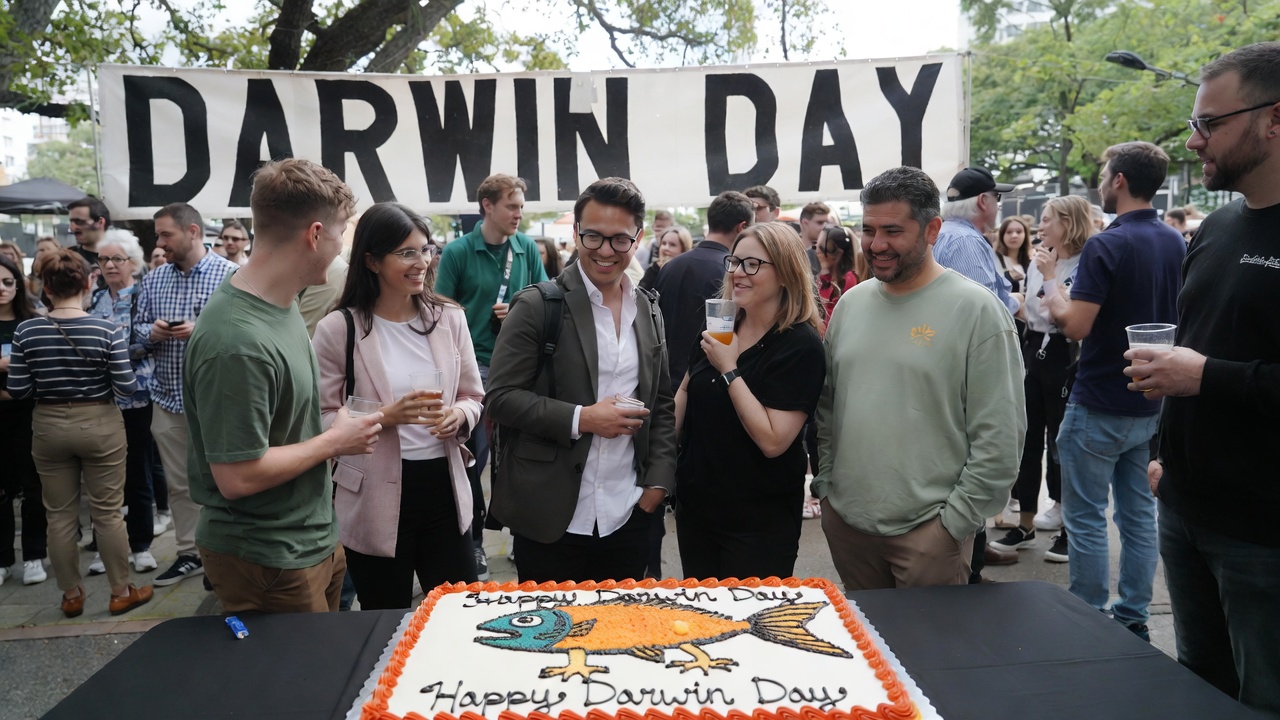

Every February, science lovers around the world circle the same date on their calendars. February 12 marks the birthday of one of the most important scientists who ever lived — Charles Robert Darwin. In 2026, Darwin Day falls on a Thursday, and this year’s celebrations are bigger and more varied than ever before. From museum galas in Sacramento to online evolution symposiums organized by the National Center for Science Education (NCSE), communities everywhere are finding creative ways to honor the man who changed our understanding of life on Earth.
But Darwin Day is about more than one man’s birthday. It is a global celebration of science, curiosity, and the courage to ask hard questions. Whether you are a biology professor, a homeschool parent, or simply someone who finds the natural world fascinating, this day offers something for you. In this guide, we cover the full story — from Darwin’s early life in Shrewsbury to the 2026 events happening right now near you.
What Is Darwin Day and Why Do We Celebrate It Every Year?
Darwin Day is an annual celebration held on February 12 to honor the life and work of Charles Darwin, the English naturalist born on that date in 1809. The day is used to recognize Darwin’s groundbreaking contributions to science and to promote scientific thinking in everyday life. It is sometimes called International Darwin Day, a name that reflects its worldwide scope.
The day is not just about one man. It is about the values he stood for: intellectual bravery, endless curiosity, and a hunger for truth. As stated on the official Darwin Day website, the celebration aims to “inspire people throughout the globe to reflect and act on the principles of intellectual bravery, perpetual curiosity, scientific thinking, and hunger for truth as embodied in Charles Darwin.”
Darwin Day is not a federal holiday in the United States. It is not a bank holiday in the United Kingdom. Yet it is observed by hundreds of organizations across dozens of countries each year. Universities, museums, libraries, churches, civic groups, and individuals all participate. The celebrations range from formal lectures and research symposia to casual dinner parties with “primordial soup” on the menu.
Key facts about Darwin Day at a glance:
| Detail | Information |
|---|---|
| Official Date | February 12 (every year) |
| 2026 Day of the Week | Thursday |
| Named After | Charles Robert Darwin (1809–1882) |
| First Organized Celebration | 1995, Palo Alto, California |
| Official Website | darwinday.org |
| Social Media Hashtag | #DarwinDay |
| Type of Observance | Unofficial international celebration |
One charming detail: Darwin shares his birthday with Abraham Lincoln. Both men were born on February 12, 1809. Some celebrants combine Darwin Day with a nod to Lincoln’s legacy, creating a double tribute to two men who reshaped the modern world in very different ways.
The Complete History of Darwin Day: From Victorian Tributes to a Global Movement
The story of Darwin Day stretches back much further than most people realize. It did not appear overnight as a modern invention. Instead, tributes to Darwin’s life have been taking shape — in fits and starts — since the naturalist died in 1882.
Early Tributes at Down House and Cambridge (1882–1909)
After Darwin’s death on April 19, 1882, at the age of 73, memorial events were held at Down House in the village of Downe, Kent, where Darwin and his family had lived since 1842. Down House was where Darwin wrote On the Origin of Species, where he conducted experiments in his greenhouse, and where he took his famous daily walks along the Sandwalk, his personal “thinking path.”
The first truly large-scale tribute came in 1909, on the centennial of Darwin’s birth. That year, more than 400 scientists and dignitaries from 167 countries gathered at the University of Cambridge to honor Darwin and discuss the latest scientific discoveries related to evolution. It was a widely reported event that captured public attention. In the same year, the New York Academy of Sciences hosted a celebration at the American Museum of Natural History, where a bronze bust of Darwin was unveiled.
These early events set an important precedent. They showed that Darwin’s influence reached far beyond the boundaries of any single country or scientific discipline.
The Rise of “Phylum Feasts” and Academic Celebrations (1959–1990s)
For much of the twentieth century, Darwin tributes were informal and scattered. Scientists and academics would mark February 12 with small gatherings. One beloved tradition that emerged during this period was the “Phylum Feast” — a potluck dinner where every dish comes from a different biological phylum. The goal is to make the meal as biologically diverse as possible, with ingredients from plants, animals, fungi, and beyond. Records of such feasts go back to at least the early 1970s in Canada.
In 1959, the University of Chicago held a major celebration marking the centennial of the publication of On the Origin of Species. This was the largest event of the Darwin Centennial Celebration and drew scientists from around the world.
Meanwhile, Salem State College (now Salem State University) in Massachusetts began hosting its annual “Darwin Festival” in 1980. It is one of the longest-running Darwin celebrations in the world and continues to this day. The 2026 edition runs from February 10 through February 13, featuring talks from leading biology researchers.
The Modern Darwin Day Movement Takes Shape (1993–2000)
The push for an organized, annual Darwin Day began in earnest in the early 1990s. In late 1993, Dr. Robert Stephens motivated the Humanist Community of Palo Alto, California, to begin planning a public celebration of Darwin’s birthday. Their first event, held on April 22, 1995, featured a lecture by Dr. Donald Johanson — the paleoanthropologist who discovered the famous early hominid fossil known as “Lucy.” The lecture was co-sponsored by the Stanford Humanists student group. This is widely regarded as the first organized Darwin Day event.
Around the same time, across the Atlantic, the London Evolution Group was taking shape. Formed in 1992 by evolutionary biologist James Mallet and systematic botanist Sandra Knapp, the group brought together London-area researchers from University College London, the Natural History Museum, and Imperial College. In 1994, they held their first official meeting — called “Darwin’s Birthday Party” — at the Linnean Society of London in Piccadilly. The program featured two speakers on an evolutionary topic, followed by a question-and-answer session and a reception. This tradition continues today in collaboration with the Centre for Ecology and Evolution.
In 1997, Professor Massimo Pigliucci started an annual Darwin Day event at the University of Tennessee. His event included public lectures, hands-on activities, and a workshop for elementary and secondary school teachers. The workshop was designed to help teachers explain evolution more clearly and to give them tools for handling pressure from opponents of evolution education.
The real turning point came in 2000, when three passionate advocates — Dr. Robert Stephens, Professor Massimo Pigliucci, and Amanda Chesworth — created the Darwin Day Program. This initiative, later renamed the Darwin Day Celebration, became a nonprofit organization dedicated to promoting science education through Darwin-themed events. The Darwin Day Celebration website now serves as a global registry for events, operated by the International Darwin Day Foundation, a program of the American Humanist Association.
Official Recognition and Legislative Efforts (2011–2015)
Darwin Day received attention on the floor of the United States Congress on February 9, 2011, when California Representative Pete Stark introduced House Resolution 81. The resolution sought to designate February 12, 2011, as Darwin Day, calling Darwin “a worthy symbol of scientific advancement… and around which to build a global celebration of science and humanity.”
In 2013, New Jersey Representative Rush D. Holt, Jr. — a Quaker Christian and nuclear physicist — introduced his own resolution to designate February 12, 2013, as Darwin Day. His resolution recognized “the importance of sciences in the betterment of humanity.”
A landmark moment came in 2015, when Delaware Governor Jack Markell declared February 12 as “Charles Darwin Day”, making Delaware the first U.S. state to formally mark the occasion. That same year, Representative Jim Himes of Connecticut introduced House Resolution 67, which would have designated February 12 as Darwin Day nationally.
While no binding federal legislation has passed, these efforts reflect the growing cultural significance of Darwin Day and its role in promoting science education.
The 2009 Bicentennial: A Global Milestone
The year 2009 was a watershed moment. It marked the 200th anniversary of Darwin’s birth and the 150th anniversary of the publication of On the Origin of Species. Celebrations took place on every continent.
In Shrewsbury, Darwin’s birthplace, the town held a week of festivities. In Cambridge, Darwin’s alma mater, Christ’s College unveiled a life-sized bronze statue of the “Young Darwin,” sculpted by graduate Anthony Smith. The statue was unveiled by Prince Philip, then chancellor of the university, and it was later shortlisted for the Marsh Award for Excellence in Public Sculpture.
The Natural History Museum in London hosted major exhibitions. The Perth Mint in Australia released a commemorative silver coin. And the biopic Creation, starring Paul Bettany and Jennifer Connelly, brought Darwin’s personal story to movie screens worldwide.
Who Was Charles Darwin? A Brief Biography of the Father of Evolution
To truly appreciate Darwin Day, it helps to know the man behind it. Charles Darwin was not a flashy revolutionary. He was a quiet, careful observer who spent decades refining his ideas before sharing them with the world.
Early Life in Shrewsbury and a Failed Medical Career
Charles Robert Darwin was born on February 12, 1809, in Shrewsbury, Shropshire, England. He was the second youngest of six children. His father, Robert Darwin, was a wealthy doctor and financier. His grandfather, Erasmus Darwin, was a prominent scientist and thinker.
At the age of 16, young Charles enrolled at the University of Edinburgh to study medicine — his father’s chosen profession. But Darwin had a weak stomach. He could not stand the sight of surgery performed without anesthesia. He also found the medical lectures boring. His real passion lay elsewhere: in nature. He spent his free time collecting beetles, studying marine organisms, and learning taxidermy from John Edmonstone, a formerly enslaved man from Guyana whose knowledge and skill left a lasting impression on Darwin.
When it became clear that medicine was not going to work out, Darwin’s father was deeply disappointed. He sent Charles to Christ’s College, Cambridge, to study divinity, with the hope that the young man would settle into a respectable career as an Anglican clergyman. But once again, Darwin gravitated toward the natural world. At Cambridge, he fell under the mentorship of Professor John Stevens Henslow, a botanist who became a lifelong friend and champion. Henslow’s guidance would prove to be one of the most consequential relationships in the history of science.
The Voyage of HMS Beagle: Five Years That Changed Everything (1831–1836)
In August 1831, shortly after finishing his studies at Cambridge, Darwin received a letter that would change his life — and the world. Henslow wrote to inform him that Captain Robert FitzRoy of the Royal Navy was seeking a gentleman naturalist to join the second surveying voyage of HMS Beagle. FitzRoy wanted an educated companion who could observe and document the natural world during the trip.
Darwin’s father initially objected. He saw the voyage as a waste of time and wanted his son to settle down. But Darwin’s uncle, Josiah Wedgwood II (of the famous pottery family), intervened and persuaded Robert Darwin to relent.
On December 27, 1831, the Beagle set sail from Plymouth Sound. Darwin was 22 years old. The voyage was originally planned to last two years. It lasted nearly five.
Here is a simplified timeline of the journey:
| Date | Location / Event |
|---|---|
| December 1831 | Departs Plymouth, England |
| January 1832 | Cape Verde Islands; Darwin begins geological observations |
| February 1832 | Arrives in Brazil; explores tropical rainforests |
| September 1832 | Discovers large fossil bones in Argentina |
| August 1833 | Explores the Pampas grasslands with local gauchos |
| June 1834 | Reaches the Pacific Ocean |
| January–March 1835 | Witnesses volcanic eruption and earthquake in Chile; climbs the Andes |
| September–October 1835 | Explores the Galápagos Islands — a pivotal moment |
| April 1836 | Visits the Cocos (Keeling) Islands; develops coral reef theory |
| October 2, 1836 | Returns to England |
The Galápagos Islands were the key. There, Darwin noticed that birds, tortoises, and plants differed from island to island, even though the islands were close together. The finches, in particular, showed a striking range of beak sizes and shapes. Each species appeared adapted to its specific food source. These observations planted the seed for what would become the theory of natural selection.
Darwin later wrote that the Beagle voyage was “by far the most important event in my life” and that it “determined my whole career.” He left England as a promising young graduate. He returned as a seasoned naturalist with 5,436 specimens, 770 pages of diary entries, and 1,750 pages of scientific notes.
Down House, the Origin of Species, and a Quiet Revolution (1842–1882)
After returning to England, Darwin married his cousin Emma Wedgwood in 1839 and eventually settled with his growing family at Down House in Kent in 1842. He would live there for the rest of his life — forty years in total.
Down House became Darwin’s laboratory. The gardens served as his outdoor research station. He bred pigeons to study artificial selection. He experimented with orchids, climbing plants, and insectivorous species in his greenhouse. He measured the activity of earthworms with a device called the “wormstone.” And he walked the Sandwalk daily, turning over ideas in his mind.
For more than 20 years, Darwin kept his most radical ideas largely to himself. He knew they would be controversial. He continued to gather evidence, correspond with fellow scientists, and refine his arguments. It was only when Alfred Russel Wallace independently arrived at a similar theory in 1858 that Darwin felt compelled to act. A joint presentation of their ideas was made at the Linnean Society of London on July 1, 1858.
On November 24, 1859, Darwin published On the Origin of Species by Means of Natural Selection, or the Preservation of Favoured Races in the Struggle for Life. The first edition of 1,250 copies sold out on the day of publication. The book argued that all life on Earth descends from common ancestors, and that the diversity of species is the result of natural selection — a process in which organisms with traits better suited to their environment are more likely to survive and reproduce.
The reaction was explosive. The scientific establishment was divided. The Church was alarmed. Public debate raged. But the evidence was overwhelming, and over the following decades, the scientific community increasingly accepted Darwin’s framework.
Darwin continued to publish important works, including The Descent of Man (1871) and The Expression of the Emotions in Man and Animals (1872). He died on April 19, 1882, and was buried with full honors in Westminster Abbey, near Sir Isaac Newton.
Why Darwin Day Matters in 2026: The Relevance of Evolution Education Today
In 2026, Darwin Day is not just a historical commemoration. It takes on fresh urgency at a time when science education, critical thinking, and evidence-based reasoning face significant challenges worldwide.
The theory of evolution is one of the best-supported ideas in all of science. It forms the foundation of modern biology and has practical applications in medicine, agriculture, conservation, and public health. Understanding how viruses mutate and how antibiotic resistance develops, for example, depends directly on evolutionary principles.
Yet evolution remains a subject of public controversy in many parts of the world. Efforts to undermine evolution education in schools persist in several U.S. states and in other countries. According to the National Center for Science Education, promoting clear and accurate evolution education is more important now than ever.
Darwin Day provides a focused opportunity to address these challenges. It encourages:
- Public engagement with science through free lectures, museum events, and community programs
- Teacher support with workshops and resources for explaining evolution effectively in the classroom
- Interfaith dialogue through initiatives like the annual Religion and Science Weekend, which takes place alongside Darwin Day and features congregations from over 30 U.S. states and five countries discussing the compatibility of faith and scientific inquiry
- Youth participation through essay contests, art competitions, and student-led research presentations
As the NCSE puts it, Darwin Day events offer “a marvelous opportunity not only to celebrate Darwin’s birthday but also to engage in public outreach about science, evolution, and the importance of evolution education.”
Darwin Day 2026 Events and Celebrations Around the World
One of the best things about Darwin Day is the enormous variety of events. You can find something happening in almost every state in the U.S. and in dozens of countries worldwide. Here is a look at some of the most notable 2026 celebrations.
Major Darwin Day 2026 Events in the United States
Sacramento Darwin Day Educational Gala (MOSAC) — February 13, 2026
The SMUD Museum of Science and Curiosity (MOSAC) in Sacramento, California, hosts the 29th Annual Darwin Day Celebration — the second longest-running Darwin Day celebration in the world. The 2026 event takes place on February 13 from 6:30 PM to 9:30 PM in the museum’s state-of-the-art planetarium. The keynote speaker is Dr. Rick Grosberg, a marine evolutionary biologist whose research focuses on the major evolutionary transitions in the history of life. Tickets are $25 for general admission, $20 for MOSAC members, and $10 for students. Parking and refreshments are included.
Salem State University Darwin Festival — February 10–13, 2026
Salem State University in Massachusetts continues its long tradition with the 2026 Darwin Festival, running from Tuesday, February 10, through Friday, February 13. All in-person talks are held in Vets Hall. The festival features sessions from leading biology researchers and has been a fixture of the Darwin Day calendar since 1980.
NCSE Evolution Symposium — February 12, 2026 (Online)
The National Center for Science Education, in partnership with the National Association of Biology Teachers (NABT), presents an online evolution symposium titled “Journey into Darkness: The Allegory of the Cave” at 7:00 PM Eastern on February 12, 2026. This is a reprise of the popular 2025 symposium and is free to attend with registration.
Paleontological Research Institution (PRI) Darwin Days — February 10–14, 2026
In Ithaca, New York, the Paleontological Research Institution celebrates with a five-day series of events at the Museum of the Earth. The 2026 theme explores mollusk evolution, inspired by the museum’s special exhibition, Marvellous Mollusks: The Secret World of Shells. Events include panel discussions, film screenings, and workshops.
North Carolina Botanical Garden Darwin Day Lecture — February 12, 2026
The North Carolina Botanical Garden and the Carolina Biodiversity Collaborative host their annual Darwin Day Lecture. The 2026 speaker is Paul Brinkman of the NC Museum of Natural Sciences, who will discuss Charles Darwin’s encounters with vertebrate fossils during the voyage of the Beagle. The talk is moderated by Damon Waitt, NCBG Director.
University of Delaware Darwin Day — February 12, 2026
The University of Delaware hosts a campus-wide celebration exploring Darwin’s explorations and the diversity of life sciences through an interdisciplinary lens. The event involves multiple departments within the College of Arts and Sciences.
University of Alabama at Birmingham (UAB) Darwin Day — February 12, 2026
The UAB Department of Biology presents its 2026 Darwin Day, featuring a public poster session and reception from 6:00 to 7:00 PM, followed by a keynote lecture by Dr. Andrea Bodnar from 7:00 to 8:00 PM.
Essig Museum of Entomology, UC Berkeley — February 2026
Each year, the Essig Museum at UC Berkeley celebrates the birthdays of Charles Darwin, Alfred Russel Wallace, and Henry Bates with special behind-the-scenes tours of their insect collection in the Valley Life Sciences Building.
Denver Secular Hub — February 2026
The Secular Hub in Denver, Colorado, marks 13 years of hosting science-themed events with a special Darwin Day celebration. The featured talk by Nick Schweitzer explores the history of evolution in American legal and education systems.
International Darwin Day Celebrations in 2026
Darwin Day is observed in countries across Europe, Asia, South America, and Oceania. In the United Kingdom, the Linnean Society of London typically hosts its annual “Darwin’s Birthday Party” with evolutionary biology lectures. The Natural History Museum in London — home to the Darwin Centre, which houses tens of millions of preserved specimens — offers year-round exhibits related to Darwin’s work.
In Germany, universities and science organizations hold lectures and workshops. In India, science clubs and educational institutions mark the day with seminars on evolutionary biology. In Australia, natural history museums often organize special exhibits around February 12.
The Darwin Day Celebration registry provides a comprehensive, searchable list of events worldwide. If you are looking for an event near you, this is the best place to start.
Religion and Science Weekend 2026
Running alongside Darwin Day each year is the Religion and Science Weekend (formerly known as Evolution Weekend). This initiative brings together religious congregations and scientific communities to explore how faith and evolution can coexist. In 2026, the event marks its 21st year. According to the NCSE, 106 congregations in 34 U.S. states and five foreign countries were scheduled to hold Religion and Science Weekend events.
The event was inspired by The Clergy Letter Project, which gathers signatures from clergy who affirm that evolution and religious faith are compatible. As the organizers note, “Weekend makes it clear that those claiming that people must choose between religion and science are creating a false dichotomy.”
How to Celebrate Darwin Day 2026: 12 Creative Ideas for Science Lovers
You do not need a PhD in biology to celebrate Darwin Day. Here are twelve ways to honor Darwin’s legacy, whether you prefer quiet reading at home or a lively community gathering.
1. Read On the Origin of Species or Another Darwin Classic
Darwin wrote more than twenty books during his lifetime. On the Origin of Species is the most famous, but The Voyage of the Beagle is often more enjoyable as a first read. It is a travel narrative filled with vivid descriptions of rainforests, volcanoes, and strange animals. The Descent of Man and The Expression of the Emotions in Man and Animals are also accessible to general readers.
2. Visit a Natural History Museum Near You
Museums across the world hold special Darwin Day programming. Even if your local museum does not have a specific event, you can spend the day exploring exhibits on evolution, paleontology, and biodiversity. Major institutions with strong Darwin connections include:
- Natural History Museum, London — Home to the Darwin Centre, Darwin’s finches, and the world’s largest collection of Darwin’s published works (478 editions of On the Origin of Species in 38 languages)
- American Museum of Natural History, New York — Features extensive Darwin exhibits and a Beagle voyage timeline
- Museum of the Earth, Ithaca, New York — Hosts the annual PRI Darwin Days
- SMUD Museum of Science and Curiosity, Sacramento — Home to the second-longest-running Darwin Day celebration
3. Make a Pilgrimage to Down House in Kent, England
For the dedicated Darwin enthusiast, a visit to Down House is a once-in-a-lifetime experience. Managed by English Heritage, the house has been restored to reflect Darwin’s time. You can stand in the study where he wrote On the Origin of Species, walk the Sandwalk “thinking path,” explore the greenhouse where he experimented with orchids, and see a full-scale replica of his cabin aboard the Beagle.
The property is located in Downe, Kent, about 15 miles from central London. It is open Wednesday through Sunday from April to October, and on weekends from November through March. Admission costs approximately £16–£18.70 for adults and £9.60–£11.20 for children (prices vary by season). English Heritage members enter free.
The nearest train station is Orpington, about four miles away. From there, you can take a taxi or a local hopper bus. Parking is limited, so public transport is recommended, especially on weekends.
4. Host a Phylum Feast with Friends and Family
One of the most creative Darwin Day traditions is the Phylum Feast. The concept is simple: prepare a meal using ingredients from as many different biological phyla as possible. Think broadly. Your dinner table might include:
- Plants (fruits, vegetables, grains)
- Mammals (beef, lamb, pork)
- Fish (salmon, cod)
- Mollusks (mussels, clams, squid)
- Crustaceans (shrimp, crab)
- Fungi (mushrooms)
- Echinoderms (sea urchin, if you are adventurous)
Darwin himself was known for his adventurous palate. During his Beagle voyage, he reportedly sampled ostrich, puma, armadillo, and various other species he encountered. A Phylum Feast is a fun, hands-on way to think about the incredible diversity of life.
5. Watch a Documentary or Film About Darwin and Evolution
There is no shortage of excellent visual media about Darwin. Consider these options:
- Creation (2009) — A biographical drama starring Paul Bettany as Darwin and Jennifer Connelly as his wife, Emma. The film focuses on Darwin’s personal struggles while writing On the Origin of Species.
- Darwin’s Dangerous Idea (BBC, 2009) — A three-part documentary exploring how Darwin’s theory has influenced science, society, and culture.
- Galápagos (BBC, 2006) — A stunning nature documentary series narrated by Tilda Swinton that explores the islands that inspired Darwin’s most famous ideas.
- Your Inner Fish (PBS, 2014) — Based on the book by Neil Shubin, this series traces the evolutionary origins of the human body.
6. Attend a Darwin Day Lecture or Symposium (In Person or Online)
Check the Darwin Day Celebration event registry for lectures, symposiums, and workshops in your area. Many events in 2026 are offered both in-person and virtually, making them accessible to anyone with an internet connection. The NCSE’s online Evolution Symposium on February 12 is a particularly good option for remote participants.
7. Take a Nature Walk and Observe Natural Selection in Action
Darwin was, above all, an observer. He noticed things that others walked past. You can follow his example by taking a walk in your local park, forest, or garden and paying close attention to the plants and animals around you. Notice the variation in leaf shapes on the same tree. Watch how different birds use different feeding strategies. Look at how insects have adapted to their environments. Bring a notebook and sketch what you see, just as Darwin did.
8. Share Darwin’s Legacy on Social Media
Use the hashtag #DarwinDay to share facts, favorite Darwin quotes, or photos from your celebrations. Some popular Darwin quotes to share include:
“There is grandeur in this view of life, with its several powers, having been originally breathed into a few forms or into one; and that, whilst this planet has gone cycling on according to the fixed law of gravity, from so simple a beginning endless forms most beautiful and most wonderful have been, and are being, evolved.” — Charles Darwin, On the Origin of Species, final paragraph
The NCSE also encourages the use of the hashtag #whyteachevolution on Darwin Day to promote evolution education.
9. Volunteer or Donate to Science Education Organizations
Several organizations work year-round to defend and promote science education. Consider supporting:
- National Center for Science Education (NCSE) — Defends the teaching of evolution and climate science in public schools
- American Humanist Association — Operates the International Darwin Day Foundation
- The Paleontological Research Institution — Promotes earth science education through its Museum of the Earth
10. Visit the Galápagos Islands (For the Ultimate Darwin Day Adventure)
If you want the most immersive Darwin experience possible, consider planning a trip to the Galápagos Islands in Ecuador. This remote volcanic archipelago, located about 600 miles west of the South American mainland, is where Darwin made the observations that inspired his theory of natural selection. Today, the islands are a UNESCO World Heritage Site and one of the world’s premier destinations for wildlife observation. You can see giant tortoises, marine iguanas, blue-footed boobies, and, of course, Darwin’s finches — all in their natural habitat.
11. Organize a Darwin Day Event in Your School or Community
You do not need a large budget to host a Darwin Day event. Consider organizing:
- A book club discussion of On the Origin of Species or The Voyage of the Beagle
- A science fair or poster session at your school
- A movie screening followed by a discussion about evolution
- An art or essay contest with an evolution theme
- A guided nature walk led by a local biologist or naturalist
The Darwin Day website provides resources and templates for organizing events of all sizes.
12. Explore Darwin’s Work Through Modern Genomics and Biotechnology
One of the most exciting areas of modern biology is the way genomic science has validated and expanded Darwin’s ideas. DNA sequencing has confirmed the evolutionary relationships that Darwin predicted based on physical characteristics alone. In 2026, scientists continue to use evolutionary principles to develop new medicines, track disease outbreaks, and even explore the possibility of de-extinction — bringing back species that have gone extinct.
At the Darwin Day 2026 celebration hosted by a community event partner, Ben Novak, Lead Scientist at Revive & Restore, serves as a distinguished guest speaker. Novak is a pioneer in the field of genetic rescue and de-extinction, using 21st-century biotechnology to restore lost biodiversity. His presence at a Darwin Day event perfectly illustrates how Darwin’s 19th-century ideas continue to drive cutting-edge science in the present day.
Famous Places Connected to Charles Darwin You Can Visit Today
For travelers who want to walk in Darwin’s footsteps, here are the most important sites connected to his life and work.
Down House, Downe, Kent, England
As described above, Down House is the single most important site in Darwin’s personal history. Managed by English Heritage, it offers a multimedia tour narrated by Sir David Attenborough, original furniture from Darwin’s study, a recreated bedroom, and beautifully maintained gardens. The greenhouse contains orchids and insectivorous plants of the types Darwin studied. The Sandwalk is open for walking, and interactive panels throughout the gardens bring his experiments to life.
Address: Luxted Road, Downe, Kent, BR6 7JT Getting there: Train to Orpington station, then taxi or hopper bus (about 4 miles)
The Natural History Museum, London
The Natural History Museum in South Kensington is home to the Darwin Centre, a state-of-the-art facility housing tens of millions of preserved specimens. The museum’s library holds the world’s largest concentration of Darwin’s published works, including 478 editions of On the Origin of Species in 38 languages. You can see Darwin’s finches, his coral specimens from the Cocos Islands, and the skull of Toxodon platensis — a giant extinct mammal Darwin discovered in Uruguay during the Beagle voyage.
The eight-story Cocoon building within the Darwin Centre allows visitors to see scientists at work and explore collections of insects and plants. The museum’s Archie, an 8.62-meter-long giant squid, is one of the most famous specimens in the spirit collection.
Admission: Free for the permanent collection Address: Cromwell Road, London SW7 5BD
Christ’s College, Cambridge
Darwin studied at Christ’s College from 1828 to 1831. The college still stands and welcomes visitors. In the college grounds, you can see the bronze statue of the “Young Darwin”, unveiled during the 2009 bicentennial celebrations. The gardens where Darwin collected beetles as a student remain a lovely place to walk.
Shrewsbury, Shropshire, England
Darwin’s hometown of Shrewsbury honors its most famous son with several landmarks. The Mount, the house where Darwin was born, still stands (though it is now a private building). The town also features a Darwin statue outside the old Shrewsbury School library, a Darwin shopping center, and Darwin’s Gate — a public artwork near the river.
The Galápagos Islands, Ecuador
The ultimate Darwin pilgrimage. The Charles Darwin Research Station on Santa Cruz Island continues scientific work in Darwin’s tradition. Visitors can learn about ongoing conservation efforts, see giant tortoise breeding programs, and explore the islands’ unique ecosystems.
The Scientific Legacy of Charles Darwin: Why His Ideas Still Shape Modern Biology
Darwin’s influence extends far beyond the pages of On the Origin of Species. His ideas form the backbone of modern biology and have given rise to numerous scientific disciplines. Here are some of the fields that trace their roots directly to Darwin’s work:
- Evolutionary biology — the core discipline that studies how species change over time
- Ecology — the study of how organisms interact with each other and their environments
- Genetics — while Darwin did not know about DNA, his theory predicted the existence of a mechanism for inheritance
- Ethology — the scientific study of animal behavior
- Behavioral genetics — the study of how genes influence behavior
- Immunology — understanding how immune systems evolve to fight new threats
- Conservation biology — applying evolutionary principles to protect endangered species
Modern genomic research has confirmed Darwin’s central insight: all life on Earth shares common ancestry. DNA comparison shows that humans share approximately 98.7% of their DNA with chimpanzees, about 85% with mice, and even about 60% with fruit flies. These findings are a stunning validation of the “tree of life” that Darwin first sketched in his notebooks in the late 1830s.
The phrase “survival of the fittest” is often attributed to Darwin, but it was actually coined by Herbert Spencer, a British philosopher, who used it to connect his own economic theories to Darwin’s work. Darwin himself preferred the term “natural selection”, which he felt was more precise. Natural selection does not mean that the strongest or fastest survive. It means that the organisms best adapted to their specific environment are more likely to pass on their genes.
Frequently Asked Questions About Darwin Day 2026
When is Darwin Day 2026? Darwin Day 2026 falls on Thursday, February 12, 2026. It is the 43rd day of the year, with 322 days remaining.
Is Darwin Day a public holiday? No. Darwin Day is not a public or federal holiday in any country. It is an unofficial observance celebrated voluntarily by individuals, organizations, schools, and museums.
Who started Darwin Day? The modern Darwin Day movement was started by Dr. Robert Stephens, Professor Massimo Pigliucci, and Amanda Chesworth, who founded the Darwin Day Program in 2000. The first organized public celebration was held in 1995 in Palo Alto, California.
How old would Charles Darwin be in 2026? Charles Darwin was born on February 12, 1809. If he were alive in 2026, he would turn 217 years old.
What is a Phylum Feast? A Phylum Feast is a potluck dinner in which every dish is made from ingredients representing different biological phyla. The tradition dates back to at least the 1970s and is a popular way to celebrate Darwin Day with food and conversation about biodiversity.
What is Religion and Science Weekend? Religion and Science Weekend is an annual event that takes place alongside Darwin Day. It brings together religious congregations and science educators to discuss the compatibility of faith and evolution. In 2026, it marks its 21st year.
Where is Darwin buried? Charles Darwin is buried in Westminster Abbey in London, near the grave of Sir Isaac Newton.
What was the name of Darwin’s ship? Darwin sailed aboard HMS Beagle from 1831 to 1836. The ship was a 90-foot-long, 10-gun brig of the Royal Navy.
Did Darwin discover evolution? Darwin did not “discover” evolution in the sense that he was the first to suggest that species change over time. What Darwin did was provide a mechanism — natural selection — to explain how and why evolution occurs. He also assembled overwhelming evidence to support the theory, published in On the Origin of Species in 1859.
Fun Facts About Charles Darwin That Will Surprise You
Even the most devoted Darwin fans may not know all of these details:
- Darwin and Abraham Lincoln were born on the exact same day — February 12, 1809. Both men also lost their mothers at a young age.
- Darwin’s portrait appeared on the British £10 banknote from 2000 to 2017.
- Darwin originally trained to be a doctor and then a priest. Neither career stuck.
- Darwin ate many of the animals he studied. During the Beagle voyage, he sampled ostrich, puma, armadillo, and a large rodent called an agouti.
- Darwin was a prolific letter writer. He sent and received over 14,500 letters during his lifetime, corresponding with scientists, gardeners, pigeon breeders, and ordinary citizens from around the world.
- Darwin suffered from chronic illness for most of his adult life. The exact cause has never been determined, with theories ranging from Chagas disease (possibly contracted during the Beagle voyage) to anxiety disorder.
- Darwin played backgammon with his wife every evening and reportedly kept a running tally of wins and losses.
- Darwin’s final book was about earthworms. The Formation of Vegetable Mould through the Action of Worms (1881) was a bestseller in its day.
- He was buried in Westminster Abbey despite initial plans to bury him at St. Mary’s Church in Downe. His scientific colleagues campaigned for a national honor, and the Abbey accepted.
How Darwin Day Connects Science and Community in 2026
Darwin Day is, at its heart, a community event. It brings together people who might not normally cross paths: university professors and kindergarten teachers, retired engineers and college students, churchgoers and humanists, amateur birdwatchers and professional geneticists. The shared thread is a love of learning and a belief that understanding the natural world makes life richer.
In 2026, the Darwin Day Celebration registry lists events across the United States and around the world. The NCSE encourages everyone to attend, participate in, or organize their own Darwin Day events. Whether your contribution is a casual social media post with the #DarwinDay hashtag or a fully organized educational gala, you are part of a global movement that honors one of the most important ideas in human history.
Darwin himself would probably be embarrassed by all the fuss. He was, by all accounts, a modest man who preferred the quiet of his garden to the spotlight. But his ideas — born from careful observation, tireless work, and the courage to follow evidence wherever it leads — deserve to be celebrated. They remind us that the world is more wonderful, more connected, and more alive than we might ever have imagined.
So on February 12, 2026, take a moment. Pick up a book. Walk outside and look closely at the world around you. Ask a question. Follow your curiosity. That is the best way to honor Darwin’s legacy.
Happy Darwin Day.
For a complete listing of Darwin Day 2026 events near you, visit the Darwin Day Celebration official event registry or the National Center for Science Education’s Darwin Day page.