By a lifelong traveler and cultural explorer — someone who has spent decades chasing festivals, customs, and the living stories etched into landscapes around the world. Of all the places I have been, the Galápagos Archipelago remains among the most transformative. This is the story of the birds that changed everything we know about life itself.
There is a moment, standing on the black volcanic rock of a Galápagos shoreline, when the world goes quiet. The equatorial sun beats down. A marine iguana sneezes salt beside your boot. And a small, dull-brown bird — no bigger than your fist — lands on a nearby cactus and begins to crack open a seed. That bird, unremarkable at first glance, helped reshape our understanding of life on Earth.
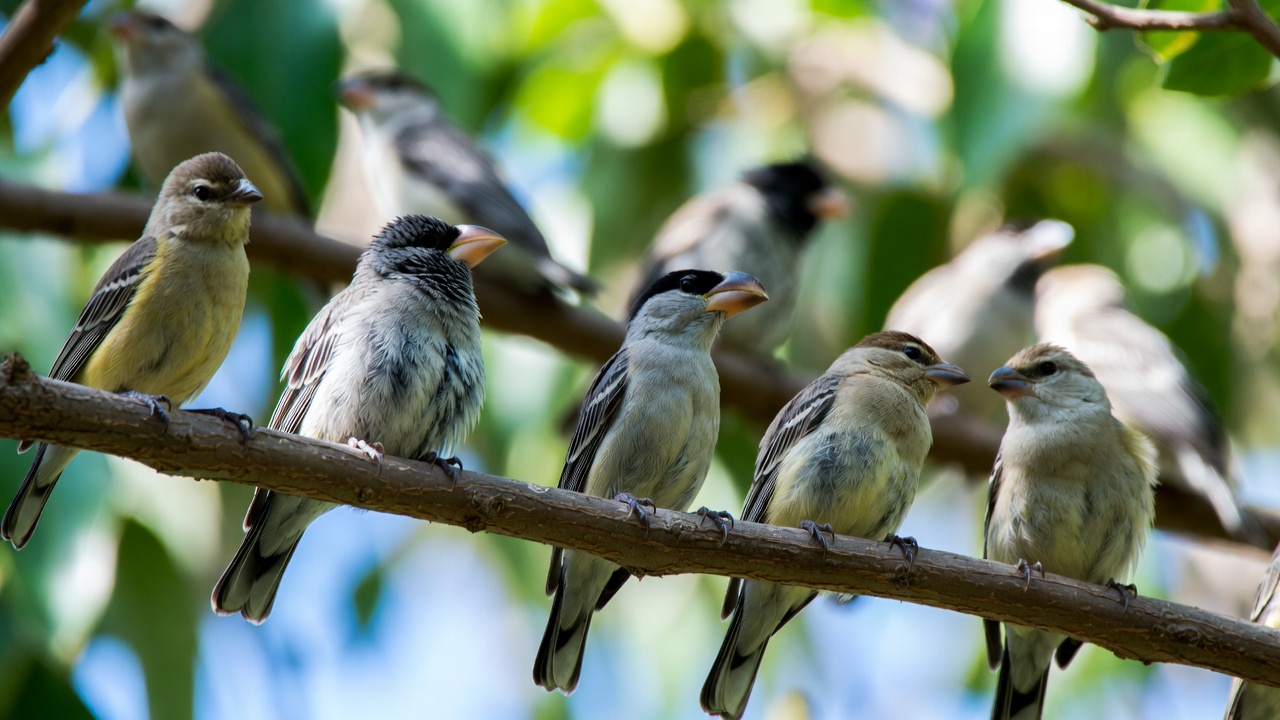
Darwin’s finches are not flashy. They do not have the iridescent feathers of a quetzal or the wingspan of a wandering albatross. Most of them are brownish or black, with stubby tails and rounded wings. But packed inside those tiny bodies is one of the most powerful stories biology has ever told: the story of adaptive radiation, the process by which a single ancestor species branches into many, each fitted to a different way of life. These modest birds are living proof that the natural world is always in motion, always adapting, always becoming.
In 2026, the study of Darwin’s finches is more alive than ever. New genomic research, groundbreaking conservation projects, and decades of tireless fieldwork continue to reveal secrets that Charles Darwin himself could not have imagined. This article is a deep journey into that world — from the historical voyage of the HMS Beagle to the cutting-edge science being done today on a remote volcanic island called Daphne Major.
What Are Darwin’s Finches and Why Are They Important to Evolution?
Darwin’s finches are a group of roughly 18 species of small passerine birds found almost entirely in the Galápagos Islands, a volcanic archipelago about 1,000 kilometers west of Ecuador in the Pacific Ocean. One additional species, the Cocos finch, lives on Cocos Island off the coast of Costa Rica. Despite their common name, these birds are not true finches. They belong to the tanager family (Thraupidae), and their closest known living relative is the dull-coloured grassquit (Asemospiza obscura), a small bird found on mainland South America.
What makes these birds so important? The answer lies in their beaks. Each species of Darwin’s finch has a beak shape finely tuned to a specific food source. Some have thick, powerful beaks for cracking hard seeds. Others have slender, pointed beaks for catching insects. One species, the woodpecker finch, even uses tools — cactus spines or small twigs — to dig beetle larvae out of rotting wood. The vampire finch on the remote islands of Wolf and Darwin drinks the blood of seabirds by pecking at their skin.
All of these species are thought to have descended from a single ancestral finch that arrived in the Galápagos more than one million years ago. Over time, as different populations settled on different islands with different food sources, natural selection shaped their bodies — especially their beaks — to fit their environments. This process is what biologists call adaptive radiation, and Darwin’s finches remain one of the most famous and thoroughly studied examples of it on the planet.
The birds range in size from 10 to 20 centimeters in length and weigh between 8 and 38 grams. The smallest are the warbler-finches; the largest is the vegetarian finch. Their coloring is mostly dull — males of ground finch species tend to be black, while females are brown and streaky. This lack of visual drama is precisely what makes them so interesting. Their story is not written in plumage. It is written in bone, muscle, and the quiet mathematics of survival.
How Did Charles Darwin Discover the Galápagos Finches in 1835?
The story begins in September 1835, when a young English naturalist named Charles Darwin arrived in the Galápagos aboard HMS Beagle. He was 26 years old, serving as a gentleman naturalist on a five-year survey voyage around the world. His time in the Galápagos lasted only five weeks, but those weeks would eventually change the course of science.
Here is the surprising part: Darwin did not initially realize the finches were important. He collected specimens, yes, but he thought some of them were blackbirds, some were “gross-beaks,” and some were wrens. He paid far more attention to the mockingbirds, which he carefully labeled by island. The finches were almost an afterthought.
It was only after Darwin returned to England and handed his bird specimens to John Gould, the celebrated ornithologist at the Zoological Society of London, that the truth emerged. At a meeting on January 10, 1837, Gould announced that the birds Darwin had thought were different types were actually a closely related group of twelve entirely new species — all of them unique to the Galápagos. The news made the London newspapers.
Darwin was stunned. Combined with what he had noticed about the mockingbirds and the famous Galápagos tortoises — each island seemed to have its own variety — the finch discovery planted a seed. If closely related species could look so different from island to island, perhaps species were not fixed and unchanging. Perhaps they evolved.
Darwin would spend the next two decades developing this idea before publishing On the Origin of Species in 1859. In that landmark book, he discussed the Galápagos birds without singling out the finches specifically. The term “Darwin’s finches” was not coined until 1936, when ornithologist Percy Lowe used it in a publication. It was then popularized in 1947 by David Lack in his influential book Darwin’s Finches, which drew on the massive specimen collection gathered by the 1905–06 California Academy of Sciences expedition to the Galápagos.
The irony is rich. The birds that would become the most iconic symbol of evolution were nearly overlooked by the man whose name they now carry.
How Many Species of Darwin’s Finches Exist in the Galápagos?
Classifying Darwin’s finches has never been straightforward. Depending on which taxonomic authority you consult, the number of recognized species ranges from 13 to 18. The most widely accepted count today is 17 species endemic to the Galápagos, plus one species on Cocos Island.
These species are traditionally divided into several groups based on their habitats and feeding behaviors:
| Group | Species Examples | Key Beak Trait | Primary Diet |
|---|---|---|---|
| Ground finches (Geospiza) | Small, Medium, Large Ground Finch; Sharp-beaked Ground Finch | Broad, crushing beaks of varying size | Seeds, insects, cacti |
| Cactus finches (Geospiza) | Common Cactus Finch, Large Cactus Finch | Long, probing beaks | Opuntia cactus flowers, nectar, seeds |
| Tree finches (Camarhynchus) | Small, Medium, Large Tree Finch | Grasping, parrot-like beaks | Insects, fruit, leaves |
| Woodpecker finch (Camarhynchus pallidus) | Woodpecker Finch | Strong, straight beak | Beetle larvae (uses tools) |
| Vegetarian finch (Platyspiza crassirostris) | Vegetarian Finch | Thick, curved beak | Leaves, buds, fruit, tree sap |
| Warbler finches (Certhidea) | Green Warbler-Finch, Grey Warbler-Finch | Thin, pointed beak | Small insects |
| Cocos finch (Pinaroloxias inornata) | Cocos Finch | Medium, versatile beak | Insects, nectar, fruit |
In January 2025, researchers at the Charles Darwin Foundation announced a potential new addition to the list. A study published in the Zoological Journal of the Linnean Society identified the woodpecker finch population on San Cristóbal Island as a potential new species, Camarhynchus striatipecta. Previously considered one of three subspecies of the common woodpecker finch, this population turned out to be a genetically distinct lineage. As biologist Birgit Fessl noted, the discovery “emphasizes the need for more precise and continued biodiversity assessments in the Galápagos Islands.”
The classification may continue to shift. Some authorities consider the Genovesa ground finch a separate sub-species; others view it as the same as the sharp-beaked ground finch. What is certain is that new tools — especially genomic sequencing — are refining our picture of finch diversity faster than ever before.
What Is Adaptive Radiation and How Do Darwin’s Finches Explain It?
Adaptive radiation is the rapid evolution of many species from a single ancestor, driven by the availability of new environments or ecological niches. Think of it as a tree: one trunk splits into many branches, each reaching toward a different patch of sunlight.
Darwin’s finches are considered one of the textbook examples of adaptive radiation for several reasons. First, the Galápagos Archipelago provided an ideal setting. The islands are young (the oldest is less than 5 million years old), isolated (nearly 1,000 km from the South American mainland), and diverse in habitat — from dry lowland scrub to humid highland forests. When the ancestral finch first arrived, perhaps blown off course from the mainland by a storm, it found an environment with abundant food resources but very few competitors.
Over hundreds of thousands of years, populations of finches that settled on different islands or in different habitats faced different survival pressures. On one island, the primary available food might be hard seeds. On another, it might be soft insects. Birds with beaks better suited to the local food thrived and reproduced more successfully. Generation by generation, natural selection pushed each population toward a specialized beak shape. Eventually, these populations became so different that they could no longer interbreed — they had become separate species.
The key insight is that beak shape is not random. It is a direct response to the ecological conditions on each island. Researchers at Harvard’s John A. Paulson School of Engineering and Applied Sciences have gone even further, combining evolutionary biology with geometry, biophysics, and biomechanics. They developed a mathematical model describing the relationship between beak shape, diet, and mechanical performance. As researcher Gary Choi explained, “We found a simple, mathematical relationship to describe and characterize the beak shape. This allowed us to compare beak shape across species and further characterize all the varieties of beak shapes.”
In the Galápagos, one ancestral species evolved into 18 different species in roughly one million years. That is astonishingly fast by evolutionary standards. And the process is not finished. As we will see, evolution is still happening in these birds right now — fast enough for human eyes to witness.
Peter and Rosemary Grant: The Scientists Who Watched Evolution Happen in Real Time
If Darwin planted the seed, Peter and Rosemary Grant watered it for 40 years.
The Grants are evolutionary biologists and Professors Emeriti at Princeton University. In 1973, they traveled to the Galápagos for what they expected would be a two-year study. They chose a tiny, uninhabited volcanic island called Daphne Major — a steep-sided speck of rock with no beach, no fresh water, and no trees taller than a person. Visitors do not walk onto Daphne Major. They leap from a boat onto a narrow ledge above churning water.
The Grants chose Daphne Major because it was pristine. No humans lived there. No invasive species had taken hold. Any changes in the finch populations would be caused by natural forces alone. It was, in effect, a perfect natural laboratory.
What began as a two-year project became the longest and most detailed field study of evolution ever conducted. Every year for four decades, the Grants and their students returned to Daphne Major. They captured, measured, banded, and released nearly every finch on the island. They recorded beak dimensions to fractions of a millimeter. They documented songs, mating behavior, feeding habits, nest success, survival rates, and deaths. They tracked family lineages across generations.
Their most dramatic observations came during extreme weather events. During a severe drought in 1977, food became scarce. Large, hard seeds were the only food left. Finches with larger, stronger beaks survived at higher rates. In just one generation, the average beak size of the medium ground finch (Geospiza fortis) increased measurably. When the rains returned and smaller, softer seeds became plentiful again, the trend reversed. Evolution, which Darwin believed was too slow to observe, was happening before the Grants’ eyes — in real time.
Later, during a prolonged drought of two-and-a-half years, the Grants watched something even more dramatic. The average beak and body size of the medium ground finch population shrank after larger individuals were outcompeted for food by a bigger species, the large ground finch (Geospiza magnirostris), which had colonized the island in 1982.
As the Grants explained in an interview with the Galápagos Conservation Trust: “Charles Darwin believed you could not observe or study evolution because it happens far too slowly. Our study on Daphne Major has shown the opposite.”
Perhaps the most extraordinary discovery came with “Big Bird” — an unusually large male finch that appeared on Daphne Major in 1981. Genetic analysis later revealed it was a hybrid, descended from a bird that originated on Española Island, more than 100 kilometers away. Big Bird mated with local finches, and his descendants began mating only among themselves. After seven generations — roughly 30 years — these birds had become a distinct lineage, reproductively isolated from the other finch species on the island. The Grants had witnessed the very beginning of a new species forming through hybrid speciation, a process published in the journal Science in 2017.
The Grants’ work was chronicled in Jonathan Weiner’s Pulitzer Prize-winning book, The Beak of the Finch: A Story of Evolution in Our Time (1994). They received the Kyoto Prize — often called the Japanese equivalent of the Nobel Prize — for their lifetime contributions to evolutionary biology. Peter Grant published his memoir, Enchanted by Daphne, in 2023, and Rosemary Grant published One Step Sideways, Three Steps Forward in 2024.
Groundbreaking Genomic Study Reveals 30 Years of Darwin’s Finch Evolution
The Grants’ meticulous fieldwork laid the foundation for one of the most remarkable genomic studies in evolutionary biology. In 2023, an international research team led by UC Santa Cruz postdoctoral scholar Erik Enbody (then at Uppsala University, Sweden) published a landmark study in the journal Science that combined 30 years of population data with whole-genome sequencing of nearly 4,000 individual Darwin’s finches on Daphne Major.
The results were striking. The team identified six genetic loci (specific locations on the genome) with large effects on beak size. Together, these six loci explain 45% of the variation in the highly heritable beak size of the medium ground finch. One of these loci turned out to be a supergene — a cluster of four genes bundled together on the chromosome that are inherited as a single unit.
“One of the remarkable things we found is that only a few genetic loci explain a great deal of the variation in the beak of the finch,” said Leif Andersson, a professor at Uppsala University and Texas A&M University and senior author of the study. “It seems that one of the ways these genetic changes evolve is by bundling together multiple genes into supergenes, which are then subject to natural selection as the environment changes.”
This finding was surprising. In human genetics, complex traits like height or disease risk are typically influenced by thousands of genes, each with a tiny effect. In Darwin’s finches, the genetic architecture is far simpler — a handful of powerful loci doing most of the heavy lifting.
The study also showed that natural selection and hybridization work together to drive evolution. During drought periods, when food availability shifted, the frequencies of beak-size alleles (gene variants) changed rapidly. Some of these alleles had been transferred between species through hybridization — a process called introgressive hybridization. In other words, interbreeding between species was not just a genetic dead end. It was a source of useful variation that natural selection could act upon.
A related study published in Science Advances revealed that the rapid adaptive radiation of Darwin’s finches depends on ancestral genetic modules — ancient haplotype blocks (inherited DNA segments) that predate the speciation of the finches. As the researchers reported, “Ancestral haplotypes constitute genetic modules for selection and act as key determinants of the unusual phenotypic diversity of Darwin’s finches.” In plain language, the finches have been reusing the same ancient toolbox of genes for over a million years, remixing them in different combinations to produce different beak sizes and body shapes.
Darwin’s Finches and Climate Change: What 24 Years of Data Tell Us
As the global climate continues to warm, a natural question arises: are Darwin’s finches being affected? A major new study published in the Journal of Evolutionary Biology in February 2026 set out to answer this question using 24 years of data on beak and body traits in two species of finches on Santa Cruz Island.
Led by Paola L. Carrión of McGill University and a large team of international collaborators, the study examined three questions: Is climate change happening at the study sites? Are finch beak and body traits showing long-term trends? And how much does weather affect year-to-year changes in finch traits?
The answers were nuanced. The researchers found that temperature and precipitation have been increasing over the past two decades in the Galápagos — but this trend is minor compared to the enormous year-to-year variation driven by events like El Niño and La Niña. The Galápagos climate swings wildly from season to season and year to year, and these short-term fluctuations dwarf the slower signal of long-term climate change.
As for the finches, the study found no detectable long-term trends in beak or body size that could be linked to climate change. Trait measurements over the 24-year period behaved either as random walks (wandering without direction) or stable trajectories (staying roughly the same). However, the researchers did find strong evidence that short-term weather events — especially rainfall — affect finch traits. In years following heavy rain, both species tended to have smaller beaks and bodies in subsequent years. The relationship with temperature was more complex and variable.
Why are Darwin’s finches apparently resilient to long-term climate trends, even as many other species around the world are not? The authors suggest several explanations. The Galápagos climate is so variable from year to year that the finches may already be adapted to coping with wide fluctuations. The extreme droughts and deluges caused by El Niño and La Niña cycles may exert stronger evolutionary pressure than the gradual warming trend. And the food resources that the finches depend on may not yet be strongly affected by the slowly shifting baseline climate.
This does not mean Darwin’s finches are safe. The study is a snapshot, and climate change is accelerating. The researchers caution that future changes could cross tipping points that the finches have not yet experienced.
How Hybridization Among Darwin’s Finch Species Drives New Evolutionary Pathways
One of the most surprising findings from recent research is that hybridization — the mating of individuals from different species — is not a rare accident among Darwin’s finches. It happens regularly, and it plays a significant role in driving evolution.
Traditional evolutionary thinking viewed hybridization as mostly harmful. If two species had evolved to fill different niches, mixing their genes would produce offspring poorly suited to either niche. But the evidence from Darwin’s finches tells a different story.
A 2025 study published in Evolutionary Applications examined genomic introgression between Critically Endangered medium tree finches (Camarhynchus pauper) and the stable small tree finches (Camarhynchus parvulus) on Floreana Island. The researchers found frequent introgression — the transfer of genetic material between species through hybridization and backcrossing. Hybrids regularly mated back with one parent species, creating complex patterns of gene flow.
The study raises a difficult question for conservationists. Is hybridization a threat to the genetic integrity of the endangered medium tree finch, potentially diluting it out of existence? Or is it a source of genetic rescue, providing new variation that could help the species adapt to changing conditions?
The answer depends on the specific genes being transferred and the ecological context. Some introgressed genes may be beneficial — for example, alleles related to beak size or immune function. Others may be neutral or harmful. What is clear is that the boundaries between Darwin’s finch species are more porous than anyone once thought.
This porosity is a feature, not a bug. As the landmark genomic study in Science showed, the finches have been sharing genetic material across species lines for their entire evolutionary history. Beneficial alleles that arise in one species can spread to others through hybridization, allowing the entire radiation to draw on a shared pool of genetic variation. This process, known as adaptive introgression, may be one of the reasons Darwin’s finches have diversified so rapidly.
Why Is the Mangrove Finch the Rarest Darwin’s Finch Species in the World?
Not all of the news about Darwin’s finches is encouraging. The mangrove finch (Camarhynchus heliobates) holds the grim distinction of being one of the rarest birds on the planet. Its entire world population is estimated at roughly 60 to 100 individuals, confined to a few small patches of mangrove forest on the western coast of Isabela Island in the Galápagos.
The mangrove finch’s decline is driven by two main threats: invasive rats, which prey on eggs and chicks, and the avian vampire fly (Philornis downsi), an invasive parasitic insect that has become the number-one threat to Galápagos landbirds.
The avian vampire fly was likely introduced to the Galápagos accidentally, probably through imported fruit. Its larvae hatch inside bird nests and feed on the blood of hatchlings at night. In some nests, the parasitism is so severe that every chick dies. The Charles Darwin Foundation estimates that the fly attacks at least 21 of the 29 small landbird species in the Galápagos, including 12 of the 17 endemic Darwin’s finch species. It is causing population declines in at least eight species, six of which are classified as threatened by the International Union for Conservation of Nature (IUCN).
Conservation efforts for the mangrove finch have involved multiple strategies. Teams from the Charles Darwin Foundation and the Galápagos National Park have hand-reared chicks in captivity and released them into the wild. Over several years, this program successfully released 39 fledglings and increased the juvenile population by over 50%. A newer approach involves injecting permethrin — a chrysanthemum-based insecticide — into the bases of nests to kill vampire fly larvae without harming the birds. This technique successfully protected chicks in treated nests, though it remains a short-term solution because of the difficulty of reaching nests high in 19-meter mangrove trees.
The long-term hope lies in biological control. Scientists on mainland Ecuador have identified a tiny parasitic wasp, Conura annulifera, that attacks the pupae of Philornis species in its native range. Laboratory colonies of this wasp are being studied to ensure it would not pose risks to other Galápagos species before any potential introduction. Additionally, researchers are exploring the Sterile Insect Technique, which involves releasing large numbers of sterilized male flies to reduce the wild population. A 2025 study published in Frontiers in Conservation Science also tested improved methods for the self-fumigation technique, in which finches are encouraged to incorporate insecticide-treated nesting material into their own nests, providing protection from within.
The race to save the mangrove finch is a race against time. But it also illustrates a broader truth: the same evolutionary flexibility that made Darwin’s finches famous is now being tested by threats that no amount of beak variation can solve.
The Floreana Island Restoration Project: Saving Darwin’s Finches from Extinction
The island of Floreana holds a special place in both Galápagos history and conservation. It was one of the first islands to be settled by humans, with a pirate hideout in the 1600s and a penal colony in the 1800s. With human settlement came invasive species — goats, pigs, rats, mice, and feral cats — that devastated the island’s native wildlife. Five species of Darwin’s finch have gone locally extinct on Floreana in the past century alone. Twelve species of native animals are now missing from the island entirely.
But in 2023, one of the most ambitious conservation projects in history began to turn the tide. The Floreana Island Restoration Project, led by the Galápagos National Park and the Galápagos Biosecurity Agency, co-executed by the Jocotoco Conservation Foundation and Island Conservation, is the largest ecological restoration effort ever attempted on an inhabited tropical island.
The first phase involved the eradication of invasive rats, mice, and feral cats. Using a combination of helicopter bait drops and ground-based methods, the removal operation began in October 2023 and was completed by December 2023. Before the eradication started, conservationists took extraordinary precautions to protect non-target species. Over 500 individual finches from five species were captured and held in specially built aviaries on the island, under the care of park rangers and wildlife biologists.
On February 22, 2024, those finches were released. A total of 510 finches from five native species — including the Critically Endangered medium tree finch, which is found nowhere else on Earth — were freed into the highlands and lowlands of Floreana. Many were fitted with radio transmitters, and the Konrad Lorenz Research Center at the University of Vienna is leading post-release monitoring using drone systems that can track up to 40 birds at a time.
“We have been planning for this moment for so many years, it feels surreal to experience it,” said Paula Castaño, Island Conservation’s Native Species Manager. “The release of these finches marks a monumental moment for the future of Floreana.”
Early signs are encouraging. Within months of the eradication, species that had not been seen on the island in years began to return. The Galápagos rail — not recorded on Floreana since Charles Darwin observed it in 1835 — was spotted on the island again. Doves began pairing up. Nesting success among resident birds soared as rat predation dropped to near zero.
The next phases of the project are even more ambitious. Over the coming years, the team plans to reintroduce 12 locally extinct species to Floreana, including the Floreana giant tortoise, the Floreana mockingbird (Darwin’s original inspiration), the vermilion flycatcher, the vegetarian finch, the grey warbler-finch, the sharp-beaked ground finch, the large ground finch, and others. These species survive on neighboring islets and can be used to re-establish populations on the restored island.
The project is a collaboration involving the Floreana community of about 160 residents, who participated in planning and construction, and international partners including the Durrell Wildlife Conservation Trust, the Galápagos Conservation Trust, and the Charles Darwin Foundation. It stands as a model for what is possible when conservation science, local communities, and international cooperation come together.
What Is the Role of Beak Shape in Darwin’s Finch Survival and Adaptation?
The beak of a Darwin’s finch is not just a feeding tool. It is a marker of identity, a product of natural selection, and a window into the genetic mechanisms of evolution. No other trait has been studied as closely in this group, and no other trait has revealed as much.
Beak shape in Darwin’s finches varies along two main axes: size (depth and width) and pointedness (length relative to depth). Ground finches tend to have deep, wide beaks for crushing seeds. Tree finches have more grasping, parrot-like beaks for handling insects and fruit. Warbler-finches have thin, pointed beaks like tweezers, ideal for picking small insects off leaves.
The biomechanics of these beaks are impressive. A study from Harvard’s School of Engineering and Applied Sciences used 3D CT scans of finch beaks and mathematical modeling to show that beak shapes fall along a predictable spectrum defined by a simple mathematical function. The researchers then connected each beak geometry to its mechanical performance — how efficiently it could crush a given size of seed or close around a moving insect. This approach allowed them to identify both the real beak shapes that exist in nature and the “impossible” shapes that developmental constraints prevent, even though they might theoretically be functional.
The developmental genetics behind beak shape have also been illuminated. Key genes and signaling molecules — including BMP4 (bone morphogenetic protein 4) and calmodulin — have been shown to play critical roles in determining beak depth and length during embryonic development. Changes in the expression levels and timing of these genes produce the different beak shapes seen across species.
But the story goes deeper. The 2023 genomic study in Science showed that six major loci control much of the beak variation in ground finches. One of these is a supergene of four genes. Another study in Science Advances found that the genetic modules controlling beak variation are ancient — they predate the speciation of the finches and have been recombined repeatedly through hybridization over the past million years. The finches are not reinventing the wheel each time a new species arises. They are shuffling a pre-existing deck of genetic cards.
This finding has implications far beyond ornithology. It suggests that adaptive radiation may often rely on standing ancestral genetic variation rather than new mutations — a fundamentally different view of how biodiversity arises.
How to See Darwin’s Finches in the Galápagos Islands: A Traveler’s Guide
For those inspired to see Darwin’s finches in person, the Galápagos Islands offer a unique and deeply moving travel experience. The archipelago is a UNESCO World Heritage Site and one of the most carefully managed protected areas on Earth. Tourism is regulated to minimize human impact, and all visitors must be accompanied by licensed naturalist guides within the Galápagos National Park.
Here is what you need to know for planning a trip in 2026:
Getting There. The Galápagos Islands are reached by air from mainland Ecuador, typically from Quito or Guayaquil. Flights arrive at one of two airports: Baltra Island (near Santa Cruz) or San Cristóbal Island. A Galápagos National Park entrance fee of $100 USD (as of 2025) is required, along with a transit control card ($20 USD).
Where to See Finches. Different finch species live on different islands, so the species you encounter will depend on your itinerary. Santa Cruz Island is one of the best places to start, as several species are common there, including small and medium ground finches, cactus finches, and woodpecker finches. The Charles Darwin Research Station in Puerto Ayora on Santa Cruz is an excellent place to learn about finch research and conservation. Floreana Island is home to the endemic medium tree finch — the world’s rarest tree finch. The remote islands of Wolf and Darwin are the only places to see the vampire finch, though these islands are typically only accessible by liveaboard dive boats.
Best Time to Visit. Darwin’s finches can be seen year-round, but the warm/wet season (December through May) is the best time to observe breeding behavior. This is when the males are in their darkest plumage and most actively singing, and when nesting activity peaks. The dry/cool season (June through November) offers calmer seas and is popular for diving and snorkeling.
Tips for Identification. Identifying Darwin’s finches is famously difficult, even for experienced birders. The birds are similar in size and color, and plumage alone is often not enough. The most reliable method is to consider location (which island are you on?), beak shape (is it thick and crushing, or thin and pointed?), and feeding behavior (is the bird cracking seeds on the ground, probing cactus flowers, or catching insects in trees?). A good field guide and a patient naturalist guide are essential.
Responsible Travel. The Galápagos ecosystem is fragile. Stay on marked trails, keep the required two-meter distance from wildlife, do not feed the animals, and ensure that all gear and clothing is free of seeds or organisms that could become invasive species. Choose tour operators that support local conservation, and consider donating to organizations like the Galápagos Conservation Trust or the Charles Darwin Foundation.
What Threats Do Darwin’s Finches Face in 2026 and Beyond?
Despite their resilience and adaptability, Darwin’s finches face a constellation of threats that are testing the limits of their evolutionary flexibility.
Invasive species remain the most urgent danger. The avian vampire fly (Philornis downsi) continues to parasitize nesting landbirds across the archipelago. Introduced rats, mice, and feral cats — though now eradicated from Floreana — still threaten finch populations on other islands. Invasive plants are altering habitats, and the yellow paper wasp (Polistes versicolor) competes with finches for caterpillar prey.
Habitat loss and degradation caused by agriculture, urbanization, and invasive vegetation affect some island populations. A 2017 study found that urban finch populations on Santa Cruz had different body sizes and DNA methylation patterns compared to rural populations, suggesting that human food sources were already influencing the birds’ biology.
Climate change, while not yet producing detectable long-term trends in finch traits (as the 2026 Journal of Evolutionary Biology study showed), remains a looming concern. The Galápagos climate is tied to ocean currents and atmospheric patterns that are themselves changing. More frequent or severe El Niño events could cause unprecedented droughts or floods. Sea level rise could affect coastal habitats, including the mangrove forests that sustain the mangrove finch.
Disease is an emerging threat. Avian malaria and avian pox have been found in the Galápagos, and the risk of new disease introductions grows as human traffic increases.
Genetic erosion through hybridization is a concern for some species, particularly the Critically Endangered medium tree finch on Floreana. As discussed earlier, frequent introgression with the small tree finch could dilute the genetic identity of this rare species over time.
The good news is that awareness is growing, and conservation efforts are scaling up. The Floreana restoration project is a beacon of hope. The ongoing work to control the avian vampire fly is making progress. Genomic research is giving conservationists new tools to monitor genetic health and guide management decisions. And the Galápagos National Park, the Charles Darwin Foundation, and dozens of international partners are working together to protect one of the most extraordinary natural laboratories on Earth.
Why Darwin’s Finches Still Matter: Lessons from Evolution for the Modern World
Nearly two centuries after Charles Darwin first set foot on a Galápagos beach, the finches that bear his name continue to teach us. Their lessons extend far beyond biology.
They teach us about resilience. These small birds have survived volcanic eruptions, catastrophic droughts, and the colonization of their islands by invasive species. Their genetic flexibility — the ability to shuffle ancestral gene modules through hybridization — has given them an evolutionary toolkit that few other organisms can match.
They teach us about humility. Darwin nearly missed them. The Grants thought they would study them for two years, not forty. The “Big Bird” hybrid appeared on Daphne Major by chance. Some of the most important discoveries in science come not from grand plans but from patient observation and the willingness to be surprised.
They teach us about interconnection. Every finch on every island is part of a web of relationships — with other finch species, with the plants they eat, with the parasites that attack them, with the climate that shapes their world. Pull one thread, and the whole web moves.
And they teach us about urgency. The mangrove finch, with its population of perhaps 60 individuals, is a reminder that even in a place as protected as the Galápagos, extinction is always possible. Conservation is not a one-time act. It is a sustained commitment, requiring science, resources, community engagement, and political will.
In 2026, Darwin’s finches are not museum specimens or historical curiosities. They are living, evolving, adapting creatures — still writing their story, still unlocking the secrets of evolution, still showing us what it means to be alive on a changing planet. The small brown bird on the cactus, cracking open a seed in the equatorial sun, carries within it a million years of answers to the deepest questions in biology.
All we have to do is pay attention.
Key Takeaways: Darwin’s Finches and the Secrets of Evolution
- Darwin’s finches are 18 species of small birds in the Galápagos Islands and Cocos Island, all descended from a single ancestral species that arrived over one million years ago.
- Their diverse beak shapes are a classic example of adaptive radiation — evolution driven by ecological opportunity and natural selection.
- Peter and Rosemary Grant spent 40 years documenting real-time evolution on Daphne Major, observing beak size changes driven by drought, competition, and hybridization.
- A 2023 genomic study of nearly 4,000 finches revealed that just six genetic loci explain 45% of beak size variation, including a supergene of four bundled genes.
- A February 2026 study found that Darwin’s finch traits respond to short-term weather changes but show no detectable impact from long-term climate change — yet.
- The avian vampire fly (Philornis downsi) is the greatest current threat to Galápagos landbirds, attacking at least 21 species.
- The Floreana Island Restoration Project released 510 finches in 2024 after eradicating invasive rats and cats, and plans to reintroduce 12 locally extinct species.
- A potential new species, Camarhynchus striatipecta, was identified on San Cristóbal Island in 2025.
- Darwin’s finches remain one of the most important model systems in evolutionary biology, continuing to generate discoveries that reshape our understanding of how species originate, adapt, and survive.