Last updated: March 2026 | By a cultural researcher who has spent two decades studying gift-giving traditions across the globe — and who still makes his own mother a card every May
Here’s a number that should give every budget-conscious gift-giver real confidence: in a 2025 YouGov survey of 500 American mothers, 25% said they wanted something handmade by the giver — ranking higher than jewelry, beauty products, clothing, and even vacations. A separate Mixbook survey of over 1,100 U.S. moms found an even stronger signal: 28% called handmade gifts the most meaningful category of all. And CivicScience data from 2025 noted that interest in handmade gifts rose four percentage points from the prior year.
Meanwhile, Americans spent a collective $34.1 billion on Mother’s Day in 2025. The average person budgeted $259. But here’s what the spending reports consistently miss: 88% of mothers say they value the thought behind the gift more than the gift itself, according to a StudyFinds/OnePoll survey of 2,000 adults.
The thought. The effort. The time. That’s what a homemade gift delivers — and no store-bought present can replicate it.
Mother’s Day 2026 is Sunday, May 10. You have time. You have your hands. You probably have most of the supplies already. Let’s make something she’ll keep forever.
Why Homemade Mother’s Day Gifts Carry More Emotional Weight Than Store-Bought Ones
This isn’t just sentiment. There’s real psychology behind the power of handmade gifts.
Researchers at the Yale School of Management and collaborating institutions have studied what’s sometimes called the “handmade effect” — the finding that people assign greater value to items that were made by hand, especially by someone they love. A study published in the journal Cognition examined how even children as young as four expect others to prefer an item made by a parent over the same item produced in a factory. The results were consistent across age groups: people intuitively understand that handmade carries emotional meaning that manufactured goods cannot.
Why? Because a handmade gift contains something economists don’t measure: evidence of time spent thinking about someone. When you fold paper, stir batter, press flowers, or write words by hand, you’re investing the one resource you can’t get back — your hours. Your mother knows this. Even if the edges are uneven and the glue shows, she sees the hours. That’s what she keeps.
This is especially relevant in 2026, a year when inflation and economic uncertainty continue to shape consumer behavior. The NRF reported that Mother’s Day gift spending dipped in some categories during 2024. Many families are looking for ways to celebrate meaningfully without overspending. DIY isn’t a consolation prize. It’s a deliberate choice — and increasingly, it’s the preferred one.
Easy DIY Mother’s Day Cards Anyone Can Make (Even If You’re Not Artistic)
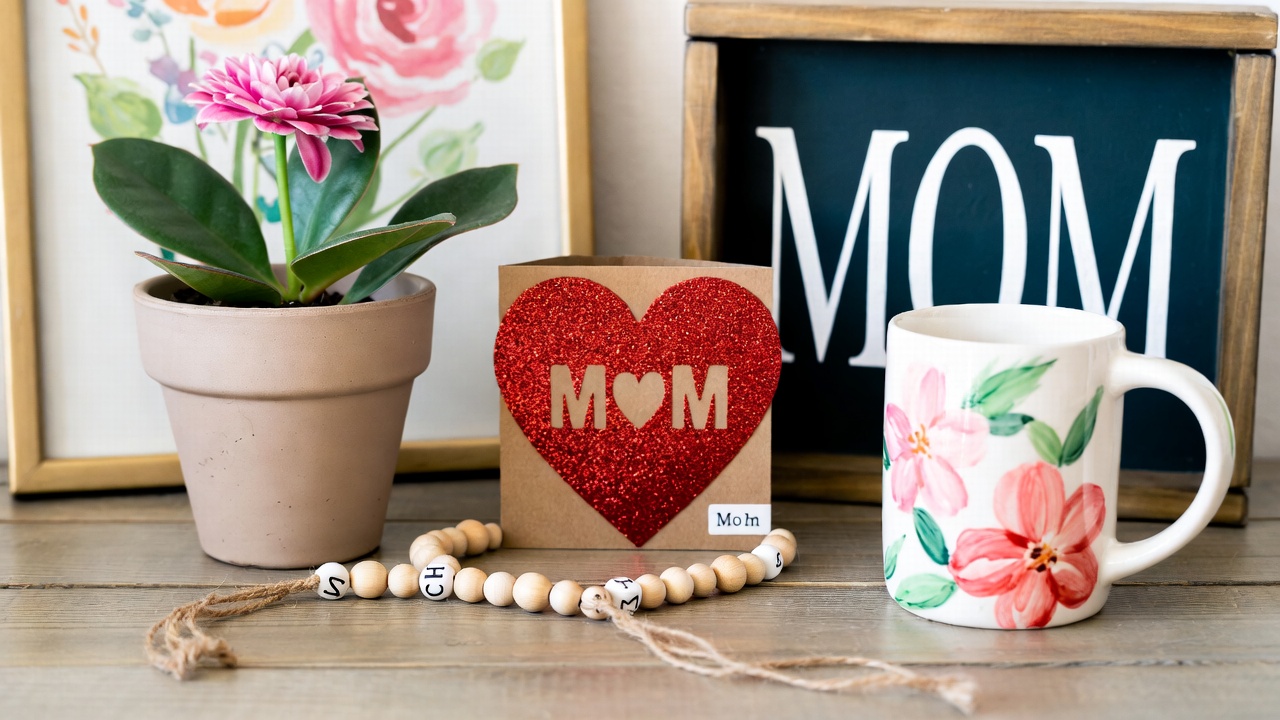
The card is not the wrapping. The card is the gift — or at least the most emotionally potent part of it. A survey from an Indiana-based research project found that handwritten cards and letters ranked third among the gifts mothers find most meaningful, behind only handmade items and special experiences. A store-bought card with a pre-written message is fine. A card you made yourself, with words you actually wrote, is something she’ll tuck into a drawer and re-read for years.
Here are five card ideas organized by skill level, all achievable for under $5.
1. The Watercolor Wash Card (beginner, 15 minutes). You need one sheet of thick cardstock (any color), a cup of water, and a single watercolor paint pan — available at any craft store for about $1. Wet the brush, load it with color, and drag a broad, loose wash across the upper portion of the card. Let it dry. Then write your message in black pen below the wash. The effect looks like a sunset or a garden horizon. It’s simple, elegant, and impossible to replicate exactly — which makes it art.
2. The Pressed-Flower Card (beginner, requires advance prep). Pick small wildflowers or herbs from your garden or a park a week before Mother’s Day. Press them between the pages of a heavy book with a sheet of wax paper on each side. After five to seven days, carefully glue the dried flowers onto the front of a folded cardstock card using a thin layer of white craft glue. Add a handwritten message inside. The finished card looks like something from a botanical archive.
3. The “Reasons I Love You” Accordion Card (intermediate, 30 minutes). Cut a long strip of cardstock and fold it accordion-style into six or eight panels. On each panel, write one specific reason you love your mother. Not generic phrases — real memories. “I love that you sang off-key in the car and didn’t care.” “I love that you drove two hours to bring me soup when I was sick at college.” The accordion format turns a simple card into a keepsake she’ll display on her shelf.
4. The Collage Card (intermediate, 20 minutes). Print small photos — wallet-size or smaller — of moments you’ve shared. Arrange them in a mosaic pattern on the front of a sturdy card. Glue them down and write a short message beneath: “Every one of these days made me who I am.” The visual impact is immediate. The message is personal.
5. The Handprint Card (perfect for young children). Dip a child’s hand in washable paint — choose a color your mother loves. Press it firmly onto the front of a card. Let it dry. Inside, write the child’s age and a simple message. This is the card she’ll still have when that child is 30. It works because it’s a physical record of a moment in time that will never come again.
| Card Style | Skill Level | Time | Cost | Best For |
|---|---|---|---|---|
| Watercolor wash | Beginner | 15 min | ~$2 | Teens and adults |
| Pressed flower | Beginner | 15 min + drying | ~$1 | Nature-loving families |
| Accordion “reasons” | Intermediate | 30 min | ~$2 | Adult children |
| Photo collage | Intermediate | 20 min | ~$3 | Anyone with printed photos |
| Handprint | Beginner | 10 min | ~$2 | Toddlers and young kids |
Homemade Self-Care Gifts for Mom That Cost Under $10 to Make
Self-care gifts dominate the commercial Mother’s Day market. Spa baskets from major retailers can run $50 to $150. But the raw ingredients for equally luxurious products cost a fraction of that — and the handmade version carries emotional weight no department store can match.
Lavender bath salts. Combine 2 cups of Epsom salts, ½ cup of baking soda, and 15–20 drops of lavender essential oil in a bowl. Stir gently. Add a few dried lavender buds if you have them. Pour into a clean mason jar, tie a ribbon around the lid, and attach a handwritten tag: “Pour a cup into warm water. Close the door. Stay as long as you want.” Total cost: roughly $4.
Honey and oat face scrub. Mix ½ cup of ground oats (pulse rolled oats in a blender), 2 tablespoons of raw honey, and 1 tablespoon of coconut oil. Spoon into a small jar. Label it with a handwritten note explaining how to use it: “Massage gently onto damp skin in small circles. Rinse with warm water.” The ingredients are grocery staples. Total cost: under $3.
Sugar scrub in her favorite scent. Combine 1 cup of granulated white sugar with ½ cup of coconut oil (melted) and 10–15 drops of essential oil in her preferred fragrance — peppermint for energizing mornings, eucalyptus for sinus relief, rose geranium for a floral note. Pour into a jar and decorate. Total cost: about $5.
Herbal tea blend. Buy loose chamomile flowers, dried peppermint leaves, and dried rose petals from a health food store’s bulk section. Mix them in a bowl and spoon into small muslin bags or tea filters. Place five or six bags in a decorated box or tin. Include a card that says, “One cup for each evening this week. You’ve earned the quiet.” Total cost: roughly $6.
A “spa in a jar” gift set. Combine several of the above — a small jar of bath salts, a bag of herbal tea, a travel-size candle (or a homemade beeswax tealight), and a handwritten note — in a single mason jar or cloth bag. Tie it with twine. Total cost for the full set: approximately $8–$10. It looks curated. It smells wonderful. It says: I made this because I wanted you to rest.
Sentimental DIY Mother’s Day Gifts That Become Family Heirlooms
Some handmade gifts are consumed. Bath salts dissolve. Cookies get eaten. Candles burn down. But the projects below are designed to last — gifts she’ll keep on display or tucked into a keepsake box for decades.
A handmade memory jar. Gather a large glass jar (a clean pasta sauce jar works perfectly). Cut 50–100 small strips of colorful paper. On each strip, write one memory, one thing you love about her, or one inside joke. Fold them and fill the jar. Decorate the outside with a ribbon and a label that reads “Open one whenever you need a reminder.” She’ll ration these over months, pulling one out on hard days. The jar will never truly empty because the memories keep accumulating.
A family recipe scrapbook. This project is especially powerful if your mother or grandmother has recipes she’s never written down. Interview her. Ask for the ingredients, the techniques, the stories behind each dish. Transcribe them onto sturdy cardstock pages, add hand-drawn illustrations or printed photos, and bind them together with a simple book ring or ribbon. The result is part cookbook, part oral history. It costs almost nothing to produce, but it preserves knowledge that would otherwise disappear.
A handmade photo calendar. Print twelve of your favorite family photos — one for each month. Glue each photo to the top half of a sturdy cardstock page. Below, draw or print a simple calendar grid for each month of the coming year. Punch holes at the top and hang it with string or a binder ring. She’ll flip through your curated memories for 365 days. Total cost: $5–$8 for printing.
A hand-painted flower pot. Buy a plain terracotta pot from any garden center for $2–$4. Paint it with acrylic craft paint in her favorite colors. Add her name, a simple floral design, or a child’s handprint. Seal it with a clear acrylic spray. Plant a small herb — basil, rosemary, lavender — and present it on Mother’s Day morning. The pot is art. The plant is alive and growing, just like the relationship.
A “then and now” scrapbook page. Find an old photo — her holding you as a baby, or a vacation from years ago. Recreate the pose in a new photo today. Print both, mount them side by side on a decorated cardstock page, and write a caption: “Some things change. The important ones don’t.” Frame it or leave it unframed for her to display. The juxtaposition of time passing is deeply moving.
Budget-Friendly DIY Mother’s Day Gifts Kids Can Make with a Little Help
Some of the most treasured Mother’s Day gifts in history were made by small hands with a lot of glue and zero concern for straight lines. If you’re a parent helping young children create something for the other parent — or if you’re a kid reading this on your own — here are projects that work.
Thumbprint art. Press a child’s thumb into washable ink or paint and stamp it onto cardstock. Repeat in a pattern to create a caterpillar, a bunch of grapes, a row of flowers, or a tree with thumbprint leaves. Add stems, faces, or details with a fine marker. Write “Made by [child’s name], age [age]” on the back. She will frame this.
A coupon book of kindness. Fold several sheets of paper in half and staple them at the spine. On each page, write (or have the child draw) one promise: “Good for one hug that lasts as long as you want.” “Good for one morning where I make my own breakfast.” “Good for one evening where I pick up all my toys without being asked.” The charm is in the specificity. The value is in the follow-through.
Pasta jewelry. Thread dried penne, rigatoni, or wagon wheel pasta onto string or yarn. Before stringing, let the child paint each piece with acrylic craft paint in bright colors. Once dry, tie the ends to form a necklace or bracelet. Will she wear it to work? Probably not. Will she keep it in her jewelry box for the next thirty years? Almost certainly.
A paper flower bouquet. Cut flower shapes from colored construction paper or tissue paper. Attach each flower head to a green pipe cleaner or a painted wooden skewer. Arrange five to ten blooms in a small jar or cup wrapped in decorative paper. Unlike real flowers, this bouquet never wilts. It sits on her desk as a permanent reminder of the tiny hands that shaped each petal.
A decorated stepping stone. Mix quick-set concrete according to the package directions and pour it into a disposable aluminum pie pan or a shallow cardboard box lined with plastic wrap. Before it sets, have the child press their hand into the surface and use a stick to carve their name and the year. Let it cure for 24 hours. Remove from the mold. She’ll place it in her garden path and step on it — gently, lovingly — for years.
How Handmade Gifts Honor Mother’s Day Traditions Around the World
The history of Mother’s Day is, at its core, a history of handmade gestures. When Anna Jarvis organized the first official celebration in Grafton, West Virginia, on May 10, 1908, there were no gift registries or shopping sprees. She sent 500 white carnations — her late mother’s favorite flower — to the church where the service was held. The symbol was simple, personal, and deeply rooted in a specific memory.
In England, the tradition of Mothering Sunday dates back to the 16th century, when servants and apprentices were given a day off to visit their “mother church” and their families. They often brought a Simnel cake — a handmade fruit cake layered with marzipan — as a gift. The cake was baked by the giver, not purchased. The labor was the offering.
In Ethiopia, the multi-day festival of Antrosht celebrates mothers at the end of the rainy season. Daughters traditionally bring vegetables and cheese. Sons bring meat. The family cooks together. The gift is not an object — it’s raw ingredients transformed by collective effort into a shared meal.
In Mexico, Mother’s Day (Día de las Madres, fixed on May 10 every year) often begins with a mañanitas — a serenade performed outside the mother’s home, sometimes as early as midnight. The gift is a song. You can’t buy a mañanita at a store. It only exists when someone chooses to sing it.
In Japan, children traditionally present their mothers with red carnations and a handmade card. The emphasis is on sincerity and simplicity, not on the scale of the gift. A child’s drawing, carefully colored and presented with a bow, carries as much weight as any wrapped package.
The global pattern is clear: the oldest and most enduring Mother’s Day traditions are all handmade. Flowers picked, cakes baked, songs sung, meals prepared. The commercial gift industry is barely a century old. The tradition of making something with your hands for the woman who raised you is as old as motherhood itself.
The Secret to a Great DIY Gift: It’s Not Perfection — It’s Specificity
The biggest fear people have about homemade gifts is that they’ll look amateurish. That the bath salts won’t be as polished as the ones from Anthropologie. That the card won’t have the crisp typography of a Hallmark product. That the scrapbook pages will be crooked.
Here’s the thing: your mother doesn’t want professional. She wants personal.
The specificity is what makes a homemade gift land. A generic jar of bath salts is nice. A jar labeled “Lavender + chamomile, because you always say the smell of lavender reminds you of Grandma’s garden” is unforgettable. A blank card with “Happy Mother’s Day” written inside is pleasant. A card with a pressed flower from her own backyard and a paragraph about a specific afternoon you shared is something she’ll re-read until the paper wears thin.
When you make something by hand, you’re not competing with professional manufacturers. You’re doing something they can never do: embedding a private language into a physical object. The inside joke on the label. The photo only your family would recognize. The recipe written in your handwriting that she’ll compare, years from now, to how your handwriting has changed.
That imperfection? That’s what tells her it’s real.
How to Plan Your DIY Mother’s Day Gifts: A Week-by-Week Timeline
If May 10 feels far away, that’s good. A little planning makes the difference between a rushed craft and a finished gift you’re genuinely proud of.
Four weeks before (early April). Pick your projects. Decide whether you’re making a card, a spa gift, a keepsake, or a combination. Inventory what you already have at home — most people have cardstock, glue, scissors, and basic kitchen ingredients. Make a short list of anything you need to buy.
Three weeks before. Buy supplies. If you’re pressing flowers, start now — they need five to seven days to dry fully. If you’re making a concrete stepping stone, get the quick-set mix. If you’re creating a recipe scrapbook, schedule a phone call or visit with your mother to collect her recipes (frame it as casual conversation, not an interview, so she doesn’t suspect the gift).
Two weeks before. Begin assembly. Make the bath salts or sugar scrubs, which keep well in sealed jars. Start painting the flower pot. Print photos you’ll need for collages or calendars. Write the first draft of your card message — you can revise it later, but getting the words down now reduces last-minute pressure.
One week before. Finish everything. Assemble multi-component gifts (like the “spa in a jar”). Write the final version of your card. Wrap or package each item. If you’re involving children in a craft project, do it this weekend — building in buffer time for spills, do-overs, and the inevitable “I want to start over.”
The night before. Set everything out. If breakfast in bed is part of the plan, prep what you can — cut fruit, set the coffee maker, lay out the tray. Place the gifts where she’ll find them first thing.
Mother’s Day morning. Present your gifts. Watch her face. That expression — the one where her eyes go soft and her hand covers her mouth — is worth more than anything $259 could buy.
Mother’s Day 2026 falls on Sunday, May 10. The average American plans to spend $259 on the holiday. But the gifts mothers remember most — the ones they keep in drawers and display on shelves and mention at dinner parties decades later — are almost never the expensive ones. They’re the ones that took time, carried a story, and proved that someone sat down, thought about them specifically, and made something with their own two hands. This year, be that someone.