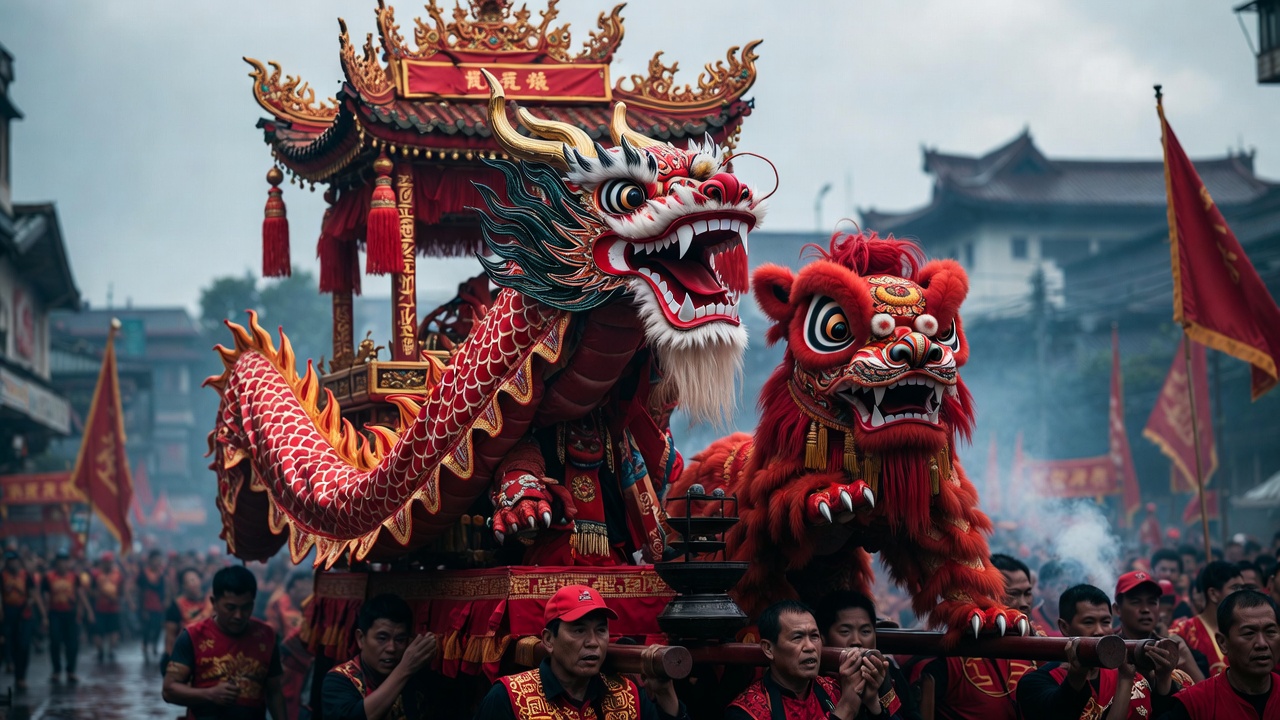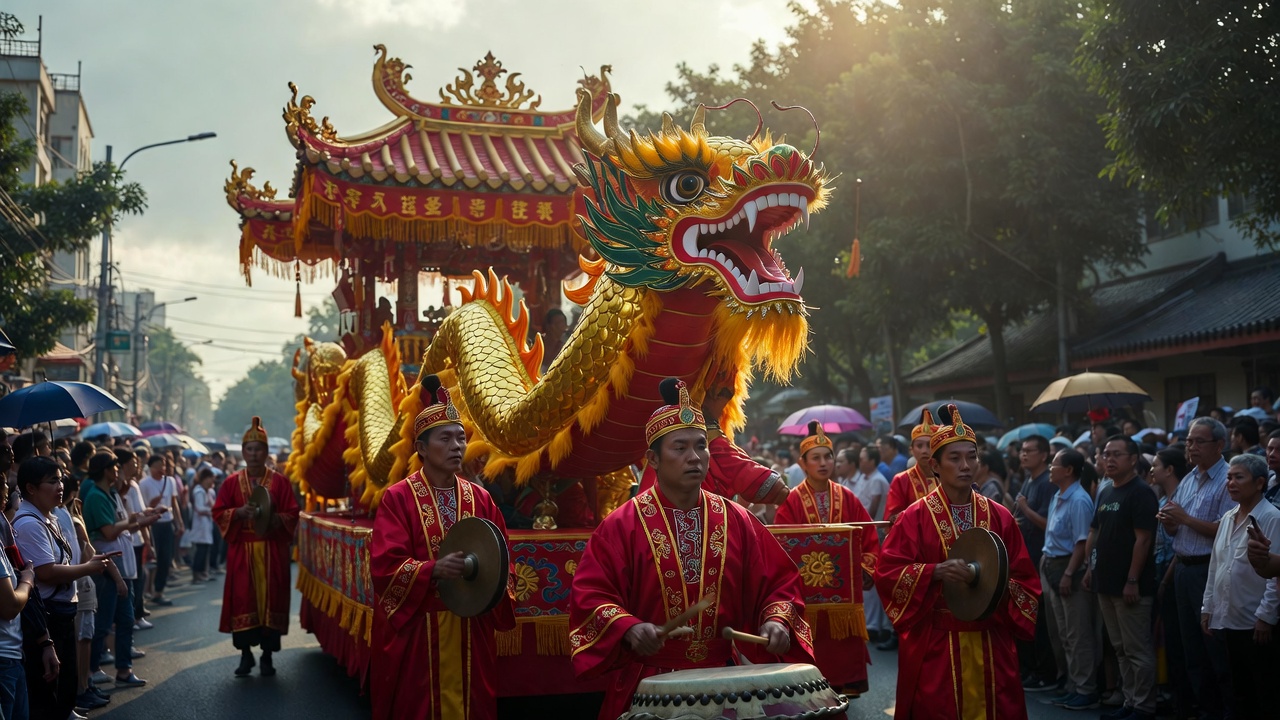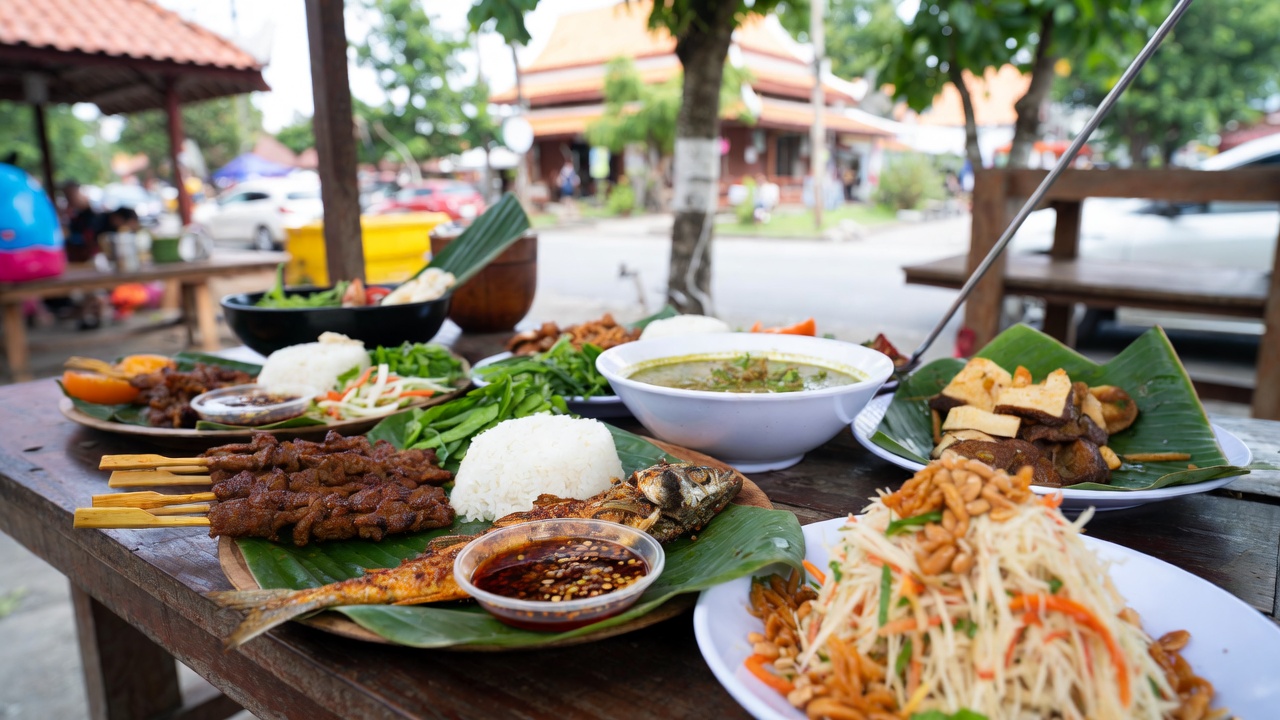
Every year, as red lanterns illuminate ancient shophouses and the thunder of dragon drums echoes through narrow streets, Nakhon Sawan transforms into Thailand’s most delicious Chinese New Year destination. While Bangkok’s famous Yaowarat often steals the spotlight, seasoned food travelers know a secret: the Pak Nam Pho Chinese New Year Festival offers something far more authentic, far more accessible, and infinitely more delicious.
The year is 2026. We welcome the Year of the Fire Horse—a rare zodiac combination that occurs only once every sixty years. The energy is palpable. The streets are packed. And the food? The food is absolutely extraordinary.
This guide will take you on a comprehensive journey through every bite, every aroma, and every unforgettable flavor waiting at Nakhon Sawan’s legendary festival market. Whether you are planning your first visit or returning after many years, prepare to eat—truly eat—your way through one of Southeast Asia’s greatest food festivals.
Why Nakhon Sawan Hosts Thailand’s Most Authentic Chinese New Year Food Festival
Before we dive into the sizzling woks and steaming bamboo baskets, you need to understand why Nakhon Sawan matters. This is not just another provincial festival. This is the heart of Thai-Chinese culinary heritage.
Nakhon Sawan sits at the precise point where the Ping River and Nan River converge to form the Chao Phraya River, Thailand’s great artery of life and commerce. According to historical accounts from the Bangkok Post, Chinese merchants began settling here during the reign of King Rama III, establishing trading posts along the riverbanks. The strategic location made Pak Nam Pho (the original name of the area) a vital hub for rice, timber, and goods flowing between northern Thailand and Bangkok.
“When I was young, I remember people around me spoke only Chinese,” recalled local businessman Santi Kunawong in an interview with the Bangkok Post. “Our historical records show that five groups of Chinese-speaking people settled here: Teochew, Hainanese, Cantonese, Hakka, and Hokkien.”
Today, Nakhon Sawan is home to Thailand’s third-largest Chinese community, after Bangkok and Phuket. The Pak Nam Pho Chinese New Year Festival has celebrated over 110 years of unbroken tradition. What began in 1914 has evolved into a twelve-day extravaganza that draws hundreds of thousands of visitors annually.
The 2026 festival marks approximately 110 years of continuous celebration—a remarkable achievement that speaks to the deep roots of this community’s cultural identity.
Pak Nam Pho Chinese New Year Festival 2026: Essential Dates and Information
Key Dates for the 2026 Fire Horse Year Celebrations
| Event | Date | Time |
|---|---|---|
| Chinese New Year’s Day | Tuesday, February 17, 2026 | — |
| Festival Opens | Early February 2026 | 5:00 PM onwards |
| Night Parade (Chiew Sa) | Final Friday of Festival | Evening |
| Day Parade (Chiew Si) | Final Saturday of Festival | Early Morning |
| Festival Closes | Late February 2026 | — |
| Lantern Festival | March 3, 2026 | — |
The festival typically runs for twelve days and twelve nights, culminating in the spectacular dragon parades that have earned international recognition. The 2026 celebrations will feature themes honoring the Fire Horse, a zodiac animal symbolizing energy, freedom, and perseverance in Chinese culture.
The Five Wonder Zones: Where Food Dreams Come True
The festival organizes attractions into five distinct zones, each offering unique experiences:
| Zone | What to Expect |
|---|---|
| Wonder Food | Paradise for street food lovers with over 100 stalls |
| Wonder Faith | Shrines, prayers, and spiritual offerings |
| Wonder Five | Tribute to the five Chinese ethnic communities |
| Wonder Fun | Carnival games and entertainment |
| Wonder Festival | Grand parade viewing areas |
For food lovers, Wonder Food is your primary destination. But don’t ignore the other zones—many of the best hidden food gems are tucked into side streets near the shrines and entertainment areas.
Traditional Thai-Chinese Street Foods You Must Try at the Nakhon Sawan Market
Gui Chai Thod: Nakhon Sawan’s Legendary Crispy Chive Dumplings
If there is one dish that defines Nakhon Sawan’s food identity, it is gui chai thod—crispy fried chive dumplings. These golden parcels of joy are a Teochew specialty that has been perfected over generations in this river city.
The most famous version comes from Jay Lai’s Gui Chai Thod, a shop that has been serving these addictive dumplings for over thirty years. According to the Tourism Authority of Thailand, owner Jay Lai maintains consistently high quality standards for the dough, fillings, and dipping sauce that have kept customers loyal for decades.
What makes gui chai thod special:
- The outer shell achieves a perfect balance between crispy and chewy
- Garlic chives pack a fragrant, pungent punch
- The tapioca-flour dough becomes translucent when cooked
- The signature dipping sauce combines sweet soy and chili
How to order like a local:
| Thai Name | English | Description |
|---|---|---|
| Gui Chai Thod | Fried chive dumplings | Classic version |
| Gui Chai Sai Khai | Chive dumplings with egg | Extra richness and protein |
| Gui Chai Sai Phuak | Taro-filled dumplings | Sweeter, earthier flavor |
The best festival stalls will offer all three varieties. Order a mixed plate and compare.
Price range: 30-60 baht per portion
Jok Pak Nam Pho: The Heartwarming Rice Porridge of the River City
Jok (pronounced “joke”) is Thailand’s beloved rice porridge, and Nakhon Sawan’s version carries the distinct fingerprint of Teochew culinary tradition. Unlike Cantonese congee, which is smooth and almost creamy, Teochew-style jok retains visible rice grains in a lighter, more watery broth.
During the Chinese New Year festival, jok vendors set up early in the morning—often as early as 4:00 AM—to serve the crowds who have stayed up all night watching the celebrations. There is something profoundly comforting about eating a steaming bowl of jok as the sun rises over the Chao Phraya’s birthplace.
Traditional toppings include:
- Moo sap (seasoned minced pork meatballs)
- Tap moo (tender sliced pork liver)
- Khai (soft-boiled or raw egg cracked into the hot porridge)
- Ginger julienne (essential for cutting richness)
- Fried garlic and garlic oil (for aromatic depth)
- White pepper (the finishing touch)
Pro tip: Ask for “sen mee grob” (crispy rice vermicelli) sprinkled on top. This textural contrast elevates the dish from comfort food to something extraordinary.
Price range: 35-50 baht per bowl
Khao Phat Pu: Wok-Fired Crab Fried Rice
While crab fried rice exists throughout Thailand, the festival version in Nakhon Sawan benefits from the freshwater crabs pulled from the Chao Phraya’s tributaries. The wok hei—that elusive smoky char that can only come from a blazing-hot wok—is particularly impressive here, where vendors cook over roaring gas flames in the open air.
Look for stalls where the cook is constantly tossing the wok. The best khao phat pu will have:
- Visible chunks of lump crabmeat
- Slightly charred grains of jasmine rice
- Eggs scrambled directly into the rice
- A light seasoning of fish sauce and white pepper
- Fresh lime wedges on the side
Price range: 60-120 baht per plate
Lucky Foods for Chinese New Year: What to Eat for Prosperity and Good Fortune
Food at Chinese New Year is never just food. Every dish carries symbolic weight, connecting the eater to centuries of tradition and hope for the year ahead. At the Nakhon Sawan festival, these auspicious foods take on distinctly Thai-Chinese characteristics.
Nian Gao: Sticky Rice Cake for Rising Fortunes
Nian gao (年糕) is perhaps the most essential Chinese New Year food. In Mandarin, “nian gao” sounds like “year high,” symbolizing the wish for improvement, advancement, and progress in the coming year. As noted by China Highlights, eating nian gao represents the hope that life will become better year after year.
In Thailand, nian gao appears in several forms:
| Type | Description | Best Preparation |
|---|---|---|
| Khanom Tian | Disk-shaped with red lucky characters | Sliced and pan-fried until caramelized |
| Khanom Khao | Mooncake-shaped with bean filling | Eaten as-is or lightly steamed |
| Sweet nian gao | Plain sweetened version | Dipped in egg batter and fried |
Thai twist: Thai-Chinese nian gao often comes in pandan green or Thai tea orange, flavors that would seem strange in mainland China but taste absolutely delicious.
Price range: 20-80 baht depending on size
Whole Steamed Fish: Abundance and Surplus
“Fish” in Chinese (鱼, yú) sounds identical to “surplus” (余, yú). Serving a whole fish at New Year symbolizes the wish for abundance—specifically, the hope that you will have money left over at year’s end.
At the Nakhon Sawan festival, look for:
- Pla kapong neung manao (steamed sea bass with lime)
- Pla neung si-ew (steamed fish with soy sauce, Teochew style)
- Pla chon thod kratiam (fried snakehead fish with garlic)
Important custom: The fish should be presented whole, head to tail, symbolizing a good beginning and ending to the year. Never flip the fish over—doing so is considered bad luck, as it metaphorically “capsizes” your fortune.
Price range: 150-400 baht per fish
Longevity Noodles: Long Life in Every Slurp
Mee sua or longevity noodles represent the wish for a long life. The rules are simple: the longer the noodle, the longer your life. Never cut them.
At the festival, you will find several noodle preparations:
Ba mee (egg noodles) — Teochew favorite, served dry or in soup with barbecued pork
Guay tiew (rice noodles) — Lighter option, perfect for hot weather
Mee sua (wheat vermicelli) — Traditional longevity noodle, often in savory broth
Price range: 40-80 baht per bowl
Thai-Chinese Fusion Foods: Where Two Culinary Traditions Meet
The genius of Nakhon Sawan’s food scene lies in its fusion heritage. Over more than a century of coexistence, Thai and Chinese cooking have merged into something unique—dishes that belong fully to neither tradition but honor both.
Tom Yum Fried Wontons: Spice Meets Tradition
This remarkable dish combines crispy Chinese wontons with Thailand’s beloved tom yum flavors. The wontons are stuffed with seasoned pork, deep-fried until shatteringly crisp, then topped with:
- Ground pork
- Roasted peanuts
- Lemongrass
- Galangal
- Kaffir lime leaves
- Fish sauce
- Fresh chilies
The result is electric—a collision of textures and flavors that could only exist in Thailand.
Price range: 50-80 baht per plate
Khao Man Gai: Hainanese Chicken Rice, Thai Style
Originally brought by Chinese immigrants from Hainan Island, khao man gai has become one of Thailand’s most beloved dishes. The festival version is particularly good because competition among stalls drives quality higher.
What to look for:
- Silky poached chicken with slightly pink bones
- Fragrant rice cooked in chicken fat and garlic
- The holy trinity of sauces: fermented soybean sauce, ginger sauce, and sweet dark soy
- Clear chicken broth on the side
Price range: 50-80 baht per plate
Moo Krob: Crispy Pork Belly
The Teochew community brought their love of braised meats to Thailand, and moo krob (crispy pork belly) represents the evolution of that tradition. Festival vendors slow-roast pork belly until the skin puffs into shatteringly crisp crackling while the meat remains succulent.
This dish is often served alongside khao tom (rice soup) or over plain rice with pickled mustard greens.
Price range: 60-120 baht per portion
Dim Sum and Teochew Specialties: Deep Dives into Chinese Heritage
Steamed Delights: Bamboo Baskets of Joy
The festival’s dim sum offerings reflect the Teochew heritage of the local Chinese community. Unlike Cantonese dim sum, which tends toward elaborate preparations, Teochew dim sum emphasizes simplicity and clarity of flavor.
Essential dim sum to try:
| Dish | Thai Name | Description |
|---|---|---|
| Siu mai | ขนมจีบ (khanom jeeb) | Open-faced pork and shrimp dumplings |
| Har gow | ฮะเก๋า | Translucent shrimp dumplings |
| Char siu bao | ซาลาเปา (salapao) | Fluffy buns with barbecued pork |
| Lo mai gai | ข้าวห่อใบบัว | Sticky rice in lotus leaf |
| Cheung fun | ก๋วยเตี๋ยวหลอด | Rice noodle rolls with various fillings |
Pro tip: The best dim sum stalls have constant turnover—baskets coming and going from the steamer. Never eat dim sum that has been sitting out.
Price range: 15-40 baht per basket
Braised Duck: Teochew Comfort Food
Lor ark (braised duck) is a Teochew signature dish that has become integral to Thai-Chinese cuisine. The duck is simmered for hours in a master sauce containing:
- Dark soy sauce
- Five-spice powder
- Star anise
- Cinnamon
- Rock sugar
- Garlic
The result is impossibly tender meat with a deep mahogany color. Festival vendors typically serve it over rice with pickled mustard greens and hard-boiled eggs braised in the same sauce.
Price range: 60-100 baht per plate
Teochew Porridge with Side Dishes
While jok is the Thai adaptation, traditional Teochew porridge (潮州糜) is served in a different style—plain rice grains in clear broth, accompanied by multiple small dishes. According to Wikipedia, this style emphasizes simplicity and originality, with each side dish cooked with minimal seasoning to retain its natural taste.
Classic accompaniments include:
- Kiam chai (salted preserved vegetables)
- Chai por (preserved radish)
- Kiam nui (salted duck eggs)
- Tau ju (fermented beancurd)
- Steamed fish with light soy and ginger
Look for vendors who display a wide array of side dishes in glass cases—the more options, the more authentic the experience.
Price range: 80-150 baht per set
Sweet Treats and Desserts: The Perfect Ending to Your Food Journey
Bua Loi: Sweet Rice Balls in Coconut Cream
Bua loi (บัวลอย) features chewy rice flour balls floating in warm coconut cream. During Chinese New Year, these take on special significance because round shapes symbolize unity and completeness.
Festival versions often include:
- Pandan green balls
- Natural white balls
- Sweet potato orange balls
- Taro purple balls
The coconut cream is gently sweetened and often infused with fragrant pandan leaves.
Price range: 30-50 baht per bowl
Khanom Ko: Teochew Rice Cakes
Khanom ko is a traditional Teochew snack featuring flattened discs or mooncake-shaped cakes made from glutinous rice flour. According to Khaosod English, these cakes often bear lucky Chinese characters stamped in red on their surface.
Thai variations include:
- Durian filling (distinctly Thai adaptation)
- Black sesame (traditional)
- Mung bean (classic)
- Salted egg yolk (indulgent modern version)
Price range: 20-40 baht each
Tang Yuan: Glutinous Rice Balls for Reunion
Tang yuan (汤圆) appears at the Lantern Festival that concludes Chinese New Year celebrations. These sweet rice balls, filled with black sesame paste or peanuts, are served in warm ginger syrup.
The round shape symbolizes family reunion and togetherness. In Chinese, “tang yuan” sounds similar to “tuan yuan” (团圆), meaning reunion.
Price range: 40-60 baht per bowl
Drinks and Beverages to Pair with Your Festival Feast
Traditional Chinese Teas
The heat and rich flavors of festival food call for proper beverages. Chinese tea is the traditional choice.
| Tea Type | Benefits | Best With |
|---|---|---|
| Pu-erh | Aids digestion | Fatty meats, fried foods |
| Chrysanthemum | Cooling | Spicy dishes |
| Oolong | Balanced | Dim sum |
| Jasmine | Fragrant | Light dishes |
Look for traditional tea stalls serving from large copper urns.
Price range: 20-40 baht per cup
Nam Krajiap: Roselle Juice
This deep crimson drink made from hibiscus flowers is both refreshing and auspicious—its red color aligns with Chinese New Year symbolism.
Price range: 20-30 baht per cup
Fresh Coconut Water
Nothing beats the heat like a young coconut hacked open on the spot. The mild sweetness cleanses the palate between savory dishes.
Price range: 30-50 baht per coconut
Strategic Eating: How to Navigate the Nakhon Sawan Food Market Like a Pro
The Best Times to Eat at the Festival
| Time | What’s Available | Crowd Level | Tip |
|---|---|---|---|
| 4:00-7:00 AM | Jok, dim sum, breakfast items | Low | Post-parade breakfast |
| 11:00 AM-2:00 PM | Full range, rice dishes | Moderate | Locals’ lunch rush |
| 5:00-7:00 PM | Everything opens | Building | Arrive early for selection |
| 8:00-11:00 PM | Peak festival food | Very high | Best atmosphere, longest waits |
| 11:00 PM-2:00 AM | Night owls’ favorites | Moderate | Late-night noodles and snacks |
The Golden Rules of Festival Eating
Rule 1: Arrive hungry, leave satisfied—but pace yourself.
With over 100 food stalls, the temptation is to try everything immediately. Resist. Start with lighter dishes, build to richer ones, and save sweets for the end.
Rule 2: Follow the locals.
If a stall has a long line of Thai visitors—not just tourists—it is probably worth the wait. Local knowledge is invaluable.
Rule 3: Carry cash in small bills.
Most vendors accept only cash. Bring plenty of 20 and 100 baht notes. Larger bills may be refused or create delays.
Rule 4: Use the shrine breaks strategically.
When you need to rest your stomach, visit the North Shrine or South Shrine areas. The spiritual atmosphere provides a natural pause, and you can return to eating with renewed enthusiasm.
Rule 5: Hydrate constantly.
February in Thailand is hot. The combination of spicy food, crowds, and warm weather can lead to dehydration. Drink water or tea between dishes.
A Suggested Eating Itinerary
Evening Session (5:00 PM – 9:00 PM)
- Start with gui chai thod (chive dumplings) as a warm-up
- Move to dim sum from a reputable vendor
- Try one noodle dish—guay tiew or ba mee
- Rest, watch performances, explore shrines
- Return for khao man gai or braised duck
Night Session (9:00 PM – Midnight)
- Find a seafood vendor for stir-fried dishes
- Sample moo krob (crispy pork)
- End with tang yuan or bua loi
Early Morning Session (After Parade, 5:00 AM onwards)
- Essential: jok with all the toppings
- More dim sum if available
- Tea to conclude
Cultural Etiquette: Respecting Traditions While Enjoying the Food
At the Shrines
The North Shrine and South Shrine are active places of worship, especially during the festival. If you visit:
- Remove your hat
- Dress modestly (cover shoulders and knees)
- Lower your voice
- Never point your feet toward altars or religious images
- Ask permission before photographing worshippers
Food Offerings
You may see elaborate food offerings at shrine altars—whole roasted pigs, towers of fruit, stacks of nian gao. These are for the deities and ancestors first. Do not touch or take photos from intrusive angles.
Red Envelopes and Lucky Money
If you are invited to a local family’s celebration, bringing a hong bao (red envelope with money) is appropriate. Even numbers are preferred—but avoid the number four, which sounds like “death” in Chinese.
General Festival Behavior
- Wear red to participate in the lucky energy
- Do not block parade routes once processions begin
- Respect the dragons and lions—they are considered sacred performers
- Thank vendors with a smile and “khob khun krap/ka”
Practical Information for Visiting Nakhon Sawan
Getting There from Bangkok
Nakhon Sawan is approximately 250 kilometers north of Bangkok, a journey of roughly three hours by road.
| Transport | Duration | Price Range | Notes |
|---|---|---|---|
| Minivan | 3 hours | 180-250 THB | Leaves from Mo Chit |
| Bus | 3.5 hours | 150-300 THB | More spacious, scheduled |
| Private car | 3 hours | — | Most flexible |
| Train | 4-5 hours | 100-500 THB | Scenic but slower |
Pro tip: Book return transport in advance for parade nights—the rush is intense.
Where to Stay
Nakhon Sawan has a range of accommodations, from budget guesthouses to mid-range hotels. During the festival, book early—the best properties fill up weeks in advance.
Weather Considerations
February in Nakhon Sawan is generally:
- Hot: Daytime temperatures of 30-35°C (86-95°F)
- Dry: Minimal rain expected
- Dusty: The dry season creates particulate matter
Bring sunscreen, a hat, and comfortable walking shoes.
The Fire Horse Year: What 2026 Means for Celebrations
The Year of the Fire Horse is considered particularly auspicious for bold ventures and new beginnings. According to China Highlights, the Fire Horse occurs only once every sixty years, making 2026 a truly special celebration.
The Horse symbolizes vitality, perseverance, and success in Chinese culture. The popular expression “马到成功” (mǎ dào chéng gōng) means “to succeed quickly,” like a victorious horse arriving on the battlefield.
What this means for the festival:
- More elaborate dragon performances honoring the Fire Horse energy
- Special horse-themed decorations throughout the venue
- Increased crowds as people mark this rare year
- Extended celebrations lasting well into March
The Fire Horse year encourages action over hesitation. What better way to embrace that spirit than by diving fearlessly into Nakhon Sawan’s extraordinary food culture?
Supporting the Local Community
When you eat at the Nakhon Sawan Chinese New Year festival, you support more than just individual vendors. You participate in a living tradition that connects present-day Thailand to centuries of migration, adaptation, and cultural evolution.
The Thai-Chinese community has contributed enormously to Thailand’s development. According to the Minority Rights Group, Thai-Chinese may control more than 80% of Thai business interests, reflecting generations of entrepreneurial spirit that began with humble food stalls not unlike those you will visit at the festival.
Ways to give back:
- Buy souvenirs from local artisans
- Donate at the shrines if you feel moved to do so
- Tip generously at exceptional food stalls
- Share your experience respectfully on social media, tagging the location
Conclusion: Your Invitation to Feast
The Pak Nam Pho Chinese New Year Festival is not just about food. It is about belonging—even as a visitor—to something larger than yourself. When you stand in line for gui chai thod alongside local families, when you share a table with strangers over bowls of steaming jok, when you watch the Golden Dragons parade through streets your great-grandparents never knew, you become part of a story that has been unfolding for over a century.
Nakhon Sawan waits for you. The woks are hot. The dumplings are crisp. The dragons are ready to dance.
Come hungry. Leave transformed.
Gong Xi Fa Cai. May the Year of the Fire Horse bring you prosperity, good health, and unforgettable meals.
Frequently Asked Questions About Nakhon Sawan’s Chinese New Year Street Food
What is the most famous street food in Nakhon Sawan?
Gui chai thod (fried chive dumplings) is the signature dish. Jay Lai’s shop, operating for over 30 years, is particularly renowned.
When is the best time to visit the food market?
The market opens around 5:00 PM daily, but the peak atmosphere occurs between 8:00-11:00 PM. For shorter lines and more selection, arrive early.
Is the food spicy?
Chinese-influenced dishes at the festival tend to be milder than typical Thai street food. However, condiment stations allow you to add chili to taste.
How much money should I bring for food?
Budget approximately 300-500 baht for a full evening of sampling, more if you want to try premium items like seafood or complete dim sum sets.
Are vegetarian options available?
Yes. Look for stalls selling vegetarian dim sum, jok without meat, plain nian gao, and various Buddhist vegetarian dishes marked with a yellow or red “เจ” (jay) sign.
Can I take photos of the food and vendors?
Generally yes, but ask permission first. Most vendors appreciate the attention, but some may be too busy during rush times.
Is the festival family-friendly?
Absolutely. Children love the carnival atmosphere, and there are plenty of mild, kid-friendly foods available.
What happens if it rains?
February is dry season, so rain is unlikely. However, some areas have covered sections. Bring a small umbrella just in case.
Planning to visit the Pak Nam Pho Chinese New Year Festival in 2026? Bookmark this guide and share it with fellow food lovers. May your journey be delicious.