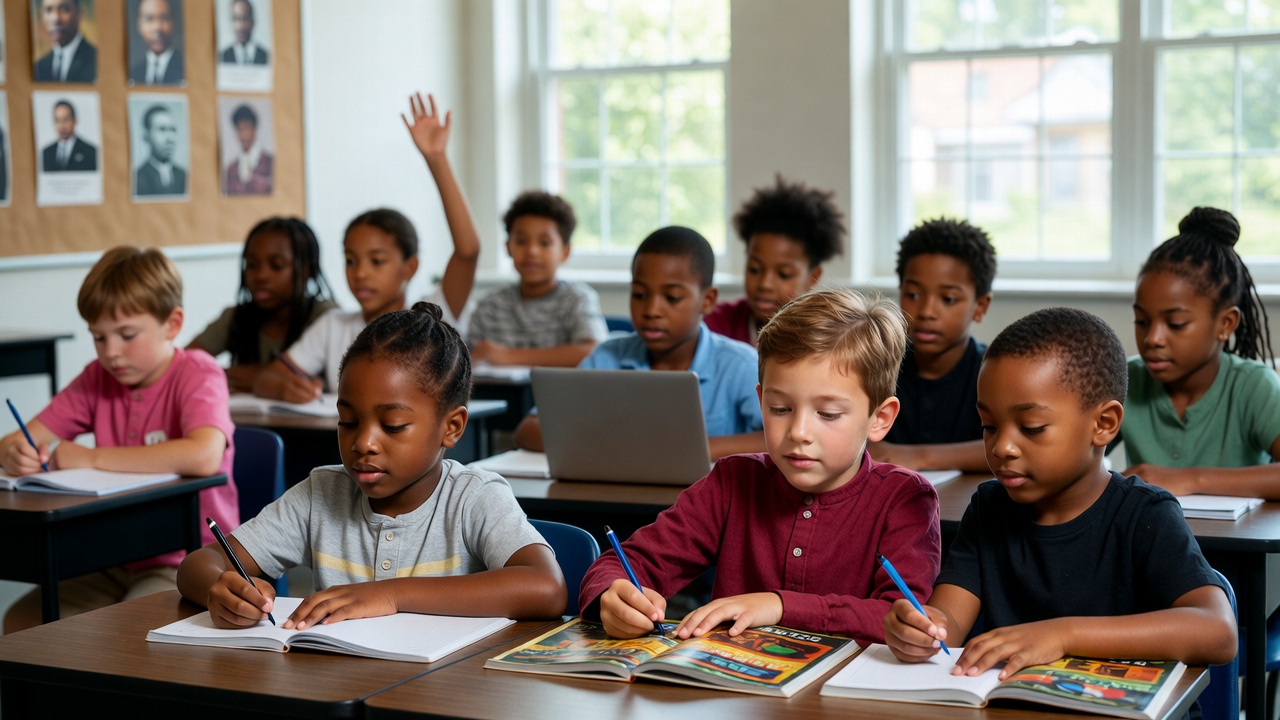
Discover meaningful ways to celebrate African American history and culture through hands-on learning experiences
February marks Black History Month across the United States and Canada. This annual celebration honors the contributions, achievements, and experiences of African Americans throughout history. For educators, parents, and youth leaders, this month presents a valuable opportunity to engage young minds in meaningful learning experiences.
The 2026 theme, “A Century of Black History Commemorations,” was chosen by the Association for the Study of African American Life and History (ASALH). This milestone theme marks 100 years since Carter G. Woodson established Negro History Week in 1926. It also coincides with the 250th anniversary of United States independence, making 2026 a uniquely significant year for reflecting on American history in its fullness.
But where do you start? How can you make Black History Month truly engaging for children of all ages? This guide provides dozens of practical, age-appropriate activities that bring history to life. From preschoolers to high school students, you will find ideas that inspire curiosity, build empathy, and celebrate Black excellence.
What Is Black History Month and Why Do We Celebrate It?
Understanding the origins of Black History Month helps students appreciate its significance. Here is the story behind this important observance.
The Story of Carter G. Woodson and Negro History Week
Carter G. Woodson founded Negro History Week in 1926. Known today as the “Father of Black History,” Woodson believed all Americans should understand the achievements of Black citizens. Born in 1875 to parents who had been enslaved, Woodson overcame tremendous obstacles. He became only the second African American to earn a PhD in history from Harvard University.
In 1915, Woodson founded the Association for the Study of Negro Life and History (now ASALH). Through this organization, he launched Negro History Week in February 1926. He chose February for two reasons. First, the month contains the birthday of Abraham Lincoln on February 12th. Second, it includes the birthday of Frederick Douglass, which Douglass celebrated on February 14th.
According to the National Museum of African American History and Culture, Woodson hoped to build upon the celebrations that already existed in Black communities. His goal was to extend and deepen the study of African American history throughout the year.
From One Week to One Month
Negro History Week grew steadily in popularity. By the 1940s, some communities in West Virginia began celebrating the entire month. The civil rights movement of the 1960s accelerated this trend. Young African Americans on college campuses became increasingly conscious of their heritage.
In 1976, the ASALH officially expanded the celebration to a full month. That same year, President Gerald Ford became the first president to officially recognize Black History Month. Every president since has issued a proclamation honoring the observance.
Teaching Children About Black History Month Origins
For younger children (ages 4-8):
- Explain that Black History Month is a time to learn about and celebrate African American people
- Share that a man named Carter G. Woodson started it almost 100 years ago
- Point out that February was chosen because two important men had birthdays that month
For older children (ages 9-12):
- Discuss Woodson’s life story and how he overcame obstacles
- Explain the connection between Negro History Week and the civil rights movement
- Talk about why representation and recognition matter
For teenagers:
- Analyze Woodson’s goals and whether they have been achieved
- Discuss his quote: “There would be no lynching if it did not start in the schoolroom”
- Explore the debate about whether one month is sufficient for studying Black history
How to Explain Black History Month to Young Children
Starting conversations about Black History Month with young children requires thoughtfulness. Here are strategies that work well.
Age-Appropriate Language for Preschoolers and Kindergarteners
Young children understand concepts best through concrete examples. Try these approaches:
Use simple definitions: “Black History Month is a special time when we celebrate African American people. We learn about amazing things they have done and the important ways they have helped our country.”
Connect to familiar concepts: “Just like we celebrate birthdays to honor special people, Black History Month is a time to honor many special people and their stories.”
Emphasize positive contributions: Focus on achievements, inventions, and acts of courage rather than solely on struggles. Young children benefit from seeing themselves reflected positively in historical narratives.
Conversation Starters That Encourage Critical Thinking
The Boys & Girls Clubs of America recommends asking children to describe concepts in their own words. Try these prompts:
| Age Group | Conversation Starter |
|---|---|
| Ages 3-5 | “Can you tell me about someone who is different from you? What makes them special?” |
| Ages 6-8 | “How would you explain Black History Month to a friend who doesn’t know about it?” |
| Ages 9-12 | “Why do you think it is important to learn about people from different backgrounds?” |
| Ages 13+ | “What does equality mean to you? What can you do to promote it?” |
Books That Help Introduce Black History Month
Picture books provide excellent entry points for young readers. The NPR expert panel on children’s literature recommends these titles:
For babies and toddlers (ages 0-3):
- ABC Black History and Me by Queenbe Monyei
- Whose Toes Are Those? by Jibari Asim
- Board books featuring Black children in everyday situations
For preschoolers (ages 3-5):
- Hair Love by Matthew Cherry
- The Day You Begin by Jacqueline Woodson
- Saturday by Oge Mora
For early elementary (ages 5-8):
- Schomburg: The Man Who Built a Library by Carole Boston Weatherford
- The Undefeated by Kwame Alexander
- Henry’s Freedom Box by Ellen Levine
Fun Black History Month Crafts and Art Projects for Elementary Students
Hands-on activities help children connect emotionally with history. Art projects engage multiple learning styles and create lasting memories.
Creative Art Activities Inspired by Famous Black Artists
Black artists have made profound contributions to American culture. Use their work as inspiration for classroom projects.
Alma Thomas Mosaic Project The artist Alma Thomas (1891-1978) created vibrant paintings using colorful mosaic-like patterns. Students can:
- Study her paintings online through museum archives
- Create their own mosaics using cut paper squares
- Discuss how Thomas broke barriers as a Black female artist
Jacob Lawrence Storytelling Panels Jacob Lawrence (1917-2000) created narrative painting series that told stories of African American history. Students can:
- View his “Migration Series” panels online
- Create their own series of 4-6 panels telling a story
- Use bold colors and simple shapes like Lawrence did
Faith Ringgold Story Quilts Faith Ringgold (born 1930) combines quilting with painting to tell stories. For this project:
- Read her book Tar Beach together
- Have students design paper quilt squares
- Combine individual squares into a class quilt
Biography Poster and Timeline Projects for Classroom Displays
Creating visual displays reinforces learning and allows students to share knowledge with others.
“Who Am I?” Interactive Bulletin Board The Boys & Girls Clubs describes this engaging activity:
- Create cards featuring photos of historic Black Americans
- Have the photo open or flip to reveal information about each person
- Students can guess identities before revealing answers
Personal Timeline Projects According to Teach Starter, timeline activities build important skills:
- Students learn about chronological order and sequence
- Timelines develop critical thinking as students analyze cause and effect
- Research skills improve as students gather historical information
To create biography timelines:
- Assign each student a notable Black American
- Have students research 6-8 key events in that person’s life
- Create visual timelines using paper strips, digital tools, or bulletin boards
- Present timelines to the class
Door Decorating and Classroom Display Contests
School-wide activities build community and spread awareness. HMH (Houghton Mifflin Harcourt) suggests organizing:
Door Decorating Competitions:
- Work with school leadership to coordinate
- Assign themes or allow creative freedom
- Judge based on creativity, accuracy, and visual appeal
- Display winning doors throughout February
Hallway Display Guidelines:
- Feature student work prominently
- Include quotes from historical figures
- Rotate displays throughout the month
- Ensure representation of various fields (science, arts, politics, sports)
Black History Month STEM Activities for Middle School Students
Science, technology, engineering, and mathematics offer rich opportunities for exploring Black history. Many groundbreaking innovations came from Black inventors and scientists.
Famous Black Inventors and Hands-On Science Experiments
Connecting STEM activities to Black innovators makes learning memorable. iD Tech recommends these engaging projects:
Garrett Morgan Traffic Signal Activity Garrett Morgan (1877-1963) invented the three-position traffic signal. Students can:
- Play Red Light, Green Light to introduce Morgan’s invention
- Build simple traffic light models using LEDs
- Research how his invention improved road safety
Dr. James West Microphone Building Dr. James West co-invented the electret microphone used in 90% of modern microphones. Students can:
- Build simple microphones using household items
- Test different designs for sound quality
- Learn about acoustics and electrical engineering
Percy Julian Chemistry Exploration Percy Julian (1899-1975) was a pioneering chemist who synthesized important medicines from plants. Older students can:
- Learn about chemical synthesis
- Conduct simple plant extraction experiments
- Discuss his contributions to treating arthritis and glaucoma
Lonnie Johnson Super Soaker Physics Lonnie Johnson, a NASA engineer, invented the Super Soaker water gun. This provides an entry point for:
- Studying fluid dynamics and pressure
- Building simple water propulsion devices
- Discussing Johnson’s aerospace engineering career
Katherine Johnson and the “Hidden Figures” STEM Connection
The 2016 film Hidden Figures introduced millions to the Black women mathematicians at NASA. These women calculated trajectories that sent astronauts to space.
Math Activities Inspired by Katherine Johnson:
- Calculate simple rocket trajectories using provided data
- Create graphs showing orbital paths
- Solve word problems about distance, speed, and time
Discussion Questions:
- Why might these women’s contributions have been “hidden” for so long?
- What barriers did they face as Black women in the 1960s?
- How has representation in STEM fields changed since then?
Extension Activities:
- Research other women featured in the story: Dorothy Vaughan, Mary Jackson
- Watch documentary clips about the real women
- Write letters to current Black scientists or engineers
Building Computer Skills Through Mark Dean’s Legacy
Mark Dean helped invent the personal computer at IBM. He holds three of IBM’s original nine PC patents. Students can learn about computers through:
Low-Tech Computer Activities:
- Paper circuit activities that teach basic computing concepts
- Unplugged coding activities using cards and games
- Building simple logic gates with paper and pencil
Digital Literacy Projects:
- Research the history of computing
- Create presentations about diverse contributors to technology
- Explore career paths in computer science
Virtual Field Trips to Explore Black History Monuments and Museums
Virtual experiences bring distant locations into classrooms. These digital field trips remove barriers of cost and geography.
Smithsonian National Museum of African American History and Culture Online Resources
The Smithsonian’s National Museum of African American History and Culture offers extensive digital resources:
Virtual Exhibitions:
- Explore over 3,500 artifacts online
- View 3D models of museum objects through Google partnership
- Access primary source documents and photographs
Interactive Features:
- Follow the Green Book: A virtual cross-country trip using the historic travel guide
- Step Show: Learn about stepping dance traditions
- 3D artifact exploration with historical context
Education Resources:
- Downloadable lesson plans aligned to standards
- Student worksheets and discussion guides
- Professional development materials for teachers
Martin Luther King Jr. Memorial Virtual Tour Experience
Kai XR and other platforms offer virtual tours of the MLK Memorial in Washington, D.C. These experiences work well paired with:
Pre-Visit Activities:
- Read or listen to the “I Have a Dream” speech
- Discuss the speech’s key themes and metaphors
- Research Dr. King’s life and legacy
During the Virtual Visit:
- Observe the memorial’s design and inscriptions
- Take virtual notes about what students see
- Screenshot favorite quotes for discussion
Post-Visit Reflection:
- Compare themes in the speech to the memorial’s design
- Write reflections on what the memorial means to them
- Create artwork inspired by the experience
Negro Leagues Baseball Museum Digital Experience
The Negro Leagues Baseball Museum in Kansas City offers virtual tours that teach about:
- The history of segregation in sports
- Legendary players like Satchel Paige and Josh Gibson
- Jackie Robinson’s integration of Major League Baseball
- The cultural significance of Black baseball
Cross-Curricular Connections:
- Math: Calculate batting averages and statistics
- Social Studies: Discuss Jim Crow laws and segregation
- Language Arts: Write biographical reports on players
- Physical Education: Learn about baseball rules and history
Charles H. Wright Museum Virtual Tour
The Charles H. Wright Museum of African American History in Detroit offers comprehensive virtual experiences covering African American history from Africa through the present day.
Black History Month Reading Activities for All Grade Levels
Reading builds understanding and empathy. These activities work across grade levels with appropriate adaptations.
Grade-Level Appropriate Book Lists and Reading Challenges
Kindergarten through Second Grade:
| Book Title | Author | Key Themes |
|---|---|---|
| I Am Ruby Bridges | Ruby Bridges | Courage, perseverance |
| The Story of Martin Luther King Jr. | Johnny Ray Moore | Civil rights, peace |
| Brave Ballerina | Michelle Meadows | Following dreams, breaking barriers |
Third through Fifth Grade:
| Book Title | Author | Key Themes |
|---|---|---|
| Hidden Figures Young Readers’ Edition | Margot Lee Shetterly | STEM, women’s history |
| The Watsons Go to Birmingham | Christopher Paul Curtis | Family, civil rights era |
| One Crazy Summer | Rita Williams-Garcia | Family, Black Power movement |
Middle School:
| Book Title | Author | Key Themes |
|---|---|---|
| The Black Kids | Christina Hammonds Reed | Identity, LA riots |
| Ghost Boys | Jewell Parker Rhodes | Justice, perspective |
| March (trilogy) | John Lewis | Civil rights, activism |
High School:
| Book Title | Author | Key Themes |
|---|---|---|
| The Nickel Boys | Colson Whitehead | Injustice, reform schools |
| Stamped | Jason Reynolds | History of racism in America |
| Between the World and Me | Ta-Nehisi Coates | Identity, race in modern America |
Poetry Reading and Writing Activities Celebrating Black Poets
Black poets have shaped American literature. Introduce students to diverse voices:
Classic Poets to Study:
- Langston Hughes: “Harlem,” “Dreams”
- Maya Angelou: “Still I Rise,” “Caged Bird”
- Gwendolyn Brooks: “We Real Cool”
- Claude McKay: “If We Must Die”
Contemporary Voices:
- Amanda Gorman: “The Hill We Climb”
- Nikki Giovanni: “Ego Tripping”
- Jacqueline Woodson: Poetry collections for children
Poetry Activities:
- Paired Poetry Reading
- Students read poems aloud in pairs
- Discuss tone, imagery, and meaning
- Share interpretations with the class
- Found Poetry Creation
- Select passages from speeches by Black leaders
- Arrange words into new poetic forms
- Illustrate final poems
- Spoken Word Workshop
- Watch examples of spoken word performances
- Write original poems about identity or history
- Perform for classmates (optional)
Discussion Strategies for Books About Civil Rights and Equality
Sensitive topics require careful facilitation. Nearpod recommends creating safe spaces for discussion:
Setting Ground Rules:
- Listen respectfully to all perspectives
- Use “I” statements when sharing opinions
- Ask questions when you don’t understand something
- Remember that discomfort is part of learning
Discussion Techniques:
| Technique | Description | Best For |
|---|---|---|
| Think-Pair-Share | Think alone, discuss with partner, share with class | All ages |
| Fishbowl Discussion | Inner circle discusses while outer circle observes | Middle/High |
| Written Response First | Write thoughts before speaking | Students who need processing time |
| Digital Discussion Board | Post responses anonymously | Sensitive topics |
Teaching Black History Through Music and Dance Activities
Music provides a powerful window into Black culture and history. From spirituals to hip-hop, musical traditions tell important stories.
Exploring the Harlem Renaissance Through Jazz and Art
The Harlem Renaissance (1920s-1930s) was a cultural explosion of art, music, and literature. PBS NewsHour Classroom offers resources for exploring this era.
Jazz Listening Activities:
- Listen to recordings by Duke Ellington, Louis Armstrong, and Bessie Smith
- Identify different instruments and discuss the feeling each creates
- Compare jazz to other musical styles students know
Art and Music Integration:
- Study artworks from Harlem Renaissance artists while listening to jazz
- Create paintings or drawings inspired by the music
- Write descriptions of how music and art connect
Writing Extensions:
- Research a Harlem Renaissance figure
- Write journal entries from their perspective
- Create “interview” scripts with these historical figures
Step Dance and African Dance History for Physical Education
Step dance (or stepping) originated from African traditions. Boys & Girls Clubs recommends stepping as an engaging physical activity.
Introduction to Stepping:
- Watch YouTube tutorials on beginner step routines
- Discuss the history and cultural significance
- Practice basic patterns as a group
- Allow students to create their own combinations
Connections to Black Greek Letter Organizations:
- Explain how stepping connects to historically Black fraternities and sororities
- Discuss their community service and scholarship programs
- Explore the history of the “Divine Nine” organizations
Civil Rights Movement Protest Songs and Their Historical Significance
Music played a crucial role in the civil rights movement. Songs united protesters and spread messages of hope and resistance.
Essential Songs to Study:
- “We Shall Overcome” – The anthem of the movement
- “Lift Every Voice and Sing” – Often called the Black national anthem
- “A Change Is Gonna Come” – Sam Cooke’s powerful ballad
- “Strange Fruit” – Billie Holiday’s haunting protest song
Classroom Activities:
- Lyric Analysis
- Read lyrics as poetry
- Identify metaphors and symbolism
- Connect themes to historical events
- Compare Past and Present
- Compare civil rights songs to modern protest music
- Discuss how musical styles change while messages remain relevant
- Create playlists connecting historical and contemporary songs
- Student Song Creation
- Write original lyrics about current issues
- Set words to familiar melodies
- Perform for classmates
High School Black History Month Projects and Research Activities
High school students benefit from deeper exploration and independent research. These projects develop critical thinking and research skills.
Creating Multimedia Presentations on African American Innovators
Digital presentations allow students to synthesize research and demonstrate learning.
Project Guidelines:
Step 1: Topic Selection Encourage students to look beyond familiar names. Suggest figures like:
- Lewis Howard Latimer – Improved Edison’s lightbulb
- Madame C.J. Walker – First female self-made millionaire
- Dr. Daniel Hale Williams – Performed first successful open-heart surgery
- Granville T. Woods – “Black Edison” with 60+ patents
- Dr. Mae Jemison – First Black female astronaut
Step 2: Research Requirements
- Minimum of 5 credible sources
- Include primary sources when possible
- Document contributions and impact on society
- Address obstacles faced due to race
Step 3: Presentation Elements
- 10-15 minute multimedia presentation
- Include images, video clips, or audio when appropriate
- Create engaging visuals that support learning
- Prepare for questions from classmates
Documentary Analysis and Film Studies for History Classes
Films provide powerful entry points for historical discussions. Use these responsibly with age-appropriate content.
Recommended Documentaries:
- 13th (2016) – History of racial inequality in criminal justice
- I Am Not Your Negro (2016) – Based on James Baldwin’s work
- Eyes on the Prize series – Comprehensive civil rights history
Recommended Feature Films:
- Hidden Figures (2016) – Black women mathematicians at NASA
- Selma (2014) – Voting rights and the Selma-to-Montgomery marches
- The Great Debaters (2007) – Wiley College debate team in 1930s Texas
Film Analysis Framework:
| Analysis Element | Questions to Consider |
|---|---|
| Historical Accuracy | How closely does the film follow actual events? What was changed or dramatized? |
| Perspective | Whose story is being told? Whose perspective is missing? |
| Impact | What emotions does the film evoke? Why? |
| Connection to Today | How do the issues portrayed connect to current events? |
Organizing Student-Led Community Events and Celebrations
Empower students to take leadership roles in school-wide celebrations.
Event Ideas:
Cultural Exhibition:
- Students create museum-style displays
- Include artifacts, artwork, and informational panels
- Invite families and community members to attend
Panel Discussion:
- Invite local Black community leaders to speak
- Students prepare questions in advance
- Follow up with thank-you notes
Talent Showcase:
- Feature performances celebrating Black culture
- Include music, dance, poetry, and spoken word
- Highlight student creativity
Community Service Project:
- Partner with local organizations serving the Black community
- Organize food drives, tutoring programs, or beautification projects
- Connect service to the 2026 centennial theme by documenting local Black history
Inclusive Black History Month Lesson Plans for Teachers
Effective teaching requires intentionality and cultural responsiveness. These strategies help educators create inclusive classrooms.
Standards-Aligned Curriculum Resources and Free Materials
Several organizations offer free, high-quality resources:
NEA (National Education Association):
- Lesson plans for all grade levels
- Links to museum resources and primary sources
- Book recommendations with discussion guides
- Civics-focused lessons on voting rights and citizenship
- Interactive games and simulations
- Resources organized by grade level
- People’s history perspective
- Primary source documents
- Teaching guides for complex topics
- Video clips with discussion questions
- Lesson plans aligned to standards
- Resources for history and ELA classes
Integrating Black History Across Subject Areas Year-Round
Black History Month should launch year-round learning, not contain it. Here are integration strategies:
Mathematics:
- Study Black mathematicians like Benjamin Banneker
- Analyze data on civil rights movement participation
- Calculate statistics from Negro Leagues baseball
Science:
- Highlight Black scientists throughout the year
- Include diverse scientists in every unit
- Discuss barriers in STEM fields and efforts to address them
Language Arts:
- Feature Black authors in reading lists year-round
- Include diverse characters in literature circles
- Study rhetoric through civil rights speeches
Social Studies:
- Integrate Black history into every historical period studied
- Discuss contributions of Black citizens in every era
- Address both achievements and injustices
Art and Music:
- Study Black artists and musicians throughout the year
- Include diverse cultural traditions in performances
- Discuss art as a form of expression and resistance
Tips for Teaching Sensitive Topics with Respect and Accuracy
Teaching about slavery, segregation, and racial violence requires care. Learning for Justice (formerly Teaching Tolerance) provides “Teaching Hard History” resources.
Best Practices:
- Prepare Yourself First
- Review materials before presenting them
- Anticipate questions students might ask
- Have support resources available
- Provide Context
- Never present violence without historical context
- Connect past events to current efforts for justice
- Emphasize resistance and resilience alongside suffering
- Create Safe Space
- Establish discussion norms before sensitive topics
- Allow students to opt out of specific activities if needed
- Check in with students after difficult discussions
- Avoid Common Pitfalls
- Don’t use simulations that reenact trauma
- Don’t ask Black students to speak for their race
- Don’t present slavery as a “long time ago” without connection to present
Black History Month Activities for Preschoolers and Toddlers
The youngest learners benefit from sensory experiences and simple concepts. Focus on belonging, diversity, and positive representation.
Sensory Play and Early Learning Activities
Skin Tone Crayon Exploration:
- Provide crayons in various skin tones
- Have children draw themselves and their families
- Celebrate the beautiful variety in skin colors
Cultural Cooking Activities:
- Make simple recipes from African American cuisine
- Discuss where foods come from
- Create sensory experiences with different textures and smells
Music and Movement:
- Play diverse music during free play time
- Dance to jazz, blues, gospel, and contemporary Black artists
- Use rhythm instruments to explore beat and pattern
Picture Books Featuring Black Children in Everyday Situations
Bright Horizons emphasizes the importance of books showing Black children in natural, everyday settings.
Everyday Life Books:
- Baby Goes to Market by Atinuke
- Leo Loves Baby Time by Anna McQuinn
- Saturday by Oge Mora
- Parker Looks Up by Parker Curry
Self-Love and Identity:
- My Hair is Beautiful by Shauntay Grant
- Brown: The Many Shades of Love by Nancy Johnson James
- Hair Love by Matthew Cherry
Reading Tips for Toddlers:
- Point to pictures and name what you see
- Ask simple questions: “Do you see the baby?”
- Connect book content to the child’s own life
Simple Songs and Fingerplays Celebrating Diversity
Fingerplay: “We’re All Different” (To the tune of “Twinkle, Twinkle”)
We are different, that is true, I look different, so do you. Hair and eyes and skin and more, Each of us is worth adoring. We are different, that is true, Different makes each one of us new.
Movement Song: “Friends Come in All Colors” (To the tune of “If You’re Happy and You Know It”)
If you have brown skin, clap your hands! If you have white skin, clap your hands! Every color is so fine, Every friend of yours and mine, All our differences make us shine!
Community Events and Family Activities for Black History Month
Learning extends beyond school walls. Families and communities play important roles in Black History Month celebrations.
Local Museum Visits and Historical Site Tours
Many cities have museums and sites connected to Black history. Research options in your area:
Types of Sites to Visit:
- African American history museums
- Civil rights landmarks
- Historic Black neighborhoods
- Art museums with Black art collections
- Libraries with special collections
Making the Most of Visits:
The Boys & Girls Clubs recommends preparing conversation starters for museum visits:
Before the visit:
- Research what you will see
- Generate questions to answer during the visit
- Discuss what you already know about the topic
During the visit:
- Encourage children to observe closely
- Take photos of interesting exhibits (if allowed)
- Write or draw in a journal
After the visit:
- Ask: “What surprised you most?”
- Discuss: “How did you feel when you learned about…?”
- Connect: “How does this relate to what we talked about at home?”
Supporting Black-Owned Businesses During Black History Month
Economic empowerment connects to the ongoing celebration of Black achievement. Families can:
Find Black-Owned Businesses:
- Search online directories for your city
- Ask community members for recommendations
- Look for Black-owned bookstores, restaurants, and shops
Make It Educational:
- Talk about entrepreneurship with children
- Discuss the history of Black business ownership
- Learn about Madam C.J. Walker and other Black business pioneers
Year-Round Support:
- Continue supporting Black businesses after February
- Share favorite businesses with friends and family
- Teach children about conscious consumer choices
Watching Films and Documentaries as a Family
Family movie nights provide shared learning experiences. Choose age-appropriate options:
For Young Children (with parents):
- Animated shorts about diversity and friendship
- Documentaries made for children
- Films featuring Black children as main characters
For Families with Older Children:
- Hidden Figures (PG)
- The Great Debaters (PG-13)
- Selma (PG-13)
Discussion Framework:
- Pause to check understanding
- Ask what parts were most meaningful
- Connect to current events when appropriate
- Follow up with related books or activities
The 2026 Black History Month Theme: A Century of Black History Commemorations
This year’s ASALH theme marks an extraordinary milestone in American history and provides rich opportunities for exploration across all grade levels.
Understanding the Historic Centennial Theme
According to the ASALH executive summary, 2026 marks a century of national commemorations of Black history. When Dr. Carter G. Woodson planned the inaugural week-long observance in 1926, he could hardly have anticipated the lasting impact it would have on the world.
Why This Theme Matters:
- 100 Years of Recognition: From Negro History Week to Black History Month, ASALH has carried the tradition forward
- 250th Anniversary Connection: This year also commemorates the 250th anniversary of United States independence
- Defending Black History: At a time when some seek to limit the teaching of Black history, this theme affirms its importance
Activities Connected to the Centennial Theme
Elementary Level:
- Create a timeline showing how Black History Month grew from one week to one month
- Learn about Carter G. Woodson and why he started Negro History Week
- Compare how schools celebrated 100 years ago versus today
Middle School:
- Research the history of Black history celebrations in your community
- Interview family members about their memories of Black History Month
- Create presentations about how the observance has changed over time
High School:
- Analyze primary sources from the first Negro History Week in 1926
- Debate the significance and future of Black History Month
- Study how the themes have evolved over 100 years
- Research current efforts to preserve and teach Black history
Connecting to America’s 250th Anniversary
The 2026 Black History Month theme reminds us that Black history is American history. As ASALH states, during this year commemorating United States independence, it is important to tell not only an inclusive history, but an accurate one.
Discussion Questions for Students:
- How have Black Americans contributed to America’s 250-year story?
- Why is it important to include all perspectives when studying history?
- What does “accurate history” mean, and why does it matter?
Notable Figures and Moments to Highlight
| Era | Key Figures and Events | Teaching Opportunity |
|---|---|---|
| 1926 | Carter G. Woodson establishes Negro History Week | Origins of the celebration |
| 1940s | Observance begins expanding beyond one week | Growth and momentum |
| 1976 | President Ford officially recognizes Black History Month | National recognition |
| 2016 | National Museum of African American History opens | Modern commemoration |
| 2026 | Centennial celebration | 100 years of progress |
Technology Tools and Apps for Black History Month Learning
Digital resources enhance engagement and provide access to primary sources.
Educational Websites With Interactive Learning Activities
Smithsonian Learning Lab:
- Create and share collections of resources
- Access primary sources and images
- Build interactive learning experiences
Google Arts & Culture:
- Virtual museum tours
- High-resolution artwork viewing
- Historical document exploration
National Geographic Kids:
- Age-appropriate biographies
- Interactive maps and timelines
- Video content about historical figures
Apps and Games That Teach Black History
For Younger Students:
- Apps featuring diverse characters
- Simple quiz games about historical figures
- Interactive storybook apps
For Older Students:
- Civil Rights Trail virtual tour app
- Documentary streaming services (with supervision)
- Research database apps for projects
Creating Digital Projects and Presentations
Tools for Student Projects:
| Tool | Best For | Grade Level |
|---|---|---|
| Google Slides | Multimedia presentations | 3rd grade+ |
| Canva | Infographics and posters | 5th grade+ |
| iMovie/WeVideo | Documentary projects | Middle school+ |
| Timeline creators | Chronological projects | 4th grade+ |
| Podcast tools | Oral history projects | Middle school+ |
Frequently Asked Questions About Black History Month Activities
Why is Black History Month in February?
Carter G. Woodson chose February because it contains the birthdays of Abraham Lincoln (February 12) and Frederick Douglass (February 14). Both men played significant roles in African American history. Woodson built upon celebrations that already existed in Black communities honoring these figures.
How can I celebrate Black History Month at home?
Start with conversations about what Black History Month means. Read books featuring Black authors and characters. Watch age-appropriate films and documentaries together. Visit local museums or historical sites. Support Black-owned businesses. Most importantly, continue these practices throughout the year.
What if I make a mistake when teaching about Black history?
Everyone makes mistakes when learning. If you say something incorrect, acknowledge it, correct it, and move forward. Model humility and a growth mindset for students. Seek out resources to improve your understanding. Consider reaching out to colleagues or community members for guidance.
Should Black History Month be the only time to teach Black history?
No. Black History Month should be a starting point, not the entirety of Black history education. As Carter G. Woodson intended, the observance should highlight what should be taught throughout the year. Integrate Black history into every subject area and every historical period studied.
How do I address current events related to race with students?
Create safe spaces for discussion with clear ground rules. Provide accurate, age-appropriate information. Encourage questions and acknowledge what you don’t know. Connect current events to historical context when possible. Be prepared with support resources for students who may need them.
Conclusion: Making Black History Month Meaningful for Every Student
Black History Month provides an annual reminder to celebrate the achievements, honor the struggles, and learn from the experiences of African Americans. But meaningful celebration requires more than a single month of attention.
Key Takeaways for Educators and Parents:
- Start conversations early and continue them throughout the year
- Use diverse resources including books, films, music, and art
- Create hands-on experiences that engage multiple learning styles
- Connect history to the present through discussion and reflection
- Empower students to lead learning and community engagement
- Approach sensitive topics with care, context, and support
- Celebrate achievements alongside studying struggles
As Carter G. Woodson envisioned nearly a century ago, the goal is not to confine Black history to one week or month. The goal is to use this time as a launching point for year-round learning. When students understand the full scope of American history, including the central role of African Americans, they become better prepared to build a more just future.
The activities in this guide provide starting points. Adapt them for your students, your community, and your context. Most importantly, approach this learning with curiosity, respect, and commitment to continued growth.
Black history is American history. Every student deserves to know this history in its fullness.
This guide was created to support educators, parents, and youth leaders in celebrating Black History Month 2026—the historic centennial of Black history commemorations in America. For additional resources, visit the Association for the Study of African American Life and History (ASALH) and the Smithsonian National Museum of African American History and Culture.