A journey into India’s grandest celebration of art, craft, music, and Mughal heritage held in the shadow of the world’s most iconic monument
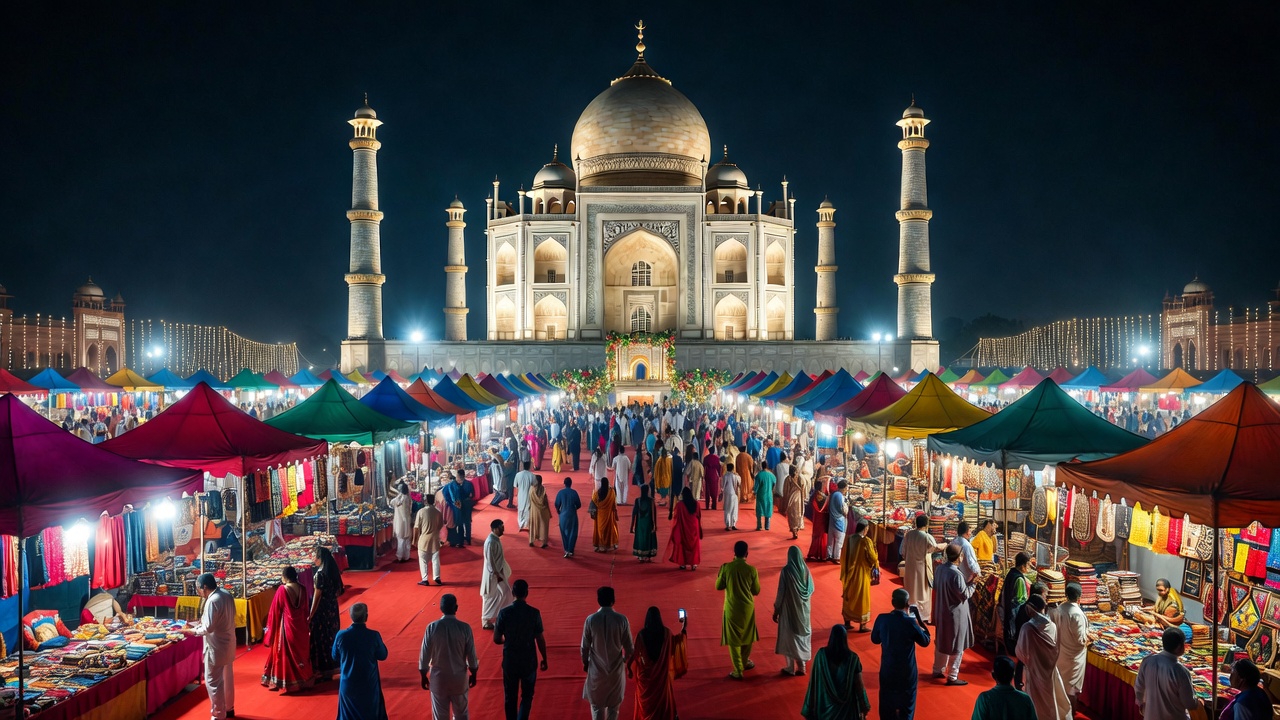
The crisp February air carries the fragrance of incense and freshly prepared biryani as you walk through the gates of Shilpgram. Ahead, the white marble dome of the Taj Mahal rises against the blue Uttar Pradesh sky, while all around you, hundreds of artisans from every corner of India display treasures their families have crafted for generations. This is Taj Mahotsav—not merely a festival, but a living, breathing celebration of India’s soul.
For ten extraordinary days each February, the ancient city of Agra transforms into a kaleidoscope of colour, sound, and flavour. The Taj Mahotsav cultural festival stands as one of India’s most significant heritage events, drawing over 400 master artisans, thousands of performers, and visitors from across the globe to experience the magnificent synthesis of Mughal grandeur and Indian folk traditions.
What is Taj Mahotsav and Why is it Celebrated Every Year in Agra?
The Taj Mahotsav (Hindi: ताज महोत्सव, literally “Taj Festival”) is an annual ten-day cultural extravaganza held at Shilpgram, situated near the Eastern Gate of the Taj Mahal in Agra, Uttar Pradesh. Celebrated from 18th to 27th February each year, this magnificent event serves as a comprehensive platform showcasing India’s diverse arts, crafts, cultures, cuisine, classical dance forms, and traditional music.
The festival draws its inspiration from the opulent Mughal era and the refined nawabi style that characterised 18th and 19th century Uttar Pradesh. Every element of Taj Mahotsav is designed to transport visitors back to an age of emperors, poets, and master craftsmen. The event recreates the aesthetic sensibilities that gave birth to the Taj Mahal itself—attention to detail, respect for craftsmanship, and celebration of beauty in all its forms.
Why Agra? The answer lies in the city’s unparalleled historical significance. Agra served as the capital of the Mughal Empire during its golden age. The city’s very foundation is intertwined with legends of artistic excellence. When Emperor Shah Jahan commissioned the Taj Mahal as an eternal tribute to his beloved Mumtaz Mahal, he summoned the finest architects, calligraphers, inlay craftsmen, stone carvers, and masons from across India, Persia, and Turkey. The skills these artisans developed have been passed down through generations, and many of their descendants still practice these ancient crafts in the narrow lanes surrounding the monument.
The Taj Mahotsav Festival Agra honours this living heritage while simultaneously looking forward. It provides traditional artisans a crucial marketplace, exposes young Indians to their cultural roots, and introduces international visitors to India’s extraordinary creative traditions.
The Complete History of Taj Mahotsav Festival from 1992 to Present Day
Origins and Foundation of the Festival
The Taj Mahotsav was started in 1992 by the Uttar Pradesh Tourism Department with a specific mission: to revive traditional Indian arts and provide artisans with sustainable livelihoods. By the early 1990s, many traditional crafts faced extinction due to industrial mass production and declining market access. Young people in artisan families were abandoning centuries-old skills because they could not earn adequate incomes from their craft.
The first edition of Taj Mahotsav was a modest affair compared to today’s spectacle. A handful of craftspeople set up stalls, local folk performers entertained small crowds, and visitors wandered through displays of regional handicrafts. Yet even in that inaugural year, something magical happened. The presence of the Taj Mahal as a backdrop, combined with the genuine skill of the participating artisans, created an atmosphere that resonated deeply with both domestic and international tourists.
Growth Through the Decades
Throughout the 1990s, the festival grew steadily in scope and reputation. Each year brought more artisans, more performance groups, and increasingly sophisticated organisation. The Uttar Pradesh State AIDS Control Society recognised the festival’s reach and began using folk dances and cultural programmes to spread awareness about AIDS—a practice that continues to this day.
By the turn of the millennium, Taj Mahotsav had evolved from a regional craft fair into a nationally recognised cultural institution. The festival began adopting annual themes to highlight specific aspects of India’s heritage. These themes have included:
| Year | Theme | Focus |
|---|---|---|
| 2017 | विरासत की छाँव में (In the Shadow of Heritage) | Regional heritage preservation |
| 2019 | Dharohar | Celebrating India’s historical monuments |
| 2024 | Ek Bharat Shrestha Bharat | National unity through cultural diversity |
| 2025-26 | Heritage Tourism | Connecting traditions with sustainable travel |
Modern Era and Global Recognition
Today, the Taj Mahotsav cultural heritage festival attracts approximately 400 artisans from across India and draws visitors numbered in the hundreds of thousands over its ten-day duration. The festival has become a case study in heritage-based tourism, attracting cultural researchers, international travel writers, and policymakers interested in sustainable development through traditional crafts.
The Uttar Pradesh Tourism Department continues to serve as the primary organiser through the Taj Mahotsav Samiti (Taj Mahotsav Committee), working under the authority of the Commissioner of Agra Division. Government support has enabled infrastructure improvements at Shilpgram, expansion of performance venues, and international marketing campaigns that now reach potential visitors across Europe, North America, and East Asia.
Where is Taj Mahotsav Located and How to Reach the Festival Venue
Shilpgram: The Artisan Village That Hosts India’s Greatest Craft Festival
The Taj Mahotsav is held at Shilpgram, a purpose-built artisan village located near the Eastern Gate of the Taj Mahal in Agra, Uttar Pradesh. The name “Shilpgram” translates to “craft village,” and the complex was specifically designed to promote and preserve Indian handicrafts. During the festival, Shilpgram transforms into a vibrant marketplace that captures the essence of traditional rural India while offering modern amenities for visitors.
The venue’s proximity to the Taj Mahal is no accident. Visitors can literally walk from the festival grounds to the monument in just a few minutes, creating a seamless experience that combines heritage tourism with cultural immersion. This strategic location means that international tourists visiting the Taj Mahal—one of the New Seven Wonders of the World—can easily incorporate the festival into their itineraries.
Shilpgram Address: Shilpgram, Eastern Gate Road, Near Taj Mahal Eastern Gate, Agra, Uttar Pradesh 282001, India
Detailed Transportation Guide to Taj Mahotsav Agra
By Air: The nearest commercial airport is Kheria Airport (AGR) in Agra itself, located approximately 11-13 kilometres from the festival venue. However, this airport has limited flight connectivity. Most international and many domestic travellers prefer to fly into Indira Gandhi International Airport (DEL) in Delhi, located approximately 220 kilometres from Agra. From Delhi, you can hire a private taxi, take a train, or join an organised tour group travelling to the festival.
By Rail: Agra enjoys excellent railway connectivity as it lies on major routes between Delhi, Mumbai, Chennai, and Kolkata. The main railway stations serving festival visitors are:
| Station | Distance from Shilpgram | Best For |
|---|---|---|
| Agra Cantt Railway Station | 9 km | Most long-distance trains |
| Agra Fort Railway Station | 6 km | Convenient city location |
| Raja Ki Mandi | 5 km | Some regional trains |
High-speed trains like the Gatimaan Express and Shatabdi Express connect Delhi to Agra Cantt in under 2 hours, making day trips feasible for visitors based in the capital.
By Road: Agra is well-connected via National Highway NH-19 (formerly NH-2), which runs from Delhi to Kolkata. The Yamuna Expressway provides a fast, smooth connection from Greater Noida to Agra—a distance of 165 kilometres on a six-lane, access-controlled highway. Journey time from Delhi to Agra by road is typically 3-4 hours depending on traffic conditions.
Travel tip from a fellow wanderer: If you’re visiting during the festival, book your transportation and accommodation well in advance. Agra fills up quickly during Taj Mahotsav, and prices rise accordingly. Consider staying in Delhi and making a day trip, or booking accommodations in nearby Fatehpur Sikri for a more affordable alternative.
Traditional Indian Arts and Handicrafts Displayed at Taj Mahotsav 2026
Master Artisans Showcase Centuries-Old Craft Traditions
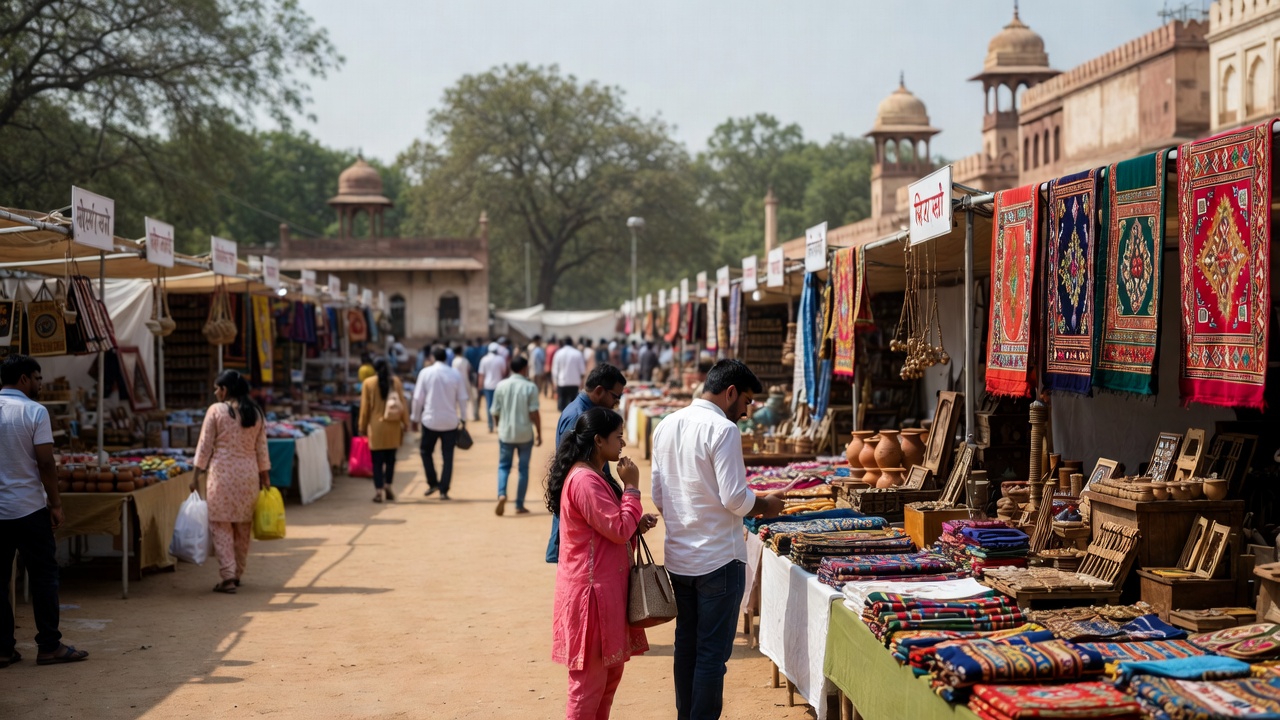
The heart of Taj Mahotsav lies in its extraordinary display of Indian handicrafts. Over 400 master artisans from every state and region gather to demonstrate skills refined over generations. Walking through the craft pavilions is like taking a journey across the entire subcontinent without leaving Agra.
Marble Inlay Work (Parchin Kari) from Agra: No craft is more intimately connected with the Taj Mahal than marble inlay, known locally as Parchin Kari or Pachchikari. This technique, introduced during the Mughal period, involves cutting semi-precious stones into delicate shapes and embedding them into white marble to create intricate floral and geometric patterns.
The artisans who practice this craft today are largely descendants of the families who worked on the Taj Mahal nearly four centuries ago. They live in compact, congested areas around the monument—in Taj Ganj, Nai Ki Mandi, and Gokulpura—carrying forward a tradition that might otherwise have been lost.
At Taj Mahotsav, visitors can watch these master craftsmen at work. The process is mesmerising: a piece of semi-precious stone is carefully shaped using a hand-powered grinding wheel, the artisan’s fingers sometimes abrading against the stone alongside the material. Each piece must fit precisely, with no gaps, into cavities chiseled into the marble surface. The adhesive used is still the traditional paste made from sugarcane, beeswax, honey, lemon juice, marble dust, and natural lentils—the same formula employed during the Taj Mahal’s construction.
Regional Crafts Featured at the Festival:
| Region | Featured Crafts |
|---|---|
| Tamil Nadu | Wood and stone carvings |
| Northeast India | Bamboo and cane work |
| Kashmir | Paper mâché, shawls, carpets |
| Agra | Marble inlay, zardozi embroidery |
| Saharanpur | Wood carving |
| Moradabad | Brassware |
| Bhadohi | Handmade carpets |
| Khurja | Pottery |
| Lucknow | Chikan embroidery |
| Varanasi | Silk and zari work |
| Gujarat | Textiles and shawls |
| Farrukhabad | Hand printing |
| West Bengal | Kantha stitch work |
| Rajasthan | Block printing, tie-dye |
Live Craft Demonstrations That Connect Visitors With Artisan Heritage
What sets Taj Mahotsav apart from ordinary craft markets is the opportunity to witness creation in progress. Throughout the festival grounds, artisans demonstrate their techniques:
- Weavers spin silk into vibrant sarees on traditional handlooms
- Painters bring mythological stories to life using natural dyes
- Potters shape clay on ancient-style wheels
- Woodcarvers transform blocks of teak into intricate sculptures
- Zardozi workers embroider gold and silver thread into luxurious fabrics
These demonstrations serve a dual purpose. They help visitors understand the time, skill, and devotion that goes into each piece, justifying prices that might otherwise seem high. More importantly, they create connections between artisans and customers that transcend mere commerce. Many visitors leave Taj Mahotsav having not just purchased handicrafts, but having heard the stories behind them—the family histories, the traditional techniques, the hopes and challenges of keeping ancient skills alive in a modern economy.
Personal observation: I’ve found that the best conversations happen at the quieter stalls, away from the main thoroughfares. The elderly karigar working alone on a corner display often has the most extraordinary skills and the most compelling stories to share.
Classical Dance Performances and Folk Music at Taj Mahotsav Festival
Soul-Stirring Cultural Performances Under the Agra Sky
As the sun sets behind the Taj Mahal and the monument begins to glow pink and then orange, the cultural performance stages of Taj Mahotsav come alive. Every evening features a carefully curated programme of classical and folk performances that represents the staggering diversity of Indian artistic traditions.
Classical Dance Forms: The festival provides a prestigious platform for India’s eight classical dance forms:
| Dance Form | Origin Region | Characteristics |
|---|---|---|
| Kathak | Uttar Pradesh / North India | Intricate footwork, spins, expressive storytelling |
| Bharatanatyam | Tamil Nadu | Geometric precision, devotional themes |
| Odissi | Odisha | Fluid movements, sculptural poses |
| Kuchipudi | Andhra Pradesh | Drama elements, brass plate dancing |
| Manipuri | Manipur | Graceful, circular movements |
| Mohiniyattam | Kerala | Feminine grace, subtle expressions |
| Kathakali | Kerala | Elaborate costumes, dramatic facial makeup |
| Sattriya | Assam | Devotional themes from Vaishnavite tradition |
Kathak holds special significance at Taj Mahotsav given the festival’s setting in the heart of the Brij region, where this dance form originated and flourished under Mughal patronage. Watching a master Kathak performer execute lightning-fast chakkar spins while maintaining perfect rhythm with ankle bells is an unforgettable experience, especially with the illuminated Taj Mahal visible in the distance.
Folk Dances from Every Corner of India
While classical performances demonstrate refined technique developed over centuries, folk dances bring raw energy and community joy to the festival. The programme typically includes:
Rajasthani Ghoomar: Women in colourful traditional ghagras perform graceful spinning and clapping movements that embody Rajasthan’s royal heritage. The dancers often balance pots on their heads while executing complex footwork.
Punjabi Bhangra: The infectious rhythms and exuberant movements of Bhangra represent Punjab’s agricultural heritage, originally performed during the wheat harvest celebration of Vaisakhi. At Taj Mahotsav, Bhangra performances invariably draw audience participation.
Kalbelia: The “gypsy dance” of the Kalbelia tribe from Rajasthan features sinuous movements mimicking the motion of serpents. These performances are accompanied by haunting music played on the been (snake charmer’s flute) and dholak drum.
Lavani: From Maharashtra, this energetic dance form combines powerful footwork with theatrical expressions, traditionally performed to songs about love and social issues.
The evening performances typically begin around 6:00 PM and continue until late night. The main stage hosts headline acts—renowned classical artists, popular folk troupes, and occasionally Bollywood performers—while smaller performance areas throughout Shilpgram feature continuous folk entertainment.
Traveller’s recommendation: Check the daily performance schedule at the information desk upon arrival. Headline evening concerts fill up quickly, so arrive early to secure good viewing positions. The afternoon shows, while less crowded, often feature exceptional regional artists who deserve wider recognition.
Authentic Indian Food and Culinary Traditions at Taj Mahotsav
A Gastronomic Journey Through India’s Regional Cuisines
No Indian celebration is complete without food, and Taj Mahotsav serves as a culinary pilgrimage across the subcontinent. The festival’s food zone brings together expert chefs and traditional cooks from different states, each presenting authentic regional specialties that you might otherwise need to travel thousands of kilometres to experience.
Mughlai Cuisine Takes Centre Stage: Given Agra’s Mughal heritage, the festival appropriately features outstanding examples of Mughlai cooking—the refined cuisine that evolved in the royal kitchens of the emperors. Expect to find:
- Kebabs: Succulent seekh kebabs, kakori kebabs, and galouti kebabs so tender they melt on the tongue
- Biryani: Both Lucknowi dum pukht biryani with its delicate flavours and the more robust Hyderabadi version
- Kormas and Curries: Rich, creamy dishes featuring nuts, dried fruits, and complex spice blends
- Tandoori Specialties: Bread and meat cooked in traditional clay ovens
Regional Culinary Diversity:
| Region | Signature Dishes |
|---|---|
| Uttar Pradesh | Awadhi cuisine, Bedai-Jalebi, Petha, Gajak |
| Rajasthan | Dal Baati Churma, Laal Maas, Pyaaz ki Kachori |
| Punjab | Amritsari Kulcha, Chole, Lassi |
| Bengal | Rosogolla, Mishti Doi, Fish preparations |
| South India | Dosa, Idli, Uttapam, Filter Coffee |
| Gujarat | Dhokla, Thepla, Kadhi |
Street Food Paradise: For those seeking the vibrant flavours of Indian street food, Taj Mahotsav delivers abundantly:
- Chaat: Pani puri, bhel puri, aloo tikki, papdi chaat—all the tangy, spicy, crunchy sensations that make Indian street food legendary
- Fresh Samosas: Crispy pastry triangles stuffed with spiced potatoes
- Jalebi: Spiral-shaped sweets dripping with sugar syrup, best eaten hot
- Dahi Vada: Lentil dumplings in yogurt with sweet and spicy chutneys
Agra’s Local Specialties: No visit to Taj Mahotsav is complete without trying Agra’s signature sweet, Petha. This translucent candy made from ash gourd (winter melon) comes in numerous varieties—plain, angoori (grape-shaped), paan-flavoured, kesar (saffron), and chocolate-coated for the adventurous. The best petha has been made by the same families for generations, using recipes that have remained unchanged for centuries.
Food lover’s tip: Arrive hungry and pace yourself. The variety is overwhelming, and you’ll want to sample broadly rather than filling up on any single dish. Carry cash, as most food vendors prefer direct transactions over digital payments.
Unique Cultural Experiences and Activities for Families at Taj Mahotsav
Entertainment and Adventure Beyond Arts and Crafts
While artisan displays and cultural performances form the festival’s core, Taj Mahotsav offers diverse activities ensuring that every visitor—regardless of age or interests—finds something memorable.
Traditional Animal Experiences: In keeping with India’s historical traditions, the festival offers camel and elephant rides. These activities evoke the transportation of the Mughal era and are especially popular with families. Trained handlers ensure safety while providing information about the historical role these animals played in Indian society.
Funfair and Children’s Activities: The festival includes a dedicated carnival zone featuring:
- Ferris wheels with views across the festival grounds
- Merry-go-rounds and train rides
- Traditional Indian games and folk entertainment
- Puppet shows depicting mythological stories
- Magic shows by local performers
Interactive Workshops: Various stalls offer hands-on workshops where visitors can try traditional crafts:
- Pottery throwing on traditional wheels
- Block printing on fabric
- Henna (mehndi) application
- Basic embroidery techniques
- Rangoli creation
These workshops provide particularly meaningful experiences for children, allowing them to understand the patience and skill involved in traditional crafts rather than merely observing finished products.
Spiritual and Wellness Experiences: Taj Mahotsav acknowledges India’s sacred roots through morning programmes including:
- Bhajans (devotional songs)
- Yoga sessions
- Musical tributes to Indian deities
- Spiritual discourses by local teachers
These morning activities offer a contemplative counterpoint to the festival’s celebratory atmosphere, reflecting the spiritual dimension that permeates Indian culture.
Planning Your Visit to Taj Mahotsav 2026 with Complete Travel Guide
Essential Information for First-Time Visitors
Taj Mahotsav 2026 Dates: 18th February to 27th February, 2026
Festival Hours: 10:00 AM to 10:00 PM daily (performance times vary; headline evening shows typically begin at 6:00 PM)
Entry Fees (as per recent editions):
| Category | Fee |
|---|---|
| Adult (Indian citizen) | ₹50 |
| Children under 5 years | Free |
| Children 5-10 years | ₹10 |
| School groups (100 students in uniform) | ₹700 total |
| Foreign tourists | Free / Nominal fee |
Note: Fee structures may change; verify current prices through official sources before visiting.
Recommended Duration: While the entire festival spans ten days, most visitors can experience its highlights in 1-2 full days. A recommended approach:
Day 1 Morning: Arrive early to explore craft stalls before crowds peak. Engage with artisans, watch demonstrations, and make purchases while selection remains optimal.
Day 1 Afternoon: Sample regional cuisines for lunch. Attend afternoon folk performances. Visit the workshop areas.
Day 1 Evening: Secure positions for headline cultural performances. Experience the Taj Mahal at sunset (separate ticketed entry).
Day 2: Return for items you considered the previous day. Explore stalls you missed. Attend different performance genres. Dedicate time to food exploration.
Best Time to Visit Taj Mahotsav for Optimal Experience
Weather Considerations: February in Agra offers pleasant weather—one reason the festival is scheduled during this month. Daytime temperatures typically range from 15-25°C (59-77°F), though evenings can become cool. Expect:
- Clear skies and good visibility for photography
- Comfortable conditions for walking the extensive festival grounds
- Occasionally dusty conditions; carry sunglasses and stay hydrated
Crowd Management: The festival experiences varying crowd levels:
| Period | Crowd Level | Recommendation |
|---|---|---|
| Weekdays | Moderate | Best for unhurried craft shopping and artisan conversations |
| Weekends | Heavy | Arrive early; focus on performances |
| Opening days | Heavy | Official ceremonies; extra activities |
| Closing days | Moderate-Heavy | Last chance purchases; potential discounts |
Strategic tip: Visiting on weekdays allows for deeper engagement with artisans. Many craftspeople have remarkable stories to share but lack time for conversation during peak weekend hours.
Why Taj Mahotsav Matters for Indian Heritage Tourism and Cultural Preservation
Economic Impact on Traditional Artisan Communities
The significance of Taj Mahotsav extends far beyond tourism statistics. The festival represents a crucial lifeline for artisan communities across India whose traditional skills might otherwise become economically unviable.
Consider the economics facing a traditional marble inlay craftsman in Agra. Creating a single intricate tabletop can require weeks of painstaking labour. Without platforms like Taj Mahotsav that connect artisans directly with appreciative customers willing to pay fair prices, many would be forced to abandon their craft for factory work or other employment.
The festival provides:
- Direct market access without middlemen who often capture most of the value
- Exposure to international buyers who may place large orders or establish ongoing relationships
- Recognition and prestige that enhances artisans’ standing in their communities
- Motivation for skill transfer to younger generations who see viable futures in traditional crafts
Preservation of Endangered Crafts: Several craft traditions showcased at Taj Mahotsav were on the verge of extinction before the festival and similar initiatives began providing support. The festival has played a documented role in reviving interest in:
- Certain forms of Kashmiri papier-mâché work
- Traditional pottery techniques from smaller villages
- Specific embroidery styles from remote regions
- Handloom weaving traditions facing competition from powerlooms
Tourism Development and Regional Economy
Taj Mahotsav contributes significantly to Agra’s economy during February. The influx of visitors supports:
- Hotels and guesthouses (occupancy rates rise substantially during the festival)
- Restaurants and food vendors
- Transportation services
- Retail businesses throughout the city
- Guide and tour services
Beyond direct economic impact, the festival strengthens Agra’s brand as a cultural destination rather than merely a one-monument stopover. Visitors who experience Taj Mahotsav often extend their stays to explore Agra Fort, Fatehpur Sikri, and the Brij region, distributing tourist spending more broadly.
Exploring Agra Beyond Taj Mahotsav: UNESCO World Heritage Sites and Historical Monuments
Combining Festival Attendance with Heritage Tourism
A visit to Taj Mahotsav provides the perfect opportunity to explore Agra’s extraordinary concentration of Mughal monuments. The city contains three UNESCO World Heritage Sites within easy reach.
Taj Mahal: The monument that inspired the festival needs little introduction. This ivory-white marble mausoleum, built by Emperor Shah Jahan between 1632-1653 in memory of his wife Mumtaz Mahal, represents the zenith of Mughal architectural achievement. The combination of Persian, Ottoman Turkish, and Indian architectural styles created something unprecedented and unrepeatable.
Visiting tip: Experience the Taj Mahal at sunrise for the softest light and smallest crowds. The monument is closed on Fridays (except for worshippers at the mosque). Combine a dawn Taj visit with late morning exploration of Taj Mahotsav.
Agra Fort: This massive red sandstone fortress served as the main residence of Mughal emperors until 1638. Within its 2.5-kilometre walls stand stunning palaces, audience halls, and mosques. Shah Jahan spent his final years imprisoned here by his son Aurangzeb, gazing across the Yamuna at the Taj Mahal he had built for his beloved wife.
Fatehpur Sikri: Located 40 kilometres from Agra, this abandoned Mughal capital was built by Emperor Akbar in the 16th century and served as the seat of government for 14 years before being mysteriously abandoned. The complex represents one of the finest examples of Mughal urban planning and architecture.
Itmad-ud-Daula’s Tomb (Baby Taj): Often called a “draft” for the Taj Mahal, this smaller tomb was the first Mughal structure built entirely of marble and featuring extensive pietra dura inlay work. Its intimate scale makes it easier to appreciate the intricate craftsmanship up close.
Mehtab Bagh: This garden complex across the Yamuna from the Taj Mahal offers spectacular sunset views of the monument reflected in the river. Some historians believe Shah Jahan intended to build a black marble counterpart to the Taj here.
The Brij Bhumi Connection: Understanding the Cultural Geography of Taj Mahotsav
Agra’s Place in India’s Sacred Cultural Landscape
To fully appreciate Taj Mahotsav, one must understand Agra’s position within the broader Brij Bhumi cultural region. This ancient territory, centred on Mathura and Vrindavan but extending to include Agra, holds profound significance in Hindu tradition as the land where Lord Krishna lived and performed his divine leelas (plays).
The Brij region spans approximately 2,500 square kilometres across portions of Uttar Pradesh, Rajasthan, and Haryana. Agra sits at its southern edge, historically connected to Mathura (57 kilometres north) by the Yamuna River and ancient trade routes.
This cultural geography matters for understanding Taj Mahotsav because:
- The folk traditions featured at the festival draw heavily from Brij culture
- Music and dance forms specific to this region receive prominent placement
- The cuisine reflects both Mughal influences and vegetarian Brij traditions
- The spiritual undertones of the festival connect to regional devotional practices
Brij Bhasha, the local dialect of Hindi spoken throughout this region, infuses festival performances with distinctive linguistic character. Songs praising Radha and Krishna, composed in this sweetly musical dialect, have formed part of the regional culture for centuries.
Cultural insight: If time permits, extend your trip to include Mathura and Vrindavan. These twin cities offer profound spiritual experiences and complement Taj Mahotsav’s cultural programming with temple visits, aarti ceremonies on the Yamuna, and exploration of sites associated with Krishna’s life.
Photography Tips and Best Spots for Capturing Taj Mahotsav Memories
Documenting Your Festival Experience
Taj Mahotsav provides extraordinary photographic opportunities for everyone from smartphone users to professional photographers. The combination of colourful displays, expressive performers, skilled artisans at work, and the Taj Mahal backdrop creates endless possibilities.
Recommended Photography Subjects:
| Subject | Best Time | Tips |
|---|---|---|
| Craft demonstrations | Morning | Natural light; artisans less rushed |
| Food stalls | Midday | Steam rising from hot dishes |
| Folk performers | Afternoon | Vibrant costumes; energetic movement |
| Classical dancers | Evening | Stage lighting; dramatic poses |
| Overall ambiance | Golden hour | Warm light across festival grounds |
| Taj Mahal views | Sunrise/sunset | Optimal monument lighting |
Etiquette Considerations:
- Always ask permission before photographing artisans or performers up close
- Some vendors may expect a small purchase in exchange for detailed craft photos
- Avoid flash during classical performances
- Children should not be photographed without parental consent
Equipment Suggestions:
- A versatile zoom lens (24-70mm equivalent) covers most situations
- Fast prime lenses (f/1.8 or faster) help in dim evening conditions
- Consider a small tripod or monopod for evening performances
- Bring extra batteries—you’ll shoot more than expected
Photography enthusiast’s note: The most compelling images often come from patient observation rather than rapid shooting. Spend time watching an artisan work, understand their rhythm, and anticipate meaningful moments before raising your camera.
Accommodation and Where to Stay During Taj Mahotsav 2026
Lodging Options for Every Budget and Preference
Agra offers accommodation ranging from heritage luxury hotels to budget guesthouses. During Taj Mahotsav, booking in advance is essential as the city’s hotel inventory faces significant demand.
Luxury Heritage Hotels: Several converted mansions and purpose-built heritage properties offer immersive experiences:
- Properties near the Eastern Gate provide walkable access to both the Taj Mahal and festival grounds
- Many luxury hotels organise guided festival visits and cultural evenings
- Expect to pay premium rates during the festival period
Mid-Range Options:
- Numerous three and four-star hotels are concentrated along Fatehabad Road and Taj East Gate Road
- Many offer Taj Mahotsav packages including transportation and guided visits
- Book direct for best rates; verify festival-period pricing
Budget Accommodations:
- Guesthouses and hostels in Taj Ganj offer basic but affordable rooms
- Some homestays provide authentic local experiences
- Quality varies widely; read recent reviews carefully
Alternative Strategies:
| Approach | Advantages | Considerations |
|---|---|---|
| Stay in Fatehpur Sikri | Lower prices; less crowded | 40 km from festival; requires transportation |
| Stay in Mathura | Combine spiritual tourism | 57 km from Agra; limited luxury options |
| Day trip from Delhi | Access to Delhi’s accommodation and attractions | 4-5 hours round trip; long days |
Accommodation tip: If traveling as part of the popular Golden Triangle tour (Delhi-Agra-Jaipur), schedule your Agra portion during Taj Mahotsav dates. Most tour operators can adjust standard itineraries to accommodate festival attendance.
Responsible Tourism and Supporting Artisan Communities at Taj Mahotsav
Making Your Visit Count for Cultural Preservation
Attending Taj Mahotsav offers opportunities to practice meaningful, responsible tourism that benefits the communities preserving India’s heritage.
Supporting Authentic Craftsmanship:
- Purchase directly from artisans rather than large commercial stalls
- Ask about the craft’s history and the artisan’s family tradition
- Understand that quality handwork takes time and justifies higher prices
- Request certificates of authenticity for significant purchases
Engaging Respectfully:
- Learn a few words of Hindi—Namaste (greetings), Dhanyavaad (thank you), Bahut sundar (very beautiful)
- Bargaining is culturally appropriate but should be respectful and reasonable
- Recognise that artisans depend on festival sales for their livelihoods
- Share artisan contact information with friends interested in future orders
Environmental Considerations:
- Carry a reusable water bottle (refill stations are available)
- Minimise single-use plastic
- Dispose of food waste responsibly
- Consider walking or shared transportation within Agra
Photography Ethics:
- Treat artisans and performers as skilled professionals, not exotic subjects
- Images shared on social media can help artisans gain international recognition
- Consider crediting artisans by name when posting their work online
Reflection: Every purchase at Taj Mahotsav is a vote for cultural continuity. When you buy that marble box or embroidered shawl, you’re not just acquiring an object—you’re participating in an economic ecosystem that makes it possible for traditional skills to survive into the next generation.
Frequently Asked Questions About Taj Mahotsav Cultural Heritage Festival
Common Queries Answered for First-Time Visitors
What are the exact dates for Taj Mahotsav 2026? The festival runs annually from 18th to 27th February. For 2026, this means a ten-day celebration during the last full week of February.
Is Taj Mahotsav suitable for international tourists? Absolutely. The event is foreigner-friendly with multilingual signage, available tour support, and secure surroundings. International visitors receive free or nominal-fee entry, and many vendors are accustomed to communicating in English.
Can I visit Taj Mahotsav with children? Yes, the festival is family-friendly. The carnival zone, puppet shows, folk games, and food stalls make it ideal for family outings. However, the grounds are extensive, so plan for rest breaks and bring comfortable footwear.
What should I wear to Taj Mahotsav? Dress comfortably for walking. February weather is pleasant but can be cool in evenings. Modest clothing is appropriate given the conservative cultural context. Avoid high heels on the uneven festival grounds.
Is photography allowed at Taj Mahotsav? Yes, photography is encouraged, especially at craft stalls and performances. However, always ask permission before taking close-up portraits. Professional photography equipment may require registration.
Can I ship purchases internationally? Many larger vendors offer international shipping, particularly for fragile items like marble inlay work. Obtain receipts and shipping documentation for customs purposes.
Is Taj Mahotsav accessible for visitors with mobility limitations? The festival grounds are largely flat but can be crowded and uneven in places. Contact the organisers in advance to discuss specific accessibility needs.
How crowded does Taj Mahotsav get? Weekends and opening/closing days see the largest crowds. For a more relaxed experience, visit on weekdays and arrive early in the day.
Conclusion: Why Every Culture Enthusiast Must Experience Taj Mahotsav
The Festival That Captures India’s Creative Soul
In a world increasingly dominated by mass production and digital experiences, Taj Mahotsav stands as a vibrant reminder of what human hands can create when guided by generations of accumulated wisdom. The festival is not a museum exhibit frozen in time but a living celebration where ancient skills meet contemporary appreciation.
Standing in Shilpgram as dusk falls, watching a Kathak dancer spin beneath lights while the Taj Mahal glows in the background, listening to the rhythms of tabla mixing with children’s laughter from the carnival zone, smelling biryani from one direction and fresh jalebi from another—in these moments, the festival transcends its official description as a “cultural event.” It becomes something rarer: a genuine experience of cultural immersion that touches multiple senses simultaneously.
For international visitors, Taj Mahotsav offers a concentrated introduction to India’s creative diversity that would otherwise require months of travel across multiple states. For Indian visitors, it provides an opportunity to rediscover heritage that modern life often obscures. For everyone, it creates memories that last far longer than any souvenir.
The artisans who gather each February at Shilpgram carry forward skills that connect the present to a past stretching back centuries. When you purchase their work, engage with their craft, and share their stories, you become part of that continuity. In this sense, Taj Mahotsav is not merely an event to attend but a tradition to participate in—a celebration that grows richer with each visitor who approaches it with curiosity and respect.
Plan Your Taj Mahotsav 2026 Journey Today
Key Information at a Glance:
| Detail | Information |
|---|---|
| Dates | 18-27 February 2026 |
| Location | Shilpgram, Eastern Gate, Taj Mahal, Agra |
| Hours | 10:00 AM – 10:00 PM daily |
| Nearest Airport | Kheria (Agra) – 11 km; IGI Delhi – 220 km |
| Nearest Railway | Agra Cantt – 9 km |
| Official Website | tajmahotsav.org |
| Tourism Information | Incredible India – Taj Mahotsav |
This article was researched and written with deep appreciation for the artisans, performers, and organisers who make Taj Mahotsav possible. The traditions showcased at this festival represent India’s living heritage—skills and stories passed down through generations that deserve our attention, respect, and support.
Share your Taj Mahotsav experiences and help spread awareness of this magnificent celebration of Indian culture. Use the hashtags #TajMahotsav and #IndianHeritage to connect with fellow culture enthusiasts worldwide.