A comprehensive guide to the sacred rituals, spiritual disciplines, and devotional practices that transform ordinary individuals into vessels of divine grace during one of Hinduism’s most intense festivals.
What is Thaipusam and Why is It Celebrated by Tamil Hindus?
Thaipusam (Tamil: தைப்பூசம்) stands as one of the most visually striking and spiritually intense Hindu festivals in the world. Celebrated annually on the full moon day in the Tamil month of Thai (January-February), this sacred occasion honors Lord Murugan, the Hindu god of war, victory, and wisdom.
The festival commemorates a pivotal moment in Hindu mythology. According to ancient scriptures, Goddess Parvati bestowed upon her son Murugan a divine spear called the Vel. Armed with this celestial weapon, Murugan vanquished the demon Surapadman, restoring cosmic order and the triumph of good over evil.
But Thaipusam represents far more than mythological remembrance. It embodies a living tradition of penance, gratitude, and spiritual renewal. For millions of Tamil Hindus across India, Malaysia, Singapore, Sri Lanka, and diaspora communities worldwide, this festival offers an opportunity to fulfill sacred vows, seek divine blessings, and undergo profound personal transformation.
The celebrations at Batu Caves near Kuala Lumpur attract nearly two million devotees annually, making it one of the largest religious gatherings outside of India. Similarly, Singapore’s procession from Sri Srinivasa Perumal Temple to Sri Thendayuthapani Temple draws tens of thousands of participants each year.
Understanding the Spiritual Significance of Thaipusam Festival Preparations
The preparation for Thaipusam extends far beyond the festival day itself. True devotees understand that the journey toward divine grace begins weeks or even months before the main celebration.
This preparatory phase, known as Viratham (விரதம்), represents a period of intense spiritual discipline. The word itself derives from Sanskrit, meaning “vow” or “religious observance.” During this time, devotees commit to purifying their mind, body, and soul through various austerities.
The underlying philosophy draws from the Hindu concept of tapas (ascetic practice). By voluntarily embracing hardship and self-denial, devotees believe they can:
- Purify accumulated karma from past actions
- Strengthen spiritual resolve and mental fortitude
- Create receptivity to divine grace
- Honor their commitment to Lord Murugan
- Transform personal challenges into spiritual growth
As the Divine Life Society explains, Lord Murugan is regarded as capable of offering mukti (spiritual liberation) to sincere devotees. The preparatory practices serve as demonstrations of that sincerity.
How Long is the Traditional Thaipusam Fasting Period for Devotees?
The duration of the fasting period varies based on individual commitment and physical capability. However, traditional practices recognize several established timeframes:
| Fasting Duration | Name | Description |
|---|---|---|
| 48 Days | Mandala Viratham | The most rigorous and traditional period, representing one complete mandala |
| 30 Days | Month-long Fast | A moderately intensive option for committed devotees |
| 21 Days | Three-week Fast | A common choice balancing devotion with practical constraints |
| 9 Days | Navratri-style Fast | A shorter but still meaningful commitment |
| 3 Days | Brief Preparation | Minimum recommended for kavadi bearers |
| 1 Day | Day-of Fast | For those unable to observe longer periods |
According to the Malaysia Hindu Sangam, the 48-day Mandala Viratham represents the gold standard for serious devotees. This period commences exactly 48 days before Thaipusam, allowing devotees to undergo complete physical and spiritual transformation.
For Thaipusam 2026, which falls on February 1st, the traditional 48-day fasting period would begin on December 15th, 2025.
What Do Devotees Eat During Thaipusam Vegetarian Diet Restrictions?
The dietary component of Thaipusam preparation forms one of its most recognizable elements. Devotees adopt a strict vegetarian diet that goes beyond merely avoiding meat.
Foods Typically Avoided During Viratham
- All meats including beef, chicken, lamb, and pork
- Seafood including fish, shrimp, and shellfish
- Eggs in any form
- Onions and garlic (considered rajasic or stimulating)
- Alcohol and all intoxicants
- Spicy foods that may agitate the mind
- Processed foods with artificial ingredients
Foods Commonly Consumed During Preparation
Permitted Foods:
- Fresh fruits (especially bananas, coconuts, and citrus)
- Fresh vegetables (excluding onions and garlic)
- Milk and dairy products
- Rice and lentils
- Whole grains
- Nuts and seeds
- Honey and jaggery
Many devotees further restrict themselves to one simple vegetarian meal per day. This meal is typically consumed in the afternoon, with the evening meal skipped as an additional act of penance.
For those who are already lifelong vegetarians, the common practice involves observing a one-meal fast daily—usually skipping the evening meal—as a form of additional sacrifice and simplicity.
The philosophy behind these dietary restrictions aligns with Hindu concepts of sattva (purity and goodness). A sattvic diet is believed to calm the mind, reduce bodily toxins, and create conditions favorable for spiritual practice.
What Are the Essential Prayer Practices for Thaipusam Preparation?
Prayer forms the spiritual backbone of Thaipusam preparation. Devotees don’t merely abstain from certain foods—they actively cultivate devotion through systematic spiritual practices.
Daily Prayer Schedule During Viratham
Morning Practices (Before Sunrise):
- Wake before dawn
- Take a purifying cold bath
- Apply sacred ash (vibhuti) and sandalwood paste
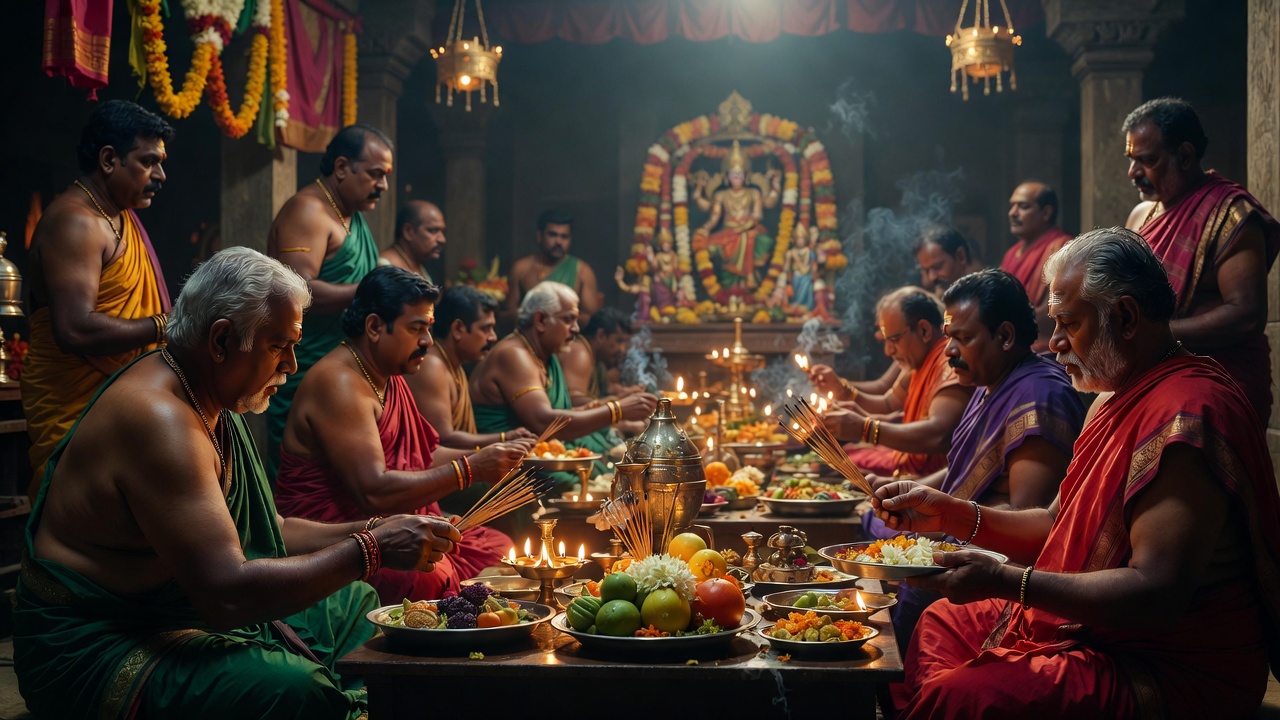
- Perform personal puja to Lord Murugan
- Chant the sacred mantra “Om Saravana Bhava” 108 times
Evening Practices:
- Attend temple services if possible
- Light lamps before the home shrine
- Recite devotional hymns
- Engage in meditation focused on Lord Murugan
Sacred Texts and Mantras Recited During Thaipusam Preparation
The following devotional works hold special significance during this period:
| Text/Mantra | Description | Significance |
|---|---|---|
| Kanda Sashti Kavasam | Protective armor hymn | Believed to invoke Lord Murugan’s protection |
| Thiruppugazh | Devotional poetry by Arunagirinathar | Celebrates Murugan’s glory |
| Kavadi Sindhu | Traditional kavadi songs | Accompanies processions |
| Kandar Anubhuti | Spiritual verses by Arunagirinathar | Describes union with Murugan |
| Om Saravana Bhava | Core Murugan mantra | His essential name mantra |
| Vel Vel Muruga | Simple devotional chant | Common during processions |
The number 108 holds profound significance in these practices. There are 108 beads in a japa mala (prayer rosary), and the mantra is traditionally repeated 108 times. This number appears throughout Hindu cosmology—the Sun’s diameter is approximately 108 times Earth’s diameter, and there are 27 nakshatras (constellations) multiplied by 4 padas (steps), equaling 108 divisions covering all aspects of human experience.
How Do Devotees Maintain Physical and Mental Purity Before Thaipusam?
Beyond dietary restrictions and prayer, Thaipusam preparation encompasses a comprehensive lifestyle transformation. Devotees commit to practices designed to purify every aspect of their being.
Physical Purity Practices
Daily Cleansing Rituals:
- Two cold baths daily (morning and evening)
- Wearing clean, simple clothes (preferably yellow or saffron)
- Sleeping on the floor or simple mats rather than comfortable beds
- Abstaining from footwear when possible
- Avoiding perfumes and cosmetics
Bodily Restrictions:
- Complete celibacy throughout the fasting period
- Avoiding tobacco and all forms of smoking
- Refraining from drugs or mind-altering substances
- Limiting sleep to necessary hours only
Mental Purity Practices
Mind Control Techniques:
- Meditation focused on Lord Murugan’s form
- Japa (repetitive mantra recitation)
- Scriptural study of texts related to Murugan
- Avoiding gossip, anger, and negative speech
- Observing silence (mauna) for extended periods
Some devotees observe a vow of silence in the final 24 hours before Thaipusam. This practice, called mauna vrata, helps concentrate mental energies for the upcoming rituals.
The Malaysia Hindu Sangam emphasizes that devotees should engage in “constant or at least morning and evening poojas, prayers, japa, chanting mantras, singing hymns, reading of Sastras and spiritual books and remembrance of Lord Murugan.”
What Types of Vows Do Devotees Make to Lord Murugan for Thaipusam?
The making and fulfilling of vows (Nettikadans) represents one of Thaipusam’s most sacred dimensions. Devotees approach Lord Murugan with specific prayers and promises, creating a spiritual contract between human and divine.
Common Reasons for Making Thaipusam Vows
Devotees typically make vows seeking:
- Healing from serious illness for themselves or loved ones
- Conception of children after struggles with fertility
- Success in important examinations or career endeavors
- Protection from dangers or difficulties
- Gratitude for prayers already answered
- Spiritual growth and divine blessings
- Resolution of family problems or disputes
The Structure of a Thaipusam Vow
A traditional vow involves several components:
- The Prayer: The specific request made to Lord Murugan
- The Promise: What the devotee commits to do in return
- The Timeframe: When the vow will be fulfilled
- The Witness: Often made in a temple before the deity
For example, a parent might pray: “If my child recovers from this illness, I vow to carry the kavadi at Batu Caves for three consecutive years.”
Vow Fulfillment Methods
| Method | Description | Intensity Level |
|---|---|---|
| Paal Kavadi | Carrying milk pots to the temple | Moderate |
| Simple Kavadi | Bearing a decorated wooden arch | Moderate-High |
| Alagu Kavadi | Kavadi attached with hooks/skewers | High |
| Vel Kavadi | Heavy frame attached by spears | Very High |
| Head Shaving | Offering hair to Lord Murugan | Moderate |
| Barefoot Pilgrimage | Walking long distances without shoes | Moderate-High |
| Fire Walking | Walking across hot coals | Very High |
The personal testimony of A. Sree Vijayanayagam of Penang illustrates this practice powerfully. According to Yahoo News Malaysia, Vijayanayagam has carried the kavadi for 51 consecutive years after his sister made a vow for his recovery from bronchial asthma and pneumonia in 1973.
Understanding Kavadi: The Sacred Burden Carried During Thaipusam
The Kavadi (காவடி) represents perhaps the most iconic element of Thaipusam. This ceremonial burden symbolizes the devotee’s willingness to bear physical hardship as an expression of devotion.
The Origin and Legend of Kavadi
The practice traces back to the legend of Idumban, a devoted follower of Sage Agastya. The sage instructed Idumban to transport two sacred hills—Sivagiri and Shaktigiri—from the Himalayas to South India.
To accomplish this monumental task, Idumban tied the two hills to either end of a pole, balancing them on his shoulders in a manner resembling the modern kavadi. During his journey, he encountered Lord Murugan, who was seated atop one of the hills.
A confrontation ensued, and though Idumban was defeated, his unwavering devotion deeply impressed Lord Murugan. The deity blessed him and decreed that anyone who carries a kavadi to a Murugan temple would receive special blessings.
Types of Kavadi Carried During Thaipusam Festival
Paal Kavadi (Milk Pot): The simplest form involves carrying pots of fresh cow’s milk on the head or suspended from a pole. The milk symbolizes purity and is later used to bathe (abhishekam) the deity’s idol.
Simple Kavadi: A semi-circular wooden or steel frame decorated with flowers, peacock feathers, and images of Lord Murugan. This arch-shaped structure rests on the devotee’s shoulders.
Alagu Kavadi: The kavadi is attached to the bearer’s body using hooks and skewers pierced through the skin. Despite the apparent pain, devotees in trance reportedly feel nothing.
Vel Kavadi: The most elaborate form features a large, heavy framework adorned with peacock feathers and religious imagery. It may be attached to the body through multiple spears and hooks, sometimes numbering over 100.
Sugar Cane Kavadi: Parents fulfilling vows for children carry their young ones in a bundle held by a pole made of sugar cane.
How Do Devotees Prepare Their Mind and Body for Kavadi Carrying?
Preparing to carry the kavadi requires both physical conditioning and intense spiritual preparation. The process transforms ordinary individuals into vessels capable of transcending normal human limitations.
Physical Preparation for Kavadi Bearers
Building Endurance:
- Gradually increasing distances walked barefoot
- Strengthening shoulder and back muscles
- Practicing proper kavadi-bearing posture
- Conditioning the body through fasting
Temple Visits:
- Regular attendance at Murugan temples
- Participating in practice processions
- Learning proper ritual procedures
- Receiving guidance from experienced devotees
Mental and Spiritual Preparation
Developing Trance Capacity: The ability to enter a trance state (or altered state of consciousness) proves essential for kavadi bearers, particularly those undergoing body piercing. This state is cultivated through:
- Extended mantra repetition
- Deep meditation on Lord Murugan
- Rhythmic breathing techniques
- Concentrated devotion over the fasting period
The continuous beating of urumi melam drums and chanting during the procession helps maintain this trance state, enabling devotees to transcend physical pain.
The 24-Hour Final Preparation
According to the Malaysia Hindu Sangam, “Devotees after completing the 48 days vows, 24 hours before the Thaipusam, must maintain a complete fast.”
This final day includes:
- Absolute fasting (no food, sometimes no water)
- Continuous prayer and meditation
- Complete silence (mauna vrata)
- Purificatory bath before the procession
- Donning traditional attire in yellow or saffron
- Receiving the sacred thread (kaapu) tied on the wrist
What is the Role of the Thaipusam Priest and Temple in Devotee Preparation?
The journey toward Thaipusam doesn’t occur in isolation. Temple priests (poosaris) and the broader religious community provide essential guidance and support.
Priestly Functions During Preparation
Initial Vow Registration: When a devotee decides to undertake Thaipusam practices, they typically inform temple priests who:
- Record the vow officially
- Advise on appropriate preparations
- Determine the suitable level of kavadi
- Schedule necessary rituals
Ongoing Spiritual Support: Throughout the preparation period, priests provide:
- Guidance on proper procedures
- Instruction in mantras and prayers
- Blessing ceremonies at key milestones
- Advice on managing challenges
Temple Rituals Supporting Devotees
Temples conduct special programs during the weeks leading to Thaipusam:
| Ritual | Purpose | Timing |
|---|---|---|
| Special Pujas | Seek blessings for devotees | Daily throughout Thai month |
| Abhishekam | Sacred bathing of deity | Morning and evening |
| Bhajan Sessions | Communal devotional singing | Weekly gatherings |
| Discourse Programs | Spiritual teaching | Regular scheduling |
| Kaapu Tying | Binding the sacred thread | Eve of Thaipusam |
The Kaapu Ceremony
One of the most important pre-Thaipusam rituals involves tying the kaapu (sacred yellow thread) around the devotee’s wrist. This ceremony:
- Formally initiates the final phase of preparation
- Provides spiritual protection during the rituals
- Connects the devotee to Lord Murugan’s grace
- Is removed only after completing all Thaipusam rites
Traditional Attire and Dress Code for Thaipusam Festival Participants
The visual spectacle of Thaipusam owes much to its distinctive attire. Colors, fabrics, and adornments carry deep symbolic meaning.
Sacred Colors for Thaipusam
Yellow and Saffron: These colors dominate Thaipusam celebrations because they represent:
- Lord Murugan’s preferred colors
- Purity and renunciation
- Spiritual awakening
- The color of sandalwood paste offered to the deity
Orange: Also acceptable as it relates to:
- Ascetic traditions
- The rising sun
- Spiritual fire and transformation
Dress Requirements by Gender
For Male Devotees:
| Item | Requirement | Significance |
|---|---|---|
| Dhoti | Mandatory for kavadi bearers | Traditional Tamil garment |
| Upper Body | Bare chest (no shirt) | Humility and surrender |
| Rudraksha Mala | Optional but common | Sacred beads for protection |
| Head | Often shaved | Ultimate sacrifice |
| Feet | Bare | Direct connection to earth |
For Female Devotees:
| Item | Requirement | Significance |
|---|---|---|
| Saree | Yellow or orange preferred | Traditional modesty |
| Punjabi Dress | Acceptable alternative | Practical comfort |
| Hair | Must be tied, not loose | Tradition and practicality |
| Blouse | Modest, full coverage | Religious propriety |
| Feet | Bare during procession | Same as men |
Sacred Markings and Adornments
Devotees typically apply:
- Vibhuti (sacred ash) across the forehead and body
- Sandalwood paste for cooling and fragrance
- Kumkum (vermillion) as per Shaivite tradition
- Turmeric for purification
How Does Community Support Help Devotees During Thaipusam Preparation?
Thaipusam transcends individual practice to become a communal spiritual experience. Family, friends, and the broader Hindu community play crucial supporting roles.
Family Support Systems
Within the Home:
- Family members often join in vegetarian eating to support the devotee
- Adjusting household routines to accommodate prayer schedules
- Creating a sacred space for daily puja
- Providing emotional encouragement during difficult moments
Extended Family Involvement:
- Experienced relatives share guidance from their own Thaipusam journeys
- Family groups often make joint pilgrimages
- Younger members learn traditions by observing elders
Temple Community Support
The temple community provides:
- Free vegetarian meals during the festival period
- Accommodation for pilgrims traveling from far distances
- Medical support and first aid facilities
- Guidance for first-time participants
The Practice of Annadanam
Annadanam (food donation) represents a significant aspect of Thaipusam celebrations. As noted by Aanmeegam.org, “many temples provide special annadanam (food offerings) to devotees. Those observing fasts often contribute money, rice, or other necessary items for these annadanam services.”
This practice ensures that:
- No devotee goes hungry
- The merit of feeding others benefits donors
- Community bonds strengthen
- The spirit of generosity pervades the festival
What Happens on the Final Day Before Thaipusam Procession?
The eve of Thaipusam marks the culmination of weeks of preparation. This critical 24-hour period follows specific protocols.
Timeline of Pre-Thaipusam Day Activities
Morning:
- Wake before dawn for final purificatory bath
- Complete morning puja with extra attention
- Begin the complete fast (no food)
- Continue mantra recitation
Afternoon:
- Rest and conserve energy
- Continue prayers and meditation
- Avoid unnecessary conversation
- Family prepares kavadi decorations
Evening:
- Attend temple for special prayers
- Receive priest’s blessings
- Participate in kaapu-tying ceremony
- Final instructions from temple authorities
Night:
- Minimal sleep or all-night vigil
- Continuous chanting and meditation
- Mental preparation for morning
- Gathering of kavadi and offerings
Preparation of the Kavadi
The kavadi itself undergoes ceremonial preparation:
- Cleaning: The structure is thoroughly washed
- Decorating: Fresh flowers, peacock feathers, and images are attached
- Blessing: The kavadi receives priestly benediction
- Sanctification: Holy water and ash are applied
- Final Assembly: All components are secured
Preparing Offerings for Lord Murugan
Devotees prepare specific items for offering:
| Offering | Symbolism | Preparation |
|---|---|---|
| Fresh milk | Purity and nourishment | Collected before dawn |
| Coconut water | Natural purity | Fresh coconuts opened |
| Sugarcane | Sweetness of devotion | Cleaned and decorated |
| Rose water | Divine fragrance | Prepared or purchased |
| Panchamritam | Five sacred ingredients | Mixed: fruit, jaggery, ghee, honey, sugar |
| Flowers | Natural beauty | Fresh marigolds and jasmine |
How Do Different Regions Celebrate Thaipusam Preparation Differently?
While the core elements of Thaipusam preparation remain consistent, regional variations add unique dimensions to the practice.
Thaipusam Preparation in Malaysia
Malaysia hosts the world’s largest Thaipusam celebrations, with distinct regional practices:
Batu Caves, Kuala Lumpur:
- The famous 272 colorful steps lead to the temple
- Silver Chariot procession from Sri Maha Mariamman Temple
- Preparation camps established weeks before
- Government coordination for crowd management
Penang Waterfall Temple:
- 513 steps to Arulmigu Balathandayuthapani Temple
- 21.6-meter tall main tower (largest Murugan temple outside India)
- Strong emphasis on traditional practices
- Intimate community atmosphere
Ipoh Kallumalai Temple:
- Established in 1889
- Attracts over 350,000 devotees
- Known for maintaining traditional austerities
Thaipusam Preparation in Singapore
Singapore’s approach balances tradition with urban practicality:
- Procession covers 3.2 kilometers from Sri Srinivasa Perumal Temple to Sri Thendayuthapani Temple
- Authorities collaborate with temple committees on logistics
- Live music restrictions ensure peaceful celebration
- Road closures and safety zones carefully planned
Thaipusam Preparation in India
In Tamil Nadu, particularly at Palani Murugan Temple:
- Celebrated as Brahmotsavam over ten days
- Greater emphasis on temple-centered rituals
- Body piercing practices are limited by law
- Focus on traditional prayers and offerings
At Tiruchendur Temple, where Murugan is believed to have achieved victory:
- Lakhs of pilgrims gather annually
- Ocean proximity adds unique ritual elements
- Ancient traditions maintained strictly
What Are Common Challenges Faced During Thaipusam Fasting and How to Overcome Them?
The rigorous preparation period presents significant challenges. Understanding and preparing for these difficulties helps devotees persevere.
Physical Challenges
Hunger and Weakness:
- Solution: Consume nutrient-dense foods during permitted eating windows
- Milk, fruits, and nuts provide sustained energy
- Stay hydrated with water and coconut water
Sleep Difficulties:
- Solution: Establish consistent wake times
- The discomfort of floor sleeping diminishes over time
- Use the extra waking hours for additional prayer
Health Concerns:
- Solution: Those with medical conditions should consult doctors
- Modified fasting may be appropriate for health reasons
- Lord Murugan values intention over physical extremes
Mental and Emotional Challenges
Temptation to Break Vows:
- Solution: Remember the purpose behind the commitment
- Seek support from family and fellow devotees
- Increase prayer during moments of weakness
Doubt and Discouragement:
- Solution: Focus on previous devotees’ success stories
- Trust in Lord Murugan’s supporting grace
- Break the remaining days into smaller milestones
Social Pressures:
- Solution: Politely explain your commitments to colleagues and friends
- Many non-Hindu Malaysians and Singaporeans understand and respect these practices
- Workplace accommodations are often available
Practical Life Challenges
Work Obligations:
- Solution: Plan vacation days around the final preparation period
- Communicate needs to understanding employers
- Perform work duties with extra devotion as a form of service
Family Responsibilities:
- Solution: Involve family members in supportive roles
- Delegate certain tasks during intensive periods
- Balance devotion with necessary duties
What Health and Safety Considerations Should Thaipusam Devotees Know?
While Thaipusam celebrates transcendence of physical limitations, practical health considerations remain important.
Medical Considerations Before Undertaking Vows
Conditions Requiring Consultation:
- Diabetes
- Heart conditions
- High or low blood pressure
- Pregnancy
- Chronic illnesses
- Recent surgeries
Recommended Preparations:
- Complete medical check-up before beginning fasting
- Inform doctors about intended practices
- Carry necessary medications
- Know your limits
Safe Fasting Practices
| Do | Don’t |
|---|---|
| Stay hydrated | Fast without water for extended periods |
| Eat nutrient-dense foods | Completely eliminate essential nutrients |
| Break fast gradually | Overeat after fasting periods |
| Rest when needed | Push past clear physical warnings |
| Listen to your body | Ignore signs of serious distress |
Safety During Processions
Heat and Crowd Management:
- Arrive early to avoid midday heat
- Carry water bottles
- Know emergency exit routes
- Stay with your group
For Kavadi Bearers:
- Ensure hooks and skewers are properly sterilized
- Have support team to assist if needed
- Know the signs of medical emergency
- Post-procession care for piercing sites
The Spiritual Transformation Experienced Through Thaipusam Preparation
Beyond the physical practices, Thaipusam preparation catalyzes profound inner transformation. Many devotees describe the experience as life-changing.
Personal Growth and Self-Discovery
The rigorous disciplines reveal hidden capacities:
- Mental strength previously unknown
- Will power to resist temptation
- Patience developed through sustained practice
- Humility gained through service and sacrifice
Deepening of Faith
Consistent spiritual practice over weeks creates:
- Intimate connection with Lord Murugan
- Personal experiences of divine grace
- Strengthened belief through answered prayers
- Community belonging with fellow devotees
Life Beyond Thaipusam
The Divine Life Society notes that “the sages who initiated the kavadi-carrying practice hoped that devotees would make these observances a part of their daily lives and not just do it for Thaipusam.”
Many devotees carry forward:
- Continued vegetarianism or reduced meat consumption
- Regular prayer and meditation practices
- Moderation in worldly pleasures
- Service orientation toward others
Tips for First-Time Thaipusam Participants and Observers
Whether you’re preparing for your first Thaipusam or planning to observe this remarkable festival, consider these guidelines.
For First-Time Devotees
Starting Your Journey:
- Consult experienced devotees and temple priests
- Begin with modest commitments and build over years
- Join a support group of fellow practitioners
- Document your journey for reflection
- Approach with sincere devotion rather than spectacle
Practical Advice:
- Start fasting preparations well in advance
- Build physical stamina gradually
- Learn proper mantra pronunciation
- Attend preparation classes if offered
- Have backup support for unexpected challenges
For Visitors and Observers
Respectful Observation:
- Dress modestly (cover shoulders and knees)
- Avoid obstructing processions or rituals
- Ask permission before photographing devotees
- Maintain respectful silence during sacred moments
- Never touch kavadi bearers in trance
Best Viewing Practices:
| Location | Best Spot | Best Time |
|---|---|---|
| Batu Caves | Base of steps before sunrise | Before 7 AM or after sunset |
| Singapore | Serangoon Road at dawn | Early morning |
| Penang | Temple entrance area | Predawn to avoid crowds |
Conclusion: The Sacred Journey of Self-Transformation Through Thaipusam
The preparation for Thaipusam represents far more than religious ritual. It embodies a complete system of spiritual transformation that has guided Tamil Hindu devotees for centuries.
Through fasting, devotees purify their bodies and demonstrate control over physical desires. Through prayers, they cultivate constant awareness of the divine. Through vows, they enter into sacred covenant with Lord Murugan, exchanging earthly sacrifice for heavenly grace.
The kavadi bearer walking barefoot through the streets, body pierced yet feeling no pain, stands as a powerful testament to what human beings can achieve when faith meets discipline. The phenomenon defies easy scientific explanation, yet year after year, millions witness and participate in this extraordinary display of devotion.
For those who undertake this journey, Thaipusam offers:
- Personal transformation through sustained spiritual practice
- Community connection with fellow devotees
- Divine relationship with Lord Murugan
- Inner peace and clarity of purpose
- Gratitude for blessings received and requested
Whether you’re a devoted Hindu planning your own Thaipusam journey, a spiritual seeker curious about intensive practices, or a traveler hoping to witness one of the world’s most remarkable religious festivals, understanding the preparation process deepens appreciation for what unfolds on that sacred full moon day.
The festival reminds us that extraordinary experiences require extraordinary preparation. The 48 days of discipline, the early morning prayers, the vegetarian meals, the sleeping on hard floors—all of these seemingly difficult practices serve a singular purpose: preparing the soul to receive and express divine grace.
As Lord Murugan wields his Vel against cosmic evil, so too do devotees wield their discipline against personal demons. And in that spiritual battle, preparation makes all the difference.
May Lord Murugan bless all sincere seekers on their journey toward divine grace.
Vel Vel Muruga! 🙏
Frequently Asked Questions About Thaipusam Preparation
Q: Can non-Hindus participate in Thaipusam? A: While the religious rituals are for Hindu devotees, Thaipusam is open to all observers. Non-Hindus should participate respectfully, observing from appropriate distances and following temple guidelines.
Q: Is body piercing mandatory for Thaipusam participation? A: No. Many devotees participate by carrying milk pots, walking barefoot, or observing prayers without any piercing. The level of physical austerity is a personal choice based on one’s vow.
Q: Can women carry the kavadi during Thaipusam? A: Yes, women can carry kavadi or milk pots. However, women during menstruation should not bear kavadi or paal kudam according to traditional guidelines.
Q: What if I cannot complete the 48-day fast? A: Shorter fasting periods of 21, 9, 3, or even 1 day are acceptable. Lord Murugan values sincere intention over extreme physical feats.
Q: Where can I learn more about proper Thaipusam preparation? A: Consult your local Murugan temple, the Malaysia Hindu Sangam, or experienced devotees in your community.
Note: This article is for informational purposes only. Always consult with qualified religious authorities and medical professionals before undertaking any fasting or physical austerity practices.