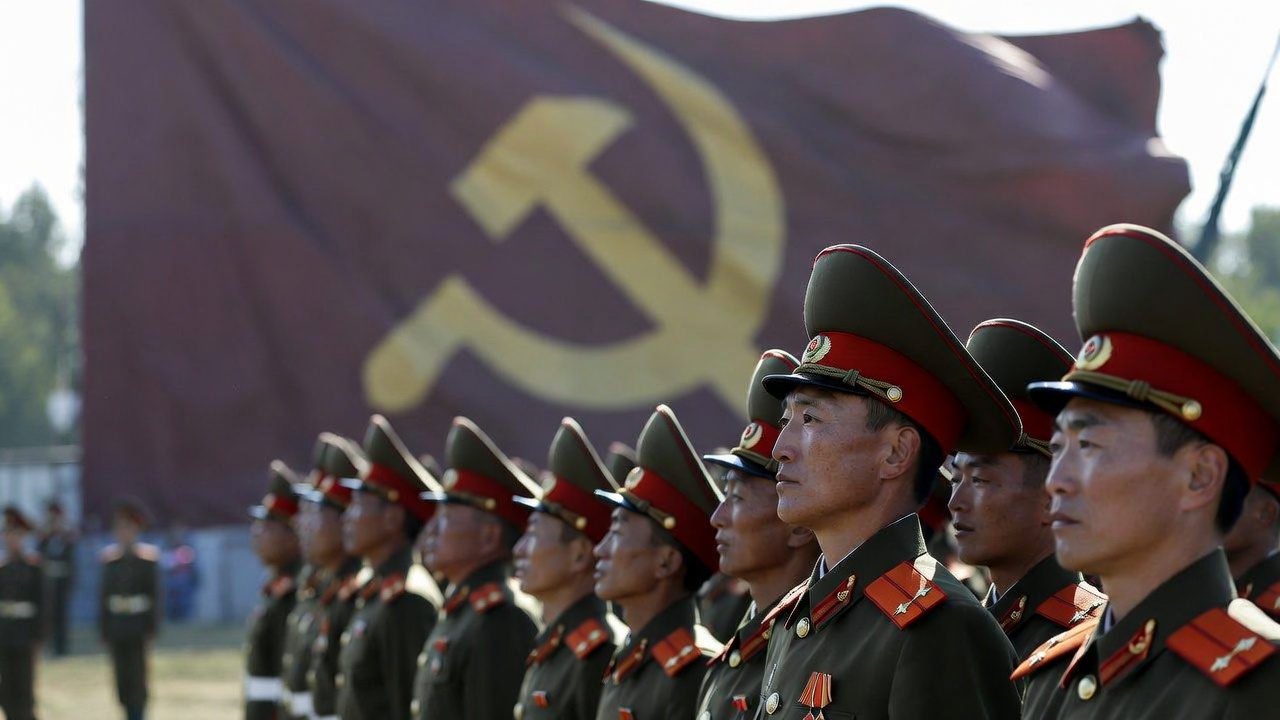
Every year in early February, the streets of Pyongyang come alive with goose-stepping soldiers, rumbling tanks, and the thunderous cheers of an audience bundled in thick winter coats. But wait — didn’t we just see a similar spectacle in April last year? And wasn’t that also called “Military Foundation Day”?
If you have ever tried to keep track of North Korea’s public holidays, you are not alone in your confusion. The Democratic People’s Republic of Korea (DPRK) is perhaps the only country in the world that has maintained two separate founding dates for the same armed forces. February 8 and April 25 both claim to mark the birth of the Korean People’s Army (KPA), and the story of how — and why — these two dates have traded places across seven decades is as revealing as any missile test or diplomatic summit.
This is not a simple matter of paperwork. In North Korea, the calendar is politics. Each date on the national schedule tells a story about who holds power, which version of history is in favor, and what message the ruling Kim family wants to send to its people and to the world.
In this deep-dive guide, we will untangle the full history, walk through every date change, and explain what it all means for travelers, scholars, and anyone trying to make sense of the world’s most secretive state — especially now, in 2026, as the KPA prepares for its 78th anniversary celebrations on February 8.
What Is North Korea’s Military Foundation Day and Why Does It Matter?
Military Foundation Day — known in Korean as 조선인민군 창건일 (Joseon Inmingun Changgeon-il) — is one of the most important public holidays in North Korea. It celebrates the founding of the Korean People’s Army (KPA), the armed forces of the DPRK.
The KPA is not a minor institution. It is the backbone of North Korean society, the enforcer of state ideology, and, by some measures, one of the largest military organizations on the planet. Its total strength — including active duty, reserves, and paramilitary units — is estimated at roughly 5 million personnel. North Korea’s “Songun” (military-first) policy, which dominated the country’s politics under Kim Jong Il and continues to shape policy under Kim Jong Un, places the army at the very center of national life.
So the question of when the army was born is not an academic footnote. It is a matter of national identity. And the confusion over whether that birthday falls on February 8 or April 25 is rooted in a deliberate choice to rewrite history — more than once.
Here is the simplest way to understand the two dates:
| Date | Event Commemorated | Year Referenced | Current Status (2026) |
|---|---|---|---|
| February 8 | Founding of the Korean People’s Army (KPA) as a formal, regular military force | 1948 | Main Army Day (public holiday) |
| April 25 | Founding of the Korean People’s Revolutionary Army (KPRA), an anti-Japanese guerrilla force | 1932 | Recognized as Military Foundation Day; secondary observance |
Both dates are still observed. But the balance of emphasis has shifted dramatically over the decades — and that shifting tells the story of the Kim dynasty itself.
The True Origin Story: How the Korean People’s Army Was Founded in 1948
To understand the confusion, you have to start with what actually happened.
In the chaos following the end of World War II and the liberation of the Korean Peninsula from Japanese colonial rule in August 1945, the northern half of Korea fell under Soviet influence. Soviet military administrators helped organize local security forces in the north, and by 1946, these forces began to take shape as a more formal military organization.
The decisive moment came on February 8, 1948. On this date, Kim Il Sung — then the Soviet-backed leader of the emerging North Korean state — presided over the official establishment of the Korean People’s Army (KPA) as a regular, standing armed force. The Soviet Union recognized this new military as the official defense force of what would soon become the Democratic People’s Republic of Korea, formally established on September 9, 1948.
The first military parade to mark the occasion took place at Pyongyang Station on that very day. Soviet generals from the 25th Army and the Soviet Civil Administration were in attendance. Roughly 20,000 North Korean soldiers stood at attention as Kim Il Sung reviewed the new army as its commander-in-chief.
For the next three decades, February 8 was the undisputed Army Day. It was the date celebrated with parades, speeches, banquets, and national festivities. There was no ambiguity. The KPA was born on February 8, 1948.
But that origin story had a problem — at least from the perspective of the Kim family’s propaganda machine. The 1948 founding made it clear that the KPA was a product of the Soviet occupation. Soviet advisors trained the army. Soviet weapons armed it. Soviet diplomacy legitimized it. And for a regime that was building a cult of absolute national self-reliance — the ideology of Juche — being indebted to Moscow for the very existence of the army was awkward.
The solution? Go further back in time.
April 25, 1932: The Anti-Japanese Guerrilla Origin Story of the Korean People’s Revolutionary Army
The second date in this story is April 25, 1932. According to North Korean official history, this was the day that a young Kim Il Sung founded the Korean People’s Revolutionary Army (KPRA) — an anti-Japanese guerrilla force that fought against Japan’s colonial occupation of Korea and Manchuria.
This is the founding myth that North Korean state propaganda has cultivated for decades. In this version of history, the roots of the KPA stretch back not to a Soviet-sponsored ceremony in 1948 but to the heroic armed resistance of Korean patriots in the 1930s. Kim Il Sung is portrayed not as a Soviet protégé but as a brilliant guerrilla commander who forged a fighting force from nothing in the frozen forests of Manchuria.
The historical reality is more complicated. Kim Il Sung did participate in anti-Japanese guerrilla activity in the 1930s and 1940s, but the forces he led were part of the broader Northeast Anti-Japanese United Army, a Chinese Communist-led coalition of resistance fighters operating in Manchuria. The specific claim that Kim founded a distinct “Korean People’s Revolutionary Army” on April 25, 1932, is a construct of North Korean historiography. Many outside historians dispute that any such formal organization was created on that specific date.
But historical accuracy was never really the point. The April 25 date served a crucial political function: it allowed the regime to claim that the KPA’s lineage began 16 years before the Soviet-assisted founding of 1948, rooted in the independent revolutionary struggle of the Korean people under the leadership of the Great Leader Kim Il Sung.
Why Did North Korea Change Army Day From February 8 to April 25?
The shift from February 8 to April 25 did not happen overnight. It was a gradual process driven by ideology and politics.
The early period (1948–1961): February 8 reigns supreme. For the first decade and a half after the KPA’s founding, February 8 was the sole and undisputed Army Day. It was marked with parades, ceremonies, and official celebrations. April 25 had no special status on the national calendar.
The transitional period (1962–1977): April 25 rises. Starting in the early 1960s, the regime began to celebrate April 25 as the anniversary of the founding of “anti-Japanese guerrilla units.” This was initially a secondary, low-key observance. Over time, however, it grew in importance as the state placed increasing emphasis on Kim Il Sung’s guerrilla credentials. The date was gradually reframed as the birthday of the KPRA specifically.
The swap (1978): February 8 is dropped. In 1978, the North Korean leadership made a decisive move. The regime stopped celebrating February 8 as Army Day entirely and replaced it with April 25. The official line became that the army’s true founding dated to 1932, not 1948. The Soviet-assisted origins were quietly erased from the national narrative. As 38 North, a respected analytical platform on North Korea, noted, this decision effectively pushed the army’s birthday back by 16 years to sever its ties with its Soviet origins.
One key reason for this change was to strengthen the personality cult of Kim Il Sung. By tracing the army’s origins to his guerrilla activities in the 1930s, the state reinforced the myth that Kim — and Kim alone — was the creator of all that North Korea holds dear. It also served the ideology of Juche, which insists that the Korean revolution was entirely self-directed, without dependence on foreign powers.
The 1992 milestone: Kim Jong Il speaks. The importance of the April 25 date was underscored during the 1992 diamond jubilee parade, which celebrated what was counted as the 60th anniversary of the army (counting from 1932). During this parade, then-Supreme Commander Kim Jong Il made his first — and only — recorded public speech, declaring: “Bring glory to the heroic people’s military.” The event cemented April 25 as the premier military holiday.
Official holiday status (1996): April 25 goes on the books. In 1996, the April 25 Military Foundation Day was formally designated as an official public holiday, further solidifying its status.
For nearly four decades, from 1978 to 2014, April 25 stood as the sole Army Day. February 8 faded into obscurity.
How Kim Jong Un Restored February 8 as North Korea’s Army Day in 2015
Then came a new leader with his own agenda.
When Kim Jong Un took power following the death of his father Kim Jong Il in December 2011, he faced the challenge that confronts every new authoritarian ruler: how to put his own stamp on the state while maintaining continuity with the past.
One of his moves was to revive February 8 as Army Day. In 2015, the North Korean state began celebrating February 8 again as the anniversary of the KPA’s formal founding in 1948. This was the army’s 67th anniversary by the 1948 count — a number the state had not publicly acknowledged in nearly four decades.
The revival was carried out through a formal decision of the Politburo of the Central Committee of the Workers’ Party of Korea. It was accompanied by wreath-laying ceremonies, a defense ministry meeting, and other commemorative events.
As 38 North analyst Robert Carlin observed, this seemed to be “an important symbolic move, possibly an example of how [Kim Jong Un] was putting his own stamp on things.” The restoration of February 8 allowed the young leader to differentiate himself from his father and grandfather, both of whom had prioritized the April 25 date.
It also solved a practical problem. By 2015, the February 8, 1948 date was approaching significant round-number anniversaries — the kind of milestones that North Korea loves to celebrate with massive parades and displays of military hardware. The 70th anniversary, in 2018, would be a perfect opportunity.
And that is exactly what happened.
The 2018 Parade Controversy: North Korea’s Military Display on the Eve of the Winter Olympics
The revival of February 8 became international headline news in 2018.
On February 8, 2018, North Korea held a massive military parade in Pyongyang to mark the 70th anniversary of the KPA’s founding (by the 1948 count). The parade featured approximately 13,000 soldiers, along with tanks, missiles, and other weaponry marching through Kim Il Sung Square in the biting February cold.
What made this parade especially controversial was its timing. The opening ceremony of the 2018 Pyeongchang Winter Olympics in South Korea was scheduled for the very next day, February 9. In a remarkable contrast, North Korean and South Korean athletes were preparing to march together under a unified Korean flag at the Olympic opening ceremony — even as Pyongyang was simultaneously displaying its military might just a few hundred kilometers to the north.
Many observers and media outlets suggested that North Korea had deliberately “moved” Army Day back to February 8 in order to stage a provocative display on the eve of the Olympics. But as analysts at 38 North pointed out, this characterization was not quite accurate. North Korea had already restored the February 8 date in 2015 — three years before the Olympics. The 2018 parade was simply the first one held on that date since the revival, because North Korea traditionally reserves large parades for decennial and quinquennial (every five years) anniversaries.
Still, the optics were striking. The juxtaposition of a military parade and an Olympic peace ceremony captured the contradictions of the Korean Peninsula like few other events.
February 8 vs. April 25: What Each Date Represents in North Korean Ideology
To truly understand why both dates persist, it helps to think about what each one represents in the framework of North Korean ideology.
February 8 (1948) represents the formal, institutional founding of the Korean People’s Army as a regular military force. It is tied to the modern, post-liberation state — the DPRK as a functioning country with a formal government and a recognized military. It is a date of institutional pride: this is when we became a real army, with uniforms, ranks, and a chain of command.
April 25 (1932) represents the revolutionary, guerrilla origins of the armed forces. It is tied to the anti-Japanese resistance — the most sacred chapter in North Korean national mythology. It places the army’s birth in the context of armed struggle against colonial oppression, led personally by Kim Il Sung. It is a date of revolutionary pride: this is when we first picked up arms to fight for our freedom.
Both narratives serve the regime, and both carry political weight. The tension between them reflects a broader tension in North Korean ideology: between the practical realities of building a modern state (which required Soviet help) and the mythological imperative of absolute self-reliance (which demands that everything trace back to the Kim family’s revolutionary genius).
Under Kim Jong Un, the solution has been to celebrate both dates — each with its own emphasis.
| Aspect | February 8 (Army Day) | April 25 (Military Foundation Day) |
|---|---|---|
| Year of origin | 1948 | 1932 |
| Event commemorated | Formal founding of the KPA | Founding of the KPRA (guerrilla force) |
| Current public holiday? | Yes | Yes (since 2020 decree) |
| Typical celebrations | Parades (on major anniversaries), banquets, ceremonies | Parades (on major anniversaries), ceremonies |
| Ideological emphasis | Institutional strength, modern military power | Revolutionary heritage, anti-Japanese struggle |
| Associated leader | Kim Il Sung (as state founder) | Kim Il Sung (as guerrilla commander) |
A Complete Timeline of How North Korea’s Army Day Has Changed Over the Decades
For those who want the full picture, here is a chronological summary of every significant change:
1948 — The Korean People’s Army is formally established on February 8. The first military parade is held at Pyongyang Station. February 8 becomes Army Day.
1958 — Following Chinese practice, North Korea begins holding major military parades on Kim Il Sung Square every five years.
1962 — The regime begins celebrating April 25 as the anniversary of “anti-Japanese guerrilla units,” a secondary military-related observance.
Late 1960s–1970s — April 25 gradually gains importance as the founding date of the Korean People’s Revolutionary Army specifically.
1978 — February 8 celebrations are discontinued. April 25 becomes the sole Army Day, pushing the army’s official founding date back to 1932.
1992 — The 60th anniversary (by the 1932 count) is celebrated with a massive parade. Kim Jong Il delivers his only known public speech.
1996 — April 25 Military Foundation Day is formally designated as an official public holiday.
2015 — Kim Jong Un revives February 8 as Army Day by a decision of the Workers’ Party Politburo. The 67th anniversary (by the 1948 count) is celebrated with wreath-laying and other events, but no parade.
2018 — The 70th anniversary of the February 8 founding is marked with a large military parade featuring 13,000 soldiers — controversially held the day before the Pyeongchang Winter Olympics opening ceremony.
2020 — A decree is issued making the April 25 founding day of the KPRA an official national holiday, ensuring both dates have formal recognition.
2023 — The 75th anniversary of the KPA (February 8) is celebrated with a nighttime military parade, a banquet at the Yanggakdo Hotel, and public appearances by Kim Jong Un with his wife Ri Sol Ju and daughter Kim Ju Ae.
2025 — The 77th anniversary of the KPA is marked on February 8. Kim Jong Un pays a congratulatory visit to the Ministry of National Defence. A banquet is held for commanding officers. In October 2025, North Korea stages a massive parade for the 80th anniversary of the Workers’ Party of Korea, showcasing the new Hwasong-20 ICBM — a reminder that the military calendar is packed with competing commemorative events.
2026 — The 78th anniversary of the Korean People’s Army (February 8) arrives. The date falls on a Sunday, and observances are expected to include commemorative assemblies and cultural events in Pyongyang.
What Happened at North Korea’s Most Recent Army Day Celebrations in 2025
The most recent Army Day on February 8, 2025 marked the 77th founding anniversary of the Korean People’s Army. While it was not a quinquennial or decennial anniversary (and therefore did not feature a full military parade), the occasion was still treated with great ceremony.
According to reports from the Korean Central News Agency (KCNA), Kim Jong Un personally visited the Ministry of National Defence on February 8 to congratulate the armed forces. He spoke of the army’s “sacred mission of firmly defending the sovereignty and security of the state” and called on the military to demonstrate its strength through “indomitable fighting spirit.”
A formal banquet was held for senior commanding officers. Speeches at the banquet emphasized that the KPA was now heading toward the 80th anniversary of the Workers’ Party of Korea later that year — a far larger milestone on the North Korean calendar.
That October 2025 WPK anniversary parade turned out to be one of the most significant military events in recent North Korean history. It featured the debut of the Hwasong-20, a new intercontinental ballistic missile that KCNA described as the country’s “most powerful nuclear strategic weapon system.” The parade was attended by Chinese Premier Li Qiang, Russia’s Dmitry Medvedev, and Vietnam’s Communist Party General Secretary To Lam — marking a significant diplomatic moment for the increasingly less isolated state.
North Korea’s Military Calendar: A Full Guide to Key Dates for Travelers and Researchers
The February 8 vs. April 25 confusion is just one part of North Korea’s dense military calendar. For travelers considering a visit to the DPRK, or for researchers tracking North Korean events, understanding the full schedule is essential. Military parades, in particular, are among the most sought-after events for foreign visitors — but they are far less common than most people assume.
Here is a guide to the key military and national dates:
| Date | Holiday | Significance |
|---|---|---|
| January 8 | Kim Jong Un’s Birthday | Not an official public holiday (as of 2025), but increasingly acknowledged |
| February 8 | Army Day (KPA Founding) | Marks the 1948 formal founding of the Korean People’s Army |
| February 16 | Day of the Shining Star | Birthday of Kim Jong Il; one of the two most important holidays |
| April 15 | Day of the Sun | Birthday of Kim Il Sung; the most important holiday in North Korea |
| April 25 | Military Foundation Day (KPRA Founding) | Marks the 1932 founding of the anti-Japanese guerrilla army |
| July 27 | Victory Day | Anniversary of the 1953 Korean Armistice |
| August 15 | Liberation Day | Liberation from Japanese colonial rule in 1945 |
| August 25 | Day of Songun | Commemorates Kim Jong Il’s “military-first” leadership |
| September 9 | Day of the Foundation of the Republic | Establishment of the DPRK in 1948 |
| October 10 | Party Foundation Day | Founding of the Workers’ Party of Korea in 1945 |
Important note for travelers: Large military parades in North Korea typically occur only on quinquennial or decennial anniversaries (every 5 or 10 years) of major holidays. Do not expect a parade every time one of these dates rolls around. The next likely occasion for a major February 8 parade would be the 80th anniversary in 2028. The next major April 25 parade could potentially fall on the 95th anniversary in 2027, though this would be less certain.
Why Does North Korea Keep Changing Its Army’s Birthday? The Political Logic Explained
The repeated shifting of Army Day is not a quirk of bureaucratic confusion. It is a deliberate tool of political control. Each change in the date has served a specific purpose for the leader in power at the time.
Kim Il Sung’s era (through 1994): The shift from February 8 to April 25 served Kim Il Sung’s desire to erase the Soviet role in creating North Korea’s military and to anchor the army’s identity in his own personal revolutionary heroism. By claiming the army was born in 1932 under his guerrilla leadership, Kim Il Sung could present himself not just as a political leader but as the literal father of the armed forces.
Kim Jong Il’s era (1994–2011): Kim Jong Il maintained the April 25 date and used it to reinforce his own “military-first” (Songun) politics. The guerrilla narrative suited his approach, which placed the military at the apex of society and government. His famous 1992 speech at the April 25 parade — the only time his voice was publicly recorded — became a defining moment of his rule.
Kim Jong Un’s era (2011–present): Kim Jong Un’s revival of February 8 served multiple goals. It allowed him to put his own mark on the calendar — a symbolic declaration that a new era had begun. It also restored a connection to the formal, modern military that his predecessors had downplayed. In an age when North Korea’s military identity is increasingly defined by nuclear ICBMs and hypersonic missiles rather than guerrilla rifles, the 1948 founding of a modern, organized army resonates differently than the 1932 guerrilla origin story.
There may also be a practical political dimension. Some analysts have suggested that by celebrating both dates, Kim Jong Un balanced the interests of different factions within the military and party establishment — traditionalists who valued the revolutionary guerrilla narrative and modernizers who favored the institutional military identity.
How Does North Korea’s Military Foundation Day Compare to Other Countries’ Armed Forces Days?
North Korea is unusual in having two competing army birthdays, but it is not unique in using military anniversaries for political purposes. A comparison with other countries helps put the DPRK’s approach in context.
South Korea celebrates Armed Forces Day on October 1, marking the date in 1950 when ROK forces crossed the 38th parallel during the Korean War. The South Korean military traces its formal roots to January 15, 1946, when the National Defense Force was established under the United States Army Military Government.
China celebrates Army Day on August 1, commemorating the 1927 Nanchang Uprising, which is considered the birth of the Chinese Communist military forces. Like North Korea, China chose to trace its army’s birthday to a revolutionary armed struggle rather than the formal founding of its modern military.
Russia celebrates Defender of the Fatherland Day on February 23, a date with roots in the founding of the Red Army in 1918. The holiday has been rebranded multiple times as Russia’s political identity has shifted.
The pattern is clear: for revolutionary states, the choice of a military birthday is never neutral. It always tells a story about where the state locates its legitimacy — in revolution, in formal statehood, or (as in North Korea’s case) in both.
What the February 8 and April 25 Confusion Means for Understanding North Korea Today
In 2026, North Korea’s military is at a crossroads. The country has pushed its nuclear weapons program further than ever, debuting the Hwasong-20 ICBM at the October 2025 Workers’ Party parade and continuing to develop hypersonic glide vehicles and solid-fuel missile technology. Thousands of North Korean troops were deployed to Russia to support Moscow’s military operations in Ukraine, marking the first time KPA soldiers have seen combat abroad since the Korean War era. And the regime’s diplomatic relationships with China, Russia, and Vietnam have deepened to levels not seen in years.
Against this backdrop, the distinction between February 8 and April 25 might seem like a relic of an earlier era’s ideological hair-splitting. But it remains relevant.
The February 8 date — the founding of a formal, modern army — resonates with a North Korea that now defines its military identity through ballistic missiles, nuclear warheads, and cyber warfare capabilities. The April 25 date — the founding of a revolutionary guerrilla force — resonates with a North Korea that still draws moral authority from its narrative of resistance against imperialism.
Kim Jong Un needs both stories. He needs the revolutionary legitimacy that connects his family to the anti-Japanese struggle. And he needs the institutional credibility that connects his military to a modern, capable fighting force. By celebrating both dates, he holds both threads of the narrative together.
Visiting North Korea During Military Foundation Day: What Travelers Should Know
For the relatively small number of foreign travelers who visit North Korea each year — typically through specialized tour operators — the military holidays represent some of the most dramatic and memorable experiences available.
February 8 Army Day falls in the dead of winter. Temperatures in Pyongyang in early February regularly drop below -10°C (14°F), and the city’s wide boulevards can be brutally windswept. If you are fortunate enough to be in Pyongyang during a major anniversary parade, you should prepare for hours of standing outside in freezing conditions.
April 25 Military Foundation Day is a more temperate affair. Late April in Pyongyang sees average temperatures around 12–15°C (54–59°F), with spring flowers beginning to bloom in the city’s parks. This can be a more comfortable time to visit.
In both cases, foreign visitors are typically kept at a considerable distance from the parade route. Photography and video may be restricted. Tour operators such as Young Pioneer Tours and Koryo Tours have historically arranged special itineraries around these dates, though availability depends on the DPRK’s own unpredictable decisions about foreign access.
A word of caution: Travel to North Korea carries significant risks and is subject to restrictions from many governments. As of early 2026, borders have partially reopened following the extended COVID-19 closures, but access remains limited and conditions can change with little notice. Always check the latest travel advisories from your home country before making any plans.
Frequently Asked Questions About North Korea’s Military Foundation Day
Is February 8 or April 25 the “real” Army Day in North Korea? Both are recognized. As of 2026, February 8 is the primary Army Day, marking the formal founding of the Korean People’s Army in 1948. April 25 is also an official holiday, marking the founding of the predecessor guerrilla force in 1932.
When did the date change? February 8 was the original Army Day from 1948 to 1978. It was replaced by April 25 from 1978 to 2014. Kim Jong Un restored February 8 in 2015.
Does North Korea hold a military parade every year? No. Large parades are typically reserved for quinquennial or decennial anniversaries (every 5 or 10 years). Smaller commemorative events, such as banquets and assemblies, are held annually.
Why did Kim Jong Un bring back February 8? Analysts believe it was a way for him to put his own stamp on the national calendar, distinguish his era from his father’s, and align the military’s identity with its modern, institutional character.
Is it safe to visit North Korea during Army Day? Travel to North Korea always carries risks. During military holidays, the atmosphere is highly nationalistic. Foreign visitors are closely monitored. Check your government’s travel advisories and consult a specialized tour operator.
North Korea’s Military Holidays in the Context of the 2025–2026 Geopolitical Landscape
The significance of North Korea’s military calendar has only grown as the geopolitical landscape has shifted in recent years. The events of 2025 underscored just how much the KPA’s role — and the holidays that celebrate it — matter to North Korea’s broader strategic positioning.
Three developments stand out.
First, North Korea’s military cooperation with Russia reached new depths. Throughout 2025, reports confirmed that thousands of North Korean soldiers had been deployed to Russia to assist in Moscow’s ongoing military operations in Ukraine. These troops reportedly participated in combat operations in Russia’s Kursk region. At the October 2025 Workers’ Party parade, soldiers described by state media as an “invincible overseas operations unit” marched under both North Korean and Russian flags. This marked the first acknowledged overseas combat deployment of KPA forces in decades.
This partnership was sealed by a mutual defense treaty signed between Pyongyang and Moscow, which committed both nations to provide military assistance if either came under attack. Russia’s Dmitry Medvedev, who attended the October 2025 parade in Pyongyang, publicly thanked North Korea for its “steadfast support of the special military operation” in Ukraine.
Second, North Korea’s nuclear and missile capabilities advanced significantly. The October 2025 parade revealed the Hwasong-20, a new ICBM that KCNA called the country’s “most powerful nuclear strategic weapon system.” Analysts believe it may be designed to carry multiple nuclear warheads, a capability that would dramatically increase the threat it poses to existing missile defense systems. The Hwasong-11Ma, a short-range ballistic missile with a hypersonic glide vehicle, was also displayed for the first time.
These advances give new weight to the military holidays that celebrate the KPA’s founding. When North Korea holds its Army Day parades, it is no longer simply celebrating a historical anniversary. It is showcasing a nuclear-armed force with intercontinental reach.
Third, North Korea’s diplomatic isolation eased considerably. The October 2025 parade was attended by high-level delegations from China, Russia, and Vietnam — the most significant foreign presence at a North Korean military event since before the COVID-19 pandemic. Chinese Premier Li Qiang’s visit was the highest-level Chinese delegation to Pyongyang since 2019. Vietnam’s To Lam made the first top-level Vietnamese contact with North Korea since 2007.
These diplomatic shifts mean that North Korea’s military holidays are no longer purely domestic affairs. They have become stages for international signaling, where Pyongyang demonstrates its alliances and its capabilities to a global audience.
The Role of the Korean People’s Army in North Korean Society and Culture
To appreciate the cultural significance of Military Foundation Day, it is important to understand that the KPA is not just a military organization. In North Korea, it is woven into every aspect of daily life.
Compulsory military service in North Korea lasts an extraordinary length of time. Men are required to serve for approximately 10 years, and women for around 7 years — far longer than in almost any other country. This means that virtually every North Korean family has an intimate, personal connection to the army. Military Foundation Day is not an abstract holiday for civilians. It is a day that honors their sons, daughters, brothers, and sisters.
The military also plays a central role in economic construction. KPA soldiers are regularly mobilized for large-scale infrastructure projects, from building roads and dams to working on construction sites in Pyongyang. The blurred line between military and civilian labor means that the army’s anniversary is, in a real sense, a celebration of the national workforce.
Culturally, the military is celebrated in film, music, art, and literature. North Korean state media is filled with stories of heroic soldiers, and many of the country’s most famous songs and operas are about military themes. The Mass Games — the spectacular choreographed performances that are among the few North Korean cultural products known internationally — frequently feature military tableaux.
On Military Foundation Day itself, the celebrations extend beyond the formal parades and banquets in Pyongyang. Across the country, local communities hold their own commemorative events. Schools organize special programs. Workers at factories and farms are given extra rations or small gifts. The holiday is, in effect, a moment when the entire society pauses to affirm its relationship with the armed forces.
The Deeper Meaning Behind North Korea’s Two Military Birthdays
Dates on a calendar may seem like dry, bureaucratic details. But in a country where the state controls every narrative, every symbol, and every public memory, the choice of which date to celebrate — and which to forget — is an act of power.
North Korea’s two army birthdays are a window into how the Kim dynasty constructs its legitimacy. The February 8 date says: We are a modern, powerful state with a real army that can threaten the world’s mightiest powers. The April 25 date says: We are heirs to a sacred revolutionary tradition, born in struggle against oppression, forged by the genius of our Great Leader.
Both messages are essential to the regime’s survival. And both will continue to echo through the wide avenues of Pyongyang for years to come — in the rumble of missile trucks, the thud of marching boots, and the winter cold of every February 8.