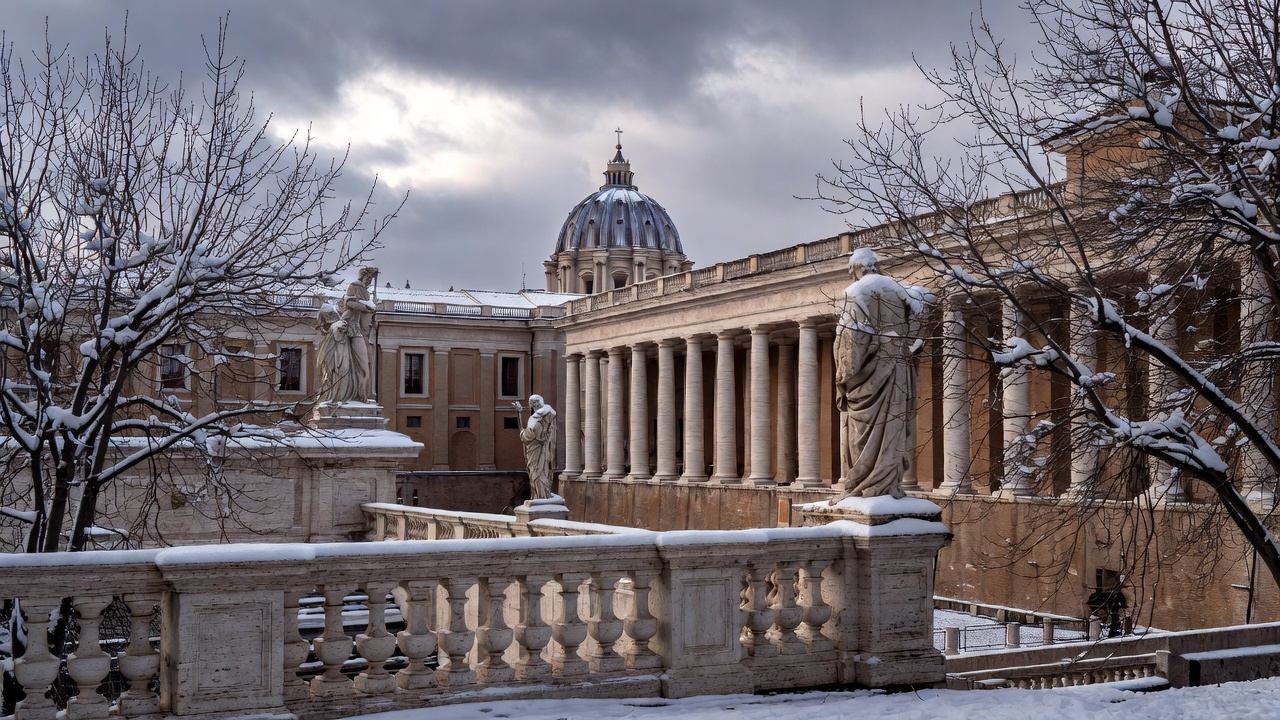
Every year on February 11, a quiet but powerful celebration takes place inside the world’s smallest sovereign state. Vatican City marks Lateran Treaty Day — the anniversary of the 1929 agreement that gave the Holy See its independence and created the nation as we know it today. In 2026, this date falls on a Wednesday, and it carries special weight. It is the 97th anniversary of the treaty signing, the first February under the new pontificate of Pope Leo XIV, and a month rich with once-in-a-generation events — from a rare Sistine Chapel restoration to a newly proclaimed Franciscan Jubilee Year.
Yet February in Vatican City remains one of the best-kept secrets among seasoned Rome travelers. While summer visitors sweat through four-hour queues at the Vatican Museums, February guests glide through the same galleries in near-solitude. Hotel prices drop by as much as 50–60% compared to peak season. The Roman air carries a crisp freshness, and the light over St. Peter’s Dome takes on that low winter gold that photographers prize.
This guide covers everything you need to plan a February 2026 trip to Vatican City around the Lateran Treaty anniversary. You will find the history behind the holiday, practical travel advice, a breakdown of this year’s unique events, and insider tips on navigating a Vatican that is, right now, undergoing a rare transformation.
What Is Lateran Treaty Day and Why Does Vatican City Celebrate It on February 11
Lateran Treaty Day is the national day of Vatican City. It is a public holiday observed every February 11. The date marks the signing of the Lateran Pacts in 1929, the agreement that ended decades of tension between the Catholic Church and the Italian state.
To understand why this day matters, you need to go back to 1870. That year, Italian unification forces seized Rome and absorbed the Papal States — a collection of territories the popes had ruled for over a thousand years. Pope Pius IX refused to recognize the new Kingdom of Italy. He declared himself a “prisoner of the Vatican” and never left the papal grounds. For nearly 60 years, successive popes maintained this stance. The standoff became known as the “Roman Question.”
The answer came on February 11, 1929. Inside the Lateran Palace, Cardinal Pietro Gasparri signed on behalf of Pope Pius XI, and Benito Mussolini signed for King Victor Emmanuel III. The resulting treaty recognized the full sovereignty of Vatican City as an independent state. In return, the Holy See recognized Italy with Rome as its capital. A separate financial agreement compensated the Vatican for the territories it had lost in 1870. A concordat regulated the relationship between the Catholic Church and the Italian government.
The treaty created the smallest sovereign state in the world — just 44 hectares (about 109 acres) — with its own postal service, gendarmerie, and radio station. To mark the occasion, Mussolini commissioned the Via della Conciliazione (“Road of Reconciliation”), the broad boulevard that still connects St. Peter’s Square to the heart of Rome.
In 1948, the Lateran Treaty was formally enshrined in the new Constitution of the Italian Republic. A major revision in 1984 updated the concordat, ending Catholicism’s status as the sole state religion of Italy. But the core treaty — the one granting Vatican sovereignty — has remained in force, unchanged, ever since.
Today, Lateran Treaty Day is observed as a solemn yet joyful occasion. Vatican offices close. The Swiss Guard dons ceremonial dress. Special liturgical observances take place. And for visitors who happen to be in Rome on this day, there is a quiet sense of participating in a moment that shaped both modern Italy and the global Catholic Church.
How to Visit Vatican City in February 2026: Weather, Crowds, and Low-Season Benefits
February is statistically the quietest month to visit Vatican City. According to seasonal travel data compiled by multiple sources, the month offers the year’s smallest crowds with near-immediate ticket availability and unhurried museum exploration.
Rome Weather in February: What to Pack
Rome in February is cool but not harsh. Here is a snapshot of what to expect:
| Weather Factor | February Average |
|---|---|
| Daytime High | 13°C (55°F) |
| Nighttime Low | 3–4°C (37–39°F) |
| Rainfall | 73 mm across 6–8 rainy days |
| Sunshine | 5–6 hours per day |
| Daylight Hours | Roughly 10 hours |
The coldest point typically falls around mid-February, when overnight lows can dip to about 2.9°C (37°F). By the end of the month, temperatures begin their slow climb toward spring.
Packing essentials for a February Vatican visit:
- A warm, layered coat (indoor museum temperatures are comfortable, but you will spend time outdoors in St. Peter’s Square and the queue areas)
- A compact umbrella or lightweight rain jacket
- Comfortable, waterproof walking shoes — cobblestones and occasional puddles are part of the Roman landscape
- A scarf or shawl that doubles as a shoulder cover for church dress codes
- Modest clothing: shoulders and knees must be covered to enter St. Peter’s Basilica and the Sistine Chapel, regardless of the season
Why February Is the Best Month for a Quiet Vatican Experience
The advantages of a February visit go beyond smaller crowds. Here is what the low season offers:
Shorter queues at every turn. Summer visitors at the Vatican Museums regularly face wait times of two to three hours. In February, you can often walk straight to security screening. The difference is striking — and it transforms the entire experience.
Better prices on accommodation. Hotel rates in the Vatican and Prati neighborhoods drop 50–60% from their summer peaks. A room that costs €250 per night in July might run €100–120 in February. Booking windows are shorter, too. While summer trips require reservations 90–120 days in advance, winter visitors can often book just 30–45 days ahead.
A more contemplative atmosphere. The Sistine Chapel, the Raphael Rooms, and the Gallery of Maps were designed for quiet reflection. In February, you can actually experience them that way. The ceiling frescoes are easier to study when you are not shoulder-to-shoulder with thousands of other visitors.
Seasonal Roman cuisine at its peak. February marks the height of carciofi (artichoke) season in Rome. The classic preparation — carciofi alla giudia, or Jewish-style fried artichokes — reaches its peak quality this time of year. Roman trattorias also feature hearty winter dishes like coda alla vaccinara (oxtail stew) and pasta e ceci (pasta with chickpeas).
Vatican Museums and Sistine Chapel in February 2026: Tickets, Hours, and Restoration Updates
A visit to the Vatican Museums is the anchor of most Vatican itineraries. The museum complex contains 54 galleries spanning centuries of art, from Egyptian antiquities to modern religious works. In February 2026, however, visitors need to be aware of an extraordinary development.
The Sistine Chapel Last Judgment Restoration: What Visitors Should Know
On February 2, 2026, the Vatican Museums announced that Michelangelo’s The Last Judgment — the towering fresco covering the altar wall of the Sistine Chapel — has begun its first major restoration in over 30 years. The cleaning is expected to last approximately three months, with a target completion before Holy Week in April.
According to a Vatican Museums statement reported by the Associated Press, the restoration addresses a “widespread whitish haze, produced by the deposition of microparticles of foreign substances carried by air movements” that has accumulated since the landmark 1994 cleaning. More than 6 million people visit the Vatican Museums annually, and the sheer volume of foot traffic in the chapel has gradually dulled the fresco’s legendary colors.
The Sistine Chapel remains open throughout the restoration. Scaffolding now covers the altar wall, but the Vatican has installed a high-definition reproduction of the Last Judgment behind which conservators work. The rest of the chapel — including the iconic ceiling with The Creation of Adam — remains fully visible. Restorers from the Vatican Museums’ Painting and Wood Restoration Laboratory are conducting the work, supported by the Florida Chapter of the Patrons of the Arts of the Vatican Museums.
For visitors, this means a trade-off. You will not see the original Last Judgment fresco in person during February or March 2026. But you will witness something few visitors ever see: an active conservation effort on one of humanity’s greatest artworks. You will also see the ceiling frescoes with fewer crowds than almost any other time of year — an experience that, for many, is the more moving encounter anyway.
Vatican Museums Ticket Prices and Booking Tips for February 2026
| Ticket Type | Price (2026) |
|---|---|
| Standard entry (includes Sistine Chapel) | €20 + €4 online booking fee |
| Audio guide | €8 additional |
| Guided group tour | €45–85 depending on group size |
| Private tour (up to 6 people) | €300–500 |
Key booking advice for February:
- Book online in advance, even in low season. While walk-up entry is more feasible in February than in summer, pre-booking guarantees your time slot and avoids the risk of weather-related schedule changes.
- Arrive early. The museums open at 8:00 AM. The first hour offers the most peaceful experience, regardless of season.
- Avoid Wednesdays if possible. The Papal Audience is held on Wednesday mornings, drawing large crowds to St. Peter’s Square and creating spillover effects at the Museums.
- Consider Tuesday or Thursday for the smallest crowds and most relaxed pace.
- The last Sunday of each month offers free entry from 9:00 AM to 2:00 PM (last entry at 12:30 PM). In February 2026, this falls on February 22. Expect much larger crowds on this day.
- Photography is allowed in most areas of the Vatican Museums, but photography and video recording are strictly prohibited inside the Sistine Chapel.
Security and Dress Code Requirements
Vatican security screening is similar to airport procedures. Metal detectors, bag inspections, and prohibited item confiscation are standard. Prohibited items include large bags, umbrellas, knives, glass containers, professional camera equipment, and food or drinks. Storage facilities near the entrance cost €5–8 per item.
The dress code is enforced strictly: covered shoulders and knees for all visitors. Tank tops, shorts, miniskirts, and low-cut clothing will result in entry denial. In February, winter clothing usually meets these requirements naturally — but keep it in mind if you plan to visit on a warmer day.
Lateran Treaty Anniversary Events and Celebrations on February 11, 2026
February 11 is a public holiday in Vatican City. Government offices, the Vatican post office, and certain administrative buildings close for the day. The holiday is observed with a combination of liturgical celebrations and formal ceremonies.
What Happens in Vatican City on Lateran Treaty Day
The day typically begins with a special Mass in one of the Vatican’s basilicas or chapels. Under Pope Leo XIV — who was elected on May 8, 2025, and is leading his first full year as pontiff — the observance may carry additional significance as a moment to reflect on Vatican sovereignty and the Church’s relationship with the Italian state.
The Swiss Guard — the Vatican’s ceremonial and security force, active since 1506 — marks the day in formal regalia. If you are lucky enough to be near the Apostolic Palace or St. Peter’s Square on the morning of February 11, you may see the Guard in their full Renaissance-era uniforms, designed (according to tradition) in colors attributed to the Medici.
For visitors, the practical effect of the holiday is mixed. St. Peter’s Basilica remains open for worship and visitation. However, the Vatican Museums follow their regular schedule — open Monday through Saturday, closed Sundays (except the last Sunday of the month). Since February 11, 2026, falls on a Wednesday, the Museums will be open, but the morning may be busier than usual due to the weekly Papal Audience, which typically takes place in the Paul VI Audience Hall or St. Peter’s Square.
Attending the Papal Audience on Lateran Treaty Day
Pope Leo XIV holds his General Audience every Wednesday. This weekly event, free and open to the public, is one of the most meaningful experiences a visitor can have in Vatican City. On February 11, 2026, the audience may carry a special resonance, given its overlap with the treaty anniversary.
How to attend:
- Tickets are free but must be reserved in advance through the Prefecture of the Papal Household. Requests can be made online or by fax.
- Arrive early — seating opens around 7:30 AM, and the audience typically begins at 9:00 AM in winter (moving to St. Peter’s Square in warmer months).
- The Pope delivers a catechesis (teaching), greets specific groups, and offers a final blessing. In his most recent audiences, Pope Leo XIV has been delivering a series on the documents of the Second Vatican Council, a topic close to his theological priorities.
Pope Leo XIV and the First Full Year of a New Pontificate: What It Means for February Visitors
The Vatican in February 2026 is a Vatican in transition. Pope Leo XIV — elected on May 8, 2025, following the death of Pope Francis — closed the Holy Door on January 6, 2026, formally ending the Jubilee of Hope that his predecessor had inaugurated. With that chapter closed, Leo has begun shaping the direction of his own pontificate.
In his first weeks of 2026, the new Pope has already:
- Convened an extraordinary consistory of cardinals — the first since 2014 — to foster dialogue among the Church’s senior leaders.
- Launched a new catechesis series on the Second Vatican Council, urging Catholics to read the Council’s documents directly rather than relying on secondhand interpretations.
- Proclaimed a Franciscan Jubilee Year (January 10, 2026 – January 10, 2027) to mark the 800th anniversary of the death of St. Francis of Assisi.
- Addressed the Vatican Diplomatic Corps on global peace and disarmament.
For visitors, this translates into an atmosphere of renewal and energy. The Vatican is not coasting between events — it is in the early, defining months of a new era. The Pope’s Wednesday audiences have drawn strong attendance, and his emphasis on peace, dialogue, and the legacy of Vatican II gives the weekly gatherings a sense of purpose and immediacy.
The Franciscan Jubilee Year 2026: A Pilgrimage Opportunity During Your February Vatican Visit
One of the most significant spiritual events of 2026 is the Franciscan Jubilee Year, proclaimed by Pope Leo XIV and running from January 10, 2026, to January 10, 2027. This extraordinary jubilee marks the 800th anniversary of the death of St. Francis of Assisi (who died on October 3, 1226) and carries a plenary indulgence for participating faithful.
What the Franciscan Jubilee Means for Travelers
The jubilee is not confined to Assisi. The decree from the Apostolic Penitentiary grants the plenary indulgence to anyone who makes a pilgrimage to any Franciscan conventual church or place of worship dedicated to St. Francis anywhere in the world. Rome has several such churches, making it possible to participate in the jubilee during a Vatican-centered trip.
Franciscan pilgrimage sites in and near Rome:
- Basilica of San Francesco a Ripa in Trastevere — home to a cell where St. Francis stayed during visits to Rome
- Chiesa di San Francesco d’Assisi in various Roman neighborhoods
- Basilica of Santa Maria in Aracoeli on the Capitoline Hill, historically linked to Franciscan friars
For visitors who wish to combine their Vatican trip with a deeper Franciscan pilgrimage, Assisi is approximately 2.5 hours from Rome by train. During February and March 2026, the remains of St. Francis are being displayed at the Basilica of St. Francis in Assisi for public veneration — a rare event requiring free online reservations through the official centennial website.
New Rome Tourist Fees in February 2026: Trevi Fountain, Museums, and What You Need to Budget
February 2026 brought a significant change to the Rome tourism landscape that every Vatican visitor should know about. Starting February 2, 2026, the city of Rome introduced a €2 entry fee for tourists wishing to approach the Trevi Fountain up close.
According to NPR’s reporting on the new policy, the fee applies during prime-time daylight hours (9:00 AM to 10:00 PM most days, 11:00 AM to 10:00 PM on Mondays and Fridays). After 10:00 PM, the barriers open and access is free. Rome residents are exempt. The fee can be paid in advance online or via QR codes at the site.
The Trevi initiative is part of a broader effort by the city to manage overtourism. Rome Mayor Roberto Gualtieri cited data showing the fountain attracts up to 70,000 visitors per day at peak times. Officials estimate the fee could generate €6.5 million per year for monument maintenance.
Alongside the Trevi fee, Rome rolled out a new €5 tourist ticket (the Roma Mic card) for select civic museums, including the Napoleonic Museum and the Giovanni Barracco Museum of Ancient Sculpture. These fees are separate from Vatican City admission, which is governed by its own sovereign pricing.
Complete Budget Overview for a February 2026 Vatican and Rome Trip
| Expense | Approximate Cost |
|---|---|
| Vatican Museums + Sistine Chapel | €24 (ticket + booking fee) |
| Vatican audio guide | €8 |
| St. Peter’s Basilica | Free |
| St. Peter’s Dome climb | €8 (stairs) / €10 (elevator + stairs) |
| Papal Audience | Free (reservation required) |
| Trevi Fountain close-up access | €2 |
| Roma Mic card (civic museums) | €5 |
| Pantheon entry | €5 |
| Colosseum + Roman Forum combo | €18–24 |
| Average mid-range hotel per night | €100–150 (low season) |
| Average meal at a trattoria | €15–25 |
Best Day-by-Day Itinerary for a February Vatican City Trip Around Treaty Anniversary Week
Planning your visit around the week of February 11 allows you to experience both the treaty anniversary atmosphere and the low-season advantages. Here is a suggested five-day itinerary.
Day 1 (Monday, February 9): Arrival and Roman Orientation
Settle into your hotel in the Prati or Borgo neighborhood, both within walking distance of Vatican City. Spend the afternoon on a gentle orientation walk. Cross the Ponte Sant’Angelo — the ancient bridge lined with Bernini’s angel statues — and stroll down the Via della Conciliazione toward St. Peter’s Square. This boulevard was built specifically to commemorate the Lateran Treaty. Note the obelisk at the center of the square and the Bernini colonnade that embraces visitors on both sides.
Evening: Dinner in Prati. Try a Roman classic like cacio e pepe (pecorino and black pepper pasta) at a neighborhood trattoria.
Day 2 (Tuesday, February 10): Vatican Museums and Sistine Chapel
Tuesday is statistically one of the least crowded days at the Vatican Museums. Book an 8:00 AM entry and plan for at least 3–4 hours inside. Walk through the Gallery of Maps, the Raphael Rooms, and the Gallery of Tapestries before reaching the Sistine Chapel. Remember: the Last Judgment wall will be behind scaffolding and a high-definition screen, but the ceiling frescoes — including The Creation of Adam — remain fully visible.
Afternoon: Visit St. Peter’s Basilica (free entry, no reservation needed). Climb the dome for sweeping views of Rome in winter light. The 551 steps are worth the effort.
Day 3 (Wednesday, February 11): Lateran Treaty Day and Papal Audience
This is the day. Arrive at the Paul VI Audience Hall by 7:30 AM for the Papal Audience with Pope Leo XIV. After the audience, walk through St. Peter’s Square and absorb the holiday atmosphere. The Swiss Guard will be in full dress. Vatican offices are closed, but the Basilica and Square remain open.
Afternoon: Visit the Castel Sant’Angelo, the cylindrical fortress on the Tiber that once served as a papal refuge. From its terrace, you get one of Rome’s finest views of St. Peter’s.
Evening: Treat yourself to a special dinner. February 11 is not a public holiday in Italy, so Roman restaurants operate normally.
Day 4 (Thursday, February 12): Beyond the Vatican Walls
Explore Rome’s broader treasures. Start at the Trevi Fountain (book your €2 ticket online to save time). Continue to the Pantheon (€5 entry), then walk to Piazza Navona. In the afternoon, visit the Colosseum and Roman Forum.
Optional Franciscan pilgrimage: Visit the Basilica of San Francesco a Ripa in Trastevere to mark the Franciscan Jubilee Year.
Day 5 (Friday, February 13): Day Trip to Assisi or a Quieter Vatican Return
If the Franciscan Jubilee has inspired you, take the 2.5-hour train from Roma Termini to Assisi. During February and March 2026, the remains of St. Francis are on rare public display at the Basilica. Book free reservations in advance through the official website.
Alternatively, return to the Vatican for anything you missed. Visit the Vatican Gardens (guided tour required, book in advance) or explore the Vatican Necropolis beneath St. Peter’s Basilica — the archaeological site believed to contain the tomb of St. Peter himself.
Dress Code for Vatican City in February: What to Wear for Churches, Museums, and Winter Weather
Navigating the Vatican dress code in February is actually easier than in summer. Winter clothing naturally covers the shoulders and knees. But there are still details worth knowing.
Mandatory requirements for all Vatican religious sites:
- Shoulders must be covered
- Knees must be covered
- No excessively low-cut tops
- No clothing with offensive imagery
Practical February wardrobe tips:
- A mid-weight wool coat or insulated jacket handles the outdoor cold
- Layers are essential: museums and churches are heated, but the interiors of St. Peter’s can still feel cool
- Scarves serve double duty — warmth outside, modesty coverage inside
- Waterproof boots or shoes with good grip handle Rome’s cobblestone streets and occasional rain
- Consider bringing a small daypack rather than a large bag, as oversized luggage must be checked at museum entrances
How to Get to Vatican City from Rome: Transportation Tips for February Visitors
Vatican City sits on the west bank of the Tiber River, fully enclosed within the city of Rome. There is no separate border crossing. You walk from Italy into Vatican City seamlessly.
Metro: The Ottaviano station on Metro Line A is the closest stop, about a 10-minute walk to the Vatican Museums entrance or St. Peter’s Square. The Cipro station is slightly closer to the museum entrance.
Bus: Several Rome bus lines stop near the Vatican, including routes 49, 32, 81, and 982.
On foot: From central Rome (Piazza Navona, Campo de’ Fiori), the walk to the Vatican takes about 25–35 minutes and crosses some of Rome’s most scenic streets and bridges.
Taxi or rideshare: A taxi from Roma Termini station to the Vatican costs roughly €15–20. In February, traffic is lighter than in peak tourist months.
From the airports: Rome’s Fiumicino Airport (FCO) connects to Roma Termini via the Leonardo Express train (32 minutes, about €15). From Termini, take Metro Line A to Ottaviano. Total travel time from Fiumicino to the Vatican: approximately 60–75 minutes. From Ciampino Airport (CIA), buses run to Termini in about 40 minutes.
Vatican City Safety Tips and Practical Advice for February 2026 Travelers
Vatican City is one of the safest destinations in Europe. The Vatican Gendarmerie Corps and the Swiss Guard maintain a strong security presence. However, the areas immediately outside Vatican City — particularly along the crowded stretch between Ottaviano metro and the Museum entrance — are known for pickpocketing. Keep your valuables secure and your bags zipped.
Additional practical tips:
- Vatican post office: Send a postcard with a Vatican stamp — it is a beloved tradition, and Vatican mail is famously more reliable than the Italian postal service. The main post office is in St. Peter’s Square; additional mailboxes are found at the top of St. Peter’s Dome.
- Currency: Vatican City uses the euro. Credit cards are widely accepted at the Museums, gift shops, and cafeterias.
- Language: Italian is the primary language. Latin holds a ceremonial role. English is widely understood in tourist-facing areas.
- Phone and internet: Vatican City has its own telecommunications authority, but your Italian or EU mobile plan will work seamlessly. Wi-Fi is available inside the Vatican Museums.
- Emergency contacts: Vatican security services can be reached at 06-6988-3860. Rome’s general emergency number is 112.
The History and Significance of the Lateran Treaty: A Deeper Look for Culture and History Lovers
For those drawn to the deeper layers of this story, the Lateran Treaty repays close attention. It is not just a piece of diplomatic paperwork. It is the document that resolved one of modern Europe’s most unusual political crises and created a state unlike any other on earth.
The Roman Question: Six Decades of Papal Protest
When Italian nationalists captured Rome on September 20, 1870, Pope Pius IX retreated behind the Vatican walls. He rejected the Law of Guarantees offered by the Italian government, which would have granted him use of the Vatican and Lateran Palaces and an annual income of 3,250,000 Lire. The Pope refused on principle: spiritual independence, he argued, required genuine sovereignty, not a government stipend.
For the next six decades, popes did not leave the Vatican. They did not recognize the Italian state. They did not participate in Italian elections. This self-imposed isolation became a defining feature of the papacy in the late 19th and early 20th centuries.
The Signing at the Lateran Palace
Negotiations began in earnest in 1926. The Fascist government under Mussolini saw an opportunity to gain legitimacy by resolving the Roman Question. The Vatican saw an opportunity to regain formal sovereignty.
The agreements were signed on February 11, 1929, in the Popes’ Room at the Lateran Palace — hence the name. The Lateran Pacts actually consisted of three components: a political treaty recognizing Vatican sovereignty, a financial convention compensating the Holy See, and a concordat regulating Church-state relations in Italy.
As the Encyclopaedia Britannica notes, the treaty’s Article 1 gave Rome a special character as the “centre of the Catholic world and place of pilgrimage.” Article 20 required all bishops to take an oath of loyalty to the state and to be Italian speakers. The Pope, in turn, pledged perpetual neutrality in international disputes unless all parties requested mediation.
The Treaty’s Legacy in 2026
The Lateran Treaty survives, almost a century later, as a living document. The 1984 revision updated the concordat, removing Catholicism’s status as Italy’s sole state religion and ending mandatory religious education in public schools. But the core treaty — the one establishing Vatican sovereignty — remains in force.
Today, Vatican City is home to a population of roughly 800 people. It has its own bank, pharmacy, supermarket, fire department, and helipad. It issues its own stamps and coins. It is a full member of international organizations. And it all traces back to a single afternoon in 1929, in a room at the Lateran Palace, when two very different powers found a way to coexist.
Combining a Vatican February Trip with Other Italian Winter Destinations
A February visit to the Vatican pairs beautifully with other Italian winter experiences. Here are three natural extensions.
Assisi and the Franciscan Jubilee
As mentioned, the Franciscan Jubilee Year 2026 makes Assisi an especially meaningful side trip. The town is reachable from Rome in about 2.5 hours by train. During February and March, the remains of St. Francis are on rare display at the Basilica. The town itself is peaceful in winter — far quieter than its sun-drenched summer crowds — and the views of the Umbrian countryside from the medieval ramparts are breathtaking in the cool February air.
Florence and the Renaissance Trail
A 1.5-hour high-speed train from Roma Termini takes you to Florence, the birthplace of the Renaissance. In February, the Uffizi Gallery and the Accademia (home of Michelangelo’s David) are blissfully uncrowded. The connection between Florence and the Vatican is profound — many of the artists whose works fill the Vatican Museums trained and worked in Florence.
Naples and Pompeii
Naples is about 70 minutes by high-speed train from Rome. February is an ideal time to explore the Museo Archeologico Nazionale, the world’s foremost collection of Roman antiquities, and to visit Pompeii without the summer heat and crowds.
Frequently Asked Questions About Visiting Vatican City in February 2026
Is Vatican City open on Lateran Treaty Day (February 11)? St. Peter’s Basilica and St. Peter’s Square are open. The Vatican Museums follow their regular Wednesday schedule (open, but the morning may be busier due to the Papal Audience). Vatican administrative offices are closed.
Can I see the Sistine Chapel ceiling during the February 2026 restoration? Yes. The ceiling frescoes, including The Creation of Adam, remain fully visible. Only the Last Judgment on the altar wall is behind scaffolding and a high-definition reproduction screen. The chapel is open throughout the restoration.
Do I need a visa to visit Vatican City? No separate visa is required. Vatican City is accessible from Rome without border checks. If you can enter Italy (or the Schengen Area), you can visit Vatican City.
How long does a Vatican visit take? A thorough visit to the Vatican Museums takes 3–4 hours. Add 1–2 hours for St. Peter’s Basilica and the Dome. A full Vatican day, including the Papal Audience, can run 6–8 hours.
Is February too cold to enjoy Rome and the Vatican? Not at all. Daytime temperatures hover around 13°C (55°F), which is comfortable for walking. Most Vatican attractions are indoors. The trade-off of cooler weather for dramatically fewer crowds is one that experienced travelers happily accept.
What is the Franciscan Jubilee Year and can I participate as a non-Catholic? The Franciscan Jubilee Year (January 10, 2026 – January 10, 2027) commemorates the 800th anniversary of the death of St. Francis of Assisi. While the plenary indulgence is a Catholic sacramental practice, all visitors — of any faith or none — are welcome at Franciscan churches, celebrations, and pilgrimage sites. The jubilee’s themes of peace, simplicity, and care for creation resonate across traditions.
How much should I budget for a 5-day Vatican and Rome trip in February? For a mid-range experience including accommodation, meals, museum tickets, and transportation, budget approximately €150–200 per person per day in February’s low season. This is significantly lower than the €250–350 range typical of peak summer months.
Final Thoughts: Why the Lateran Treaty Anniversary Makes February the Most Meaningful Time to Visit Vatican City
There is something fitting about visiting Vatican City in February. The crowds are thin. The light is soft. The city is not performing for anyone. It simply is — ancient, layered, alive.
On February 11, 2026, the 97th anniversary of the Lateran Treaty, Vatican City will quietly affirm its existence as the world’s smallest and most unusual sovereign state. There will be no fireworks, no parade. Just a Guard in ceremonial dress, a Mass in a chapel of unimaginable beauty, and the steady pulse of a place that has persisted through empires, wars, and revolutions.
This year, you can witness that anniversary under a new Pope, during a Franciscan Jubilee, while conservators carefully restore a fresco that Michelangelo completed in 1541. You can toss a coin in the Trevi Fountain under Rome’s new ticketing system, eat the season’s best artichokes, and walk the Via della Conciliazione — the road built to honor the very treaty you came to commemorate.
February in the Vatican is not the easiest month. It is cool. It rains sometimes. The days are short. But for the traveler who values meaning over convenience, it may be the most rewarding month of all.
Planning your trip? Book Vatican Museums tickets through the official Vatican Museums website. For Papal Audience reservations, contact the Prefecture of the Papal Household. For information on the Franciscan Jubilee Year, visit the Order of Friars Minor official page.