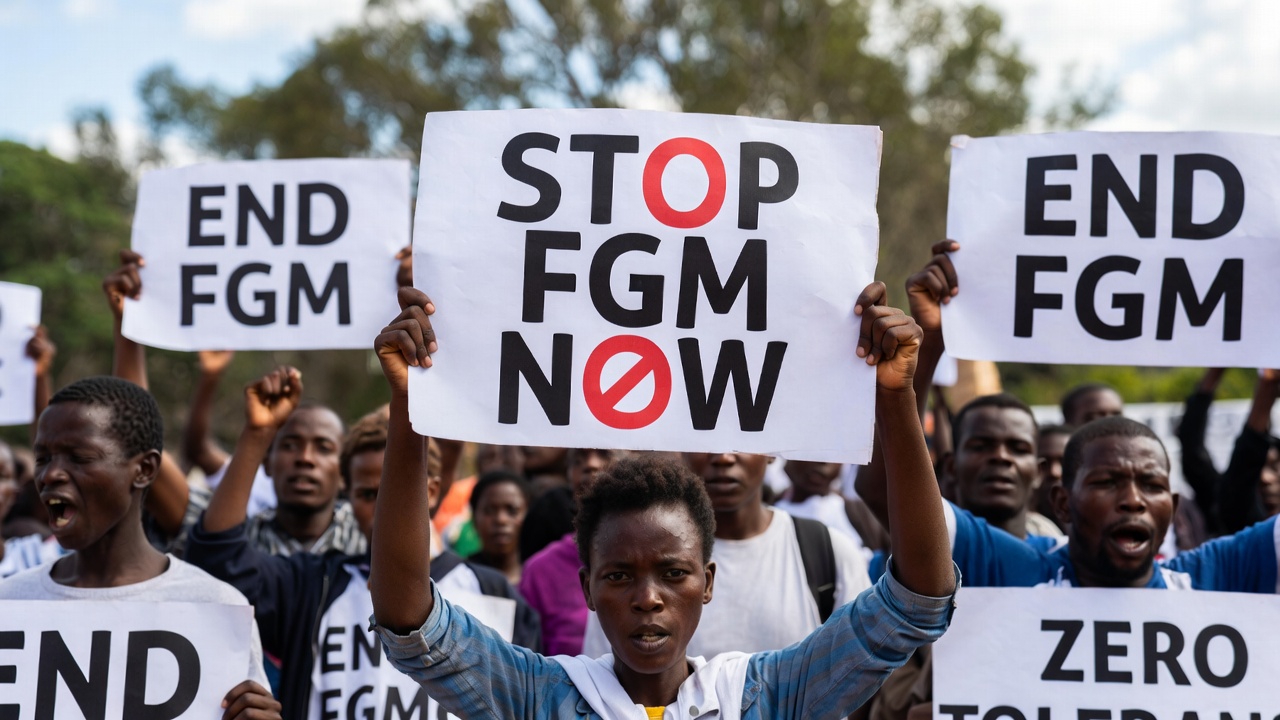
Every year on February 6, communities around the world pause to mark the International Day of Zero Tolerance for Female Genital Mutilation (FGM). It is a day of reckoning. It is a day of remembrance. And in 2026, it is a day of renewed urgency.
The 2026 theme — “Towards 2030: No End to FGM Without Sustained Commitment and Investment” — carries a weight that demands attention. With only four years left before the Sustainable Development Goal 5.3 deadline to eliminate all harmful practices against women and girls, the clock is running out. And progress, while real, remains fragile.
An estimated 230 million girls and women alive today have undergone some form of FGM, according to the World Health Organization (WHO). Around 4 million more girls face this risk each year. If current trends hold, 22.7 million additional girls will be affected by 2030.
Yet despite decades of global campaigns, scientific evidence, and survivor testimony, myths about FGM persist. These misconceptions fuel the continuation of the practice. They offer false justification. They silence survivors. And they undermine the very efforts designed to bring this harmful tradition to an end.
This article confronts those myths head-on. Grounded in data from international health bodies, academic research, and the voices of survivors and advocates, what follows is a thorough, honest examination of what people get wrong about FGM — and why the truth matters more than ever.
A Brief History of International Zero Tolerance Day for FGM
The International Day of Zero Tolerance for Female Genital Mutilation was first declared on February 6, 2003. On that date, Stella Obasanjo, then First Lady of Nigeria and spokesperson for the Campaign Against Female Genital Mutilation, made the official declaration at a conference organized by the Inter-African Committee on Traditional Practices Affecting the Health of Women and Children. The UN Sub-Commission on Human Rights adopted it as an international awareness day shortly after.
In 2012, the United Nations General Assembly formalized its commitment by passing a resolution calling for intensified global efforts to end FGM. Since then, February 6 has served as an annual rallying point — a date on which survivors share their stories, policymakers review progress, researchers present new findings, and communities recommit to the goal of a world where no girl faces the blade.
The UNFPA-UNICEF Joint Programme on the Elimination of FGM, launched in 2008, has become the largest and longest-running global initiative dedicated to this cause. Each year, the campaign chooses a theme that reflects the most pressing challenges of the moment. In 2026, that theme — investment — speaks directly to a growing funding crisis that threatens to undo decades of hard-won progress.
What Is Female Genital Mutilation and Why Does It Still Happen in 2026?
Before we debunk myths, we need to understand what we are talking about.
Female genital mutilation refers to all procedures that intentionally alter or cause injury to the female genital organs for non-medical reasons. The WHO classifies FGM into four major types:
| Type | Description | Approximate Prevalence |
|---|---|---|
| Type I (Clitoridectomy) | Partial or total removal of the clitoral glans and/or the clitoral hood | Most common globally (alongside Type II) |
| Type II (Excision) | Partial or total removal of the clitoral glans and the labia minora, with or without removal of the labia majora | Most common globally (alongside Type I) |
| Type III (Infibulation) | Narrowing of the vaginal opening by creating a covering seal, formed by cutting and repositioning the labia | About 10% of all cases; most common in Somalia, Sudan, and Djibouti |
| Type IV (Other) | All other harmful procedures, including pricking, piercing, incising, scraping, and cauterization | Varies widely by region |
The practice has no health benefits. None. It is carried out on girls primarily between infancy and age 15. It causes severe pain, bleeding, infections, difficulty urinating, menstrual complications, childbirth dangers, psychological trauma, and — in some cases — death.
So why does it continue?
The reasons are complex, rooted in a tangled web of social convention, gender inequality, cultural identity, and myth. In many communities where FGM is common, social pressure to conform is enormous. Families fear that uncut girls will face rejection, difficulty finding a husband, or loss of community standing. FGM is often framed as a rite of passage, a marker of womanhood, a guarantee of “purity.”
These pressures are real. They are deeply felt. And they deserve to be met not with judgment, but with truth.
Myth 1: Female Genital Cutting Is Required by Islam or Christianity
This is one of the most persistent and damaging myths about FGM. It is also entirely false.
No major world religion prescribes FGM. Not Islam. Not Christianity. Not Judaism. No religious text — the Quran, the Bible, the Torah — contains any instruction to cut or alter female genitalia.
The United Nations Population Fund (UNFPA) is clear on this point: while supposed religious doctrine is often used to justify the practice, FGM has no religious foundation. It predates both Islam and Christianity and exists across multiple faiths and belief systems.
The reality is that FGM is practiced among some Muslim communities, some Christian communities, some followers of traditional African religions, and even among some Ethiopian Jewish communities. It is not exclusive to any one faith.
Despite this, surveys show that more than half of girls and women in four out of 14 countries where data is available believe FGM is a religious requirement. This misconception persists because:
- Some local religious leaders endorse the practice, blurring the line between cultural tradition and spiritual obligation.
- Community reinforcement creates a feedback loop in which families assume their neighbors’ beliefs reflect divine law.
- Limited access to religious scholarship means communities may rely on secondhand interpretations rather than scriptural study.
The encouraging news is that many religious leaders are now actively working to dismantle this myth. In Mali, imams like Ousmane Fakoro Traoré have incorporated anti-FGM awareness into their Friday sermons. In Egypt, Al-Azhar — one of the most important institutions in Sunni Islam — has spoken against FGM. Across West Africa, interfaith coalitions are partnering with the UNFPA-UNICEF Joint Programme on the Elimination of FGM to separate cultural practice from religious teaching.
The fact is simple: FGM is a cultural tradition, not a religious commandment.
Myth 2: FGM Only Happens in Africa and Developing Countries
Walk into a conversation about FGM in London, New York, or Sydney, and you might hear someone say: “That’s an African problem.”
It is not.
FGM is documented in more than 90 countries, according to a 2025 study published in the International Journal of Gynecology & Obstetrics. While the highest prevalence is concentrated in 30 countries across sub-Saharan Africa, the Middle East, and parts of Asia, FGM also occurs in diaspora communities across Europe, North America, and Oceania.
Consider these facts:
- In Europe alone, an estimated one million women and girls are affected by FGM.
- In the United States, research has indicated that over 500,000 women and girls have undergone or are at risk of FGM.
- In the United Kingdom, the National Health Service recorded thousands of FGM-related medical consultations annually.
- Countries like Indonesia, Malaysia, and India also have documented FGM practices that are often overlooked in global discussions.
UN Women Goodwill Ambassador Jaha Dukureh, who underwent FGM as a baby in The Gambia, has pointed out that misconceptions persist about who FGM affects. Maryum Saifee, an American FGM survivor, noted at a Spotlight Initiative-supported event that being born in Texas meant she did not fit the profile that most people picture when they think of an FGM survivor.
Framing FGM as exclusively an “African problem” is not only inaccurate — it is counterproductive. It allows countries outside Africa to ignore FGM within their own borders. It reduces attention to at-risk diaspora communities. And it reinforces harmful stereotypes about African societies.
The fact: FGM is a global issue. It crosses continents, cultures, and class boundaries.
Myth 3: Female Genital Mutilation Has Health Benefits for Women and Girls
Some communities believe that FGM improves hygiene, enhances fertility, or promotes child survival. Others believe the external female genitalia are “unclean” and that cutting makes a woman “pure.”
None of this is true. The WHO has been unequivocal: FGM has zero health benefits.
What it does have is a long, documented list of health consequences:
Immediate complications:
- Severe pain
- Excessive bleeding (hemorrhage)
- Shock
- Genital tissue swelling
- Fever and infections
- Urinary problems
- Wound-healing problems
- Injury to surrounding tissue
- Death (in extreme cases)
Long-term consequences:
- Chronic pain
- Chronic infections (urinary tract and reproductive)
- Menstrual difficulties
- Keloid scarring
- Cysts and abscesses
- Painful intercourse (dyspareunia)
- Sexual dysfunction
- Increased risk of complications during childbirth
- Increased risk of newborn deaths
- Higher vulnerability to HIV transmission
- Post-traumatic stress disorder (PTSD), anxiety, and depression
A 2025 WHO study further highlighted that FGM survivors face health complications across their entire lifespan — from childhood through reproductive years and into old age. The global cost of treating these complications is staggering: an estimated USD 1.4 billion per year for health systems worldwide.
Related myths — such as the belief that an uncut clitoris will grow to the size of a penis, or that FGM prevents promiscuity — have no basis in human biology. They are stories passed down through generations, reinforced by social pressure, and left unchallenged due to taboos around discussing female sexuality.
The fact: FGM causes only harm. It has no medical justification.
Myth 4: Medicalized FGM Performed by Doctors Is Safe
This myth is perhaps the most dangerous one emerging in recent years. And it is growing.
As of 2020, an estimated 52 million girls and women were subjected to FGM at the hands of health workers — that is roughly 1 in 4 cases of FGM worldwide, according to a landmark 2025 WHO guideline on FGM prevention.
The logic seems intuitive on the surface: if FGM is going to happen anyway, wouldn’t it be safer in a sterile clinical environment with trained medical personnel?
The answer is a firm no.
Here is why:
- FGM performed by health workers still causes harm. The physical and psychological consequences of removing healthy genital tissue do not disappear simply because the procedure happens in a clinic. The 2025 WHO guideline found that some studies suggest medicalized FGM can actually be more dangerous, resulting in deeper, more severe cuts.
- Medicalization legitimizes the practice. When a doctor or nurse performs FGM, it sends a powerful message to communities: this must be medically acceptable. It undermines decades of community-level advocacy that frames FGM as harmful. As Dr. Pascale Allotey, WHO’s Director for Sexual and Reproductive Health, stated: health workers must be “agents for change rather than perpetrators of this harmful practice.”
- It delays abandonment. By offering a “safer” version of FGM, medicalization removes the urgency that drives communities toward giving up the practice entirely.
The WHO’s updated 2025 guideline now recommends that professional codes of conduct must expressly prohibit health workers from performing FGM. It also calls on health systems to train and engage health workers as active agents in prevention efforts — not passive performers of a harmful procedure.
The End FGM European Network has reinforced this position, arguing that medicalization cannot be accepted as a “safer” alternative. Their policy paper makes the case that allowing FGM to exist in any form — clinical or traditional — undermines the entire movement to eliminate it.
The fact: No form of FGM is safe. Medicalization is not harm reduction — it is harm continuation.
Myth 5: FGM Rates Will Decline on Their Own Without Intervention
Some people assume that modernization, urbanization, and rising education levels will naturally eliminate FGM over time. The logic is: as societies “progress,” old customs will fade.
The data tells a different story.
While it is true that a girl today is about one-third less likely to undergo FGM than she was 30 years ago, population growth in high-prevalence countries is outpacing the decline in prevalence rates. According to UNFPA, the absolute number of girls at risk is actually rising. The UNFPA estimates that 4.4 million girls face FGM in 2026 alone. If current trends continue, 22.7 million additional girls could be affected by 2030.
This is not a problem that will solve itself. It requires:
- Sustained funding for community-based prevention programs
- Legal frameworks that criminalize FGM and are actually enforced
- Community engagement that shifts deeply held social norms
- Education programs that provide alternative rites of passage
- Healthcare training that equips providers to counsel families and treat survivors
- Survivor support services including medical, psychological, and legal assistance
The economic case for action is also compelling. According to the WHO, each dollar invested in ending FGM yields a tenfold return. An estimated USD 2.8 billion in prevention spending could prevent 20 million cases, generating USD 28 billion in returns through improved health outcomes and productivity.
The fact: Without active intervention and investment, FGM will not end. It could even increase.
Myth 6: FGM Is the Same as Male Circumcision
This comparison surfaces frequently, and it warrants careful discussion.
FGM and male circumcision are fundamentally different procedures with vastly different health outcomes. While both involve the genitalia, comparing them creates dangerous false equivalences.
Here is a clear breakdown:
| Factor | Male Circumcision | Female Genital Mutilation |
|---|---|---|
| Medical basis | Some evidence of health benefits (reduced UTI risk, reduced HIV transmission risk) | No health benefits whatsoever |
| Adverse event rate | Very low (0.2–0.4% for infant circumcision) | Extremely high across all types |
| Tissue removed | Foreskin (a fold of skin) | Clitoral glans, labia minora, labia majora, or narrowing of the vaginal opening |
| Long-term health impact | Minimal in most cases | Chronic pain, infections, childbirth complications, sexual dysfunction, psychological trauma |
| WHO position | Encourages in some settings for HIV prevention | Strongly condemns as a human rights violation |
The WHO has encouraged male circumcision in certain contexts, particularly in parts of Eastern and Southern Africa, as a tool for reducing HIV transmission. FGM, by contrast, can increase the risk of HIV transmission due to tissue damage and scarring.
Using the term “female circumcision” — which is how FGM was initially described when it first entered international discourse — has been widely criticized for drawing an inaccurate parallel. The UNFPA now uses the term “female genital mutilation” precisely because it reflects a human rights perspective and avoids minimizing the severity of the practice.
The fact: FGM and male circumcision are different in procedure, consequence, and medical justification. They should not be equated.
Myth 7: Women Who Undergo FGM Cannot Experience Sexual Pleasure
This myth exists on both sides of the debate. Supporters of FGM sometimes cite the suppression of female sexuality as its purpose. Opponents sometimes describe FGM survivors as permanently robbed of all sexual feeling.
The reality, as documented by the End FGM European Network’s research on myths and misconceptions, is more nuanced.
It is true that FGM, particularly more severe forms, causes significant sexual dysfunction. Removal of the clitoral glans — the most sensitive external part of the female genitalia — can profoundly impact a woman’s ability to experience sexual pleasure. Many survivors report chronic pain during intercourse.
However, blanket statements that FGM survivors “can never feel pleasure” are both scientifically inaccurate and deeply disrespectful to survivors’ lived experiences. Research has shown that:
- The clitoris is a larger organ than its visible external portion; internal structures may still allow for sensation.
- Sexual experience is influenced by many factors beyond anatomy, including emotional connection, psychological state, and context.
- Some survivors report satisfying intimate lives, while others do not. Individual variation is significant.
What matters is that FGM removes the right to choose. A girl who is cut as an infant cannot consent. A girl who is cut at age 10 cannot fully understand the lifelong consequences. This is a violation of bodily autonomy, regardless of what happens afterward.
The fact: FGM frequently impairs sexual function, but survivors’ experiences are diverse. The violation lies in the denial of choice and the unnecessary destruction of healthy tissue.
Myth 8: FGM Survivors Are Passive Victims Who Need to Be “Saved”
This myth is well-intentioned but harmful.
The narrative of the “helpless victim” strips survivors of their agency and ignores the extraordinary work that FGM survivors are doing to end the practice. Across the globe, survivors are among the most powerful advocates for change.
Consider these examples:
- Jaha Dukureh, a survivor from The Gambia, became a UN Women Goodwill Ambassador and founded Safe Hands for Girls, an organization supporting survivors across West Africa.
- Fahma Mohamed, a 17-year-old Bristol student, launched a petition in 2014 that gained over 230,000 supporters and helped push the UK government to address FGM in schools.
- Catherine Meng’anyi, a Kenyan nurse and survivor, works at the community level to educate families and provide medical care to other survivors.
- Shakira, a survivor working with the UNFPA-UNICEF Joint Programme, shares her story to raise awareness about the lasting effects of FGM.
The United Nations has emphasized that centering survivor voices is essential to ending FGM. Survivors possess unique insight into the pressures, fears, and social dynamics that sustain the practice. Their stories reduce stigma, challenge norms, and inspire community-level change.
Describing survivors solely as victims erases their resilience. It also risks reinforcing colonial narratives that portray entire communities as “backward” and needing external rescue. The movement to end FGM is strongest when it is community-led, survivor-informed, and culturally respectful.
The fact: FGM survivors are not passive. Many are leaders, advocates, and changemakers driving the movement to end the practice.
Myth 9: Laws Against FGM Are Enough to Stop the Practice
Legislation matters. When countries criminalize FGM, it sends a clear signal that the state does not condone the practice. Legal frameworks provide a basis for prosecution and a tool for advocates seeking to protect girls at risk.
But laws alone have never been sufficient.
Consider The Gambia. FGM was banned in 2015 under the Women’s Amendment Act. Yet as of 2020, 73% of women and girls aged 15 to 49 had still undergone the practice, with two-thirds affected before age five. In 2024, lawmakers attempted to repeal the ban, and while parliament ultimately rejected the repeal bill in a landmark vote, the case was taken to the Gambian Supreme Court in early 2026 by those arguing the ban violates religious and cultural freedom.
The Gambian story illustrates several truths:
- Enforcement is inconsistent. Even where FGM is illegal, prosecutions are rare and penalties often weak. In one Gambian case, women convicted of performing FGM on eight minors were fined roughly $220 each — penalties reportedly paid by a local religious leader.
- Social norms resist legal mandates. In communities where FGM is deeply embedded, a law passed in a distant capital may carry little weight. Families may continue the practice in secret or travel to areas where enforcement is weaker.
- Backlash is real. The attempt to repeal The Gambia’s FGM ban shows that legal protections are never permanently secure. They require ongoing political will and community support.
- Cross-border cutting complicates enforcement. Families may take girls to neighboring countries where FGM is legal or less strictly policed — a practice sometimes called “vacation cutting.”
The most effective approach combines legal measures with community-led education, health worker training, alternative rite-of-passage programs, survivor support services, and sustained investment. Law is the foundation, but change must be built on top of it, brick by brick, within the communities themselves.
The fact: Laws are necessary but not sufficient. Ending FGM requires a comprehensive approach that addresses social norms, not just legal codes.
Myth 10: FGM Is Declining Everywhere and the Problem Is Nearly Solved
It is tempting to look at headline progress and feel reassured. And real progress does exist:
- In East Africa, FGM among girls under 14 dropped from 71% in 1995 to 8% in 2016.
- In North Africa, rates fell from nearly 60% in 1990 to 14% in 2015.
- In West Africa, prevalence dropped from 74% in 1996 to 25% in 2017.
- Since 1990, the likelihood of a girl undergoing FGM has decreased threefold, according to WHO data from 2025.
- Countries like Burkina Faso, Sierra Leone, and Ethiopia have seen reductions in prevalence among 15-to-19-year-olds of up to 50%, 35%, and 30% respectively.
But these numbers mask serious concerns.
Population growth means that even as the percentage of girls cut declines, the absolute number at risk is rising in many high-prevalence countries. Funding cuts and declining investment in health, education, and child protection programs are weakening prevention efforts. Political pushback against women’s rights — including efforts like the Gambian repeal attempt — threatens to reverse gains. And the COVID-19 pandemic disrupted prevention programs and school-based protections, leaving millions of girls more vulnerable.
Additionally, FGM is shifting in form. The rise of medicalization means the practice is not disappearing — it is adapting. Cross-border cutting means that even where one country’s prevalence drops, neighboring countries may see increases. And the move toward cutting girls at younger and younger ages makes the practice harder to detect and prevent.
The UNFPA-UNICEF Joint Programme has warned that shrinking resources are weakening protection efforts and risking the reversal of hard-won gains. Local women- and youth-led organizations — the backbone of on-the-ground prevention — face growing funding uncertainty.
The fact: Progress is real but fragile. Without sustained commitment and investment, the gains of the past three decades could be lost.
How the International Community Is Fighting FGM in 2026
Understanding the myths is essential. But so is understanding what is being done.
The global response to FGM is multifaceted. Here are the key pillars of action in 2026:
The UNFPA-UNICEF Joint Programme on the Elimination of FGM
Since 2008, this joint programme has been the longest and largest global initiative working to end FGM. It operates in 17 countries across Africa and supports governments, community organizations, and health systems in implementing evidence-based prevention strategies.
In 2026, the Joint Programme is calling on all stakeholders — governments, civil society, donors, young changemakers, and survivors — to join the #Invest2EndFGM and #EndFGM campaigns.
Updated WHO Guidelines (2025)
The 2025 WHO guideline on FGM prevention and clinical management represents the most comprehensive, evidence-based resource to date. It includes:
- Recommendations to prevent medicalization through professional codes of conduct
- Guidance on training health workers as advocates for abandonment
- Clinical recommendations for managing health complications across the lifespan
- Protocols for mental health support for survivors experiencing anxiety, depression, or PTSD
- Guidance on deinfibulation (surgical reversal of Type III FGM) and informed consent
- Recommendations for community education that involves men and boys
Legal and Policy Frameworks
More than 60 countries now have some form of legislation against FGM. International frameworks — including CEDAW, the Convention on the Rights of the Child, and the Maputo Protocol — provide a legal basis for enforcement. The African Union’s 2025 Convention on Ending Violence Against Women further strengthens continental commitments.
Community-Led Approaches
The most sustainable change comes from within communities. Programs that work with community leaders, religious authorities, educators, and young people to challenge social norms from the inside out have shown the strongest results. Alternative rites-of-passage programs — which preserve cultural celebration while eliminating the cutting — have been particularly effective in parts of Kenya, Tanzania, and Senegal.
In Senegal, the Tostan community empowerment program has helped more than 8,000 communities make public declarations of abandonment. The approach works not by imposing external values, but by facilitating open discussions about human rights, health, and democracy. When entire communities decide together to end FGM — rather than individual families acting alone — the social pressure that sustains the practice is replaced by collective commitment to abandoning it.
In Kenya, the Maasai community has embraced alternative rite-of-passage ceremonies that mark a girl’s transition to womanhood through celebration, song, and education rather than cutting. These ceremonies honor cultural identity while protecting girls’ bodies. They demonstrate that culture is not static. It evolves. And it can evolve in the direction of health and human rights.
Young people are leading much of this change. Across Africa, the Middle East, and diaspora communities worldwide, young women and men aged 15 to 19 are significantly less likely to support FGM than older generations. They are organizing on social media, mentoring younger girls, confronting family elders, and building movements from the ground up. Their voices — amplified by platforms like TikTok, Instagram, and community radio — are shifting the conversation in real time.
Survivor-Centered Care
Modern healthcare is increasingly recognizing the specific needs of FGM survivors. This includes not only management of physical complications but also sexual health services, mental health support, and access to surgical options like deinfibulation where appropriate.
What You Can Do on International Zero Tolerance Day for FGM 2026
You do not need to be a health worker, a lawmaker, or a UN official to contribute. Here are concrete actions anyone can take:
- Educate yourself and others. Share accurate information about FGM. Challenge myths when you hear them. Talk to your family, friends, and community.
- Support survivor-led organizations. Donate to or volunteer with groups like Safe Hands for Girls, the Orchid Project, Equality Now, or the UNFPA-UNICEF Joint Programme.
- Amplify survivor voices. Use the hashtags #EndFGM and #Invest2EndFGM on social media. Share survivor stories with respect and consent.
- Advocate for policy. Contact your elected representatives. Push for stronger enforcement of existing FGM laws and increased funding for prevention programs.
- Support community-based organizations. These grassroots groups are on the front lines but face the most severe funding gaps. Even small contributions make a difference.
- Engage men and boys. Ending FGM is not “women’s business.” Men hold significant influence in many communities where FGM is practiced. Programs that engage men and boys as allies — not bystanders — have shown strong results.
- If you are a healthcare professional: Learn about FGM, its health consequences, and how to provide respectful, trauma-informed care to survivors. Refuse requests to perform FGM. Use your position to educate patients and families.
Frequently Asked Questions About Female Genital Mutilation
Is FGM the same as female circumcision?
The terms have been used interchangeably, but the international community now favors “female genital mutilation” because it accurately reflects the severity of the practice. The term “female circumcision” was criticized for creating a misleading parallel with male circumcision, which is a fundamentally different procedure.
How many countries have banned FGM?
More than 60 countries have enacted laws against FGM. However, enforcement varies dramatically. In many places, the law exists on paper but prosecutions are rare.
Can FGM be reversed?
For Type III FGM (infibulation), a surgical procedure called deinfibulation can open the sealed vaginal opening. This does not restore removed tissue but can relieve urinary and menstrual complications and reduce childbirth risks. The 2025 WHO guidelines provide updated clinical recommendations for this procedure. For other types of FGM, emerging surgical approaches exist, but outcomes vary and research is ongoing.
What age are girls typically cut?
FGM is most often performed on girls between infancy and age 15. In many countries, the majority of girls were cut before their fifth birthday. In The Gambia, 56% of affected girls were cut in this age group. In Indonesia, nearly half of affected girls were cut as infants.
Does FGM happen in the United States or Europe?
Yes. FGM occurs in diaspora communities across North America, Europe, and Australia. It may be performed locally or families may send girls abroad for the procedure. FGM is illegal in the United States and in all EU member states, but enforcement remains a challenge.
The Path Forward: Why 2026 Is a Turning Point for Ending FGM
We stand at a crossroads.
The 2030 deadline for SDG 5.3 is only four years away. The global movement against FGM has achieved remarkable things — declining prevalence rates, stronger laws, growing community opposition, and a generation of young people who are less supportive of the practice than any before them.
But these gains are not guaranteed. Funding is shrinking. Political will is uneven. Backlash is real. The Gambia’s Supreme Court will soon decide whether its FGM ban survives a constitutional challenge. Climate change, conflict, and economic instability are disrupting prevention programs and displacing millions of at-risk girls.
This is why the 2026 theme matters. “No end to FGM without sustained commitment and investment” is not a slogan. It is a statement of fact backed by decades of evidence.
Every act of commitment — whether a policy change, a community dialogue, a donation, a shared story, or a health worker’s refusal to cut — represents a step forward. But these steps must be taken together, consistently, and with adequate resources.
The myths debunked in this article are not abstract intellectual exercises. They are barriers that stand between 4 million girls and their right to grow up whole, healthy, and free. Every time a myth is challenged with truth, a barrier comes down.
On this International Day of Zero Tolerance for Female Genital Mutilation, the question is not whether you care. The question is what you will do with that care.
The girls who are at risk today cannot wait for 2030.
They need us now.