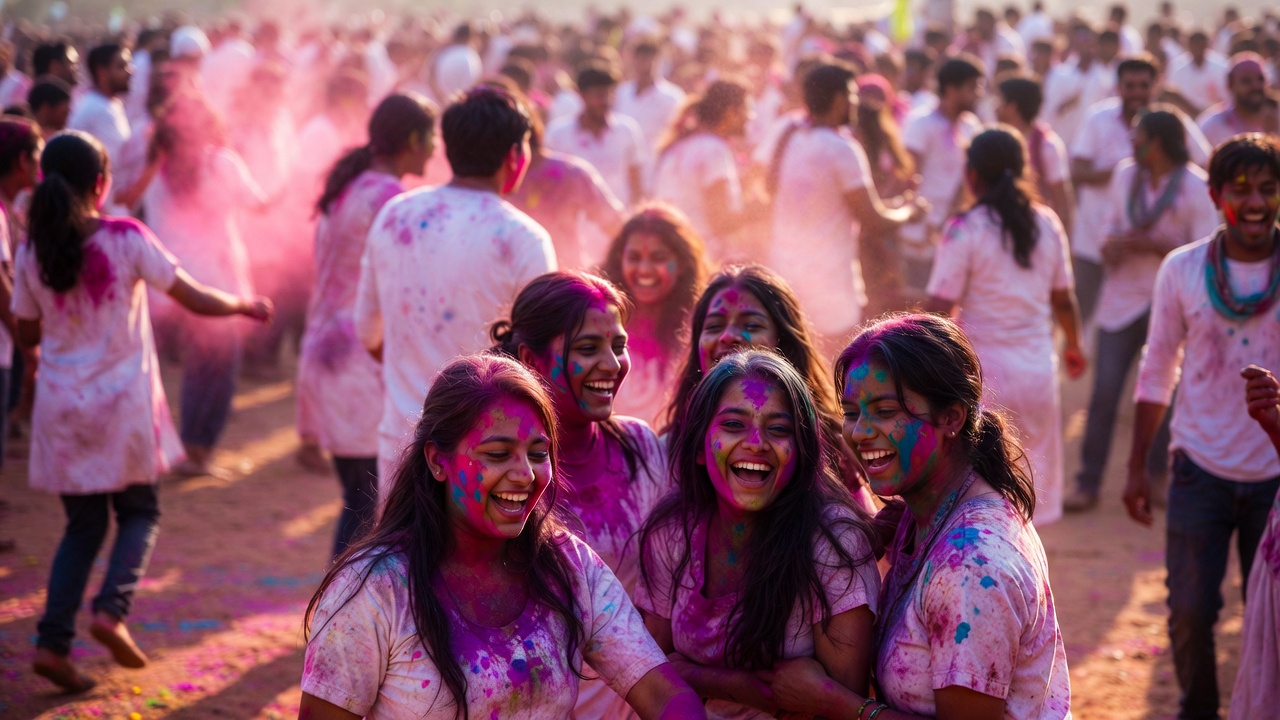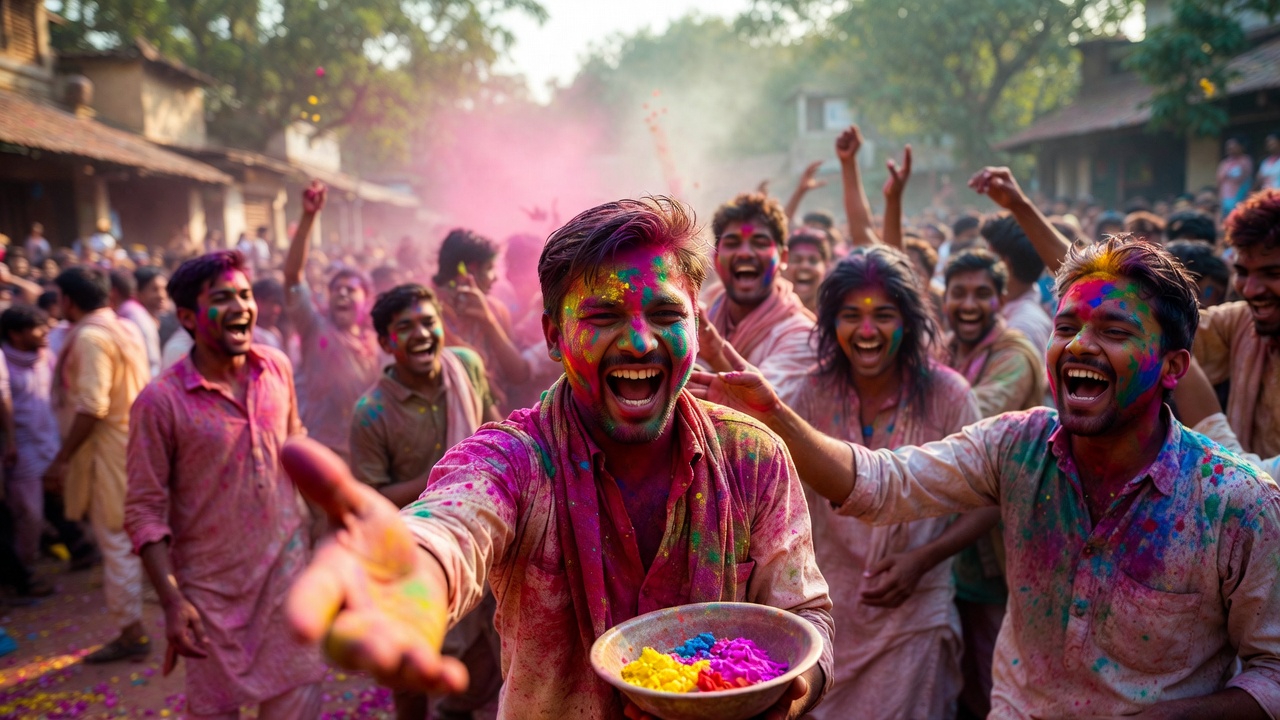
The air fills with laughter. Streets transform into living rainbows. Strangers become friends in seconds. This is Holi, India’s most vibrant celebration that has captured hearts across the globe.
Holi 2026 is just around the corner! This year, the Festival of Colors falls on March 3-4, 2026, with Holika Dahan on Tuesday evening and Rangwali Holi celebrations on Wednesday.
Every year, millions of people drench themselves in colored powders. They dance to rhythmic drums. They share sweets with neighbors and embrace loved ones. But Holi is far more than a colorful spectacle. It carries centuries of mythology, profound spiritual meaning, and agricultural traditions that continue to shape communities today.
Whether you are planning your first Holi experience or want to understand this ancient festival more deeply, this guide covers everything you need to know. From sacred legends to practical safety tips, from the best celebration spots to traditional recipes, we explore every aspect of this magnificent festival.
What Is Holi and Why Is It Called the Festival of Colors?
Holi is a Hindu spring festival celebrated primarily in India and Nepal. It marks the arrival of spring, the triumph of good over evil, and the eternal love between Radha and Krishna. People know it by several names: the Festival of Colors, the Festival of Love, and the Festival of Spring.
The celebration spans two days. The first evening features Holika Dahan, a sacred bonfire ceremony. The second day explodes with color as participants throw gulal (colored powder) and spray colored water at each other.
The name “Holi” derives from “Holika,” a demoness from Hindu mythology. Her story forms the foundation of this festival’s spiritual significance. The colored powders represent joy, love, and the vibrant hues of spring flowers blooming across the land.
Holi breaks down social barriers like no other celebration. During this festival, distinctions of caste, class, gender, and age dissolve. Everyone becomes equal under the rainbow of colors. A wealthy businessman gets splashed by a street vendor’s child. A grandmother chases her grandchildren with pink powder. This leveling of social hierarchies makes Holi uniquely democratic among world festivals.
When Is Holi Celebrated? Understanding the Hindu Lunar Calendar Date
Holi falls on the full moon day (Purnima) in the Hindu month of Phalguna. This typically occurs in late February or March according to the Gregorian calendar.
Holi Dates for Upcoming Years
| Year | Holika Dahan | Main Holi (Rangwali Holi) |
|---|---|---|
| 2026 | March 3 (Tuesday) | March 4 (Wednesday) |
| 2027 | March 22 (Monday) | March 23 (Tuesday) |
| 2028 | March 10 (Friday) | March 11 (Saturday) |
| 2029 | February 28 (Wednesday) | March 1 (Thursday) |
The exact timing varies because it follows the lunar calendar. The festival’s date shifts each year based on moon phases. The full moon of Phalguna signals that winter is ending. Spring is arriving. New life is emerging.
In 2026, Holika Dahan will be observed on March 3, with bonfires lit during the auspicious muhurat (timing) between approximately 6:22 PM and 8:50 PM. The main celebration, Rangwali Holi or Dhulandi, takes place on March 4.
Some regions celebrate for multiple days. In Mathura and Vrindavan, festivities span sixteen days. The Braj region’s celebrations begin a week before the main Holi date. This extended celebration draws millions of domestic and international visitors annually.
The Mythology Behind Holi: Ancient Stories That Shaped a Festival
The Legend of Prahlad and Holika: Triumph of Good Over Evil
The most famous story connected to Holi comes from the Bhagavata Purana. It tells of Hiranyakashipu, a demon king who gained extraordinary powers through severe penance.
Hiranyakashipu had received a boon that made him nearly invincible. He could not be killed by man or beast. He could not die during day or night. Neither indoors nor outdoors could harm him. No weapon could destroy him. This power corrupted him. He demanded that everyone worship him as a god.
But his own son, Prahlad, refused. Prahlad remained devoted to Lord Vishnu despite his father’s threats. Hiranyakashipu tried many times to kill his son. Each attempt failed because of Prahlad’s unwavering faith.
Finally, Hiranyakashipu turned to his sister, Holika. She possessed a magical cloak that protected her from fire. The plan was simple but cruel. Holika would sit with Prahlad in a raging bonfire. The cloak would protect her while the flames consumed the boy.
But divine intervention changed everything. As the fire roared, the cloak flew from Holika and wrapped around Prahlad instead. The demoness burned to ashes. The faithful prince emerged unharmed.
Later, Lord Vishnu appeared as Narasimha, a half-man, half-lion avatar. He killed Hiranyakashipu at twilight (neither day nor night), on a doorstep (neither indoors nor outdoors), placing him on his lap (neither on earth nor in the sky), using his claws (not a weapon).
The bonfire of Holika Dahan commemorates this victory. People light pyres to symbolize the burning away of evil. They cast negative energies into the flames. They welcome righteousness and renewal.
The Divine Love of Krishna and Radha: Origin of Playing With Colors
Another beloved story explains why people throw colors during Holi.
Young Krishna had dark blue skin. A demoness named Putana had tried to poison him as an infant. The poison did not kill him but turned his complexion blue. As Krishna grew, he became self-conscious about his appearance.
One day, Krishna complained to his mother, Yashoda. He worried that fair-skinned Radha would not love him because of his dark color.
Yashoda gave playful advice. She suggested that Krishna apply color to Radha’s face. If both their faces were covered in bright colors, their skin tones would not matter anymore.
Krishna followed this suggestion. He smeared Radha’s face with colored powder. Radha fell in love with him completely. Their playful coloring of each other became the foundation for Holi’s color traditions.
This story explains why Holi is called the Festival of Love. It celebrates not just romantic love but also divine love, familial love, and the love between friends. The colors represent equality. When everyone is covered in the same bright hues, all differences disappear.
The regions of Mathura, Vrindavan, and Barsana celebrate Holi with special intensity. These towns in Uttar Pradesh are associated with Krishna and Radha’s childhood. Local traditions here date back centuries.
How Is Holi Celebrated? Traditional Rituals and Modern Customs
Holika Dahan: The Sacred Bonfire Ceremony Before Holi
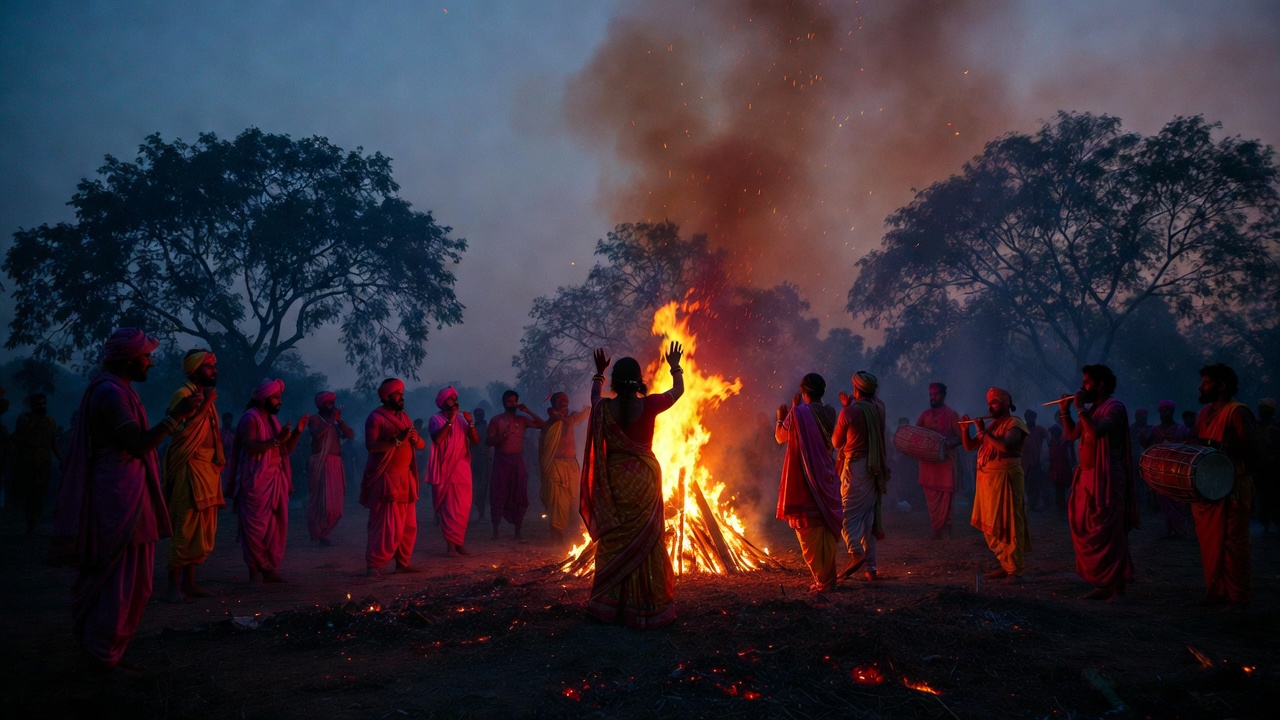
Holi celebrations begin with Holika Dahan on the evening before the main festival. This ceremony involves building and lighting a large bonfire.
Communities gather combustible materials for weeks beforehand. They collect wood, dried leaves, twigs, and hay. In some areas, an effigy of Holika sits atop the pyre.
The bonfire must be lit after sunset during a specific muhurat. Priests perform rituals to invoke blessings. Families circle the fire, offering prayers. Many throw coconuts, grains, or sweets into the flames.
This ritual represents:
- Burning away evil and negative energies
- Welcoming new beginnings and fresh starts
- Honoring the victory of Prahlad over Holika
- Preparing the spirit for the joyful celebration ahead
People sing traditional songs around the bonfire. They share stories with children about Prahlad’s faith. The community atmosphere strengthens social bonds before the colorful chaos of the next day.
Rangwali Holi: Playing With Colors and Water
The main celebration, called Rangwali Holi or Dhulandi, begins the morning after Holika Dahan. This is when the famous color play erupts.
People arm themselves with gulal (dry colored powder) and abir (colored powder mixed with water). They carry pichkaris (water guns) filled with colored water. Some fill balloons with colored liquid.
The rules are simple: everyone is fair game. Children splash adults. Strangers color friends. Old rivalries dissolve in clouds of pink and purple powder.
Common Holi activities include:
- Smearing faces with powder by hand
- Throwing handfuls of colored powder at groups
- Spraying colored water from pichkaris
- Dropping water balloons from rooftops
- Dancing to dhol (drum) beats in the streets
- Singing traditional Holi songs
The color play typically continues until early afternoon. Then people wash off, change into clean clothes, and visit friends and family. Evening gatherings feature more singing, dancing, and feasting.
Traditional Holi Foods and Drinks You Must Try
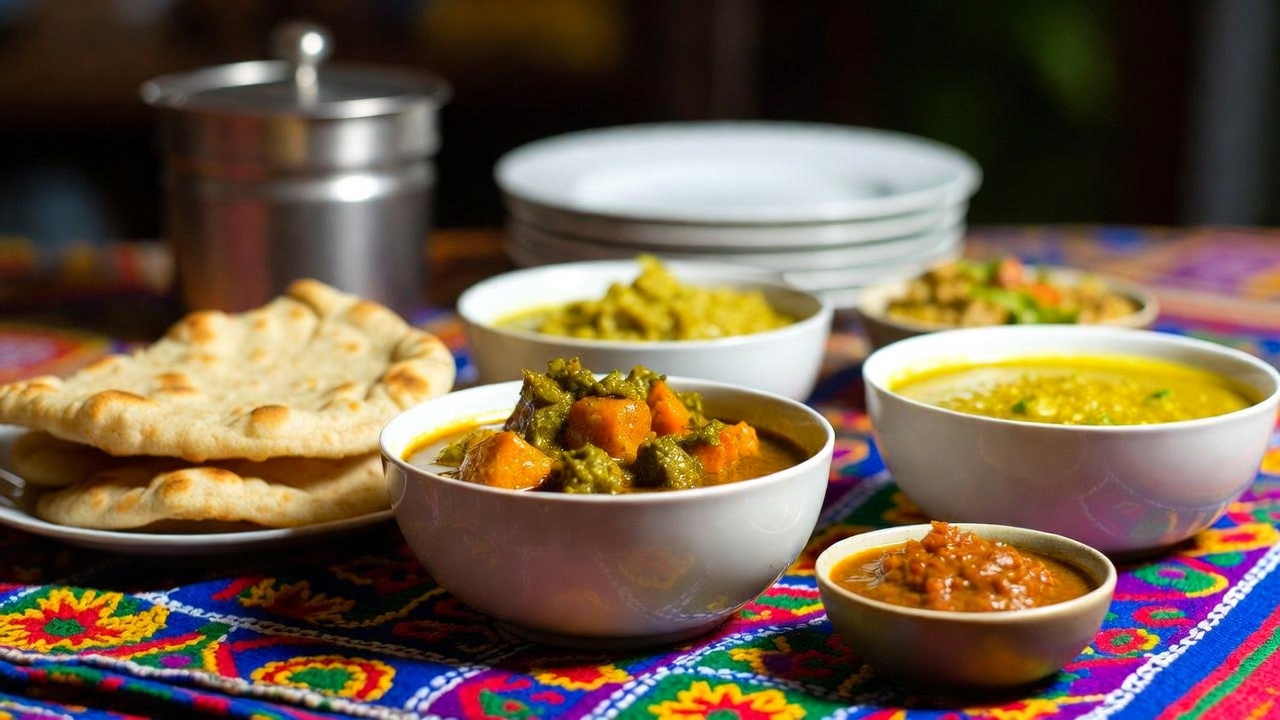
No Indian festival is complete without special foods. Holi has its own beloved culinary traditions.
Sweet Dishes:
| Dish | Description | Region |
|---|---|---|
| Gujiya | Sweet dumplings filled with khoya, dried fruits, and nuts | North India |
| Malpua | Crispy pancakes soaked in sugar syrup | Bihar, Bengal |
| Puran Poli | Sweet flatbread stuffed with jaggery and lentils | Maharashtra |
| Gulab Jamun | Deep-fried milk balls in rose-flavored syrup | All India |
Savory Snacks:
| Dish | Description | Region |
|---|---|---|
| Mathri | Crispy, flaky crackers | North India |
| Kachori | Fried pastries with spiced lentil filling | Rajasthan |
| Dahi Bhalla | Lentil dumplings in yogurt with chutneys | North India |
| Papri Chaat | Crispy wafers with yogurt and spices | All India |
Traditional Drinks:
Thandai holds a special place during Holi. This cooling milk drink contains almonds, saffron, cardamom, rose petals, and poppy seeds. It provides relief from the rising spring temperatures.
Bhang deserves special mention. This traditional beverage contains cannabis paste mixed into milk or thandai. It has been part of Hindu ceremonies for centuries, particularly associated with Lord Shiva worship. Many consume bhang during Holi to enhance the festive mood.
Kanji is a fermented drink made from black carrots and mustard seeds. This probiotic beverage aids digestion and provides natural cooling.
What Do the Different Holi Colors Mean? Symbolism and Significance
Each color used during Holi carries deep symbolic meaning. The vibrant hues represent various emotions, deities, and aspects of nature.
Meaning of Each Holi Color
| Color | Symbolism |
|---|---|
| Red | Love, fertility, and marriage |
| Yellow | Knowledge, learning, and prosperity (associated with turmeric) |
| Blue | Lord Krishna, divinity, and the infinite sky |
| Green | Spring, new beginnings, and nature’s renewal |
| Pink | Caring, compassion, and harmony |
| Orange | Optimism, energy, and courage |
| Purple | Magic, mystery, and spiritual awareness |
Traditionally, colors came from natural sources:
- Yellow from turmeric (haldi)
- Red from kumkum and pomegranate
- Green from neem and mehendi (henna)
- Blue from indigo and jacaranda flowers
- Orange from palash (flame of the forest) flowers
These natural colors were gentle on skin and environmentally friendly. They even offered health benefits. Neem has antibacterial properties. Turmeric is anti-inflammatory.
Today, many commercial colors contain synthetic dyes. Some include harmful chemicals like lead oxide, mercury sulfide, and copper sulfate. These can cause skin irritation, allergic reactions, and eye problems.
The eco-friendly Holi movement encourages returning to natural colors. Many vendors now sell organic gulal made from flower extracts, vegetable dyes, and food-grade materials. This trend combines celebration with environmental consciousness.
Best Places to Celebrate Holi in India for an Authentic Experience
Mathura and Vrindavan: The Birthplace of Holi Traditions
No place on Earth celebrates Holi like the Braj region of Uttar Pradesh. This area includes Mathura (Krishna’s birthplace), Vrindavan (where he grew up), Barsana (Radha’s village), and Nandgaon (Krishna’s village).
Celebrations here span sixteen days in most areas, though the broader Braj Rangotsav extends for 40 days beginning from Basant Panchami. Each town hosts unique events. Millions of pilgrims and tourists visit annually.
Braj Holi 2026 returns as India’s longest Holi celebration, spreading across Vrindavan, Barsana, Mathura, Nandgaon, and Gokul. Instead of ending in days, this festival stretches through ritual-filled weeks rooted in Krishna lore. Temple courtyards, narrow lanes, and sacred ghats transform into spaces of color, music, and devotion.
Key Events in the Braj Region:
| Date (2026) | Event | Location |
|---|---|---|
| February 25 | Lathmar Holi | Barsana |
| February 26 | Lathmar Holi | Nandgaon |
| February 27 | Phoolon ki Holi (Flower Holi) | Banke Bihari Temple, Vrindavan |
| February 28 | Chhadi Mar Holi | Gokul |
| March 1 | Widow’s Holi | Gopinath Temple, Vrindavan |
| March 3 | Holika Dahan | Throughout the region |
| March 4 | Dhulandi (Rangwali Holi) | Throughout the region |
| March 5 | Huranga Holi | Dauji Temple, Baldeo |
Lathmar Holi in Barsana deserves special attention. Women from Barsana playfully beat men from Nandgaon with sticks (lathis). The men protect themselves with shields. This tradition recreates Krishna’s playful visits to Radha’s village. The colorful “battle” draws photographers and tourists from around the world.
Phoolon ki Holi at Banke Bihari Temple uses flower petals instead of colored powder. Priests shower devotees with fragrant marigold and rose petals. This sustainable alternative creates beautiful, aromatic celebrations. In 2026, this event takes place on February 27.
Widow’s Holi at Gopinath Temple breaks centuries-old taboos. Traditionally, Hindu widows wore only white and abstained from celebrations. Recent years have seen widows in Vrindavan joining Holi festivities. Their participation represents powerful social progress. This event occurs on March 1, 2026.
Barsana Lathmar Holi: Where Women Chase Men With Sticks
Barsana hosts India’s most unique Holi celebration. The small village, about 50 kilometers from Mathura, was Radha’s childhood home.
According to legend, Krishna and his friends from Nandgaon would visit Barsana to tease Radha and her friends. The women would chase them away with sticks. This playful conflict became a cherished tradition.
Today, thousands gather to witness and participate. Men from Nandgaon arrive in Barsana. Women arm themselves with long bamboo sticks. The men wear padded clothing and carry shields. Then the good-natured “battle” begins.
Women chase men through narrow lanes. They swing sticks while men duck and dodge. Everyone is drenched in colors. Music plays constantly. The atmosphere combines devotion with carnival energy.
The celebration continues the next day in reverse. Barsana’s women travel to Nandgaon. They get their “revenge” by coloring the men there.
Pushkar and Jaipur: Celebrating Holi in Rajasthan
Rajasthan offers a different Holi flavor. The desert state combines royal heritage with vibrant celebration.
Pushkar attracts international travelers seeking authentic experiences. The sacred lake town hosts colorful gatherings at ghats (riverfront steps) and temples. International backpackers mix with Indian families. Music echoes across the water.
Jaipur’s Royal Holi offers grandeur. The city’s royal family hosts celebrations featuring:
- Elephant processions decorated in bright colors
- Traditional folk music and dance performances
- Cultural programs showcasing Rajasthani heritage
- Grand bonfire ceremonies at historic locations
The Pink City takes on additional colors during Holi. Streets transform into rivers of pink, yellow, and orange.
Shantiniketan Basant Utsav: A Cultural Holi Celebration in West Bengal
Shantiniketan in West Bengal celebrates Holi as Basant Utsav (Spring Festival). This tradition began with Nobel laureate Rabindranath Tagore at his university, Visva-Bharati.
The celebration emphasizes arts and culture over mere color throwing. Students dress in saffron and white. They perform Tagore’s songs and dances. Processions wind through campus grounds.
The cultural programs include:
- Classical and folk dance performances
- Recitations of Tagore’s poetry
- Traditional Baul music concerts
- Gentle color play with flower petals
This intellectual approach to Holi attracts those seeking meaningful celebration over raucous partying. The atmosphere remains festive but refined.
Holi Safety Tips: How to Protect Your Skin, Hair, and Eyes
While Holi brings joy, synthetic colors can cause health problems. Proper preparation prevents skin damage, eye irritation, and hair problems.
Pre-Holi Preparation for Skin Protection
The day before Holi:
- Apply oil generously to all exposed skin. Coconut oil, mustard oil, or almond oil creates a protective barrier. Colors cannot penetrate oiled skin easily.
- Moisturize thoroughly. Hydrated skin resists color absorption better than dry skin.
- Apply sunscreen if celebrating outdoors. SPF 30 or higher protects against UV rays during extended outdoor play.
- Keep nails trimmed and apply nail polish. Colors stick stubbornly under long nails. Clear or light-colored polish prevents staining.
- Apply petroleum jelly to ears, lips, and eyebrows. These delicate areas need extra protection.
On Holi morning:
- Apply another layer of oil or moisturizer
- Wear sunglasses to protect eyes from color
- Consider wearing a hat or bandana
- Apply lip balm to protect lips
Protecting Your Hair During Holi Celebrations
Colors damage hair significantly. Chemical dyes strip natural oils. They cause dryness, brittleness, and color that takes weeks to fade.
Hair protection strategies:
- Oil your hair and scalp thoroughly the night before. Coconut oil or olive oil works best.
- Tie hair in braids or buns to reduce exposed surface area.
- Wear a scarf, bandana, or cap to create a physical barrier.
- Avoid leave-in conditioners that might react with synthetic colors.
- Consider a temporary hair covering if you have recently colored or treated hair.
Post-Holi Care: Removing Colors Safely
For skin:
- Do not scrub aggressively. Harsh rubbing damages skin and pushes colors deeper.
- Apply coconut oil or baby oil and massage gently. This breaks down color pigments.
- Wait 10-15 minutes, then wipe with soft cotton.
- Use mild, sulfate-free cleanser and lukewarm water.
- Avoid hot water, which opens pores and sets stains.
- Apply aloe vera gel or soothing moisturizer afterward.
- Repeat oil application if colors persist.
For hair:
- Rinse with cold water first to remove loose color.
- Do not shampoo immediately. Let the hair rest.
- Apply a mixture of lemon juice and honey to stubborn stains.
- Use sulfate-free, hydrating shampoo gently.
- Follow with deep conditioning treatment.
- Let hair air dry. Avoid heat styling for several days.
For persistent stains:
- Curd (yogurt) masks remove color while nourishing skin
- Gram flour (besan) paste with milk acts as gentle exfoliant
- Olive oil soaked overnight helps stubborn hair stains
Choosing Safe, Organic Holi Colors
The best protection is using safe colors in the first place. Look for:
- Organic certification or clear “natural ingredients” labeling
- Plant-based ingredients like turmeric, beetroot, marigold, and indigo
- Absence of heavy metals and synthetic dyes
- FDA or similar safety certifications
You can make natural colors at home:
| Color | Natural Source | Method |
|---|---|---|
| Yellow | Turmeric powder | Use directly or mix with gram flour |
| Red/Pink | Beetroot | Boil, strain, and dry the liquid |
| Orange | Marigold flowers | Dry petals and grind to powder |
| Green | Henna leaves | Dry and grind to powder |
| Blue | Indigo leaves | Process traditionally for dye |
How Is Holi Celebrated Around the World by Indian Diaspora?
Holi Celebrations in Nepal: Phagu Purnima Traditions
Nepal celebrates Holi as a national holiday called Phagu Purnima. The festival is one of the country’s most anticipated annual events.
Celebrations begin a week early with the installation of a chir (ceremonial bamboo pole) in Kathmandu’s Basantapur Durbar Square. This pole symbolizes the tree where Krishna hung the milkmaids’ clothes while they bathed.
Key features of Nepali Holi:
- Week-long celebrations across the country
- Traditional concerts in major cities broadcast on television
- Chir burning at the festival’s conclusion
- Water balloon throwing called “lola” is especially popular
- Bhang consumption as in India
The Terai plains host elaborate processions. The hilly regions feature intimate family gatherings. Tourists flock to Kathmandu, Pokhara, and Chitwan for authentic experiences.
Caribbean Phagwah: Holi in Trinidad, Tobago, and Guyana
The Indian diaspora brought Holi to the Caribbean during the colonial era. Workers from Uttar Pradesh and Bihar arrived as indentured laborers. They maintained their festivals, adapting them to new environments.
In Trinidad and Tobago, Holi is called Phagwah. Celebrations feature:
- Chowtal singing: Traditional folk songs specific to the season
- Dholak drums and majeera cymbals accompaniment
- Color play combined with Caribbean carnival energy
- Community gatherings at temples and cultural centers
Guyana begins Holi preparations a month early. Families plant castor oil bushes that are burned during Holika Dahan. The singing of Chowtaals fills the air. Colored powders called abrack and colored water called abeer create the familiar rainbow scenes.
Suriname observes Holi as a national holiday. The significant Indian-origin population maintains traditions while adding local flavors. White clothing is customary. Everyone expects to end the day completely colorful.
Holi Events in the United States, United Kingdom, and Beyond
The Indian diaspora has spread Holi worldwide. Major cities host large-scale celebrations that welcome participants of all backgrounds. In 2026, these global events continue to grow in popularity.
United States:
- Festival of Colors in Spanish Fork, Utah, draws over 50,000 participants. Organized by ISKCON (International Society for Krishna Consciousness), it is one of North America’s largest Holi events.
- New York City hosts celebrations in Queens, home to large Indo-Caribbean communities.
- Houston, San Francisco, and Chicago feature major community events.
United Kingdom:
- London sees large gatherings in areas with significant Indian populations.
- Leicester, with Britain’s largest Diwali celebrations, also hosts vibrant Holi events.
Australia:
- Melbourne and Sydney feature multicultural Holi festivals combining Indian traditions with local celebrations.
UAE and Middle East:
- Large expatriate populations organize concerts, parties, and cultural programs.
- Events sometimes adjust timing due to other religious observances like Ramadan.
Modern global Holi events often include:
- Live Bollywood music and dance performances
- DJ sets and electronic music stages
- Food festivals featuring Indian cuisine
- Yoga and wellness activities
- Charity fundraising components
Some critics argue that these adaptations remove religious significance. Others see them as beautiful cultural sharing. Regardless of format, the core message of joy, unity, and renewal travels across borders.
Regional Variations: How Different Indian States Celebrate Holi
Lathmar Holi in Uttar Pradesh: The Stick-Fighting Tradition
As discussed earlier, the Braj region’s Lathmar Holi stands unique. But Uttar Pradesh offers other distinctive celebrations too.
Varanasi celebrates along the sacred Ganges River. Colors mix with ancient spirituality. Pilgrims participate between temple visits. The ghats transform into colorful gathering places.
Lucknow adds Awadhi elegance to Holi. The former royal capital features refined celebrations. Traditional Chowtal singing competitions attract serious musicians. Food plays an enormous role, with Lucknowi kebabs and biryanis complementing sweets.
Dol Jatra and Basant Utsav in West Bengal and Odisha
Eastern India calls Holi by different names. Dol Jatra (Swing Festival) and Basant Utsav (Spring Festival) emphasize different aspects.
In West Bengal:
Women dress in yellow saris, symbolizing prosperity and spring. Idols of Radha and Krishna are placed on decorated swings (dol). Devotees swing the idols gently while singing devotional songs. Then colors are applied to the images and to each other.
In Odisha:
Dol Jatra lasts multiple days. The celebration centers on temple rituals. Processions carry deity images through streets. The atmosphere balances devotion with festivity.
Shantiniketan’s Basant Utsav has already been described. Its cultural emphasis distinguishes it from color-centric celebrations elsewhere.
Yaosang Festival in Manipur: A Six-Day Holi Celebration
Manipur in northeastern India celebrates Holi as Yaosang Festival. This unique tradition spans six days.
Key features include:
- Thabal Chongba: A traditional Manipuri folk dance performed during Holi nights. Participants hold hands and move in circles under moonlight.
- Bonfire rituals on the first day
- Color play similar to mainland India
- Traditional sports and competitions
- Community feasting and social gathering
The extended celebration reflects Manipur’s distinct cultural identity. The festival blends Hindu traditions with indigenous practices.
Holi in Punjab and Hola Mohalla for Sikhs
Punjab celebrates Holi with characteristic energy. Folk dances like bhangra and gidda accompany color play. Traditional foods include makki di roti and sarson da saag alongside sweets.
Sikhs observe Hola Mohalla the day after Holi. This tradition began with Guru Gobind Singh Ji in 1701. He organized martial arts displays and mock battles to train Sikh warriors.
Today, Hola Mohalla at Anandpur Sahib features:
- Martial arts demonstrations (gatka)
- Horse riding displays
- Poetry competitions
- Music and kirtan (devotional singing)
- Community meals (langar)
The event attracts hundreds of thousands. It demonstrates Sikh martial traditions while celebrating spring.
Planning Your Holi Trip: Practical Travel Tips for Visitors
Best Time to Visit India for Holi Festivals
For Holi 2026, plan to arrive by February 24-25 to experience the full Braj region celebrations. The festivities begin with Lathmar Holi in Barsana on February 25 and continue through Huranga Holi on March 5.
Arrive early. If attending celebrations in Mathura or Vrindavan, come at least 5-6 days before main Holi (March 4). This allows you to experience multiple events across the Braj region, including:
- February 25: Lathmar Holi at Barsana
- February 26: Lathmar Holi at Nandgaon
- February 27: Phoolon ki Holi at Banke Bihari Temple
- March 3: Holika Dahan bonfires
- March 4: Main Dhulandi celebration
Book accommodations well in advance. Hotels fill quickly during Holi season. Prices increase significantly. Properties near major celebration sites may fully book months ahead.
Consider guided tours. First-time visitors benefit from local guides who know:
- Exact event locations and timings
- Safe areas for international tourists
- Best vantage points for photography
- Local customs and etiquette
What to Wear During Holi: Clothing Tips and Recommendations
Choose wisely because your clothes will not survive intact.
Recommended:
- Old white clothes: Traditional choice that shows colors beautifully. Don’t wear anything you want to keep.
- Full-sleeved shirts and long pants: Protect skin from colors and sun.
- Cotton fabric: Breathable and easier to wash than synthetics.
- Comfortable, closed shoes: Streets get wet and slippery. Avoid sandals.
- Waterproof phone case: Essential for protecting electronics.
- Sunglasses: Protect eyes and add style.
- Bandana or scarf: Protect hair and can cover face if needed.
Avoid:
- Expensive or new clothing
- Silk or delicate fabrics
- Tight clothes that restrict movement
- White clothes made of synthetic materials (stain permanently)
- Jewelry that could get damaged or lost
Photography Tips for Capturing Holi Festival Moments
Holi offers extraordinary photographic opportunities. But challenges abound.
Protecting your camera:
- Use a waterproof camera or underwater housing if possible.
- Wrap camera in clear plastic bags with holes for lens and viewfinder.
- Consider using older equipment rather than expensive gear.
- Carry lens cleaning supplies constantly.
- Keep silica gel packets in camera bag to absorb moisture.
Capturing the best shots:
- Arrive early for soft morning light.
- Shoot during color throws for dramatic action shots.
- Focus on faces and expressions rather than just color clouds.
- Get permissions before photographing people closely.
- Shoot from elevated positions to capture crowd scenes.
- Use fast shutter speeds (1/500 or higher) to freeze motion.
- Embrace being colorful yourself: Some best shots come when you participate.
Eco-Friendly Holi: How to Celebrate Sustainably and Responsibly
Environmental Impact of Synthetic Holi Colors
Commercial Holi colors often contain:
- Heavy metals: Lead, mercury, chromium, and cadmium
- Industrial dyes: Not designed for human contact
- Glass powder: Sometimes added for sparkle
- Oxidized metals: For bright colors
These substances harm:
- Human health: Skin irritation, respiratory problems, eye damage
- Water systems: Colors wash into drains, rivers, and groundwater
- Soil: Toxins persist long after celebrations end
- Wildlife: Animals drinking contaminated water face poisoning
Making Natural Colors at Home: DIY Holi Color Recipes
Creating organic colors connects modern celebrations to ancient traditions. Here are simple recipes:
Yellow/Orange (Turmeric-based):
- Mix 1 part turmeric powder with 2 parts gram flour (besan)
- Add dried marigold petals for deeper orange
Red/Pink (Beetroot-based):
- Boil beetroot until water turns deep red
- Dry the colored water in sun
- Collect powder residue
Green (Henna-based):
- Dry and grind henna leaves
- Mix with green leafy vegetable powder (spinach, mint)
Blue (Indigo-based):
- Traditional indigo processing is complex
- Alternatively, dry jacaranda flowers and grind to powder
Water Conservation During Holi Celebrations
Traditional Holi uses enormous water quantities. In water-scarce regions, this creates real problems.
Conservation strategies:
- Use dry colors only: Gulal play creates beautiful celebrations without water waste.
- If using water, minimize quantity: One bucket per person rather than unlimited supplies.
- Collect rainwater beforehand specifically for Holi use.
- Avoid tap water waste by not using running hoses.
- Celebrate in groups: Shared water supplies reduce overall consumption.
The Spiritual Significance of Holi: Beyond Colors and Celebrations
Holi as a Time for Forgiveness and Renewal of Relationships
Holi carries deep spiritual meaning beyond its surface festivities.
Forgiveness: The festival provides opportunity to mend broken relationships. People visit those they have wronged. They ask forgiveness and offer it freely. Old grudges dissolve in shared celebration.
Renewal: Like the spring season it welcomes, Holi represents new beginnings. People clean their homes. They discard old possessions. They prepare for fresh starts.
Equality: When everyone is covered in the same colors, social distinctions become meaningless. The wealthy and poor look identical. Age differences disappear. This temporary leveling reminds participants of essential human equality.
The Agricultural Significance of Holi and Spring Harvest
Before religious meanings attached to Holi, it was an agricultural celebration. Spring harvest time demanded acknowledgment.
Holi marks:
- End of winter crop season: Farmers celebrate successful wheat and other winter crops.
- Beginning of spring planting: New agricultural cycles start.
- Abundance prayers: Communities ask for good harvests ahead.
- Fertility celebration: Spring represents nature’s reproductive power.
The bonfire of Holika Dahan connects to harvest traditions. People offer grain into flames as thanksgiving. They seek blessings for future abundance.
Holi Music and Dance: Traditional Songs and Modern Celebrations
Traditional Holi Songs: Phag, Jogira, and Chowtal
Music is inseparable from Holi celebrations. Specific song forms developed for this festival.
Phag: Folk songs sung during Phalguna month. Lyrics describe spring beauty, Krishna-Radha love stories, and festive joy. Melodies range from contemplative to energetic.
Jogira: Playful, sometimes humorous songs. Sung with call-and-response patterns. Often include teasing lyrics between groups.
Chowtal: Traditional folk songs performed with dholak drums and harmonium. Popular in Uttar Pradesh and Bihar. Competition-style performances judge groups on skill.
Rasiya: Songs from the Braj region describing Radha-Krishna’s divine love. Emotional and devotional in nature.
Modern Holi Music: Bollywood Holi Songs and DJ Culture
Contemporary Holi celebrations blend traditional and modern music.
Iconic Bollywood Holi songs include:
- “Rang Barse” from Silsila (1981)
- “Holi Ke Din” from Sholay (1975)
- “Balam Pichkari” from Yeh Jawaani Hai Deewani (2013)
- “Badri Ki Dulhania” from Badrinath Ki Dulhania (2017)
These songs play constantly during celebrations. Their familiar lyrics unite generations.
DJ culture has transformed urban Holi parties. Electronic remixes of traditional songs blend with international dance music. Large-scale events feature professional sound systems and lighting.
Some purists regret these changes. Others welcome music’s evolution. Either way, rhythm and melody remain central to Holi joy.
Frequently Asked Questions About Holi Festival Celebrations
Q: Is Holi only for Hindus? Can non-Hindus participate?
A: Holi welcomes everyone regardless of religion. Throughout history, Mughal emperors participated in Holi celebrations. Today, people of all faiths join the festivities worldwide. The festival’s message of unity transcends religious boundaries.
Q: How long does Holi last?
A: The main celebration spans two days: Holika Dahan evening and Rangwali Holi the next day. However, some regions celebrate for much longer. Mathura and Vrindavan observe sixteen days of festivities. Manipur’s Yaosang lasts six days.
Q: What should I do if colors get in my eyes?
A: Rinse immediately with clean, cold water. Do not rub, which can cause abrasion. If irritation persists, seek medical attention. Wearing sunglasses during play prevents most eye issues.
Q: Is bhang legal and safe to consume?
A: Bhang (cannabis-infused drinks) is legal in India during Holi and other religious occasions. However, consumption can cause disorientation, anxiety, and other effects. First-time users should consume very small amounts. Avoid driving or operating machinery afterward.
Q: How do I remove stubborn Holi color stains?
A: Apply coconut oil or baby oil to stained areas. Let it sit for 15-20 minutes. Gently massage and wipe away. Repeat as needed. Avoid harsh scrubbing. For hair, use clarifying shampoo followed by deep conditioning.
Q: What should I do with my valuables during Holi?
A: Leave jewelry, expensive watches, and unnecessary valuables at home. Carry only essential items in waterproof bags. Keep phones in waterproof cases. Consider leaving wallets at accommodations and carrying only minimal cash.
Conclusion: Embracing the Spirit of Holi Festival Celebrations
Holi represents humanity’s deepest longings. We crave connection. We need joy. We yearn for renewal. This ancient festival delivers all three wrapped in brilliant colors.
The stories of Prahlad remind us that faith conquers evil. The love of Radha and Krishna shows that differences dissolve in genuine affection. The spring timing connects us to nature’s eternal cycles of death and rebirth.
Whether you celebrate in Vrindavan’s sacred temples or at a color run in Sydney, the essence remains the same. For a few precious hours, we become children again. We play without inhibition. We embrace strangers. We forgive old wrongs.
As you prepare for Holi 2026 on March 3-4, remember these core principles:
- Choose safe, organic colors that protect health and environment
- Prepare skin and hair for color protection
- Respect others’ boundaries and consent during play
- Share food and joy with family, friends, and strangers
- Embrace the deeper meaning beyond surface fun
For those traveling to India this year, the Braj region celebrations begin February 25 with Lathmar Holi in Barsana. Book accommodations early, as hotels fill up weeks in advance.
Holi teaches that life’s struggles end. Good triumphs. Spring always follows winter. May your celebration be filled with color, love, and the timeless wisdom this beautiful festival carries.
Happy Holi 2026!
Holi hai!