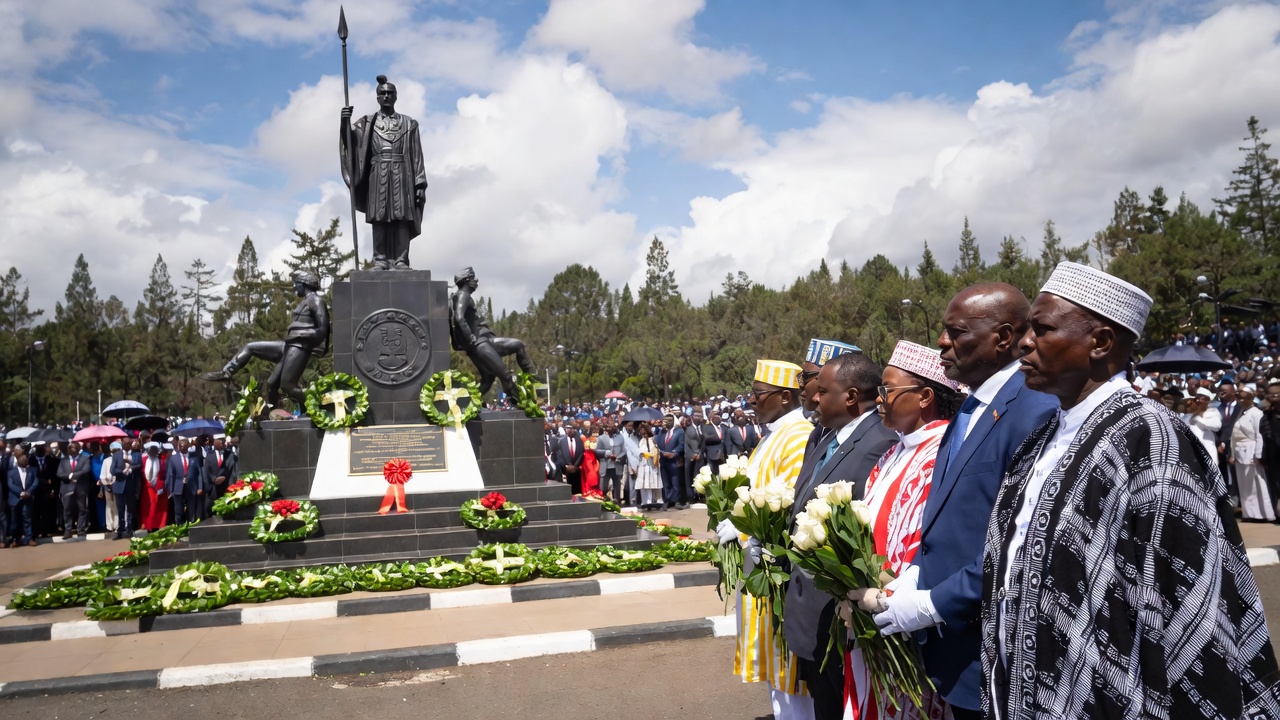
Every year on February 3, the streets of Maputo fall quiet. Schools close. Government offices shut their doors. Families gather around tables laid with xima and piri-piri chicken. In the capital’s Praça dos Heróis Moçambicanos—the Square of Mozambican Heroes—wreaths are placed at the feet of stone monuments, and political leaders deliver speeches that echo with the names of the dead. This is Mozambican Heroes’ Day (Dia dos Heróis Moçambicanos), one of the most solemn and politically charged public holidays in southern Africa.
But Heroes’ Day is more than a date on the calendar. It is a living argument about who built Mozambique, who owns its story, and who decides which names deserve to be carved in national memory. At the center of that argument stands FRELIMO—the Frente de Libertação de Moçambique, or Mozambique Liberation Front—the political and military movement that led the country out of nearly five centuries of Portuguese colonial rule and has governed it, without interruption, since independence in 1975.
In 2026, the 57th anniversary of the assassination of FRELIMO’s founder, Eduardo Mondlane, arrives against a backdrop of extraordinary political tension. A disputed general election in October 2024, months of deadly street protests, and a bitter struggle over who qualifies as a national “hero” have turned Heroes’ Day into a flashpoint for Mozambique’s deepest divisions. For travelers, historians, and anyone interested in African liberation movements, understanding FRELIMO’s role in this holiday is essential to understanding Mozambique itself.
This guide covers the full story—from the colonial era to the present day.
What Is Mozambican Heroes’ Day and Why Is February 3 So Important?
Mozambican Heroes’ Day is a national public holiday observed on February 3 every year in the Republic of Mozambique. The date commemorates the assassination of Eduardo Mondlane, the founder and first president of FRELIMO, who was killed by a parcel bomb at FRELIMO headquarters in Dar es Salaam, Tanzania, on February 3, 1969.
The holiday honors not just Mondlane but all Mozambicans who sacrificed their lives during the war of independence against Portugal (1964–1974) and, more broadly, in the long struggle for freedom. It is a day of national mourning and national pride at the same time.
In 2026, Heroes’ Day falls on a Tuesday, giving many Mozambicans a midweek pause to reflect on the country’s turbulent history. The holiday is observed with:
- Official ceremonies at the Praça dos Heróis in Maputo, led by the sitting president
- Wreath-laying at monuments and memorials across the country
- Political speeches broadcast on national television and radio
- School programs teaching young Mozambicans about the independence struggle
- Family gatherings with traditional Mozambican food, including xima (a stiff maize porridge), grilled piri-piri prawns, and fresh pão (bread)
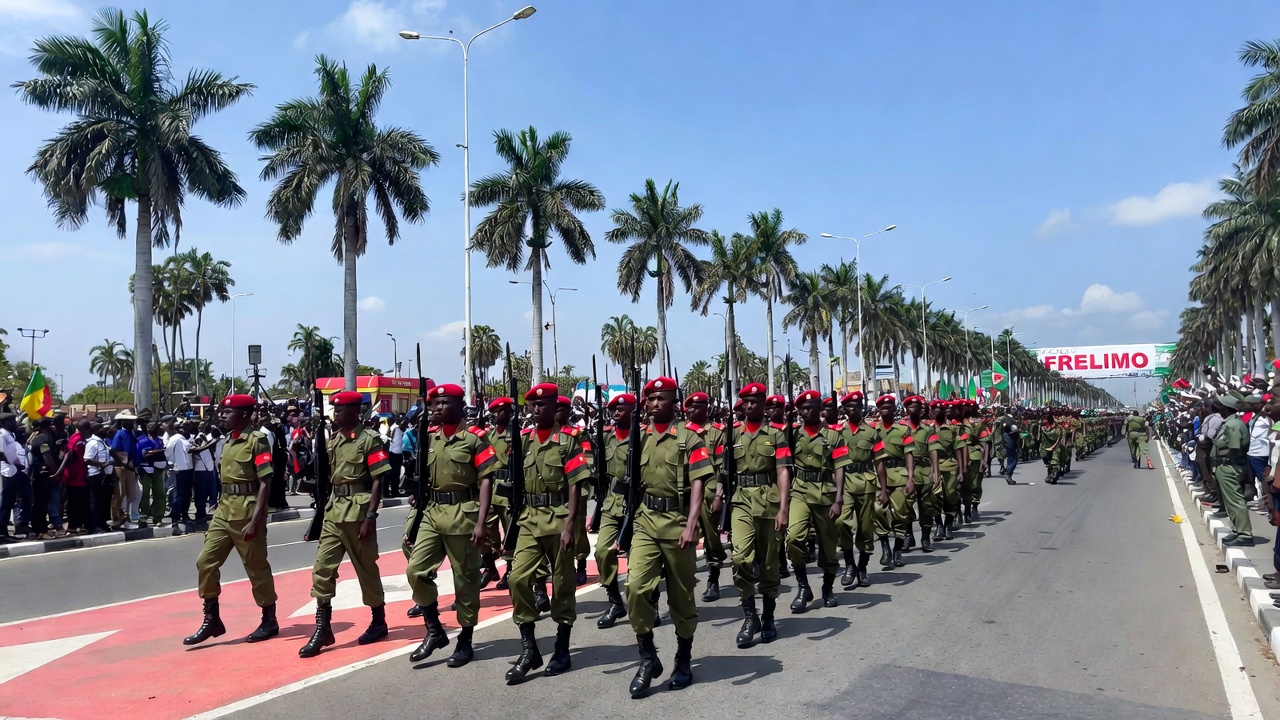
- Parades and cultural performances featuring traditional music and dance
All schools and most businesses remain closed for the day.
Key Facts About Mozambican Heroes’ Day
| Detail | Information |
|---|---|
| Official Name | Dia dos Heróis Moçambicanos |
| Date | February 3 (annually) |
| Type | National public holiday |
| 2026 Day | Tuesday |
| Origin | Assassination of Eduardo Mondlane (1969) |
| Established By | FRELIMO government after independence (1975) |
| Main Observance Location | Praça dos Heróis Moçambicanos, Maputo |
| Status | Day off for general population |
The History of Portuguese Colonial Rule in Mozambique Before FRELIMO
To understand why Heroes’ Day exists, you must first understand what Mozambicans were fighting against. The roots of Portuguese colonialism in Mozambique stretch back more than 500 years, to the era of maritime exploration.
How Portugal Established Control Over Mozambique
Portuguese explorer Vasco da Gama first reached the coast of present-day Mozambique in 1498, during his voyage to India. Portuguese traders and missionaries established coastal settlements over the following decades. By 1530, Portugal had a firm presence along the Mozambican coast and controlled the region’s lucrative maritime trade routes.
For centuries, Portugal treated Mozambique as a source of labor and raw materials. The colonial system was built on forced labor (chibalo), racial segregation, and the systematic exclusion of Black Mozambicans from education, healthcare, and political participation. Under the authoritarian Estado Novo regime of António de Oliveira Salazar, which ruled Portugal from 1933 to 1968, conditions grew even harsher. In 1951, Salazar formally reclassified Mozambique and other colonies as “overseas provinces” to resist international pressure for decolonization.
By the early 1960s, the vast majority of Mozambicans had no access to secondary education. Black nurses were paid less than their white counterparts. Farmers were forced to grow cotton for export rather than food for their families. The colonial administration employed roughly 60,000 Portuguese troops to maintain order in Mozambique alone.
This was the world that FRELIMO was born to fight.
Who Was Eduardo Mondlane, the Father of Mozambican Independence?
No figure looms larger in the story of Heroes’ Day than Eduardo Chivambo Mondlane (June 20, 1920 – February 3, 1969). He was an anthropologist, an educator, a diplomat, and the founder and first president of FRELIMO. His assassination is the reason February 3 became a national holiday.
From Shepherd Boy to University Professor
Mondlane was born in N’wajahani, in the district of Mandlakazi, Gaza Province, in what was then Portuguese East Africa. He was the fourth of 16 sons of a chief of the Bantu-speaking Tsonga people. He worked as a shepherd until the age of 12.
Despite the enormous barriers to education for Black Mozambicans, Mondlane attended several mission schools, eventually enrolling at a Swiss-Presbyterian school near Manjacaze. He completed his secondary education at Lemana College in the Transvaal (now Limpopo Province, South Africa).
Mondlane briefly attended the University of the Witwatersrand in Johannesburg but was forced to leave after just one year because his political views clashed with the apartheid government’s policies. He then studied at the University of Lisbon before transferring to Oberlin College in Ohio, where he earned a degree in sociology and anthropology. He later completed a PhD in sociology at Northwestern University in Illinois.
After his studies, Mondlane worked as a research officer for the United Nations Trusteeship Department. He also taught as an assistant professor of anthropology at Syracuse University, where he helped develop the East African Studies Program. It was a remarkable academic career for a man who had grown up herding cattle in rural Mozambique.
Why Mondlane Gave Up His Academic Career
During a visit to Mozambique in 1961, Mondlane was greeted by thousands of Mozambicans who saw in him the leadership qualities they needed. The experience changed his life. He resigned from Syracuse University in early 1963 and moved to Dar es Salaam, Tanzania, to dedicate himself full-time to the liberation struggle.
As he later wrote, he resolved to devote his life to “the liberation struggle of my people.”
How FRELIMO Was Founded and Changed the Course of African History
The Birth of the Mozambique Liberation Front in Tanzania
FRELIMO was founded on June 25, 1962, in Dar es Salaam, Tanzania. The date—which would later become Mozambique’s Independence Day—marked the merger of three existing nationalist groups:
- Mozambican African National Union (MANU)
- National African Union of Independent Mozambique (UNAMI)
- National Democratic Union of Mozambique (UDENAMO)
These groups had all been formed in exile because the Portuguese colonial regime was so repressive that organized resistance inside Mozambique was nearly impossible. Tanzania’s newly independent president, Julius Nyerere, permitted liberation movements to use Dar es Salaam as their base of operations.
Eduardo Mondlane was elected as FRELIMO’s first president. His exceptional diplomatic skills and international experience made him the natural choice to unite the various factions and present a coherent case for Mozambican independence to the world.
FRELIMO’s Armed Struggle Begins: September 25, 1964
After two years of organizing, training, and building international support, FRELIMO launched its armed guerrilla campaign against the Portuguese colonial government on September 25, 1964. This date is now commemorated in Mozambique as Armed Forces Day (Dia das Forças Armadas).
The initial attacks targeted Portuguese military positions in the northern province of Cabo Delgado. From there, the conflict spread south and west. By the mid-1960s, despite being vastly outnumbered—FRELIMO’s guerrilla force numbered roughly 7,000 against 60,000 to 70,000 Portuguese troops—the liberation movement had established what it called “liberated zones” in the northern and central provinces.
As Samora Machel, who would become FRELIMO’s second leader, later explained, the concept of “liberated zones” did not mean complete expulsion of the Portuguese. It meant that in those areas, the people followed FRELIMO, not the colonial government. Schools, health clinics, and local administrative structures were set up under FRELIMO’s authority.
International Support for FRELIMO
FRELIMO’s success depended heavily on international alliances. The movement received support from a wide range of countries and organizations, including:
| Supporter | Type of Support |
|---|---|
| Soviet Union | Military equipment, training, financial aid |
| China | Military training, weapons, advisors |
| Tanzania | Base of operations, political support |
| Algeria | Military training |
| Cuba | Military advisors |
| Sweden, Norway, Denmark, Netherlands | Humanitarian and financial aid |
| Egypt | Political support |
| Bulgaria, Czechoslovakia, Poland | Military and economic assistance |
| Organization of African Unity | Political recognition, coordination |
Mondlane’s diplomatic ability was key to maintaining these relationships. In the context of the Cold War, he managed to keep FRELIMO on good terms with both the Soviet Union and China—a difficult balancing act that few African liberation movements achieved. His position of non-alignment within the Cold War framework was, according to his son Eduardo Mondlane Jr., something that “probably cost him his life.”
The Assassination of Eduardo Mondlane: Origin of Heroes’ Day
What Happened on February 3, 1969?
On the morning of February 3, 1969, Eduardo Mondlane received a package at the FRELIMO headquarters on Nkrumah Street in central Dar es Salaam. The package appeared to contain a book. When Mondlane opened it at the home of an American friend, Betty King, it exploded. The bomb killed him instantly. He was 48 years old.
The assassination sent shockwaves through the liberation movement and across Africa. FRELIMO was plunged into a leadership crisis at a critical moment in the war.
Who Was Responsible for Mondlane’s Death?
No one was ever formally charged with the murder. Over the decades, several theories have emerged. The most widely accepted explanation points to PIDE (Polícia Internacional e de Defesa do Estado), Portugal’s notorious secret police. Former PIDE agent Oscar Cardoso has claimed that agent Casimiro Monteiro planted the bomb. Monteiro was also connected to the shadowy right-wing organization Aginter Press, which was linked to the French OAS (Organisation Armée Secrète).
However, internal rivalries within FRELIMO and the involvement of Tanzanian political figures have also been discussed. Portuguese diplomat José Duarte de Jesus, author of the 2023 book Eduardo Mondlane: A Silenced Voice, has written that the perpetrator “possibly had indirect help from within FRELIMO.”
The full truth may never be known. But for Mozambicans, the date of Mondlane’s death became the foundation of national remembrance—the reason February 3 is Heroes’ Day.
Samora Machel and FRELIMO’s March to Independence
How FRELIMO’s Second Leader Won the War
After Mondlane’s assassination, FRELIMO faced a dangerous leadership vacuum. Vice President Uria Simango expected to take over. Instead, the FRELIMO Executive Committee appointed a three-person presidential council consisting of Simango, Samora Machel, and veteran nationalist Marcelino dos Santos.
Simango soon broke ranks and publicly criticized the rest of the leadership. He was expelled from FRELIMO. In May 1970, the Central Committee elected Samora Machel as FRELIMO’s new president.
Machel (September 29, 1933 – October 19, 1986) was born in Chilembene, Gaza Province. He came from a family of farmers who had been forced to grow cotton for the Portuguese. His parents were later displaced from their land to make room for Portuguese settlers. Machel trained as a nurse—one of the few professions open to Black Mozambicans—and was radicalized by the racial discrimination he witnessed in the hospitals of Lourenço Marques (now Maputo), where Black nurses earned less than their white counterparts.
He joined FRELIMO in 1962, received military training in Algeria, and quickly rose through the ranks to become Commander-in-Chief of FRELIMO’s armed forces.
The Turning Point: Portugal’s Carnation Revolution
Under Machel’s leadership, FRELIMO intensified its military operations, opening new fronts in central and northern Mozambique. The Portuguese military launched Operation Gordian Knot (Operação Nó Górdio) in 1970, a massive offensive designed to crush FRELIMO in the north. But Machel’s strategy of shifting operations to other provinces—including Tete, Manica, and Sofala—diffused the Portuguese effort.
By the early 1970s, the Portuguese military was stretched thin across three colonial wars in Africa: Mozambique, Angola, and Guinea-Bissau. The human and financial cost was enormous. On April 25, 1974, left-wing military officers in Lisbon staged the Carnation Revolution (Revolução dos Cravos), overthrowing the authoritarian Estado Novo regime. The new government in Lisbon had no appetite for continuing the colonial wars.
Portugal and FRELIMO negotiated Mozambique’s independence. On June 25, 1975, Samora Machel proclaimed “the total and complete independence of Mozambique” and became the country’s first president. The colonial era—which had lasted nearly five hundred years—was over.
Machel’s famous response to those who suggested a referendum on independence captured the spirit of the moment: “You don’t ask a slave if he wants to be free, particularly when he is already in revolt, and much less if you happen to be a slave-owner.”
From Liberation Movement to Ruling Political Party: FRELIMO After 1975
FRELIMO’s Transition to One-Party Socialist State
After independence, FRELIMO moved quickly to consolidate power and transform Mozambique into a socialist one-party state. At its Third Party Congress in February 1977, FRELIMO formally adopted Marxism-Leninism as its official ideology and reconstituted itself as a political party under the name Partido FRELIMO.
The new government nationalized land, healthcare, and education. Private schools and clinics were abolished. Urban housing was redistributed to Black Mozambicans. FRELIMO also promoted gender equality as a core principle. Women had fought alongside men in the guerrilla war, and the party declared that women’s liberation was “a fundamental necessity for the revolution.”
The Civil War with RENAMO (1977–1992)
However, independence brought new enemies. The white minority governments of Rhodesia (now Zimbabwe) and apartheid South Africa saw FRELIMO’s socialist, anti-colonial government as a direct threat. They created and funded an insurgent group called RENAMO (Resistência Nacional Moçambicana, or Mozambican National Resistance) to destabilize Machel’s government.
The resulting civil war lasted from 1977 to 1992 and was devastating. Key statistics paint a grim picture:
| Impact | Figure |
|---|---|
| Deaths | Over 1 million |
| Displaced persons | Approximately 5 million |
| Duration | 16 years (1977–1992) |
| Infrastructure destroyed | Schools, hospitals, railways, power stations |
Samora Machel was killed on October 19, 1986, when his presidential aircraft crashed in the Lebombo Mountains near Mbuzini, South Africa. Many Mozambicans believe the apartheid government was responsible for the crash, though South Africa denied involvement.
After Machel’s death, Joaquim Chissano became president. He oversaw the peace negotiations that led to the General Peace Accords signed in Rome in 1992, ending the civil war. Mozambique’s first multiparty elections were held in 1994, which FRELIMO won.
FRELIMO’s Democratic Era and Continued Dominance
FRELIMO has won every presidential and parliamentary election since 1994. The party shifted away from Marxism-Leninism in the 1990s, officially adopting democratic socialism at its 10th Party Congress. A succession of FRELIMO leaders have served as president:
| President | Years in Office | Background |
|---|---|---|
| Samora Machel | 1975–1986 | FRELIMO military commander; killed in plane crash |
| Joaquim Chissano | 1986–2005 | Diplomat; oversaw peace process and multiparty elections |
| Armando Guebuza | 2005–2015 | Party secretary-general; businessman |
| Filipe Nyusi | 2015–2025 | Former defense minister |
| Daniel Chapo | 2025–present | Former governor of Inhambane Province; first president born after independence |
In 2025, Daniel Chapo became Mozambique’s fifth president and the first FRELIMO leader born after independence (he was born in 1977). His inauguration on January 15, 2025, came after a bitterly contested election and months of deadly protests.
How Mozambicans Celebrate Heroes’ Day: Traditions, Food, and Customs
Heroes’ Day is both a solemn day of remembrance and a moment of national community. Celebrations vary by region, but certain traditions are shared across the country.
Official Ceremonies and Public Events
The president of Mozambique leads the main ceremony at the Praça dos Heróis Moçambicanos (Square of Mozambican Heroes) in Maputo. This monument complex, located in a central part of the capital, features the tombs of several national heroes and a large marble memorial. Wreaths are placed at the monument, and the president delivers a speech that typically reflects on the liberation struggle and the country’s current challenges.
At the 2025 Heroes’ Day ceremony, President Daniel Chapo used the occasion to call for economic independence and a rejection of “damaging practices such as corruption, nepotism and boot-licking.” He also stressed his commitment to political dialogue with the opposition—a pointed message given the post-election crisis that had shaken the country.
Family Traditions and Food
For ordinary Mozambicans, Heroes’ Day is a day to spend with family. Meals are central to the celebration. Common dishes include:
- Xima (shee-ma): A stiff porridge made from maize flour, served as the staple base of most meals
- Piri-piri chicken or prawns: Grilled with the fiery piri-piri chili that Mozambique is famous for
- Matapa: A dish made from cassava leaves, ground peanuts, and coconut milk
- Pão: Fresh Portuguese-style bread, a lasting influence of the colonial period
- Caril de amendoim: Peanut curry, often served with rice or xima
The Portuguese language—the country’s official language—and Portuguese culinary influences remain deeply embedded in Mozambican culture, even as the holiday celebrates liberation from Portuguese rule.
Cultural Performances
In many communities, traditional music and dance are performed during Heroes’ Day. The Mapiko dance, performed by the Makonde people of northern Mozambique (the very region where FRELIMO’s guerrilla campaign began), is one of the most iconic. Dancers wear elaborate carved wooden masks and move to rhythmic drumming. The Makonde were among FRELIMO’s earliest and most dedicated supporters, and their cultural traditions are closely linked to the independence struggle.
The Contested Legacy of Heroes’ Day in Modern Mozambique (2024–2026)
Why Heroes’ Day Is Now a Political Battleground
For decades, Heroes’ Day was a straightforward celebration of the FRELIMO-led liberation struggle. But in recent years—and especially since the disputed 2024 general election—the holiday has become a site of deep political conflict.
The central question is this: Does FRELIMO alone have the right to define who counts as a national hero?
The 2024 Election Crisis and Its Aftermath
On October 9, 2024, Mozambique held general elections. The national electoral commission declared FRELIMO’s Daniel Chapo the winner of the presidential race with approximately 65% of the vote. His main challenger, Venâncio Mondlane (no relation to Eduardo Mondlane), an independent candidate backed by the newly formed PODEMOS party, officially received about 24%.
But Mondlane and his supporters rejected the results, claiming that the election had been rigged. PODEMOS published its own parallel vote count, based on data from election monitors at polling stations, which showed Mondlane winning with 53% of the vote. International observers, including the European Union election mission, criticized the process, noting what they called “unjustified alteration of election results” at polling station and district levels. The Catholic Bishops’ Conference of Mozambique also reported serious irregularities.
The result was months of mass protests, concentrated among young Mozambicans. According to monitoring groups, over 350 people were killed by security forces during the demonstrations, and roughly 4,000 were detained. The economic impact was severe: Mozambique’s GDP growth fell to just 1.9% in 2024, far below the 5.5% originally forecast, according to the Ministry of Finance.
Venâncio Mondlane’s Challenge to FRELIMO’s Heroes’ Day
On Heroes’ Day 2025, Venâncio Mondlane directly challenged the holiday itself. In a social media broadcast, he issued what he called “Decree 002/2025”, declaring that Heroes’ Day should be moved from February 3 to March 18. The new date would mark the anniversary of the death of Edson da Luz, a socially conscious Mozambican rapper known by his stage name Azagaia, who died in 2023 at age 38.
Mondlane argued that February 3 represented “heroes from FRELIMO only” and that March 18 would honor “heroes from all political and social backgrounds.”
He also issued a revised list of national heroes. Notably, the list retained both Eduardo Mondlane and Samora Machel—the two foundational FRELIMO figures—at the top. But it added figures from outside the FRELIMO tradition, including:
- Afonso Dhlakama, the longtime leader of opposition party RENAMO (who died in 2018)
- Elvino Dias, Venâncio Mondlane’s lawyer, assassinated in Maputo in October 2024
- Carlos Cardoso, an investigative journalist murdered in 2000
- Siba-Siba Macuácua, a banking executive killed while investigating major financial fraud
- José Craveirinha, Mozambique’s foremost poet
- Maria de Lurdes Mutola, Olympic 800-meter champion, described as a “living heroine”
- Alice Mabota, a prominent human rights lawyer
Most Mozambicans did not observe Mondlane’s alternative date, and the official Heroes’ Day ceremonies went ahead as planned at the Praça dos Heróis, led by President Chapo. As critics pointed out, even if Mondlane had won the presidential election, a president does not have the legal authority to unilaterally declare public holidays or determine who is a national hero.
But the gesture was politically significant. It reflected the growing sentiment, especially among young Mozambicans, that FRELIMO has used Heroes’ Day and the broader narrative of the liberation struggle to monopolize national identity and silence critics.
The Chapo-Mondlane Dialogue: A Fragile Peace
The political crisis eased somewhat in March 2025, when President Chapo and Venâncio Mondlane held a surprise meeting in Maputo on March 23. The two agreed to “end all violence” and established a joint task force to provide support to victims of the protests.
By September 2025, Chapo launched a formal “inclusive national dialogue” involving political parties, civil society, and opposition figures—including Mondlane, who had by then founded his own political party, ANAMOLA (Aliança Nacional para Moçambique Livre e Autónomo, or National Alliance for a Free and Autonomous Mozambique). The dialogue is scheduled to continue until November 2026.
As of early 2026, the dialogue remains fragile. Mondlane has requested that ANAMOLA be included in the Technical Commission overseeing the process but has not received a response. Several of his associates face criminal charges related to the protests. Meanwhile, Mondlane himself is under a restriction order that limits his movements.
Heroes’ Day 2026 thus arrives at a moment of cautious hope but persistent tension. Whether the holiday can evolve from a celebration of FRELIMO’s history alone into something that unites all Mozambicans remains an open question.
FRELIMO’s Role in Shaping Mozambique’s National Identity and Collective Memory
How Liberation Movements Become National Myths
FRELIMO’s relationship to Heroes’ Day reflects a pattern common across post-colonial Africa. Liberation movements that won independence often became the dominant political parties of newly independent states. They then used national holidays, monuments, and school curricula to enshrine their version of history as the official national narrative.
In Mozambique, FRELIMO has maintained a tightly controlled “official history” since the earliest days of the liberation struggle. This narrative equates FRELIMO with the Mozambican nation itself. Dissidents within the movement—such as Uria Simango, who was expelled after Mondlane’s assassination—are cast as traitors. The liberation war is presented as a unified, heroic effort led by FRELIMO alone.
This official history is visible everywhere in Mozambique’s public landscape:
- The national flag features an AK-47 with a bayonet, crossed with a hoe—a direct reference to the armed struggle and FRELIMO’s vision of a worker-peasant alliance
- Maputo’s Eduardo Mondlane University (formerly the University of Lourenço Marques) is named after the FRELIMO founder
- Streets, schools, and public buildings across the country bear the names of FRELIMO leaders and fighters
- The national currency, the metical, features Eduardo Mondlane’s face on the 100 metical banknote
The Growing Generational Divide
For older Mozambicans who lived through the civil war, FRELIMO’s narrative holds deep emotional power. Many of them fought in the liberation struggle or lost family members to the violence. The idea of challenging FRELIMO’s place in national memory feels uncomfortable—even dangerous.
But for younger Mozambicans—and more than 50% of the population is under 18—FRELIMO is not a liberation movement. It is the government that has ruled for their entire lives, one they associate with unemployment, corruption, and political repression. The 2024 protests were overwhelmingly driven by Generation Z Mozambicans. A report by the monitoring organization Plataforma Decide found that 78% of detained protesters were between 18 and 35 years old.
This generational divide is reshaping how Mozambicans relate to Heroes’ Day and to FRELIMO’s legacy.
Key National Holidays in Mozambique Connected to the Independence Struggle
Heroes’ Day does not exist in isolation. It is part of a broader calendar of national holidays that mark important moments in Mozambique’s fight for freedom. Understanding these dates provides a fuller picture of how FRELIMO’s history is woven into the national calendar.
| Date | Holiday | Significance |
|---|---|---|
| February 3 | Heroes’ Day | Anniversary of Eduardo Mondlane’s assassination (1969) |
| April 7 | Mozambican Women’s Day | Honors Josina Machel, FRELIMO fighter who died in 1970 |
| June 25 | Independence Day | Mozambique’s independence from Portugal (1975) |
| September 7 | Victory Day | End of the armed struggle |
| September 25 | Armed Forces Day | FRELIMO launched armed struggle (1964) |
| October 4 | Peace and Reconciliation Day | Commemorates the 1992 peace accords |
Every one of these holidays is directly linked to FRELIMO’s history. This fact underscores the party’s central role in shaping Mozambican national identity—and explains why opposition figures like Venâncio Mondlane have sought to challenge or redefine these observances.
Travel Tips for Visiting Mozambique During Heroes’ Day 2026
If you are planning to visit Mozambique around February 3, 2026, here are some practical considerations.
What to Expect
- Most businesses and government offices will be closed. Plan accordingly for banking, shopping, and administrative tasks.
- Public transport may be reduced. In Maputo, bus services (chapas) may run on limited schedules.
- Cultural events and ceremonies are open to visitors. The atmosphere at the Praça dos Heróis is respectful and welcoming to foreigners who show genuine interest.
- Security awareness. Following the political tensions of 2024–2025, be aware of any security advisories. Check your government’s travel guidance before departure.
Best Places to Experience Heroes’ Day
- Praça dos Heróis Moçambicanos, Maputo – The main national ceremony and the emotional heart of the holiday
- National Museum of the Revolution, Maputo – Exhibits on the liberation struggle and FRELIMO’s history
- Maputo’s Independence Square (Praça da Independência) – The site of major national events
- Cabo Delgado Province – The northern region where FRELIMO’s armed struggle began; communities here have deep connections to the war
- Inhambane and Tofo – For travelers seeking a more relaxed experience, the coast offers stunning beaches and a chance to observe local celebrations in smaller towns
Cultural Etiquette
- Show respect at memorials. Dress modestly and behave quietly at monuments and ceremonies.
- Learn a few words of Portuguese. Mozambique’s official language is Portuguese. A simple “Bom dia” (Good morning) goes a long way.
- Ask before photographing. At official events and memorials, always ask permission before taking photos.
- Be sensitive about politics. Mozambique’s political situation is complex and emotional. Listen more than you speak, and avoid making judgments about local political figures.
The Meaning of FRELIMO’s Legacy for Mozambique’s Future
Can Heroes’ Day Unite a Divided Nation?
The story of FRELIMO and Heroes’ Day is, in many ways, the story of Mozambique itself. A movement born in exile. A guerrilla war fought against overwhelming odds. An assassination that became a national touchstone. An independence won through blood and diplomacy. And then—decades of power, with all the compromises, failures, and abuses that power brings.
In 2026, Mozambique stands at a crossroads. The country marked the 50th anniversary of independence in June 2025, a milestone that President Chapo used to call for national unity. The inclusive national dialogue launched in September 2025 is still underway, with talks scheduled to continue through November 2026.
But the fundamental tension at the heart of Heroes’ Day remains unresolved. FRELIMO built Mozambique. FRELIMO’s founders gave their lives for Mozambican freedom. But FRELIMO has also governed for half a century, and for many Mozambicans—especially the young—the party’s hold on power, on history, and on the definition of heroism feels suffocating.
The challenge for Mozambique in the years ahead is to honor the sacrifices of the past while making space for new voices, new heroes, and new definitions of what it means to be Mozambican. Whether Heroes’ Day can evolve to meet that challenge will say a great deal about the country’s future.
Eduardo Mondlane’s Enduring Vision
Perhaps the best guide to that future is Mondlane himself. He was not a rigid ideologue. He was a man who studied at universities on three continents, who worked at the United Nations, who built alliances across the Cold War divide. His vision for Mozambique was not of a one-party state but of a free nation where education, dignity, and self-determination were available to all.
Mondlane wrote about his hopes for Mozambique in his 1969 book, The Struggle for Mozambique, published just before his death. He did not live to see the country he helped create. But every year on February 3, his name is spoken aloud in the Praça dos Heróis, and Mozambicans—whether they support FRELIMO or oppose it—pause to remember what was sacrificed.
That is the power of Heroes’ Day. It is not just about the past. It is about the ongoing, unfinished work of building a nation.
Frequently Asked Questions About Mozambique Heroes’ Day and FRELIMO
What does FRELIMO stand for? FRELIMO stands for Frente de Libertação de Moçambique, which means Mozambique Liberation Front in Portuguese. It was founded in 1962 as a nationalist movement and has governed Mozambique since independence in 1975.
Why is Heroes’ Day on February 3? February 3 marks the date of the assassination of Eduardo Mondlane, FRELIMO’s founder and first president, who was killed by a parcel bomb in Dar es Salaam, Tanzania, in 1969.
Is Heroes’ Day a public holiday in Mozambique? Yes. It is a national public holiday. Schools, government offices, and most businesses are closed.
Who is Daniel Chapo? Daniel Chapo is the current President of Mozambique, inaugurated on January 15, 2025. He is the first FRELIMO president born after independence and previously served as governor of Inhambane Province.
What is the relationship between Venâncio Mondlane and Eduardo Mondlane? Despite sharing a surname, there is no family relationship between Venâncio Mondlane, the opposition leader, and Eduardo Mondlane, the FRELIMO founder.
How many people died in Mozambique’s war of independence? It is estimated that approximately 10,000 Mozambicans died during the independence war with Portugal (1964–1974).
What language do Mozambicans speak? The official language is Portuguese. However, dozens of Bantu languages are spoken across the country, including Makhuwa, Tsonga, and Sena.
Sources and Further Reading
For readers who want to explore this topic further, the following works are recommended:
- Mondlane, Eduardo. The Struggle for Mozambique. Baltimore: Penguin, 1969.
- Jesus, José Duarte de. Eduardo Mondlane: A Silenced Voice – New Elements About His Assassination. Lisbon, 2023.
- Roberts, George. “The Assassination of Eduardo Mondlane: FRELIMO, Tanzania, and the Politics of Exile in Dar es Salaam.” Cold War History 17, no. 1 (February 2017): 1–19.
- Isaacman, Allen, and Barbara Isaacman. Mozambique: From Colonialism to Revolution, 1900–1982. Boulder, CO: Westview Press, 1983.