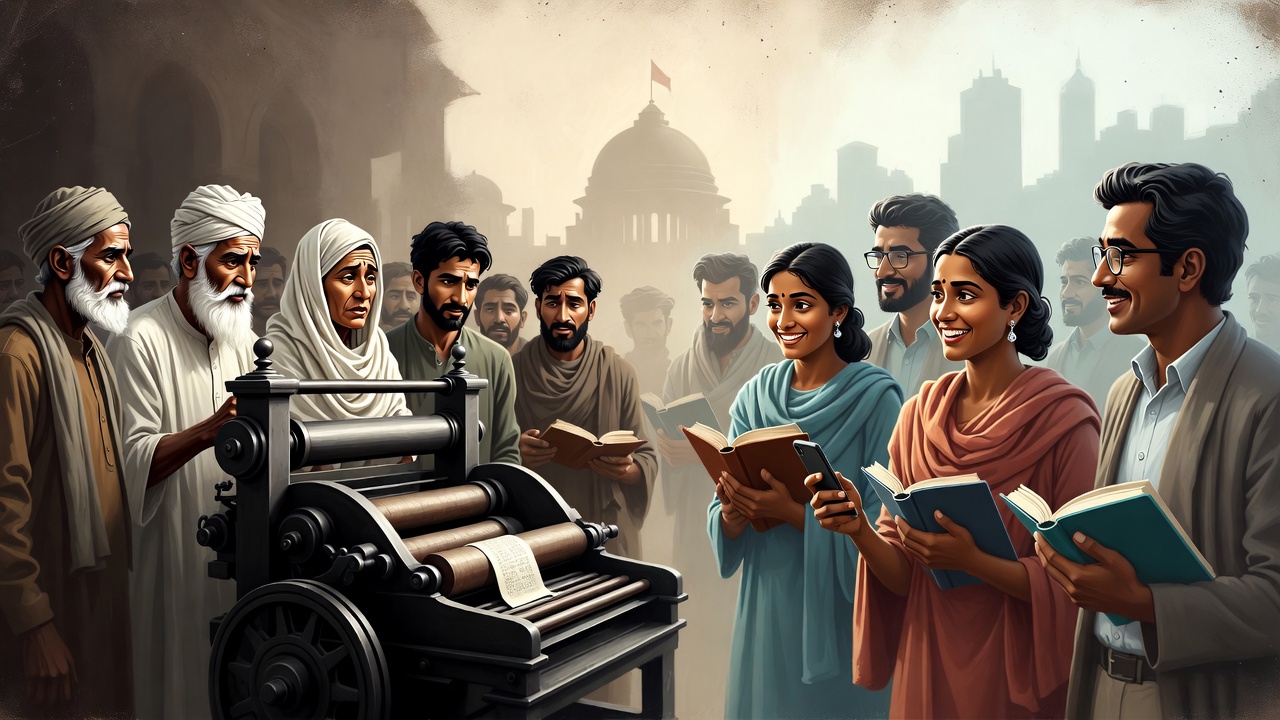
Every year on February 21, the world pauses to celebrate one of humanity’s most precious treasures—our mother tongues. International Mother Language Day stands as a powerful reminder that language is far more than a communication tool. It is the vessel of our ancestors’ wisdom, the keeper of our cultural heritage, and the foundation of our very identity.
But this global observance carries a history written in blood, sacrifice, and unwavering determination. It is a story that begins on the streets of Dhaka in 1952 and echoes through UNESCO halls in Paris today.
In this comprehensive guide, we explore the complete history of International Mother Language Day, from its tragic origins to its 2026 celebrations, examining why preserving linguistic diversity has never been more urgent than it is today.
What Is International Mother Language Day and Why Is It Celebrated on February 21?
International Mother Language Day (IMLD) is a worldwide annual observance held on February 21 to promote awareness of linguistic and cultural diversity and to encourage multilingualism. The day was first announced by UNESCO on November 17, 1999, and has been observed globally since February 21, 2000.
The date was not chosen arbitrarily. It commemorates the Bengali Language Movement and the tragic events of February 21, 1952, when students in Dhaka sacrificed their lives defending their right to speak their mother tongue.
According to the United Nations, International Mother Language Day underscores the role of languages in promoting inclusion and achieving Sustainable Development Goals. The UN General Assembly formally welcomed UNESCO’s proclamation in its resolution 56/262 in 2002.
| Key Facts About International Mother Language Day |
|---|
| Date Observed |
| First Proclaimed |
| First Observed |
| UN Recognition |
| Origin |
| Purpose |
The Tragic Origins: Understanding the Bengali Language Movement of 1952
Why Did the Bengali Language Movement Begin in East Pakistan?
To understand International Mother Language Day, we must travel back to 1947 and the partition of British India. When the British colonial rulers departed, they divided the subcontinent into two independent states: India and Pakistan. Pakistan itself was split into two geographically separated wings—West Pakistan (present-day Pakistan) and East Pakistan (present-day Bangladesh).
Despite being separated by over 1,600 kilometers of Indian territory, these two wings were united under one nation. However, a fundamental tension emerged almost immediately: language.
The population demographics were striking:
- East Pakistan had approximately 44 million Bengali-speaking people
- The combined population of Pakistan was approximately 69 million
- This meant Bengali speakers constituted the majority of the entire nation
Yet the government, dominated by West Pakistani leaders, declared in 1948 that Urdu would be the sole national language of Pakistan—despite Urdu being the native language of a small minority.
What Sparked the 1952 Language Movement Protests in Dhaka?
The imposition of Urdu sparked immediate resistance. Bengali speakers viewed this linguistic policy as an attack on their cultural identity and an attempt at cultural suppression.
For years, protests simmered. Intellectuals, writers, and students organized demonstrations demanding official recognition of Bengali. The government responded by imposing restrictions on public gatherings and rallies.
The tension reached its breaking point on February 21, 1952.
February 21, 1952: The Day That Changed Linguistic Rights Forever
What Happened on February 21, 1952 in Dhaka?
On the morning of February 21, 1952, students from the University of Dhaka began gathering on campus despite Section 144 of the penal code—which banned public assemblies. Armed police surrounded the campus as students grew in number.
By 11:15 AM, students attempted to break through police lines. Police fired tear gas to disperse them. But the students refused to leave. They demanded that their legislators, who were meeting nearby at the East Bengal Legislative Assembly, present their case for Bengali language rights.
What happened next shocked the nation and would eventually move the world.
Police opened fire on the unarmed protesters. The massacre occurred near Dhaka Medical College and Ramna Park. Several students were killed on the spot.
Who Were the Language Movement Martyrs of 1952?
The students who lost their lives on February 21, 1952, became known as the Bhasha Shaheed (Language Martyrs). Their names are etched in Bangladesh’s national memory:
| Martyr Name | Background |
|---|---|
| Abdus Salam | University student |
| Abul Barkat | Dhaka University student |
| Rafiq Uddin Ahmed | Student activist |
| Abdul Jabbar | Political activist |
| Shafiur Rahman | Student |
These five young men gave their lives for the simple right to speak their mother tongue. According to SBS Bangla, this was the “first time” people were shot dead protesting for the right to speak their mother language.
How the Shaheed Minar Became a Symbol of Linguistic Resistance
The First Monument Built Overnight by Grieving Students
Just two days after the massacre, on February 23, 1952, students of Dhaka Medical College and other institutions worked through the night to erect a makeshift memorial at the site where Abul Barkat fell.
According to the Wikipedia article on Shaheed Minar, this first monument was completed by the morning of February 24, 1952. By dawn, people from all walks of life began rushing to pay their respects.
But the monument stood for only three days.
On February 26, 1952, Pakistani police demolished the memorial. This act of destruction, however, only strengthened the resolve of the movement.
The Three Versions of Shaheed Minar Throughout History
The Shaheed Minar’s turbulent history mirrors the struggle of the Bengali people:
| Version | Year Built | Fate |
|---|---|---|
| First | February 23, 1952 | Demolished by police on February 26, 1952 |
| Second | Started 1957 | Construction halted by martial law; destroyed during 1971 Liberation War |
| Third | Rebuilt post-1971 | Expanded in 1983; stands today |
The current Shaheed Minar was designed by Bangladeshi sculptors Hamidur Rahman and Novera Ahmed. Its striking architecture features:
- White marble columns rising from a raised platform
- A central double frame representing the mother
- Four smaller frames representing the martyred sons
- The platform stands approximately 4 meters (14 feet) above ground
Today, the Shaheed Minar is the centerpiece of all Ekushey February (21 February) commemorations in Bangladesh.
From Regional Struggle to International Recognition: How Bangladesh Gave the World Mother Language Day
Who Proposed International Mother Language Day to the United Nations?
The journey from a regional observance in Bangladesh to a UN-recognized international day began with one determined individual: Rafiqul Islam, a Bengali Canadian living in Vancouver, Canada.
On January 9, 1998, Rafiqul Islam, along with Abdus Salam (another Bengali Canadian), wrote a letter to then-UN Secretary-General Kofi Annan. Their request was simple yet profound: they asked the UN to save the world’s languages from extinction by declaring an International Mother Language Day.
According to Terralingua, Rafiqul Islam proposed February 21 as the date to commemorate the 1952 killings during the Bengali mother language movement.
The Timeline: From Proposal to UNESCO Proclamation
The path to international recognition followed these key steps:
| Date | Event |
|---|---|
| January 9, 1998 | Rafiqul Islam writes to UN Secretary-General Kofi Annan |
| 1998 | Proposal introduced in Bangladesh Parliament |
| 1998-1999 | Bangladesh government submits formal proposal to UNESCO |
| November 17, 1999 | UNESCO’s 30th General Conference proclaims February 21 as International Mother Language Day |
| February 21, 2000 | First global observance of IMLD |
| 2002 | UN General Assembly welcomes proclamation (Resolution 56/262) |
| May 16, 2007 | UN Resolution A/RES/61/266 calls for preservation of all languages |
| 2008 | Declared International Year of Languages |
The diplomats who shepherded this proposal through UNESCO’s regulatory system included Syed Muazzem Ali (Bangladesh ambassador to France and Permanent Representative to UNESCO) and Tozammel Tony Huq (former ambassador and Special Adviser to UNESCO).
Why Is Linguistic Diversity Under Threat in the 21st Century?
How Many Languages Are Endangered Around the World Today?
The statistics are alarming. According to Ethnologue, there are currently 7,168 living languages in the world. However, the picture is far from stable:
| Language Status Category | Number of Languages | Percentage |
|---|---|---|
| Institutional | ~490 | 6.8% |
| Stable | ~3,600 | 50.2% |
| Endangered | ~3,078 | 43% |
The Endangered Languages Project notes that nearly half of the 7,000 languages spoken today are in danger of being silenced within the next few generations.
What Causes Languages to Become Endangered or Extinct?
Languages don’t simply disappear overnight. They fade gradually through a process called language shift. Key factors include:
- Globalization — Dominant languages in commerce and media overshadow local tongues
- Migration and urbanization — Communities disperse, breaking intergenerational transmission
- Education policies — Schools teaching only in national or colonial languages
- Economic pressures — Speaking dominant languages offers better job opportunities
- Cultural assimilation — Pressure to abandon traditional languages for social integration
- Lack of legal recognition — Governments failing to protect minority languages
- Digital exclusion — Less than 100 languages are meaningfully used online
According to Visual Capitalist, a language dies approximately every 40 days. At current rates, 90% of the world’s languages could disappear within the next 100 years.
Which Regions Have the Highest Concentration of Endangered Languages?
The crisis is not evenly distributed:
| Region | Endangered Languages |
|---|---|
| Oceania | 733 |
| Africa | 428 |
| Asia | 600+ |
| North & Central America | 222 |
| South America | 200+ |
| Europe | 100+ |
Oceania has the highest density of endangered languages relative to its population. In the United States alone, 98% of Indigenous languages are endangered—one of the highest rates in the world.
International Mother Language Day Themes: 25 Years of Celebration (2000-2025)
What Have Been the Most Significant IMLD Themes Over the Years?
Each year, UNESCO selects a theme to focus global attention on specific aspects of linguistic preservation. Here are notable themes throughout the years:
| Year | Theme / Focus |
|---|---|
| 2000 | First global observance |
| 2002 | Linguistic diversity: 3,000 endangered languages (motto: “In the galaxy of languages, every word is a star”) |
| 2004 | Children’s learning and literacy |
| 2008 | International Year of Languages |
| 2019 | International Year of Indigenous Languages |
| 2024 | “Multilingual education is a pillar of learning and intergenerational learning” |
| 2025 | Silver Jubilee Celebration: “Languages Matter” |
The Silver Jubilee: How Did the World Celebrate International Mother Language Day 2025?
The year 2025 marked a milestone—the 25th anniversary of International Mother Language Day. According to UNESCO, the Silver Jubilee celebration reaffirmed the importance of linguistic diversity and multilingualism in fostering dignity, peace, and understanding.
Key highlights of the 2025 celebrations included:
- Official events at UNESCO Headquarters in Paris (February 20-21, 2025)
- Launch of UNESCO’s “Languages Matter: Global Guidance on Multilingual Education”
- Global gatherings in Addis Ababa bringing together diplomats, scholars, and cultural enthusiasts
- Children’s book publications in multiple language editions
- Events promoting Indigenous knowledge systems and indigenous languages
The theme “Languages Matter” emphasized 25 years of continuous efforts in:
- Preserving linguistic diversity
- Promoting mother tongues in education
- Protecting endangered languages
- Encouraging multilingual education
How Is International Mother Language Day Celebrated Around the World?
Traditional Celebrations in Bangladesh: Ekushey February
In Bangladesh, February 21 is far more than an international observance—it is Shohid Dibôsh (Martyrs’ Day), a national holiday since 1953 and one of the most emotionally significant days in the country’s calendar.
Traditional observances include:
- Provat Feri (Dawn Procession) — Millions of people walk barefoot at midnight toward the Shaheed Minar, carrying flowers
- Placing flowers at the Shaheed Minar — The monument is adorned with wreaths and floral tributes
- Singing “Amar Bhaiyer Rokte Rangano” — The plaintive song memorializing the martyrs
- Drawing alpana — Traditional rice flour designs on roads
- Ekushey Book Fair — The Bangla Academy organizes a month-long book fair throughout February
- Literary competitions — Poetry readings, essay contests, and cultural programs
- Special meals and gatherings — Families come together to honor the day
The tradition of placing flowers at the Shaheed Minar has grown into a mass movement. According to observers, the queue to pay respects can stretch for kilometers through Dhaka’s streets.
Shaheed Minar Replicas Around the World
The symbol of the Shaheed Minar has spread globally wherever Bangladeshi diaspora communities have settled:
| Location | Notable Features |
|---|---|
| London, UK | Replica in Tower Hamlets |
| Oldham, UK | Community-built replica |
| Sydney, Australia | Monument at Ashfield Park (erected February 19, 2006) |
| Vancouver, Canada | Where the IMLD proposal originated |
| Tokyo, Japan | Community monument |
| New York, USA | Commemorative events |
The Sydney monument features a slab of slate with stylized images of the Shaheed Minar and the globe, bearing the words “We will remember the martyrs of 21st February” in English and Bengali.
How Do Other Countries Observe International Mother Language Day?
Beyond Bangladesh, IMLD has gained recognition in various forms:
Canada:
- British Columbia and Manitoba issued proclamations observing IMLD in 2015
- A private member’s bill (C-573) was introduced in Parliament in 2014
India:
- Observed in West Bengal, Assam, Jharkhand, and Tripura
- Bengali-speaking communities hold cultural programs
- Universities host seminars on linguistic preservation
Global UNESCO Events:
- Official ceremonies at UNESCO Headquarters in Paris
- Webinars and digital campaigns
- Educational programs in schools worldwide
- Cultural exhibitions featuring endangered languages
What Are the Benefits of Multilingual Education for Children?
Why Is Mother Tongue Education Important for Early Learning?
Research consistently demonstrates that children learn best when taught in a language they understand. According to UNESCO:
“Students who are taught in a language they fully understand show better comprehension, engagement, and critical thinking skills.”
Key benefits of mother tongue-based education include:
- Improved learning outcomes — Children grasp concepts faster in familiar languages
- Stronger cognitive development — Bilingualism enhances mental flexibility
- Better academic performance — Foundation in mother tongue supports later learning
- Preserved cultural identity — Children connect with their heritage
- Increased confidence — Students feel validated when their language is respected
- Reduced dropout rates — Children are more engaged when they understand instruction
What Is the Global Education Language Gap?
Despite these proven benefits, a significant gap remains. According to UNESCO:
- 40% of the global population does not have access to education in a language they speak or understand
- Only a few hundred languages out of 7,000+ are taught in education systems
- Less than 100 languages are meaningfully represented online
This creates a cycle of disadvantage where speakers of minority languages face barriers to education, economic opportunity, and social participation.
How Are Technology and Digital Tools Helping Preserve Endangered Languages?
What Role Does Technology Play in Language Preservation?
In the digital age, technology has become both a threat and a solution for endangered languages.
Threats:
- Digital platforms dominated by major world languages
- Search engines and AI trained primarily on high-resource languages
- Social media encouraging use of dominant languages
Solutions:
- Language documentation apps — Recording speakers of endangered languages
- Online dictionaries and learning platforms — Making materials accessible
- AI translation tools — Expanding to include under-resourced languages
- Digital archives — Preserving audio and video recordings of native speakers
- Social media communities — Connecting dispersed speakers
Success Stories in Language Revitalization
While the statistics are concerning, there are inspiring success stories:
Māori (New Zealand):
- In the 1970s, only 5% of Māori schoolchildren spoke the language
- Today, approximately 25% speak Māori
- Government protection and school programs drove the revival
Hawaiian (USA):
- Just 2,000 speakers remained in the 1970s
- After government-mandated school instruction, speakers increased to 18,700 by 2023
Welsh (UK):
- Active language education and media presence
- Government support for Welsh-language schools and broadcasting
Hebrew:
- One of history’s most dramatic revivals
- From a liturgical language to daily use by millions in Israel
These successes demonstrate that language loss is not inevitable—with political will, community engagement, and adequate resources, endangered languages can be revitalized.
Looking Ahead: International Mother Language Day 2026 and Beyond
What Is the Expected Theme for International Mother Language Day 2026?
While the specific theme for 2026 will be finalized closer to the date, recent trends provide clear direction. Themes in 2024 and 2025 focused heavily on:
- Multilingual education as a pillar of learning
- Intergenerational connection through language
- Technology’s role in preservation
According to Remitly, we can expect 2026 to continue this trend, likely emphasizing the role of technology in language preservation.
Digital tools are becoming vital for language survival. From apps teaching indigenous dialects to AI tools translating under-resourced languages, technology offers new hope.
Why Is International Mother Language Day 2026 Significant?
The year 2026 holds special significance:
- It marks the 74th anniversary of the 1952 Bengali Language Movement
- Continued momentum from the Silver Jubilee celebrations of 2025
- Growing global awareness of climate change’s impact on indigenous communities and their languages
- Increased focus on Sustainable Development Goals and inclusive education
- Advancement in AI and digital preservation technologies
How Can You Celebrate International Mother Language Day and Support Linguistic Diversity?
Practical Ways to Honor Your Mother Tongue
You don’t need to be a linguist or policymaker to make a difference. Here are practical ways to celebrate IMLD and support linguistic diversity:
At Home:
- Speak your mother tongue with family, especially children
- Tell stories and sing songs in your native language
- Cook traditional recipes while teaching food-related vocabulary
- Read books and watch films in your mother language
- Document family history through recordings of elders speaking
In Your Community:
- Organize cultural events featuring your language
- Support language classes at community centers
- Create or join language preservation groups on social media
- Mentor younger generations in language and culture
- Celebrate multilingualism in local schools
Globally:
- Donate to language preservation organizations
- Support indigenous language documentation projects
- Advocate for multilingual education policies
- Learn about endangered languages and share awareness
- Use technology to document and preserve languages
Key Organizations Working to Preserve Languages
| Organization | Focus Area |
|---|---|
| UNESCO | Global policy and awareness |
| Endangered Languages Project | Documentation and cataloguing |
| Terralingua | Biocultural diversity |
| Linguapax Institute (Barcelona) | Language peace and diversity |
| SIL International | Language development and documentation |
| Living Tongues Institute | Recording endangered languages |
The Deeper Meaning: Why Languages Matter for Humanity
What Do We Lose When a Language Dies?
When a language disappears, humanity loses far more than vocabulary and grammar. We lose:
- Unique worldviews — Each language encodes a distinct way of perceiving reality
- Traditional knowledge — Medicinal plants, agricultural practices, ecological wisdom
- Cultural heritage — Songs, stories, ceremonies, and oral traditions
- Historical memory — Connection to ancestors and their experiences
- Cognitive diversity — Different ways of thinking and problem-solving
- Human identity — Part of who we are as a species
As UNESCO states:
“Languages are the most powerful instruments of preserving and developing our tangible and intangible heritage.”
The Connection Between Language and Cultural Identity
Our mother tongue is not just how we communicate—it is who we are. It shapes:
- How we think and dream
- How we understand the world around us
- How we connect with our communities
- How we pass wisdom to future generations
When children cannot speak with their grandparents in their native language, something profound is lost—not just words, but an entire relationship with heritage and identity.
Conclusion: The Legacy of 1952 Lives On
From the bloodstained streets of Dhaka in 1952 to UNESCO headquarters in Paris and classrooms around the world, the story of International Mother Language Day is a testament to the power of language and the courage of those who fight to preserve it.
The young students who fell on February 21, 1952—Abdus Salam, Abul Barkat, Rafiq Uddin Ahmed, Abdul Jabbar, and Shafiur Rahman—could never have imagined that their sacrifice would inspire a global movement. Their names may have faded from newspaper headlines, but their legacy endures every time:
- A grandmother sings a lullaby in her native tongue
- A child learns to read in their mother language
- A community gathers to preserve their linguistic heritage
- The world pauses on February 21 to celebrate linguistic diversity
As we approach International Mother Language Day 2026, let us remember that every language lost is a library burned, a universe extinguished. And every language preserved is a victory for human diversity, cultural heritage, and the eternal bond between mothers and their children.
The martyrs of 1952 gave their lives for their mother tongue. The least we can do is speak ours.
Frequently Asked Questions About International Mother Language Day
When is International Mother Language Day 2026?
International Mother Language Day 2026 falls on Saturday, February 21, 2026. It will be observed globally with events, cultural programs, and educational activities promoting linguistic diversity.
Why is February 21 celebrated as International Mother Language Day?
February 21 commemorates the 1952 Bengali Language Movement in Dhaka, where students were killed while protesting for the recognition of Bengali as an official language. This date was chosen to honor their sacrifice and promote linguistic rights worldwide.
How many languages are spoken in the world today?
According to Ethnologue, there are approximately 7,168 living languages in the world today. However, about 43% (over 3,000 languages) are classified as endangered.
What is the difference between mother tongue and first language?
Mother tongue (also called native language) is the language a person learns from birth within their family and community. First language is essentially the same concept—the first language a child is exposed to and acquires naturally. These terms are often used interchangeably.
Who proposed International Mother Language Day?
Rafiqul Islam, a Bengali Canadian living in Vancouver, proposed International Mother Language Day in a letter to UN Secretary-General Kofi Annan on January 9, 1998. The proposal was supported by the Bangladesh government and eventually adopted by UNESCO in 1999.
This article is dedicated to the memory of the Language Movement martyrs of 1952 and to all who work tirelessly to preserve humanity’s linguistic heritage. May every mother tongue find a voice, and may every child know the joy of their ancestral language.
Share this article to spread awareness about International Mother Language Day and the importance of preserving linguistic diversity. Every language matters. Every voice counts.