A Journey Through Ancient Japanese Mythology, Imperial History, and Modern National Celebration
Introduction: Understanding Japan’s National Foundation Day Celebration
Every year on February 11th, Japan pauses to commemorate one of its most significant national holidays: Kenkoku Kinen no Hi (建国記念の日), or National Foundation Day. This celebration marks the mythological founding of Japan and the ascension of its first emperor, Emperor Jimmu (神武天皇), to the Chrysanthemum Throne in 660 BCE.
But what makes this particular Japanese public holiday so fascinating is its unique position at the crossroads of ancient mythology and historical reality. Unlike most national foundation days around the world, which commemorate specific documented historical events, Japan’s Foundation Day is rooted in the legendary tales of the Kojiki and Nihon Shoki—ancient chronicles that blend divine intervention with human endeavor.
In this comprehensive exploration, we’ll journey through the mythological origins of Japan, examine the legendary figure of Emperor Jimmu, understand how these ancient narratives shaped modern Japanese identity, and discover how contemporary Japan celebrates this remarkable holiday. Whether you’re planning a trip to Japan during Foundation Day, researching Japanese mythology for academic purposes, or simply curious about one of Asia’s most fascinating cultural traditions, this guide will provide you with everything you need to know.
What is Japan’s National Foundation Day: History and Significance
The Official Designation and Legal Status
National Foundation Day (国民の祝日, Kokumin no Shukujitsu) holds the distinction of being one of Japan’s 16 official public holidays. The holiday was officially established in its current form in 1966, though its roots stretch back much further into Japan’s complex political and cultural history.
| Aspect | Details |
|---|---|
| Japanese Name | 建国記念の日 (Kenkoku Kinen no Hi) |
| Date | February 11 |
| Year Established | 1966 (modern form) |
| Original Form | Empire Day (紀元節, Kigensetsu) from 1872 |
| Commemorates | Mythological founding of Japan by Emperor Jimmu |
| Legal Status | National Public Holiday |
The phrase “no Hi” (の日, “the day of”) in the holiday’s name is significant. Lawmakers specifically chose this wording rather than simply calling it “Foundation Day” (Kenkoku Kinenbi) to acknowledge that the exact historical date of Japan’s founding cannot be verified. This linguistic nuance reflects the ongoing scholarly debate about the boundary between Japanese mythology and historical fact.
The Historical Evolution of Foundation Day
The modern celebration traces its lineage to Kigensetsu (紀元節), or Empire Day, which was first observed in 1872 during the Meiji Era. The Meiji government, seeking to modernize Japan while simultaneously strengthening national identity around the imperial institution, calculated the founding date using the traditional Japanese lunar calendar and converted it to the Gregorian calendar.
Key Historical Timeline:
- 660 BCE — Mythological date of Emperor Jimmu’s enthronement
- 720 CE — Nihon Shoki compiled, establishing the official foundation narrative
- 1872 — Kigensetsu established as a national holiday
- 1945 — Japan’s defeat in World War II
- 1948 — Kigensetsu abolished during Allied occupation
- 1966 — National Foundation Day reinstated with new name
The Allied Occupation authorities abolished Kigensetsu in 1948, viewing it as a symbol of the ultranationalism and emperor worship that had contributed to Japanese militarism. For nearly two decades, Japan lacked any official celebration of its national founding. The holiday’s reinstatement in 1966 came after years of political debate, with opponents arguing it could revive dangerous nationalist sentiments and supporters maintaining that every nation deserves to celebrate its origins.
Emperor Jimmu: The Legendary First Emperor of Japan
Who Was Emperor Jimmu in Japanese Mythology
Emperor Jimmu (神武天皇, Jinmu-tennō) stands as the mythological founder of the Japanese imperial line—a dynasty that continues to this day and represents the oldest continuous hereditary monarchy in the world. According to traditional accounts, Emperor Jimmu was not merely human; he was a descendant of the sun goddess Amaterasu (天照大神), making the imperial family divine in origin.
The name “Jimmu” itself carries profound meaning. The characters 神武 can be translated as “Divine Warrior” or “Divine Might,” reflecting his legendary role as both a spiritual figure and military conqueror. This posthumous name was assigned centuries after the mythological events, during the compilation of Japan’s first historical chronicles.
Emperor Jimmu’s Divine Lineage and Family Tree
Understanding Emperor Jimmu’s significance requires tracing his extraordinary genealogy back to the creation myths of Japan. According to the Kojiki and Nihon Shoki, the lineage of Emperor Jimmu connects directly to the highest deities in the Shinto pantheon:
| Generation | Figure | Significance |
|---|---|---|
| Divine Ancestors | Izanagi and Izanami | Creator gods who gave birth to the Japanese islands |
| Grandmother | Amaterasu Ōmikami | Sun goddess, supreme deity of Shinto |
| Grandfather | Takamimusubi | One of the three creation deities |
| Great-Grandfather | Ninigi-no-Mikoto | Descended from heaven to rule Earth |
| Father | Ugayafukiaezu | Prince of the earthly realm |
| Mother | Tamayori-hime | Daughter of the sea god Watatsumi |
Emperor Jimmu’s divine ancestry wasn’t merely symbolic—it formed the theological foundation of Japanese imperial authority for millennia. The concept that the emperor was a living god (arahitogami, 現人神) persisted officially until Emperor Hirohito’s Humanity Declaration in January 1946, following Japan’s defeat in World War II.
The Birth and Early Life of Emperor Jimmu
According to the ancient chronicles, Emperor Jimmu was born in 711 BCE (traditional dating) in the region of Hyūga, located in present-day Miyazaki Prefecture on the island of Kyushu. His birth name was Kamu-yamato-iware-biko no Mikoto (神日本磐余彦尊), a name that would later be shortened and modified.
The young prince grew up in a time of chaos and regional conflict. Various clans and chieftains controlled different portions of the Japanese archipelago, and there was no unified political authority. This fragmented landscape would set the stage for Jimmu’s legendary eastern expedition.
The Mythological Journey: Emperor Jimmu’s Eastern Expedition
The Decision to Conquer the East
One of the most dramatic episodes in Japanese mythology is Emperor Jimmu’s legendary military campaign to establish a unified kingdom in the Yamato region (present-day Nara Prefecture). According to the Nihon Shoki, Jimmu declared his intention to march east when he was 45 years old:
“I have heard from the Ancient Deity of the Salt Sea that in the East there is a fair land encircled on all sides by blue mountains. I believe that this land will undoubtedly be suitable for the extension of the Heavenly task, so that its glory should fill the universe. It is the center of the world.”
This passage reveals the religious and political motivations behind the expedition: Jimmu sought not merely territorial conquest but the establishment of a divinely ordained capital from which heavenly rule could extend across the land.
The Route of the Eastern Campaign
The journey of Emperor Jimmu took him and his followers on an arduous multi-year campaign across western Japan. Modern historians and archaeologists have attempted to map this legendary route onto actual geography:
Major Stops on Emperor Jimmu’s Eastern Expedition:
- Hyūga (Miyazaki Prefecture) — Starting point
- Usa (Ōita Prefecture) — First major stop
- Okada no Miya (Fukuoka Prefecture) — Extended stay
- Aki no Miya (Hiroshima Prefecture) — Seven years residence
- Takaoki no Miya (Okayama Prefecture) — Eight years residence
- Nanba (Osaka) — Initial landing in Kinai region
- Kumano (Wakayama Prefecture) — Divine guidance received
- Yamato (Nara Prefecture) — Final destination and capital
The Battle of Naniwa and Divine Intervention
Emperor Jimmu’s campaign was not without significant obstacles. When his forces attempted to enter the Kinai region (the area around modern Osaka and Nara) from the west, they encountered fierce resistance from a powerful chieftain named Nagasunehiko.
In the Battle of Kusatsu, Jimmu’s forces suffered a severe defeat, and his elder brother Prince Itsuse was mortally wounded by an arrow. Recognizing that he had erred by fighting with the sun at his back (effectively opposing the sun goddess, his divine ancestor), Jimmu withdrew and devised a new strategy.
The legend recounts several divine interventions:
- The Golden Kite (Yatagarasu): A three-legged crow sent by Amaterasu guided Jimmu’s forces through the treacherous mountain paths of the Kii Peninsula
- The Sacred Sword: Divine weapons aided in defeating hostile forces
- Heavenly Arrows: Celestial assistance turned the tide of battle
The Yatagarasu (八咫烏), the three-legged crow, has become one of Japan’s most enduring symbols. Today, it serves as the emblem of the Japan Football Association and appears throughout Japanese culture as a symbol of divine guidance and safe travel.
The Founding of Yamato and Emperor Jimmu’s Enthronement
After overcoming Nagasunehiko and pacifying the region, Emperor Jimmu established his capital at Kashihara at the foot of Mount Unebi in the Yamato Province. According to traditional chronicles, he was formally enthroned on the first day of the first month in 660 BCE—a date that would later be calculated as February 11 in the Gregorian calendar.
The Nihon Shoki describes the enthronement:
“The Emperor assumed the throne in the palace of Kashihara at the southeast of Mount Unebi. This year is the first year of the Emperor’s reign.”
This moment represents the mythological foundation of the Japanese state—the beginning of an imperial line that has continued, according to tradition, for over 2,600 years through 126 emperors to the current monarch, Emperor Naruhito.
Ancient Japanese Chronicles: The Kojiki and Nihon Shoki
Understanding Japan’s Oldest Historical Texts
The stories of Emperor Jimmu and the foundation of Japan come primarily from two ancient texts that form the cornerstone of Japanese classical literature and mythology: the Kojiki (古事記) and the Nihon Shoki (日本書紀), also known as the Nihongi.
| Chronicle | Kojiki | Nihon Shoki |
|---|---|---|
| English Name | Records of Ancient Matters | Chronicles of Japan |
| Date Completed | 712 CE | 720 CE |
| Commissioned By | Emperor Tenmu | Emperor Tenmu |
| Language | Japanese with Chinese characters | Classical Chinese |
| Primary Purpose | Preserve oral traditions | Official state history |
| Narrative Style | Mythological, poetic | More historical, detailed |
| Coverage Period | Creation to 628 CE | Creation to 697 CE |
The Kojiki: Records of Ancient Matters
The Kojiki, completed in 712 CE, holds the distinction of being the oldest surviving written record in Japan. It was compiled by the court noble Ō no Yasumaro under the direction of Empress Genmei, based on oral traditions memorized by a figure named Hieda no Are.
The Kojiki is divided into three volumes:
- Volume One — Creation myths, divine genealogies, and the age of the gods
- Volume Two — Emperor Jimmu through Emperor Ōjin
- Volume Three — Emperor Nintoku through Empress Suiko
The text uses a complex writing system called man’yōgana, employing Chinese characters for their phonetic values to represent Japanese words. This makes the Kojiki invaluable not only for its mythological content but also for understanding the development of the Japanese language.
The Nihon Shoki: Chronicles of Japan
Completed just eight years after the Kojiki, the Nihon Shoki was designed as Japan’s official state history, modeled after the imperial histories of China. Written entirely in Classical Chinese—the language of scholarship in East Asia—it was intended to present Japan as a civilized nation with a legitimate imperial lineage equal to China’s.
The Nihon Shoki provides more detailed and often multiple variant accounts of the same events, including Emperor Jimmu’s eastern expedition. These alternative versions suggest the compilers were drawing from various regional traditions and attempting to reconcile conflicting accounts.
Scholarly perspectives from institutions like the University of Tokyo’s Historiographical Institute continue to analyze these texts for insights into early Japanese society, governance, and religious beliefs.
Separating Mythology from History: Archaeological and Historical Analysis
The Academic Debate on Emperor Jimmu’s Historical Existence
The question of whether Emperor Jimmu was a real historical figure has occupied Japanese historians for over a century. The scholarly consensus has evolved significantly, particularly since the Meiji Restoration when critical historical methods began to be applied to traditional accounts.
Three main scholarly positions exist:
- Traditionalist View: Emperor Jimmu existed essentially as described, though some mythological embellishment occurred
- Reductionist View: Jimmu is entirely mythological, possibly a composite of several historical figures
- Moderate View: A historical kernel of truth underlies the legends, though heavily mythologized
Modern archaeology has been crucial in this debate. While no direct evidence of Emperor Jimmu has been found, excavations of Yayoi period (300 BCE–300 CE) and Kofun period (300–538 CE) sites have revealed:
- Evidence of increasing social stratification and powerful chieftains
- Migration patterns consistent with population movements from Kyushu to the Kinai region
- Burial mounds (kofun) suggesting powerful rulers existed in the Yamato region
The Yamato Kingdom and Early Japanese State Formation
Archaeological evidence strongly supports the emergence of a powerful political entity in the Yamato region during the 3rd to 4th centuries CE. This Yamato Kingdom (大和王権) eventually unified much of Japan and established the foundations of the imperial institution.
Key archaeological sites related to early Yamato:
| Site | Location | Significance |
|---|---|---|
| Makimuku Site | Nara Prefecture | Possible capital of Himiko’s kingdom |
| Hashihaka Tomb | Nara Prefecture | Earliest known keyhole-shaped tomb |
| Ishibutai Tomb | Nara Prefecture | 7th-century royal tomb |
| Kashihara Shrine | Nara Prefecture | Traditional enthronement site |
The Imperial Household Agency restricts access to major imperial tombs, limiting archaeological investigation. Many scholars argue that excavation of sites like the Gosashi Tomb (traditionally attributed to Emperor Jimmu) could provide valuable historical evidence but would also challenge traditional narratives.
The 660 BCE Date: Historical Analysis
The specific date of 660 BCE for Japan’s founding has been questioned by historians since the Meiji period. The calculation relies on Chinese sexagenary cycle dating and appears to have been deliberately chosen to predate the foundation of the Chinese Zhou Dynasty, establishing Japanese civilization as equally ancient.
Modern historians generally place the emergence of the Yamato state between the 3rd and 4th centuries CE, meaning the traditional founding date predates verifiable history by approximately 1,000 years. However, as noted by researchers at institutions like the National Museum of Japanese History, this doesn’t necessarily invalidate the cultural and symbolic significance of the traditions.
Kashihara Shrine: The Sacred Site of Emperor Jimmu
History and Architecture of Kashihara Jingu
Kashihara Shrine (橿原神宮, Kashihara Jingū) stands as Japan’s most important site connected to Emperor Jimmu and the nation’s mythological founding. Located in Kashihara City, Nara Prefecture, the shrine was constructed in 1890 at the location where Emperor Jimmu traditionally established his capital and ascended to the throne.
Shrine Overview:
| Aspect | Details |
|---|---|
| Location | Kashihara City, Nara Prefecture |
| Deity Enshrined | Emperor Jimmu |
| Year Founded | 1890 |
| Architectural Style | Kashihara-zukuri (unique style) |
| Grounds Area | 500,000+ square meters |
| Annual Visitors | 1.5-2 million |
| Festival Day | February 11 (Kigensetsu-sai) |
The shrine’s establishment during the Meiji Era was part of the government’s broader effort to promote State Shinto and establish a cult of emperor worship. The architecture deliberately evokes ancient styles, with the main hall modeled after the Kyoto Imperial Palace’s Shishinden Hall.
Visiting Kashihara Shrine During Foundation Day
For travelers interested in experiencing authentic Japanese cultural traditions, visiting Kashihara Shrine on National Foundation Day offers an unparalleled opportunity. The annual Kigensetsu-sai (紀元節祭) ceremony draws thousands of visitors who come to witness:
- Imperial envoys presenting offerings on behalf of the Emperor
- Traditional gagaku (court music) performances
- Ceremonial dances and Shinto rituals
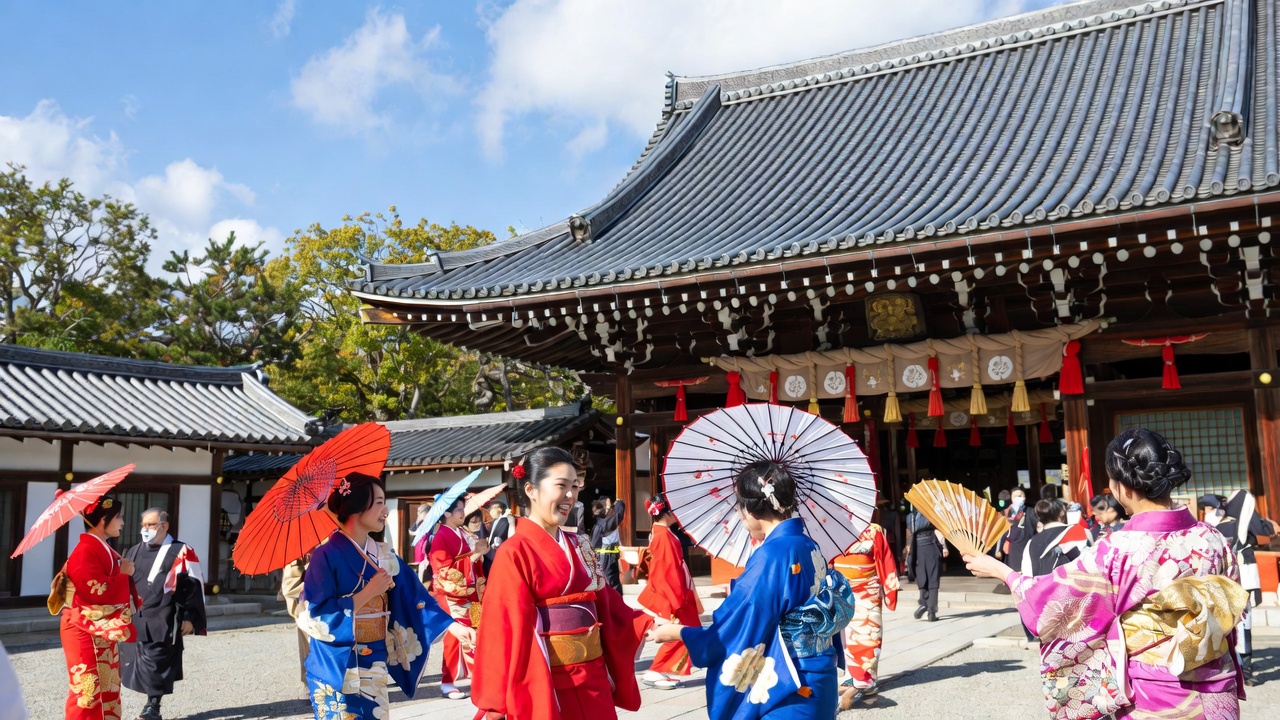
- Processions of priests in ancient court dress
Practical visitor information:
- Getting There: Take the Kintetsu Kashihara Line to Kashiharajingu-mae Station
- Hours: 6:30 AM to 5:00 PM (varies seasonally)
- Admission: Free for general grounds
- Best Time: Early morning for fewer crowds; festival day for ceremonies
The Nara Prefecture Tourism Office provides detailed information for international visitors planning trips to the region.
How Japan Celebrates National Foundation Day Today
Modern Observances and Traditions
Contemporary celebrations of National Foundation Day in Japan vary significantly based on political orientation, regional traditions, and individual preferences. Unlike many national holidays that feature widespread public festivities, Foundation Day observances tend to be more subdued and reflective.
Common ways Japanese people observe the holiday:
- Shrine Visits: Many families visit Shinto shrines, particularly Kashihara Shrine
- Flag Display: Some households display the national flag (日の丸, Hinomaru)
- Civic Ceremonies: Local governments may hold commemorative events
- Reflection: The day offers an opportunity to contemplate national identity
- Day Off: For many, it’s simply a welcomed public holiday
Political Dimensions and Contemporary Debates
National Foundation Day remains politically charged in contemporary Japan. The holiday serves as a flashpoint for ongoing debates about:
- Japan’s wartime history and responsibility
- The role of nationalism in modern society
- Constitutional revision efforts
- The position of the emperor in democratic Japan
Conservative groups often hold rallies emphasizing patriotic themes and traditional values. Progressive organizations may organize counter-demonstrations, criticizing what they view as attempts to rehabilitate prewar nationalism. These competing events reflect broader divisions in Japanese society about how to interpret and commemorate the nation’s past.
Recent surveys by organizations like the Japan Broadcasting Corporation (NHK) suggest that younger Japanese people are less likely to hold strong views about Foundation Day compared to older generations, though awareness of the holiday remains high.
Foundation Day in the Japanese Calendar
Understanding Foundation Day’s place in the Japanese holiday calendar helps contextualize its significance:
| Month | Holiday | Type |
|---|---|---|
| January 1 | New Year’s Day | Traditional |
| January 8 | Coming of Age Day | Life event |
| February 11 | National Foundation Day | Historical |
| February 23 | Emperor’s Birthday | Imperial |
| March 20/21 | Vernal Equinox Day | Seasonal |
| April 29 | Shōwa Day | Imperial history |
| May 3 | Constitution Day | Political |
| May 4 | Greenery Day | Nature |
| May 5 | Children’s Day | Traditional |
Foundation Day falls during a relatively quiet period in the Japanese calendar, between the bustle of New Year celebrations and the spring holiday season. Some businesses and schools use the day as an opportunity for travel or educational activities related to Japanese history.
The Role of Emperor Jimmu in Japanese National Identity
Imperial Symbolism and Modern Japan
Despite Japan’s transformation into a constitutional democracy after World War II, Emperor Jimmu and the foundation mythology continue to play significant roles in national identity. The current constitution defines the emperor as the “symbol of the State and of the unity of the people,” a role that draws implicitly on the ancient traditions connecting the imperial line to Japan’s founding.
Ways Emperor Jimmu remains relevant in modern Japan:
- Imperial Succession: The current emperor traces his lineage to Jimmu
- Era Names: New imperial eras reference traditional concepts
- National Symbols: The chrysanthemum seal and other imperial imagery
- Cultural Identity: Foundation myths inform understanding of “Japaneseness”
- Religious Practice: Shinto ceremonies honor imperial ancestors
The 2019 imperial transition from Emperor Akihito to Emperor Naruhito demonstrated continued public interest in the imperial institution. The abdication—the first in over 200 years—and subsequent enthronement ceremonies drew massive media attention and public participation.
Emperor Jimmu in Japanese Art and Culture
The legendary first emperor has been depicted throughout Japanese cultural history in various artistic forms:
Traditional Art:
- Ukiyo-e prints: Woodblock prints depicting Jimmu’s eastern expedition
- Historical paintings: Meiji-era works showing the founding narrative
- Sculpture: Statues at Kashihara Shrine and Miyazaki Prefecture
Modern Media:
- Manga and anime: Reimaginations of ancient mythology
- Video games: Japanese mythology-themed games often reference Jimmu
- Literature: Historical novels exploring the founding period
The Yatagarasu (three-legged crow) that guided Jimmu has become particularly iconic, appearing in contexts ranging from sports (Japan Football Association emblem) to tourism (Kumano region symbol) to popular culture.
Comparative Analysis: Foundation Day Celebrations Around the World
How Japan’s Foundation Day Compares to Other National Days
Examining how different countries celebrate their national foundations provides valuable perspective on Japan’s unique approach:
| Country | National Day | Date | What It Commemorates |
|---|---|---|---|
| Japan | National Foundation Day | February 11 | Mythological founding (660 BCE) |
| United States | Independence Day | July 4 | Declaration of Independence (1776) |
| France | Bastille Day | July 14 | French Revolution (1789) |
| Australia | Australia Day | January 26 | First Fleet arrival (1788) |
| China | National Day | October 1 | PRC establishment (1949) |
| South Korea | Foundation Day | October 3 | Mythological founding (2333 BCE) |
| India | Republic Day | January 26 | Constitution adoption (1950) |
Interestingly, Japan shares its approach with South Korea, whose Gaecheonjeol (개천절) celebrates the mythological founding by Dangun in 2333 BCE. Both countries base their foundation days on legendary rather than historically verifiable events, reflecting the importance of origin mythology in East Asian cultures.
The Global Significance of Foundation Myths
Foundation myths serve important social functions across cultures:
- Identity Formation: They provide shared narratives of collective origin
- Legitimacy: They justify existing political and social structures
- Values Transmission: They encode cultural values and ideals
- Community Building: They create occasions for collective celebration
Anthropological research published in journals like the Journal of Japanese Studies has examined how Japan’s foundation myths function within this broader framework of national mythology.
Planning Your Visit to Japan During Foundation Day
Best Places to Experience Foundation Day Celebrations
For international travelers interested in experiencing authentic Japanese Foundation Day traditions, several destinations offer particularly meaningful experiences:
Top Destinations:
- Kashihara Shrine, Nara Prefecture
- The most significant Foundation Day site
- Imperial envoy ceremonies
- Traditional performances
- Accessible from Osaka and Kyoto
- Miyazaki Shrine, Miyazaki Prefecture
- Emperor Jimmu’s legendary birthplace
- Beautiful forest setting
- Less crowded than Kashihara
- Combined with coastal scenery
- Ise Grand Shrine, Mie Prefecture
- Japan’s most sacred Shinto site
- Dedicated to Amaterasu
- Imperial family connections
- Architectural masterpiece
- Meiji Shrine, Tokyo
- Convenient urban location
- Major Foundation Day events
- Beautiful forest setting
- Combined with Harajuku visit
Practical Travel Tips for February in Japan
February visitors to Japan should be prepared for:
Weather Considerations:
- Temperatures: 3-10°C (37-50°F) in major cities
- Snow possible in northern regions
- Clear skies common in Pacific side cities
- Layered clothing recommended
Travel Planning:
- Book accommodations in advance for Foundation Day weekend
- Trains may be crowded with domestic travelers
- Many restaurants and shops may be closed
- Check specific attraction hours for holidays
Cultural Etiquette:
- Observe quiet, respectful behavior at shrines
- Follow photography guidelines (some ceremonies prohibited)
- Dress modestly for religious sites
- Learn basic Japanese phrases
The Japan National Tourism Organization (JNTO) provides comprehensive resources for international visitors planning trips during national holidays.
The Legacy of Emperor Jimmu: Influence on Japanese Religion and Philosophy
Emperor Jimmu’s Role in Shinto Belief System
The mythology surrounding Emperor Jimmu is inseparable from Shinto, Japan’s indigenous religion. His divine descent from Amaterasu established the theological framework that positioned the emperor as both political leader and spiritual intermediary between heaven and earth.
Key Shinto Concepts Connected to Emperor Jimmu:
| Concept | Japanese | Meaning | Connection to Jimmu |
|---|---|---|---|
| Divine Descent | 天孫降臨 (Tenson Kōrin) | Heavenly grandson’s descent | Jimmu’s lineage from Ninigi |
| Heavenly Mission | 八紘一宇 (Hakkō Ichiu) | Eight corners under one roof | Jimmu’s unification vision |
| Imperial Regalia | 三種の神器 (Sanshu no Jingi) | Three sacred treasures | Symbols of Jimmu’s authority |
| Divine Emperor | 現人神 (Arahitogami) | Living god | Jimmu as divine-human bridge |
The Three Sacred Treasures and Imperial Authority
According to tradition, Emperor Jimmu received the Three Sacred Treasures (三種の神器, Sanshu no Jingi) that have symbolized imperial authority for millennia:
- Kusanagi no Tsurugi (草薙剣) — The Grass-Cutting Sword
- Symbolizes valor
- Enshrined at Atsuta Shrine, Nagoya
- Yata no Kagami (八咫鏡) — The Eight-Span Mirror
- Symbolizes wisdom
- Enshrined at Ise Grand Shrine
- Yasakani no Magatama (八尺瓊勾玉) — The Grand Jewel
- Symbolizes benevolence
- Kept at the Tokyo Imperial Palace
These treasures continue to play roles in imperial succession ceremonies. During Emperor Naruhito’s 2019 enthronement, the sword and jewel (represented by containers, as the actual artifacts are never viewed) were present as symbols of legitimate succession.
Understanding the Controversy: Foundation Day in Historical Context
The Abolition and Reinstatement of Foundation Day
The 1948 abolition of Kigensetsu by Allied occupation authorities represented more than administrative change—it symbolized the comprehensive reformation of Japanese society following World War II. The holiday had been deeply associated with State Shinto and the emperor-worship that authorities blamed for enabling Japanese militarism.
Factors Leading to Abolition:
- Association with ultranationalism
- Emperor worship concerns
- Mythological basis contradicting historical education
- International pressure for democratization
Arguments for Reinstatement (1950s-60s):
- Every nation deserves a foundation day
- Cultural heritage should be preserved
- The holiday could be reframed for democratic values
- Public sentiment favored reinstatement
The 1966 reinstatement represented a compromise. The carefully chosen name—”National Foundation Day” rather than “Empire Day”—and the explicit acknowledgment that the historical founding date cannot be verified reflected an attempt to preserve tradition while accommodating modern historical understanding.
Contemporary Perspectives on Foundation Day
Modern Japanese society holds diverse views on Foundation Day:
Conservative Perspective:
- Celebrates Japan’s unique history and culture
- Honors the imperial institution
- Reinforces national pride and identity
- Should be observed with appropriate respect
Progressive Perspective:
- Risks reviving problematic nationalism
- Based on mythology, not history
- Could be used to justify historical revisionism
- Requires critical engagement rather than celebration
Neutral/Pragmatic Perspective:
- Provides a welcome day off work
- Historical debates need not affect personal observance
- Cultural traditions can be appreciated without political implications
- Focus should be on contemporary unity rather than ancient myths
Academic institutions like Sophia University and Waseda University continue to produce scholarship examining these competing perspectives and their implications for Japanese society.
The Yatagarasu: The Three-Legged Crow and Divine Guidance
Symbolism of Japan’s Sacred Crow
The Yatagarasu (八咫烏), the three-legged crow that guided Emperor Jimmu through the mountains of Kumano, has become one of Japan’s most recognizable mythological symbols. Its image appears throughout Japanese culture, from ancient shrine carvings to modern corporate logos.
Meaning of the Three Legs:
Various interpretations exist for the crow’s three legs:
- Heaven, Earth, and Humanity — The three realms connected by the emperor
- Sun, Moon, and Stars — Celestial guidance
- Past, Present, and Future — Temporal wisdom
- Virtue, Power, and Creativity — Leadership qualities
Yatagarasu in Modern Japan
Today, the Yatagarasu appears in numerous contexts:
Official Uses:
- Japan Football Association (JFA) emblem since 1931
- Kumano Sanzan pilgrimage route symbol
- Self-Defense Force unit insignias
- Government seals and official documents
Popular Culture:
- Sports team mascots
- Anime and manga characters
- Tourism promotional materials
- Corporate branding
The Kumano region of Wakayama Prefecture, where Jimmu encountered the divine crow, has made the Yatagarasu central to its tourism identity. The ancient Kumano Kodō pilgrimage routes, now a UNESCO World Heritage Site, feature Yatagarasu imagery at numerous shrines and waypoints.
Emperor Jimmu’s Tomb and Imperial Burial Sites
The Unebi Goryo: Jimmu’s Traditional Burial Site
The Unebi Goryo (畝傍御陵), also known as the Misasagi of Emperor Jimmu, is the traditional burial site of Japan’s first emperor. Located at the foot of Mount Unebi in Kashihara City, the tomb is one of the imperial mausolea maintained by the Imperial Household Agency.
Tomb Details:
| Aspect | Information |
|---|---|
| Location | Kashihara City, Nara Prefecture |
| Type | Circular mound (en-fun) |
| Diameter | Approximately 100 meters |
| Height | Approximately 9 meters |
| Designation | Imperial mausoleum |
| Public Access | Exterior viewing only |
The Mystery of Imperial Tomb Attribution
Archaeological and historical scholars have long questioned the accuracy of imperial tomb attributions. The current designations date primarily from the Meiji Era, when the government systematically assigned imperial burials to specific individuals based on local traditions and historical records of varying reliability.
Issues with Traditional Attributions:
- No excavation permitted for verification
- Designations based on later-period documents
- Multiple competing traditions for many emperors
- Some tombs’ ages inconsistent with attributed occupants
The Imperial Household Agency maintains strict control over the imperial tombs, prohibiting archaeological excavation. This policy preserves the tombs’ sanctity but prevents scientific investigation that could shed light on early Japanese history. The Science Council of Japan has periodically called for limited research access, but policies remain unchanged.
Future of National Foundation Day in Japan
Evolving Perspectives on National Identity
As Japan moves further into the 21st century, the meaning and observance of National Foundation Day continue to evolve. Several trends are shaping its future:
Demographic Changes:
- Aging population with stronger traditional ties
- Younger generations less connected to wartime debates
- Increasing internationalization of Japanese society
- Mixed views among newer immigrant communities
Political Developments:
- Ongoing constitutional revision debates
- Changing attitudes toward national symbols
- Regional autonomy movements
- International relations pressures
Cultural Shifts:
- Declining shrine attendance among youth
- Renewed interest in traditional culture
- Social media reshaping public discourse
- Globalization influencing national identity
Educational Approaches to Foundation Day
Japanese schools approach Foundation Day through various educational frameworks:
Elementary Schools:
- Focus on Japanese cultural traditions
- Age-appropriate mythology introduction
- Emphasis on national symbols and holidays
Middle and High Schools:
- Critical historical analysis
- Comparison with archaeological evidence
- Discussion of multiple perspectives
Universities:
- Scholarly examination of sources
- Historiographical debates
- Contemporary political implications
The Ministry of Education, Culture, Sports, Science and Technology (MEXT) provides curriculum guidelines that balance respect for cultural traditions with modern historical methodology.
Connecting with Japanese History: Resources for Further Learning
Recommended Museums and Cultural Sites
For those wishing to deepen their understanding of Emperor Jimmu and Japan’s foundation mythology, numerous institutions offer valuable resources:
Museums:
- National Museum of Japanese History (Sakura, Chiba)
- Comprehensive collection on Japanese civilization
- Archaeological exhibits
- Foundation period displays
- Nara National Museum (Nara City)
- Buddhist and Shinto art
- Historical artifacts
- Special Foundation Day exhibitions
- Tokyo National Museum (Ueno, Tokyo)
- Japan’s oldest and largest museum
- Ancient Japanese collection
- Imperial history exhibits
- Miyazaki Prefectural Museum of Nature and History
- Focus on Jimmu’s legendary birthplace
- Regional mythology emphasis
- Archaeological findings
Academic Resources and Further Reading
Essential Primary Sources:
- Kojiki — Donald L. Philippi translation
- Nihon Shoki — W.G. Aston translation
- Norito: A Translation of the Ancient Japanese Ritual Prayers
Scholarly Works:
- Shinto and the State by Helen Hardacre
- A History of Japan by George Sansom
- Inventing Japan by Ian Buruma
- Sources of Japanese Tradition edited by Wm. Theodore de Bary
Online Resources:
- Kokugakuin University Digital Museum
- Japanese Archaeological Association
- Shinto Online Network Association
Conclusion: The Enduring Power of Japan’s Foundation Mythology
The story of Emperor Jimmu and Japan’s National Foundation Day represents far more than ancient history or religious tradition. It embodies the complex relationship between myth and memory, between tradition and modernity, that characterizes contemporary Japanese society.
Key Takeaways:
- National Foundation Day commemorates the mythological founding of Japan on February 11, 660 BCE
- Emperor Jimmu, the legendary first emperor, represents the divine origins of the imperial line
- The ancient chronicles Kojiki and Nihon Shoki provide the primary source material for these traditions
- Archaeological evidence suggests a historical kernel underlying the mythology, though specific details cannot be verified
- Kashihara Shrine serves as the primary site for Foundation Day observances
- Contemporary Japan holds diverse views on the holiday’s meaning and appropriate observance
- The mythology continues to influence Japanese identity, art, and culture
Whether viewed through the lens of religious tradition, historical inquiry, political debate, or cultural curiosity, Japan’s foundation mythology offers inexhaustible opportunities for engagement and reflection. For travelers, scholars, and casual observers alike, understanding these ancient narratives provides invaluable insight into the world’s oldest continuous civilization.
As Japan continues to navigate the challenges of the 21st century—demographic shifts, international relations, constitutional debates—the stories of Emperor Jimmu and the nation’s founding will undoubtedly continue to evolve in meaning and significance. What remains constant is the fundamental human need to understand where we come from and what it means to belong to something larger than ourselves.
Frequently Asked Questions About Japan’s National Foundation Day
Common Questions About Foundation Day and Emperor Jimmu
Q: Is Emperor Jimmu a real historical figure? A: The historical existence of Emperor Jimmu is debated among scholars. Most historians view him as a legendary figure who may represent a composite of early tribal leaders or embody mythological narratives about Japan’s origins. The 660 BCE date is not supported by archaeological evidence.
Q: Why is National Foundation Day on February 11? A: The date was calculated during the Meiji Era by converting the traditional lunar calendar date of Emperor Jimmu’s enthronement to the Gregorian calendar. The specific date was chosen to connect modern Japan with ancient tradition.
Q: Is National Foundation Day a public holiday in Japan? A: Yes, it is one of Japan’s 16 official national holidays. Government offices, banks, and many businesses close, and schools are not in session.
Q: Can tourists visit Kashihara Shrine on Foundation Day? A: Yes, the shrine is open to visitors, though it may be crowded. Special ceremonies occur throughout the day, and visitors can observe traditional rituals and performances.
Q: What is the connection between Emperor Jimmu and the current emperor? A: According to tradition, the current Emperor Naruhito is the 126th emperor in an unbroken line descending from Emperor Jimmu. This makes the Japanese imperial family the world’s oldest hereditary monarchy.
Q: How do Japanese people typically celebrate Foundation Day? A: Celebrations vary widely. Some visit shrines, some display national flags, and some attend civic ceremonies. Many Japanese simply enjoy the day off without specific observances.