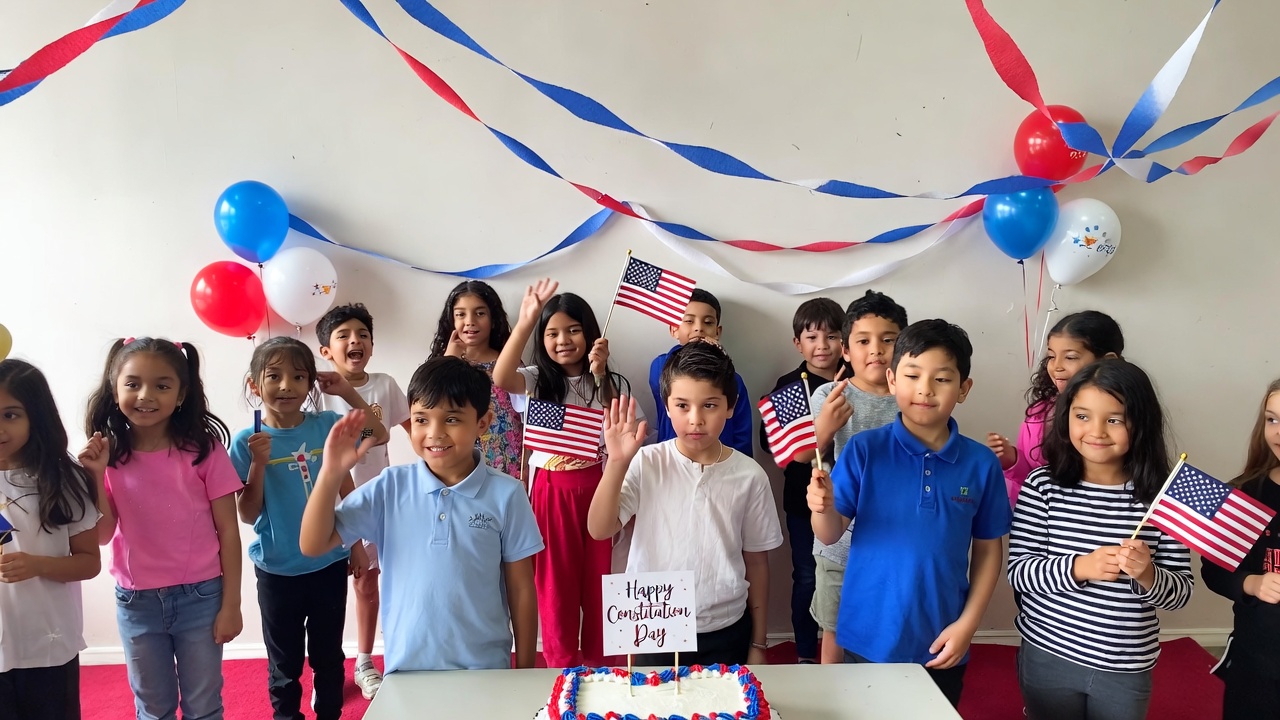
September 17, 2026, marks the 239th anniversary of the signing of the U.S. Constitution — and this year, it falls during America’s historic Semiquincentennial celebrations. Here is your ultimate guide to making Constitution Day exciting, hands-on, and unforgettable for children of all ages.
Every September, a quiet but powerful holiday arrives on the American calendar. It does not come with fireworks or parades. There is no turkey on the table and no gifts under a tree. Yet Constitution Day, observed each year on September 17, celebrates something that touches every American life: the document that built a nation.
For adults, the Constitution can feel like a dense legal text — all “We the People” and “establish justice” and carefully worded clauses. But for kids? It can be a gateway to adventure. The Constitution is really a story about fairness, about people arguing passionately over rules, about compromise and courage. When you strip away the old-fashioned language, children discover something surprisingly relatable: a group of people trying to agree on how to live together.
In 2026, there has never been a better moment to bring that story to life. The United States is in the middle of its 250th anniversary celebrations, a once-in-a-lifetime milestone that connects the Declaration of Independence signed in 1776 to the Constitution completed in 1787. Schools, museums, libraries, and families across the country are finding new ways to engage young people with the founding documents. This guide is packed with games, crafts, puzzles, and creative projects that turn Constitution Day from a dry history lesson into a day kids actually look forward to.
Whether you are a parent planning a weekend activity, a teacher preparing a September lesson, or a homeschooling family looking for hands-on civics projects, this article has something for every age group — from preschoolers tracing the Liberty Bell to middle schoolers running a mock constitutional law firm.
Let us roll up our sleeves and get started.
What Is Constitution Day and Why Do We Celebrate It on September 17
Before diving into activities, it helps to understand the holiday itself. Constitution Day commemorates September 17, 1787 — the day 39 delegates signed the United States Constitution at the Constitutional Convention in Philadelphia, Pennsylvania. That document, just 4,400 words long in its original form, established the framework for the American government that still functions today.
The holiday has an interesting modern backstory. In 2004, President George W. Bush signed a law that officially designated September 17 as Constitution Day and Citizenship Day. The law also created a practical requirement: every school that receives federal funding must provide educational programming about the Constitution on or near this date. An older law from 1956 designates September 17–23 as Constitution Week.
This means Constitution Day is not optional for public schools — it is mandated. But that mandate does not mean the day has to be boring. In fact, it is an open invitation to get creative.
Key facts kids should know about the Constitution:
| Fact | Detail |
|---|---|
| Date signed | September 17, 1787 |
| Location | Independence Hall, Philadelphia, PA |
| Number of signers | 39 delegates |
| Original word count | Approximately 4,400 words |
| Number of articles | 7 |
| Number of amendments | 27 (as of 2026) |
| First 10 amendments | Known as the Bill of Rights |
| Oldest signer | Benjamin Franklin (age 81) |
| “Father of the Constitution” | James Madison |
These facts alone can launch a trivia game, a scavenger hunt, or a classroom quiz. But the real magic happens when kids engage with the Constitution through play.
Best Constitution Day Games for Kids That Make Civics Fun
Games are arguably the fastest way to get kids interested in anything — and the Constitution is no exception. The good news is that a growing number of high-quality, free digital games now exist alongside classic analog activities that require nothing more than index cards and enthusiasm.
Digital Games Worth Bookmarking
1. “Do I Have a Right?” by iCivics
This is one of the most popular civics games available for students, and for good reason. Developed by iCivics, the nonprofit founded by former Supreme Court Justice Sandra Day O’Connor, Do I Have a Right? puts kids in charge of a constitutional law firm. Clients walk in with complaints, and players must decide whether the client’s constitutional rights have been violated. If the answer is yes, the player matches the client to the correct lawyer who specializes in the relevant amendment.
The game comes in two editions. The Full Edition covers rights across all constitutional amendments. The Bill of Rights Edition focuses on the first ten amendments. Both versions are free, available in English and Spanish, and include voice-over support for multilingual learners. The game is best suited for kids in grades 5–8, though younger players can enjoy it with adult guidance.
Why it works: Kids are not memorizing amendments from a list. They are making decisions under time pressure, building a business, and seeing how abstract rights apply to real-world situations. A child who plays this game for thirty minutes will remember more about the Fourth Amendment than one who reads about it in a textbook for an hour.
2. “Branches of Power” by iCivics
Also from iCivics, Branches of Power lets players control all three branches of the federal government — legislative, executive, and judicial. Kids propose laws, sign or veto them, and watch the system of checks and balances play out in real time. This game helps children understand why the Constitution divides power the way it does. It is suitable for grades 4–8.
3. “Executive Command” by iCivics
For kids who dream of running the country, Executive Command puts them in the Oval Office. Players experience the daily pressures and decisions of the presidency, grounded in the powers granted by Article II of the Constitution. It is a wonderful way to teach older elementary and middle school students about executive power without a lecture.
4. Preamble Scramble by the National Constitution Center
The National Constitution Center in Philadelphia offers an online unscramble activity where kids rearrange the phrases of the Preamble into the correct order. It sounds simple, but it is surprisingly tricky — and by the end, most kids can recite at least part of the Preamble from memory.
Analog Games for the Classroom and Living Room
Not every Constitution Day game needs a screen. Some of the best activities require only paper, pencils, and a bit of imagination.
5. Bill of Rights Bingo
Create bingo cards where each square contains a right from the Bill of Rights — “freedom of speech,” “right to a fair trial,” “no unreasonable searches,” and so on. The caller reads a scenario (“Your neighbor says the government searched her house without a warrant”), and players must identify which right applies and mark the matching square. This game works beautifully for grades 3–6 and can be adapted for younger learners by simplifying the language.
6. Constitutional Convention Role Play
Assign each child a role as one of the original delegates — George Washington, Benjamin Franklin, James Madison, Alexander Hamilton, and others. Give each “delegate” a card with that person’s key beliefs and concerns. Then stage a mock debate about a constitutional issue, such as how much power the president should have or whether to include a Bill of Rights. This activity teaches negotiation, compromise, and the messy reality of how the Constitution was actually created. It is ideal for grades 4–8.
7. “We the People” Relay Race
Divide kids into teams. Write the words of the Preamble on individual index cards — one word per card — and scatter them around the room or yard. Teams race to collect the words and arrange them in the correct order. The first team to assemble the complete Preamble wins. This game combines physical activity with memorization and works for ages 6 and up.
8. Amendment Charades
Write the 27 amendments on slips of paper. Kids draw a slip and must act out the amendment without speaking. Can the other players guess that the performer is miming “freedom of the press” or “the right to vote”? This game sparks laughter and surprisingly deep conversations about what each amendment means in practice.
Easy Constitution Day Crafts for Kids of All Ages
Crafts transform abstract ideas into something kids can touch, hold, and display. The Constitution might seem like a distant concept to a six-year-old, but a handmade scroll or a Liberty Bell made from construction paper makes it real. Below are crafts organized by age group, from the simplest projects for preschoolers to more involved creations for older children.
Crafts for Preschool and Kindergarten (Ages 3–5)
1. Mini Constitution Scroll
This is one of the most beloved Constitution Day crafts for young children, and it could not be simpler. You need brown construction paper (or white paper stained with tea bags for an aged parchment effect), two wooden dowels or pencils, tape, and a marker.
Steps:
- Cut a rectangle of brown or tea-stained paper, roughly 8 by 11 inches.
- Help the child write “We the People” across the top in large letters. Younger children can trace dotted letters.
- Tape a dowel or pencil to each short end of the paper.
- Roll the paper inward from both sides so it looks like an old scroll.
- Tie with a ribbon or piece of yarn.
This craft introduces the most famous phrase in American government while building fine motor skills. Display the scrolls on a bulletin board or mantelpiece, and you have an instant conversation starter.
2. Liberty Bell Paper Craft
Cut a bell shape from brown construction paper. Use a black marker to draw the famous crack. Glue the bell onto a blue background and let children decorate around it with star stickers or red-and-white stripes. Discuss with children why the Liberty Bell is a symbol of American freedom. This craft takes about 15 minutes and leaves little ones with a tangible piece of history they made themselves.
3. American Flag Handprint Art
Paint a child’s hand with red and white stripes on the fingers and a blue palm with white star stickers. Press the handprint onto white paper. This creates a personalized flag that doubles as a keepsake. It is messy, joyful, and absolutely appropriate for the youngest patriots.
Crafts for Elementary Students (Ages 6–10)
4. Illustrated Preamble Book
This is a powerful activity that many experienced teachers swear by. Print the Preamble in short phrases across several pages — for example, “We the People” on one page, “of the United States” on the next, “in order to form a more perfect union” on the third, and so on. Give each child a set of pages and ask them to illustrate what each phrase means to them.
A child might draw a group of diverse faces for “We the People.” Another might draw a handshake for “insure domestic tranquility.” The results are often surprisingly thoughtful. When assembled, these illustrated books can live in a classroom library all year long.
5. Rights and Responsibilities Wheel
This craft teaches the important concept that rights come with responsibilities. Cut two circles from cardstock — one slightly larger than the other. On the outer circle, write rights from the Bill of Rights (such as “freedom of speech” and “right to vote”). On the inner circle, write corresponding responsibilities (“respect others’ speech” and “stay informed about candidates”). Attach the circles in the center with a brass fastener so the inner circle spins. Children rotate the wheel to match rights with their responsibilities.
6. “We the People” Collaborative Poster
This is perfect for classrooms. Give each student one letter from the phrase “We the People of the United States.” Students decorate their letter with patriotic colors, drawings, or collage materials. Assemble the letters on a bulletin board to create a large collaborative display. The poster itself becomes a lesson: just as many people worked together to create the Constitution, many students work together to create the poster.
7. Patriotic Eagle Craft
The bald eagle is the national bird of the United States and appears on the Great Seal. Provide templates for an eagle shape, or let kids draw their own. Use brown paper for the body, white paper for the head, and yellow paper for the beak and talons. Add real feathers if available. Discuss why the eagle was chosen as a national symbol and how it connects to the values in the Constitution.
Crafts for Older Kids and Middle Schoolers (Ages 10–14)
8. Constitution Agamograph
An agamograph is a zigzag-folded art piece that shows one image from one angle and a different image from another. For Constitution Day, one side can display an image of the Constitution and the other side can show a patriotic star or the American flag. Templates for this craft are available from many teacher resource sites. It is a hit with older students who want something more sophisticated than coloring pages.
9. Class Constitution Parchment
This is both a craft and a civic exercise. Students collaboratively draft a “Class Constitution” — a set of rules and principles that will govern their classroom for the year. They write the final version on parchment-style paper using calligraphy or careful lettering. Each student signs the document with a quill pen (or a regular pen dipped in ink for dramatic effect). Frame the finished document and hang it in the classroom. This activity mirrors the real Constitutional Convention and gives students genuine ownership of their community norms.
Constitution Day Puzzles and Printable Activities for Every Grade Level
Puzzles engage a different part of the brain than games and crafts. They require patience, vocabulary knowledge, and problem-solving skills. For Constitution Day, puzzles also serve a sneaky educational purpose: kids absorb civics vocabulary — words like “amendment,” “preamble,” “ratify,” “delegate,” and “judiciary” — without even realizing they are studying.
Word Searches
A Constitution Day word search is one of the easiest no-prep activities available. You can find free printable word searches from websites like ConstitutionFacts.com and The Holiday Zone. These puzzles ask students to find terms related to the Constitution hidden in a grid of letters.
For younger students (grades 1–3), choose word searches with 8–10 simple words like “flag,” “vote,” “rights,” “law,” and “freedom.” For older students (grades 4–8), increase the difficulty with words like “ratification,” “federalism,” “judicial review,” “amendment,” and “bicameral.”
Tip: After completing the word search, have students pick three words they found and write a sentence using each one. This transforms a simple puzzle into a vocabulary exercise.
Crossword Puzzles
Crossword puzzles are fantastic for building recall. Constitution-themed crosswords typically include clues like “The first ten amendments are called the ___” (BILL OF RIGHTS) or “He is known as the Father of the Constitution” (MADISON). Free printable crosswords are available from Rudolph Academy and WordMint, where teachers can also create custom puzzles tailored to their students’ level.
Preamble Unscramble
The National Constitution Center’s Preamble Scramble activity — available both online and as a printable — cuts the Preamble into individual phrases and challenges kids to arrange them in the correct order. This is harder than it sounds. The Preamble contains 52 words, and most adults cannot recite it from memory. For kids, successfully unscrambling it feels like a genuine achievement.
Code-Cracking Activities
These puzzles assign a number or symbol to each letter of the alphabet. Students must decode a hidden message related to the Constitution — perhaps a famous quote from Benjamin Franklin or a phrase from the Bill of Rights. Code-cracking activities appeal to kids who enjoy logic puzzles and detective work.
Constitution Day Trivia Quiz
Put together a trivia quiz with questions like:
- How many articles does the Constitution have? (7)
- What are the first three words of the Constitution? (We the People)
- Which amendment gives women the right to vote? (19th Amendment)
- How old was Benjamin Franklin when he signed the Constitution? (81)
- What city hosted the Constitutional Convention? (Philadelphia)
Trivia quizzes can be played individually, in teams, or as a whole-class competition. Add a buzzer or bell for extra excitement.
Maze Activities
Constitution-themed mazes — where kids guide a character through a path to reach the Founding Fathers or the Constitution document — are great for younger children. They build spatial reasoning while keeping the theme festive.
How to Create a Classroom Constitution with Your Students
One of the most meaningful Constitution Day activities has nothing to do with worksheets or screens. It involves asking kids to write their own constitution for their classroom.
This idea comes up repeatedly in educator circles because it works on multiple levels. It teaches the purpose of a constitution — a written set of rules that governs a community. It builds social skills like negotiation and compromise. And it gives students a personal stake in the rules they follow every day.
Here is how to do it, step by step:
Step 1: Discuss what a constitution is. Keep it simple. A constitution is a set of organized rules that helps guide how an organization works. The U.S. Constitution guides the American government. A class constitution will guide the classroom.
Step 2: Brainstorm rights and responsibilities. Ask students: What rights should everyone in this classroom have? Expect answers like “the right to be heard,” “the right to feel safe,” and “the right to ask for help.” Then ask: What responsibilities come with those rights? This mirrors the real tension in the Constitution between individual freedom and collective duty.
Step 3: Draft the document together. Write the brainstormed ideas on chart paper. Help students organize them into sections — a preamble that explains the constitution’s purpose, a list of rights, a list of responsibilities, and any rules the class agrees on.
Step 4: Vote. Just as the original Constitution required ratification by the states, your class constitution should be ratified by a vote. Discuss what happens if not everyone agrees. This is a perfect teaching moment about majority rule and minority rights.
Step 5: Sign the document. Have every student sign their name on the finished document, preferably with a special pen. Hang the class constitution in a prominent place.
Step 6: Compare. Read parts of the real U.S. Constitution alongside your class constitution. Students will be amazed at the parallels.
This activity works for grades 2–8 and can be adjusted in complexity. Younger children might create a simple list of five rules. Older students can draft a multi-section document with a formal preamble.
Constitution Day Books That Help Kids Understand the Founding Document
Reading aloud is one of the simplest and most effective ways to build background knowledge before diving into activities. Several excellent children’s books break down the Constitution’s language and history into terms kids can understand.
Recommended reads by age group:
| Book Title | Author | Best For | Why It Works |
|---|---|---|---|
| We the Kids: The Preamble to the Constitution of the United States | David Catrow | Ages 4–8 | Takes each phrase of the Preamble and pairs it with humorous illustrations showing what the words might mean to kids |
| A More Perfect Union: The Story of Our Constitution | Betsy Maestri | Ages 6–10 | Tells the story of the Constitutional Convention in narrative form |
| The Constitution Decoded: A Guide to the Document That Shapes Our Nation | Katie Kennedy | Ages 10–14 | Explains each section of the Constitution with modern examples |
| Shh! We’re Writing the Constitution | Jean Fritz | Ages 7–11 | A behind-the-scenes look at the Convention with humor and historical accuracy |
| If You Were a Kid When They Signed the Constitution | Wil Mara | Ages 6–9 | A fictional story set during the Convention that weaves in real historical facts |
Tip: Use reading time as a vocabulary-building exercise. Have students jot down unfamiliar words as they listen. After reading, create a class vocabulary list and refer back to it during games and activities throughout the day.
How to Teach the Bill of Rights to Kids Through Hands-On Activities
The Bill of Rights — the first ten amendments to the Constitution, ratified in 1791 — deserves special attention on Constitution Day. These amendments protect the individual freedoms Americans often take for granted: speech, religion, assembly, a fair trial, and more.
For kids, the concept of “rights” can be abstract. The following activities make it concrete.
Bill of Rights Jigsaw Puzzle
Print each of the ten amendments on a separate card. Cut each card into puzzle pieces. Mix all the pieces together and challenge kids to reassemble all ten amendments. This is tactile, cooperative, and surprisingly effective at building familiarity with the amendments.
Scenario Sorting Activity
Write ten everyday scenarios on index cards — for example, “A student is told she cannot wear a political t-shirt to school” or “Police search a family’s car without permission.” Write the ten amendments on separate cards. Kids must match each scenario to the correct amendment. Discuss any scenarios where multiple amendments might apply.
Bill of Rights Illustrated Booklet
Similar to the Illustrated Preamble activity, have students create a booklet where each page features one amendment, translated into kid-friendly language and illustrated with a drawing. For example, the First Amendment might be written as “You have the right to say what you think, pray how you choose, and gather peacefully with others.” The accompanying drawing might show a child holding a protest sign or attending a religious service.
Amendment Rap or Song
Challenge students to write a rap, poem, or song about one or more amendments. If you want to give them inspiration, search for the Schoolhouse Rock classic “The Preamble” on YouTube. Its catchy tune has helped generations of American students memorize the Preamble’s 52 words. Students might choose to write about the 13th Amendment (which ended slavery in 1865) or the 19th Amendment (which gave women the right to vote in 1920), connecting historical struggles to the rights they enjoy today.
Constitution Day Activities for Preschoolers and Kindergartners
Very young children cannot read the Constitution or debate the merits of federalism. But they can begin building the foundations of civic understanding through age-appropriate activities that emphasize community, fairness, and symbols.
Patriotic Coloring Pages. The National Constitution Center and sites like Teach Starter offer free Constitution Day coloring pages featuring the Liberty Bell, the American flag, the bald eagle, and Independence Hall. Coloring is a calming, focused activity that introduces national symbols to young minds.
Constitution Day Mini-Book. Several teacher resource sites offer free printable mini-books for early readers. These tiny booklets contain simple sentences like “The Constitution is a set of rules for our country” paired with pictures to color. They build reading skills while teaching basic civics.
Patriotic Sensory Bin. Fill a bin with red, white, and blue rice (dyed with food coloring and vinegar). Add small star-shaped cookie cutters, miniature flags, and letter beads spelling “USA.” Toddlers and preschoolers explore the bin freely, developing fine motor skills while absorbing patriotic imagery.
Voting Activity. Give children a simple choice — “Should our class snack be apples or crackers?” — and let them vote by placing a sticker on a chart. Count the votes together. Explain that voting is how Americans make decisions, and the Constitution protects that right. This is democracy in its most basic, delicious form.
Constitution Day in the Age of America 250: Why 2026 Is a Special Year
Constitution Day 2026 carries extra significance. It arrives in the middle of the United States Semiquincentennial — the 250th anniversary of the Declaration of Independence, which will reach its climax on July 4, 2026.
The America250 initiative, a bipartisan effort involving a congressionally established commission, has been working since 2016 to engage every American in this celebration. One of their key programs, America’s Field Trip, invites students in grades 3–12 to submit original artwork or writing answering the question: “What does America mean to you?” Winners earn unique experiences at iconic American historical and cultural sites.
For educators and families, the Semiquincentennial creates a natural throughline from the Declaration of Independence (1776) to the Constitutional Convention (1787). Constitution Day is the perfect moment to connect these two documents. The Declaration announced the ideals — liberty, equality, the pursuit of happiness. The Constitution built the system to protect those ideals.
Ways to connect Constitution Day to America 250 in 2026:
- Timeline project. Have kids create a visual timeline from 1776 to 1787, showing key events between the Declaration and the Constitution — the Revolutionary War, the Articles of Confederation, Shays’ Rebellion, and finally the Constitutional Convention.
- Then-and-now comparison. Ask students to compare life in 1787 with life in 2026. Who could vote then? Who can vote now? What rights did people have? What rights have been added through amendments?
- Submit to America’s Field Trip. Encourage students to create artwork or essays for the America250 program. Constitution Day is a natural inspiration for submissions.
- Watch “Liberty’s Kids.” This animated series, freely available online, features young characters living through major events of the Revolutionary period. The episode about the Constitutional Convention brings the drama and debate of 1787 to life in a way that resonates with children ages 6–12.
Free Online Resources and Printable Downloads for Constitution Day 2026
One of the best things about Constitution Day is the abundance of free, high-quality resources available to parents and teachers. Here are the most reliable sources:
| Resource | What It Offers | Best For | Link |
|---|---|---|---|
| iCivics | Free games, lesson plans, and extension packs | Grades 3–12 | icivics.org |
| National Constitution Center | Preamble Scramble, quizzes, classroom activities, virtual field trips | All ages | constitutioncenter.org |
| ConstitutionFacts.com | Crossword puzzles, kid-friendly Constitution text, trivia | Grades 2–8 | constitutionfacts.com |
| Teach Starter | Printable worksheets, word searches, coloring pages, mini-books | PreK–6 | teachstarter.com |
| America250 | America’s Field Trip contest, volunteer initiatives, historical resources | Grades 3–12 | america250.org |
| PBS Constitution USA | Games, quizzes, and videos hosted by Peter Sagal | Grades 5–12 | pbs.org |
| Studies Weekly | Classroom activities, primary source images, and videos | Grades K–6 | studiesweekly.com |
Most of these resources are completely free. Some teacher marketplace sites like Teachers Pay Teachers also offer both free and paid Constitution Day activity bundles, including word searches, crossword puzzles, crafts, and reading passages differentiated for multiple grade levels.
How to Plan a Constitution Day Party at Home or School
Who says Constitution Day cannot be a party? With a little planning, September 17 can feel as festive as any holiday. Here is a sample schedule for a Constitution Day celebration that works at home or in a classroom.
Sample Constitution Day Party Schedule (2–3 hours):
| Time | Activity | Materials Needed |
|---|---|---|
| 0:00–0:15 | Read-aloud: We the Kids by David Catrow | Book or digital copy |
| 0:15–0:35 | Craft: Mini Constitution Scrolls | Brown paper, dowels, markers, ribbon |
| 0:35–0:55 | Game: Preamble Relay Race | Index cards with Preamble words |
| 0:55–1:10 | Snack break with patriotic treats (star-shaped cookies, red-white-and-blue fruit skewers) | Food supplies |
| 1:10–1:30 | Puzzle time: Word search and crossword | Printed puzzles, pencils |
| 1:30–1:50 | Activity: Write a Family or Class Constitution | Chart paper, markers, special pen for signing |
| 1:50–2:00 | Wrap-up: Constitution Day trivia quiz with small prizes | Quiz questions, stickers or bookmarks as prizes |
Party decoration ideas: Hang red, white, and blue streamers. Print the Preamble in large letters and tape it to the wall. Display pictures of the Founding Fathers. Create a “We the People” photo booth with props like tricorn hats, quill pens, and speech bubbles with famous Constitution quotes.
Patriotic snack ideas: Star-shaped sandwiches made with cookie cutters. Blueberries, strawberries, and whipped cream layered in cups. Red-and-blue frosted cupcakes with fondant stars.
Tips for Making Constitution Day Engaging for Reluctant Learners
Not every child will leap at the chance to study a 239-year-old document. Here are strategies for reaching kids who might initially resist.
Connect to their world. Ask: “Should students have the right to use phones in school?” or “Is it fair for a teacher to search your backpack?” These questions connect directly to constitutional principles — free speech, unreasonable search — but they start with situations kids care about.
Let them lead. The class constitution activity works especially well for reluctant learners because it gives them power. They are not studying someone else’s rules. They are creating their own.
Use humor. The Constitutional Convention was full of colorful personalities and surprising moments. Benjamin Franklin, at 81, was so frail he had to be carried to the Convention in a sedan chair. Delegates argued so fiercely that George Washington barely spoke during the entire summer. These human details make the story funny and relatable.
Offer choice. Some kids thrive with puzzles. Others prefer crafts. Still others want to play digital games. Let students choose their activity, and engagement soars.
Keep it short. Constitution Day does not need to consume an entire school day. Even 30 minutes of focused, fun activity satisfies the federal mandate and plants a seed of civic awareness.
Constitution Day Activities Aligned with Common Core and State Standards
For teachers who need to document standards alignment, Constitution Day activities connect naturally to multiple academic standards.
English Language Arts: Reading informational text (reading the Preamble or kid-friendly Constitution summaries), writing (creating a class constitution, writing about amendments), vocabulary development (civics terms), and speaking and listening (debates, role plays, presentations).
Social Studies: Understanding the purpose and structure of government, identifying the roles of citizens, explaining the significance of national symbols and documents, and analyzing primary sources.
Visual Arts: Creating patriotic artwork, designing posters, building crafts that represent constitutional concepts.
Mathematics: For younger students, Constitution Day can even connect to math through counting activities (counting the 39 signers, the 27 amendments, the 7 articles) and graphing (surveying classmates on favorite amendments and creating bar graphs).
The C3 Framework (College, Career, and Civic Life) for Social Studies, widely adopted across states, emphasizes inquiry-based learning — exactly the kind of learning that Constitution Day games, puzzles, and projects encourage.
How the National Constitution Center Celebrates Constitution Day Every Year
No discussion of Constitution Day is complete without mentioning the National Constitution Center in Philadelphia. Located on Independence Mall, just steps from where the Constitution was signed, this museum is the country’s leading platform for civic education.
Each year on September 17, the National Constitution Center hosts a Naturalization Ceremony where new citizens take the Oath of Allegiance. It is a moving event that connects the 1787 signing to the living reality of American citizenship today. The ceremony is often available to watch online.
The Center also offers a rich library of free educational resources for teachers and families. These include lesson plans, classroom activities, classroom videos, and their Constitution 101 curriculum — a set of 15 modules with videos, activities, and assessments that explore the Constitution’s history and principles. Their Interactive Constitution feature pairs the full text of the document with nonpartisan analysis from top constitutional scholars.
For families visiting Philadelphia, the museum itself is a must-see destination. Its exhibits bring the Constitution to life with interactive displays, historical artifacts, and multimedia presentations. The Signers’ Hall features life-sized bronze statues of the 39 delegates who signed the Constitution and the 3 who refused — a powerful visual that reminds visitors these were real people making real choices.
Constitution Day Beyond the Classroom: Community Events and Family Activities
Constitution Day is not just for schools. Communities across the United States mark the occasion with public events that welcome families.
Library programs. Many public libraries host Constitution Day story times, craft sessions, and trivia contests during the week of September 17. Check your local library’s event calendar in early September.
Museum events. History museums, presidential libraries, and civic organizations often offer special Constitution Day programming. In 2026, with America 250 celebrations in full swing, expect expanded offerings nationwide.
Courthouse visits. Some federal and state courthouses open their doors for Constitution Day tours and mock trial demonstrations. Contact your local courthouse to ask about family-friendly events.
Community service. The America Gives initiative, part of the Semiquincentennial celebration, encourages Americans to make 2026 a record-setting year for volunteer service. Constitution Day is a perfect occasion to teach kids that citizenship is not just about rights — it is about giving back.
At-home celebration. Even without a public event nearby, families can celebrate at home. Cook a meal from a recipe that might have been served in 1787 Philadelphia (think hearty stews, cornbread, and apple pie). Watch a documentary about the Constitution together. Play a round of Amendment Charades after dinner. The point is not to create a perfect lesson plan. The point is to make the Constitution part of your family’s story.
Why Teaching Kids About the Constitution Matters More Than Ever in 2026
In a year dominated by the Semiquincentennial, it is tempting to focus on the celebration and the spectacle. But the deeper purpose of Constitution Day — especially for children — is building civic literacy.
Research consistently shows that civic knowledge among American young people is alarmingly low. Many students graduate high school without being able to name all three branches of government or explain what the Bill of Rights protects. Constitution Day, even in its simplest form, pushes back against that trend.
When a child plays Do I Have a Right? and learns that the Fourth Amendment protects against unreasonable searches, that knowledge stays. When a second grader signs a class constitution, she begins to understand that rules are not just imposed from above — they are agreed upon by a community. When a middle schooler debates the merits of the Electoral College during a mock convention, he practices the skills of democratic participation.
These are not abstract lessons. They are the building blocks of a functioning republic. And they start with a single day in September — a day of games, crafts, puzzles, and the joyful discovery that a 239-year-old document still matters.
Final Thoughts: Make Constitution Day 2026 a Day Kids Remember
Constitution Day does not need to be solemn. It does not need to be complicated. It needs to be real.
Give kids something to hold — a scroll they made, a puzzle they solved, a constitution they wrote and signed. Give them something to play — a game where they run a law firm or race to assemble the Preamble. Give them something to argue about — whether their classroom needs a rule about gum, whether the Bill of Rights should include the right to recess.
When children engage with the Constitution through their hands and their hearts, not just their heads, they begin to see it for what it truly is: not a dusty old document, but a living agreement — one that belongs to them as much as it belonged to the men who signed it on a warm September day in Philadelphia, 239 years ago.
Happy Constitution Day 2026. Now go make something.
Did you find this guide useful? Share it with a fellow parent or teacher who is planning their Constitution Day celebration. And if you try any of these activities, we would love to hear about it — tag your photos and stories with #ConstitutionDay2026 and #America250.