Celebrate American history with these creative, educational, and entertaining projects the whole family will love
There’s a particular magic that settles over the third Monday of February—a day when we pause to honor the remarkable individuals who have shaped our nation from behind the resolute desk of the Oval Office. Presidents’ Day offers families a golden opportunity to transform history from dusty textbook pages into something children can touch, create, and remember. Whether your little ones are just learning to hold scissors or your teenagers are crafting college application essays, these activities bridge generations and bring American heritage to vivid life.
Easy Presidents’ Day Crafts for Preschoolers and Toddlers
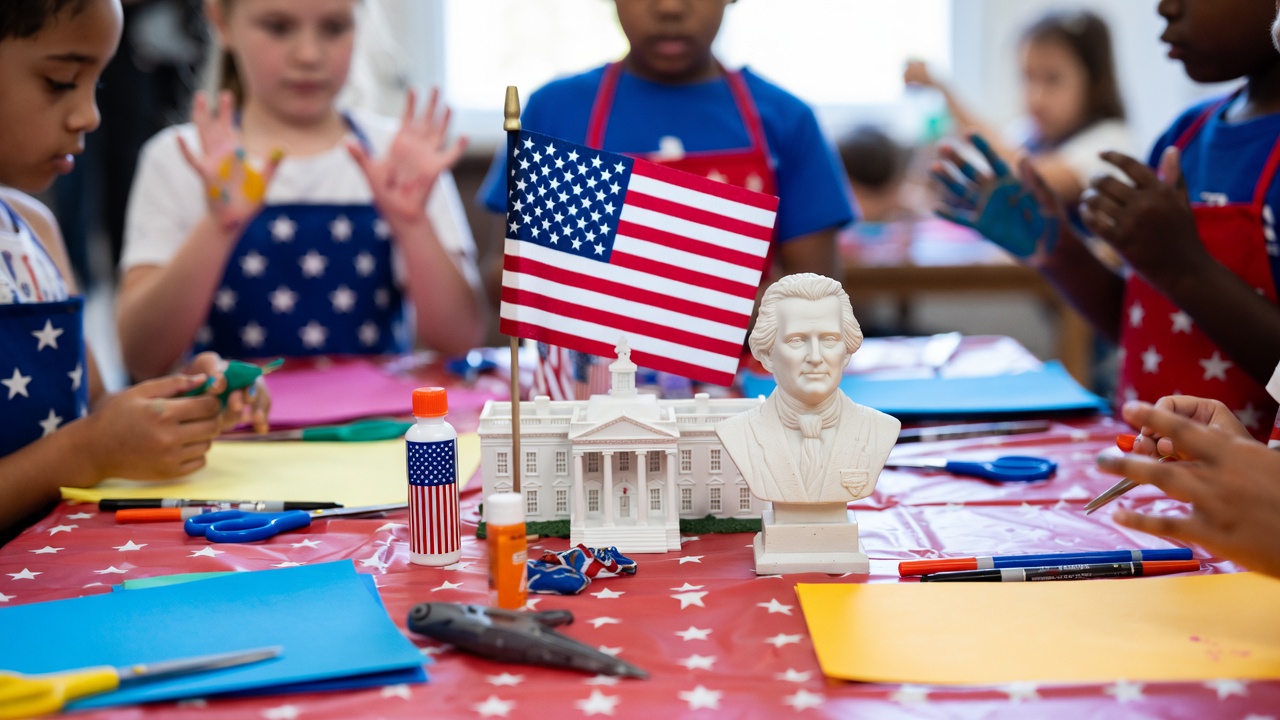
The youngest patriots among us deserve projects that match their boundless enthusiasm with manageable complexity. For children ages two through five, tactile experiences reign supreme. Consider the classic paper plate portrait: using a sturdy white plate as your canvas, guide tiny fingers in gluing cotton balls to create George Washington’s iconic powdered wig or Abraham Lincoln’s distinguished beard made from crinkled black construction paper.
Another beloved option involves handprint art. A child’s palm, dipped in red, white, and blue paint and pressed onto cardstock, transforms into a patriotic keepsake. Add googly eyes and a construction paper hat, and suddenly that handprint becomes a miniature commander-in-chief. These projects require minimal fine motor skills while maximizing creative satisfaction.
| Craft Project | Materials Needed | Time Required | Mess Level |
|---|---|---|---|
| Paper Plate Presidents | Paper plates, cotton balls, construction paper, glue | 20 minutes | Low |
| Handprint Patriots | Washable paint, cardstock, googly eyes | 15 minutes | Medium |
| Flag Collage | Tissue paper squares, glue stick, template | 25 minutes | Low |
| Lincoln’s Log Cabin | Pretzel sticks, cardboard base, frosting glue | 30 minutes | Medium |
| Cherry Tree Craft | Brown paper bag, red pom-poms, green paper | 20 minutes | Low |
Simple Abraham Lincoln Hat Craft Ideas for Elementary Students
Few presidential symbols capture children’s imaginations quite like Lincoln’s towering stovepipe hat. For elementary-aged children, constructing their own wearable version provides both historical connection and dramatic play possibilities. Begin with black poster board, measuring a strip long enough to encircle the child’s head with an inch of overlap. This forms the hat’s base cylinder.
Cut a wide circle for the brim, then a smaller circle from its center—sized to match the cylinder’s circumference. The cylinder attaches to this ring with tape or staples, and a circular top completes the silhouette. Children can embellish their creation with a paper buckle or ribbon band, just as nineteenth-century haberdashers might have done. When the hat sits upon their heads, watch how they stand a little taller, perhaps channeling some of the Great Emancipator’s quiet dignity.
George Washington Cherry Tree Activities for Kindergarten Kids
The legend of young George and the cherry tree—though likely apocryphal—endures because it speaks to values we hope to cultivate in our children: honesty, accountability, and moral courage. Kindergarteners particularly delight in activities centered around this story, which combines nature, narrative, and craft in equal measure.
Create a “growing honesty tree” for your classroom or living room wall. Cut a tree trunk and branches from brown butcher paper and mount it at child height. Throughout the week leading to Presidents’ Day, invite children to share moments when they chose honesty; each admission earns a red tissue-paper cherry to add to the branches. By holiday’s end, the tree blooms with integrity.
Cherry Tree Activity Variations:
- Sensory Bin Adventure: Fill a container with dried red beans (cherries), brown rice (soil), and small plastic shovels. Hide small Washington figurines or coins for discovery.
- Counting Game: Use red pom-poms and a paper tree to practice number recognition—”Can you put seven cherries on the tree?”
- Story Sequencing: Illustrate the cherry tree tale across four panels, then have children arrange them in proper order.
- Cherry Stamping Art: Cut an apple in half horizontally, dip in red paint, and stamp to create cherry-like circles around a painted tree.
DIY Patriotic Presidents’ Day Decorations for Your Home
Transform your household into a celebration of American leadership with decorations that children can help create. These projects serve double duty: they beautify shared spaces while reinforcing the holiday’s significance through hands-on participation.
A presidential portrait gallery makes for particularly striking décor. Print or photocopy images of various presidents, then provide children with frames made from popsicle sticks painted in metallic gold or silver. Arrange these along a hallway or staircase, creating a “Hall of Presidents” that sparks conversation and curiosity. Who has the most interesting facial hair? Which president looks kindest? These questions lead naturally to deeper historical exploration.
Bunting crafted from scrapbook paper in stars-and-stripes patterns drapes beautifully across mantels and doorways. Cut triangles, punch holes in the top corners, and thread onto ribbon or twine. The repetitive nature of this craft makes it ideal for children who find comfort in predictable patterns while still producing impressive results.
Educational Presidents’ Day Games and Learning Activities
The most effective learning often disguises itself as play. These games transform presidential facts from rote memorization into genuine engagement, ensuring that children retain what they discover long after the holiday passes.
Presidential Bingo remains a perennial favorite. Create cards featuring presidential portraits, monuments, or historical symbols. As you call out facts—”This president was the first to live in the White House” or “He gave the Gettysburg Address”—players cover the corresponding images. First to complete a row wins a small prize, perhaps a presidential dollar coin or patriotic sticker.
Memory Match adapts easily to the theme. Create pairs of cards showing presidents alongside their key accomplishments, or match portraits to the states where they were born. For older children, increase difficulty by pairing lesser-known commanders-in-chief with their signature legislation or historical moments.
| Game | Age Range | Players | Educational Focus |
|---|---|---|---|
| Presidential Bingo | 5-12 | 2-20 | Fact recognition, listening skills |
| Memory Match | 4-10 | 2-4 | Visual memory, historical connections |
| Timeline Race | 8-14 | 2-6 | Chronological understanding |
| Electoral College Map | 10+ | 2-4 | Geography, civics |
| Presidential Trivia | 8-adult | 2-teams | General knowledge |
| “Who Am I?” Guessing | 6-12 | 3-10 | Deductive reasoning |
Free Printable Presidents’ Day Worksheets and Coloring Pages
Sometimes the simplest activities prove most valuable. Coloring pages featuring presidential portraits allow children to study faces that shaped history while developing fine motor control. The meditative quality of coloring creates space for conversation: “Why do you think Lincoln looked so serious in photographs?” or “What do you notice about Washington’s expression?”
Word searches and crossword puzzles reinforce vocabulary—terms like “constitution,” “democracy,” “liberty,” and “amendment” become familiar friends rather than intimidating abstractions. For emerging readers, simple fill-in-the-blank sentences provide scaffolded learning: “George __________ was the first president” or “Abraham Lincoln freed the __________.”
Recommended Printable Activities by Age:
- Ages 3-5: Simple coloring pages, dot-to-dot numbers 1-20, tracing activities
- Ages 6-8: Word searches, basic crosswords, reading comprehension passages
- Ages 9-11: Research worksheets, compare-and-contrast graphic organizers, timeline activities
- Ages 12+: Essay prompts, primary source analysis guides, debate preparation sheets
Presidents’ Day Party Ideas and Themed Snacks for Children
A holiday celebration elevates any occasion from ordinary to memorable. Consider hosting a Presidents’ Day gathering complete with themed refreshments that delight both palate and imagination.
The culinary possibilities prove surprisingly abundant. Cherry pie—nodding to the Washington legend—serves as an obvious centerpiece. Lincoln Logs, constructed from pretzel rods and peanut butter or cream cheese, make for interactive appetizers. Red, white, and blue fruit skewers (strawberries, bananas, blueberries) provide nutritious color. For beverages, “Election Punch” combining cherry juice, lemon-lime soda, and blue sports drink creates a patriotic gradient when layered carefully.
Presidential Party Menu Ideas:
| Course | Item | Presidential Connection |
|---|---|---|
| Appetizer | Lincoln Log Pretzel Sticks | Log cabin birthplace |
| Appetizer | Mount Rushmore Cheese Platter | Presidential monument |
| Main | Liberty Bell Sandwiches (bell-shaped cookie cutter) | American freedom symbol |
| Side | Stars and Stripes Veggie Tray | Flag representation |
| Dessert | Cherry Hand Pies | Washington legend |
| Dessert | Presidential Cupcakes with Fondant Hats | Lincoln’s stovepipe hat |
| Beverage | Red, White & Blue Layered Punch | Patriotic colors |
How to Teach Kids About Presidents’ Day History and Meaning
Beyond crafts and celebrations lies the holiday’s deeper purpose: understanding the individuals who have guided our nation through triumph and tribulation. Age-appropriate conversations help children grasp why we dedicate a day to presidential remembrance.
For younger children, focus on concrete concepts. Presidents are leaders who help make rules to keep people safe and treat everyone fairly. George Washington helped create our country, and Abraham Lincoln worked to make sure all people were treated equally. These simplified explanations plant seeds that grow more nuanced with time.
Older children can explore complexity. Discuss how presidents are chosen through elections, how their decisions affect millions of lives, and how historians evaluate their legacies. Encourage critical thinking: What qualities make an effective leader? How do we judge historical figures by modern standards? These conversations cultivate the informed citizenship our democracy requires.
Discussion Questions by Age Group:
- Ages 4-6: What does a president do? Who helps the president? Would you want to be president someday?
- Ages 7-9: Why do we have elections? What’s the hardest part of being president? How do presidents help people?
- Ages 10-13: How has the presidency changed over time? What challenges did Lincoln face? How do presidents work with Congress?
- Ages 14+: How do we evaluate presidential legacies? What role should personal character play in leadership? How has the electoral process evolved?
Presidents’ Day Books and Read-Aloud Stories for Young Learners
Literature breathes life into history. The right book transforms distant figures into relatable humans—people who were once children themselves, with dreams and fears and favorite foods. A well-chosen read-aloud creates shared experience while building historical understanding.
For the youngest listeners, picture books like Duck for President by Doreen Cronin offer humorous introductions to the electoral process. Abe Lincoln’s Hat by Martha Brenner tells the charming tale of how our sixteenth president used his famous headwear as a filing system. A Picture Book of George Washington by David A. Adler provides straightforward biography accessible to kindergarteners.
Middle-grade readers might enjoy Who Was George Washington? or Who Was Abraham Lincoln? from the beloved biographical series. These chapter books balance factual content with engaging narrative, perfect for independent reading or family read-aloud sessions. For advanced readers, Lincoln: A Photobiography by Russell Freedman earned the Newbery Medal for its compelling, nuanced portrait.
Outdoor Presidents’ Day Activities and Nature Walks for Families
February’s chill need not confine celebrations indoors. Nature itself offers opportunities for presidential exploration, particularly in regions where cherry trees bloom or historical sites beckon.
Plan a “Presidential Scavenger Hunt” through your neighborhood or local park. Create a checklist featuring items connected to Presidents’ Day themes: something red, white, and blue; a tree (honoring the cherry tree legend); something that represents leadership; the number four (for the four-year presidential term). Children photograph or sketch each discovery, creating a visual record of their adventure.
If you’re fortunate enough to live near Washington D.C., or visiting during the holiday weekend, the possibilities multiply exponentially. The National Mall, with its monuments to Washington, Lincoln, and Jefferson, offers unparalleled experiential learning. Even photographs of these sites—studied beforehand and discussed during your local walk—help children understand scale and significance.
Virtual Museum Tours and Online Presidents’ Day Resources for Homeschool
Technology expands educational horizons beyond physical limitations. Families unable to visit Mount Vernon or the Lincoln Memorial can still experience these sacred spaces through digital exploration.
The White House Historical Association offers virtual tours through the executive mansion’s storied rooms. Mount Vernon’s website features interactive exhibits about Washington’s life, including 360-degree views of his plantation home. The Abraham Lincoln Presidential Library and Museum provides digital collections ranging from handwritten documents to personal artifacts.
Top Virtual Resources:
- White House Virtual Tour: Explore the People’s House room by room
- Mount Vernon Interactive: George Washington’s estate with educational videos
- Lincoln Presidential Museum Digital Collections: Primary sources and artifacts
- National Archives DocsTeach: Original documents with teaching activities
- Smithsonian Learning Lab: Curated collections on presidential history
- C-SPAN Classroom: Video clips and lesson plans for older students
Creative Writing Prompts and Journal Ideas for Presidents’ Day
Writing allows children to process and personalize historical learning. These prompts encourage imagination while reinforcing knowledge, suitable for classroom journals or kitchen-table scribbling.
Younger children might respond to simple scenarios: “If you could have lunch with any president, who would you choose and what would you eat?” or “Draw a picture of the White House and write three words describing it.” The combination of visual and written expression accommodates varying developmental levels.
Older students benefit from more challenging prompts: “Write a diary entry from Lincoln’s perspective on the night before delivering the Gettysburg Address” or “Compose a letter to a future president explaining what you hope they will accomplish.” These exercises build empathy and historical imagination while developing writing skills.
Journal Prompts by Writing Level:
- Beginning Writers: Draw your favorite president. Write their name.
- Emerging Writers: What is one thing you learned about George Washington?
- Developing Writers: If you were president for one day, what rule would you make?
- Fluent Writers: Compare and contrast two presidents you have studied.
- Advanced Writers: Argue whether Presidents’ Day should honor all presidents or only specific individuals.
Conclusion: Making Presidents’ Day Memories That Last
The crafts dry and the snacks disappear, but the memories we create with children during holidays like Presidents’ Day endure across lifetimes. When we fold paper into hats and layer fruit into patriotic patterns, we’re doing more than keeping small hands busy—we’re weaving our children into the great tapestry of American story, helping them understand that they, too, are participants in this ongoing experiment in democracy.
Perhaps the child who colors Washington’s portrait today will someday stand before his monument in awe. Perhaps the teenager who debates presidential legacies around the dinner table will cast informed votes for decades to come. These seeds we plant in February take root in ways we cannot always see, growing into the civic engagement our nation needs.
So spread newspaper across the kitchen table. Gather the glue sticks and glitter. Tell the old stories and ask the new questions. In doing so, we honor not just the presidents of our past, but the citizens of our future—the small hands that will someday shape what America becomes.
Happy Presidents’ Day, and happy crafting!