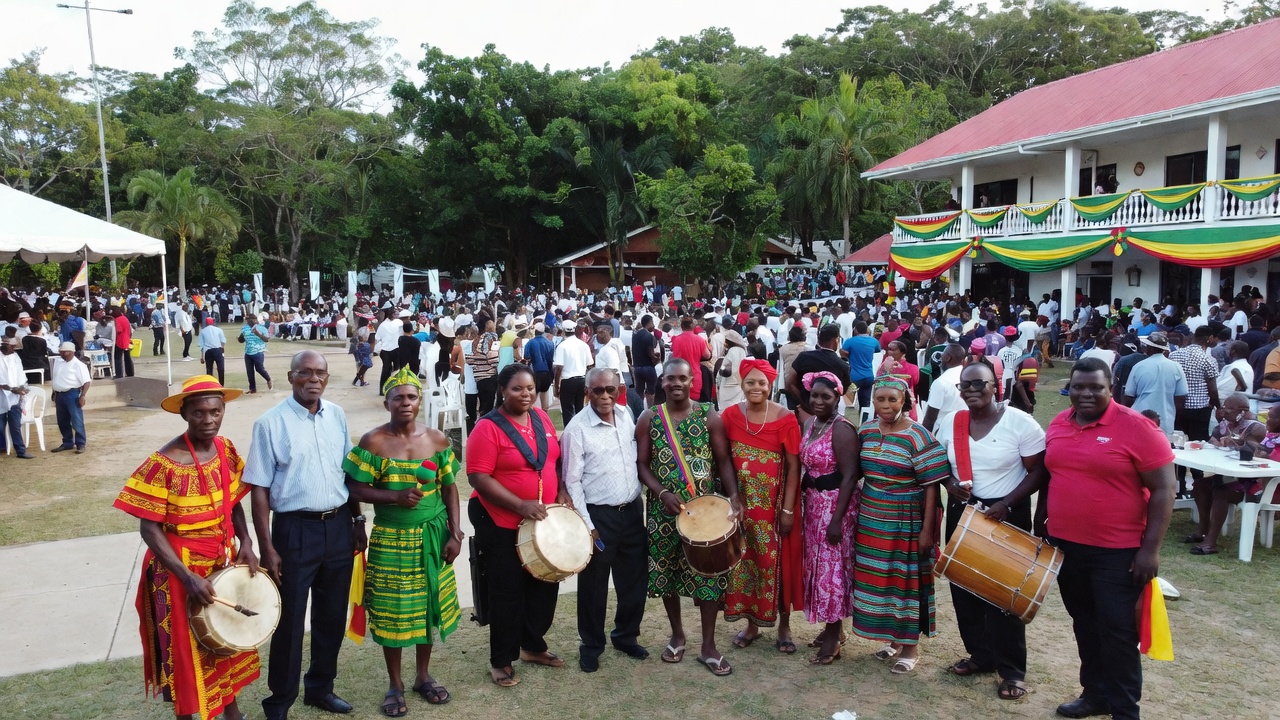
Every February 7, the tri-island state of Grenada, Carriacou, and Petite Martinique erupts in celebration. Flags snap in the warm Caribbean trade winds. Drumbeats roll through the narrow streets of St. George’s. The scent of nutmeg, turmeric, and simmering coconut milk drifts from kitchens across the island. This is Grenada Independence Day — a national holiday that marks the moment, back in 1974, when the “Spice Isle” broke free from over two centuries of British colonial rule.
In 2026, Grenada celebrates its 52nd anniversary of independence. The occasion falls on a Saturday this year, giving families an entire weekend to gather, feast, and honor the sacrifices of those who fought for sovereignty. But Independence Day in Grenada is far more than a date on the calendar. It is a living, breathing expression of national identity — woven from African, French, British, and indigenous Caribbean threads into something entirely its own.
This guide walks you through everything you need to know about Grenada’s Independence Day. From the history behind the holiday to the food on every table, from the parades in the capital to the quiet pride of rural parishes, this is your complete look at one of the Caribbean’s most culturally rich national celebrations.
How Grenada Gained Independence from Britain on February 7 1974
To understand why Independence Day matters so deeply to Grenadians, you have to understand the long road that led to it.
Grenada’s colonial history stretches back more than 400 years. Christopher Columbus first sighted the island in 1498 during his third voyage to the Americas. For the next century and a half, European powers attempted — and failed — to colonize the island, largely due to resistance from the indigenous Kalinago (Carib) people who had settled there centuries earlier.
In 1649, France established the first successful European settlement on Grenada. The French turned the island into a major sugar-producing colony, importing thousands of enslaved Africans to work the plantations. According to the Voyages Trans-Atlantic Slave Trade Database, approximately 127,600 enslaved Africans were brought to Grenada between 1669 and 1808 by both the French and the British.
Britain took control in 1763 following the Seven Years’ War, when the Treaty of Paris ceded the island to the British Crown. Apart from a brief French recapture, Grenada remained a British colony for more than two hundred years. Slavery was abolished across the British Empire in 1834, and full emancipation came in 1838. To address the resulting labor shortage, the British brought indentured workers from India beginning in 1857 — adding yet another cultural layer to the island’s population.
The independence movement gained momentum in the 1950s. Political parties began organizing, and Grenadians increasingly demanded self-governance. In March 1967, Grenada became a British Associated State, which gave the island full control over its internal affairs while Britain retained responsibility for defense and foreign policy.
Full independence arrived on February 7, 1974. At midnight, the new Grenadian flag — designed by local artist Anthony C. George of Soubise, St. Andrew Parish — was raised for the first time. Eric Gairy became the country’s first Prime Minister. The date has been celebrated as a national public holiday ever since.
The Revolution Years and the Return to Democracy
Grenada’s post-independence journey was not without turbulence. In 1979, the New Jewel Movement led by Maurice Bishop overthrew the Gairy government in a bloodless coup. Bishop established a People’s Revolutionary Government that pursued socialist policies and developed close ties with Cuba and the Soviet Union.
In October 1983, an internal power struggle led to Bishop’s arrest and execution, along with several cabinet members and supporters. This event is remembered each year on October 19 as National Heroes Day. Just days later, on October 25, 1983, a joint military operation by the United States and several Caribbean nations intervened in Grenada. That date is now commemorated as Thanksgiving Day in Grenada — a holiday that acknowledges the restoration of constitutional government.
These events — the revolution, Bishop’s death, and the American intervention — remain sensitive topics in Grenada. Independence Day provides an opportunity for the nation to reflect on its entire post-colonial history, including the difficult chapters. It is a day for celebrating sovereignty, but also for remembering the cost of political instability and the value of democratic governance.
What Happens on Grenada Independence Day: Parades Ceremonies and Festivities
Independence Day in Grenada is a public holiday. Schools close. Banks shut their doors. Most businesses take the day off. The island shifts from its everyday rhythms into a mode of collective celebration and reflection.
The day’s events typically include:
- A military parade at the National Stadium in St. George’s, featuring the Royal Grenada Police Force, the Grenada Cadet Corps, and community organizations marching in formation
- Official government ceremonies attended by the Prime Minister, cabinet members, and dignitaries
- Flag-raising ceremonies across all six parishes and on the sister islands of Carriacou and Petite Martinique
- Cultural performances showcasing calypso, steelpan, and soca music
- Community gatherings in homes, churches, and public parks throughout the country
What makes Independence Day in Grenada feel different from many national holidays elsewhere is its warmth and intimacy. This is an island of roughly 114,000 people. Everybody knows somebody who knows somebody. The celebrations feel personal. Families dress in their finest. Children wave small flags on sticks. Elders share stories about what life was like before 1974.
In 2024, the country marked its 50th anniversary of independence with a year-long program of special events. Prime Minister Dickon Mitchell announced the golden jubilee celebrations at St. George’s in October 2023. The program included calypso and gospel concerts, relay races, triathlon events, arts exhibitions, and formal galas. The celebrations reached their peak with a grand military parade on February 7, 2024, at the National Stadium.
The Organisation of Eastern Caribbean States (OECS) congratulated Grenada on its 51st anniversary in 2025 under the theme “Embracing a Future of Development, Transformation, and Unity.” OECS Director General Dr. Didacus Jules noted the country’s remarkable resilience, particularly in the wake of Hurricane Beryl, which devastated the sister islands of Carriacou and Petite Martinique in July 2024.
The Grenada National Flag: Symbols of Spice Courage and Unity
No discussion of Grenada’s Independence Day is complete without understanding the national flag — a banner that is everywhere on February 7.
The flag features a bold design unlike almost any other in the world. It consists of two yellow triangles (top and bottom) and two green triangles (at the hoist and fly), all enclosed by a red border. In the border sit six yellow five-pointed stars, three at the top and three at the bottom. A seventh star sits on a red disk in the center. And on the hoist-side green triangle, there is a small but unmistakable image: a nutmeg.
Here is what each element represents:
| Symbol | Meaning |
|---|---|
| Red border | Courage, vitality, harmony, and unity |
| Yellow triangles | Sunshine, warmth, and the wisdom of Grenadians |
| Green triangles | Agriculture, vegetation, and the island’s fertile land |
| Six border stars | The six parishes of Grenada |
| Central star on red disk | St. George’s, the capital (or Carriacou and Petite Martinique, depending on interpretation) |
| Nutmeg at hoist | Grenada’s primary agricultural export and its identity as the “Isle of Spice” |
The flag was designed by Anthony C. George, a teacher and artist with no formal training in flag design. His entry beat more than 60 other submissions in a national competition held before independence. The design deliberately broke from the common horizontal or vertical tricolor pattern used by most nations. George kept one element from the earlier associated-state flag: the nutmeg, which has been Grenada’s defining symbol for over a century.
On Independence Day, the flag is raised at schools, government buildings, and private homes across the country. Flag etiquette is taken seriously in Grenada. According to official government guidelines, the national flag must never touch the ground, must not be dipped toward any individual, and must be displayed at or near every polling place during elections.
Oil Down: Grenada’s National Dish and Independence Day Tradition
If there is one dish that belongs on every Grenadian table on February 7, it is Oil Down. This hearty one-pot stew is Grenada’s national dish, and it is as central to Independence Day celebrations as the flag and the parade.
Oil Down — pronounced locally as something close to “all-don” — is a slow-cooked stew built from breadfruit, salted meat (often pigtail), chicken, callaloo leaves, dumplings, and coconut milk, all seasoned with turmeric, thyme, chives, garlic, and Scotch bonnet pepper. The dish gets its name from the cooking process: the coconut milk simmers down until the oil separates and coats every ingredient at the bottom of the pot.
There is no single recipe for Oil Down. Every household, every parish, and every family matriarch has her own version. As NPR reported, the dish reflects Grenada’s cultural melting pot. The callaloo greens were cultivated by early Amerindian inhabitants. The turmeric was brought by South Asian immigrants. The salted meat harkens back to colonial-era preservation techniques. The breadfruit — brought to the Caribbean as a cheap crop to feed enslaved people — is now the star of the dish.
How Oil Down Is Prepared: Packing the Pot
What makes Oil Down unique among Caribbean stews is the way it is assembled. The ingredients are not stirred together. They are “packed” into the pot in layers:
- Breadfruit and salted meat go on the bottom
- Vegetables (carrots, dasheen, green bananas, pumpkin) are layered in the middle
- Callaloo leaves and dumplings go on top
- Coconut milk mixed with turmeric is poured over everything
The pot is then sealed — traditionally with dasheen bush leaves placed over the top — and left to simmer for about an hour. The cook does not stir. When the dish is ready, all the liquid has been absorbed. The coconut oil has settled to the bottom, creating a rich, golden layer that coats the breadfruit.
Shirma Wells of the Grenada Tourism Authority has noted that the recipe has evolved over time. Some families now add conch, crab, or lobster. There are vegetarian versions. But one rule remains absolute: without breadfruit, you are not making Oil Down. You are making stew.
Other Traditional Grenadian Foods Served on Independence Day
While Oil Down takes center stage, the Independence Day table often includes several other beloved dishes:
- Curried goat — slow-braised in a rich curry sauce with local spices
- Lambi — conch prepared in various ways, often stewed with peppers and onions
- Callaloo soup — a thick, creamy soup made from dasheen leaves, okra, and coconut milk
- Nutmeg ice cream — a uniquely Grenadian dessert that uses the island’s most famous spice
- Rum punch — made with local River Antoine rum, one of the oldest continuously operating distilleries in the Caribbean
Street vendors across St. George’s and Grand Anse set up stalls on Independence Day, offering these dishes alongside fried bake, roasted corn, and fresh tropical juices. Eating together — in homes, on beaches, and along parade routes — is as much a part of the celebration as any formal ceremony.
Calypso Music and Steelpan: The Soundtrack of Grenadian Independence Celebrations
Music is the heartbeat of every Grenadian celebration, and Independence Day is no exception. Two musical forms dominate the soundscape: calypso and steelpan.
Calypso: Political Commentary Set to Rhythm
Calypso has deep roots in the Caribbean, originating from the oral traditions of enslaved Africans who used song to communicate, satirize their oppressors, and preserve cultural memory. In Grenada, calypso evolved into a sharp-witted art form that blends social and political commentary with infectious melody.
Grenadian calypsonians have traditionally used their music to address current events, challenge authority, and celebrate national identity. Notable performers in Grenada’s calypso tradition include Mighty Unlucky, The Black Wizard, Ajamu (who holds the record for the most Calypso Monarch titles), and Flying Turkey. Independence Day often features calypso performances that reflect on Grenada’s journey from colonial rule to sovereignty.
Steelpan: Music from Recycled Oil Drums
The steelpan (often called “steel drum”) is one of the most recognizable instruments in Caribbean music. Originally crafted from recycled oil barrels, steelpan produces a bright, melodic sound that defines Caribbean celebrations.
In Grenada, steelpan bands play a major role in Independence Day festivities. The instrument’s connection to the island’s African roots and its birth from improvisation and resourcefulness make it a fitting symbol for a holiday about freedom and self-determination.
Soca and Jab Jab Music: Modern Beats with Deep Roots
Alongside calypso and steelpan, soca — a more uptempo, dance-driven genre — has become a major part of Independence Day celebrations. Grenada has also developed its own distinct sub-genre known as Jab Jab soca, which features heavy percussion, driving bass, and call-and-response vocals. This style is deeply connected to the island’s Jab Jab masquerade tradition, which we will explore below.
The Jab Jab Masquerade: Grenada’s Most Powerful Cultural Tradition
Although Jab Jab is most closely associated with Spicemas (Grenada’s August carnival), its spirit permeates the entire national culture — including the Independence Day season. Understanding Jab Jab is essential to understanding Grenadian identity.
What Is Jab Jab and Where Does It Come From?
Jab Jab (from the French Creole diable diable, meaning “devil devil”) is a centuries-old masquerade tradition rooted in resistance to slavery and colonial oppression. It dates back to 1834, when slavery was abolished across the British Caribbean.
According to Ian Charles, CEO and Founder of Jambalasee Grenada, a group dedicated to preserving Jab Jab culture, the tradition began when newly freed Grenadians took to the streets to celebrate their emancipation. They covered their bodies in black substances — molasses, tar, soot, or mud — and donned horned helmets to mock the “devil” label that enslavers had used to dehumanize them.
The word “Jab” itself was deliberately reclaimed. Enslaved Africans had been called “devils” by their colonizers. By “playing the devil”, the formerly enslaved turned that insult into an act of defiance. They wore chains. They marched at dawn. They satirized the cruelty of plantation life through exaggerated costumes and bold, confrontational performance.
The Elements of Jab Jab Performance
A traditional Jab Jab performance involves several key elements:
- Black oil or paint covering the body (historically molasses; today, motor oil or eco-friendly charcoal-based mixtures)
- Horned helmets made from construction helmets with cattle or goat horns attached
- Chains and padlocks worn around the neck, wrists, and ankles — symbolizing the shackles of slavery
- Conch shells, blown to communicate and rally participants
- Drums — the base, the coupé, and the cutter — creating the distinctive Jab Jab rhythm
- Call-and-response chants known as “spellings,” led by figures called Capitals
Jab Jab is more than spectacle. It is, as researchers have noted, a collective act of cultural memory. The chants carry historical and political messages. The drums echo African rhythmic traditions. The act of covering the body in black reclaims an identity that was once used to justify oppression.
Grenada is sometimes called “The Land of 100,000 Jab Jab” — a remarkable statement for a nation of just over 100,000 people. The tradition remains strongest in the rural parishes of St. Andrew, St. Patrick, and St. David, where it has been passed down through generations without interruption.
Jab Jab’s Influence Beyond Carnival Season
While the formal Jab Jab celebrations take place during Spicemas in August, the cultural values that Jab Jab represents — freedom, resistance, community, and ancestral pride — are central to what Independence Day means. On February 7, when Grenadians reflect on their journey from colonial rule to sovereignty, Jab Jab’s legacy is never far from mind.
In recent years, there has been a growing movement to innovate the tradition while preserving its roots. Ian Charles of Jambalasee Grenada has developed an eco-friendly version using charcoal powder instead of motor oil, making Jab Jab more accessible and environmentally sustainable.
Spicemas Carnival Grenada: The Biggest Cultural Festival on the Spice Isle
If Independence Day is Grenada’s most solemn national celebration, then Spicemas is its most exuberant. Grenada’s annual carnival — officially organized by the Spicemas Corporation, a statutory body created by an act of parliament — typically takes place over two weeks in late July and August, culminating on Carnival Monday and Tuesday.
In 2026, Spicemas is scheduled for August 1 through August 11, with Carnival Monday and Tuesday falling on August 10 and 11.
Key Events During Spicemas Week
| Event | Day | Description |
|---|---|---|
| Soca Monarch Competition | Carnival Friday | Top soca artists compete for the crown |
| Panorama (Steelpan Competition) | Carnival Saturday | Steel bands with up to 100 musicians compete |
| Dimanche Gras | Carnival Sunday night | Calypso Monarch finals and King & Queen of the Bands |
| Jab Jab J’ouvert | Carnival Monday (pre-dawn) | The iconic oil-covered street celebration |
| Fancy Mas Parade | Carnival Tuesday | Elaborate costumes, feathered backpacks, and band processions |
The Jab Jab J’ouvert on Monday morning is widely considered the spiritual heart of Spicemas. Starting before dawn, thousands of participants covered in oil, paint, or charcoal march through the streets of St. George’s to the pounding rhythms of Jab soca music. It is raw, primal, and deeply moving.
Fancy Mas on Tuesday is the more polished counterpart — a dazzling parade of color, sequins, and feathered costumes. Each band presents a unique theme, and the artistry on display is extraordinary. This is, as many visitors describe it, “Instagram gold” — but it is also a genuine celebration of Grenadian creativity and cultural pride.
Spicemas is one of the most authentic carnival experiences in the Caribbean. Unlike some larger Caribbean carnivals that have become heavily commercialized, Grenada’s celebration retains a grassroots spirit. Visitors are welcomed warmly, and many Grenadians see sharing their culture with outsiders as an important part of the festival.
The Cultural Roots of Spicemas: From Plantation to Street Theater
The roots of Spicemas stretch back to the days of slavery. French plantation owners in Grenada celebrated European carnival traditions — masked balls, elaborate costumes, and feasts — during the period before Lent. Enslaved Africans were forbidden from participating. Instead, they created their own parallel celebrations in the slave quarters, using improvised instruments, satirical performances, and bodily adornment to express joy, resistance, and cultural memory.
After emancipation in 1838, these underground celebrations moved into the streets. The formerly enslaved brought drums made from biscuit tins and oil barrels. They blew conch shells. They smeared their bodies with molasses and ash from burned sugarcane. What had been hidden was now performed in public — a declaration that the streets belonged to everyone.
Over time, this evolved into the structured carnival we know today. The Spicemas Corporation describes the event as a “compelling expression of Caribbean culture and Street Theatre through music, dance, entertainment and cuisine.” The corporation also emphasizes that the festivities take place in a safe, crime-free environment — a point of pride for Grenadians.
The Carnival Queen Show and Dimanche Gras Night
Two events during Spicemas week carry particular cultural weight. The Carnival Queen Show, held on Carnival Thursday, features contestants representing each of Grenada’s parishes. The competition goes beyond physical beauty — contestants are judged on poise, intelligence, talent, and their ability to represent Grenadian culture.
Dimanche Gras — French for “Big Sunday” — is the grand opening night of the carnival’s climactic weekend. This event features the Calypso Monarch competition, where the island’s best calypsonians face off for the title, and the King and Queen of the Bands presentation, which showcases the most spectacular costumes of the season. Dimanche Gras sets the stage for J’ouvert on Monday morning, and the energy in the National Stadium is electric.
Why Grenada Is Called the Isle of Spice: Nutmeg and the National Identity
Grenada’s nickname — “The Isle of Spice” or “The Spice Isle” — is not mere marketing. It reflects a deep, centuries-old relationship between the island and its most famous crop: nutmeg.
Nutmeg was introduced to Grenada in 1843, when a merchant ship stopped at the island on its way from the East Indies to England. The crop thrived in Grenada’s volcanic soil and tropical climate, and by the late 19th century, nutmeg had become the island’s primary agricultural export. The first recorded nutmeg exports left Grenada in 1881, when nearly 100,000 pounds of spices were shipped from the island.
Today, Grenada is the second-largest producer of nutmeg in the world, behind only Indonesia. The spice is so central to the national identity that it appears on the national flag — making Grenada one of the few countries in the world whose flag features a specific agricultural product.
But nutmeg is only the beginning. Grenada also produces significant quantities of:
- Mace (the red, lacy covering around the nutmeg shell)
- Cinnamon
- Cloves
- Ginger
- Turmeric
- Allspice (pimento)
- Bay leaves
- Vanilla
- Cocoa
Visiting a nutmeg processing station is one of the most popular activities for tourists visiting during the Independence Day season. The Gouyave Nutmeg Processing Station in St. John’s Parish offers guided tours that show the entire process — from harvesting to drying to sorting.
On Independence Day, spices are everywhere. They flavor the Oil Down simmering on the stove. They perfume the nutmeg ice cream sold by street vendors. They scent the rum punch raised in toasts to freedom. In Grenada, spice is not just an industry. It is an identity.
Grenada Tourism in 2026: Visiting for Independence Day After Hurricane Beryl
For travelers considering a trip to Grenada for the 2026 Independence Day celebrations, there is an important context to be aware of: Hurricane Beryl.
On July 1, 2024, Hurricane Beryl — a record-breaking Category 4 storm and the earliest Category 5 hurricane ever recorded in the Atlantic — struck Grenada’s sister islands of Carriacou and Petite Martinique with devastating force. More than 90% of buildings on both islands were destroyed or rendered uninhabitable. Five people lost their lives. The damage was immense.
However, the main island of Grenada was largely spared the worst of the storm. According to travel analytics firm ForwardKeys, Grenada’s tourism market showed a “remarkable recovery” in the months following Beryl. After an initial dip of about 18% in bookings from key U.S. markets, the industry bounced back to near-normal levels within weeks.
By early 2025, the OECS reported that Grenada was continuing its recovery with cultural exhibitions, citizen recognition ceremonies, song competitions, and concerts as part of its 51st independence celebrations. The OECS Director General praised the resilience of the Grenadian people and highlighted Prime Minister Mitchell’s “Vision 75” roadmap and the National Sustainable Development Plan 2020–2035.
What Travelers Should Know for February 2026
Here is what visitors can expect:
- Mainland Grenada’s tourism infrastructure is fully operational. Hotels, resorts, restaurants, and attractions are open and welcoming guests.
- Carriacou and Petite Martinique have made significant progress in rebuilding, though some areas still show evidence of storm damage.
- February is peak dry season in Grenada, with warm temperatures, low humidity, and minimal rainfall — ideal conditions for travel.
- Independence Day events are centered in St. George’s, the capital, but smaller celebrations take place across all parishes.
- Accommodation books up quickly around major holidays, so early reservations are recommended.
Grenada’s luxury hotel portfolio has been growing steadily. Properties like the Spice Island Beach Resort, Mount Cinnamon Resort, and the Six Senses La Sagesse (the first Six Senses resort in the Caribbean, which opened recently) offer world-class accommodations just minutes from Independence Day festivities.
Traditional Grenadian Customs and Beliefs That Shape Independence Day
Beyond the parades and the food, Independence Day is shaped by a set of cultural values and customs that are deeply Grenadian.
Community and Togetherness
Grenada is a small, close-knit society. On Independence Day, the emphasis is on gathering with family and friends. Large extended families will often converge at a single home, where an enormous pot of Oil Down will be prepared outdoors — sometimes over a wood fire on the beach, a tradition that connects the modern celebration to older communal cooking practices.
Church and Spirituality
Grenada is a predominantly Christian nation, with Roman Catholicism and various Protestant denominations making up the majority of the population. Many families attend special church services on or around Independence Day, giving thanks for the nation’s freedom and praying for its continued prosperity.
Respect for Elders and Ancestors
There is a strong tradition of honoring the elders who remember the pre-independence era. Grandparents and great-grandparents who lived under colonial rule are given special recognition. Their stories — of what school was like, what work was like, what daily life was like before 1974 — are treated as living history.
National Pride and the Diaspora
Grenadians around the world participate in Independence Day celebrations. Diaspora communities in New York, London, Toronto, and Miami organize events, gatherings, and cultural programs. Social media has become an important platform for connecting Grenadians across the globe, with messages of pride and unity flooding platforms on February 7 each year.
Grenada Independence Day 2026: Schedule Dates and Practical Information
For those planning to attend, here is a quick reference guide:
| Detail | Information |
|---|---|
| Date | Saturday, February 7, 2026 |
| Anniversary | 52nd year of independence |
| Type | Public holiday (banks, schools, and most businesses closed) |
| Main Location | St. George’s, Grenada |
| Key Events | Military parade, flag-raising ceremonies, cultural performances, community gatherings |
| Traditional Food | Oil Down, curried goat, lambi, nutmeg ice cream, rum punch |
| Weather | Warm and dry (average high ~30°C / 86°F in February) |
| Currency | Eastern Caribbean Dollar (EC$); USD widely accepted |
| Language | English (official); Grenadian Creole widely spoken |
| Weekend Note | Falls on a Saturday in 2026; following Monday is generally NOT observed as a replacement holiday |
Important: When Independence Day falls on a weekend in Grenada, the following Monday is not automatically observed as a public holiday. This differs from the practice in some other countries.
How Grenada’s Independence Celebrations Compare to Other Caribbean National Days
Grenada’s Independence Day shares some features with national celebrations across the Caribbean, but it also has distinctive elements that set it apart.
Like Trinidad and Tobago’s Independence Day (August 31) and Jamaica’s Independence Day (August 6), Grenada’s celebration includes military parades, political speeches, and cultural performances. But Grenada’s event has a more intimate, community-centered feel — a natural consequence of the island’s smaller size.
The Jab Jab tradition is uniquely Grenadian. While similar masquerade forms exist in Trinidad (Jab Molassie), Grenada’s version is far more deeply embedded in everyday culture. Trinidad’s Carnival is larger and more globally famous, but many Caribbean cultural observers argue that Grenada’s Spicemas has preserved a greater degree of authenticity and grassroots participation.
Grenada is also unique in having nutmeg as its national symbol. No other Caribbean nation’s identity is so tightly bound to a single agricultural crop. This gives Independence Day a distinctive flavor — literally — that is impossible to replicate elsewhere.
Supporting Grenada: Responsible Travel and Cultural Respect During Independence Day
Visiting Grenada during Independence Day is a privilege. Here are some guidelines for being a respectful and responsible guest:
Do learn a little about Grenada’s history before you arrive. Understanding the colonial past and the struggle for independence will deepen your experience of the celebrations.
Do try Oil Down and other local dishes. Ask your hosts about their family’s recipe. Food is a gateway to genuine cultural connection in Grenada.
Do attend public events with an open mind. If you are invited to a community gathering, accept graciously. Grenadians are famously warm and hospitable hosts.
Do support local businesses, artisans, and tour operators. Purchase spices directly from local vendors. Book tours through Grenadian-owned companies.
Don’t treat the celebration as mere spectacle. Independence Day carries deep emotional weight for Grenadians. Approach it with the respect it deserves.
Don’t assume that the recovery from Hurricane Beryl is complete, especially on Carriacou and Petite Martinique. If you visit the sister islands, be prepared to see ongoing rebuilding. Consider contributing to local recovery efforts if you are able.
The Future of Grenada Independence Day: Preserving Culture in a Changing World
As Grenada moves through its sixth decade of independence, the country faces the same challenges as many small island developing states: climate vulnerability, economic pressures, and the pull of globalization.
Hurricane Beryl in 2024 was a harsh reminder of Grenada’s exposure to increasingly powerful Atlantic storms. The government has responded with ambitious plans, including the National Sustainable Development Plan 2020–2035 and Prime Minister Mitchell’s “Vision 75” roadmap, which charts a course toward the country’s 75th anniversary of independence in 2049.
Cultural preservation is a central part of this vision. Organizations like Jambalasee Grenada are working to document and protect traditional practices like Jab Jab for future generations. The Spicemas Corporation continues to organize and promote the annual carnival as both a cultural event and an economic driver.
Young Grenadians, both on the island and in the diaspora, are finding new ways to engage with their heritage. Social media, digital storytelling, and international cultural exchanges are helping to ensure that Grenadian traditions reach new audiences — while remaining rooted in the communities that created them.
Independence Day 2026 is not just a look backward. It is a statement of intent. Grenada has survived colonialism, political upheaval, and natural disasters. Its people have rebuilt, again and again, with creativity, resilience, and an unshakable sense of who they are.
On February 7, when the drums begin to beat and the scent of Oil Down fills the air, that identity will be on full display — not for tourists, not for cameras, but for the Grenadian people themselves. And that is what makes this celebration so remarkable.
Final Thoughts: Why You Should Experience Grenada Independence Day at Least Once
There are holidays that you observe, and there are holidays that you feel. Grenada Independence Day is the latter.
It is the taste of turmeric-stained breadfruit scooped from the bottom of a communal pot. It is the sound of a conch shell echoing across a hillside parish. It is the sight of a grandmother in her Sunday best, eyes bright with memory and pride. It is the knowledge that freedom — hard-won, fiercely defended — is something worth celebrating every single year.
Whether you are Grenadian by birth, by heritage, or simply by curiosity, February 7 on the Spice Isle is an experience unlike any other in the Caribbean. Come for the parade. Stay for the Oil Down. Leave with a deeper understanding of what it means for a small island nation to stand, proudly and independently, on its own.