Every year on 26 May, Australians pause to remember one of the most painful chapters in the nation’s history. National Sorry Day is not a public holiday. It is something far more important. It is a collective reckoning — a day when an entire country confronts the truth about what was done to Aboriginal and Torres Strait Islander children who were torn from their families, their communities, and their cultures.
National Sorry Day 2026 falls on Tuesday, 26 May. It marks the 29th anniversary of the tabling of the landmark Bringing Them Home report in Australian Parliament. It also opens the door to National Reconciliation Week 2026 (27 May – 3 June), which this year carries the powerful theme “All In” — a call for every Australian to commit wholeheartedly to reconciliation, not just during one week, but every single day.
For the Stolen Generations and their descendants, 26 May is deeply personal. For all Australians, it is an invitation to listen, to learn, and to act.
What Is National Sorry Day and Why Does Australia Observe It Every Year?
National Sorry Day — officially renamed the National Day of Healing in 2005 — is an annual observance held across Australia on 26 May. The day honours the Stolen Generations: Aboriginal and Torres Strait Islander children who were forcibly removed from their families by government agencies, police, churches, and welfare organisations from the early 1900s through to the 1970s.
The term “Stolen Generations” refers to tens of thousands of Indigenous children separated from their parents under official government assimilation and “protection” policies. These children were placed in institutions, missions, or foster homes — most of them non-Indigenous households. The goal was explicit: to eliminate Indigenous cultures as distinct entities and absorb Aboriginal people into white Australian society.
The consequences were devastating. Children lost their languages, their family connections, their cultural identities, and their sense of belonging. Many suffered neglect and abuse. The trauma did not end with childhood. It rippled through generations, affecting the health, wellbeing, and social outcomes of descendants who never experienced removal themselves.
National Sorry Day exists for three purposes:
- To acknowledge the immense pain and suffering caused by forced removal policies
- To recognise the strength and resilience of Stolen Generations survivors
- To reflect on what every Australian can do to support healing and reconciliation
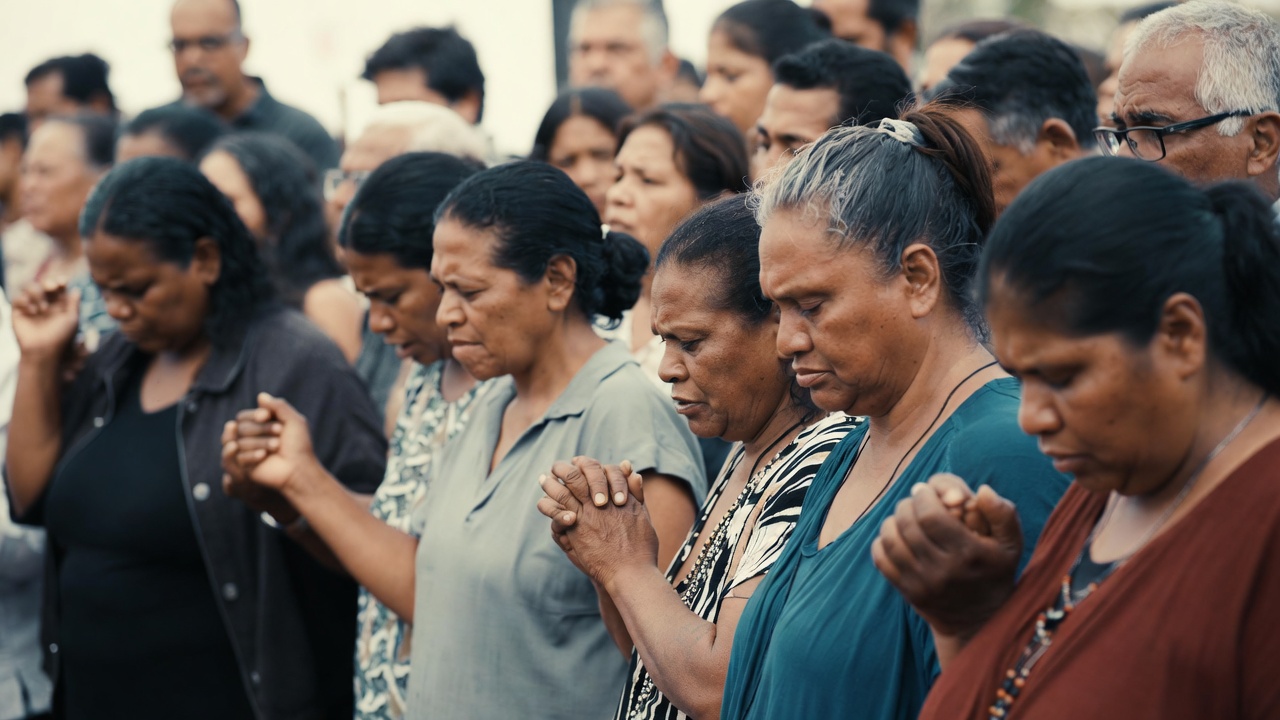
The day is not a public holiday. Businesses operate on normal hours. But across every state and territory, communities come together for ceremonies, speeches, reconciliation walks, flag-raising events, morning teas, and quiet moments of reflection.
The Bringing Them Home Report: How the 1997 Inquiry Changed Australia’s Conscience
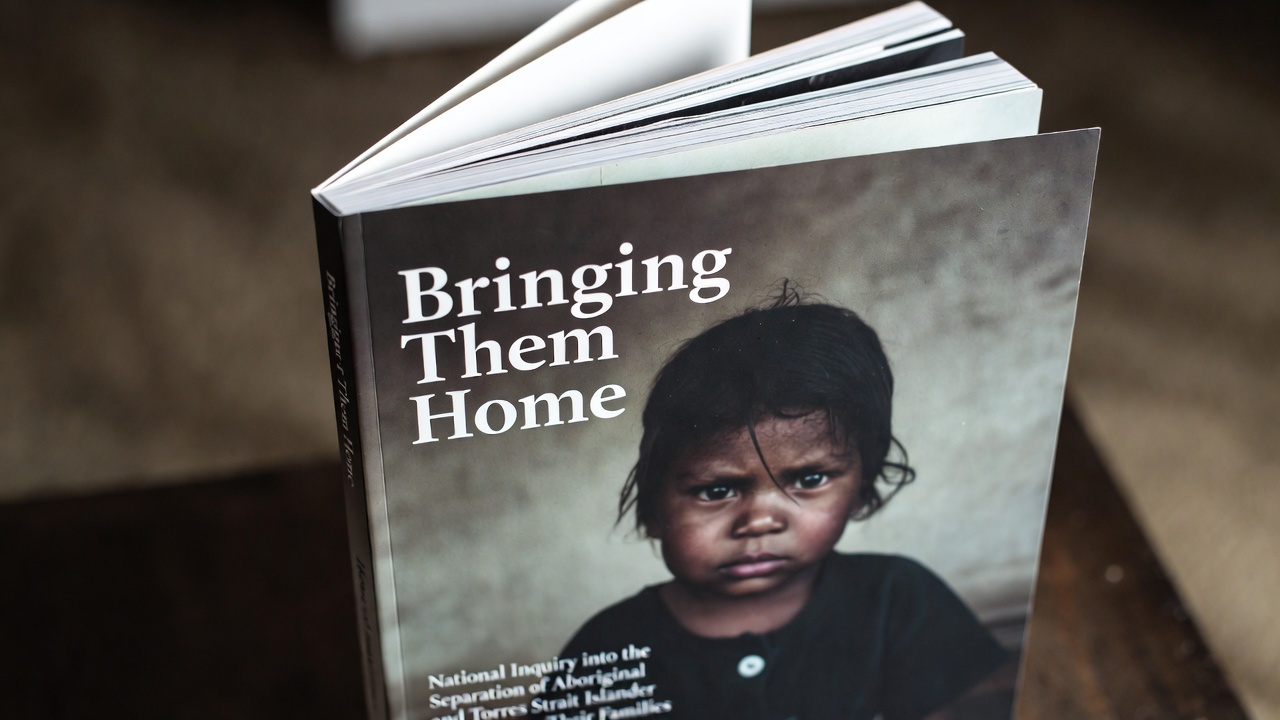
The origins of National Sorry Day trace back to 26 May 1997, the date the Bringing Them Home report was tabled in the Australian Parliament. Produced by the Human Rights and Equal Opportunity Commission (now the Australian Human Rights Commission), this landmark report was the result of a national inquiry led by Sir Ronald Wilson and Professor Mick Dodson.
The inquiry took testimony from 535 Indigenous people across Australia. Their stories — of being snatched from mothers’ arms, of growing up in cold institutions, of being told their families did not want them — shocked a nation that had largely been in denial.
The report made 54 comprehensive recommendations to address the damage. The Healing Foundation summarised these into several key areas:
| Category | Key Recommendations |
|---|---|
| Acknowledgment and Apology | All parliaments, police forces, and churches should acknowledge, apologise, and make reparation |
| Reparations | Monetary compensation through a national fund for those forcibly removed |
| Records and Reunion | Fund community-based Link-Up services to help families reconnect |
| Rehabilitation | Local healing and wellbeing approaches for survivors |
| Education | A National Sorry Day and compulsory school modules on the Stolen Generations |
| Guarantees Against Repetition | Self-determination in the wellbeing of Indigenous children |
The first National Sorry Day was held exactly one year later, on 26 May 1998. It was organised by a coalition of community groups determined to ensure the report’s findings would not be forgotten. Among those who performed at the first commemoration were “Uncle Bob” Randall, a Yankunytjatjara elder and Stolen Generations survivor, and his daughter Dorothea.
In the years that followed, tens of thousands of Australians signed “sorry books” — handwritten messages of apology and commitment to reconciliation. These books became powerful symbols of a nation coming to terms with its past.
Kevin Rudd’s National Apology to the Stolen Generations: Words That Changed History
For more than a decade after the Bringing Them Home report, successive Australian governments resisted issuing a formal apology. Prime Minister John Howard passed a Motion of Reconciliation in 1999 expressing “deep and sincere regret,” but his government argued it was not responsible for the actions of past administrations. Howard feared that an admission of wrongdoing could open the door to compensation claims.
That changed on 13 February 2008, when newly elected Prime Minister Kevin Rudd stood before a packed Parliament House in Canberra and delivered an unreserved apology to the Stolen Generations.
His words carried the weight of a nation’s conscience:
“We apologise for the laws and policies of successive Parliaments and governments that have inflicted profound grief, suffering and loss on these our fellow Australians” (Rudd, Kevin. “Apology to Australia’s Indigenous Peoples.” Parliament of Australia, 13 Feb. 2008).
The apology was broadcast live across the country. In living rooms, workplaces, town squares, and community halls, Australians — both Indigenous and non-Indigenous — watched together. Many wept. For Stolen Generations survivors who had spent decades waiting to hear those words, the moment was profound.
Rudd’s government also adopted the goals of the Closing the Gap framework, committing to measurable targets aimed at reducing inequality between Indigenous and non-Indigenous Australians in areas such as life expectancy, education, employment, and child mortality.
The apology did not erase the pain. But for many, it was a turning point — a moment when the nation finally said what needed to be said.
How Australians Commemorate National Sorry Day: Events, Traditions and Ceremonies
National Sorry Day is observed in cities, regional towns, remote communities, and schools across Australia. There is no single way to mark the day. The diversity of activities reflects the breadth of the reconciliation movement itself.
Community Events and Gatherings
Across the country, local councils, Aboriginal organisations, schools, and community groups host events that bring people together. Common activities include:
- Reconciliation walks and marches — Public walks through town centres, often led by Elders and community leaders, that demonstrate solidarity. The most famous was the 2000 Sydney Harbour Bridge walk, where more than 250,000 people crossed the bridge in support of reconciliation.
- Flag-raising ceremonies — The Aboriginal flag and the Torres Strait Islander flag are raised at government buildings, schools, and community centres. The Aboriginal flag, designed by Harold Joseph Thomas and first flown at Victoria Square in Adelaide on 12 July 1971, carries deep significance. Its black represents Aboriginal people, the yellow circle represents the sun, and the red represents the earth and the spiritual connection to the land.
- Sorry Day speeches — Community leaders, Elders, politicians, and educators speak about the ongoing impact of forced removal and the importance of reconciliation.
- Morning teas and lunches — Shared meals provide a relaxed space for conversation, learning, and connection.
- Sorry books — Since 1998, thousands of Australians have signed sorry books, writing messages of apology and pledging support for reconciliation. Some organisations maintain digital versions today.
Schools and Education
Many Australian schools treat National Sorry Day as a vital learning opportunity. Activities include essay competitions, candle-lighting ceremonies for children who were taken, screenings of films about the Stolen Generations, and visits from local Indigenous Elders who share their stories directly with students.
This educational role is especially important. Young Australians who learn the truth about forced removal grow up with a deeper understanding of why reconciliation matters.
Art, Music, and Storytelling
Indigenous art exhibitions, music performances, and storytelling sessions play a central role in Sorry Day commemorations. These creative expressions give voice to experiences that words alone cannot capture. They also celebrate the extraordinary resilience and cultural richness of Aboriginal and Torres Strait Islander communities.
The Stolen Generations: Understanding the Forced Removal of Aboriginal Children in Australia
To understand why National Sorry Day carries such weight, it is necessary to understand the full scope of what happened to the Stolen Generations.
The Policy of Assimilation
Beginning in the late 19th century, Australian federal and state governments implemented policies designed to remove Aboriginal children — particularly those of mixed descent — from their families. The stated goal was “assimilation”: the belief that Aboriginal culture was inferior and that Indigenous people would be better off absorbed into white society.
Under laws such as Western Australia’s 1905 Aborigines Protection Act, officials were given sweeping powers over Aboriginal lives. They could dictate where Aboriginal people lived, whom they married, where they worked, and when they could leave their communities. Children could be removed on the basis of their Aboriginality alone. As historian Margaret Jacobs wrote, under the 1905 Act, “Indigeneity itself became inextricably associated with neglect.”
The removals were systematic. Government officials, police officers, and church missionaries carried them out. Children were taken — often without warning and without parental consent — to missions, government institutions, or non-Indigenous foster families.
The Scale of Removal
The exact number of children taken will never be known with certainty. Records were incomplete, deliberately destroyed, or never created. Some estimates suggest that between one in three and one in ten Aboriginal children were removed from their families during the policy era.
In Western Australia alone, the rate of removal was the highest in the country. Today, more than 50% of Aboriginal people in WA are either Stolen Generations survivors or their direct descendants.
The Trauma That Continues
The Bringing Them Home report found that the forced removal policies constituted acts of genocide under the United Nations Convention on the Prevention and Punishment of the Crime of Genocide. The systematic removal of children from one ethnic group to be raised by another ethnic group meets the Convention’s definition.
The trauma of removal did not end when children grew up. It was passed down through generations. Descendants of the Stolen Generations experience higher rates of mental illness, family violence, homelessness, substance addiction, and involvement with the criminal justice system. The Healing Foundation has described Stolen Generations survivors as “the gap within the gap” — meaning they fare worse than even other Indigenous Australians on key health and social measures.
Stolen Generations Redress Schemes in Australia: State-by-State Compensation Guide
One of the most important — and most delayed — recommendations of the Bringing Them Home report was financial compensation for survivors. Nearly three decades later, the patchwork of state and territory redress schemes remains incomplete.
Current Status of Redress Schemes Across Australia (as of Early 2026)
| State/Territory | Redress Scheme Status | Payment Amount | Applications |
|---|---|---|---|
| New South Wales | Scheme closed | Up to $75,000 | No longer accepting |
| Victoria | Open | Up to $100,000 | Open until March 2027 |
| South Australia | Scheme closed | Up to $50,000 | No longer accepting |
| Tasmania | Scheme closed | $58,000 | No longer accepting |
| Northern Territory | Open (Commonwealth) | Up to $75,000 | Open until August 2027 |
| ACT & Jervis Bay | Open (Commonwealth) | Up to $75,000 | Open until August 2027 |
| Western Australia | Newly announced | $85,000 | Registrations opened 2025 |
| Queensland | No scheme | N/A | N/A |
The Western Australian redress scheme, announced by Premier Roger Cook on 27 May 2025 — one day after National Sorry Day — was a significant milestone. WA had the highest rates of Indigenous child removal in the country, yet it was the second-to-last state to offer reparations. The scheme provides $85,000 per person for survivors removed from their families before 1 July 1972.
Queensland remains the only Australian state without a Stolen Generations redress scheme.
The Limits of Financial Compensation
Redress schemes have been welcomed by many survivors, but they are far from perfect. As The Conversation has reported, many schemes rely on there being official records of a child’s removal — records that were often incomplete, destroyed, or never created. This means that potentially fewer than half of eligible survivors may qualify under current criteria.
One-off payments also cannot address the deeper, ongoing effects of intergenerational trauma. Experts have argued that sustained investment in culturally safe health services, aged care, and community-controlled support programs is equally vital.
Are You Waiting for Us to Die? The Unfinished Business of the Bringing Them Home Report
In February 2025, The Healing Foundation released a devastating report titled Are You Waiting for Us to Die?: The Unfinished Business of Bringing Them Home. The title comes from the collective testimony of Stolen Generations survivors who have watched their brothers and sisters pass away while waiting for the government to act on promises made nearly three decades ago.
The report’s findings are stark:
- Only 5 out of 83 recommendations from the Bringing Them Home report have been clearly implemented — just 6%
- 45 recommendations (54%) have failed to be implemented at all
- 11 received a qualified pass
- 10 were classified as a partial failure
- The status of 10 recommendations remains unclear
Healing Foundation CEO Shannan Dodson — daughter of Professor Mick Dodson, who co-led the original inquiry — called for an urgent and coordinated response. “We have already lost too many survivors, even in the last few weeks,” she said at the time of the report’s release.
The report makes 19 recommendations as part of a proposed National Healing Package, organised across six priority areas:
- Reparations — Fair and equitable redress for all survivors across all jurisdictions
- Rehabilitation and Research — Culturally safe, trauma-informed aged care and health services
- Records, Family Tracing, and Reunions — Access to personal records that hold survivors’ family stories
- Acknowledgments and Apologies — Including from police forces and churches
- Education and Training — Embedding Stolen Generations history in school curricula nationwide
- Monitoring and Accountability — Ongoing oversight of implementation progress
Professor Steve Larkin, chair of The Healing Foundation, noted that Stolen Generations survivors have “specific and complex ageing needs” resulting from their forced removal. Many are reluctant to access aged care services because institutional settings re-trigger the trauma of their childhood.
Yorta Yorta survivor Ian Hamm put it plainly: the test of a nation is “not how far it advances its brightest and its best. The test of a nation is how far behind it chooses to leave its most vulnerable.”
National Reconciliation Week 2026: The “All In” Theme and What It Means for All Australians
National Sorry Day serves as the gateway to National Reconciliation Week (NRW), held each year from 27 May to 3 June. These dates mark two milestones in Australia’s reconciliation journey:
- 27 May 1967 — The date of the landmark referendum in which more than 90% of Australians voted to amend the Constitution to allow the federal government to make laws for Aboriginal and Torres Strait Islander people and to count them in the national Census
- 3 June 1992 — The date of the Mabo decision, when the High Court of Australia recognised Aboriginal and Torres Strait Islander peoples as the Traditional Owners of their lands, overturning the legal fiction of terra nullius (“land belonging to no one”)
The 2026 Theme: “All In”
Reconciliation Australia announced the 2026 NRW theme as “All In” — a direct call for every Australian to commit to reconciliation not as a spectator, but as an active participant.
The theme carries special significance in 2026. Reconciliation Australia marks its 25th anniversary this year, creating a moment to reflect on the progress made since the organisation was established in 2001 to continue the work of the Council for Aboriginal Reconciliation.
As Reconciliation Australia has stated, “All In is not about guilt or shame, but about the reciprocal responsibility of being Australian. Reconciliation will not happen by itself; we must be all in for reconciliation.”
The NRW 2026 campaign artwork was created by Gumbaynggirr/Bundjalung artist Otis Hope Carey, in collaboration with Carbon Creative, a First Nations-owned marketing agency. Carey’s colourful and optimistic style represents people from all backgrounds uniting in their commitment to change.
In a first for the campaign, Reconciliation Australia is offering NRW 2026 information and resources in 13 languages other than English, reflecting a deliberate effort to engage Australia’s multicultural communities in the reconciliation conversation.
The Yoorrook Justice Commission: Australia’s First Truth-Telling Inquiry and Its 2025 Findings
One of the most significant recent developments in Australia’s reconciliation journey is the Yoorrook Justice Commission — the country’s first formal truth-telling inquiry. Established in Victoria in 2021, Yoorrook operated with the powers of a Royal Commission and was led entirely by First Peoples.
On 1 July 2025, the Commission’s final reports — Yoorrook for Transformation and Yoorrook: Truth be Told — were tabled in the Victorian Parliament.
What the Yoorrook Commission Investigated
Over four years, the Commission examined how colonisation and government policies created systemic injustice for Victoria’s First Peoples across every area of life: land, health, housing, education, criminal justice, child protection, and political participation.
The numbers are significant:
- More than 1,300 submissions received from individuals and organisations
- 67 public hearing days with over 250 witnesses
- More than 7,000 documents obtained from the state government
- 100 recommendations for reform in the final interim report
Key Findings
The Yoorrook Commission did not soften its language. The Truth be Told report described what happened to Victoria’s First Peoples since colonisation as genocide. It documented mass killings, sexual violence, cultural erasure, forced child removal, and the ongoing effects of dispossession.
The Yoorrook for Transformation report made 100 recommendations covering land justice, health reform, housing, access to personal records, and systemic change in the criminal justice and child protection systems.
Government Response
The Victorian Government acknowledged the Commission’s work but has been criticised for its partial response. Out of the Commission’s earlier 46 recommendations from the 2023 Yoorrook for Justice report, the government accepted only four in full and completely rejected three — including recommended reforms to bail laws and raising the minimum age of criminal responsibility.
Truth-telling is only meaningful if it leads to action. The gap between hearing the truth and implementing change remains one of Australia’s most pressing challenges.
Closing the Gap in 2026: Progress, Setbacks, and the Road Ahead for Indigenous Equality
The National Agreement on Closing the Gap, signed in 2020, represents the most comprehensive framework Australia has ever developed to address Indigenous disadvantage. It includes 19 socio-economic targets across 17 outcome areas and is built on four Priority Reforms that aim to transform how governments work with Aboriginal and Torres Strait Islander people.
Where Progress Is Being Made
According to the Productivity Commission’s latest data, improvements have been seen nationally in 10 of the 15 targets with available data. Federal Minister for Indigenous Australians Senator Malarndirri McCarthy welcomed these gains while acknowledging the scale of work remaining.
The Australian Government’s 2025 Closing the Gap Implementation Plan focuses on early childhood and school education, with new Formal Partnership Agreements signed in March 2025 with SNAICC (National Voice for Our Children) and the National Aboriginal and Torres Strait Islander Education Corporation.
Where Outcomes Are Worsening
Not all targets are moving in the right direction. Senator McCarthy noted that outcomes continue to worsen in three critical areas:
- Incarceration rates — Aboriginal and Torres Strait Islander people remain grossly overrepresented in the prison system
- Children in out-of-home care — As of June 2024, approximately 20,000 Aboriginal and Torres Strait Islander children were in out-of-home care, at a rate 11 times higher than non-Indigenous children
- Suicide — Rates remain alarmingly high, particularly in remote communities
The life expectancy gap also persists. Aboriginal and Torres Strait Islander people still live, on average, 8 to 10 years less than non-Indigenous Australians. According to the Australian Institute of Health and Welfare, if First Nations people had experienced the same mortality rates as non-Indigenous Australians between 2017 and 2021, there would have been approximately 9,200 fewer deaths during that period.
The Close the Gap Campaign’s Assessment
The Close the Gap Campaign’s 2025 annual report — produced by a coalition of more than 50 Aboriginal and Torres Strait Islander and non-Indigenous health organisations — was blunt in its assessment. Progress has been “inconsistent, disjointed, and slow.” Very little meaningful reform has been implemented. Divisive state and territory policies continue to contradict the goals of the National Agreement.
The report emphasised that Aboriginal and Torres Strait Islander leadership is the key to achieving genuine, sustainable reform. As Close the Gap Co-Chair Karl Briscoe said: “This campaign, our work, is about amplifying and championing Aboriginal and Torres Strait Islander-led solutions.”
Indigenous Children Removed from Families Today: Why the Crisis Is Not Over
One of the most painful truths about National Sorry Day is that the removal of Aboriginal and Torres Strait Islander children from their families has not stopped. It has accelerated.
The Bringing Them Home report documented forced removal as a historical policy that ended in the 1970s. But modern child protection systems continue to disproportionately remove Indigenous children at alarming rates.
The Numbers
The data tells a confronting story:
- In 2008, there were approximately 9,070 Aboriginal and Torres Strait Islander children in out-of-home care
- By 2022, that number had risen to approximately 18,900
- As of 30 June 2024, the number had reached approximately 20,000
- Aboriginal and Torres Strait Islander children are now 9.6 times more likely to be in out-of-home care than non-Indigenous children, according to the Family Matters 2025 report
These figures have led Indigenous advocates to warn that Australia is on the path to another Stolen Generation.
Catherine Liddle, CEO of SNAICC — National Voice for Our Children, has said the figures represent “real children who have been let down for another 12 months by the very systems meant to keep them safe.”
Why This Matters for National Sorry Day
As Senator Lidia Thorpe told Parliament: “Sorry means you don’t do it again.”
This is perhaps the most urgent challenge facing Australia’s reconciliation movement. An apology loses its meaning if the patterns it addresses continue under a different name. Advocates argue that funding must shift from crisis-driven removal toward early intervention, prevention, and family support — especially through Aboriginal community-controlled organisations that keep children safe while maintaining their connections to culture, kin, and Country.
How the 2023 Voice Referendum Shaped the Reconciliation Landscape Going Forward
On 14 October 2023, Australians voted in a national referendum on whether to enshrine an Aboriginal and Torres Strait Islander Voice to Parliament in the Constitution. The proposal, rooted in the 2017 Uluru Statement from the Heart, called for three interconnected reforms: Voice, Treaty, and Truth.
The referendum was defeated, with approximately 60% of voters saying “No.”
The result was a blow to many in the reconciliation movement. But it did not end the conversation. If anything, it sharpened the urgency.
The Aftermath
The Close the Gap Campaign’s 2025 report acknowledged that “a year on from the Voice referendum, not much has changed.” But it also emphasised that Aboriginal and Torres Strait Islander health equity and justice must continue to be pursued regardless of the political landscape.
In Victoria, the truth-telling and treaty process has continued despite the national referendum result. The Yoorrook Justice Commission completed its work and tabled its final reports in July 2025. The First Peoples’ Assembly of Victoria continues to advance treaty negotiations with the state government.
What This Means for National Sorry Day 2026
The 2026 NRW theme — “All In” — can be read as a direct response to the post-referendum landscape. It acknowledges that reconciliation cannot depend on a single vote or a single policy. It requires sustained, everyday commitment from all Australians — Indigenous and non-Indigenous alike.
Practical Ways You Can Support Reconciliation on National Sorry Day 2026
National Sorry Day is not just for Aboriginal and Torres Strait Islander people. It belongs to all Australians. Here are meaningful ways to participate in 2026:
Attend a Local Sorry Day Event
Check your local council website, community noticeboard, or the Reconciliation Australia events page for Sorry Day gatherings near you. Even small events — a morning tea, a flag-raising, a moment of silence — carry significance.
Listen to Stolen Generations Survivors
If your community hosts a Sorry Day event with Elders or survivors, attend and listen. Their stories are not easy to hear. But listening is one of the most important things you can do.
Educate Yourself and Your Family
Watch documentaries about the Stolen Generations. Read the Bringing Them Home report. Visit your local library and find books by Aboriginal and Torres Strait Islander authors. Share what you learn with your children.
Some essential films and texts include:
- Rabbit-Proof Fence (2002 film) — The true story of three Stolen Generations girls who walked 1,500 miles to return home
- Stolen (2018 documentary series) — Survivors share their stories in their own words
- The Healing Foundation’s resources — Available at healingfoundation.org.au
Support Aboriginal Community-Controlled Organisations
Financial donations, volunteer work, and advocacy all make a difference. Organisations like The Healing Foundation, Reconciliation Australia, SNAICC, and Link-Up work year-round to support survivors and advance reconciliation.
Start Conversations in Your Workplace
Encourage your employer to acknowledge National Sorry Day and participate in Reconciliation Week. Many workplaces develop Reconciliation Action Plans (RAPs) — structured commitments to learning, respect, and practical action. Reconciliation Australia provides frameworks and support for organisations of all sizes.
Support Aboriginal Art and Culture
Visit galleries featuring Indigenous artists. Attend cultural festivals. Buy directly from Aboriginal-owned businesses. Supporting Indigenous creative industries is a form of reconciliation in action.
The Symbols of National Sorry Day: The Aboriginal Flag and Torres Strait Islander Flag
Two flags are central to National Sorry Day and Reconciliation Week:
The Aboriginal Flag
Designed by Harold Joseph Thomas, a Luritja man from Central Australia, the Aboriginal flag was first flown on 12 July 1971 at Victoria Square in Adelaide. Its design is simple and powerful:
- Black (top half) — Represents Aboriginal people
- Red (bottom half) — Represents the earth and the spiritual relationship with the land. It also represents ochre, used in traditional Aboriginal ceremonies
- Yellow circle (centre) — Represents the sun, the giver of life
The flag was recognised by the Australian government as an official flag in 1995. In 2022, the Commonwealth acquired the copyright to the flag, making it free for all Australians to use.
The Torres Strait Islander Flag
Designed by the late Bernard Namok of Thursday Island, the Torres Strait Islander flag features:
- Green stripes (top and bottom) — Represent the land
- Blue stripe (centre) — Represents the sea
- Black lines — Represent the Torres Strait Islander people
- White dhari (headdress, centre) — A symbol of Torres Strait Islander identity
- Five-pointed star — Represents the five island groups of the Torres Strait. It also symbolises navigation, a vital tradition for the island people
Both flags are flown proudly across Australia on 26 May and throughout Reconciliation Week.
The Role of Truth-Telling in Healing Historical Trauma for Indigenous Australians
Truth-telling has emerged as one of the most significant elements of Australia’s reconciliation journey. The principle is straightforward: a nation cannot heal what it refuses to acknowledge.
The 2017 Uluru Statement from the Heart identified truth-telling as one of three essential reforms, alongside Voice and Treaty. While the Voice referendum did not succeed, truth-telling processes have continued — most notably through the Yoorrook Justice Commission in Victoria.
Why Truth-Telling Matters
For generations, the history of forced removal, dispossession, and violence against Aboriginal and Torres Strait Islander people was suppressed, denied, or minimised in mainstream Australian education and public discourse. The Bringing Them Home report was, for many Australians, the first time they encountered the reality of what had happened.
Truth-telling creates a shared historical understanding. It brings suppressed stories into the public record. It honours the courage of those who share their experiences. And it provides a foundation for practical action.
As Reconciliation Australia has stated, truth-telling is fundamental to “Historical Acceptance” — one of its five dimensions of reconciliation. Without accepting what happened, there can be no genuine path forward.
Truth-Telling Beyond Victoria
While Victoria’s Yoorrook Justice Commission is Australia’s first formal truth-telling inquiry, calls for similar processes exist in other states and territories. The challenge is ensuring that truth-telling does not become an end in itself. It must be accompanied by genuine action — policy reform, investment, accountability, and structural change.
National Sorry Day for International Visitors: How Travellers Can Show Respect During Their Visit
If you are visiting Australia around 26 May, you may encounter Sorry Day events and Reconciliation Week activities. Here is how you can respectfully engage:
Be present and open. If you happen upon a ceremony or event, observe quietly and respectfully. Many events welcome visitors. If unsure, ask an organiser.
Learn before you go. Read about the Stolen Generations and the history of Aboriginal and Torres Strait Islander peoples before your trip. This context will enrich your understanding of the places you visit and the people you meet.
Visit Indigenous cultural centres. Many cities and regional areas have cultural centres, galleries, and museums that tell the stories of local Aboriginal communities. These are excellent places to learn and to support Indigenous cultural organisations.
Respect cultural protocols. If visiting Aboriginal Country, follow local protocols. This may include observing Welcome to Country ceremonies, asking permission before photographing sacred sites, and recognising that you are on Aboriginal land.
Avoid treating Aboriginal culture as a tourist commodity. Indigenous culture is living, not a spectacle. Engage with respect, curiosity, and humility.
The Future of Reconciliation in Australia: What Must Happen After Sorry Day 2026
National Sorry Day 2026 arrives at a pivotal moment. The Healing Foundation’s report has laid bare the failure to implement the Bringing Them Home recommendations. The Yoorrook Commission has completed its work. Reconciliation Australia marks its 25th anniversary. And the number of Indigenous children in out-of-home care continues to rise.
The path forward requires action on multiple fronts:
Complete the unfinished business. Governments at all levels must implement the remaining Bringing Them Home recommendations — particularly those related to aged care, health services, and records access for survivors.
Establish redress in Queensland. Queensland remains the only state without a Stolen Generations compensation scheme. This must change.
Invest in prevention, not removal. Australia’s child protection systems must shift from crisis-driven intervention to early, culturally safe family support led by Aboriginal community-controlled organisations.
Support truth-telling nationwide. Victoria’s Yoorrook model should inspire formal truth-telling processes across Australia. Every state and territory has its own history to reckon with.
Sustain Closing the Gap commitments. Targets are only as meaningful as the investment behind them. Governments must fund the programs that work and hold themselves accountable for results.
Centre Indigenous voices. As the Close the Gap Campaign has consistently argued, Aboriginal and Torres Strait Islander people must lead the design and delivery of policies that affect their communities. Self-determination is not a slogan. It is a principle with proven outcomes.
Frequently Asked Questions About National Sorry Day in Australia
When is National Sorry Day 2026?
National Sorry Day 2026 is on Tuesday, 26 May 2026. It is held on the same date every year.
Is National Sorry Day a public holiday in Australia?
No. National Sorry Day is not a federal public holiday. Businesses operate normally. However, many workplaces, schools, and government offices hold commemorative events.
What is the difference between National Sorry Day and National Reconciliation Week?
National Sorry Day (26 May) focuses specifically on the Stolen Generations and the legacy of forced removal. National Reconciliation Week (27 May – 3 June) is a broader celebration of Indigenous history, culture, and the ongoing journey toward reconciliation. Sorry Day effectively opens the door to Reconciliation Week.
Who are the Stolen Generations?
The Stolen Generations are Aboriginal and Torres Strait Islander children who were forcibly removed from their families by government agencies, police, churches, and welfare organisations between the early 1900s and the 1970s. The policies aimed to assimilate Indigenous children into white Australian society.
What is the Bringing Them Home report?
The Bringing Them Home report was released in 1997 after a national inquiry into the forced removal of Aboriginal and Torres Strait Islander children. It documented survivors’ experiences and made 54 recommendations for support, compensation, and systemic change.
What is the 2026 Reconciliation Week theme?
The theme for National Reconciliation Week 2026 is “All In” — a call for every Australian to commit wholeheartedly to reconciliation as an everyday responsibility.
Final Reflections: Why National Sorry Day Still Matters in 2026
There is a temptation, nearly three decades on from the Bringing Them Home report, to treat National Sorry Day as a historical commemoration — a day to remember something that happened in the past. That would be a mistake.
The Stolen Generations are not a chapter in a history book. Survivors are still alive. Many are elderly, living with the lifelong effects of childhood trauma, and still waiting for the promises made to them to be fulfilled. Their children and grandchildren carry intergenerational wounds that shape their health, their education, their housing, and their interactions with government systems.
And the removal of Indigenous children from their families has not stopped. It has continued under different laws and different language, but with consequences that echo those of the policies that created the Stolen Generations in the first place.
National Sorry Day 2026 is a day to pause. To listen. To learn. To feel the weight of what this country did to its First Peoples. And then to act — not out of guilt, but out of a genuine commitment to justice, healing, and a shared future.
As the 2026 Reconciliation Week theme reminds us: reconciliation requires all of us to be all in.
This post was written with respect for Aboriginal and Torres Strait Islander peoples and acknowledges the Traditional Owners of Country throughout Australia. Aboriginal and Torres Strait Islander people should be aware that this article contains references to the Stolen Generations and the experiences of those who were forcibly removed from their families.
If this content raises feelings of distress, please contact 13YARN (13 92 76), a crisis support line for Aboriginal and Torres Strait Islander people, available 24/7. You can also contact Lifeline on 13 11 14.