Discover the fascinating 2,000-year-old rabbinical dispute that shaped Judaism’s New Year for Trees and continues to influence Jewish customs worldwide.
What Is Tu Bishvat and Why Does It Matter?
Tu Bishvat (ט״ו בִּשְׁבָט in Hebrew) stands as one of the most intriguing holidays in the Jewish calendar. Known as Rosh HaShanah La’Ilanot, literally translated as the “New Year for Trees,” this celebration occurs annually on the 15th day of the Hebrew month of Shevat. The name itself reveals its date: “Tu” represents the Hebrew letters Tet (ט) and Vav (ו), which carry numerical values of 9 and 6 respectively, summing to 15.
But here’s what many people don’t realize: the date of Tu Bishvat was not always settled. This minor yet meaningful holiday emerged from one of the most famous debates in Jewish history—the dispute between the House of Hillel and the House of Shammai.
What follows is a journey through ancient rabbinical wisdom, agricultural law, and spiritual symbolism that ultimately shaped how millions of Jews around the world celebrate the birthday of the trees.
Understanding the Four New Years in the Jewish Calendar
Before diving into the great debate, it’s essential to understand that Judaism recognizes four distinct “New Years” throughout its calendar. This concept, documented in the Mishnah (Tractate Rosh Hashanah 1:1), may seem unusual at first, but it parallels how modern societies use different fiscal years, academic years, and calendar years.
The Four Jewish New Years
| New Year Date | Purpose | Significance |
|---|---|---|
| 1st of Nisan | New Year for kings and festivals | Marks the reign of Jewish kings; determines the order of festivals |
| 1st of Elul | New Year for animal tithes | Cut-off date for tithing livestock |
| 1st of Tishrei | Rosh Hashanah – New Year for years | The most recognized New Year; marks creation, sabbatical years, and jubilees |
| 15th of Shevat | New Year for Trees (Tu Bishvat) | Agricultural cut-off date for fruit tree tithes and calculations |
Each of these dates serves as a demarcation line separating one year from another for specific purposes. Tu Bishvat, in particular, held critical importance for Jewish farmers in ancient Israel, as it determined how they calculated the age of their trees and organized their agricultural tithes.
Who Were Hillel and Shammai? The Great Sages of Ancient Israel
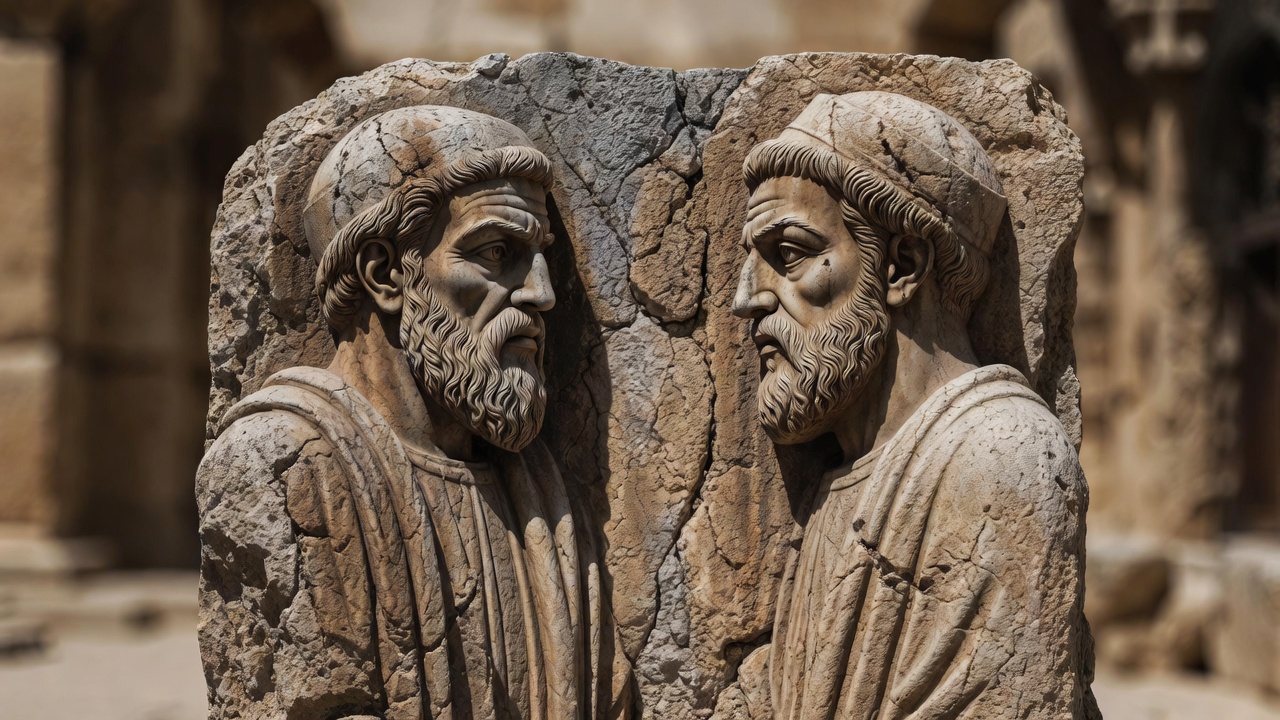
To understand the Tu Bishvat date controversy, we must first meet the two intellectual giants who shaped this debate: Hillel the Elder and Shammai the Elder.
Hillel the Elder: The Patient Teacher
Hillel (c. 110 BCE – 10 CE) was born in Babylonia and migrated to the Land of Israel to pursue Torah study. According to Chabad.org’s historical accounts, Hillel was once so poor that he couldn’t afford the entrance fee to the study hall. Rather than abandon his studies, he climbed to the roof and sat near a skylight to hear the lesson below. When morning came, the other scholars found him covered in snow—he had nearly frozen to death in his dedication to learning.
Key characteristics of Hillel:
- Known for exceptional patience and humility
- Founded the House of Hillel (Beit Hillel)
- Served as Nasi (President) of the Sanhedrin
- Famous for the teaching: “What is hateful to you, do not do to your fellow”
- Generally favored more lenient interpretations of Jewish law
Shammai the Elder: The Principled Scholar
Shammai (c. 50 BCE – 30 CE), in contrast, was born in Judea to a wealthy family. He served as the Av Beit Din (Vice President) of the Sanhedrin alongside Hillel. According to Britannica, Shammai was characterized by a more stern temperament and favored stricter interpretations of Jewish law.
Key characteristics of Shammai:
- Known for firmness and strictness
- Founded the House of Shammai (Beit Shammai)
- Taught: “Greet every person with a cheerful face”
- Advocated for literal, strict interpretation of Jewish law
- Concerned about maintaining Jewish identity during Roman occupation
Both sages lived during the reign of King Herod (37-4 BCE), an oppressive period marked by Roman occupation. Despite their different approaches, they shared profound mutual respect—a fact that the Talmud celebrates by calling their disputes “arguments for the sake of Heaven.”
The Historical Context of the Hillel and Shammai Debate on Tu Bishvat
The period during which Hillel and Shammai flourished was one of the most turbulent in Jewish history. The Roman occupation, Herod’s tyranny, and growing tensions between different Jewish factions created an atmosphere of uncertainty.
The Period of the Zugot (Pairs)
Hillel and Shammai represented the final generation of what Jewish tradition calls the Zugot (Hebrew for “pairs”)—the five generations of scholarly pairs who led the Jewish community from approximately 515 BCE to 30 CE. These pairs consisted of:
- Yose ben Yoezer and Yose ben Yochanan
- Joshua ben Perachiah and Nitai of Arbel
- Judah ben Tabbai and Shimon ben Shatach
- Shemaya and Avtalyon
- Hillel and Shammai
According to Torah.org, while Hillel and Shammai themselves only disagreed on three issues, their disciples (the Houses of Hillel and Shammai) debated over 300 matters of Jewish law. The Talmud (Sanhedrin 88b) attributes this proliferation of disputes to the difficult circumstances of the time, which prevented students from serving their teachers as thoroughly as previous generations had.
The Mishnaic Source: Rosh Hashanah 1:1 Explained
The debate about Tu Bishvat’s date appears in the first Mishnah of Tractate Rosh Hashanah. This foundational text states:
“The four new years are: On the first of Nisan, the new year for the kings and for the festivals; On the first of Elul, the new year for the tithing of animals (Rabbi Eliezer and Rabbi Shimon say, on the first of Tishrei); On the first of Tishrei, the new year for years, for the Sabbatical years and for the Jubilee years, and for the planting and for the vegetables. On the first of Shevat, the new year for the trees according to the House of Shammai; The House of Hillel says, on the fifteenth thereof.“
This single line contains the essence of the debate that has echoed through Jewish history for over two millennia.
What Was Actually at Stake?
The question wasn’t merely academic. The date of the “New Year for Trees” had real-world agricultural and legal implications:
| Agricultural Law | How Tu Bishvat Date Affects It |
|---|---|
| Orlah (Forbidden fruit) | Fruit from trees under 3 years old cannot be eaten; Tu Bishvat determines when a tree “turns” a year older |
| Neta Revai (Fourth-year fruit) | Fourth-year fruit must be brought to Jerusalem; Tu Bishvat marks the transition |
| Maaser Sheni (Second tithe) | Required in years 1, 2, 4, and 5 of the Shmita cycle; Tu Bishvat determines which year’s produce applies |
| Maaser Ani (Tithe for the poor) | Required in years 3 and 6; same dating principle applies |
Why Did Shammai Say the 1st of Shevat? Understanding Potential vs. Actual
The House of Shammai’s position—that the New Year for Trees should fall on the 1st of Shevat—was based on a profound philosophical principle: the primacy of potential over actuality.
The Rainfall Connection
According to the Jerusalem Talmud (Rosh Hashanah 1:2), the date of the tree’s New Year relates directly to when trees begin drawing sustenance from the new year’s rainfall.
Here’s the reasoning:
- Rosh Hashanah (1st of Tishrei) is when the world is judged in a general sense—including the potential for water
- Sukkot (15th of Tishrei) is when the specific amount of rainfall is decreed
- Four months later, trees begin drawing from this new water
Shammai’s calculation: Since the general judgment occurs on the 1st of Tishrei, exactly four months later (1st of Shevat) marks when trees begin accessing the waters that were judged in potential.
The Kabbalistic Perspective on Shammai’s Position
From a mystical standpoint, as explained by A Still Small Voice, Shammai’s choice of the 1st of the month carries deeper symbolism:
- The 1st of any Hebrew month corresponds to the new moon (Rosh Chodesh)
- At this time, the sun is dominant while the moon is barely visible
- This represents the Written Torah (Tree of Life)—the pure, radiant source of divine wisdom
- Shammai emphasized humility and submission to the divine source
Why Did Hillel Say the 15th of Shevat? The Case for Actuality
The House of Hillel’s position—that the New Year for Trees should fall on the 15th of Shevat—was based on the contrasting principle: the primacy of actuality over potential.
Hillel’s Rainfall Reasoning
Following Hillel’s logic:
- The actual, specific judgment of water occurs on Sukkot (15th of Tishrei)
- Four months later, on the 15th of Shevat, trees actually begin living from the new waters
- Most of the year’s rainfall has already fallen by mid-Shevat
- The sap begins rising, and fruit starts forming
The Talmud (Rosh Hashanah 14a) supports this by noting that by the 15th of Shevat, most of the rainy season has passed, and trees begin their new growth cycle.
The Full Moon Symbolism
The 15th of any Hebrew month corresponds to the full moon—when the moon is at its brightest, reflecting the sun’s light in equal measure. This carries profound spiritual meaning:
- The full moon represents completion and fulfillment
- It symbolizes the Oral Torah (Tree of Knowledge)—human engagement with divine wisdom
- Hillel emphasized realized potential and practical application
- The moon at fullness represents the ideal of unity between heaven and earth
The Resolution: Why Jewish Law Follows Hillel
After years of debate, Jewish law (Halakha) ultimately sided with the House of Hillel. The 15th of Shevat—Tu Bishvat—became the official New Year for Trees.
The Heavenly Voice (Bat Kol)
According to the Talmud (Eruvin 13b), the resolution came through extraordinary means:
“A heavenly voice declared: ‘Both these and these are the words of the living God, but the Halakha follows the House of Hillel.'”
This remarkable statement affirms that both positions contained divine truth—yet for practical purposes, Hillel’s approach was adopted.
Why Hillel Prevailed
The Talmud offers several explanations for why Hillel’s rulings became authoritative:
| Reason | Explanation |
|---|---|
| Humility | Hillel’s disciples were gentle and modest |
| Intellectual honesty | They studied Shammai’s opinions as thoroughly as their own |
| Generosity of spirit | They always cited Shammai’s views before their own |
| Majority rule | Hillel’s school eventually comprised the majority |
The Messianic Perspective
Interestingly, the 16th-century Kabbalist Rabbi Yitzchak Luria (the Ari) taught that in the Messianic era, Halakha would shift to follow the House of Shammai. According to Jewish Virtual Library, this is because Shammai’s stricter rulings represent an ideal that humanity can only fully appreciate in a perfected world.
The Evolution of Tu Bishvat: From Agricultural Date to Spiritual Celebration
The Second Temple Period
During the time of the Second Temple (516 BCE – 70 CE), Tu Bishvat functioned primarily as an agricultural cutoff date. Jewish farmers in Israel used it to calculate:
- Tree ages for orlah (forbidden fruit) laws
- Tithing obligations for different years
- The beginning of the new fruit cycle
After the Temple’s Destruction
When the Romans destroyed the Temple in 70 CE, Jews were scattered throughout the diaspora. The agricultural laws became largely theoretical for communities no longer living in Israel. Tu Bishvat might have faded into obscurity—but something remarkable happened.
According to Reform Judaism, Jews began observing Tu Bishvat with a feast of fruits as a way to:
- Maintain connection to the Land of Israel
- Preserve awareness of agricultural laws
- Express hope for eventual return to the homeland
The Kabbalistic Renaissance in Safed
The 16th century marked a turning point for Tu Bishvat. In the mystical community of Safed (Tzfat) in the Galilee, the renowned Kabbalist Rabbi Yitzchak Luria (1534-1572)—known as “the Ari” (the Lion)—and his disciples transformed the holiday.
According to My Jewish Learning, they created the first Tu Bishvat Seder—a ritual meal modeled after the Passover seder. The earliest written version, called P’ri Eitz Hadar (“Fruit of the Beautiful Tree”), was a 50-page booklet featuring:
- Four cups of wine (progressing from white to red)
- 30 different fruits organized in three categories
- Readings from Torah, Prophets, and Zohar
- Deep mystical meditations
The Kabbalistic Framework of the Tu Bishvat Seder
The Kabbalistic seder corresponds to the Four Worlds of mystical cosmology:
| World (Olam) | Meaning | Wine Color | Fruit Category |
|---|---|---|---|
| Asiyah | Action (Physical) | White | Fruits with inedible shells (walnuts, almonds) |
| Yetzirah | Formation (Emotional) | Mostly white, some red | Fruits with inedible pits (dates, olives) |
| Beriah | Creation (Intellectual) | Mostly red, some white | Completely edible fruits (figs, grapes) |
| Atzilut | Emanation (Spiritual) | Red | Beyond physical fruit—represented by fragrance |
The progression from white wine to red symbolizes the transition from winter to spring, from dormancy to growth, from potential to actuality—echoing the original debate between Shammai and Hillel.
Modern Tu Bishvat Celebrations: From Israel to the World
Tu Bishvat in Modern Israel
In contemporary Israel, Tu Bishvat has taken on renewed significance:
Tree Planting Traditions: The modern tree-planting custom began in 1890 when Rabbi Ze’ev Yavetz took his students to plant trees in Zikhron Ya’akov. This practice was later adopted by the Jewish National Fund (Keren Kayemet L’Yisrael), established in 1901.
According to Wikipedia, over one million Israelis participate in JNF Tu Bishvat tree-planting activities annually. Major Israeli institutions have chosen Tu Bishvat for their inaugurations:
| Institution | Tu Bishvat Inauguration Year |
|---|---|
| Hebrew University of Jerusalem | 1918 |
| Technion (Haifa) | 1925 |
| Israeli Knesset | 1949 |
The Almond Blossom Symbol: The shkediyah (almond tree) has become closely associated with Tu Bishvat in Israel. The famous song “HaShkediyah Porachat” (“The Almond Tree Blossoms”) celebrates this tree, which typically blooms around Tu Bishvat, signaling the end of winter.
Tu Bishvat in the Diaspora
For Jews living outside Israel, Tu Bishvat has evolved in unique ways:
Traditional Observances:
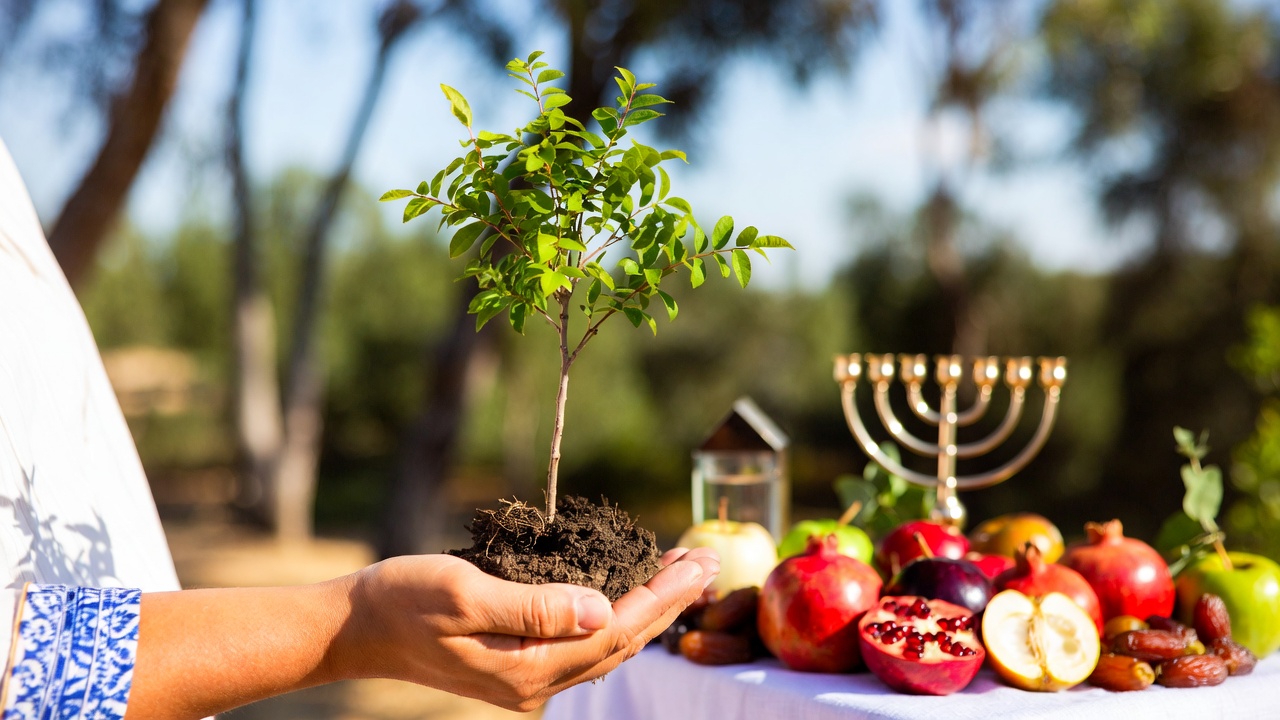
- Eating fruits from the Seven Species (wheat, barley, grapes, figs, pomegranates, olives, dates)
- Consuming dried fruits and nuts, especially almonds
- Preparing etrog (citron) preserved from Sukkot
- Holding Tu Bishvat seders with wine and fruit
The Environmental Movement: Beginning in the 1970s—particularly after the “Trees for Vietnam” campaign protesting Agent Orange—Tu Bishvat became associated with ecological awareness. Today, many Jewish communities treat it as a “Jewish Earth Day,” focusing on:
- Environmental education
- Sustainability initiatives
- Climate action
- Conservation efforts
The Seven Species: Sacred Fruits of the Land of Israel
When celebrating Tu Bishvat, special emphasis is placed on the Shivat HaMinim—the Seven Species with which the Land of Israel is blessed (Deuteronomy 8:8):
| Species (Hebrew) | English | Symbolism |
|---|---|---|
| Chitah (חיטה) | Wheat | Torah study and learning |
| Se’orah (שעורה) | Barley | Humility and simplicity |
| Gefen (גפן) | Grapes/Vine | Joy and celebration |
| Te’enah (תאנה) | Fig | Peace and prosperity |
| Rimon (רימון) | Pomegranate | Mitzvot (613 seeds = 613 commandments) |
| Zayit (זית) | Olive | Light and wisdom |
| D’vash (דבש) | Date honey | Sweetness of the Land |
These fruits carry deep agricultural, historical, and spiritual significance, connecting contemporary Jews to their ancient homeland.
Spiritual Lessons from the Hillel-Shammai Tu Bishvat Debate
The ancient controversy between Hillel and Shammai over Tu Bishvat’s date offers profound lessons that remain relevant today:
1. Both Truth and Practical Application Matter
The Talmud’s declaration that “both these and these are words of the living God” teaches that multiple valid perspectives can coexist. Shammai’s focus on potential and Hillel’s emphasis on actuality both capture essential truths about spiritual growth.
2. Humility Opens Doors
Hillel’s approach prevailed partly because of his legendary humility. The story of his near-death experience on the snowy rooftop reminds us that sincere pursuit of knowledge transcends material obstacles.
3. Disagreement Can Be Sacred
The Mishnah (Pirkei Avot 5:17) cites Hillel and Shammai as the quintessential example of machloket l’shem shamayim—”controversy for the sake of Heaven.” Their debates enriched Jewish law precisely because they were motivated by truth-seeking rather than ego.
4. Trees Teach Us About Human Growth
The Torah states, “Ki ha’adam eitz hasadeh”—”For man is like a tree of the field” (Deuteronomy 20:19). Tu Bishvat invites us to consider:
- Are we rooted in strong values?
- Do we grow continuously?
- Are we bearing fruit through good deeds?
- Can we weather storms with resilience?
How to Celebrate Tu Bishvat Today: A Practical Guide
Whether you’re observant or secular, connected to tradition or exploring Jewish culture, here are meaningful ways to observe the New Year for Trees:
Traditional Observances
- Eat the Seven Species – Prepare a meal featuring wheat, barley, grapes, figs, pomegranates, olives, and dates
- Try a new fruit – It’s customary to eat a seasonal fruit you haven’t yet enjoyed this year
- Hold a Tu Bishvat Seder – Follow the Kabbalistic tradition with four cups of wine and multiple fruits
- Skip Tachanun – In traditional prayer services, penitential prayers are omitted
- Pray for a beautiful etrog – Some traditions include prayers for a kosher citron for next Sukkot
Modern Celebrations
- Plant a tree – Whether physically or through organizations like the Jewish National Fund
- Support environmental causes – Donate to conservation efforts
- Reduce waste – Commit to sustainable practices
- Educate children – Share stories about trees, nature, and Jewish environmental ethics
- Connect with Israel – Learn about Israeli agriculture or support Israeli farmers
Tu Bishvat 2026 and Beyond: Upcoming Dates
| Year | Tu Bishvat Begins | Gregorian Date |
|---|---|---|
| 5786 | Sunset February 1, 2026 | February 1-2, 2026 |
| 5787 | Sunset January 22, 2027 | January 22-23, 2027 |
| 5788 | Sunset February 11, 2028 | February 11-12, 2028 |
| 5789 | Sunset January 30, 2029 | January 30-31, 2029 |
| 5790 | Sunset January 18, 2030 | January 18-19, 2030 |
Conclusion: The Enduring Legacy of an Ancient Debate
The story of Hillel vs. Shammai and the date of Tu Bishvat is more than a historical curiosity. It’s a window into how Judaism balances tradition and innovation, strictness and leniency, potential and actuality.
When we celebrate Tu Bishvat on the 15th of Shevat—as Hillel ruled—we participate in a decision made over 2,000 years ago. Yet we also honor Shammai’s wisdom, recognizing that his emphasis on potential carries its own profound truth.
As the almond trees begin to bloom and the sap rises in the Land of Israel, Tu Bishvat reminds us that renewal is always possible. Like trees that appear dormant through winter yet contain the seeds of spring’s abundance, we too carry within us the potential for growth, transformation, and fruitfulness.
Whether you mark the day with a traditional seder, plant a tree, eat a new fruit, or simply pause to appreciate nature’s wonders, you’re connecting with an ancient yet living tradition—one shaped by two great sages who disagreed about a date but agreed on what mattered most: the pursuit of truth for the sake of Heaven.