When the mustard fields of North India burst into golden bloom and a gentle warmth nudges aside the last stubborn grip of winter, you know Vasant Panchami has arrived. This ancient Hindu festival — also called Basant Panchami, Saraswati Puja, or Shri Panchami — is one of the most joyful and spiritually rich celebrations on the Indian calendar. It honors Goddess Saraswati, the deity of knowledge, music, art, and wisdom, while marking the earth’s slow turn toward spring.
In 2026, Vasant Panchami falls on Friday, January 23. The Panchami Tithi begins at 2:28 AM on January 23 and ends at 1:46 AM on January 24, with the most auspicious window for Saraswati Puja running from roughly 7:15 AM to 12:50 PM (DrikPanchang).
But what are the ancient stories that breathe life into this day? Why do millions dress in yellow, place their books at a goddess’s feet, and fly kites under a winter sky? Let’s walk through the history, mythology, and regional traditions that make Vasant Panchami so much more than a seasonal marker.
What Is Vasant Panchami and Why Is It Celebrated Every Year?
The name itself tells the story. “Vasant” means spring. “Panchami” means the fifth day. Vasant Panchami is celebrated on the fifth day of the bright fortnight (Shukla Paksha) in the Hindu month of Magha, which typically falls in late January or early February on the Gregorian calendar.
But here is a detail many people miss: Vasant Panchami does not mark the day spring arrives. It marks the day preparations for spring begin. According to the traditional Hindu understanding of seasonal transitions, any season takes about 40 days to fully come into bloom. Vasant Panchami falls precisely 40 days before the peak of spring — and, not coincidentally, 40 days before Holi, the great festival of colors (Wikipedia – Vasant Panchami).
The festival carries three core layers of meaning:
| Layer | Significance |
|---|---|
| Spiritual | Worship of Goddess Saraswati for wisdom, learning, and creative power |
| Seasonal | Welcoming Vasant Ritu (spring), called the “King of All Seasons” in Hindu scriptures |
| Cultural | A day to begin new ventures — education, marriage, housewarming, artistic work |
In the Hindu six-season calendar, Vasant Ritu holds special status. It is called “Rituraj” — the supreme season — because its mild weather, blooming flowers, and ripe crops represent nature at its most generous. Vasant Panchami is the doorway into this period of renewal.
The Ancient Origin Story of Vasant Panchami in Hindu Mythology
The oldest and most beloved legend behind Vasant Panchami concerns Lord Brahma, the creator of the universe, and the birth of Goddess Saraswati.
According to Hindu tradition, after Brahma created the world, he stepped back to observe his work. What he found troubled him deeply. The earth was alive — rivers flowed, trees grew, creatures roamed — but everything was silent. There was no speech. No music. No art. No expression of emotion. The world felt hollow, like a painting with no color.
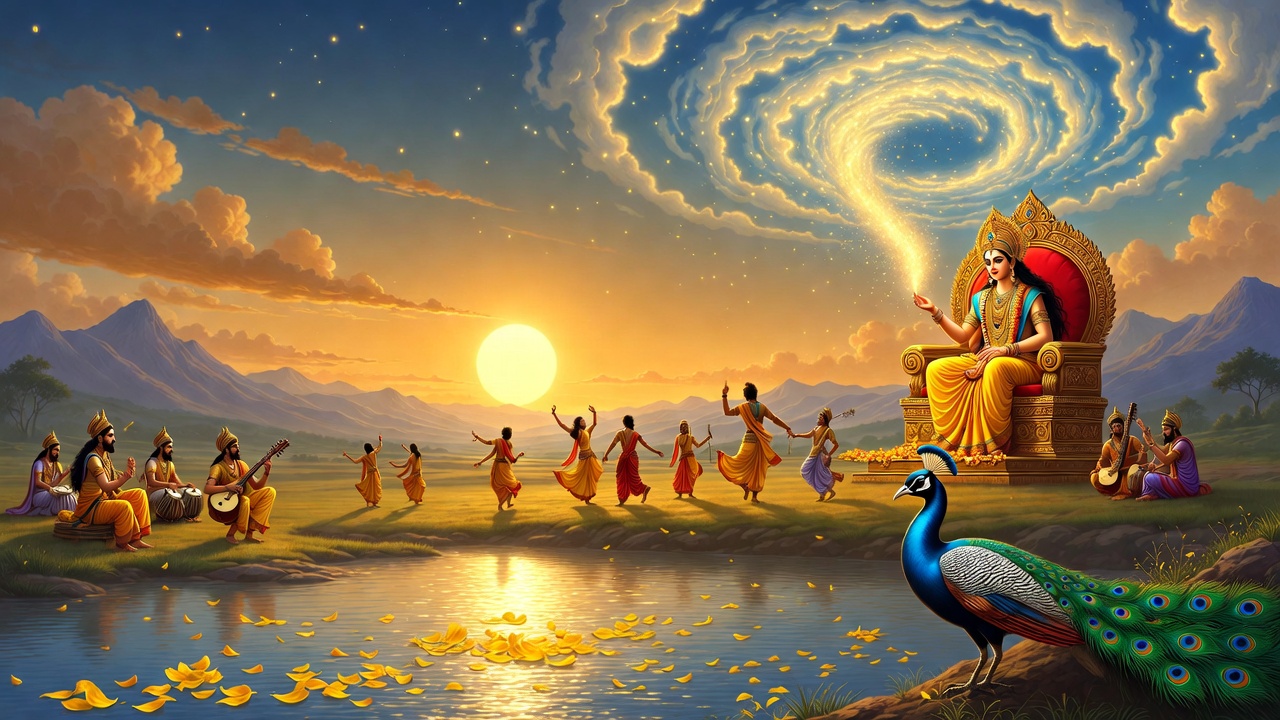
Brahma sat in meditation, seeking a solution. Then, with a flash of divine inspiration, he sprinkled water from his kamandalu (a sacred water vessel) into the air. In that moment, a radiant figure emerged. She was dressed in white, seated on a lotus, and she held a veena (a stringed instrument) in her hands. This was Goddess Saraswati.
When Brahma described the emptiness he felt in creation, Saraswati smiled and began to play her veena. As the music filled the atmosphere, speech entered the mouths of living beings, melody entered the wind, and rhythm entered the rivers. The world, once mute, now hummed with life.
Overjoyed, Brahma declared the day of Saraswati’s arrival to be Vasant Panchami — a day to honor the goddess who gave the world its voice (Art of Living). This is why devotees celebrate the festival as the birthday of Goddess Saraswati, and why it is deeply associated with knowledge, art, and learning.
The Rig Veda, one of the oldest sacred texts in Hinduism, praises Saraswati with the words: “O best of divine mothers, we stand insignificant in front of You. O Mother, please bless us!” (Rig Veda 2.41.16). Her presence in the earliest Vedic hymns shows just how ancient her worship is.
The Legend of Kamadeva: How the God of Love Changed Spring Forever
Vasant Panchami is not only about wisdom. It is also about love.
A second powerful legend connects this festival to Kamadeva, the Hindu god of love — an association that gives the day its alternate name, “Madana Panchami.”
The story begins with tragedy. After the death of Sati, Lord Shiva’s first wife, Shiva withdrew from the world. He retreated to Mount Kailash and entered a state of deep yogic meditation. Nothing could stir him. The world lost its protector, and a demon named Tarakasura took advantage of the void. Tarakasura had earned a boon that only a son of Shiva could defeat him. With Shiva lost in penance, the demon thought he was invincible.
Meanwhile, Sati had been reborn as Parvati. She performed intense penance to win Shiva’s heart, but the great ascetic remained unmoved. The desperate gods turned to Kamadeva for help.
On the day of Vasant Panchami, Kamadeva approached Shiva’s meditation ground. He created an illusion of spring around Kailash — flowers bloomed, fragrant breezes blew, and birdsong filled the air. Then Kamadeva shot his legendary arrow, made of flowers and bees, at Shiva.
Shiva’s concentration broke. But when he realized what had happened, his fury was immense. He opened his third eye, and a beam of fire reduced Kamadeva to ashes.
Yet the story did not end there. Kamadeva’s devoted wife, Rati, performed relentless penance, and her devotion eventually moved Shiva to restore Kamadeva to life. According to some versions of the tale, Kamadeva was later reborn as Pradyumna, the son of Lord Krishna and Rukmini (Wikipedia – Vasant Panchami).
This myth adds a romantic dimension to Vasant Panchami. It is a day that celebrates not only the wisdom of Saraswati but also the courage and persistence of love — a force strong enough to break the deepest meditation and, ultimately, to conquer even death.
The Inspiring Story of Kalidasa and Goddess Saraswati’s Blessings
No discussion of Vasant Panchami legends is complete without the tale of Kalidasa — one of the greatest poets and playwrights in the history of Sanskrit literature, believed to have lived during the 4th–5th century CE.
According to popular tradition, Kalidasa was once an uneducated young man. He was so unaware of basic logic that, in the famous telling, he was found sitting on a tree branch and cutting the very branch he was sitting on.
A group of scholars, humiliated by a brilliant princess named Vidyottama who had defeated them all in debate, saw an opportunity for revenge. They tricked Vidyottama into marrying Kalidasa by presenting him as a great sage who communicated only through gestures. The princess agreed. But when she discovered the truth — that her husband was a fool — she was devastated and drove him from their home (Hindu American Foundation).
Heartbroken and ashamed, Kalidasa went to a riverbank, ready to end his life. But before he could do so, Goddess Saraswati appeared from the waters. She told him to bathe in the river. The moment he emerged, his mind was transformed. Wisdom, eloquence, and poetic genius flooded into him.
Kalidasa went on to compose masterpieces such as Shakuntala, Meghaduta (The Cloud Messenger), and Kumarasambhava. His works are still studied and celebrated across the world.
According to Hindu tradition, Kalidasa’s transformation is believed to have happened on Vasant Panchami day. His story is retold every year during the festival as proof that Saraswati’s grace can turn even the most ordinary person into a vessel of brilliance (Mythlok – Vasant Panchami).
Why Is the Color Yellow So Important on Vasant Panchami?
Walk through any Indian city or village on Vasant Panchami, and you will be wrapped in yellow. Yellow clothes, yellow flowers, yellow sweets, yellow rice. The color is not decorative. It carries deep symbolic weight.
The significance of yellow on Vasant Panchami operates on multiple levels:
- Agricultural: By late January, the mustard fields of North India erupt in brilliant yellow blooms. This is a visual signal that the cold is loosening its hold and the harvest season approaches. Yellow is the color of the living earth.
- Spiritual: In Hindu tradition, yellow represents knowledge, wisdom, prosperity, and positive energy. It is the color of learning and auspiciousness. Goddess Saraswati, though often depicted in white, is honored with yellow flowers and offerings on this day.
- Emotional: Yellow conveys optimism, vitality, and warmth — the exact qualities that spring brings after the heaviness of winter.
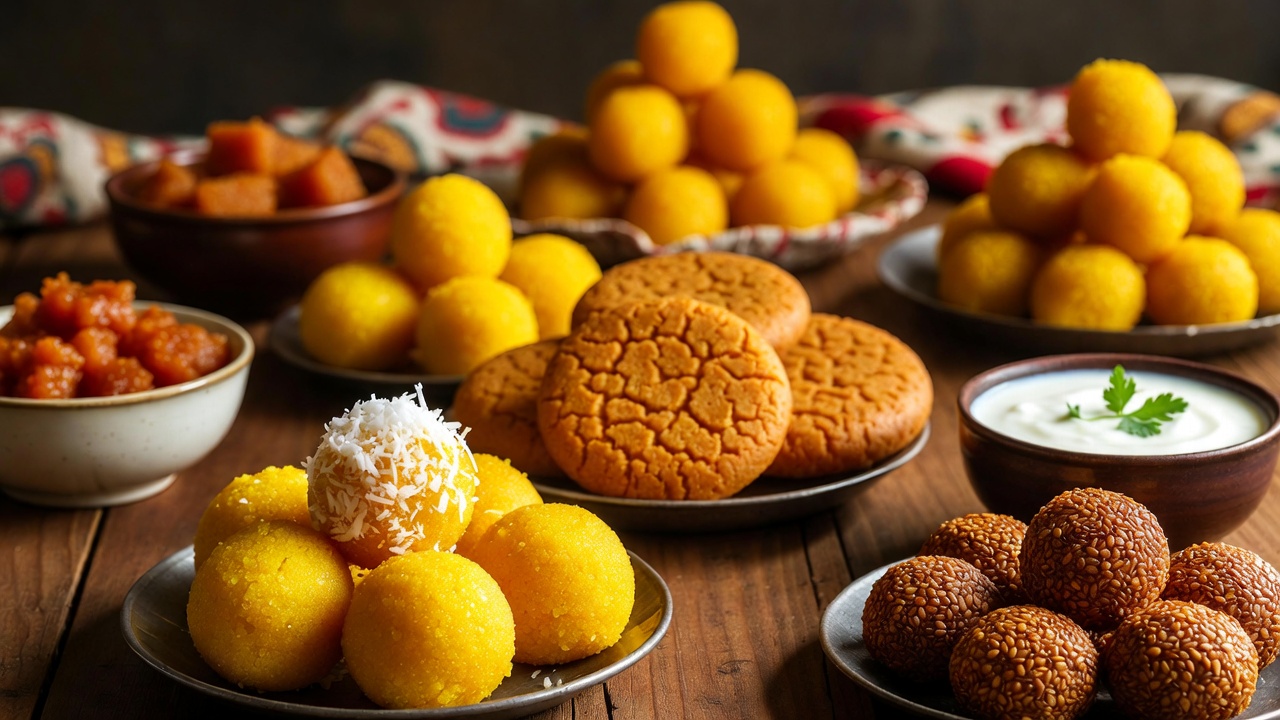
Devotees wear yellow garments, offer yellow marigolds and chrysanthemums at temples, and prepare dishes tinted with saffron and turmeric. The iconic festival sweet, kesar halwa (saffron halwa), gets its deep golden hue from saffron strands — a spice that is itself a symbol of purity and abundance.
How Is Saraswati Puja Performed on Vasant Panchami Day?
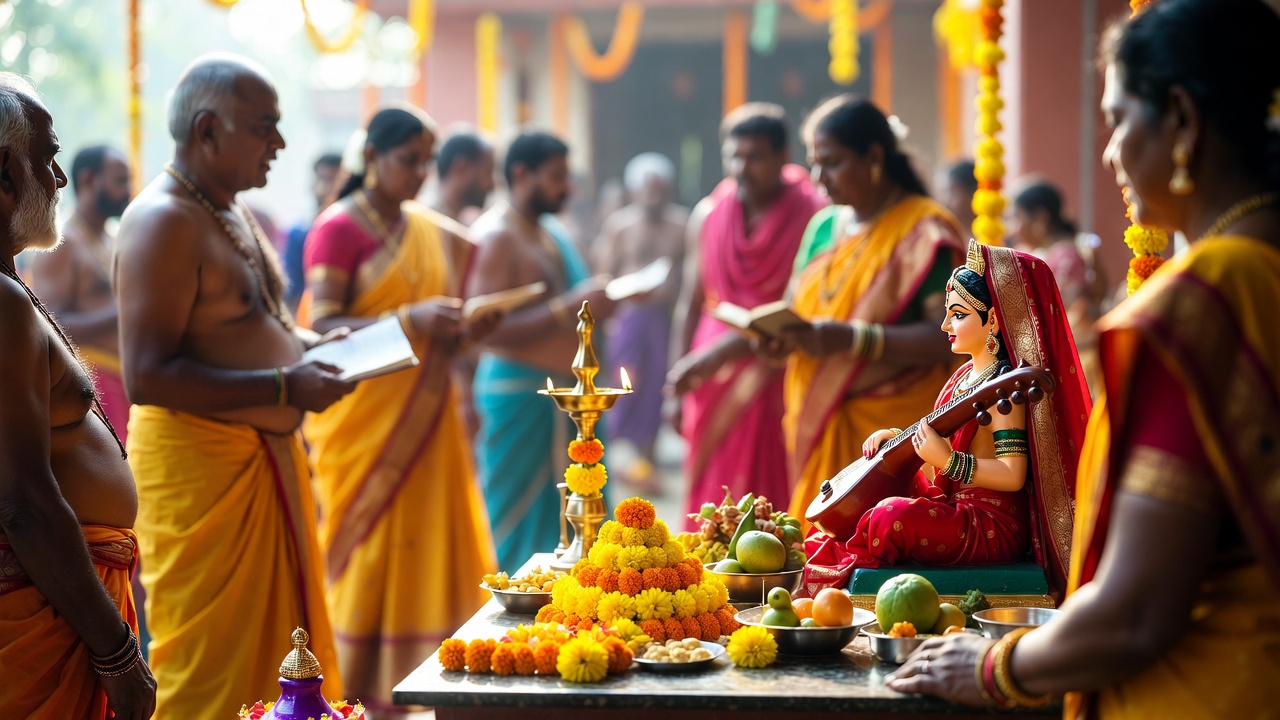
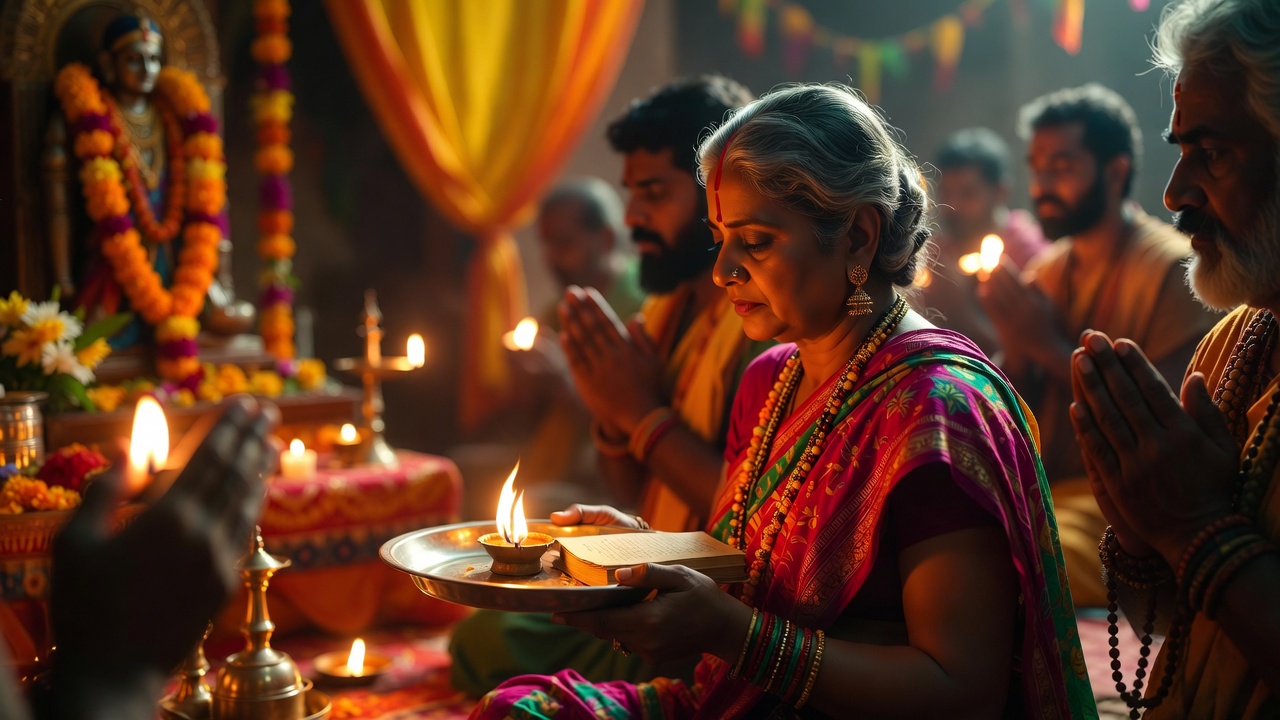
The heart of Vasant Panchami is Saraswati Puja — the worship of Goddess Saraswati. Though the details vary by region and family tradition, the core ritual follows a recognizable pattern across India and Nepal.
Step-by-step overview of Saraswati Puja:
- Early morning bath: Devotees rise before dawn and bathe, sometimes applying a paste of mustard oil and turmeric (haldi) to their skin as an offering to the goddess.
- Setting up the altar: A murti (idol) or image of Saraswati is placed on an elevated platform, often decorated with yellow and white flowers, mango leaves, and garlands.
- Dressing the goddess: The idol is draped in a yellow or white sari. Yellow flowers are offered at her feet.
- Placing tools of learning: Students and artists place their books, pens, notebooks, musical instruments, and even electronic devices at the feet of the goddess. These items are not touched until the puja is complete — a mark of deep respect for the sanctity of knowledge.
- Puja Kalash and mantras: A sacred water vessel (Puja Kalash) is established. Lord Ganesha is invoked first, followed by Saraswati. Devotees chant mantras such as “Om Saraswatyai Namah” and sing the Saraswati Vandana hymn.
- Prasad distribution: Yellow sweets — boondi laddoos, kesar halwa, sweet saffron rice — are offered to the goddess and then shared as prasad.
The festival is considered a Sarva Siddhi Muhurta, meaning it is universally auspicious. According to many Hindu astrologers, no separate muhurta (auspicious moment) calculations are needed for activities begun on this day (Deccan Chronicle). Weddings, housewarmings, naming ceremonies, and the start of new businesses are all considered especially favored.
Vidyarambh Ceremony: Why Children Start Education on Vasant Panchami
One of the most cherished customs of Vasant Panchami is Vidyarambh (also called Akshar Abhyasam in South India) — the traditional initiation of young children into the world of learning.
On this day, parents guide their children, typically between the ages of three and five, to write their first letters. In many families, the first syllable written is “Om”, the sacred primordial sound of Hinduism. In some traditions, the child traces letters in a plate of uncooked rice or writes on a small slate under the guidance of an elder or priest.
The belief is simple and profound: beginning education on the day of Saraswati’s birth ensures that the child will be blessed with intelligence, creativity, and a lifelong love of learning.
One of the most famous sites for this ceremony is the Sri Gnana Saraswathi Temple at Basar in Telangana. Every year on Vasant Panchami, thousands of families travel to Basar to have their children write their first letters at the temple, seeking the goddess’s direct blessing (Deccan Chronicle).
Ancient texts affirm this practice. Hindu scriptures record that legendary sages and poets — Valmiki, Vashishtha, Vishwamitra, and Vyasa — achieved greatness through the worship of Saraswati. The Vidyarambh ceremony is a living link to that tradition.
How Different Regions of India Celebrate Vasant Panchami
India is not one culture — it is a mosaic. Vasant Panchami is observed across the country, but its flavor changes dramatically from region to region.
| Region | Local Name | Key Traditions |
|---|---|---|
| West Bengal, Assam, Bihar, Tripura | Saraswati Puja / Saraswati Pujo | Grand community pandals, elaborate idol installations, students offer books and instruments, idol immersion the next day |
| Punjab & Haryana | Basant Festival | Kite flying, yellow turbans, mustard dishes (Makke ki Roti, Sarso ka Saag) |
| Uttar Pradesh (Mathura & Vrindavan) | Vasant Panchami | Start of Holi celebrations, temples decorated with yellow flowers, priests throw abeer and gulal on devotees |
| Andhra Pradesh & Telangana | Sri Panchami | Akshar Abhyasam ceremony, temple-centric worship, classical music performances |
| Odisha | Saraswati Puja | Offering of fresh yellow flowers in temples |
| Maharashtra | Vasant Panchami | Newlywed couples visit temples wearing yellow, jasmine garlands are common |
| Rajasthan & Madhya Pradesh | Vasant Panchami | Folk dances, regional delicacies, fairs |
| Nepal | Vasant Panchami | School ceremonies, temple visits, prayers for wisdom |
| Bali, Indonesia | Hari Raya Saraswati | Marks the beginning of the 210-day Balinese Pawukon calendar |
Saraswati Pujo in Bengal: A Cultural Phenomenon
In West Bengal, Vasant Panchami is arguably the most eagerly anticipated festival after Durga Puja for students. Schools close. Beautifully crafted Saraswati idols are installed in homes, schools, colleges, and neighborhood pandals. Students place their books, pens, and instruments at the goddess’s feet — and, in a distinctive Bengali custom, they refrain from reading or writing for the entire day out of respect for the sanctity of knowledge.
The celebration has a social dimension too. In Kolkata, young people dress in their finest yellow-toned ethnic wear and step out for adda (friendly gatherings). Some call it “Bengal’s Valentine’s Day” — a day when tradition and youthful energy meet (India Currents).
Kite Flying in Punjab: The Basant Festival of the Skies
In Punjab and Haryana, Vasant Panchami transforms into a high-spirited kite festival. The sky fills with colorful kites as families gather on rooftops. Maharaja Ranjit Singh is credited with popularizing this tradition, turning it into a grand celebration of spring and community unity (Mythlok – Vasant Panchami).
Women prepare festive dishes such as Meethe Chawal (sweet rice) and the classic Punjabi pairing of Makke ki Roti with Sarso ka Saag — both of which feature the yellow tones of the season.
Holi Preparations in Mathura and Vrindavan
In the sacred towns of Mathura and Vrindavan in Uttar Pradesh, Vasant Panchami is not just a standalone festival — it is the opening chapter of Holi. Temples are decorated in yellow. Priests at the renowned Shri Banke Bihari Temple in Vrindavan begin tossing colored powder (gulal) on devotees. Communities start preparing the wood and cow-dung pyres for Holika Dahan, which takes place 40 days later.
Vasant Panchami and the Sufi Tradition: A Beautiful Interfaith Connection
One of the most remarkable dimensions of Vasant Panchami is its place in Sufi Muslim tradition — a testament to India’s centuries-old interfaith cultural exchange.
According to tradition, the great 13th-century Sufi poet Amir Khusrau of Delhi once observed Hindu women carrying yellow flowers on Vasant Panchami. Moved by the beauty of the custom, he adopted the practice for the Sufi community, introducing it to the followers of the Chishti order (Art of Living).
To this day, Sufi Muslims mark the grave of the revered saint Hazrat Nizamuddin Auliya in Delhi with yellow flowers and cloths on Vasant Panchami. The festival is sometimes called “Sufi Basant” in this context. It is a living example of how festivals in India often transcend religious boundaries, held together by a shared love of beauty, devotion, and the turning of seasons.
The Historical Importance of Bhojshala and Vasant Panchami
The festival also carries a complex historical layer. The Bhojshala archaeological site in Dhar, Madhya Pradesh, has long been a focal point of cultural significance on Vasant Panchami.
This site contains evidence of an ancient Saraswati temple, known locally as the Waghdevi temple, associated with the legendary King Bhoja — a ruler who was a great patron of learning and the arts. A later-era structure, the Kamal-Maula mosque, also stands on the same site.
The Archaeological Survey of India (ASI) has historically provided guidelines for shared access: allowing Hindu devotees to worship at Bhojshala on Vasant Panchami and Muslim worshippers to use the site for Friday prayers (Wikipedia – Vasant Panchami).
King Bhoja’s own legend ties into the festival. According to tradition, he performed a grand Saraswati Puja on Vasant Panchami at the advice of his spiritual guide. Pleased with his devotion, Goddess Saraswati blessed him, and his kingdom became a center of learning and culture.
What Are the Traditional Foods Prepared During Vasant Panchami?
Food is inseparable from Indian festivals, and Vasant Panchami has its own rich culinary tradition — dominated, naturally, by the color yellow.
Popular Vasant Panchami foods across India:
- Kesar Halwa (Saffron Halwa): A rich, aromatic sweet made from wheat flour, ghee, sugar, nuts, cardamom, and saffron strands that give it a deep golden color. This is the signature dish of the festival.
- Meethe Chawal / Kesar Bhaat (Sweet Saffron Rice): Rice cooked with saffron, sugar, and dry fruits. Common in Punjab and North India.
- Boondi Laddoo: Small, round sweets made from fried chickpea flour droplets, often tinted yellow.
- Khichdi: A simple, nourishing dish of rice and lentils, sometimes prepared with turmeric for the yellow hue. Popular in rural celebrations.
- Sweet Pongal / Kesari (South India): A warm, sweet preparation made from semolina or rice, flavored with saffron and garnished with cashews and raisins.
- Makke ki Roti and Sarso ka Saag (Punjab): Cornmeal flatbread served with spiced mustard greens — a celebration of the winter harvest.
The yellow tint in these dishes is not just about appearance. Saffron and turmeric, the two most common coloring agents, are revered in Ayurveda for their health benefits. Turmeric is anti-inflammatory. Saffron is considered a mood enhancer. Eating these foods on Vasant Panchami is both a spiritual act and a seasonal wellness practice.
Vasant Panchami 2026 Date, Puja Muhurat, and Tithi Timings
For anyone planning their observance in 2026, here are the essential details:
| Detail | 2026 Timing |
|---|---|
| Date | Friday, January 23, 2026 |
| Panchami Tithi Begins | 2:28 AM, January 23 |
| Panchami Tithi Ends | 1:46 AM, January 24 |
| Recommended Puja Muhurat | 7:15 AM – 12:50 PM |
| Madhyahna (Midday) Moment | 12:50 PM |
Note: Exact sunrise and sunset times vary by city. Consult a local panchang or priest for precise timings in your area.
Because Vasant Panchami is considered an Abujh Muhurat — an inherently auspicious day — activities such as weddings, property registrations, housewarming ceremonies, and Vidyarambh can be performed without separate astrological consultation (Narayan Seva).
How Vasant Panchami Is Celebrated Outside India
Vasant Panchami is not confined to India. The Hindu diaspora and communities across South and Southeast Asia observe the festival in their own ways.
Nepal: Devotees visit Saraswati temples in traditional attire. Schools organize special prayers, and the festival is a public occasion for celebrating education and wisdom.
Bangladesh: Many schools and colleges observe a holiday. Saraswati Puja is held in institutions and homes, particularly by the Hindu community.
Indonesia (Bali): The festival is known as “Hari Raya Saraswati” and carries additional significance as the starting point of the 210-day Balinese Pawukon calendar. Books, lontar (palm-leaf manuscripts), and knowledge tools are blessed on this day (Wikipedia – Vasant Panchami).
Pakistan (Punjab): Hindus celebrate the festival as a private occasion. Punjabi Muslims in and around Lahore have a long tradition of kite flying during the Basant season, though this has faced legal restrictions in recent years due to safety concerns related to glass-coated kite strings.
Global diaspora: Hindu communities in the United States, United Kingdom, Canada, and Australia organize Saraswati Puja events at temples and cultural centers. Many families also hold private pujas at home and connect with relatives in India through virtual celebrations — a trend that grew significantly after the COVID-19 pandemic.
Vasant Panchami and Its Connection to Holi: The 40-Day Countdown
Vasant Panchami does not exist in isolation on the Hindu festival calendar. It is the opening act of the Holi season.
The reason is rooted in the ancient understanding of seasonal transitions. Hindu tradition holds that a season needs 40 days to move from its beginning to its peak. Vasant Panchami marks the beginning of spring’s transition, and Holi — celebrated on the full moon of the month of Phalguna — marks spring in its full glory. The gap between the two is roughly 40 days.
In practical terms, this means that Holika Dahan preparations begin on Vasant Panchami in many communities. In Mathura, Vrindavan, and parts of Uttar Pradesh, devotees dig holes and install the Holi Danda (a wooden stick) around which waste wood and dried cow dung will be stacked over the coming weeks for the Holika bonfire.
So when you celebrate Vasant Panchami, you are not just honoring Saraswati and welcoming spring. You are also setting the stage for one of the most exuberant festivals on the planet.
Key Takeaways: What Makes Vasant Panchami a Festival Like No Other
Vasant Panchami is rare among world festivals because it weaves together so many threads — nature, knowledge, love, art, agriculture, and interfaith connection — into a single celebration.
It is a day when a farmer gazes at golden mustard fields and gives thanks. A student places her books at the feet of a goddess and prays for focus. A child writes the syllable “Om” for the first time. A Sufi poet lays yellow flowers on a saint’s tomb. A family in Kolkata dresses in their finest and walks arm in arm through the streets.
All of this happens on the same day, under the same slow-warming winter sun, in a tradition that stretches back thousands of years and still feels completely alive.
Whether you observe the full puja, fly a kite, cook a plate of kesar halwa, or simply pause to notice the light changing as winter retreats — Vasant Panchami invites you to celebrate what makes us most human: the desire to learn, to create, and to begin again.
Have you celebrated Vasant Panchami before? Share your family traditions and regional customs in the comments below. And if this guide helped you, save it for next year — the date changes, but the spirit never does.