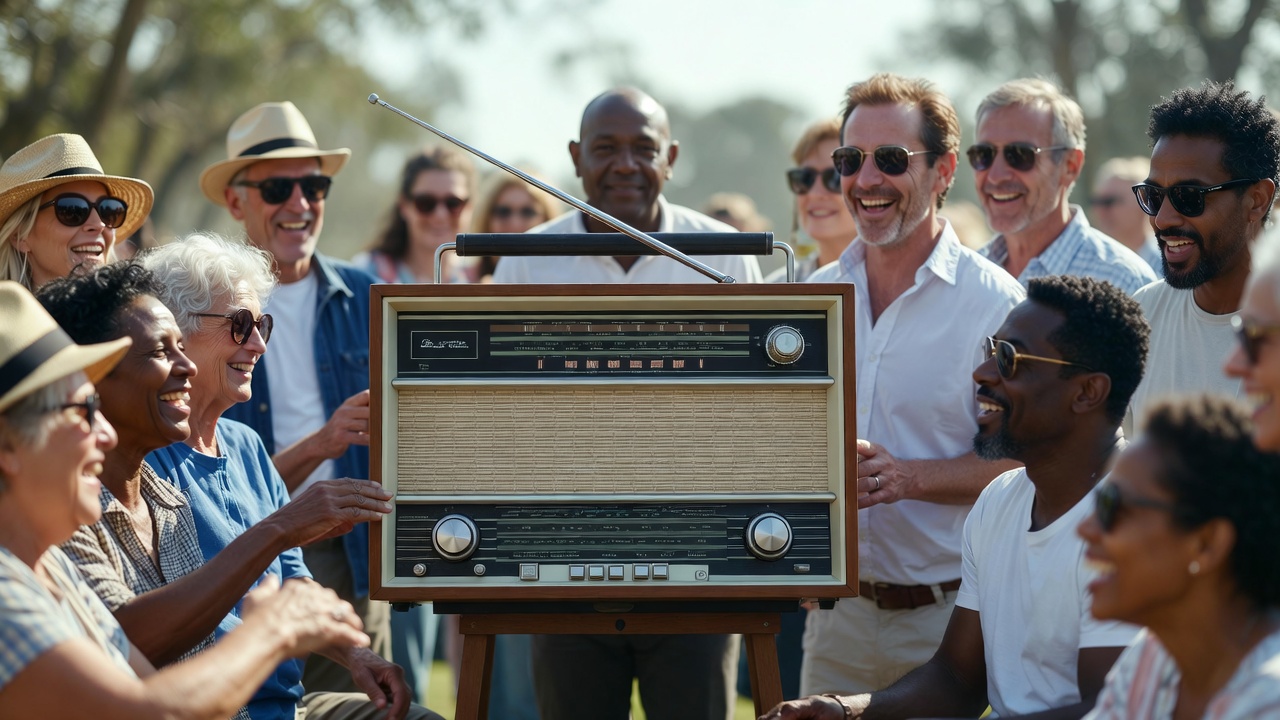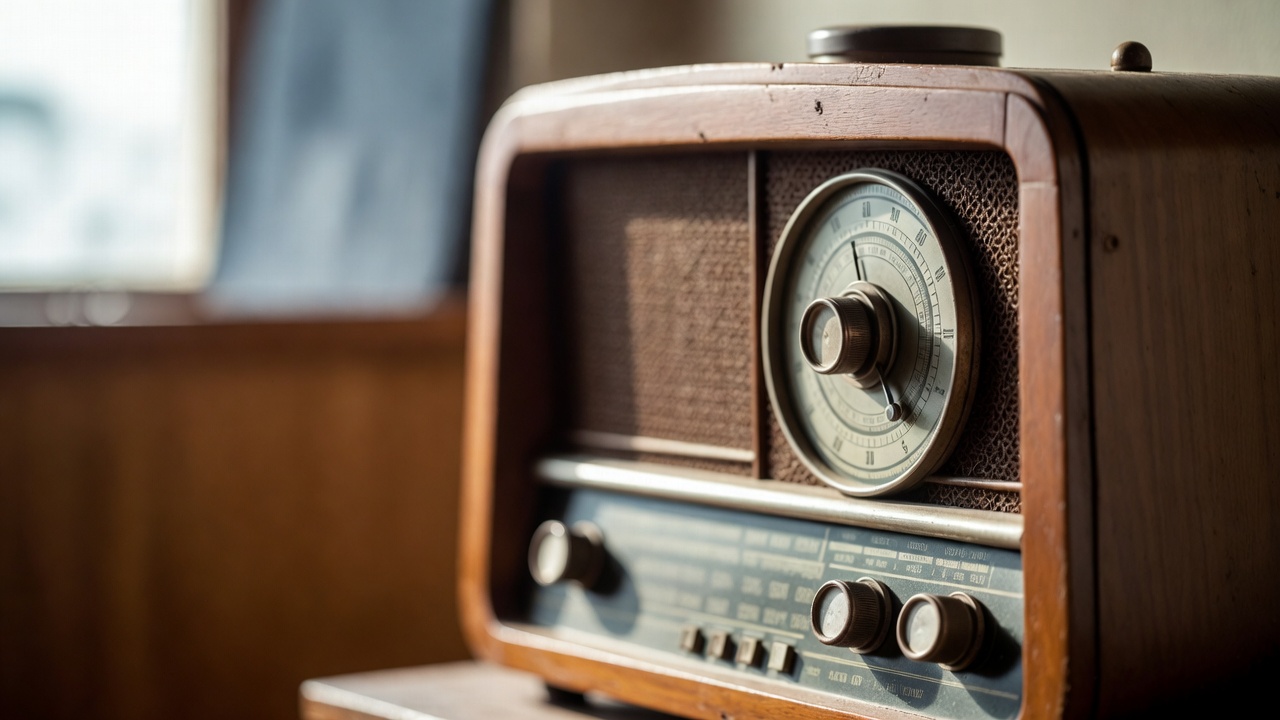
Every February 13, the world pauses to honor a medium that has shaped civilizations, survived wars, and outlasted every technology that tried to replace it. This is the story of World Radio Day — and why radio still matters more than ever.
What Is World Radio Day and Why Is It Celebrated on February 13?
World Radio Day (WRD) is an international observance held every year on February 13. It celebrates radio as one of the most powerful and far-reaching communication tools ever created. The day honors the broadcasters, journalists, engineers, and volunteers who keep the airwaves alive. It also draws attention to the role radio plays in education, public safety, cultural exchange, and democratic expression.
But why February 13, specifically?
The date marks a significant milestone in global communication history. On February 13, 1946, the United Nations established its own international broadcasting service — United Nations Radio — from its headquarters in New York. That service, now known as UN News, was created to share the work of the newly formed United Nations with people across the globe. At a time when television was still a luxury and the internet was decades away, radio was the only medium capable of reaching every corner of the earth.
When the idea of a global day for radio was first proposed, this date stood out as a natural choice. It connected the celebration to a moment when radio was used not for entertainment or commerce, but for the noble purpose of international understanding and peace. That spirit continues to guide World Radio Day today.
The observance is not a public holiday. No one gets the day off work. Instead, it is a global awareness campaign — a day when broadcasters plan special programming, universities host panels, community stations invite listeners behind the scenes, and ordinary people are encouraged to simply tune in and appreciate what radio offers.
How the Spanish Radio Academy Sparked a Global Movement
The story of World Radio Day begins not at the United Nations or in a government ministry, but in a professional association of broadcasters in Spain.
On September 20, 2010, the Spanish Radio Academy (Academia de las Artes y las Ciencias Radiofónicas de España) submitted a formal request to UNESCO — the United Nations Educational, Scientific and Cultural Organization. The Academy asked UNESCO to consider establishing an international day dedicated to radio. Spain then proposed that the UNESCO Executive Board include this item on its official agenda.
The proposal did not arrive in a vacuum. Radio professionals in Spain, and across Europe and Latin America, had long felt that radio was undervalued in international cultural policy. Television had World Television Day (November 21). The press had World Press Freedom Day (May 3). Yet radio — arguably the most widely consumed medium on the planet — had no day of its own.
The Spanish Radio Academy made a compelling case. Radio reaches audiences that no other medium can. It works without electricity grids. It crosses language barriers. It costs almost nothing to receive. In large parts of Africa, Asia, and Latin America, radio remains the primary source of news and information for millions of people.
UNESCO’s Executive Board took the proposal seriously. On September 29, 2011, the Board added the item to its provisional agenda. What followed was an extensive consultation process.
A Coalition of Global Broadcasters
UNESCO did not make this decision alone. The proposal received official support from an impressive coalition of international broadcasting organizations:
| Organization | Region Covered |
|---|---|
| Arab States Broadcasting Union (ASBU) | Middle East and North Africa |
| Asia-Pacific Broadcasting Union (ABU) | Asia and the Pacific |
| African Union of Broadcasting (AUB) | Sub-Saharan Africa |
| Caribbean Broadcasting Union (CBU) | Caribbean nations |
| European Broadcasting Union (EBU) | Europe |
| International Association of Broadcasting (IAB) | The Americas |
| North American Broadcasters Association (NABA) | United States and Canada |
| Organización de Telecomunicaciones Iberoamericanas (OTI) | Spanish and Portuguese-speaking world |
In addition, major individual broadcasters — including the BBC, Vatican Radio, and the Union of International Radio and Television (URTI) — all endorsed the initiative.
With this broad backing, the proposal moved forward. In November 2011, at its 36th session, UNESCO’s General Conference unanimously proclaimed February 13 as World Radio Day. The following year, the United Nations General Assembly formally adopted the proclamation through Resolution A/RES/67/124, making it an official International Day of the UN system.
The first World Radio Day was celebrated on February 13, 2012. The University of Pisa in Italy hosted one of the inaugural events — a fitting location, given that Italy is the birthplace of Guglielmo Marconi, the man most often credited as the father of radio.
The Invention of Radio: A Brief History of Wireless Communication
To fully appreciate World Radio Day, we need to understand the technology it celebrates. The history of radio is not a simple story with a single inventor. It is a tale of scientific discovery, fierce competition, and relentless innovation that spanned decades and continents.
The Scientific Foundations
The theoretical groundwork for radio was laid in the 1860s by James Clerk Maxwell, a Scottish physicist who predicted the existence of electromagnetic waves. In the 1880s, Heinrich Hertz, a German physicist, proved Maxwell’s theories correct by generating and detecting radio waves in his laboratory. The unit of frequency — the hertz (Hz) — is named in his honor.
Yet neither Maxwell nor Hertz imagined a practical use for these waves. Hertz famously dismissed the idea that his discovery could be applied to communication. “It’s of no use whatsoever,” he reportedly said.
Marconi and the Birth of Practical Radio
It took a young Italian tinkerer to see the potential. Guglielmo Marconi (1874–1937), born in Bologna to an Italian father and an Irish mother, read about Hertz’s experiments as a teenager and became obsessed with the idea of wireless communication.
In 1895, Marconi conducted his first successful experiment, sending a wireless Morse code signal over a distance of more than a kilometer on his family’s estate. When he found little support in Italy, he traveled to England in 1896, where he filed for the first patent for a wireless telegraphy system.
The milestones came quickly after that:
- 1899 — Marconi sent wireless signals across the English Channel
- December 12, 1901 — Marconi achieved the seemingly impossible, transmitting the Morse code letter “S” across the Atlantic Ocean, from Poldhu in Cornwall, England, to Signal Hill in St. John’s, Newfoundland — a distance of roughly 3,500 kilometers
- 1909 — Marconi shared the Nobel Prize in Physics with Ferdinand Braun for their contributions to wireless telegraphy
Marconi was not working alone, and his legacy is not without controversy. Nikola Tesla demonstrated a wireless radio to audiences in St. Louis in 1893, two years before Marconi’s first experiment. Alexander Popov in Russia was conducting similar experiments around the same time. Jagadish Chandra Bose in India was pioneering research into microwave-range radio waves. In 1943, the United States Supreme Court affirmed an earlier ruling that essentially acknowledged Tesla’s prior patents.
The truth, as with many great inventions, is that radio was the product of many minds. Marconi’s genius lay not just in the technology, but in his ability to turn scientific experiments into a commercial and global communication system.
From Morse Code to Human Voice
Early radio transmitted only Morse code — dots and dashes. The breakthrough to voice transmission came from Reginald Fessenden, a Canadian-born American inventor. On December 23, 1900, Fessenden became the first person to transmit audio wirelessly, sending his voice over a distance of about a mile. Six years later, on Christmas Eve 1906, he made the first public wireless voice broadcast, playing a violin and reading from the Bible to stunned ship operators at sea.
This was the moment radio became something more than a telegraph. It became a medium for storytelling, music, news, and human connection.
The Golden Age of Radio and the Rise of Mass Broadcasting
The decades following World War I transformed radio from a military tool and hobbyist curiosity into a household staple. This period — roughly the 1920s through the late 1940s — is often called the Golden Age of Radio.
Radio Enters the Home
The first commercial radio station in the United States, KDKA in Pittsburgh, began regular broadcasting on November 2, 1920, covering the presidential race between Warren Harding and James Cox. In Britain, the British Broadcasting Company (later Corporation, or BBC) launched in 1922. By the mid-1920s, thousands of radio stations were operating worldwide.
Families gathered around their radio sets the way later generations would gather around television screens. Radio brought the world into the living room. It broadcast soap operas, variety shows, comedy programs, live music, news bulletins, and sporting events.
The medium had enormous cultural power. On October 30, 1938, Orson Welles and the Mercury Theatre broadcast a dramatic adaptation of H.G. Wells’s War of the Worlds on CBS. Presented as a series of realistic news bulletins, the broadcast reportedly caused widespread panic among listeners who believed Martians were actually invading Earth. Whether the scale of the panic has been exaggerated over the years, the incident demonstrated something important: radio could shape reality.
Radio as a Weapon and a Lifeline in World War II
During World War II (1939–1945), radio became the most powerful tool of mass communication in history. Political leaders on all sides used it to rally their populations.
Franklin D. Roosevelt’s “fireside chats” — a series of 30 evening radio addresses between 1933 and 1944 — helped sustain American morale through the Great Depression and the war. Winston Churchill’s wartime speeches, broadcast on the BBC, became legendary rallying cries for the British people. On the other side, Nazi Germany used radio extensively for propaganda, with Joseph Goebbels recognizing it as a tool of unmatched influence.
For people living under occupation in Europe and Asia, tuning into the BBC World Service or Radio Free Europe was an act of defiance. These broadcasts provided a vital link to the outside world when all other channels of information had been shut down.
After the war, the newly formed United Nations created United Nations Radio on February 13, 1946 — the date that would later become World Radio Day.
Why the United Nations Established UN Radio on February 13, 1946
The creation of United Nations Radio was a deliberate act of faith in communication as a tool for peace.
The Second World War had shown, with devastating clarity, how propaganda could be used to dehumanize entire populations. The founders of the United Nations believed that if people around the world could hear directly about the work of the UN — about the debates, the resolutions, the efforts to prevent another global conflict — they would be more likely to support the cause of peace.
UN Radio began broadcasting from the UN’s temporary headquarters at Lake Success, New York. Its programs were distributed to national radio stations around the world. Over the decades, the service grew to produce content in multiple languages and formats. It covered landmark moments in history: the adoption of the Universal Declaration of Human Rights in 1948, the decolonization movements of the 1950s and 1960s, and countless peacekeeping operations.
Today, UN Radio’s successor — UN News — continues to provide audio content in Arabic, Chinese, English, French, Kiswahili, Portuguese, Russian, and Spanish. It remains one of the United Nations’ primary channels for reaching global audiences, especially in regions where internet access is limited but radio reception is strong.
The United Nations Audiovisual Library has preserved many of these historic broadcasts, including dramatic and documentary programs featuring voices like Audrey Hepburn, Kirk Douglas, and Bing Crosby. These recordings offer a unique window into the second half of the twentieth century.
World Radio Day Themes Over the Years: A Complete Timeline
One of the strengths of World Radio Day is its thematic focus. Each year, UNESCO selects a specific theme that guides celebrations and discussions worldwide. These themes reflect both the current state of the radio industry and broader social concerns.
Here is a complete list of World Radio Day themes from its inception to the present:
| Year | Theme |
|---|---|
| 2012 | First World Radio Day celebrated (no specific theme) |
| 2013 | Radio in the First Half of the 20th Century |
| 2014 | Radio and Gender Equality |
| 2015 | Youth and Radio |
| 2016 | Radio in Times of Emergency and Disaster |
| 2017 | Radio is You |
| 2018 | Radio and Sports |
| 2019 | Dialogue, Tolerance and Peace |
| 2020 | We Are Diversity, We Are Radio |
| 2021 | New World, New Radio |
| 2022 | Radio and Trust |
| 2023 | Radio and Peace |
| 2024 | Radio: A Century Informing, Entertaining and Educating |
| 2025 | Radio and Climate Change |
| 2026 | Radio and Artificial Intelligence |
These themes are not chosen randomly. They reflect the challenges and opportunities facing radio at each moment in history. In 2016, the theme of “Radio in Times of Emergency and Disaster” highlighted the medium’s irreplaceable role in crisis communication. In 2020, “We Are Diversity, We Are Radio” drew attention to representation and inclusion in broadcasting. In 2022, “Radio and Trust” addressed the growing crisis of misinformation.
The 2024 theme was particularly significant. “Radio: A Century Informing, Entertaining and Educating” marked approximately 100 years since the first regular radio broadcasts began reaching mass audiences in the 1920s. It was a celebration of radio’s extraordinary longevity.
World Radio Day 2026 Theme: How AI Is Transforming the Future of Radio Broadcasting
The theme for World Radio Day 2026 is “Radio and Artificial Intelligence.” It comes at a pivotal moment for the broadcasting industry.
Artificial intelligence is reshaping every corner of the media landscape, and radio is no exception. UNESCO’s 2026 initiative frames AI not as a threat to radio, but as a tool — with a crucial caveat: “AI is a tool, not a voice.”
This framing is deliberate. It acknowledges the potential benefits of AI in radio while insisting on the irreplaceable value of human judgment, creativity, and trust.
How Radio Stations Are Using AI in 2026
AI is already being deployed in radio stations around the world in several ways:
Content production assistance. AI tools can help producers research topics, generate show outlines, and draft scripts. This does not replace human creativity. It speeds up the preparation process so broadcasters can spend more time on storytelling and audience engagement.
Audio transcription and translation. AI-powered speech recognition can transcribe live broadcasts in real time, making radio content accessible to deaf and hard-of-hearing audiences. Machine translation tools can make programs available in multiple languages.
Archive management. Many radio stations have vast archives of recordings stretching back decades. AI can scan, catalog, and index these archives, identifying keywords, speakers, and topics. This breathes new life into historical content that would otherwise remain buried in storage.
Audience analytics. AI can analyze listener behavior patterns to help stations understand what content resonates, when audiences tune in and out, and how programming can be improved.
Synthetic voice generation. This is perhaps the most controversial application. AI can now generate realistic human-sounding voices. Some stations are experimenting with AI-generated presenters for overnight shifts, traffic updates, or weather reports.
The Ethical Boundaries
UNESCO’s emphasis on transparency is central to the 2026 theme. The organization encourages broadcasters to be open about when and how they use AI tools. If a station uses a synthetic voice or an AI-generated script, listeners deserve to know.
The concern is not about the technology itself. It is about trust. Radio has survived for over a century because listeners trust the human voices coming through their speakers. That trust is built on authenticity, local knowledge, and personal connection. If AI erodes that trust — by replacing human presenters without disclosure, or by generating content that lacks journalistic integrity — the consequences could be severe.
As UNESCO puts it: “Technology alone does not build trust. Radio broadcasters do.”
Why Radio Still Matters: Global Listener Statistics in 2026
In an age of streaming services, podcasts, social media, and short-form video, it is tempting to assume that radio is a relic. The data tells a very different story.
Radio Reaches More People Than Any Other Medium
According to research released by the World Radio Alliance for World Radio Day 2025, radio reaches up to 90% of the population in key markets worldwide. That figure is staggering. No social media platform, no streaming service, no website can match it.
Here are some key statistics that illustrate radio’s continued dominance:
| Metric | Statistic |
|---|---|
| Weekly radio reach in the United States | ~88% of adults |
| Weekly radio reach in the United Kingdom | ~88% of adults (~49.5 million listeners) |
| Estimated global radio listeners by 2029 | Over 3.2 billion people |
| Average daily radio listening (US adults) | 104 minutes per day |
| Gen Z (ages 13–24) who listen to AM/FM daily in the US | 55% |
| Share of ad-supported audio time held by radio (US, Q3 2025) | 62% |
These numbers challenge the assumption that young people have abandoned radio. According to Edison Research, more than half of Gen Z in the United States listens to AM/FM radio every single day. Most of their listening — about 89% — happens through traditional radio receivers, not internet streams.
Radio’s Unique Advantages
Radio’s resilience is not a mystery. It offers several advantages that no other medium can match:
Cost. A basic radio receiver costs a few dollars. It requires no subscription, no data plan, no electricity grid. Solar-powered and wind-up radios can operate in the most remote locations on earth.
Accessibility. Radio does not require literacy. It communicates in local languages and dialects. It reaches people who are blind, elderly, or living in areas without internet infrastructure.
Immediacy. Radio broadcasts in real time. During emergencies — natural disasters, military conflicts, public health crises — radio can deliver critical information faster than any other channel.
Trust. In an era of misinformation and digital manipulation, radio remains one of the most trusted media. According to World Radio Alliance data, radio holds the highest share of collective trust across all advertising channels.
How Radio Saves Lives During Natural Disasters and Humanitarian Crises
Perhaps the most powerful argument for radio’s continued relevance is its role in disaster communication. When earthquakes, hurricanes, floods, and pandemics strike, radio is often the last medium standing.
Why Radio Works When Everything Else Fails
During a major natural disaster, modern communication infrastructure is among the first things to collapse. Cell towers are destroyed. Power grids go down. Internet cables are severed. Television stations go dark. In these moments, radio’s simplicity becomes its greatest strength.
Radio signals travel through the air. A battery-powered or solar-powered receiver can pick them up without any infrastructure. Community radio stations, which operate on low power with simple equipment, can often resume broadcasting within hours of a disaster, even when commercial stations remain off the air.
The United Nations Office for Disaster Risk Reduction (UNDRR) has identified several core principles for radio in disaster contexts:
- Radio saves lives by delivering timely warnings and safety instructions
- Radio empowers survivors and vulnerable people by giving them a voice
- Radio provides access to information — a fundamental human right, even in emergencies
- Radio frequencies must be protected so they are available when crises hit
Case Studies from Around the World
Bangladesh. In the cyclone-prone coastal regions of Bangladesh, community radio stations play a vital role in disaster preparedness. Stations broadcast weather updates, evacuation instructions, and safety advice in local dialects. Research published in the International Journal of Disaster Risk Reduction found that households with access to radio incur lower levels of damage during natural disasters, partly because they receive warnings earlier.
Pakistan. After the devastating 2005 earthquake in Kashmir, Pakistan’s media regulator granted temporary licenses for emergency FM stations in the affected areas. The humanitarian organization Internews donated 10,000 radio sets, which were distributed among displaced people. These FM stations became the voice of the affected communities, bridging communication gaps between victims, relief agencies, and the government.
Caribbean. UNESCO’s “RadioBox” initiative has provided portable, low-cost radio studios to small island developing states in the Caribbean. Countries including The Bahamas, Saint Lucia, and Saint Vincent and the Grenadines have deployed these units to strengthen disaster preparedness. The RadioBox can be set up quickly and operated by community members with minimal training.
India. During the 2004 Indian Ocean Tsunami, Anna FM — at that time one of the few operational community radio stations in India — played a critical role in assisting affected communities. Though legally restricted from broadcasting news, the station provided vital survival information during the emergency. Since then, India’s community radio sector has grown significantly, with hundreds of stations now operating across the country.
West Africa. During the 2014–2016 Ebola outbreak, radio was essential for public health communication. Stations broadcast information about symptoms, prevention, and treatment in local languages. Programs that invited listeners to call in with questions helped combat misinformation and build community trust in health authorities.
Community Radio Stations: Giving Voice to the Voiceless Around the Globe
Community radio is one of the most important — and most underappreciated — forms of media in the world. These are small, locally owned and operated stations that serve specific communities. They broadcast in local languages, cover local issues, and give ordinary people a platform to speak.
The Growth of Community Radio in Africa
Africa’s community radio landscape has transformed dramatically since the early 1990s. In 1985, there were fewer than 10 independent radio stations on the entire continent, according to the World Association of Community Broadcasters (AMARC). State monopolies controlled the airwaves.
The wave of democratization that swept Africa in the 1990s changed everything. Today, South Africa alone has more than 150 community radio stations. Mali has over 110 private radio stations, 86 of which are community-based and mostly located in rural areas.
In Sub-Saharan Africa, radio is by far the dominant medium. Radios are inexpensive and can run on batteries or solar power. In many rural communities, a radio may be the only link to the outside world.
Community radio in Africa serves functions that go far beyond entertainment:
Health education. In Zambia, a USAID-funded community radio project reached as many as 600,000 people through a program called “Kumuzi Kwathu” (“In Our Village”), which promoted safer reproductive health practices.
Agricultural extension. Radio stations across West Africa broadcast planting advice, weather forecasts, and market prices to smallholder farmers who have no access to the internet.
Democratic participation. Community radio provides a platform for local political debate, holding officials accountable in ways that national media often cannot.
Community Radio in Asia and the Pacific
The Asia-Pacific region is home to the largest concentration of community radio stations in the world. According to research cited by India’s National Institute of Disaster Management, there are around 5,000 community radio stations worldwide, and over 70% are in the Asia-Pacific region. About 500 stations in South Asia — spread across Bangladesh, India, Nepal, and Sri Lanka — specifically serve rural populations.
In India, the community radio movement has gained significant momentum since the government opened licensing to educational institutions in 2002 and later to NGOs. These stations broadcast in dozens of languages and dialects, covering topics from women’s rights to soil management to election information.
How Radio Shaped Cultural Identity and National Movements Worldwide
Radio has not only informed and entertained. It has shaped the very identities of nations and communities.
Radio and Independence Movements
In many formerly colonized countries, radio played a central role in the struggle for independence. National radio stations broadcast in indigenous languages, fostering a sense of shared identity among diverse populations. Leaders used radio to communicate directly with the people, bypassing colonial media structures.
In India, All India Radio (originally Indian State Broadcasting) became a powerful symbol of national unity after independence in 1947. The station broadcast in dozens of languages, connecting a vast and diverse country through a single medium.
In Africa, radio was instrumental in the post-colonial nation-building process. New national stations helped create a sense of common citizenship among peoples who had been artificially divided by colonial borders.
Radio and Music Culture
Radio did not just broadcast music — it created music cultures. The explosion of rock and roll in the 1950s and 1960s was inseparable from radio. Disc jockeys became cultural gatekeepers, deciding which songs would reach mass audiences. In the United States, Black radio stations were among the first to play rhythm and blues, soul, and funk, helping these genres cross racial boundaries and reach mainstream audiences.
In Latin America, radio was the primary vehicle for the spread of salsa, bossa nova, cumbia, and other regional genres. In West Africa, stations in Lagos, Accra, and Dakar helped launch the careers of musicians who would go on to achieve global recognition.
Even today, radio remains the most important discovery platform for new music in many parts of the world. It introduces listeners to artists they would never find through algorithm-driven streaming playlists.
The Digital Transformation of Radio: From FM Waves to Internet Streaming
Radio has not remained static. Like every communication technology, it has adapted and evolved.
The Shift to Digital Broadcasting
Digital Audio Broadcasting (DAB) was first introduced in the 1990s. It offers better sound quality, more channel capacity, and additional data services compared to traditional analog FM and AM broadcasting. Countries including the United Kingdom, Norway, Denmark, and Germany have invested heavily in DAB infrastructure. Norway became the first country to switch off its national FM network in 2017.
However, DAB adoption has been uneven globally. Many countries — including the United States — have opted for HD Radio or other digital standards. In much of the developing world, traditional FM and AM broadcasting remain dominant because the equipment is cheaper and the infrastructure already exists.
Internet Radio and Podcasting
The rise of the internet created entirely new forms of radio. Internet radio — streaming audio content online — emerged in the mid-1990s. The first internet-only 24-hour radio station launched in 1994, the same year radio broadcasting went digital with internet streaming.
Today, thousands of internet radio stations operate worldwide. Services like iHeartRadio, TuneIn, and Radio Garden allow listeners to tune into stations from almost any country in the world.
Podcasting, which emerged in the early 2000s, represents another evolution of the radio format. Podcasts are essentially on-demand radio programs. They allow listeners to choose what they want to hear and when they want to hear it. The global podcast audience reached approximately 584 million listeners in 2025, according to industry estimates.
However, podcasts and internet radio have not replaced traditional broadcasting. They have expanded the audio landscape. The data is clear: live, over-the-air radio still holds the largest share of audio listening time in most major markets.
Smart Speakers and the New Radio Experience
The rise of smart speakers — devices like Amazon Echo, Google Nest, and Apple HomePod — has created a new gateway to radio. In the United States, approximately 100 million people now own a smart speaker. Many use these devices to listen to live radio, either through station-specific apps or through aggregators like TuneIn.
Smart speakers have made radio more accessible in the home. A listener no longer needs to find a physical radio or tune to a specific frequency. They simply say, “Play BBC Radio 4” or “Play my local news station,” and the broadcast begins.
For radio stations, smart speakers represent both an opportunity and a challenge. The opportunity is a new audience. The challenge is that the listener’s relationship shifts — from the radio station to the technology platform that delivers it.
How to Celebrate World Radio Day 2026: Activities and Ideas for Listeners
World Radio Day is not just for broadcasters and media professionals. It is for everyone who has ever found comfort, information, or joy in the sound of a voice coming through a speaker. Here are some ways to participate on February 13, 2026:
Tune into a local community station. Put down the streaming apps for a day. Find a community radio station in your area and listen. You may discover voices and stories you have never heard before.
Explore international radio online. Apps like Radio Garden allow you to spin a virtual globe and tune into live radio stations from nearly every country. Listen to a station in Nairobi, Tokyo, Buenos Aires, or Reykjavik. Experience the world through sound.
Share your radio story. Many stations run special call-in programs on World Radio Day. Call in and share what radio means to you. Post about it on social media using the hashtag #WorldRadioDay.
Support a radio station. Community radio stations often operate on shoestring budgets. Consider making a donation to a local or international station that serves underrepresented communities.
Discuss the 2026 theme. The theme “Radio and Artificial Intelligence” is a rich topic for conversation. How do you feel about AI-generated voices on the radio? Should stations be required to disclose when content is produced by AI? Start the conversation at home, at school, or at work.
Register your station on UNESCO’s map. If you operate a radio station — no matter how small — you can register on UNESCO’s World Radio Day map. This puts your station on a global directory of participants.
The Role of Radio in Achieving the United Nations Sustainable Development Goals
Radio is not just a cultural artifact. It is a development tool. UNESCO and the broader United Nations system recognize radio as a key contributor to the Sustainable Development Goals (SDGs), the 17 global objectives adopted in 2015 to end poverty, protect the planet, and ensure prosperity for all by 2030.
Radio contributes to the SDGs in several direct ways:
SDG 4 — Quality Education. Radio has been used for educational broadcasting since the 1920s. In countries where schools are inaccessible, radio lessons can reach children in remote areas. During the COVID-19 pandemic, when schools worldwide closed their doors, radio-based education programs became essential lifelines for millions of students.
SDG 5 — Gender Equality. The 2014 World Radio Day theme was “Radio and Gender Equality.” Women remain underrepresented in the radio industry in many countries, both as presenters and as subjects of coverage. Community radio, however, has been a powerful platform for women’s voices, particularly in South Asia and Sub-Saharan Africa.
SDG 13 — Climate Action. The 2025 World Radio Day theme, “Radio and Climate Change,” highlighted radio’s role in climate education and disaster preparedness. Community radio stations in vulnerable regions broadcast weather warnings, agricultural adaptation advice, and information about environmental protection.
SDG 16 — Peace, Justice, and Strong Institutions. Radio promotes democratic discourse by giving citizens a platform to engage in public debate. In post-conflict societies, radio has been used for peacebuilding, reconciliation, and truth-telling.
The Future of Radio: Will Broadcasting Survive the Age of AI and Streaming?
This is the question that hangs over every discussion about radio in 2026. Is radio dying?
The short answer is no. The long answer is more nuanced.
Radio is changing. The way people access it is changing. The competitive landscape is more crowded than ever. Streaming music services like Spotify and Apple Music, podcasts, audiobooks, and social audio platforms all compete for the same listening time.
In the United States, a milestone was crossed in 2023: for the first time, on-demand audio platforms (streaming and podcasts) accounted for a larger share of total audio listening than linear platforms (live radio and online radio). This was a symbolic turning point.
But radio is not disappearing. It is adapting — as it has done for over a century.
Traditional radio is integrating digital tools. Stations are building stronger online presences, creating companion podcasts, and using social media to engage audiences between broadcasts.
Internet radio is expanding the medium’s reach. A station in a small town in Kenya can now be heard by its diaspora community in London or New York.
AI is creating new possibilities for production, accessibility, and archive management, while also raising important questions about authenticity and trust.
Community radio continues to grow in regions where it is needed most, providing essential services in local languages that no global platform can replicate.
The fundamental human need that radio serves — the need to hear another human voice — is not going away. Algorithms cannot replicate the warmth of a familiar DJ greeting you on your morning commute. Software cannot match the comfort of a local broadcaster guiding you through a natural disaster with calm authority.
As the World Radio Alliance stated in its 2025 report: “In an era of misinformation, rapid news cycles and natural disasters, radio remains a reliable source of information and, in some cases, a lifeline.”
Frequently Asked Questions About World Radio Day
When is World Radio Day 2026? World Radio Day 2026 falls on Friday, February 13, 2026.
What is the theme of World Radio Day 2026? The theme is “Radio and Artificial Intelligence.” It explores how AI can support broadcasters while preserving the human connection that makes radio unique.
Who started World Radio Day? World Radio Day was proposed by the Spanish Radio Academy in September 2010, proclaimed by UNESCO in November 2011, and formally adopted by the United Nations General Assembly in 2012.
Why is World Radio Day on February 13? February 13 is the anniversary of the creation of United Nations Radio in 1946.
Is World Radio Day a public holiday? No. It is an international observance, not a public holiday. No country grants a day off for World Radio Day.
How many people listen to radio worldwide? Approximately 50% of the global population — around 4 billion people — tune into radio, according to a Deloitte consumer audio market report. Projections estimate over 3.2 billion regular listeners by 2029.
What is the difference between World Radio Day and National Radio Day? World Radio Day (February 13) is a UNESCO-designated international observance. National Radio Day (August 20) is an informal celebration primarily observed in the United States.
Final Thoughts: Why Radio Deserves a Day of Its Own
Radio is the great survivor of the communication age. It has outlasted every technology that was supposed to replace it — television, the internet, smartphones, streaming, social media. It has done so not by remaining the same, but by adapting to each new era while holding onto what makes it irreplaceable: simplicity, accessibility, trust, and the power of the human voice.
World Radio Day is a reminder that in a world of screens, there is still profound value in sound alone. A voice coming through a speaker can educate a child in a village with no school. It can warn a coastal community about an approaching cyclone. It can connect a lonely truck driver on a midnight highway to the wider world. It can comfort a refugee who has lost everything except the ability to listen.
On February 13, 2026, take a moment to appreciate this extraordinary medium. Turn on a radio. Listen to a station you have never heard before. Pay attention to the voices, the music, the silences between words.
Radio has been speaking to us for more than a century. It has plenty more to say.