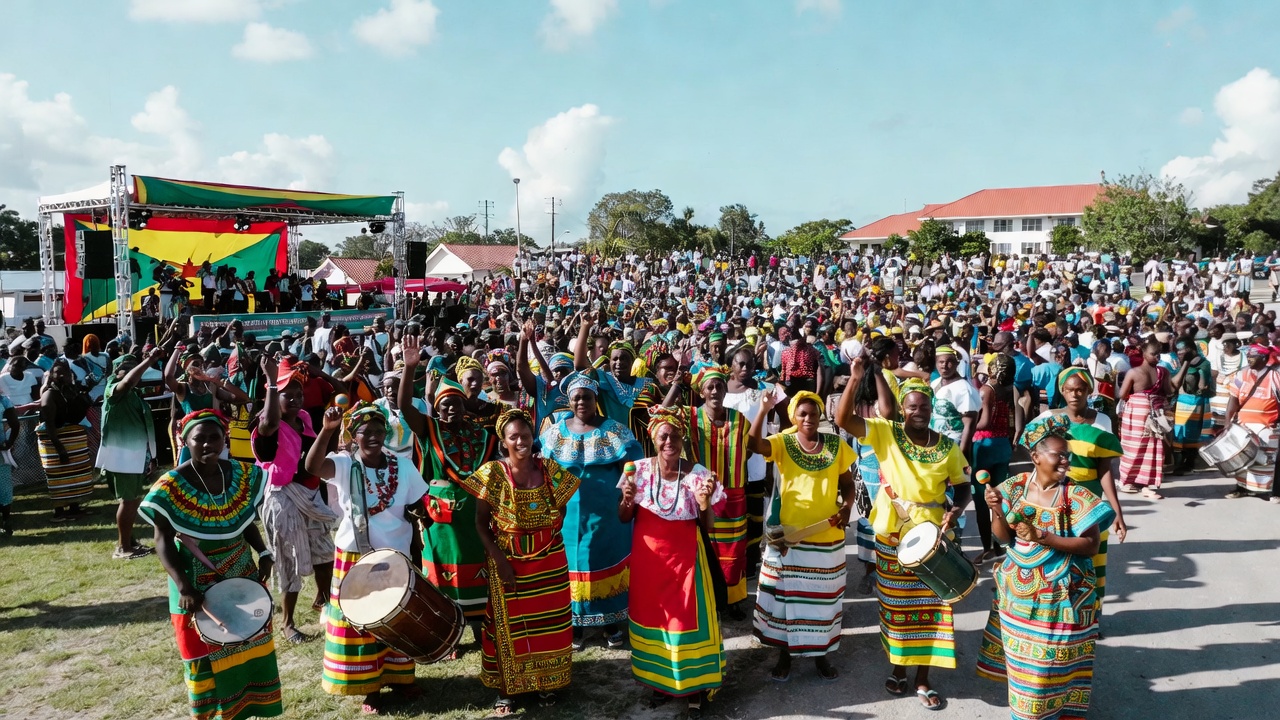
Every February 7, the Caribbean’s beloved Spice Isle erupts in a blaze of red, gold, and green. Drums pound through the streets of St. George’s. The aroma of Oil Down — Grenada’s iconic one-pot stew — drifts from backyards and beachside gatherings. Children march in school parades. The national flag soars above Fort George, just as it did at midnight on February 7, 1974, when Grenada became a sovereign nation.
Grenada Independence Day is not just a public holiday. It is the beating heart of Grenadian identity. In 2026, the tri-island state of Grenada, Carriacou, and Petite Martinique marks its 52nd anniversary of independence from Great Britain — a milestone made all the more poignant by the devastation of Hurricane Beryl in 2024 and the remarkable recovery that followed. This year, February 7 falls on a Saturday, which means Grenadians and visitors alike have an entire weekend to immerse themselves in what is arguably one of the most authentic national celebrations in the Caribbean.
Whether you are a first-time traveler, a member of the Grenadian diaspora, or a cultural enthusiast exploring global festivals, this guide will walk you through everything you need to know about how Grenada celebrates Independence Day — from the history behind the holiday to the parades, food, music, and traditions that make this celebration unforgettable.
What Is Grenada Independence Day and Why Is It Celebrated on February 7?
Grenada Independence Day marks the date when the island nation gained full sovereignty from the United Kingdom on February 7, 1974. It is a public holiday across the tri-island state. Banks close. Schools shut down. Most businesses pause their daily operations. The entire country turns its attention to celebration and remembrance.
The road to independence was neither simple nor peaceful. For over 200 years, Grenada remained a British colony. Before that, France had controlled the island for roughly a century, profiting immensely from sugar plantations worked by enslaved Africans. The Treaty of Paris in 1763 transferred Grenada to British hands following the Seven Years’ War. British rule would persist until the independence movements of the mid-20th century began to reshape the political landscape.
In the 1950s, calls for self-governance grew louder. By March 1967, Grenada achieved the status of an Associated State, gaining full control over its internal affairs while Britain retained authority over foreign relations and defense. The push for complete independence accelerated under Eric M. Gairy, a trade unionist and leader of the Grenada United Labour Party (GULP), who won the August 1967 general election.
Independence came on February 7, 1974. That night, the Union Jack was lowered at Fort George in St. George’s at 11:59 PM on February 6. Moments later, Grenada’s own flag — designed by Grenadian artist Anthony C. George from Soubise in Saint Andrew Parish — was hoisted for the first time. Eric Gairy became the country’s first Prime Minister. In his independence address, he declared that Grenada was “completely free” and “liberated.”
The significance of this moment cannot be overstated. For a tiny island of roughly 345 square kilometers and a population that today hovers around 125,000, independence represented the culmination of centuries of colonial struggle. Today, February 7 is not just a date on the calendar. It is a national reckoning — a day when Grenadians look back at their ancestors’ sacrifices and forward toward the future they are building.
The History Behind Grenada’s Independence From Britain: A Timeline
Understanding Grenada’s Independence Day requires a journey through the island’s layered colonial past. Here is a brief timeline of the key events that shaped the nation:
| Year | Event |
|---|---|
| 1498 | Christopher Columbus sights Grenada during his third voyage to the Americas |
| 1649 | France establishes full colonial control over Grenada |
| 1763 | The Treaty of Paris cedes Grenada to Great Britain after the Seven Years’ War |
| 1795 | Julien Fédon leads a brief pro-French rebellion, which the British suppress |
| 1834 | Emancipation of enslaved people across the British Caribbean |
| 1950 | Eric Gairy founds the Grenada United Labour Party (GULP) |
| 1951 | The “Sky Red” general strike shakes Grenada’s colonial establishment |
| 1967 | Grenada becomes a British Associated State with internal self-governance |
| 1974 | Grenada achieves full independence on February 7; Eric Gairy becomes first Prime Minister |
| 1979 | The New Jewel Movement, led by Maurice Bishop, overthrows Gairy in a bloodless coup |
| 1983 | U.S.-led military intervention restores constitutional governance; the original 1974 flag is reinstated |
| 2024 | Grenada celebrates its 50th independence anniversary; Hurricane Beryl devastates Carriacou and Petite Martinique |
| 2026 | Grenada marks its 52nd independence anniversary |
The path from colony to sovereign nation was turbulent. The 1979 revolution and the 1983 intervention remain deeply etched in national memory. Yet the enduring tradition of celebrating February 7 reflects something powerful: a people’s commitment to self-determination and unity, regardless of the political storms that have swept across their island.
How Grenada Celebrates Independence Day With Parades and Military Ceremonies
The most visible expression of Grenada’s Independence Day is the national parade. Held in and around the capital city of St. George’s, this event draws thousands of locals and visitors to the streets. The atmosphere is electric — think of it as part military review, part street party, and part cultural showcase.
The Military Parade at the National Stadium
The centerpiece of the day’s official celebrations takes place at the National Stadium (now formally named the Kirani James Athletic Stadium, in honor of Grenada’s first Olympic gold medalist). Here, the Royal Grenada Police Force leads a formal march, accompanied by the police band, which plays the national anthem and patriotic songs.
The military parade features:
- The Royal Grenada Police Force in full dress uniform
- Cadet corps from secondary schools across the island
- Boy Scouts and Girl Guides representing Grenada’s youth organizations
- Community groups and civic organizations from the six parishes
- The national flag-raising ceremony, the emotional high point of the morning
The proceedings often include a keynote address by the Prime Minister or another senior government official. In recent years, Prime Minister Dickon Mitchell has used the occasion to reflect on the nation’s progress and its challenges — particularly the recovery from Hurricane Beryl, which struck in July 2024.
Street Parades Through St. George’s
Beyond the stadium, the celebration spills into the streets. Participants dressed in red, gold, and green — the colors of the national flag — march through the winding roads of St. George’s, past the pastel-colored colonial buildings of the Carenage waterfront. Schools organize their own parades, with students performing choreographed routines and wearing costumes that reflect Grenadian heritage.
The street parades have a distinctly grassroots energy. Unlike larger Caribbean carnivals, Grenada’s Independence Day celebrations maintain an intimate, community-driven character. Neighbors gather on sidewalks. Families set up chairs and coolers outside their homes. Music trucks roll slowly through the streets, pumping calypso and soca from speakers the size of small refrigerators.
Traditional Grenadian Food Served During Independence Day Celebrations
No Grenadian celebration is complete without food. And on Independence Day, the island’s culinary traditions take center stage. Grenadians gather in backyards, on beaches, and in community centers to share meals that reflect centuries of cultural blending — African, French, British, South Asian, and Indigenous Caribbean.
Oil Down: Grenada’s Beloved National Dish
The undisputed star of the Independence Day table is Oil Down — or “all-don,” as locals pronounce it. This hearty, aromatic one-pot stew is Grenada’s national dish, and it is prepared in households across the tri-island state during every major celebration.
Oil Down is built around breadfruit, which forms the starchy base of the dish. Layers of salted meat (often pigtail), chicken, callaloo leaves, dumplings, and local vegetables are “packed” into a large pot — not stirred, but carefully stacked. The whole thing simmers in coconut milk seasoned with turmeric (known locally as “saffron”), thyme, chives, and Scotch bonnet pepper.
The name “Oil Down” refers to the cooking process itself. As NPR’s food section has documented, the coconut milk cooks down until all the liquid is absorbed, leaving the ingredients glistening with a coating of coconut oil.
Every family has its own version. Some add crab or conch. Others include green bananas, yams, or okra. Vegetarian versions exist. But breadfruit is non-negotiable. As Grenadian chefs will tell you: without breadfruit, you are making stew, not Oil Down.
The dish is a living map of Grenada’s cultural heritage. The callaloo greens trace back to the island’s earliest Amerindian inhabitants. The turmeric arrived with South Asian immigrants. The technique of cooking with coconut milk echoes African culinary traditions. Together, they create something that is entirely and uniquely Grenadian.
Oil Down is more than food. It is a social ritual. Preparing it is a communal activity. Families gather around a single large pot — often outdoors over a wood fire on the beach — and the act of “packing the pot” becomes a discussion, a negotiation, and sometimes a cheerful argument. Everyone has an opinion on the correct order of layering. The breadfruit and meat typically go on the bottom. Vegetables sit in the middle. Callaloo leaves and dumplings crown the top. Then the pot simmers, untouched and unstirred, for at least an hour. The waiting is part of the experience. Neighbors stop by. Rum punch is poured. Stories are told. By the time the pot is opened and the first ladle is scooped — always from the side, to capture a cross-section of every layer — the meal has become an event.
On Independence Day, Oil Down takes on an additional layer of meaning. It becomes an act of national identity. To cook Oil Down on February 7 is to participate in a tradition that connects families to generations of Grenadians before them. The Grenada Tourism Authority has noted that the dish’s recipe has “evolved over time,” with each household adapting it to their preferences. Some families include crab or conch. Others add a splash of rum to the pot. But the essence remains the same: a one-pot dish that feeds a crowd and brings people together.
Other Traditional Dishes to Try on Independence Day
Beyond Oil Down, the Independence Day spread typically includes:
- Curried Goat — slow-cooked with local spices, served with rice or roti
- Lambi (conch) — prepared grilled, stewed, or in a peppery broth
- Pelau — a rice-and-meat dish cooked in caramelized sugar and coconut milk
- Callaloo Soup — a thick, green soup made from dasheen leaves
- Nutmeg Ice Cream — a local favorite that showcases Grenada’s signature spice
- Rum Punch — mixed with fresh nutmeg, lime, and local rum
Street vendors and local markets set up stalls in towns across the island, offering these dishes alongside fresh tropical fruits, roasted corn, and grilled fish. For visitors, it is a chance to taste the flavors that define Grenadian identity.
The Role of Calypso, Soca, and Steelpan Music in Grenada’s Independence Festivities
Music is the pulse of every Grenadian celebration. On Independence Day, three musical traditions converge to create a soundtrack that is joyful, defiant, and deeply rooted in the island’s African and Caribbean heritage.
Calypso: The Voice of the People
Calypso has long served as Grenada’s musical conscience. Rooted in West African oral traditions, calypso songs use clever wordplay, satire, and storytelling to comment on politics, social issues, and everyday life. On Independence Day, calypsonians perform songs that honor the nation’s history or critique its present — a tradition that stretches back decades.
Grenada’s calypso scene has produced legendary performers such as Mighty Dictator, Black Wizard, and Ajamu, who holds the record for the most Calypso Monarch titles in Grenadian history. The Calypso Monarch competition, while primarily associated with the August Spicemas Carnival, echoes throughout Independence Day celebrations as performers and fans alike revisit the year’s best compositions.
Soca: The Sound of Celebration
Soca — the high-energy fusion of soul and calypso — is the sound of Caribbean celebration. On Independence Day, soca music blares from sound systems, music trucks, and impromptu street parties. Younger Grenadians especially gravitate toward soca for its infectious rhythms and dance-floor energy. The Soca Monarch competition, another Spicemas highlight, produces anthems that remain in heavy rotation well into February.
Steelpan: The Heartbeat of the Caribbean
The steelpan — that remarkable instrument crafted from recycled oil barrels — holds a special place in Grenadian culture. Steel bands perform at Independence Day events across the island. The sound is unmistakable: bright, resonant, and full of life. The Panorama competition, held each year during Spicemas, features ensembles of up to 100 musicians. While Panorama happens in August, steel bands often perform during the independence season as well, bringing the distinctive sound of pan music to the national celebrations.
For visitors, witnessing a live steelpan performance on Independence Day is one of the most authentic cultural experiences Grenada offers. The music is not a performance put on for tourists. It is the sound of a community celebrating itself.
Grenada’s National Flag and Its Symbolism on Independence Day
On February 7, the Grenadian flag is everywhere. It flies from government buildings, schools, homes, and businesses. Citizens wear it as bandanas, T-shirts, and face paint. Children wave small paper flags during the school parades. Understanding the flag’s design deepens the meaning of the day.
The flag was first hoisted at midnight on February 7, 1974, designed by Anthony C. George of Soubise. Its elements are rich with symbolism:
- Red border — represents courage, harmony, and vitality
- Yellow triangles — symbolize the sun, warmth, and the wisdom of Grenadians
- Green triangles — represent the island’s lush vegetation and agriculture
- Seven stars — the six small stars on the red border represent Grenada’s six parishes; the larger central star represents the capital, St. George’s (some interpret it as representing Carriacou and Petite Martinique)
- Nutmeg symbol — displayed on the hoist-side triangle, this represents Grenada’s most famous agricultural export and its identity as the “Isle of Spice”
The nutmeg on the flag is particularly significant. As the Britannica encyclopedia notes, Grenada is the second-largest producer of nutmeg in the world, trailing only Indonesia. The spice is so central to the island’s identity that it appears not only on the flag but on the national coat of arms and in countless aspects of daily life.
On Independence Day, the flag-raising ceremony — typically held at Fort George or the National Stadium — is among the most moving moments of the celebration. As the red, gold, and green ascend, the national anthem plays, and many Grenadians describe feeling a surge of pride and emotion that connects them to the sacrifices of their ancestors.
How the Grenadian Diaspora Celebrates Independence Day Around the World
Grenada’s population may be small, but its diaspora is global. Significant Grenadian communities exist in New York, London, Toronto, and across the Eastern Caribbean. On February 7, these communities come alive with their own celebrations.
In Brooklyn, New York, Grenadian community organizations host cultural nights featuring calypso performances, traditional food, and speeches by community leaders. In London, events such as the Grenada Jab, Red, Gold & Green Independence Dance draw Grenadians and Caribbean culture lovers for evenings of music and celebration — a tradition that continues into 2026 with the 52nd anniversary event.
Social media has amplified the diaspora connection. On February 7, the hashtag #GrenadaIndependenceDay trends across platforms. Grenadians share family photos, memories of childhood celebrations, videos of Oil Down being prepared, and messages of national pride. For many in the diaspora, these digital connections are a lifeline to home — a way to participate in the national moment even from thousands of miles away.
Grenada’s 52nd Independence Anniversary in 2026: What to Expect This Year
In 2026, Grenada celebrates its 52nd year of sovereignty. While the golden 50th anniversary in 2024 was the marquee event — complete with year-long festivities organized under Prime Minister Dickon Mitchell’s leadership — the 52nd anniversary carries its own special weight.
The 2025 celebrations, marking Grenada’s 51st anniversary, were held under the theme “Embracing a Future of Development, Transformation, and Unity”. That year, the Organisation of Eastern Caribbean States (OECS) commended Grenada for its resilience in recovering from Hurricane Beryl while continuing to pursue its National Sustainable Development Plan 2020–2035 and the ambitious “Vision 75” roadmap unveiled by Prime Minister Mitchell.
For 2026, the National Celebrations Committee (NCC) has been organizing a series of events leading up to February 7. Among the highlights is the Independence Youth Expo, held on January 24 at the Morne Rouge Playing Field in Grand Anse. This event, as reported by NOW Grenada, showcased the creativity and innovation of Grenada’s young people. Performances included steel pan musician Destiny, an eleven-year-old performer with the Nexa New Dimension ensemble, and a Young DJs Clash featuring emerging talents alongside established mentors.
Since February 7 falls on a Saturday in 2026, the celebrations are expected to extend across the full weekend. Expect the standard elements — military parade, cultural performances, flag-raising ceremony — alongside community gatherings, church services, and beachside cookouts where Oil Down will be the main event.
Grenada’s Recovery From Hurricane Beryl: Resilience on Display at Independence Day
Any discussion of Grenada’s recent Independence Day celebrations must acknowledge Hurricane Beryl, which made landfall on the island of Carriacou on July 1, 2024, as a Category 4 storm with sustained winds of 150 miles per hour. It was the earliest Category 4 hurricane ever recorded in the Atlantic Ocean.
The damage was catastrophic. According to a Global Rapid Post-Disaster Damage Estimation report, total economic damages were estimated at $218 million, equivalent to roughly 16.5 percent of Grenada’s 2023 GDP. On Carriacou and Petite Martinique, over 95 percent of homes were either damaged or destroyed. A senior UN official described Carriacou as virtually “flattened.”
Yet the recovery has been remarkable. By early 2025, essential services had been largely restored in Carriacou. Many homes and businesses had been rebuilt. The natural beauty of the island — its lush green forests and coral-fringed coastlines — was returning. The resilience of the Grenadian people, their deep community bonds, and the support of regional and international partners have driven a recovery that many observers describe as extraordinary.
This context gives the 2026 Independence Day an added emotional dimension. For Grenadians, particularly those in Carriacou and Petite Martinique, the celebration is not only about remembering the past. It is about affirming the present — proving that the spirit that carried the nation to independence in 1974 is the same spirit that will carry it through any storm.
The Spice Isle Connection: How Nutmeg and Spices Define Grenada’s Independence Identity
You cannot understand Grenada’s national identity without understanding its spices. The island has been called the “Spice Isle” for well over a century. It produces an astonishing range of aromatic crops, including nutmeg, mace, cinnamon, cloves, ginger, allspice, bay leaves, and vanilla.
Nutmeg is the most important. Grenada is the world’s second-largest producer of nutmeg, behind Indonesia. The spice appears on the national flag, the coat of arms, and in nearly every corner of daily life. It flavors ice cream, syrups, sauces, and, of course, the rum punch that flows freely on Independence Day.
On February 7, the connection between spice and sovereignty runs deep. Nutmeg is not merely an export commodity. It is a symbol of self-sufficiency and agricultural pride. When Grenadians see the nutmeg on their flag rising above Fort George, they see a representation of the land that sustained their ancestors and continues to sustain them.
Visitors who time their trip to coincide with Independence Day should not miss the opportunity to visit one of Grenada’s spice estates, such as the Dougaldston Spice Estate in Gouyave, where locals demonstrate how nutmeg has been grown and processed for generations. The experience connects the Independence Day celebrations to the daily rhythms of Grenadian life — the agriculture, the labor, and the enterprise that underpin the nation’s economy.
What to Know Before Visiting Grenada for Independence Day: Travel Tips and Practical Information
Planning a trip to Grenada for Independence Day? Here are some practical things to keep in mind:
When to Go
February 7 is the date, every year, without exception. In 2026, this falls on a Saturday, which creates a natural long weekend. Many Grenadians begin celebrating the week before, with cultural events, exhibitions, and community gatherings organized by the National Celebrations Committee.
Weather
February is one of the best months to visit Grenada. The island enjoys dry, warm conditions with temperatures typically ranging from 24°C to 30°C (75°F to 86°F). Rainfall is minimal compared to the wet season (June to November). The trade winds provide a pleasant breeze.
Where to Stay
Grand Anse Beach, on the southwestern coast, is Grenada’s most popular tourist area. It offers a range of accommodation from luxury resorts to guesthouses. St. George’s, the capital, puts you closest to the main Independence Day events. Boutique hotels along the Carenage waterfront offer a particularly atmospheric experience.
Getting Around
Grenada’s roads are winding and hilly. On Independence Day, road closures in St. George’s are common for parades. Pre-arrange a taxi or plan to walk within the capital on the day itself. Renting a car is practical for exploring the rest of the island before and after the celebrations.
Cultural Etiquette
- Wear the national colors. Red, gold, and green are the dress code. Visitors who join in the spirit are warmly welcomed.
- Try the food. Refusing a plate of Oil Down at a Grenadian gathering is tantamount to refusing friendship. Accept with gratitude.
- Be respectful during ceremonies. The flag-raising and military parade are solemn moments. Stand, be quiet, and observe with respect.
- Ask before photographing. Most Grenadians are happy to be photographed during celebrations, but always ask permission first.
Key Locations for Independence Day Activities
| Location | What Happens There |
|---|---|
| Kirani James Athletic Stadium, St. George’s | Military parade, flag-raising ceremony, cultural performances |
| Fort George, St. George’s | Historic flag-raising site; scenic viewpoint |
| The Carenage, St. George’s | Street parades, food vendors, waterfront atmosphere |
| Morne Rouge Playing Field, Grand Anse | Youth Expo and community events |
| Local communities island-wide | Backyard Oil Down cookouts, church services, family gatherings |
Understanding Grenada’s Carnival Spicemas and Its Connection to Independence Day
While Independence Day in February and Spicemas (Grenada’s annual carnival) in August are separate events, they are deeply connected in spirit. Both celebrate Grenadian identity, heritage, and freedom. Understanding Spicemas helps explain the cultural energy that infuses Independence Day.
Spicemas traces its roots to the era of enslavement. Enslaved Africans, observing their masters’ Mardi Gras celebrations, created their own counter-celebrations as acts of cultural resistance and self-expression. Over time, these evolved into the vibrant carnival traditions that Grenadians cherish today.
Key Spicemas elements include:
- Jab Jab (J’ouvert) — Participants cover themselves in oil, paint, or molasses and dance through the streets before dawn, symbolizing freedom from oppression. This tradition has deep African roots and represents one of the most distinctive features of Grenadian culture.
- Fancy Mas — Elaborate, colorful costumes in a grand street parade
- Calypso Monarch and Soca Monarch competitions — The pinnacle of Grenadian music
- Panorama — The annual steelpan competition
- Dimanche Gras — The “Big Sunday” showcase on the eve of Carnival Monday
In 2026, Spicemas is scheduled for August 1 to August 11, according to the Spicemas Corporation, the statutory body responsible for organizing the festival. While that is six months after Independence Day, the cultural threads are continuous. The calypso songs debuted during Spicemas are sung during Independence Day events. The steelpan ensembles that compete in August’s Panorama perform in February’s celebrations. The spirit of Jab Jab — defiant, joyful, unapologetically free — animates both occasions.
For travelers who cannot visit Grenada for both events, Independence Day offers a more intimate, community-focused alternative to the large-scale spectacle of Spicemas. Both are authentic. Both are unforgettable.
The Jab Jab Tradition: From Carnival to Independence Day Spirit
Of all the cultural traditions that link Spicemas to Independence Day, the Jab Jab deserves special attention. The word “Jab” derives from the French “diable” (devil). During the era of slavery, enslaved Africans observed their masters’ elaborate Mardi Gras celebrations and responded by creating their own subversive counter-ritual. They covered their bodies in oil, molasses, or mud, donned horned headpieces, and danced through the streets — mocking the “devils” who oppressed them.
This tradition survived abolition and evolved into one of the Caribbean’s most powerful cultural expressions. Today, Jab Jab participants paint themselves in dark grease or vibrant colors and move through the streets to the pounding rhythm of drums and soca music. The atmosphere is raw, primal, and deeply cathartic. While Jab Jab is most associated with J’ouvert morning during Spicemas, its spirit of resistance and liberation is present at every Independence Day celebration. You will see traces of it in the costumes, the body paint, and the defiant energy of the street parades on February 7.
As the Spicemas Corporation describes it, Spicemas is “a compelling expression of Caribbean culture and Street Theatre through music, dance, entertainment and cuisine.” The same could be said of Independence Day — on a smaller, more personal scale.
Why Grenada Independence Day Matters: Reflections on Freedom, Culture, and Community
Independence Day in Grenada is about more than parades and parties. It is a day of national reflection. Grenadians use the occasion to honor the sacrifices of those who fought for self-governance — from the enslaved Africans who resisted colonial oppression, to the workers who marched in the 1951 “Sky Red” strikes, to the political leaders who navigated the complex road to sovereignty.
The day also serves as a moment for community reconnection. In a world where the Grenadian diaspora is spread across continents, Independence Day pulls the nation together. Families reunite. Old friends reconnect. The bonds of community — the same bonds that held Grenadians together through hurricanes, coups, and economic hardships — are renewed and strengthened.
There is also a forward-looking dimension to Independence Day. Since the historic 50th anniversary in 2024, Grenada’s national conversation has increasingly focused on the future. Prime Minister Mitchell’s “Vision 75” roadmap envisions a Grenada that is economically self-sufficient, environmentally sustainable, and culturally vibrant by the time the nation reaches 75 years of independence. The National Sustainable Development Plan 2020–2035 sets concrete goals for infrastructure development, education, healthcare, and climate resilience.
These are not abstract policy documents. They are deeply connected to the meaning of Independence Day. When Grenadians celebrate on February 7, they are not only honoring the past. They are recommitting to a vision of what their nation can become. The young people who perform at the Independence Youth Expo, the calypsonians who compose songs about national progress, the families who gather around pots of Oil Down — all of them are participating in a living, evolving conversation about Grenadian identity.
In a region that has experienced centuries of exploitation, colonialism, and natural disaster, this kind of celebration is an act of courage. It says: we are here. We are free. And we are building something that will endure.
For visitors, the celebration offers a rare window into the soul of a Caribbean nation. Grenada is not a place that performs culture for tourists. The Independence Day celebrations are real. The emotions are genuine. The Oil Down is made from family recipes passed down through generations. The music comes from the heart.
And that is precisely what makes it special.
Frequently Asked Questions About Grenada Independence Day
When is Grenada Independence Day? Grenada Independence Day is celebrated every year on February 7, regardless of the day of the week. In 2026, it falls on a Saturday.
Is Grenada Independence Day a public holiday? Yes. Banks, schools, and most businesses close for the day. If it falls on a weekend, the following Monday is not typically observed as a replacement holiday.
What year did Grenada gain independence? Grenada gained full independence from the United Kingdom on February 7, 1974. In 2026, the nation celebrates its 52nd anniversary.
Who was Grenada’s first Prime Minister? Sir Eric M. Gairy became Grenada’s first Prime Minister upon independence. He served until his overthrow in a 1979 coup by the New Jewel Movement, led by Maurice Bishop.
What is Grenada’s national dish? Oil Down — a hearty stew of breadfruit, salted meat, callaloo, dumplings, and vegetables cooked in coconut milk with turmeric and local spices.
What is the best time to visit Grenada? February is one of the best months. The weather is dry and warm, and visiting during Independence Day offers a unique cultural experience.
What do the colors of the Grenadian flag represent? Red symbolizes courage and harmony. Yellow represents the sun and wisdom. Green stands for vegetation and agriculture. The nutmeg symbol represents the island’s identity as the “Spice Isle.”
Final Thoughts: Experience Grenada Independence Day for Yourself
Grenada’s Independence Day is a celebration unlike any other in the Caribbean. It is smaller, more personal, and more culturally rooted than many of the region’s better-known festivals. Yet it is precisely that intimacy that makes it so powerful.
In 2026, as the Grenadian flag rises over St. George’s for the 52nd time, it carries with it the weight of history — from the colonial plantations to the “Sky Red” strikes, from independence night at Fort George to the devastation and recovery of Hurricane Beryl. It carries the sound of steelpan and calypso. It carries the aroma of Oil Down. And it carries the pride of a people who, despite their small numbers, have built something extraordinary on their tiny, spice-scented islands in the eastern Caribbean.
If you ever have the chance to stand on the Carenage on the morning of February 7, surrounded by Grenadians in red, gold, and green, listening to the national anthem echo across the harbor — take it. You will understand why this day matters. You will taste it, hear it, and feel it. And you will carry a piece of Grenada home with you.