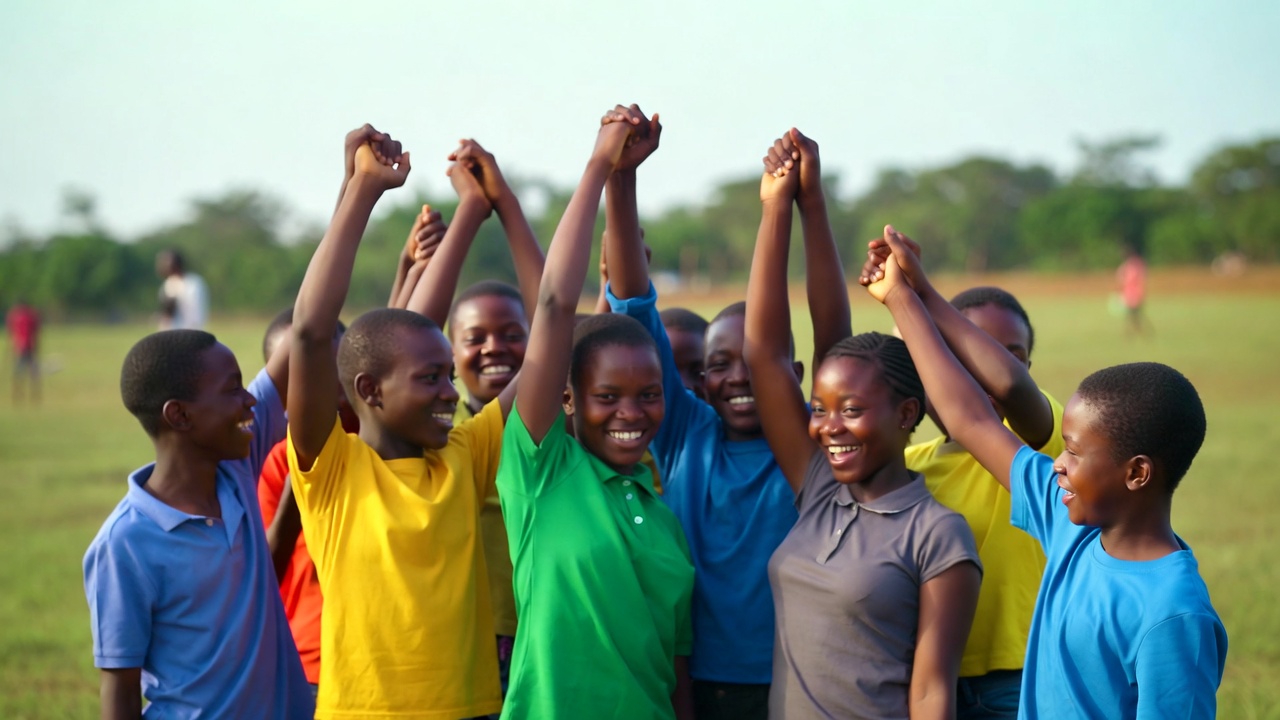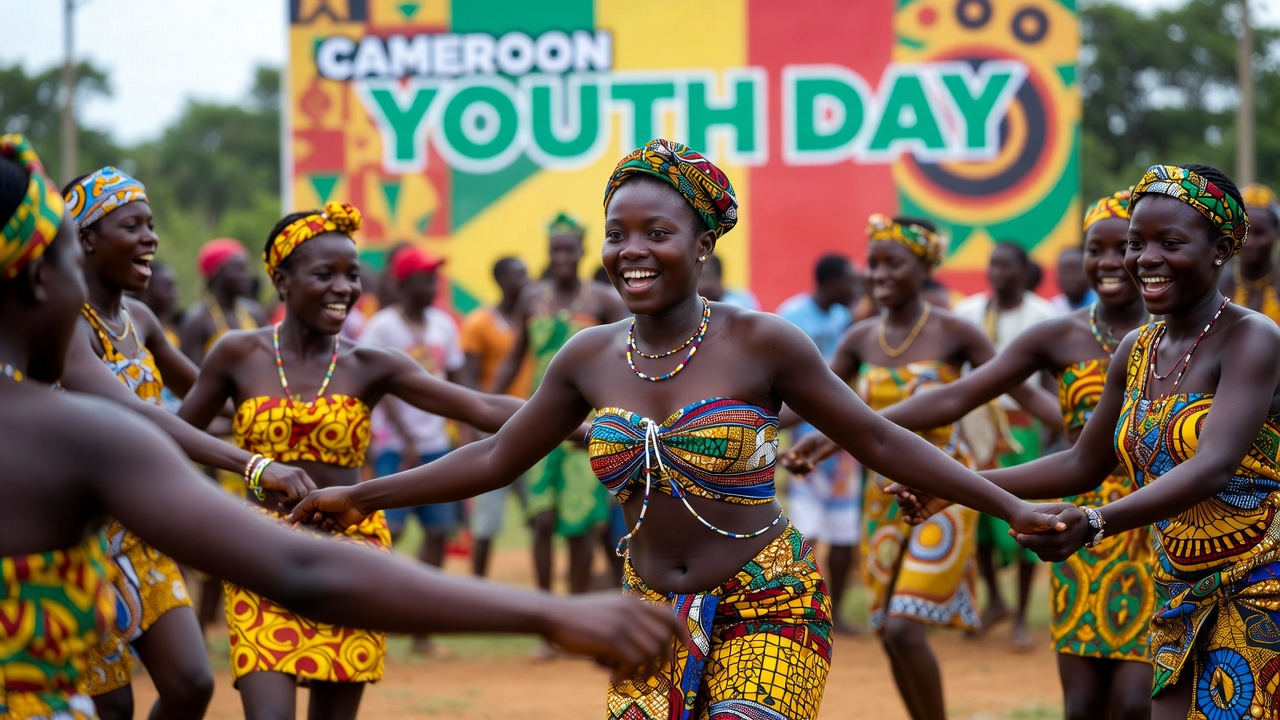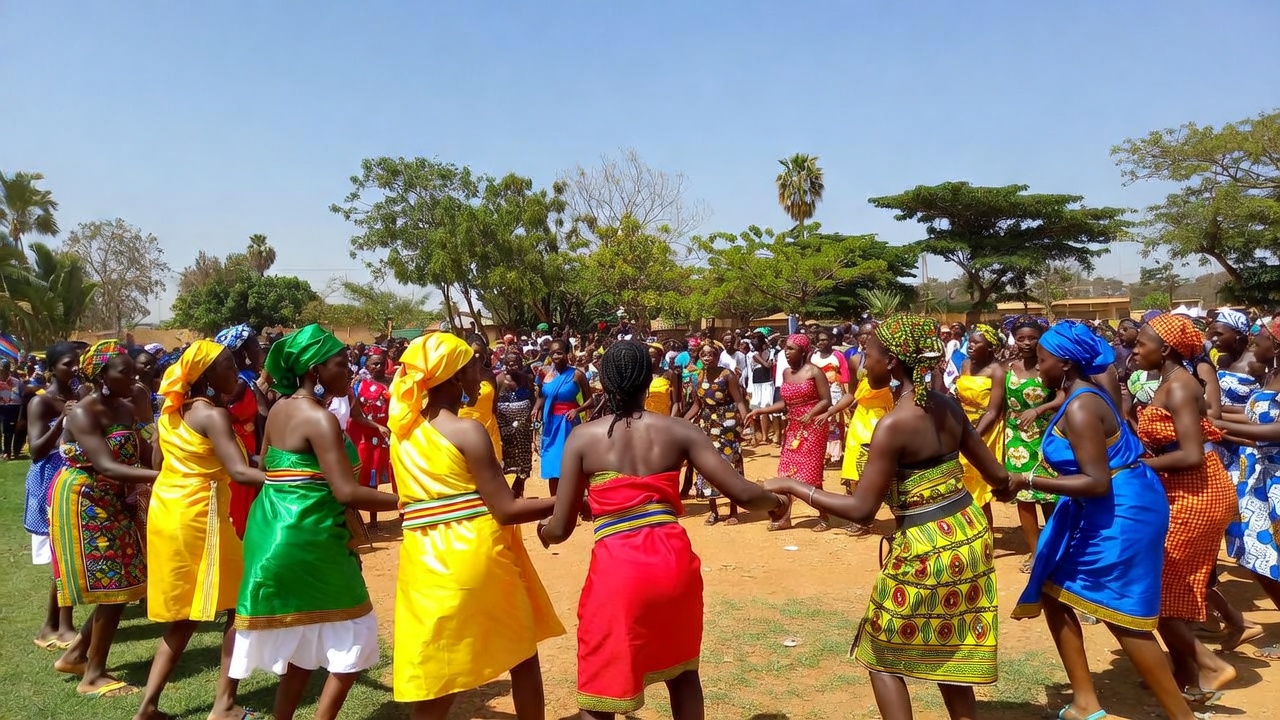
Every February 11, the Republic of Cameroon transforms into a vibrant celebration of its most valuable resource: its youth. National Youth Day (known locally as La Fête de la Jeunesse or Onze Février) is one of the most anticipated public holidays in this West African nation. The streets fill with color. Drums echo through neighborhoods. Students march proudly in their school uniforms. Government officials deliver speeches of hope. Families gather to celebrate the next generation.
This comprehensive guide explores everything you need to know about how Youth Day is celebrated in Cameroon. We will examine its historical origins, the elaborate parade traditions, cultural activities, and the deeper significance this day holds for millions of Cameroonians both at home and abroad.
What Is Cameroon National Youth Day and Why Is It Celebrated on February 11?
National Youth Day in Cameroon is a statutory public holiday observed annually on February 11. The date was not chosen randomly. It marks the anniversary of the 1961 Plebiscite, a historic referendum that shaped modern Cameroon.
On February 11, 1961, the United Nations organized a plebiscite in the British-administered Northern and Southern Cameroons. The people had to choose between two options: joining Nigeria or uniting with the already independent Republic of Cameroon (formerly French Cameroon). The results divided the territory.
| Territory | Vote Result |
|---|---|
| Southern Cameroons | Voted to join Republic of Cameroon |
| Northern Cameroons | Voted to join Nigeria |
This decision led to the reunification of Cameroon and shaped the nation’s contemporary landscape. The historical significance of this date cannot be overstated.
How the Holiday Evolved From Plebiscite Day to Youth Day
The transformation from Plebiscite Day to Youth Day has an interesting history. According to Mimi Mefo Info, the West Cameroon government under Prime Minister John Ngu Foncha decided to shift Youth Day celebrations to February 11 by the end of 1963. The move aimed to commemorate the plebiscite that led to reunification while highlighting the role of youth in national development.
The first Youth Day on February 11 took place in 1964. Grand events were held in Buea and Bamenda. Over 200 dignitaries from East (French) Cameroon attended, including mayors and traditional rulers. By 1966, the federal government of Cameroon officially adopted the West Cameroonian event. It became a national public holiday.
Since then, Youth Day has been a cornerstone of Cameroon’s national calendar. The holiday serves as a platform to align young citizens with ideologies of nation-building, national unity, and responsible citizenship.
Understanding the Demographics: Why Youth Matter So Much in Cameroon
Cameroon has one of the youngest populations in the world. According to the CIA World Factbook, more than 60% of Cameroon’s population is under the age of 25. The National Employment Fund (NEF) reports similar figures. This demographic reality makes Youth Day particularly meaningful.
Key Demographic Statistics for Cameroon
| Demographic Indicator | Value |
|---|---|
| Population under 25 | Over 60% |
| Median age | 18.8 years |
| Population aged 0-14 | 41.69% |
| Population aged 15-64 | 55.12% |
| Urban population | 59.3% |
Source: World Factbook 2023
With such a young population, investing in youth development is not just important. It is essential for the nation’s future. Youth Day serves as an annual reminder of this commitment. The holiday encourages young Cameroonians to embrace education, reject violence, and contribute positively to society.
The Youth Onzaine: An 11-Day Celebration Leading Up to February 11
The celebrations extend far beyond a single day. Cameroon observes what is locally known as the Youth Onzaine. This is an 11-day period of activities leading up to February 11.
The term “Onzaine” comes from the French word onze, meaning eleven. It refers to the period from February 1 to February 11. During these eleven days, communities across all ten regions of Cameroon organize youth-focused events.
Activities During the Youth Onzaine Period
The Ministry of Youth Affairs and Civic Education (MINJEC) typically oversees the schedule. Events take place in villages, towns, and cities nationwide. According to Remitly’s Cameroon Youth Day guide, common activities during the Onzaine include:
Civic Service Activities
- Community clean-up campaigns
- Public space renovation projects
- Volunteer work in hospitals and schools
- Tree planting initiatives
Sports Competitions
- Football (soccer) matches
- Handball tournaments
- Athletic meets and races
- Traditional sports competitions
Cultural Festivals
- Traditional dance performances
- Concert showcases
- Art exhibitions
- Theater and poetry recitals
Educational Workshops
- Entrepreneurship seminars
- Leadership training programs
- Skills development workshops
- Career guidance sessions
Round Table Discussions
- Youth congress meetings in Yaoundé
- Forums on issues affecting young people
- Dialogues between youth and government officials
- Debates on national development
The Onzaine creates opportunities for youth engagement at multiple levels. Students participate in school-based activities. Community organizations host local events. National bodies coordinate large-scale programs.
How Are Youth Day Parades Organized in Cameroon?
The grand march-past parade is the centerpiece of Youth Day celebrations. It takes place on February 11 in all ten regions of the country. Thousands of young people march proudly through the streets.
Who Participates in the Youth Day March-Past?
According to the Cameroon National Youth Council, participants in the parade include:
- Primary school students in their uniforms
- Secondary school students (both public and private)
- University students and marching bands
- Youth wings of political parties
- Religious youth groups and scouts
- Vocational training center students
- Youth associations and civic groups
The parade showcases the diversity of Cameroon. Participants dress in traditional attire from their regions. They carry banners reflecting the year’s celebration theme. School groups create party hats, play musical instruments, and perform synchronized movements.
Organization of the Grand March-Past
The parade follows a strict organizational structure:
- Presidential Tribune: Government officials and dignitaries observe from an elevated platform
- Regional Leadership: The governor presides in regional capitals
- Divisional Officers: They oversee celebrations in their respective divisions
- School Categories: Nursery schools march first, followed by primary, then secondary schools
- Private and Public: Schools are often separated by category
In the capital city of Yaoundé, the parade passes through major boulevards. Similar marches occur simultaneously in regional headquarters like Douala, Bamenda, Bafoussam, and Garoua.
Gender Roles in the Youth Day Parade
A Peace Corps Volunteer’s account from Bamenda describes interesting observations about gender in the march:
- Girls and boys typically march in separate groups within each school section
- Almost all girls wear dresses while boys wear pants
- This gender separation reflects traditional social norms
- Some schools have begun integrating mixed groups for certain activities
What Is the President’s Youth Day Speech and Why Does It Matter?
On the eve of Youth Day, February 10, the President of Cameroon delivers a nationally broadcast speech. This presidential address is a key moment in the celebration.
Content of the Presidential Youth Day Address
The speech typically covers several important topics:
Review of Government Achievements
- Progress in youth employment initiatives
- Expansion of educational institutions
- Infrastructure development projects
- Economic programs benefiting young people
Acknowledgment of Challenges
- Recognition of youth unemployment
- Security concerns in certain regions
- Economic difficulties facing young families
- Global factors affecting development
Announcements of New Policies
- Youth entrepreneurship programs
- Educational reforms and expansions
- Employment creation initiatives
- Support for diaspora youth projects
Words of Encouragement
- Calls for patriotism and national unity
- Emphasis on moral values
- Appeals to embrace self-employment
- Recognition of youth resilience and potential
According to the Presidency of the Republic of Cameroon, President Paul Biya has addressed youth on this occasion for decades. His speeches are broadcast on national radio and television. They represent official government policy toward youth development.
The Presidential Speech Tradition: A Fatherly Tone
The Congrégation de Notre-Dame describes the tradition: “Traditionally, on February 10 at 8 p.m., the President of the Republic himself offers his wishes to the youth in a fatherly speech that, while reviewing what has already been done, opens up to the current challenges.”
This speech sets the tone for the entire celebration. It provides a framework for understanding the year’s theme and the government’s priorities.
Annual Youth Day Themes: How They Guide the Celebrations
Every year, the government releases a specific theme to guide Youth Day celebrations. The Ministry of Youth Affairs and Civic Education (MINJEC) usually announces the theme a few weeks before the Onzaine begins.
Recent Youth Day Themes in Cameroon
| Year | Edition | Theme |
|---|---|---|
| 2025 | 59th | “Youth, Maturity and Responsibility for the Consolidation of Peace, Security, Economic Growth, and the Democratic Process” |
| 2024 | 58th | “Youth, Import-Substitution and Economic Patriotism for Cameroon’s Development” |
| 2022 | 56th | “Youths and Voluntary Participation in the Major Challenges of Cameroon” |
| 2019 | 53rd | “Youth, Great Opportunities and Participation in Building a Peaceful, Stable and Emerging Cameroon” |
These themes reflect current national priorities. They address challenges facing young people. They encourage specific actions and mindsets.
How Themes Shape Activities
The annual theme influences all aspects of the celebration:
- Round table discussions focus on theme-related topics
- Exhibition stands showcase relevant projects and innovations
- Speeches by officials reference the theme throughout
- School activities incorporate theme-based competitions
- Art and cultural performances express theme-related messages
For example, the 2024 theme on “Import-Substitution and Economic Patriotism” encouraged young people to produce and consume local goods. Activities emphasized entrepreneurship, supporting national businesses, and sustainable development.
Traditional Dance and Cultural Performances During Youth Day Celebrations
Culture is at the heart of Youth Day. Traditional dances, folklore performances, and cultural jamborees bring communities together. These activities showcase Cameroon’s incredible diversity.
Why Traditional Dance Matters in Cameroon
According to Wikipedia’s article on Dance in Cameroon, the country has more than 200 traditional dances. Each is associated with different events, ceremonies, and ethnic groups. Dance is integral to tradition, religion, and socializing.
After independence in 1960, the government recognized traditional dance as part of the nation’s cultural heritage. Efforts to preserve and promote these art forms continue today.
Types of Dances Featured at Youth Day
Regional Traditional Dances
- Coastal regions feature fluid, graceful movements influenced by Bantu cultures
- Grassland areas showcase energetic, rhythmic dances from Tikar and Bamileke traditions
- Northern regions incorporate cultural expressions from Fulani and Kirdi peoples
Popular Modern Dances
- Makossa: Cameroon’s famous dance music style from the coastal region
- Bikutsi: An energetic dance tradition from the Centre and South regions
- Azonto: A modern West African dance style popular among youth
- Ndombolo: Imported from Congo, featuring fast-paced hip movements
Historical Dances
- Ambasse Bey: A post-World War II dance blending coastal, Arabic, and Bantu influences
- Assiko: A solo dance from the Ewondo and Batanga ethnic groups featuring foot stomping and hand clapping
Traditional Costumes and Attire
Peace Corps observations note that participants wear beautiful traditional costumes. These are made of black fabric with bright, colorful embroideries. Each outfit is custom-made by local artists. Wearers choose their own designs.
Pagne (specially designed fabric) is often a major part of celebrations. For the 50th anniversary of Youth Day, different colors represented different sectors:
| Color | Sector |
|---|---|
| Green | Primary schools |
| Red | Secondary schools |
| Yellow | Universities |
| Blue | Teachers |
Sports Competitions and Athletic Events on Youth Day
Sports play a crucial role in Youth Day celebrations. Football (soccer), handball, athletics, and traditional sports bring communities together in healthy competition.
Football: The Most Popular Youth Day Sport
Football is the most popular sport in Cameroon. According to Wikipedia, virtually every village has its own football pitch. The Indomitable Lions national team has won five African Cup of Nations titles. Football stars like Samuel Eto’o are national heroes.
During Youth Day, football matches between schools, divisions, and communities are common. These competitions build camaraderie and showcase talent.
Traditional Sports at Youth Day
Traditional sports remain important, especially in rural areas:
- Wrestling: Found in almost every village; particularly popular in initiation rites
- Tug-of-war: A common village sport promoting teamwork
- Dancing competitions: Popular in the northwest regions
- Horse racing: Important recreation among the Fulani in the north
- Canoe racing: Enjoyed along the coast; villages compete against each other
Other Sports Featured
- Handball (traditionally played by girls on Youth Day)
- Athletic meets and races
- Basketball tournaments
- Table tennis competitions
The Cameroon National Youth Council organizes sports events at various levels. These activities foster fair play and national unity.
Youth Congresses and Round Table Discussions in Yaoundé
Beyond parades and sports, Youth Day features intellectual engagement through congresses and discussions. These forums address serious issues affecting young Cameroonians.
Government-Sponsored Youth Congresses
The government sponsors “youth congresses” in the capital Yaoundé during the Youth Week. According to Congrégation de Notre-Dame, these congresses address:
- Youth violence and crime prevention
- Social injustice affecting young Cameroonians
- Climate change and environmental responsibility
- Employment and entrepreneurship challenges
- Health issues including substance abuse
- Civic education and democratic participation
Youth representatives at these congresses contribute to finding solutions for national issues. They provide input on policies that affect their generation.
Round Table Discussions at the Local Level
At the community level, round table discussions bring together:
- Government officials and administrators
- Teachers and educators
- Religious leaders
- Youth group representatives
- Civil society organizations
These discussions focus on the annual theme. They explore practical ways youth can contribute to community development.
Role of the Cameroon National Youth Council (CNYC)
The Cameroon National Youth Council was created in 2009 by President Paul Biya. It serves as the speaker for more than 11,000 youth organizations in Cameroon. The CNYC plays a central role in organizing Youth Day activities.
According to the CNYC website, the council represents:
- A national forum for consultation
- A platform for youth expression
- A coordinating body for dialogue
- A mechanism for collective action
Municipal and regional youth councils have enabled nearly 8,000 youths to voluntarily commit to learning public affairs and development project management.
How Different Regions of Cameroon Celebrate Youth Day
Cameroon is often called “Africa in Miniature” because of its geographic and cultural diversity. The country has ten administrative regions, each with unique traditions. Youth Day celebrations reflect this diversity.
Celebrations in Yaoundé: The Capital City
As the capital and political center, Yaoundé hosts the largest and most prominent celebrations:
- The main presidential tribune is located here
- The grandest parade takes place on Boulevard du 20 Mai
- Youth congresses convene at government facilities
- Cultural performances feature acts from all regions
- Major media coverage originates from the capital
Yaoundé’s celebration sets the standard for the nation. Government ministers, diplomats, and dignitaries attend.
Celebrations in Douala: The Economic Capital
Douala is Cameroon’s largest city and economic hub. Youth Day here reflects the city’s cosmopolitan character:
- Massive student parades through Bonanjo and Akwa districts
- Cultural performances showcasing Sawa traditions
- Sports competitions at major stadiums
- Business community sponsorship of youth events
- Strong participation from private schools
Celebrations in Bamenda: The Northwest Region
Bamenda holds special significance because the Youth Day tradition originated in West Cameroon. According to Jude Fokwang’s research, the first Youth Day on February 11, 1964, featured grand events in Bamenda:
- Music played by the Bambui Teachers’ Training College band
- Activities spanning two days
- Strong participation from surrounding villages
- Traditional rulers and dignitaries in attendance
Despite recent challenges in the Anglophone regions, Bamenda continues to observe Youth Day with resilience.
Celebrations in Regional and Rural Areas
Smaller towns and villages adapt celebrations to local contexts:
- Maroua (Far North): Features traditional northern cultural expressions and activities at local schools
- Bafoussam (West): Showcases rich Bamileke cultural heritage
- Buea (Southwest): Celebrates with connections to the original 1964 Youth Day traditions
- Kribi (South): Incorporates coastal culture and beach-side activities
- Garoua (North): Features northern traditional sports and ceremonies
Rural areas often face infrastructure challenges. Students may trek long distances to participate. Local councils provide transportation when possible.
School Preparations and Marching Practice for Youth Day
Schools invest significant effort in preparing for Youth Day. The weeks leading up to February 11 are filled with intense practice and coordination.
Timeline of School Preparations
| Period | Activities |
|---|---|
| January | Practice begins; uniforms inspected |
| Late January | Official launch of Youth Day week |
| February 1-10 | Intensive daily marching practice |
| February 5-8 | Dress rehearsals and competitions |
| February 9 | Final parade dress rehearsal |
| February 10 | Pre-event preparations; Presidential speech |
| February 11 | Grand march-past parade |
According to observations from OMICAMEROUN, pupils are brought to the school compound and outside for march practice. The zeal, anxiety, joy, and excitement are visible in students’ eyes.
Competitive Elements
Schools compete against each other for recognition:
- Nursery schools are ranked against other nursery schools
- Primary schools compete within their category
- Secondary schools (both private and public) vie for top positions
- Judges evaluate synchronization, presentation, and creativity
Activities Beyond Marching
Schools also prepare:
- Dance performances: Showcasing traditional and modern styles
- Theater presentations: Often addressing theme-related topics
- Poetry recitals: In French, English, and local dialects
- Singing competitions: Patriotic songs and cultural music
- Quizzes: Testing knowledge of national history and civic education
School Uniforms and Appearance
School uniforms take center stage during the parade. Families often invest in:
- New uniforms or repairs to existing ones
- Polished shoes
- Special accessories for the parade
- Matching colors and styles within classes
As noted by Remitly, diaspora family members often send money home to help buy new school uniforms or shoes for the parade. This support enables children to participate with dignity.
The Role of Traditional Rulers and Religious Leaders in Youth Day
Youth Day engages the entire community, including traditional rulers and religious leaders. These figures play important ceremonial and symbolic roles.
Traditional Rulers (Fons and Chiefs)
Traditional rulers have participated since the earliest celebrations. The 1964 Youth Day in Buea and Bamenda featured:
- King Manga Bell of Douala
- The Sultan of Foumban
- Various Fons from the grasslands
- Local chiefs from surrounding areas
Today, traditional rulers continue to:
- Preside over local ceremonies
- Offer blessings for the youth
- Present awards to outstanding students
- Speak about cultural values and heritage
- Represent their kingdoms at regional events
Religious Leaders and Faith Communities
Both Christian and Muslim communities participate actively:
Christian Involvement
- Church services on the eve of Youth Day
- Youth group participation in parades
- Catholic and Protestant school contingents
- Religious music performances
Muslim Involvement
- Participation from Islamic schools (madrasa)
- Community gatherings in northern regions
- Cultural expressions incorporating Islamic heritage
- Youth group organization through mosques
Religious leaders often speak about:
- Moral values and responsible citizenship
- The importance of education
- Rejecting violence and extremism
- Contributing positively to society
Youth Day and National Unity: Bridging Anglophone and Francophone Cameroon
Cameroon’s bilingual nature adds complexity to Youth Day celebrations. The country has both French-speaking (Francophone) and English-speaking (Anglophone) regions. Youth Day serves as a unifying occasion, though challenges exist.
Historical Context of Bilingualism
The 1961 Plebiscite that Youth Day commemorates united two territories:
- French Cameroon: Gained independence in 1960
- British Southern Cameroons: Voted to join in 1961
This union created Africa’s only officially bilingual country (French and English). However, tensions have emerged over perceived Francophone dominance.
Youth Day as a Symbol of Unity
The holiday emphasizes national cohesion:
- Activities take place in both French and English
- School competitions require bilingual presentations
- Presidential speeches address all Cameroonians
- Cultural performances represent all regions
Contemporary Challenges
Since 2016, conflict in the Anglophone Northwest and Southwest regions has affected celebrations. According to research cited by Striving For All, youths in these regions have shown remarkable resilience despite:
- Security concerns
- Displacement of communities
- School disruptions
- Economic difficulties
The 2022 theme specifically acknowledged these challenges by calling for “Voluntary Participation in the Major Challenges of Cameroon.”
How the Cameroonian Diaspora Celebrates Youth Day Abroad
Millions of Cameroonians live abroad, forming a significant diaspora. Youth Day connects them to their homeland through various celebrations and traditions.
Diaspora Community Events
According to Remitly, Cameroonian communities in major cities organize local celebrations:
Popular Diaspora Locations
- Paris, France
- Washington D.C., United States
- London, United Kingdom
- Brussels, Belgium
- Montreal, Canada
Typical Diaspora Activities
- Community gatherings and parties
- Cultural performances and dances
- Viewing of Presidential speech broadcasts
- Traditional food and celebrations
- Fundraising for youth programs in Cameroon
Social Media Engagement
The digital age has transformed diaspora participation:
- Photos and memories from past Youth Days flood social media
- Live streaming of celebrations in Cameroon
- Virtual communities sharing experiences
- Hashtags trending on Facebook, Twitter, and Instagram
- Video calls with family members back home
Financial Support From Abroad
Diaspora families play a crucial role in supporting Youth Day:
- Sending money for uniforms and shoes
- Funding celebratory meals
- Supporting community events
- Contributing to youth organization programs
This support ensures children can participate with dignity and joy.
Food and Cuisine: What Cameroonians Eat During Youth Day Celebrations
No Cameroonian celebration is complete without delicious food. Youth Day brings families together around traditional dishes.
Popular Dishes Served During Youth Day
Main Dishes
- Ndolé: Bitterleaf stew with meat or fish; considered the national dish
- Jollof Rice: A West African classic enjoyed across the region
- Eru: A vegetable soup popular in the Southwest
- Achu: Pounded cocoyam with yellow soup from the Northwest
- Koki: Steamed bean pudding wrapped in banana leaves
Street Food and Snacks
- Soya: Grilled meat skewers sold by street vendors
- Puff-puff: Sweet fried dough balls
- Plantains: Grilled or fried as accompaniments
- Beignets: Fried dough similar to donuts
- Fresh fruit: Mangoes, papayas, and pineapples
Beverages
- Palm wine: Traditional fermented palm sap
- Top and 33 Export: Popular local beers
- Soft drinks: Coca-Cola and local brands
- Fresh juices: From tropical fruits
Communal Meals and Gatherings
Youth Day is a time for communal eating:
- Families prepare special meals at home
- Schools organize food for participating students
- Communities set up food stalls along parade routes
- Businesses provide refreshments for employees
- Churches and mosques host youth after services
Travel Tips: How Visitors Can Experience Youth Day in Cameroon
If you’re planning to visit Cameroon during Youth Day, here’s what you need to know.
Best Time to Visit Cameroon for Youth Day
According to Lonely Planet and Steppes Travel, February falls within the dry season (November to February). This is the best time to visit because:
- Skies are clearer
- Temperatures are pleasant (around 28°C / 82°F)
- Roads are more accessible
- Outdoor activities are comfortable
- Wildlife viewing is excellent
Where to Experience Youth Day Celebrations
| City | Experience |
|---|---|
| Yaoundé | Largest parade; presidential tribune; cultural diversity |
| Douala | Vibrant urban celebration; Sawa culture |
| Bamenda | Historical significance; grasslands culture |
| Kribi | Beach town; coastal celebrations |
| Bafoussam | Bamileke cultural heritage |
Practical Travel Information
Visa Requirements
- Most visitors need a visa for Cameroon
- Apply through an embassy or via e-Visa system
- Yellow fever vaccination is mandatory
Getting Around
- Yaoundé Nsimalen International Airport (NSI) serves the capital
- Douala International Airport (DLA) serves the economic capital
- Taxis are the main transport within cities
- Bus and train services connect major centers
Accommodation
- Book hotels in advance during Youth Day period
- Options range from budget guesthouses to international hotels
- Consider locations near parade routes for easy access
Safety Tips
- Follow local news and guidance
- Stay aware of your surroundings
- Keep valuables secure in crowds
- Travel with registered tour operators in sensitive areas
Cultural Etiquette for Visitors
To respectfully participate in Youth Day:
- Dress modestly: Conservative clothing is appreciated
- Ask permission: Before photographing people
- Show respect: To elders, officials, and traditional rulers
- Learn greetings: In French, English, and local languages
- Participate: Join celebrations when invited
The Future of Youth Day: Challenges and Opportunities
As Cameroon evolves, so does Youth Day. The celebration faces both challenges and opportunities for the future.
Current Challenges
Youth Unemployment According to various sources, youth unemployment remains a significant challenge. Many young graduates struggle to find work despite education.
Regional Conflicts Security issues in certain regions have affected celebrations and displaced communities.
Economic Pressures Global economic factors impact families’ ability to participate fully in celebrations.
Digital Divide Rural areas lack access to digital resources that could enhance youth engagement.
Opportunities for Growth
Technology Integration
- Virtual participation for remote communities
- Social media engagement expanding reach
- Digital skills development programs
International Partnerships
- Collaboration with diaspora communities
- NGO and civil society involvement
- International development support
Youth-Led Innovation
- Young entrepreneurs creating jobs
- Youth councils gaining influence
- Student leadership development
Cultural Preservation
- Documentation of traditional practices
- Intergenerational knowledge transfer
- Cultural tourism development
Government Initiatives
Recent government initiatives include:
- Guarantee Fund for Young Entrepreneurs: Supporting business creation
- Green Jobs Promotion Programme: Creating environmental employment
- Municipal Youth Councils (CMJ): Training youth in local governance
- Skills Development Projects: Matching education to employment needs
Frequently Asked Questions About Cameroon Youth Day
Is February 11 a Public Holiday in Cameroon?
Yes. February 11 is a statutory public holiday in Cameroon. Schools, banks, government offices, and many businesses close. If the date falls on a Sunday, the holiday is typically observed on the following Monday.
What Is the “Onzaine” in Youth Day Celebrations?
The Onzaine refers to the 11-day period from February 1 to February 11 dedicated to youth activities. The term comes from the French word “onze,” meaning eleven. It mirrors the concept of a “semaine” (week) but extends to match the holiday date.
Who Organizes Youth Day Celebrations in Cameroon?
The primary organizer is the Ministry of Youth Affairs and Civic Education (MINJEC). The Ministry of Basic Education and Ministry of Secondary Education organize school parades. Local administrative authorities, governors, and divisional officers oversee celebrations in their regions.
How Old Are “Youth” in Cameroon?
In Cameroon, youth is generally defined as those between 15 and 35 years old. However, Youth Day celebrations include children from nursery schools through university students and young professionals.
Is Youth Day the Same as the Day of the African Child?
No. The Day of the African Child is celebrated on June 16, commemorating the 1976 Soweto Uprising in South Africa. Cameroon Youth Day is a specific national holiday tied to Cameroon’s own history of reunification (the 1961 Plebiscite).
What Languages Are Used in Youth Day Celebrations?
Cameroon is officially bilingual. Activities take place in both French and English. Local languages and dialects are also featured in cultural performances and community events.
Conclusion: Why Cameroon Youth Day Matters for the Nation’s Future
National Youth Day in Cameroon is far more than a public holiday. It is a celebration of hope, unity, and potential. Every February 11, the nation pauses to honor its young people—the architects of tomorrow.
The colorful parades showcase discipline and pride. The cultural performances preserve rich traditions. The sports competitions build character and community. The intellectual forums address real challenges. The presidential speeches set national direction.
For over 58 years, Youth Day has been a cornerstone of Cameroonian identity. It connects the present generation to the historic 1961 Plebiscite. It reminds everyone that more than 60% of Cameroonians are under 25. It calls young people to embrace education, reject violence, and contribute to national development.
Whether you are a student marching in Yaoundé, a parent watching proudly in Bamenda, or a family member celebrating in the diaspora, Youth Day creates bonds that transcend distance. It is a reminder that youth are Cameroon’s present and future.
As the nation faces challenges—economic pressures, regional tensions, global uncertainties—Youth Day offers a moment of collective celebration and renewal. It is a day when the entire nation declares: We believe in our young people.
Are you planning to experience Youth Day in Cameroon? Share your thoughts and questions in the comments below. Subscribe for more cultural guides and travel content about Africa’s hidden gems.
Related Topics:
- National Day in Cameroon (May 20)
- Ngondo Festival in Douala
- Mount Cameroon Race of Hope
- Traditional Cultures of the Grassfields
- Best Time to Visit Cameroon
The Economic Impact of Youth Day Celebrations in Cameroon
Youth Day generates significant economic activity across Cameroon. The celebration creates opportunities for local businesses, vendors, and service providers.
Commercial Activities During Youth Day
Textile and Clothing Industry
- Tailors receive orders for new uniforms and traditional attire
- Fabric merchants sell pagne and celebration materials
- Shoe vendors supply thousands of students with new footwear
- Accessory makers create badges, buttons, and parade items
Food and Beverage Sector
- Street vendors set up along parade routes
- Restaurants and bars see increased customers
- Catering services provide for official events
- Breweries promote products during celebrations
Transportation Services
- Taxi drivers transport families to celebration venues
- Bus companies arrange special parade-day services
- Rural transport brings students to central locations
- Private hire vehicles serve officials and guests
Hospitality Industry
- Hotels accommodate visitors and dignitaries
- Guest houses fill with out-of-town relatives
- Event venues host Youth Day functions
- Conference facilities support youth congresses
Investment in Youth Development
The government’s annual budget allocates significant resources to:
- Ministry of Youth Affairs and Civic Education operations
- Youth entrepreneurship programs and grants
- Educational infrastructure development
- Vocational training center expansion
- Sports facility improvements
These investments reflect the understanding that youth represent both the present workforce and future leadership of the nation.
Comparison: How Cameroon Youth Day Differs From International Youth Day
It’s important to distinguish Cameroon’s National Youth Day from International Youth Day observed by the United Nations.
| Feature | Cameroon Youth Day | International Youth Day |
|---|---|---|
| Date | February 11 | August 12 |
| Origin | 1961 Plebiscite commemoration | UN established in 1999 |
| Focus | National unity and development | Global youth issues |
| Activities | Parades, national celebrations | Awareness campaigns worldwide |
| Public Holiday | Yes, in Cameroon | No |
Cameroon also participates in International Youth Day on August 12. However, the February 11 celebration remains the primary national youth festival. It carries unique historical significance tied specifically to Cameroon’s path to reunification and independence.
Preserving Youth Day Traditions for Future Generations
As Cameroon modernizes, preserving Youth Day traditions becomes increasingly important. Efforts to document and transmit these practices help maintain cultural continuity.
Documentation Initiatives
Several organizations work to preserve Youth Day heritage:
- Government archives maintain records of past celebrations
- University researchers study the holiday’s historical evolution
- Cultural centers collect photographs and videos
- Media organizations create documentary content
- Community groups pass down oral traditions
Intergenerational Participation
One of Youth Day’s strengths is its multigenerational nature:
- Grandparents share memories of early celebrations
- Parents help children prepare for parades
- Aunts and uncles support extended family participation
- Older siblings mentor younger students
- Community elders provide historical context
This intergenerational engagement ensures that Youth Day remains vibrant and meaningful for decades to come.