Every year on February 5, the entire nation of Pakistan comes to a standstill. Offices close. Banks shut their doors. Schools fall silent. Then, at exactly 10:00 a.m., over 240 million people observe a full minute of silence. The air itself seems to hold its breath.
This is Kashmir Solidarity Day — or Youm-e-Yakjehti-e-Kashmir (یوم یکجہتی کشمیر) in Urdu. It is not simply a public holiday. It is a day of collective memory, political conviction, and deep emotional resonance. From the busy streets of Karachi to the mountain roads near Muzaffarabad, Pakistan transforms into a vast stage of solidarity, remembrance, and hope.
Having spent years documenting festivals and national observances across South Asia, I can say that Kashmir Solidarity Day stands apart. Unlike harvest celebrations or religious festivals, this day carries a weight that is both deeply personal and unmistakably political. It is a day when ordinary citizens — teachers, shopkeepers, students, grandmothers — step outside their daily routines and into a shared national purpose.
In this guide, I will walk you through every major tradition, activity, and cultural element that defines how Pakistan marks this day. Whether you are a traveler planning a February visit to Pakistan, a researcher studying South Asian political culture, or simply a curious reader, this post will give you a thorough, ground-level understanding of Kashmir Solidarity Day.
What Is Kashmir Solidarity Day and Why Does Pakistan Observe It on February 5
Kashmir Solidarity Day is a national public holiday in Pakistan observed on February 5 each year. The day serves as Pakistan’s collective expression of support for the people of Indian-administered Jammu and Kashmir and their demand for the right to self-determination.
The holiday carries deep emotional and political significance. Pakistan views the Kashmir dispute as one of the oldest unresolved conflicts on the United Nations agenda. Since the partition of British India in 1947, the Himalayan region of Kashmir has been divided between India, Pakistan, and China. Pakistan administers Azad Jammu and Kashmir (AJK) and Gilgit-Baltistan. India administers the region of Jammu and Kashmir. Both countries claim the territory in full.
In 2026, the federal government declared February 5 a nationwide public holiday, with all public and private offices remaining closed. The Cabinet Division’s notification confirmed that a one-minute silence at 10:00 a.m. would be observed across the country to honor Kashmiri martyrs. The Sindh government also issued its own parallel notification, ensuring provincial-level participation.
The day is not a celebration in the festive sense. There is no feasting or dancing. Instead, it is a solemn yet energetic expression of national unity, political resolve, and humanitarian concern. It is Pakistan’s way of telling the Kashmiri people: you are not forgotten.
The History and Origin of Kashmir Solidarity Day in Pakistan
Understanding the roots of this observance requires going back to the late 1980s and early 1990s — a turbulent period in the history of Kashmir.
The 1990 Proposal by Qazi Hussain Ahmad
The idea of dedicating a day to Kashmir solidarity was first proposed in 1990 by Qazi Hussain Ahmad, the leader of Jamaat-e-Islami Pakistan. At the time, a popular uprising was sweeping through Indian-administered Kashmir. Kashmiris were demanding the right to self-determination, and the response from Indian security forces was drawing international concern.
Qazi Hussain Ahmad called for a nationwide day of awareness and protest. The idea found immediate support. Nawaz Sharif, who was then the Chief Minister of Punjab, endorsed the proposal. Benazir Bhutto, the Prime Minister at the time, took the decisive step of declaring February 5 as a national public holiday through the Pakistan People’s Party government.
The 1991 Kashmir Solidarity Day Strike
In 1991, Nawaz Sharif — now serving as Prime Minister — escalated the observance by calling for a “Kashmir Solidarity Day Strike.” This was a nationwide shutdown aimed at drawing global attention to the Kashmir conflict. The strike was largely organized through Jamaat-e-Islami’s networks, but it resonated well beyond any single party’s base.
The 2004 Official Reinstitution
While the day had been observed annually since 1990, it was formally reinstituted in 2004. On January 31 of that year, Pakistan’s Federal Minister for Kashmir Affairs and Northern Areas announced at a press conference that the government and people of Pakistan would use February 5 to demonstrate solidarity with the Kashmiri people. Since then, the observance has grown both in scale and in emotional intensity.
| Year | Key Development |
|---|---|
| 1990 | Qazi Hussain Ahmad of Jamaat-e-Islami proposes Kashmir Day |
| 1990 | Benazir Bhutto’s government declares February 5 a public holiday |
| 1991 | PM Nawaz Sharif calls for a nationwide Kashmir Solidarity Day Strike |
| 2004 | Pakistan’s Ministry for Kashmir Affairs formally reinstitutes the day |
| 2019 | India revokes Article 370, stripping Jammu and Kashmir of special status |
| 2021 | New York State Assembly passes resolution recognizing Kashmir American Day |
| 2026 | Federal government declares February 5 a public holiday with one-minute silence |
Today, Kashmir Solidarity Day is observed not only across Pakistan and AJK but also by Pakistani and Kashmiri diaspora communities in the United Kingdom, the United States, Canada, the Middle East, and beyond.
How the Pakistani Government Officially Observes Kashmir Solidarity Day
The government of Pakistan plays a central role in organizing and shaping the observance. The day is not left to organic, grassroots activity alone. It is coordinated at the highest levels of state.
Presidential and Prime Ministerial Messages
Each year, the President, the Prime Minister, and senior cabinet members issue special messages on Kashmir Solidarity Day. These statements typically reaffirm Pakistan’s moral, diplomatic, and political support for the Kashmiri people. They call for the implementation of United Nations Security Council resolutions on Kashmir and urge the international community to take notice of the situation.
In 2025, Pakistan’s Deputy Prime Minister and Foreign Minister addressed letters to the President of the UN Security Council, the UN Secretary General, and the OIC Secretary General on the situation in Indian-administered Jammu and Kashmir.
Government Notifications and Closures
The Cabinet Division issues an official notification well in advance of February 5. This notification declares the day a public holiday throughout the country. All government offices — federal and provincial — close. Banks shut down. The State Bank of Pakistan suspends operations. Educational institutions remain closed. Most private businesses also observe the holiday, although some multinational companies may continue normal operations.
In 2026, the Sindh government issued its own notification confirming closures across all government offices, autonomous bodies, local councils, and corporations under provincial control — with the exception of essential services. Meanwhile, Punjab announced additional holidays on February 6 and 7 in connection with Basant celebrations, creating a long weekend that starts with Kashmir Day.
The One-Minute Silence at 10:00 a.m.
One of the most powerful rituals of the day is the nationwide one-minute silence at 10:00 a.m. This moment of stillness is observed across the entire country — in government buildings, mosques, schools, military installations, and homes. It is dedicated to the memory of Kashmiri martyrs who lost their lives in the conflict.
This brief silence carries enormous weight. In a country of over 240 million people, the simultaneous pause creates a sense of collective grief and collective resolve that is difficult to describe unless you have experienced it firsthand.
Rallies and Protest Marches Across Pakistan on February 5
If the one-minute silence is the day’s most solemn moment, the rallies and protest marches are its most visible expression. Across every province and territory, citizens pour into the streets.
The Main Rally in Islamabad Near Parliament House
The flagship rally of Kashmir Solidarity Day is held near Parliament House in Islamabad. This event draws thousands of participants, including federal ministers, members of parliament, diplomats, students, civil society leaders, and Kashmiri political figures. Participants carry banners and placards highlighting the Kashmir cause. Slogans echo through the capital’s wide avenues.
A separate rally is typically organized from the Ministry of Foreign Affairs to D-Chowk, with diplomats, students, and civil society members marching together. This particular event underscores the diplomatic dimension of the Kashmir issue and Pakistan’s efforts at international advocacy.
Provincial Capital Rallies in Karachi, Lahore, Peshawar, and Quetta
Each of Pakistan’s four provincial capitals hosts its own major rally:
- Karachi (Sindh): Large processions move through the city’s central corridors, often organized by political and religious parties.
- Lahore (Punjab): Rallies typically start from landmarks like Al-Hamra Hall and proceed to Charing Cross on Mall Road, drawing lawmakers, local government representatives, and party workers.
- Peshawar (Khyber Pakhtunkhwa): Provincial leaders, including the Governor, often lead the rally. The event draws students and civil society groups from across the province.
- Quetta (Balochistan): Despite the province’s challenging terrain, rallies are held in Quetta as well as in smaller towns like Dera Murad Jamali, Jafarabad, and Dera Bugti.
Beyond the provincial capitals, rallies are also held in Multan, Faisalabad, Dera Ghazi Khan, Gujranwala, Hyderabad, and dozens of other cities and towns. The sheer geographic spread of these demonstrations is striking. From the Arabian Sea coastline to the northern mountains, the entire country participates.
The Role of Political and Religious Parties
Political and religious organizations play a pivotal role in organizing Kashmir Day activities. Jamaat-e-Islami, which originally proposed the observance, continues to hold major rallies across the country. Other parties — including the Pakistan Muslim League, Pakistan People’s Party, and various religious coalitions — also organize their own events.
These gatherings serve a dual purpose. They express solidarity with Kashmir, and they provide a platform for leaders to address the public on domestic and international affairs. It is one of the few occasions in Pakistan’s political calendar where parties across the ideological spectrum come together around a shared national cause.
The Human Chain Tradition: A Unique Symbol of Pakistan-Kashmir Unity
Perhaps the most visually striking tradition of Kashmir Solidarity Day is the formation of human chains along all major routes connecting Pakistan to Azad Jammu and Kashmir.
How the Human Chain Works
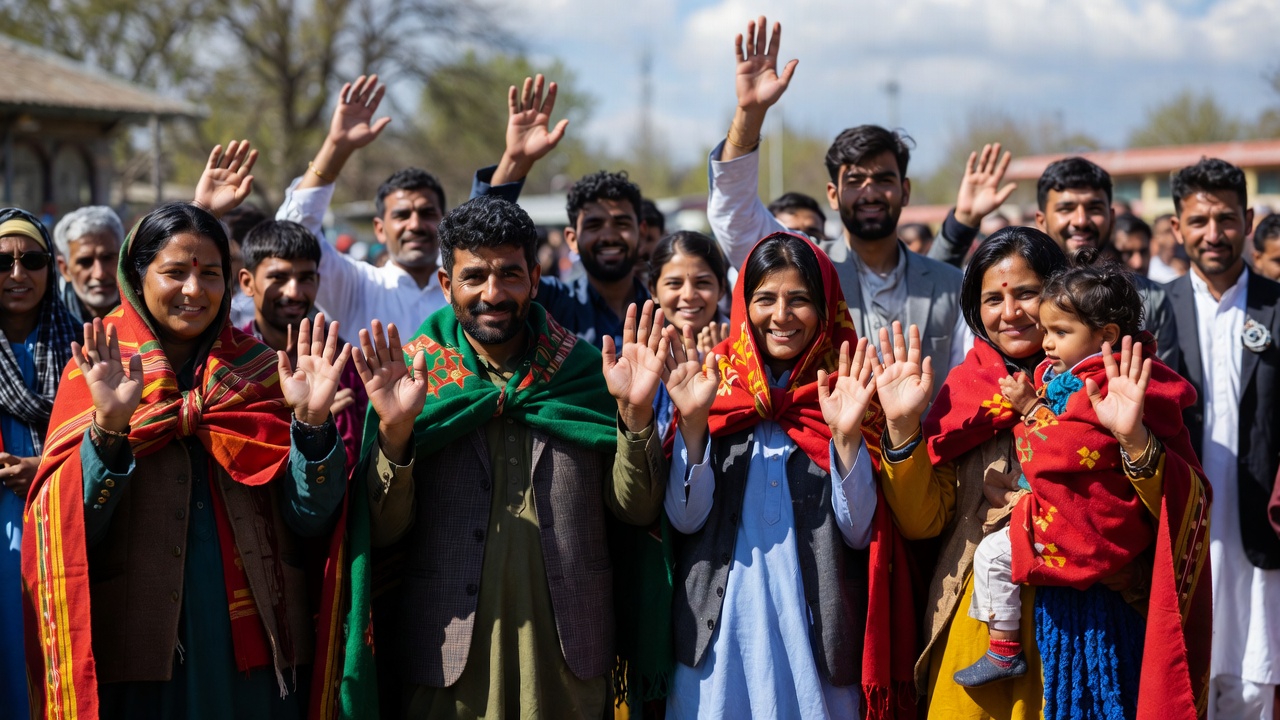
Citizens gather along highways and border crossings — at places like Kohala, Mangla, Bararkot, Azad Pattan, and Holar — and stand in long rows with their hands clasped together. The chain stretches for kilometers, linking Pakistani territory to AJK in a physical demonstration of unity.
This is not a spontaneous act. It is an organized, coordinated effort that involves local governments, political organizations, civil society groups, and ordinary citizens. People of all ages participate. You will see elderly men in traditional shalwar kameez standing shoulder to shoulder with young university students and children in school uniforms.
The Symbolism Behind the Human Chain
The human chain is a powerful metaphor. It tells the Kashmiri people that the geographic boundary between Pakistan and AJK is not a dividing line but a bridge of solidarity. It conveys the message: no matter how long this struggle takes, you are not alone.
For a traveler or observer, seeing this chain unfold across mountain roads and river crossings is an unforgettable experience. The landscape of northern Pakistan — snow-capped peaks, rushing rivers, dense pine forests — provides a dramatic backdrop for what is essentially a very human act of connection.
Special Prayers and Religious Observances on Kashmir Solidarity Day
Pakistan is a deeply religious society, and faith runs through every aspect of Kashmir Solidarity Day.
Morning Prayers in Mosques Across the Country
The day begins early. Special prayers are offered in mosques across Pakistan after the Fajr (dawn) prayer. Imams lead congregations in prayers for the liberation of Kashmir, the safety and well-being of Kashmiri people, and the souls of those who have lost their lives in the conflict.
These prayers are not limited to large urban mosques. In small villages, in mountain communities, in desert towns — wherever there is a mosque, there are prayers for Kashmir on this day.
Friday Sermon Tie-ins and Dua Gatherings
When February 5 falls close to a Friday (as it does in 2026, with the holiday on a Thursday), many mosques dedicate a portion of the Friday sermon (Khutbah) to the Kashmir issue. Imams speak about the concept of ummah — the global Muslim community — and the obligation to stand with those who are suffering.
In the evenings, some communities organize special dua gatherings (supplication sessions) where families come together to pray collectively. These gatherings are quiet, intimate affairs. They are not televised or photographed. They happen in living rooms and neighborhood mosques, far from the cameras, yet they form the spiritual backbone of the day.
Kashmir Day Activities in Azad Jammu and Kashmir (AJK)
While the entire country observes Kashmir Solidarity Day, the observance takes on a special intensity in Azad Jammu and Kashmir — the Pakistan-administered portion of the disputed territory.
The Special Session of the AJK Legislative Assembly
The AJK Legislative Assembly in Muzaffarabad typically holds a special session on February 5. This session is dedicated entirely to expressing solidarity with the people of Indian-administered Kashmir. Senior leaders from across the political spectrum address the assembly, and resolutions are passed reaffirming the demand for self-determination.
In previous years, Pakistan’s Prime Minister and President have traveled to Muzaffarabad to address this session — a gesture that carries enormous symbolic weight. When the head of state crosses into AJK on this day, it sends a clear message about the importance Pakistan places on the Kashmir issue.
Rallies and Human Chains in AJK Cities
Major rallies and human chains are organized in Muzaffarabad, Mirpur, Bagh, Rawlakot, Kohlu, and Kotli. These events draw participants from across AJK’s districts. The atmosphere in these cities is charged with emotion. For many residents of AJK, the people on the other side of the Line of Control (LoC) are their relatives, their neighbors, their childhood friends. The solidarity is not abstract. It is deeply personal.
Cultural Programs and Kashmiri Heritage Events
AJK also hosts cultural programs that showcase Kashmiri music, poetry, art, and cuisine. These events serve a dual purpose: they celebrate the rich cultural heritage of the Kashmiri people, and they remind participants that the Kashmir issue is not only about politics and territory. It is about a living, breathing culture — with its own languages, traditions, and artistic expressions — that deserves to be preserved and honored.
How Pakistani Media Covers Kashmir Solidarity Day: TV, Radio, and Print
The Pakistani media ecosystem plays a major role in shaping the public experience of Kashmir Solidarity Day. On February 5, the airwaves, print pages, and digital platforms are saturated with Kashmir-related content.
Television: Special Programs, Talk Shows, and Documentaries
All major Pakistani television channels — including PTV, Geo, ARY, and Dunya News — air special programs dedicated to the Kashmir issue. These include:
- Talk shows featuring politicians, diplomats, military analysts, and Kashmiri leaders discussing the latest developments
- Documentaries on the history of the Kashmir conflict, the experiences of Kashmiri people, and the evolution of the solidarity movement
- Drama specials that tell fictional or semi-fictional stories set against the backdrop of the Kashmir conflict
- Music programs featuring Kashmiri songs and patriotic anthems
The production quality of these programs has improved significantly in recent years. Some channels now produce cinematic-quality documentaries that are shared widely on social media in the days leading up to February 5.
Radio Pakistan’s Marathon Transmission
Radio Pakistan broadcasts a special marathon transmission on Kashmir Solidarity Day. This transmission covers various aspects of the Kashmir dispute — historical, political, humanitarian, and cultural. Radio remains an important medium in Pakistan, especially in rural areas and mountainous regions where television and internet access may be limited.
Print Media: Editorials, Special Supplements, and Op-Eds
Major Urdu and English-language newspapers publish special supplements, editorials, and opinion pieces on the Kashmir issue. Papers like Dawn, The News International, Jang, and Express Tribune run in-depth analyses, personal stories, and historical retrospectives.
Posters, billboards, and banners are also displayed around major avenues, airports, and railway stations to highlight the cause. These visual elements transform the physical landscape of Pakistan’s cities on this day.
How Schools and Universities Observe Kashmir Solidarity Day in Pakistan
Education plays a vital role in keeping the Kashmir issue alive in the national consciousness. Schools and universities across Pakistan organize a wide range of activities in the days surrounding February 5.
Debate Competitions and Essay Contests
Many educational institutions organize debate competitions where students argue different aspects of the Kashmir issue. Topics might include the role of the United Nations, the effectiveness of international advocacy, or the history of the conflict. These debates encourage critical thinking and give young people a platform to engage with complex geopolitical issues.
Essay-writing competitions are also common. Students research the topic, write their arguments, and present their work to panels of judges. Winning essays are sometimes published in school magazines or local newspapers.
Seminars, Lectures, and Dialogue Forums
Universities often host seminars and panel discussions featuring scholars, diplomats, journalists, and civil society leaders. These events go beyond sloganeering. They provide academic and intellectual depth to the Kashmir discourse. Students attend lectures on international humanitarian law, the history of the UN Security Council resolutions on Kashmir, and the broader geopolitics of South Asia.
Some universities also organize dialogue forums where students from different disciplines share their perspectives. A law student might discuss the legal dimensions of the dispute. A media studies student might analyze how the conflict is covered in international press. A literature student might read Kashmiri poetry.
Art Exhibitions and Creative Projects
In recent years, Pakistani schools and universities have embraced artistic expression as a means of engaging with the Kashmir issue. Art exhibitions, poster-making competitions, and short-film screenings allow students to process the conflict through creative lenses.
A recurring motif in student art is the image of Kashmir as “heaven on earth” — the valley’s legendary beauty — juxtaposed with symbols of conflict: barbed wire, flames, or military checkpoints. This contrast between beauty and suffering captures the emotional core of the Kashmir narrative.
The Role of Social Media and Digital Activism on Kashmir Solidarity Day
In the digital age, Kashmir Solidarity Day extends far beyond physical rallies and television broadcasts. Social media has become a powerful platform for amplifying the message.
Hashtag Campaigns and Trending Topics
Every year on February 5, hashtags like #KashmirSolidarityDay, #KashmirDay, and #StandWithKashmir trend across Twitter (now X), Facebook, and Instagram. Pakistani citizens, diaspora communities, and international supporters share posts, infographics, historical timelines, and personal reflections.
In 2022, Kashmir Solidarity Day ranked as the top trend on social media, with participants from across the globe joining the digital campaign under the banner “Let Kashmir Decide.” The hashtag was not limited to Pakistanis. International activists, human rights advocates, and solidarity groups also participated.
Video Content and Viral Storytelling
Short-form video content — on platforms like TikTok, YouTube Shorts, and Instagram Reels — has become an increasingly important medium. Young Pakistanis create educational videos explaining the history of the Kashmir conflict, share clips from rallies, and produce creative content that reaches audiences far beyond Pakistan’s borders.
The power of this digital activism lies in its accessibility. A student in Lahore can produce a two-minute video that reaches viewers in London, Toronto, or Dubai within hours. The barriers to participation have collapsed. You no longer need to attend a rally to express solidarity. Your smartphone is your megaphone.
Diaspora Digital Engagement
Pakistani and Kashmiri communities abroad are especially active on social media during Kashmir Solidarity Day. From Birmingham and Bradford in the UK to Toronto and New York in North America, diaspora members share their own stories, memories, and connections to Kashmir. This creates a transnational web of solidarity that reinforces the day’s significance beyond Pakistan’s physical borders.
Kashmir Solidarity Day Activities in the Pakistani Diaspora Worldwide
The observance of Kashmir Solidarity Day is not confined to Pakistan. Diaspora communities in dozens of countries mark the day with their own activities.
Rallies and Marches in the United Kingdom
The United Kingdom is home to one of the largest Pakistani and Kashmiri diaspora communities in the world. Cities like London, Birmingham, Manchester, Bradford, and Derby host rallies, marches, and vigils on February 5. Many of these communities have roots in AJK — particularly the Mirpur district — and the connection to Kashmir is not just political but deeply familial.
Community centers and mosques organize events that combine political advocacy with cultural celebration. Families bring homemade food. Poets recite Kashmiri verses. Activists distribute information to passersby. The events create a space where nostalgia for the homeland meets modern advocacy.
Events in North America and the Middle East
In the United States and Canada, Pakistani community organizations and student groups hold events at universities, community halls, and public parks. In 2021, the New York State Assembly passed a resolution calling on the Governor of New York to recognize the day as Kashmir American Day, describing it as a way to honor the Kashmiri community and champion human rights.
In the Middle East — particularly in the UAE, Saudi Arabia, and Qatar — Pakistani workers and community groups organize smaller but meaningful gatherings. Given the large number of Pakistani expatriates in the Gulf states, these events serve as important reminders of the homeland’s collective commitments.
Pakistani Embassies and Consulates
Pakistani embassies and consulates around the world host official events on Kashmir Solidarity Day. These typically include speeches by diplomats, screenings of documentaries, and discussions with local community leaders. The Ministry of Foreign Affairs coordinates these events to ensure a consistent and unified message across all diplomatic missions.
Understanding the Kashmir Conflict: Essential Background for Travelers and Readers
To fully appreciate Kashmir Solidarity Day, it helps to understand the conflict that gives it meaning. Here is a brief overview.
The Partition of 1947 and the First Kashmir War
When British India was partitioned in August 1947, the princely states were given the choice to join either India or Pakistan. Kashmir — a Muslim-majority state ruled by a Hindu Maharaja, Hari Singh — initially sought independence. However, an incursion by tribal militias from the Pakistani side led Hari Singh to sign the Instrument of Accession to India in exchange for military support. This triggered the First Kashmir War (1947–1948).
United Nations Intervention and the Ceasefire Line
The United Nations intervened, and a ceasefire was established in January 1949. The resulting ceasefire line — later redesignated as the Line of Control (LoC) — divided Kashmir into Indian and Pakistani-administered portions. The UN Security Council passed resolutions calling for a plebiscite to allow the Kashmiri people to determine their own future. That plebiscite has never been held.
Subsequent Wars and the Ongoing Dispute
India and Pakistan fought two more wars over Kashmir — in 1965 and 1999 (the Kargil conflict). The dispute remains unresolved and continues to shape the security architecture of South Asia.
In August 2019, India revoked Article 370 of its constitution, which had granted Jammu and Kashmir semi-autonomous status. This move intensified tensions between India and Pakistan and gave new urgency to the annual Kashmir Solidarity Day observance.
What Travelers Should Know About Visiting Pakistan During Kashmir Solidarity Day
If you are planning a trip to Pakistan in early February, Kashmir Solidarity Day will directly affect your travel experience. Here are some practical considerations.
Public Holiday Closures
February 5 is a national public holiday. Government offices, banks, educational institutions, and most businesses will be closed. If you need to handle official paperwork, exchange currency, or visit government-run tourist sites, plan accordingly.
Transportation and Traffic
Public transport operates throughout the day, but traffic congestion is common in major cities, especially near rally routes. In cities like Islamabad, Lahore, and Karachi, major roads may be blocked for processions. Plan extra travel time if you need to move around on this day.
In 2026, the holiday falls on a Thursday, and with some provinces declaring additional holidays on adjacent days, many Pakistanis will enjoy a long weekend. This means increased domestic travel, so book accommodations and transport in advance if you are visiting northern areas or tourist destinations.
Observing the Events Respectfully
If you choose to observe the rallies and events as a visitor, do so with respect. This is a deeply meaningful day for most Pakistanis. Dress modestly. Be aware of the emotional atmosphere. If you wish to photograph events, ask for permission where appropriate. Most Pakistanis are warm and welcoming to foreign visitors, and many will be happy to explain the significance of the day.
Safety Considerations
Kashmir Solidarity Day is a peaceful observance. The rallies are organized, and security is typically heightened in major cities. However, as with any large public gathering, be aware of your surroundings and follow local guidance.
How Kashmir Solidarity Day Reflects Pakistan’s National Identity and Values
Kashmir Solidarity Day is more than a political event. It is a window into Pakistan’s national identity — its values, its collective memory, and its aspirations.
A Day That Unites a Diverse Nation
Pakistan is an extraordinarily diverse country. It spans four provinces, two territories, and a wide range of ethnic, linguistic, and cultural groups — Punjabis, Sindhis, Baloch, Pashtuns, Muhajirs, Kashmiris, and many others. The Kashmir issue is one of the few topics that transcends these internal divisions. On February 5, these groups come together under a shared banner.
This unity is not imposed from above. It is felt at the grassroots level. The shopkeeper in Quetta and the student in Lahore may have little in common in their daily lives, but on this day, they share a common cause.
The Concept of Ummah and Collective Responsibility
For many Pakistanis, solidarity with Kashmir is rooted in the Islamic concept of ummah — the idea that all Muslims form a single global community. The suffering of Kashmiris is not seen as someone else’s problem. It is seen as a collective responsibility.
This sense of obligation extends beyond religion. It is also rooted in the shared history of partition, the trauma of 1947, and the belief that the promises made at independence — including the right to self-determination for Kashmir — remain unfulfilled.
Kashmir in Pakistani Art, Literature, and Music
The Kashmir issue has inspired a rich body of art, literature, and music in Pakistan. Poets write about Kashmir in Urdu, Punjabi, and Kashmiri. Musicians compose songs that blend traditional melodies with contemporary arrangements. Painters depict the valley’s beauty alongside images of conflict.
This cultural output is not propaganda. Much of it is deeply personal — the work of artists who have family ties to Kashmir or who have been moved by the stories of displacement and loss. Kashmir Solidarity Day provides an annual focal point for this creative expression.
Frequently Asked Questions About Kashmir Solidarity Day in Pakistan
Is Kashmir Solidarity Day a Public Holiday in Pakistan?
Yes. Kashmir Solidarity Day is a national public holiday in Pakistan. All government offices, banks, educational institutions, and most businesses close on February 5. The holiday has been observed annually since 1990.
What Time Is the Minute of Silence on Kashmir Solidarity Day?
The one-minute silence is observed at 10:00 a.m. local time (Pakistan Standard Time, UTC+5) across the entire country.
When Did Kashmir Solidarity Day Start?
The idea was first proposed in 1990 by Qazi Hussain Ahmad of Jamaat-e-Islami Pakistan. The Pakistan People’s Party government under Benazir Bhutto declared February 5 a public holiday the same year. The current formalized observance was reinstituted by the Ministry of Kashmir Affairs in 2004.
Is Kashmir Solidarity Day Observed Only in Pakistan?
No. The day is also observed in Azad Jammu and Kashmir and by Pakistani and Kashmiri diaspora communities in the United Kingdom, United States, Canada, Middle East, and other regions. In 2021, the New York State Assembly recognized it as Kashmir American Day.
Can Tourists Visit Pakistan on Kashmir Solidarity Day?
Yes. Pakistan remains safe and accessible for tourists on February 5. However, travelers should be aware that government offices, banks, and many businesses will be closed. Traffic disruptions are common near rally routes in major cities. The long weekend in 2026 may also affect availability of accommodations and transport.
What Is the Human Chain Tradition on Kashmir Day?
Citizens form a continuous human chain along all major roads connecting Pakistan to Azad Jammu and Kashmir. Key points include Kohala, Mangla, Bararkot, Azad Pattan, and Holar. Participants stand in rows with clasped hands, symbolizing unity and solidarity.
A Complete Timeline of Kashmir Solidarity Day Traditions and Activities
For quick reference, here is a breakdown of a typical Kashmir Solidarity Day in Pakistan:
| Time / Period | Activity |
|---|---|
| Pre-dawn (Fajr) | Special prayers in mosques across the country |
| Morning | Rallies and marches begin in cities and towns |
| 10:00 a.m. | Nationwide one-minute silence in honor of Kashmiri martyrs |
| Late morning | Main rally near Parliament House, Islamabad |
| Midday | Special session of AJK Legislative Assembly in Muzaffarabad |
| Afternoon | Human chains formed at Pakistan-AJK border crossings |
| Throughout the day | TV and radio special programs, documentaries, and talk shows |
| Throughout the day | Social media campaigns and hashtag activism |
| Evening | Cultural programs, poetry recitals, and candlelight vigils |
| Evening | Dua (supplication) gatherings in mosques and homes |
Looking Ahead: The Future of Kashmir Solidarity Day in a Changing World
As Pakistan enters 2026, Kashmir Solidarity Day continues to evolve. The digital revolution has expanded its reach. Social media campaigns now carry the message to audiences that traditional media could never access. Young Pakistanis are finding new ways to engage with the issue — through podcasts, vlogs, digital art, and online petitions.
At the same time, the geopolitical landscape is shifting. The revocation of Article 370 in 2019 added new layers to the dispute. International attention to the Kashmir issue fluctuates with global events. Yet the commitment within Pakistan remains steady.
What makes this day enduring is not its political dimension alone. It is the human element — the grandmother who prays for relatives across the LoC, the student who learns about Kashmir for the first time through a school debate, the factory worker who joins a human chain on a cold February morning.
Kashmir Solidarity Day is, at its heart, a day about people standing up for other people. That is a tradition that transcends borders, politics, and time.
If you found this guide helpful, share it with fellow travelers and researchers. For the latest updates on Kashmir Solidarity Day 2026 activities, follow Pakistan’s official news outlets and embassy announcements.
Disclaimer: This article presents factual information about how Kashmir Solidarity Day is observed in Pakistan. The Kashmir dispute involves complex and contested narratives from multiple perspectives. Readers are encouraged to consult a wide range of sources to form their own understanding.