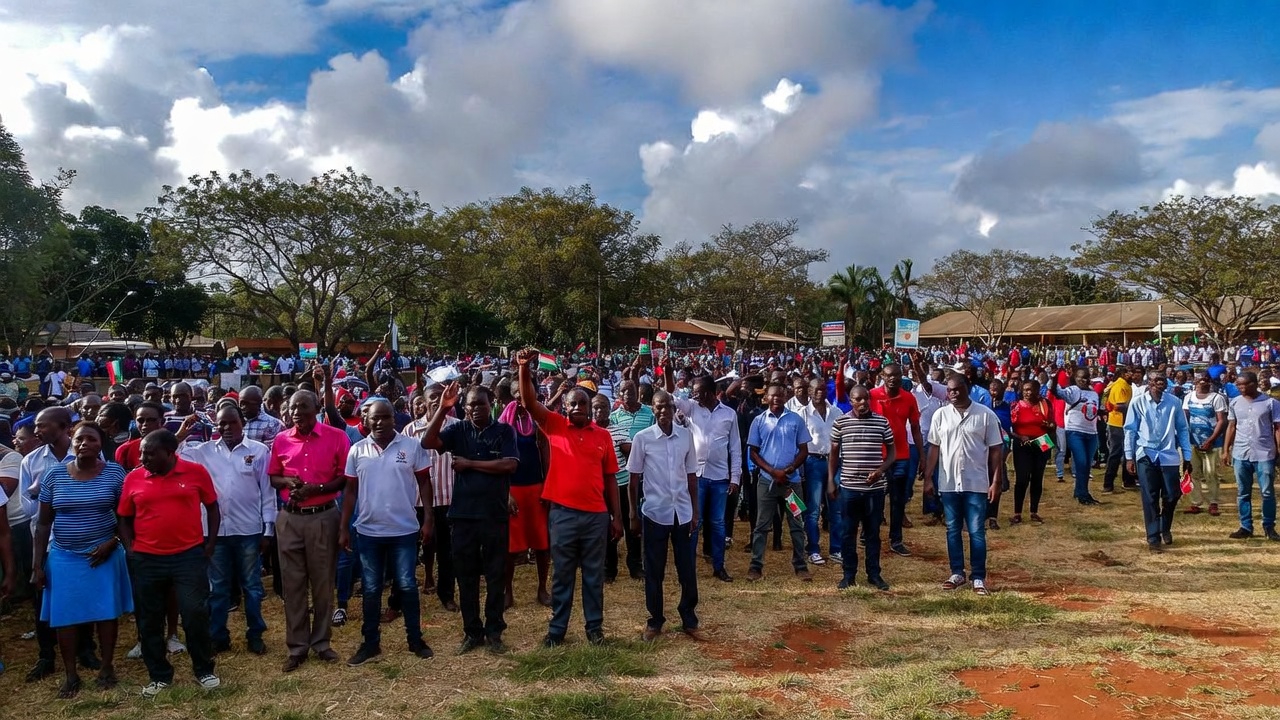
Every year on February 3, Mozambique pauses. Schools close. Government offices shut their doors. Families gather. The air in Maputo fills with the sound of drums, marching boots, and speeches that echo off the white marble of the Praça dos Heróis Moçambicanos. This is Dia dos Heróis Moçambicanos — Mozambique Heroes’ Day — and it is one of the most deeply felt national holidays on the African continent.
For a country that endured nearly 500 years of colonial rule and a brutal war for independence, this day is not just a public holiday. It is a collective act of memory. It is a promise to the dead that their sacrifice still matters. And if you find yourself in Mozambique on February 3, you will feel that promise in every corner of the nation.
In this guide, we walk you through everything you need to know: the history, the heroes, the traditions, the events, the food, the music, and the practical tips for experiencing this extraordinary day in 2026.
What Is Mozambique Heroes’ Day and Why Is It Celebrated on February 3
Mozambique Heroes’ Day, known locally as Dia dos Heróis Moçambicanos, is a national public holiday observed every year on February 3. It honors the men and women who gave their lives during the country’s long fight for independence from Portuguese colonial rule.
The date is not arbitrary. February 3 marks the anniversary of the assassination of Eduardo Chivambo Mondlane, the founder and first president of the Mozambique Liberation Front (FRELIMO). Mondlane was killed on February 3, 1969, in Dar es Salaam, Tanzania, when a bomb concealed inside a parcel detonated as he opened it. He was 48 years old.
His death sent shockwaves through the liberation movement. But it did not stop the fight. FRELIMO carried on. The guerrilla war continued for five more years until Portugal’s Carnation Revolution in 1974 led to a ceasefire. On June 25, 1975, Mozambique became an independent nation.
The choice to mark Heroes’ Day on the date of Mondlane’s death carries deep meaning. It says that the nation remembers not only the victory but also the cost. It says that the sacrifice came before the celebration. And it says that Mondlane’s vision — for a free, unified, and just Mozambique — is the foundation on which everything else was built.
In 2026, Heroes’ Day falls on Tuesday, February 3. All government offices, banks, and most businesses will be closed. Public celebrations take place across the country, with the largest events held in the capital, Maputo.
The History Behind Mozambique Heroes’ Day: Eduardo Mondlane and the Independence Struggle
To understand Heroes’ Day, you must understand the history it commemorates. And that history begins long before the war itself.
Centuries of Colonial Rule
Portuguese explorers first arrived on the coast of Mozambique in 1498, during the voyages of Vasco da Gama. By the 1530s, Portugal had established a strong colonial presence in the region. What followed was nearly four centuries of exploitation — forced labor, cultural repression, and the systematic extraction of the country’s natural resources.
Under colonial rule, Mozambicans were forbidden from speaking their own languages in official settings. They could not practice their traditional religions freely. Indigenous music and dance were suppressed. The colonial education system served almost exclusively the Portuguese settler population. At the time of independence, Mozambique had fewer than five trained doctors serving its entire population.
The Rise of FRELIMO and the Armed Struggle
By the early 1960s, anti-colonial sentiment had reached a breaking point across Portugal’s African territories. In June 1962, several Mozambican nationalist groups merged in Dar es Salaam, Tanzania, to form the Frente de Libertação de Moçambique (FRELIMO). Eduardo Mondlane was elected its first president.
Mondlane was an extraordinary figure. Born on June 20, 1920, in the Gaza Province of southern Mozambique, he was the son of a Tsonga chief and the fourth of sixteen brothers. He was the only member of his family to receive a formal education. Against remarkable odds, he studied at institutions in South Africa, Portugal, and the United States, eventually earning a PhD from Northwestern University and teaching anthropology at Syracuse University.
But Mondlane gave up his academic career to lead the liberation struggle. In September 1964, FRELIMO launched its first guerrilla attacks against Portuguese military targets in the northern provinces of Mozambique. The war had begun.
Mondlane’s Assassination and Its Aftermath
The conflict was brutal. An estimated 10,000 Mozambicans lost their lives during the decade-long struggle. Mondlane himself became a target. On the morning of February 3, 1969, in Dar es Salaam, he received a parcel that appeared to contain a book. Inside was a bomb. The explosion killed him instantly.
Investigations pointed in several directions — including the Portuguese secret police (PIDE), internal rivals within FRELIMO, and a covert European organization known as Aginter Press. Former PIDE agent Oscar Cardoso later stated that agent Casimiro Monteiro planted the bomb, a claim supported by Portuguese journalist José Duarte de Jesus in his 2023 book on Mondlane’s assassination.
Mondlane’s death did not destroy the movement. Samora Machel, a charismatic military leader from Gaza Province, took over FRELIMO’s leadership and intensified the guerrilla campaign. By the early 1970s, FRELIMO controlled significant portions of central and northern Mozambique. When the Carnation Revolution toppled Portugal’s authoritarian regime in April 1974, the path to independence was finally clear.
On June 25, 1975, Mozambique proclaimed its independence. Samora Machel became its first president.
Key National Heroes Honored on Dia dos Heróis Moçambicanos
Heroes’ Day is not just about Eduardo Mondlane. It commemorates all who fought and died for Mozambique’s freedom. Several figures stand at the center of the nation’s memory.
Eduardo Mondlane (1920–1969)
The Father of Mozambican Independence. Mondlane founded FRELIMO and gave the liberation movement its intellectual and organizational foundation. His book, The Struggle for Mozambique (1969), remains one of the most important texts on African decolonization. His remains are interred at the Praça dos Heróis Moçambicanos in Maputo, the same square where the nation gathers to honor its heroes every February 3.
Samora Machel (1933–1986)
Mozambique’s first president. Machel took command of FRELIMO after Mondlane’s assassination and led the movement to victory. As president from 1975 to 1986, he launched ambitious programs in education and healthcare, building schools and clinics across the country. Machel died on October 19, 1986, when his presidential aircraft crashed in the Lebombo Mountains near the South African border. The circumstances of the crash remain disputed. His remains also rest at Heroes’ Square. His second wife, Graça Machel, later married Nelson Mandela — making her the only woman to have served as First Lady of two different nations.
Josina Machel (1945–1971)
An icon of women’s liberation. Born Josina Abiatar Muthemba in Inhambane Province, she joined the liberation struggle as a teenager and became one of the first women to undergo military training at FRELIMO’s camp in Nachingwea, Tanzania. She married Samora Machel in 1969 and was appointed head of FRELIMO’s Department of Social Affairs. She championed education for girls and the political participation of women. She died of illness on April 7, 1971, at just 25 years old. Her death date is commemorated as Mozambican Women’s Day (Dia da Mulher Moçambicana), another national holiday.
Other Honored Figures
The nation also remembers fighters such as Romão Farinha and Luís Mara, prominent FRELIMO members who played key roles in the liberation struggle. In more recent years, non-military figures have also been interred at Heroes’ Square, including the celebrated poet José Craveirinha and the composer Justino Chemane — a sign that Mozambique’s definition of heroism has expanded to include cultural contributions as well.
| Hero | Birth–Death | Key Contribution |
|---|---|---|
| Eduardo Mondlane | 1920–1969 | Founded FRELIMO; launched the independence struggle |
| Samora Machel | 1933–1986 | Led FRELIMO to victory; first president of independent Mozambique |
| Josina Machel | 1945–1971 | Pioneered women’s rights within the liberation movement |
| José Craveirinha | 1922–2003 | Mozambique’s most celebrated poet; cultural hero |
| Justino Chemane | 1928–2007 | Renowned composer; contributed to Mozambican cultural identity |
How Do Mozambicans Celebrate Heroes’ Day: Traditions and Customs
Heroes’ Day is marked by a blend of solemn remembrance and community celebration. The tone of the day varies from neighborhood to neighborhood, city to countryside. But certain traditions are observed nationwide.
Wreath-Laying Ceremonies at Heroes’ Square
The centerpiece of the day is the official wreath-laying ceremony at the Praça dos Heróis Moçambicanos in Maputo. The president of Mozambique presides over this event. In 2026, that will be President Daniel Chapo, who was inaugurated on January 15, 2025, as the country’s fifth president and the first born after independence.
The ceremony is a formal, dignified affair. Government officials, military leaders, foreign diplomats, and invited guests gather at the star-shaped monument designed by Mozambican architect António Forjaz. Wreaths of flowers are placed at the tombs of Mondlane, Machel, and other heroes. The national flag is raised. A moment of silence is observed.
This ceremony is broadcast on national television and radio. For many Mozambicans who cannot travel to Maputo, watching or listening to the ceremony is itself a ritual — a way of participating in the collective act of remembrance from wherever they are.
Military Parades and Patriotic Speeches
Following the wreath-laying, a military parade typically takes place along the major avenues of Maputo. Units from the Forças Armadas de Defesa de Moçambique (FADM) — the Mozambique Defense Armed Forces — march in formation, with displays of equipment and battle drills.
Political leaders from across the spectrum deliver speeches reflecting on the meaning of the day. These speeches often address the current state of the nation alongside the historical narrative. Leaders use the occasion to call for peace, national unity, and sovereignty — themes that carry particular weight in a country that endured both a colonial war and a devastating civil war (1977–1992).
Community Gatherings and Family Traditions
Outside of the official events, Heroes’ Day is a day for families and communities. Many Mozambicans spend the holiday visiting extended family members. In some households, elders recount stories of the liberation struggle to younger generations. These oral histories — passed from grandparents to grandchildren — are a vital part of how the meaning of the day is kept alive.
In schools across the country, the days leading up to Heroes’ Day are devoted to educational activities. Students learn about the lives of Mondlane, Machel, and other heroes through lessons, essay contests, and presentations. Some schools organize small ceremonies or performances in the days before the holiday.
Cultural Performances and Public Festivities
Across Mozambique, local governments and community organizations host cultural performances featuring traditional music, dance, and poetry. These events are particularly vibrant in provincial capitals and larger towns. The atmosphere blends patriotic pride with the warmth of communal celebration.
Street vendors set up stalls selling food, drinks, and crafts. Children run through public parks while families spread out on blankets. The mood is not somber — it is, in the Mozambican way, a balance between respect for the past and joy in the present.
Events and Activities During Heroes’ Day in Maputo and Across Mozambique
What to Expect in Maputo
The capital is the heart of the celebrations. Here is a rough outline of what happens in Maputo on February 3:
- Morning: The official wreath-laying ceremony at the Praça dos Heróis Moçambicanos, presided over by the president.
- Mid-Morning: Military parade along Avenida Acordos de Lusaka and surrounding avenues.
- Afternoon: Cultural performances in public squares, parks, and community centers across the city.
- Evening: Informal gatherings, family dinners, and neighborhood celebrations.
The Praça dos Heróis Moçambicanos is normally restricted from public access. However, on Heroes’ Day and a handful of other national holidays such as Independence Day (June 25), the square is opened to the public. This is one of the few chances each year to visit the site and see the 95-meter mural that narrates the story of Mozambique’s liberation struggle.
Events in Provincial Capitals and Rural Areas
Heroes’ Day is celebrated across all ten of Mozambique’s provinces. Provincial governors hold their own wreath-laying ceremonies at local monuments. In cities like Beira, Nampula, Pemba, and Inhambane, parades and cultural events mirror those in Maputo on a smaller scale.
In rural areas, the celebrations tend to be more informal and community-driven. Village elders may lead gatherings under large trees — the traditional setting for community meetings in many parts of the country. Stories are told. Songs are sung. Traditional dances are performed.
Visiting Praça dos Heróis Moçambicanos: The Heroes’ Square in Maputo
No visit to Maputo on Heroes’ Day would be complete without a trip to the Praça dos Heróis Moçambicanos — the Mozambican Heroes’ Square. This is the most significant memorial site in the country.
Architecture and Design
The square is located along Avenida Acordos de Lusaka, near the Maputo International Airport. At its center stands a star-shaped white marble monument, designed by the renowned Mozambican architect António Forjaz. The star shape is both a national symbol and a reference to the star on Mozambique’s flag.
Inside the monument lie the remains of the country’s most revered heroes, including Eduardo Mondlane and Samora Machel. The surrounding grounds are landscaped with lush green grass and gardens, creating a space that feels both monumental and serene.
The 95-Meter Mural
Running along one side of the square is a 95-meter-long mural that depicts the history of Mozambique’s struggle for independence. The mural is a vivid, powerful piece of public art. It traces the story from colonial oppression through the armed struggle to independence. For visitors, it serves as a visual primer on the history that Heroes’ Day commemorates.
Visiting Tips
- Public access is limited. The square is generally open to the public only on specific national holidays, including Heroes’ Day (February 3) and Independence Day (June 25).
- Photography is restricted. Cameras and photographs have traditionally been prohibited at the square. Respect this rule.
- Arrive early. The official ceremony begins in the morning, and crowds can be large.
- Be respectful. This is a place where national heroes are buried. Dress modestly and maintain a quiet, respectful demeanor.
Traditional Mozambican Food to Enjoy During Heroes’ Day Celebrations
A national holiday in Mozambique is always a reason to eat well. Food plays a central role in community gatherings, and Heroes’ Day is no exception. Here are the dishes you are most likely to encounter — and that you absolutely should try.
Matapa: The National Dish
Matapa is the dish that defines Mozambican cuisine. It is a rich, creamy stew made from pounded cassava leaves cooked slowly in coconut milk with ground peanuts, garlic, and onion. Dried shrimp or crab are often added for flavor. The result is a deeply savory, slightly nutty dish with a velvety texture. It is traditionally served with xima (a stiff maize porridge, pronounced “shee-ma”) or white rice.
Matapa is uniquely Mozambican. You will not find this dish anywhere else in the world in its authentic form. On Heroes’ Day, families often prepare large batches of matapa to share with relatives and neighbors.
Piri Piri Chicken (Frango com Piri Piri)
No Mozambican celebration is complete without piri piri chicken. The chicken is marinated in a fiery sauce made from the African bird’s-eye chili (known as piri piri), garlic, lemon juice, paprika, and vinegar, then grilled over open coals until the skin is charred and crispy and the meat is juicy and tender.
The piri piri chili was brought to Mozambique by Portuguese traders, and the resulting dish is a perfect example of the fusion of African and Portuguese culinary traditions that defines Mozambican food. You will find it at every celebration, every market, and every street corner.
Galinha à Zambeziana
This is a chicken dish from the Zambézia Province in central Mozambique. The chicken is marinated in lime juice, garlic, and coconut milk, then baked or grilled. It is milder and more aromatic than piri piri chicken, with the coconut milk giving it a silky, slightly sweet finish.
Street Food Favorites
Heroes’ Day also means street food. Look for:
- Chamussas — triangular fried pastries stuffed with spiced meat or vegetables (the Mozambican version of the Indian samosa)
- Rissóis de Camarão — crispy half-moon-shaped shrimp croquettes, a legacy of Portuguese cuisine
- Badjia — fried dough balls, often served as a snack
- Pãozinho — small Portuguese-style bread rolls, warm and fresh
What to Drink
To wash it all down, try Tipo Tinto, a popular Mozambican rum. Or choose between the country’s two beloved beers: 2M (pronounced “doish-em”) and Laurentina. For something non-alcoholic, fresh coconut water and tropical fruit juices are available everywhere.
| Dish | Description | Key Ingredients |
|---|---|---|
| Matapa | Creamy cassava leaf stew | Cassava leaves, coconut milk, peanuts, shrimp |
| Frango com Piri Piri | Grilled spicy chicken | Chicken, bird’s-eye chili, garlic, lemon |
| Galinha à Zambeziana | Coconut-marinated chicken | Chicken, coconut milk, lime, garlic |
| Chamussas | Fried stuffed pastries | Spiced meat or vegetables, pastry dough |
| Xima | Stiff maize porridge | Maize flour, water |
| Rissóis de Camarão | Shrimp croquettes | Shrimp, dough, breadcrumbs |
Traditional Mozambican Music and Dance Performances on Heroes’ Day
Music and dance are inseparable from Mozambican identity. On Heroes’ Day, traditional performances are staged across the country, bringing communities together in celebration.
Marrabenta: The Sound of Mozambique
Marrabenta is the quintessential Mozambican music genre. It emerged in the 1930s in the urban centers of southern Mozambique as a fusion of Portuguese folk music and traditional southern Mozambican rhythms such as zucuta and magika. Characterized by its fast tempo, infectious guitar melodies, and danceable beat, marrabenta is to Mozambique what samba is to Brazil — a cultural symbol recognized around the world.
On Heroes’ Day, marrabenta bands often perform at public gatherings in Maputo and other cities. The music is joyful, energetic, and deeply rooted in the Mozambican experience.
Mapiko: UNESCO-Recognized Intangible Cultural Heritage
Mapiko (also called Ingoma ya Mapiko) is a traditional dance of the Makonde people from the northern province of Cabo Delgado. In December 2023, UNESCO inscribed Mapiko on its List of Intangible Cultural Heritage in Need of Urgent Safeguarding, recognizing its cultural importance and the threats it faces from conflict and environmental disasters in the region.
Mapiko is a theatrical performance. Dancers wear carved wooden masks representing animals or people. They perform solo or in groups, accompanied by drums and a choir of men and women who sing provocative, challenging songs. The dance is traditionally part of initiation rites marking the passage from youth to adulthood. It symbolizes the human spirit, the struggle between good and evil, and harmony with the natural world.
On national holidays, Mapiko performances are often staged as a way of showcasing Mozambique’s cultural heritage. During the liberation struggle, FRELIMO fighters even adopted Mapiko’s theatrical elements as part of their political education campaigns.
Timbila: The Orchestra of Xylophones
Timbila is a musical tradition of the Chopi people in Inhambane Province. It centers on an ensemble of wooden xylophones (each called an mbila), constructed from wooden slats fitted with resonating calabash gourds sealed with beeswax. The sound is bright, buzzing, and polyrhythmic. Timbila compositions combine music, dance, and oral literature into elaborate, multi-movement performances called ngodo. UNESCO proclaimed the Chopi Timbila a Masterpiece of the Oral and Intangible Heritage of Humanity in 2005.
Xigubo and Other Traditional Dances
Mozambique has over 1,000 traditional dances, each with its own story, rhythm, and cultural meaning. In the southern Bantu languages of Ronga and Changana, the word ngoma can mean music, dance, drum, or song — because, in the Mozambican understanding, these are all expressions of the same thing. Other dances you might see performed on Heroes’ Day include:
- Xigubo — a powerful war dance from the south
- Tufu — a ceremonial dance from the north
- Makwaya/Makwayela — a choral dance tradition with roots in southern Mozambican communities
How Travelers Can Experience Mozambique Heroes’ Day in 2026
If you are planning to visit Mozambique in early February, you have the rare chance to experience a national holiday that most international travelers never see. Here is how to make the most of it.
Attend the Official Ceremony in Maputo
The wreath-laying ceremony at the Praça dos Heróis Moçambicanos is the most significant event of the day. While parts of the ceremony may be restricted to invited guests, the military parade and surrounding public events are generally accessible. Arrive early and position yourself along Avenida Acordos de Lusaka for the best views.
Explore Maputo’s Cultural Scene
Maputo is a vibrant city with a rich cultural infrastructure. On and around Heroes’ Day, check for events at:
- Centro Cultural Franco-Moçambicano — a major arts and cultural center that frequently hosts exhibitions, concerts, and film screenings
- Kulungwana Espaco Artístico — a gallery and performance space dedicated to Mozambican arts
- Museu Nacional de Arte (National Museum of Art) — home to a remarkable collection of Mozambican art, including works by the celebrated sculptor Malangatana Ngwenya
Join Local Communities
The most authentic experience of Heroes’ Day happens not at official ceremonies but in neighborhoods, homes, and community gatherings. If you have local contacts or are staying at a guesthouse with Mozambican hosts, express your interest in joining their celebrations. Mozambicans are known for their warmth and hospitality, and sharing a meal of matapa and piri piri chicken with a local family on Heroes’ Day is an experience you will never forget.
Hire a Local Guide
A knowledgeable local guide can provide context that transforms sightseeing into understanding. Guides can explain the significance of the monuments, translate speeches and songs, and navigate the sometimes complex logistics of getting around Maputo on a national holiday.
Practical Travel Tips for Visiting Mozambique in February
February is the peak of the rainy season in Mozambique. This means hot, humid weather with frequent afternoon thunderstorms. But it also means lush, green landscapes and fewer tourists. Here is what you need to know.
Weather and What to Pack
In Maputo, February brings average daytime temperatures around 31°C (88°F) and nighttime lows of about 23°C (73°F). Humidity is high. Expect roughly 130 mm of rainfall spread over about 8 days during the month. Pack accordingly:
- Lightweight, breathable clothing in natural fabrics
- A rain jacket or compact umbrella
- Sunscreen and a hat
- Comfortable walking shoes that can handle wet pavement
- Insect repellent (mosquitoes are active in the rainy season)
Getting There
Maputo is served by Maputo International Airport (MPM), with direct flights from Johannesburg, Nairobi, Addis Ababa, Lisbon, and other regional hubs. From Johannesburg, the flight takes approximately one hour.
If you are traveling from South Africa overland, the Lebombo/Ressano Garcia border crossing connects the two countries by road.
Visa Information
Most travelers require a visa to enter Mozambique. Many nationalities can obtain a visa on arrival at Maputo International Airport, but it is advisable to check current requirements with the nearest Mozambican embassy or consulate before your trip. Having documentation ready — including proof of accommodation, return flights, and yellow fever vaccination — will speed up the process.
Currency and Costs
The local currency is the Mozambican metical (MZN). US dollars and South African rand are widely accepted in Maputo, but you will get better value by exchanging for meticais. ATMs are available in major cities but can be unreliable in rural areas. Carry some cash.
Mozambique is generally affordable for international travelers, especially when it comes to food and local transport.
Safety Considerations
Mozambique has experienced periods of political tension, including protests surrounding the 2024 presidential election that brought President Daniel Chapo to power. Before traveling, check the latest travel advisories from your government. In general, Maputo is safe for tourists who exercise normal precautions — avoid walking alone at night in unfamiliar areas, keep valuables secure, and stay aware of your surroundings.
Language
The official language is Portuguese. In Maputo, many people in the tourism and hospitality sectors speak some English. However, learning a few basic Portuguese phrases will go a long way:
| English | Portuguese |
|---|---|
| Hello | Olá |
| Thank you | Obrigado (male) / Obrigada (female) |
| Please | Por favor |
| How much? | Quanto custa? |
| Happy Heroes’ Day | Feliz Dia dos Heróis |
Other Mozambique Public Holidays and National Festivals Worth Experiencing
If Heroes’ Day captures your interest, Mozambique has a full calendar of national holidays, each with its own significance and traditions.
| Date | Holiday | Significance |
|---|---|---|
| January 1 | New Year’s Day | New year celebrations |
| February 3 | Heroes’ Day | Honors independence struggle heroes |
| April 7 | Mozambican Women’s Day | Marks the death of Josina Machel; celebrates women |
| May 1 | International Workers’ Day | Marches, parades, and labor celebrations |
| June 25 | Independence Day | The day Mozambique gained independence in 1975 |
| September 7 | Victory Day | Commemorates the ceasefire with Portugal |
| September 25 | Armed Forces Day | Marks the start of the armed struggle in 1964 |
| October 4 | Peace and Reconciliation Day | Celebrates the 1992 General Peace Agreement |
| December 25 | Family Day | A secular celebration of family (coincides with Christmas) |
Independence Day on June 25 is the most widely celebrated holiday. Maputo hosts a large concert at the national stadium, with performances by top Mozambican musicians. Cultural events including visual arts exhibitions, poetry readings, and traditional dance performances take place across the country during the preceding week.
The annual AZGO Festival, held in Maputo each May, is another highlight — a multi-day open-air music festival featuring Mozambican and international artists. For lovers of traditional music, the Chopi Timbila Festival in Quissico (Inhambane Province), held in late July, is a unique opportunity to experience one of Mozambique’s UNESCO-recognized musical traditions.
Frequently Asked Questions About Mozambique Heroes’ Day
Is Heroes’ Day a public holiday in Mozambique?
Yes. Heroes’ Day is an official public holiday. Banks, government offices, and most businesses are closed. Public transport operates on a reduced schedule.
What day does Heroes’ Day fall on in 2026?
In 2026, Heroes’ Day falls on Tuesday, February 3.
Can tourists attend the Heroes’ Day celebrations?
Yes. The military parade and public cultural events are open to everyone. The wreath-laying ceremony at Heroes’ Square may have restricted access, but the surrounding events and the general atmosphere of the holiday are accessible to visitors.
Is the Praça dos Heróis Moçambicanos open to the public year-round?
No. The Heroes’ Square is generally open to the public only on select national holidays, including Heroes’ Day (February 3) and Independence Day (June 25).
What is the significance of the date February 3?
February 3, 1969, is the date of the assassination of Eduardo Mondlane, the founder of FRELIMO and the driving force behind Mozambique’s independence struggle.
Is it safe to travel to Mozambique in February 2026?
Travel to Mozambique in February 2026 is generally possible, though travelers should check updated advisories given recent political developments. Maputo is the safest destination, with a well-established tourism infrastructure. February is part of the rainy season, so be prepared for heat, humidity, and occasional storms.
Understanding the Significance of Heroes’ Day in Contemporary Mozambique
Heroes’ Day carries a particular weight in 2026. Mozambique is a young nation — just 51 years old — and many of the challenges that Eduardo Mondlane and his generation fought to overcome remain present in different forms. Poverty, inequality, and the insurgency in Cabo Delgado Province test the country’s resilience. The transition to President Daniel Chapo’s government, following the contested 2024 election and the accompanying protests, has added new layers of complexity to the national conversation about unity and justice.
In this context, Heroes’ Day serves as both a mirror and a compass. It asks Mozambicans: Are we honoring the promise our heroes made? It asks leaders: Are you serving the people, or serving yourselves? And it asks the world: Do you remember what this country endured to become free?
The holiday is also a moment of intergenerational transmission. For the generation that fought the liberation war, the memories are lived. For their children and grandchildren, the memories must be learned. Schools, families, and public ceremonies all play a role in keeping the history alive. The challenge, as it is in every post-colonial nation, is to ensure that the next generation feels connected to a past that shaped them, even if they did not experience it directly.
This is why the cultural performances, the storytelling, the music, and the food all matter so much. They are not just decoration. They are the medium through which memory travels across time.
Why Mozambique Heroes’ Day Matters Beyond Mozambique
Heroes’ Day is more than a Mozambican event. It is part of a larger story of decolonization, self-determination, and the long struggle for dignity that defined the twentieth century across Africa and beyond.
Eduardo Mondlane was not just a guerrilla leader. He was a scholar, a diplomat, and a humanist who studied alongside some of the finest minds of his generation at institutions from Oberlin to Harvard. Josina Machel was not just a soldier. She was a pioneer for gender equality who understood that the liberation of a nation meant nothing without the liberation of its women. Samora Machel was not just a president. He was a visionary who built schools and clinics in a country that had been systematically denied both.
These stories resonate far beyond Mozambique’s borders. They speak to anyone who has ever been told they are not entitled to freedom. They speak to anyone who has fought for something larger than themselves.
If you visit Mozambique on February 3, you will stand among people who carry these stories in their blood. You will hear the drums. You will taste the matapa. You will see the wreaths laid at the marble tomb. And you will understand, in a way that no textbook can teach, what it means to remember.
Feliz Dia dos Heróis Moçambicanos.
Planning your trip? For the latest updates on Mozambique travel requirements and events, visit the official Mozambique tourism resources and check with your local embassy.